Product review · Zinsser · Updated August 7, 2026
DIFZinsser paint review
8.0/10The cheapest wallpaper stripper that actually works — as long as the solution can reach the paste.
The blue stuff in the orange bottle really does loosen old paste, and a 22-ounce bottle costs less than a sandwich. It also cannot get through vinyl or painted-over paper, and the enzyme story on the label is not what the data sheet says.

Emily Roberts · DIY Editor & First-Timer's Guide · Updated August 7, 2026
Emily painted her first room at 24, hated every minute of it, and got better. She writes the guides she wishes she'd had, and she has stripped a 1970s bedroom with DIF concentrate and a sponge to find out what comes off in sheets and what shreds. About the testing process →
Zinsser DIF
Coverage22 ounces makes 2 gallons
VOCUnder 25 g/L
Read this first
The Fast Verdict
Buy the concentrate. A 22-ounce bottle is under ten dollars, makes two gallons, and strips a small-to-medium room for less than a day's steamer rental. On old, water-permeable paper it does the job: wet it, wait fifteen minutes, and the sheets pull off in strips instead of dime-sized flakes. It cannot get through vinyl or painted-over paper unless you score it first, and it will chew up bare unpainted drywall. Slow, wet and messy — but it makes the job possible.
Best for
Old non-coated wallpaper · Painted or properly sealed walls · Whole-room and whole-house strip jobs · Softening leftover paste · Doing it for under $10 instead of renting a steamer
Skip if
Bare unpainted drywall · Painted-over wallpaper · Vinyl paper you will not score first · You need the room done in an hour · Three layers of thick old paper
What it's good at
- Loosening old paste so the paper comes off in place-mat-sized strips instead of dime-sized flakes
- Costing almost nothing — a 22-ounce bottle does a small-to-medium room for under $10
- Beating a steamer on price; a day's rental costs more than enough DIF for a whole house
- Rinsing clean and not staining a finished floor if you mop up the drips
- Cleaning off tools with plain soap and water
- Staying low-odor and low-VOC at under 25 g/L, so no solvent smell drives you out of the room
What it's not good at
- Getting through a waterproof face — vinyl and painted-over paper both block it unless you score first
- Being fast; it is fifteen minutes a section, then a re-wet, then scraping, and an afternoon per room
- Staying clean — wet walls, wet floors, gluey paper, drop cloths not optional
- Bare unpainted drywall, where soaking softens the board's paper face along with the paste
- Thick layered paper or commercial adhesive that a steamer handles better
- Living up to the enzyme claim on the label — the data sheet lists surfactants, not enzymes
Same shelf, different cans
Which DIF to Buy
DIF comes in more than one bottle and they look similar enough that people grab the wrong one at the shelf. This review is about the liquid concentrate, the cheapest and most-used version. Match the version to the size of the job, not to what is closest to your hand.
DIF Liquid Concentrate (this review)
Buy it if
You mix it with warm water yourself, and it is by far the cheapest per square foot. Get this for a whole room or a whole house. If you have a four-bedroom house to strip, this is the only version that makes financial sense.
Avoid if
You have one powder-room wall and no interest in setting up a bucket and a sprayer. For a job that small the mixing is more hassle than the savings are worth.
DIF Gel Ready-to-Use Spray
Buy it if
Pre-mixed blue gel that clings to walls without running down to the floor. Good for one small room, a single bathroom, or a renter who does not want a bucket-and-sprayer operation. The clinging is genuinely nicer to work with on a big vertical wall.
Avoid if
You are stripping a whole house. You pay a lot more per square foot for the convenience of not mixing.
DIF Ultra Concentrate
Buy it if
A stronger, faster-acting version for stubborn paste. Reach for it on heavy-duty paper or commercial adhesive that the regular concentrate stalls on.
Avoid if
Ordinary old household wallpaper. The regular concentrate already handles that for less money.
Numbers, not adjectives
Spec Sheet
- Coverage
- 22 ounces makes 2 gallons, about a 12-by-24-foot room; the 1-gallon jug makes 12 gallons of working solution
- Mix ratio
- 10 ounces of concentrate (about 1¼ cups) per gallon of warm water
- Soak time
- 15 minutes, then re-wet before scraping
- Dry before painting
- Wall must dry fully after stripping and washing, before primer or paint
- VOC
- Under 25 g/L (official TDS, Form GDH-207)
- Ingredients
- Ethoxylated alcohols, propylene glycol, water — biodegradable, non-toxic, non-staining
- Surfaces
- Strippable paper over sound plaster or sealed drywall; not bare unpainted drywall
- Primer
- Not a primer. After stripping, prime with Zinsser Gardz or a stain blocker before painting
- Sizes
- 22-ounce and 1-gallon concentrate; gel and ready-to-use spray sold separately
- Shelf life
- 5 years
- Price
- 22 ounces around $7–9; 1-gallon concentrate around $30–40
Application Settings That Work
- Brush
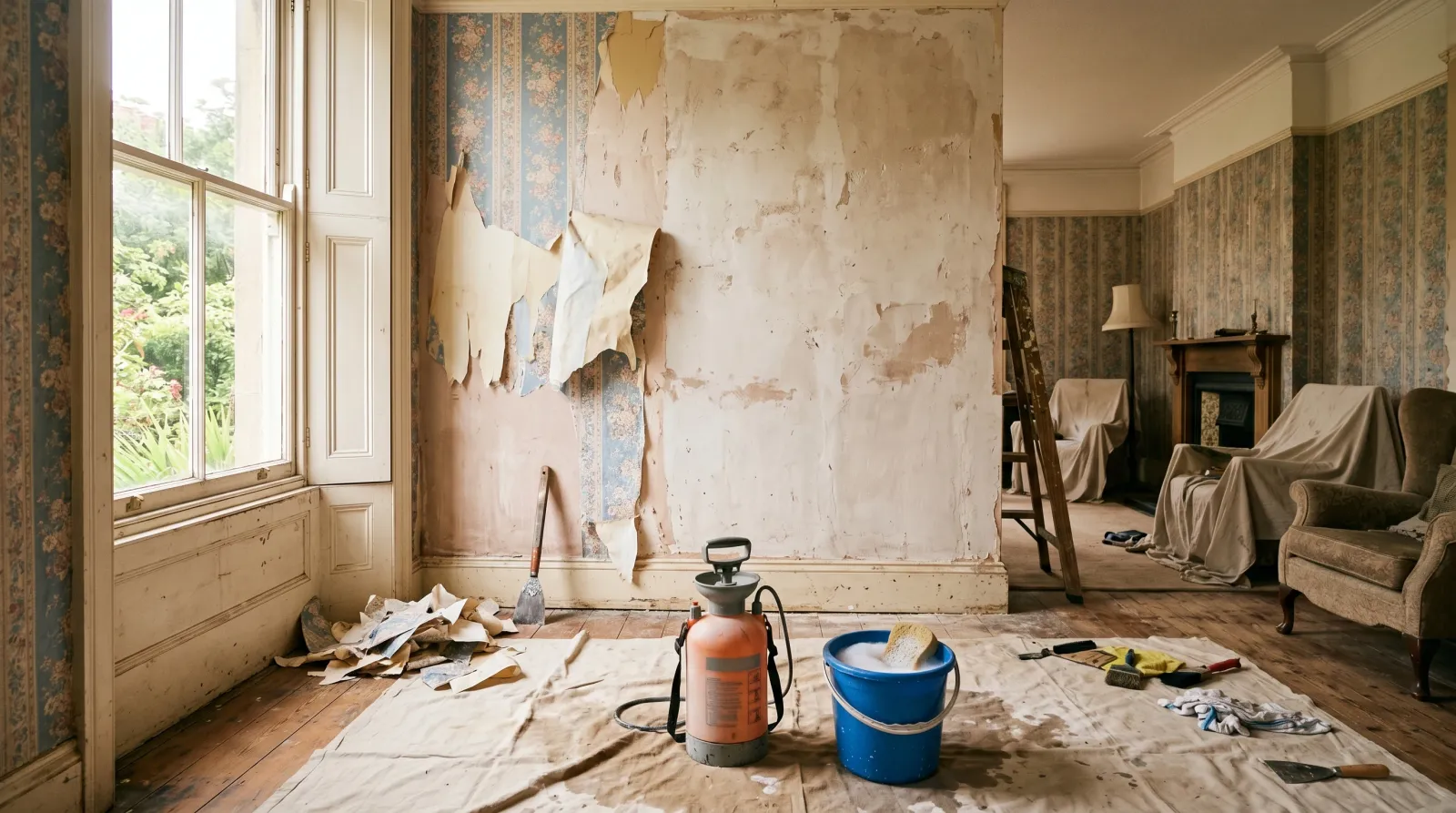
- No brush needed — a cheap garden-type pump sprayer or a big sponge both work fine. Wet a section until the paper is properly soaked, wait fifteen minutes, wet it again, then scrape with a wide scraper. Work in sections small enough that you can keep them wet. Put drop cloths down first; soggy paper lands on the floor and there is no clean way around that.
- Thinning
- 10 ounces of concentrate, about 1¼ cups, per gallon of warm water. A 22-ounce bottle makes two gallons, which covers roughly a 12-by-24-foot room. The 1-gallon jug makes 12 gallons of working solution, which is whole-house territory. Tools rinse out with soap and water.
- Primer
- DIF is not a primer and does not replace one. Once the wall is stripped, washed and fully dry, prime with Zinsser Gardz or a stain blocker before you paint. A sealing primer gives the topcoat something solid to grab on an old unsealed wall, and it locks down any paste haze you missed.
Soak Times in the Real World
There is no cure clock on a stripper, but the waiting still decides how the day goes. Wet a section, give it a full fifteen minutes, then wet it again before you scrape — one pass is rarely enough. That rhythm is why one room eats an afternoon rather than an hour. When the paper is finally down, the wall is soaked and there is almost always a thin paste haze left on it. It feels invisible while the wall is wet, then dries to a shiny, slightly sticky film. Wash it off with clean water, let the wall dry completely, and run your hand over it in side light to feel for sticky spots. Then prime. Paint straight onto a damp wall or over leftover paste and it can bubble or stay tacky for weeks.
Mid-project panic
When It Goes Wrong, and How to Fix It
The solution beads up and runs down the wall
Why it happens. DIF is a wetting agent — it only works once it can soak through to the paste underneath. Modern vinyl wallpaper and any paper that has been painted over both have a water-resistant face, so the solution never gets past the surface. You will know it when you see it: instead of soaking in, the liquid slides down and puddles on the drop cloth. Most people at this point decide the product is broken when it is really just stuck on the outside.
The fix. Score the paper first with a scoring tool, which pokes tiny holes so the solution can get behind it. Then re-wet, wait the fifteen minutes, and wet it a second time before scraping. On old non-coated paper you can usually skip scoring entirely. On vinyl, scoring is the difference between this working and not working.
The drywall paper comes up with the wallpaper
Why it happens. This happens when the wallpaper was hung directly onto bare unpainted drywall, with no primer or paint underneath. Drywall has a paper face, and soaking it with a wetting agent softens that face along with the glue. Once it is soft you can gouge straight into the board with a scraper without much force. What you get is a wall of torn spots you now have to skim smooth.
The fix. Test a small corner before you commit to the room. If the board's paper starts lifting with the wallpaper, stop — go gentler, use less solution, and scrape at a shallower angle, or accept that this wall is a skim-coat job. In the worst cases, skim-coating over the seams or replacing the drywall is less work than fighting it.
Fresh paint bubbles or stays tacky over a stripped wall
Why it happens. Leftover paste. After the paper is off there is almost always a thin haze of old adhesive on the wall, and it hides while the surface is still wet. It dries to a slightly sticky film that new paint cannot bond to properly. Old walls under wallpaper are often unsealed too, so the topcoat has nothing solid to grab.
The fix. Wash the residue off with clean water, let the wall dry completely, then check it in raking side light and by hand before you go further. Skim any spots that came out scuffed or gouged. Prime with a sealing primer such as Zinsser Gardz or a stain blocker, which locks down any haze you missed so it cannot bubble through later.
Thick or layered paper barely moves
Why it happens. Three layers hung across three decades is a different problem from one layer of old paper. The solution has to get all the way through to the bottom paste, and each extra layer slows that down or stops it. Heavy-duty paper and commercial adhesive can also simply be tougher than the regular concentrate is built for.
The fix. Try DIF Ultra Concentrate first — it is the stronger, faster-acting version aimed at stubborn paste. If that still stalls, rent a wallpaper steamer for the day. Heat plus moisture penetrates where a chemical cannot. It is heavier, hotter, and really a two-person job, but on a bad wall it is the tool that finishes it.
Side by side
DIF Concentrate vs Hot Water vs a Wallpaper Steamer
Three ways to get old paper off a wall, and they are not really competing for the same job. The question is how tough your paper is and how much of it there is.
| DIF Liquid Concentrate | Hot water and a sponge | Wallpaper steamer | |
|---|---|---|---|
| Cost | About $7–9 for 22 ounces, which does a small-to-medium room; $30–40 for the gallon | Free. Hot water and a splash of dish soap | Rent one for a day. A day's rental costs more than buying enough DIF for a whole house |
| How it works | A wetting agent that helps water soak into the water-soluble paste faster and more evenly than plain water | Plain water softening the paste on its own, given enough soaking time | Heat plus moisture, which penetrates where a chemical stalls |
| Speed | Fifteen minutes a section, re-wet, then scrape. An afternoon per room | Slower. You re-wet more often and wait longer each time | The fastest on a bad wall, but heavy, hot, and really a two-person job |
| Best on | Old, water-permeable paper over painted or properly sealed walls | One small patch of old non-coated paper | Thick, layered or genuinely stubborn paper — three layers from three decades |
| Vinyl or painted-over paper | Only after scoring. It cannot get through a waterproof face | Same wall, same problem — water cannot reach the paste | Gets through where the chemical method stalls |
| Setup | Bucket, warm water, pump sprayer or sponge, wide scraper, drop cloths, scoring tool for vinyl | A bucket and a sponge, nothing else | Pick up and return the rental, then run it hot for the day |
| Where it wins | Whole rooms and whole houses of old paper, for the least money | One small patch where buying anything feels silly | The wall nothing else is beating |
Cost
DIF Liquid ConcentrateAbout $7–9 for 22 ounces, which does a small-to-medium room; $30–40 for the gallon
Hot water and a spongeFree. Hot water and a splash of dish soap
Wallpaper steamerRent one for a day. A day's rental costs more than buying enough DIF for a whole house
How it works
DIF Liquid ConcentrateA wetting agent that helps water soak into the water-soluble paste faster and more evenly than plain water
Hot water and a spongePlain water softening the paste on its own, given enough soaking time
Wallpaper steamerHeat plus moisture, which penetrates where a chemical stalls
Speed
DIF Liquid ConcentrateFifteen minutes a section, re-wet, then scrape. An afternoon per room
Hot water and a spongeSlower. You re-wet more often and wait longer each time
Wallpaper steamerThe fastest on a bad wall, but heavy, hot, and really a two-person job
Best on
DIF Liquid ConcentrateOld, water-permeable paper over painted or properly sealed walls
Hot water and a spongeOne small patch of old non-coated paper
Wallpaper steamerThick, layered or genuinely stubborn paper — three layers from three decades
Vinyl or painted-over paper
DIF Liquid ConcentrateOnly after scoring. It cannot get through a waterproof face
Hot water and a spongeSame wall, same problem — water cannot reach the paste
Wallpaper steamerGets through where the chemical method stalls
Setup
DIF Liquid ConcentrateBucket, warm water, pump sprayer or sponge, wide scraper, drop cloths, scoring tool for vinyl
Hot water and a spongeA bucket and a sponge, nothing else
Wallpaper steamerPick up and return the rental, then run it hot for the day
Where it wins
DIF Liquid ConcentrateWhole rooms and whole houses of old paper, for the least money
Hot water and a spongeOne small patch where buying anything feels silly
Wallpaper steamerThe wall nothing else is beating
Start with DIF concentrate. On old, water-permeable paper over a painted or sealed wall it is the cheapest method that works, and a few dollars strips a whole room. If you have one small patch, try hot water with a splash of dish soap first — it costs nothing, it is just slower and you re-wet more often. Reach for the steamer only when the chemical method clearly is not winning, which usually means thick layered paper or commercial adhesive. And if the paper is painted over or vinyl, none of this matters until you score it first.
If not this one
Honest Alternatives
HW
Hot water and a spongeFree
You do not strictly need DIF for old water-permeable paper. Hot water with a splash of dish soap, sponged on and given time to soak, loosens a lot of old paste on its own. It is slower and you will re-wet more often. DIF earns its few dollars by soaking faster and more evenly, but for one small patch, try water first.
DG
DIF Gel Ready-to-Use SprayCosts more per square foot than the concentrate
Same family, no mixing. The gel clings to a vertical wall without running down to the floor, which is genuinely nicer to work with on a big surface. You are paying for the convenience. Good call for a single bathroom or a renter who does not want a bucket-and-sprayer operation.
WS
Wallpaper steamerDay rental
For thick, layered or really stubborn paper, a steamer does what no chemical can — heat plus moisture penetrates where DIF stalls. It is heavier, hotter, and a two-person job. Use DIF first and reach for this only when the chemical method clearly is not winning.
Questions people actually ask
DIF Questions, Answered
Is Zinsser DIF worth it?
Yes, at this price it is hard to argue with. A 22-ounce bottle of concentrate runs about $7 to $9, makes two gallons, and strips a small-to-medium room for less than renting a steamer for a day. It only works if the solution can reach the paste, so score vinyl or painted-over paper first. And skip it on bare unpainted drywall, where soaking softens the board's paper face along with the glue.
Do I have to score the wallpaper first?
If the top layer peels off dry, no. If it does not, yes. DIF only works once it can soak through to the paste, and most modern vinyl paper has a water-resistant face. A scoring tool pokes tiny holes so the solution gets behind the paper. On old non-coated paper you can often skip it; on vinyl, scoring is the difference between it working and it not.
What is the difference between DIF concentrate, gel, and the spray?
Same job, different convenience. The concentrate is the cheapest by far, but you mix it with warm water and apply it yourself. The ready-to-use spray and the gel come pre-mixed, so you pay more per square foot for the time saved. The gel clings to walls without running, which helps on big vertical surfaces. For a whole house, buy concentrate. For one small bathroom, the spray is fine.
How do I mix DIF concentrate?
10 ounces of concentrate, about 1¼ cups, per gallon of warm water. A 22-ounce bottle makes two gallons of working solution, which covers roughly a 12-by-24-foot room. The 1-gallon jug makes 12 gallons, so that is the whole-house size. Apply it with a cheap garden-type pump sprayer or a big sponge, and put drop cloths down before you start.
Is DIF actually enzyme-based?
The marketing says enzyme action. The official technical data sheet lists the ingredients as ethoxylated alcohols, propylene glycol, and water. Those are surfactants and a glycol, not enzymes. It works by wetting and softening the paste, which is what actually matters, but do not buy it expecting some special biological reaction the label implies.
Can I use DIF on bare drywall?
No, and this is the one that costs people real money. If the wallpaper was hung directly onto unpainted drywall, with no primer or paint underneath, soaking it softens the paper face of the board along with the paste. You can gouge straight into the drywall and create patches you then have to skim smooth. Test a small corner first, and if the board's paper starts lifting with the wallpaper, stop and go gentler.
How long do I have to let DIF soak?
Fifteen minutes, then wet the wall again before you scrape. One pass is rarely enough on anything but the friendliest old paper. Work in sections small enough that you can keep them wet while you go. Budget an afternoon for a single room — DIF does not make wallpaper removal fast, it makes it possible.
Can I paint right after stripping with DIF?
No, and this is where people rush. The wall is soaked, and there is almost always leftover paste haze you cannot see until it dries. Let the wall dry fully, wash off the residue, let it dry again, then prime with Zinsser Gardz or a stain blocker. Old paste left under fresh paint can bubble or stay tacky for weeks.
Will DIF stain my floors or trim?
It should not. It is water-based, biodegradable and non-staining, so drips you mop up will not wreck a finished floor. Tools rinse out with soap and water. At under 25 g/L VOC there is no solvent smell either, though you still want a window open for the moisture and the spraying. The real risk to your floor is water and soggy paper, not staining, so drop cloths are not optional.
What do I do after all the wallpaper is off?
Do not treat the wall as ready to paint. Wash the leftover paste off with clean water, let it dry completely, then run your hand over it in side light to feel for sticky spots. Skim smooth anything that came out scuffed or gouged. Then prime with a sealing primer so your topcoat has something solid to grab and any haze you missed cannot bubble through later.
Keep exploring
The full Zinsser brand lineupHow to get rid of leftover wallpaper glueWhat a primer actually does, in plain words
We may earn a commission when you buy through the retailer link above. It never changes the score or the verdict.
Ask a Question