Product review · Rust-Oleum · Updated August 7, 2026
2300 Traffic Zone Marking PaintRust-Oleum paint review
8.0/10The default waterborne line for routine lot striping and warehouse zone marking — specified for a schedule, not for service life.
A single-component waterborne acrylic that stripes a working lot after closing and reopens it the next morning. It is a maintenance line on a 12-to-18-month cycle, not a roadway line, and salt and a plow blade cut that in half.

Robert Vega · Commercial Coatings Editor · Updated August 7, 2026
Robert spent twelve years in facility engineering specifying coatings for school districts, light industrial sites, and municipal water assets before moving to editorial. He still consults on tank-lining specs and writes the pieces that have to survive a procurement meeting. About the testing process →
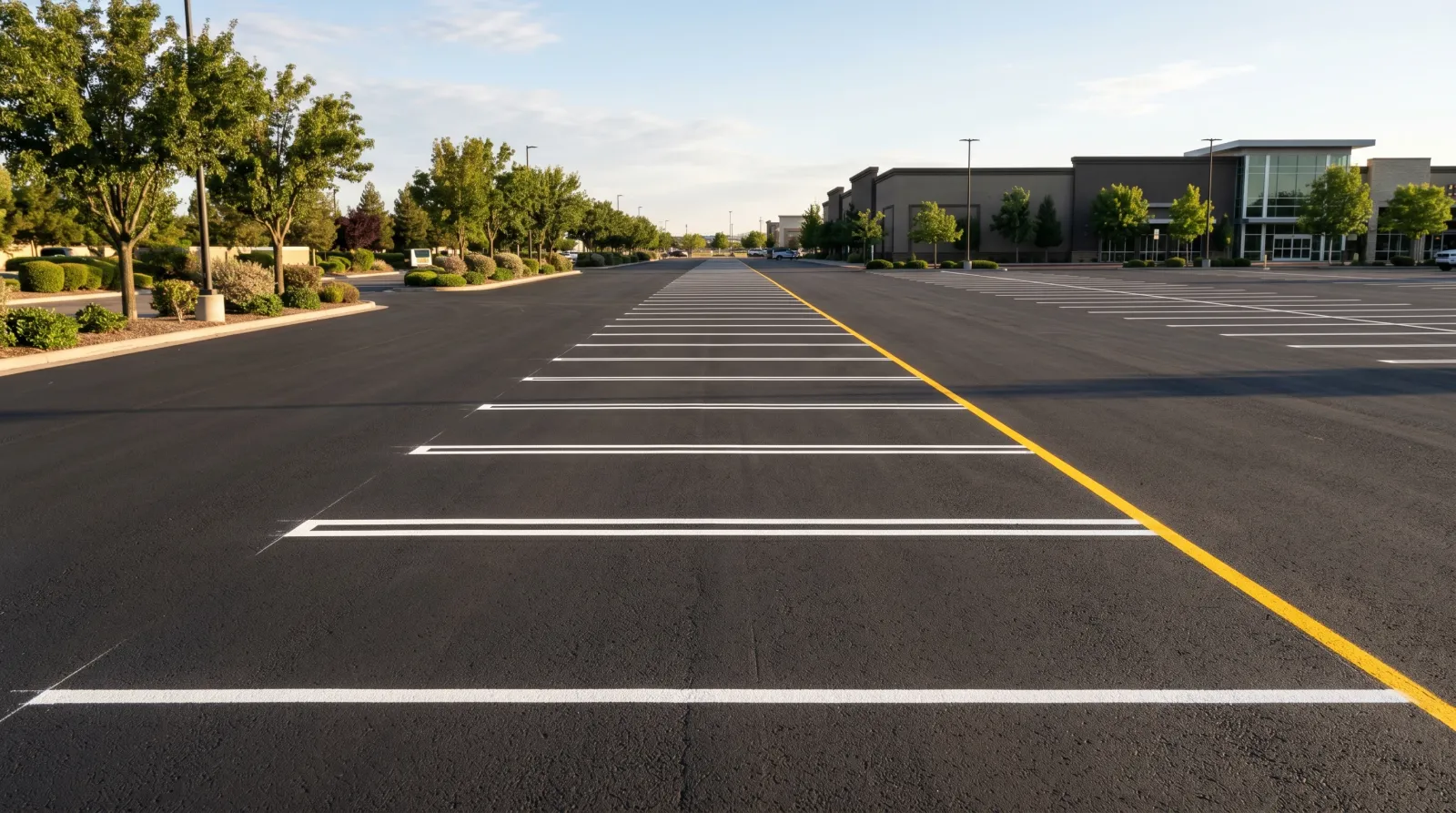
Rust-Oleum 2300 Traffic Zone Marking Paint2 sheens
CoverageUp to 450 linear ft/gal of a 4-inch stripe
Recoat / trafficRecoat and vehicle traffic at about 8 hours
VOCUnder 100 g/L
Sheens FlatSemi-Gloss
Read this first
The Fast Verdict
Specify it for routine lot striping and warehouse zone marking on a 12-to-18-month re-stripe cycle. It is a single-component waterborne acrylic that meets most state DOT waterborne specs at under 100 g/L VOC, is tack-free in 30 minutes and trafficable in 8, and runs about half the installed cost of a thermoplastic or MMA system. It is not the specification for a long-life line. On a salted, plowed lot the service life drops roughly in half, and the plow blade takes the line off the high spots first.
Best for
Parking-lot stall striping · Warehouse zone and aisle marking · Curb and safety lines · Fire-lane and handicap marking · Interior work that cannot be evacuated · Crews running a walk-behind striper
Skip if
Roadway-grade multi-year lines · Retroreflective bead requirements · Heavily plowed and salted lots · Fresh asphalt under 30 days · Striping below 50°F or above 85 percent humidity
What it's good at
- Reopening a working lot the next morning — tack-free at 30 minutes, trafficable at 8 hours
- Single-component application with no catalyst, no pot life, and no mix-ratio failure mode
- Clearing OTC and CARB limits at under 100 g/L, so it is legal where solvent traffic paints were regulated out
- Low enough odor to stripe interior warehouse zone lines without evacuating the building
- Laying opaque white and yellow in one pass at proper film build, with flat hiding coarse pavement texture
- Material cost that is a rounding error next to striping labor at about $198 a 5-gallon pail
What it's not good at
- Hot-tire pickup at stall ends when the line is opened early or the pavement is above 90°F
- Salted, plowed lots, where service life drops roughly in half and the blade takes the high spots
- Cold or damp application — below 50°F or above 85 percent humidity the film will not coalesce
- Compensating for bad prep; there is no bonding-primer step in the system
- Fresh asphalt inside its 30-day off-gassing period
- Long-life or retroreflective roadway lines, which belong to thermoplastic or MMA
Same shelf, different cans
Bulk Gallon or Inverted Aerosol?
The 2300 name covers more than the bulk striping gallon. Match the SKU to the scope of work before a case gets ordered.
2300 System bulk striping paint (this review)
BaseSingle-component waterborne acrylic
SheensFlat, Semi-Gloss
RecoatRecoat and vehicle traffic at about 8 hours
Buy it if
You are laying stall lines, zone marking, or curb lines by brush, roller, or bulk striper on asphalt or concrete.
Avoid if
The scope is a handful of spot marks or layout work, where a case of gallons and a striper is more equipment than the job needs.
2300 System inverted striping aerosol
BaseSame waterborne acrylic family, aerosol delivery
Buy it if
Spot lines, curb marking, and layout work with an inverted marking gun.
Avoid if
You are striping a full lot. It is not a bulk striping product, and the per-job cost climbs fast at that scale.
Numbers, not adjectives
Spec Sheet
- Type
- Single-component waterborne acrylic traffic paint
- Coverage
- Up to 450 linear ft/gal of a 4-inch stripe; budget 350–400 on real pavement
- Sheens
- Flat, Semi-Gloss
- Colors
- Traffic White, Yellow, Blue, Red, Black, plus Handicap Blue and Bike Lane Green
- Dry to touch
- 30 minutes, tack-free
- Recoat / traffic
- Recoat and vehicle traffic at about 8 hours
- VOC
- Under 100 g/L; clears OTC and CARB limits
- Primer
- Self-priming on cured asphalt and concrete; no separate primer in the system
- Surfaces
- Asphalt, concrete, gravel, pavement, interior or exterior
- Application temperature
- Above about 50°F and below roughly 85 percent relative humidity
- Sizes
- 1-gallon (case of 2) and 5-gallon pail
- Price
- $45–50 / gal flat, about $63 / gal semi-gloss; 5-gal about $198
Application Settings That Work
- Brush
- Brush, roller, or a walk-behind bulk striper. There is nothing to mix and no induction time — shake it, load the striper or the tray, and run. A maintenance tech with an hour of training lays a consistent line, which is most of the reason this system gets specified over a two-component product.
- Primer
- Self-priming on cured asphalt and concrete, with no separate primer in the system. That puts the whole adhesion burden on prep: 30 days minimum on new asphalt, 28 days on a new concrete pour with a laitance check, and a clean, dry, dust-free surface before the first pass.
Tack-Free at 30 Minutes, Traffic at 8 Hours
The data sheet lists tack-free at 30 minutes and vehicle traffic at 8 hours under good conditions, meaning around 70°F and low humidity. Those are two different milestones and the gap between them is where lots get damaged. Tack-free means the film has skinned; trafficable means it has coalesced. Below about 50°F or above roughly 85 percent relative humidity, the film will not coalesce properly and the 8-hour window stretches or fails outright — read the dew point, not just the air temperature, on marginal late-fall and early-spring days. Heat is its own problem at the other end: above 90°F, hot tires sitting on a fresh-ish line at a stall end can soften and pick it up, so extend the closure. On a working lot the practical schedule is to stripe at the end of the day and reopen the next morning.
Mid-project panic
When It Goes Wrong, and How to Fix It
Scuffed, picked-up line ends within a week
Why it happens. Hot-tire pickup. Cars pull into a stall and the front tires sit hot on a line that has skinned but not fully cured, and the acrylic softens and lifts with the tire. Summer heat makes it worse because the film is warmer before it is finished.
The fix. Give it the full 8 hours minimum before traffic, and longer above 90°F. Stripe at closing, reopen the next morning, and where a stall end takes direct afternoon sun, cone it off through the first day.
Lines are gone in a season on a northern lot
Why it happens. Chloride exposure and plow damage, not a coating defect. On a salted, plowed lot in zones 5 and 6, expect roughly half the service life of a mild-climate lot, and the plow blade scrapes the line off the high spots before the paint itself wears out. No thin waterborne film survives a steel blade.
The fix. Budget an annual touch-up cycle rather than expecting one application to hold. Once the re-stripe labor outweighs the material savings, specify hot-applied thermoplastic or a two-component MMA system and stripe once for five-plus years.
The line never hardened and traffic tracked it
Why it happens. The cure stalled. Below about 50°F, or above roughly 85 percent humidity, a waterborne film cannot coalesce and the 8-hour traffic window becomes fiction. Late-fall and early-spring striping in the north is a coin flip on a marginal day.
The fix. Check surface temperature and dew point before the striper leaves the shop, and reschedule marginal days. If the line has already tracked, it comes off with the next re-stripe cycle; there is no shortcut that restores a film that never formed.
New asphalt lifted the stripe
Why it happens. The 2300 is self-priming on cured pavement only. Fresh asphalt has not off-gassed, and the oils bleed up through the film and release the line. Dusty or oily concrete does the same thing, and there is no bonding-primer step in this system to compensate.
The fix. Give new asphalt at least 30 days before any striping, and let a new concrete pour cure 28 days, then check for surface laitance. Clean and dry the pavement before the striper runs. The prep has to carry the adhesion.
Side by side
2300 vs Sherwin-Williams Setfast vs Thermoplastic and MMA
Striping specifications usually come down to three tiers. The choice is a schedule and budget decision more than a chemistry one.
| Rust-Oleum 2300 | SW Setfast waterborne | Thermoplastic / MMA | |
|---|---|---|---|
| What it is | Single-component waterborne acrylic | Waterborne acrylic traffic paint, same class | Hot-applied thermoplastic or two-component methyl methacrylate |
| Spec compliance | Meets most state DOT waterborne specs at under 100 g/L VOC | Meets most state DOT waterborne specs; applies at similar mils | Roadway-grade systems, sourced through striping contractors |
| Service life | 12–18 months on a high-traffic lot; roughly half that salted and plowed | Field reports give it a cleaner re-stripe interval on adhesion and color retention | Measured in years, not months |
| Return to traffic | Tack-free 30 min, traffic at about 8 hours | Comparable waterborne schedule | Installed by a contractor crew with its own equipment and schedule |
| Equipment and skill | Nothing to mix; walk-behind striper or roller, one hour of training | Same class of equipment and handling | Kettles or two-component equipment; not a maintenance-crew product |
| Retroreflective beads | Not part of this system | Waterborne traffic class, same general use | Bead options available |
| Cost | $45–50 / gal flat, about $198 per 5-gal | A few dollars more a gallon; better with a commercial account and local stock | Three to five times more installed |
What it is
Rust-Oleum 2300Single-component waterborne acrylic
SW Setfast waterborneWaterborne acrylic traffic paint, same class
Thermoplastic / MMAHot-applied thermoplastic or two-component methyl methacrylate
Spec compliance
Rust-Oleum 2300Meets most state DOT waterborne specs at under 100 g/L VOC
SW Setfast waterborneMeets most state DOT waterborne specs; applies at similar mils
Thermoplastic / MMARoadway-grade systems, sourced through striping contractors
Service life
Rust-Oleum 230012–18 months on a high-traffic lot; roughly half that salted and plowed
SW Setfast waterborneField reports give it a cleaner re-stripe interval on adhesion and color retention
Thermoplastic / MMAMeasured in years, not months
Return to traffic
Rust-Oleum 2300Tack-free 30 min, traffic at about 8 hours
SW Setfast waterborneComparable waterborne schedule
Thermoplastic / MMAInstalled by a contractor crew with its own equipment and schedule
Equipment and skill
Rust-Oleum 2300Nothing to mix; walk-behind striper or roller, one hour of training
SW Setfast waterborneSame class of equipment and handling
Thermoplastic / MMAKettles or two-component equipment; not a maintenance-crew product
Retroreflective beads
Rust-Oleum 2300Not part of this system
SW Setfast waterborneWaterborne traffic class, same general use
Thermoplastic / MMABead options available
Cost
Rust-Oleum 2300$45–50 / gal flat, about $198 per 5-gal
SW Setfast waterborneA few dollars more a gallon; better with a commercial account and local stock
Thermoplastic / MMAThree to five times more installed
For a facility crew re-striping its own lot on an annual cycle, the 2300 is the default and the mixing-free application is a real risk reduction. Where a Sherwin-Williams commercial account already exists, Setfast is worth pricing — the field reports on adhesion and color retention buy a cleaner interval for a few dollars a gallon. Once the labor of redoing the lot every year outweighs the material savings, or the spec calls for retroreflective roadway lines, step up to thermoplastic or MMA and stop re-striping annually.
If not this one
Honest Alternatives
IM
Inverted marking aerosol (including the 2300 inverted line)By the case, cheaper per job
For layout, temporary marking, or a handful of curb lines, a case of inverted aerosol beats breaking out the gallon system and a striper. It will not hold up as a permanent lot line, but for spotting and short runs it is the right tool.
SW
Sherwin-Williams Setfast waterborneA few dollars more per gallon
The closest direct competitor, another waterborne acrylic traffic paint that meets most state DOT specs. It often edges the 2300 on adhesion and color retention in side-by-side field reports, and a Sherwin-Williams commercial account can beat ordering Rust-Oleum by the case on both price and local stock.
TO
Thermoplastic or MMA roadway systemsThree to five times more installed
For plowed lots, roadways, and crosswalks where lines have to be measured in years. Higher material and equipment cost, far longer service life, and retroreflective bead options this system does not offer. Sourced through striping contractors.
Questions people actually ask
2300 Traffic Zone Marking Paint Questions, Answered
Is Rust-Oleum 2300 traffic paint worth it?
For routine lot striping and warehouse zone marking on a 12-to-18-month re-stripe cycle, yes. It is a single-component waterborne acrylic that meets most state DOT waterborne specs at under 100 g/L VOC, is tack-free in 30 minutes and trafficable in 8, and costs about half what a thermoplastic or MMA system runs installed. It is not worth it as a long-life line: on a salted, plowed lot the service life drops roughly in half.
How long until cars can drive on Rust-Oleum 2300?
The data sheet lists tack-free at 30 minutes and vehicle traffic at 8 hours under good conditions, around 70°F and low humidity. Cooler temperatures or a heavy film push that past 8 hours. On a working lot, stripe at the end of the day and reopen the next morning. The 8-hour figure assumes the coating cured, not just skinned over.
Is the 2300 the same as Sherwin-Williams Setfast?
No. They are competing products in the same class. Setfast is Sherwin-Williams' waterborne acrylic traffic line; the 2300 is Rust-Oleum's. Both meet most state DOT waterborne specs and apply at similar mils. If a spec names one by brand, do not substitute without approval. If it is a generic waterborne acrylic call-out, either qualifies.
Does Rust-Oleum 2300 need a primer on fresh asphalt?
No separate primer, but the asphalt has to be cured. New asphalt needs 30 days minimum to off-gas before any striping, or the oils bleed through and lift the line. The 2300 is self-priming on cured asphalt and concrete. On a new concrete pour, let it cure 28 days and check for surface laitance first.
Flat or semi-gloss for a parking lot?
Flat for most striping. It hides minor pavement texture, reads cleanly day and night, and costs less per gallon. Semi-gloss buys a bit more wet-look visibility and slightly easier cleaning, which matters more for interior warehouse zone lines on sealed concrete than for an outdoor lot.
How far does a gallon really go?
The published figure is up to 450 linear feet per gallon of a 4-inch line at spec wet film, which is standard stall width. For estimating, budget closer to 350 to 400 linear feet on real pavement, because no striper lays a perfectly uniform film over textured asphalt. Wider lines, fire-lane stripes, or extra mils for durability drop it further.
How often will I have to re-stripe?
Plan on 12 to 18 months on a high-traffic lot, longer on low-traffic asphalt. De-icing salt exposure and hot-tire pickup at stall ends shorten it. Snowplow scraping takes lines off faster than the coating itself wears. Budget an annual touch-up cycle rather than expecting one application to last for years.
Can I stripe in the cold?
Not below about 50°F, and not above roughly 85 percent relative humidity. The film will not coalesce properly, and the 8-hour traffic window stretches or fails outright. Late-fall and early-spring striping in the north is a coin flip on a marginal day, so read the dew point, not just the air temperature.
Keep exploring
Rust-Oleum brand reviews and lineupBest concrete floor coatings, testedWhat VOC limits actually meanDry time vs cure time, explained
We may earn a commission when you buy through the retailer link above. It never changes the score or the verdict.
Ask a Question