Product review · Rust-Oleum · Updated August 7, 2026
NeverWetRust-Oleum paint review
5.4/10Real superhydrophobic chemistry with a useful life measured in days on anything you handle.
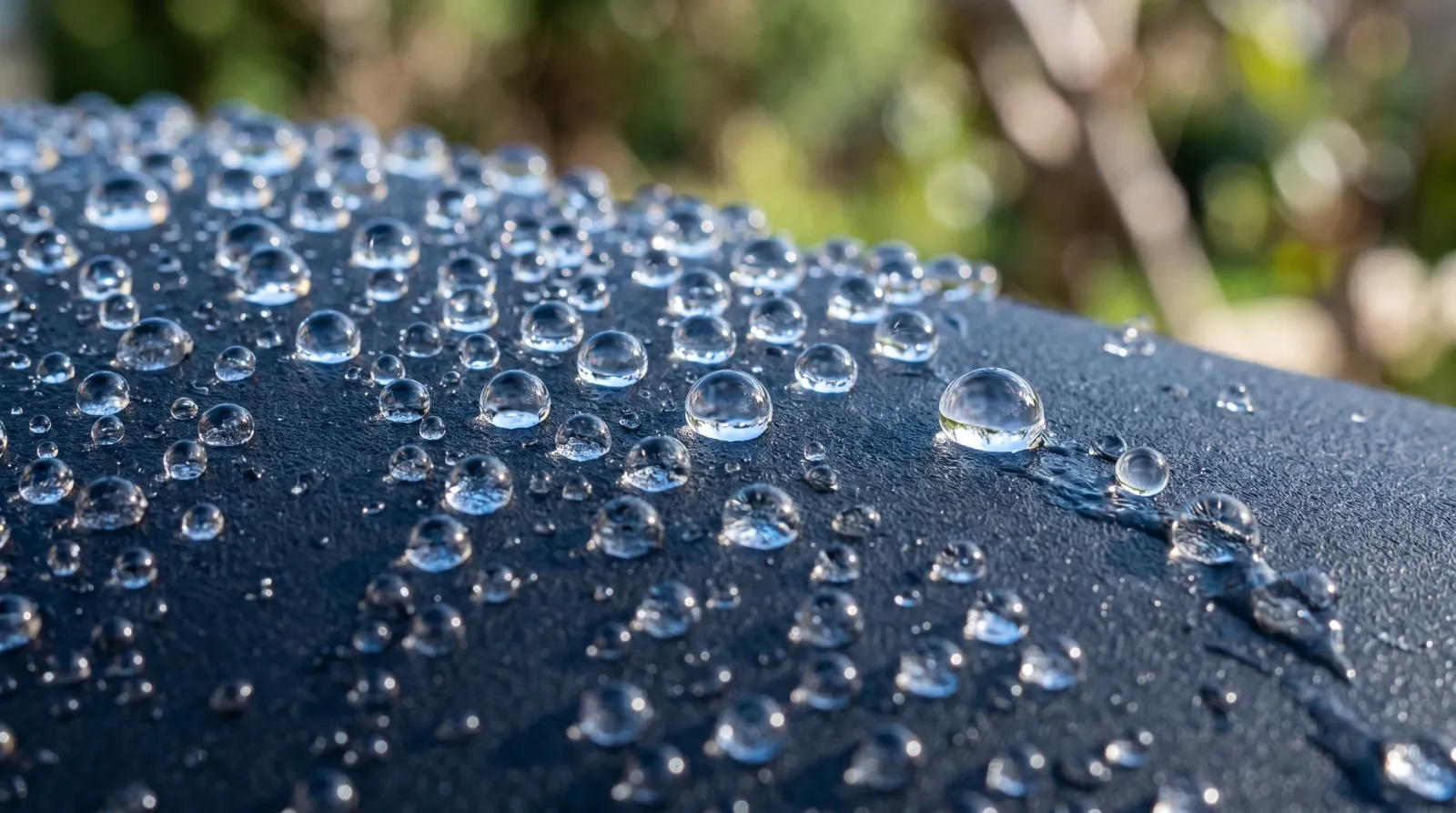
The demo is honest. Water beads into spheres and rolls off, taking the dust with it. Then you touch it, and that is where the $15 to $22 kit stops living up to the video.

Maya Patel · Reviews Editor & Product Tester · Updated August 7, 2026
Maya spent five years running comparative product testing at a consumer testing nonprofit before joining CompositePaint. She built the round-up protocol the team uses, and she tested NeverWet on plywood, a steel trowel, a paver, and an outdoor junction box to see which surfaces it actually survives on. About the testing process →
Rust-Oleum NeverWet
Coverage10–15 sq ft per two-step kit
VOCHigh-solvent aerosol
Read this first
The Fast Verdict
For most people, no. It works exactly as advertised on day one and then wears off in days on anything you touch. It is worth $15 to $22 on a low-touch outdoor item you are happy to see wearing a milky haze — a planter, a junction box, a shop tool, beater work boots. Soap, oil, and pressure water all disable it, and the frosted clear does not dry clear. Think of it as a temporary water shield with a recoat schedule.
Best for
Outdoor planters · Junction boxes and covers · Shop tools stored wet · Beater work boots · Static surfaces you never touch · Mixed materials one kit can cover
Skip if
Anything you handle daily · Surfaces you wash or pressure-wash · Dark or glossy pieces where haze shows · Sealing a deck, concrete, or masonry for real · Indoor spraying
What it's good at
- The day-one effect — water forms near-perfect spheres and runs off, taking dust with it
- Self-cleaning on static surfaces; on a paver and a junction box left alone, repellency held for weeks
- Covering materials most sealers ignore — metal, masonry, fabric, leather, plastic from one kit
- Rinsing mud off a coated tool without a trace
- Costing little enough to experiment with, at $15 to $22 a kit
- Simple two-step application with no mixing and no separate primer
What it's not good at
- Surviving touch — the haze transfers to your fingers and the effect is gone in days on handled items
- Detergent, oil, or pressure water, all of which disable it
- Looking invisible; the frosted clear dries to a milky haze that reads chalky on dark or glossy surfaces
- Holding up under UV, which wears it down over a season even untouched
- Flex points on boots and fabric, where it cracks within a few wears
- Value over time, since the short lifespan means re-buying the kit
Same shelf, different cans
Which NeverWet Are You Buying?
NeverWet covers several products, and buying the wrong one is the most common mistake. This review is the 18-oz consumer multi-purpose kit in frosted clear. Here is how the family breaks down.
NeverWet Multi-Purpose Kit, frosted clear (this review)
BaseTwo-step aerosol: base coat, 45 min, top coat
SheensFlat frosted haze — not an invisible film
Buy it if
You want DIY water repellency across mixed surfaces and the haze does not matter on what you are coating.
Avoid if
The surface is dark or glossy, where the clear reads as a chalky cloud.
NeverWet Multi-Purpose Kit, white or silver-gray
BaseSame two-step chemistry, opaque finish
SheensOpaque white or silver-gray
Buy it if
You want the same performance on a surface where an opaque color hides the coating better than the clear does.
Avoid if
You need the underlying color or finish to stay visible.
NeverWet Boot & Shoe
BaseAerosol aimed at footwear
Buy it if
You are treating beater work boots and you accept the same short life at flex points.
Avoid if
These are shoes you wear in public — a dedicated fabric protector looks and lasts better.
NeverWet Fabric
BaseAerosol for canvas, upholstery, and gear
Buy it if
The item is fabric. It handles fabric better than the clear multi-purpose kit does.
Avoid if
The fabric flexes hard in use — the coating still flakes at the fold points.
NeverWet Industrial
BasePro and OEM coating sold in gallons, spray-applied at scale
Buy it if
You are coating at production scale to an industrial spec.
Avoid if
You are a homeowner. Application is fussier and the finish is heavier than the consumer kit.
Numbers, not adjectives
Spec Sheet
- Coverage
- 10–15 sq ft per two-step kit
- Finish
- Flat frosted haze in the clear; white and silver-gray also sold
- System
- Base coat, wait 45 min, then top coat; no separate primer
- Touch dry
- 30 min
- Repels water
- 30 min
- Full performance
- 12 hours
- VOC
- High-solvent aerosol; not a low-VOC product, spray outdoors
- Surfaces
- Wood, metal, concrete, masonry, fabric, leather, plastic
- Not for
- Food contact, high-abrasion items, anything washed with detergent
- Sizes
- 18-oz kit in frosted clear, white, or silver-gray
- Price
- $15–22 per kit
Application Settings That Work
- Primer
- No separate primer. The kit is self-contained: base coat, wait 45 minutes, then the top coat that builds the superhydrophobic texture. Both steps matter — the top coat alone is not the effect. Spray outdoors, since this is a high-solvent aerosol with no low-VOC version, and match the kit color to the surface before you start.
How Long the Effect Actually Lasts
The dry schedule is the easy part. Base coat, wait 45 minutes, top coat, touch dry at 30 minutes, repelling water at 30 minutes, full performance at 12 hours. The number that matters is what happens after that. On a static, untouched surface in mild weather — a coated paver, an outdoor junction box — the repellency held for weeks in our use, and can run to a couple of months. On anything you handle, walk on, wash, or rub, it is often days. UV wears it down over a season even on things you never touch. Soap drops the beading, oil stops it, and a pressure washer strips it outright. So plan on a recoat schedule from the start. This is not a coat-it-once product, and the marketing never frames it that way.
Mid-project panic
When It Goes Wrong, and How to Fix It
White haze rubs onto your hands
Why it happens. The superhydrophobic layer is a fragile micro-texture, not a tough film. Picking a coated object up flattens the texture and transfers it to your fingers.
The fix. There is no fix on a handled object, only a choice: coat things you leave alone. Planters, junction boxes, tools you store rather than grip. If you must coat something handled, expect to recoat and accept the transfer.
It stopped beading after a wash
Why it happens. Detergent, oil, and pressure water all foul or flatten the micro-texture. The exact cleaning you would do to keep an outdoor surface nice is what destroys the coating.
The fix. Rinse with plain water only, no soap and no pressure washer. Once the beading stops, the layer is done — clean the surface properly, dry it, and reapply both steps of the kit.
The coating cracked at the flex points on boots
Why it happens. It cures as a rigid micro-texture. Anywhere the material folds hard, it fractures within a few wears, and fabric stiffens slightly under it.
The fix. Reserve NeverWet for beater work gear you do not care about. For anything you wear in public, use a dedicated fabric-and-leather protector, which wears far longer at the flex points and leaves no haze.
It looks chalky on a dark surface
Why it happens. Frosted clear is not clear. It dries to a flat, milky haze that reads as a cloud on dark panels, glossy tables, and black tools. Rust-Oleum selling white and silver-gray is the quiet admission.
The fix. Test a hidden spot before you commit. On dark or glossy items, pick the white or silver-gray kit so the finish reads as deliberate color rather than a smear. On light or rough surfaces the clear is livable.
Side by side
NeverWet vs a Penetrating Sealer vs Clear Spar Urethane
Three ways to keep water off something, and they work in completely different places. NeverWet is the only one that beads dramatically, and the only one that wipes off with a thumb.
| NeverWet | Penetrating concrete/masonry sealer | Clear spar urethane | |
|---|---|---|---|
| How it works | Sits on top as a micro-rough texture that forces water into beads. | Soaks into the surface instead of coating it. | Bonds as a hard clear film over the surface. |
| Lifespan | Days on handled items; weeks to a couple of months untouched. | Years. | Years outdoors in a spar formulation. |
| Survives handling and washing | No. Touch, soap, oil, and pressure water all kill it. | Yes. Survives foot traffic and pressure washing. | Yes. Abrasion-resistant and cleanable. |
| Look | Milky frosted haze; chalky on dark or glossy surfaces. | Little visible change; no dramatic beading. | Gloss or satin clear film. |
| Best surfaces | Mixed bag — metal, masonry, fabric, leather, plastic from one kit. | Concrete, masonry, decks. | Wood and metal. |
| Price | $15–22 per kit | Varies by brand | Varies by size |
How it works
NeverWetSits on top as a micro-rough texture that forces water into beads.
Penetrating concrete/masonry sealerSoaks into the surface instead of coating it.
Clear spar urethaneBonds as a hard clear film over the surface.
Lifespan
NeverWetDays on handled items; weeks to a couple of months untouched.
Penetrating concrete/masonry sealerYears.
Clear spar urethaneYears outdoors in a spar formulation.
Survives handling and washing
NeverWetNo. Touch, soap, oil, and pressure water all kill it.
Penetrating concrete/masonry sealerYes. Survives foot traffic and pressure washing.
Clear spar urethaneYes. Abrasion-resistant and cleanable.
Look
NeverWetMilky frosted haze; chalky on dark or glossy surfaces.
Penetrating concrete/masonry sealerLittle visible change; no dramatic beading.
Clear spar urethaneGloss or satin clear film.
Best surfaces
NeverWetMixed bag — metal, masonry, fabric, leather, plastic from one kit.
Penetrating concrete/masonry sealerConcrete, masonry, decks.
Clear spar urethaneWood and metal.
Price
NeverWet$15–22 per kit
Penetrating concrete/masonry sealerVaries by brand
Clear spar urethaneVaries by size
If the real goal is keeping water out of concrete, masonry, or a deck, a penetrating sealer beats NeverWet on every axis except the demo — it lasts years and survives the pressure washer. If you want durable protection on wood or metal and can accept a visible clear film, spar urethane bonds instead of sitting on top. NeverWet only wins where nothing else applies: a mixed pile of low-touch outdoor items you want shedding water this weekend, at $15 to $22, with a recoat penciled in.
If not this one
Honest Alternatives
SO
Silicone or acrylic penetrating sealerVaries by brand
If the real goal is keeping water out of concrete, masonry, or a deck, this beats NeverWet on every axis but the demo. It soaks in, survives foot traffic and pressure washing, and lasts years instead of weeks. It will not bead dramatically, but it actually waterproofs.
DF
Dedicated fabric and leather protectorVaries by brand
For shoes, boots, and gear, a repellent spray made for outdoor apparel wears longer at flex points and leaves no chalky haze. NeverWet's own fabric version is a step up from the clear kit here, but a purpose-made shoe protector still looks and lasts better.
CS
Clear spar urethaneVaries by size
When you want real, durable water and weather protection on wood or metal and can accept a gloss or satin film, this is the grown-up answer. It bonds, resists abrasion, and survives cleaning. Rust-Oleum's own Varathane line covers it.
Questions people actually ask
NeverWet Questions, Answered
Is Rust-Oleum NeverWet worth it?
Only for a narrow job. On a low-touch outdoor item that gets rained on and rarely handled — a planter, a junction box, a shop tool, beater work boots — a $15 to $22 kit sheds water for a season and does something no paint does. For anything you touch, walk on, wash, or care about the look of, it is not worth it: the coating rubs off in days, detergent and pressure water disable it, and the frosted clear dries to a milky haze.
Does Rust-Oleum NeverWet actually work?
Yes, at first. Fresh out of the can it does exactly what the demo shows: water beads into spheres and rolls off, mud rinses clean. The catch is durability. Touch the coating, scrub it, or hit it with detergent or pressure water and the effect fades fast. It is a real superhydrophobic coating with a short useful life on anything you handle.
Will NeverWet make my surface look different?
Yes. The frosted clear formula dries to a flat, milky haze, not an invisible film. On dark or glossy surfaces it reads as a chalky cloud. Rust-Oleum sells white and silver-gray versions partly to mask this. Test it on a hidden spot before you coat anything where appearance matters.
How long does NeverWet last outdoors?
On a static, untouched surface in mild weather, weeks to a couple of months. On anything that gets handled, walked on, washed, or rubbed, often just days. UV, abrasion, and detergents all break it down. Plan to recoat, or use it only where you can leave it alone.
Can I use NeverWet on shoes or fabric?
You can spray it on work boots and canvas, and it will shed water for a while. But it leaves a visible haze, it stiffens fabric slightly, and flex points crack the coating quickly. For everyday sneakers or nice shoes, a dedicated fabric protector wears better and looks cleaner. Reserve NeverWet for beater work gear.
How much does one kit cover?
Ten to 15 sq ft per two-step kit, which is a tool, a pair of boots, or a planter. Buy two kits for anything larger. Remember you are spraying two coats from the same kit, so the usable area is smaller than a single-coat number would suggest.
Do I need a primer under NeverWet?
No. The kit is the system: a base coat, a 45-minute wait, then the top coat that builds the water-repelling texture. Skipping the base coat or rushing the wait gives you patchy repellency. Both cans in the kit are needed for the effect.
Can I wash something coated with NeverWet?
Plain water only. Soap drops the repellency, oil stops the beading, and a pressure washer strips the coating outright. That is the core frustration with the product: normal cleaning is what destroys it. Once it stops beading, clean the surface properly, dry it, and recoat.
Will NeverWet waterproof a deck, concrete, or masonry?
No, not in any lasting way. Foot traffic and washing take it off quickly on a walking surface. For concrete, masonry, or a deck, a penetrating sealer soaks into the surface, survives traffic and pressure washing, and lasts years. It will not bead for the camera, but it does the actual job.
Keep exploring
Rust-Oleum brand hub and product reviewsBest multi-surface paints and coatingsWhat VOC numbers actually mean
We may earn a commission when you buy through the retailer link above. It never changes the score or the verdict.
Ask a Question