Product review · Purdy · Updated August 8, 2026
White DovePurdy paint review
9.0/10The interior wall cover to buy if you want the room to look like a painter did it — on smooth-to-light texture only.
The woven Dralon cover that rolls a lint-free first coat on smooth drywall and washes out four or five more times. It is flatly the wrong tool on knockdown.

Maya Patel · Reviews Editor & Product Tester · Updated August 8, 2026
Maya spent five years running comparative product testing at a consumer testing nonprofit before joining CompositePaint. She built the round-up protocol the team uses, and she has cut the same wall with Purdy, Wooster, and a three-dollar multipack tool to see what the extra money actually buys. About the testing process →
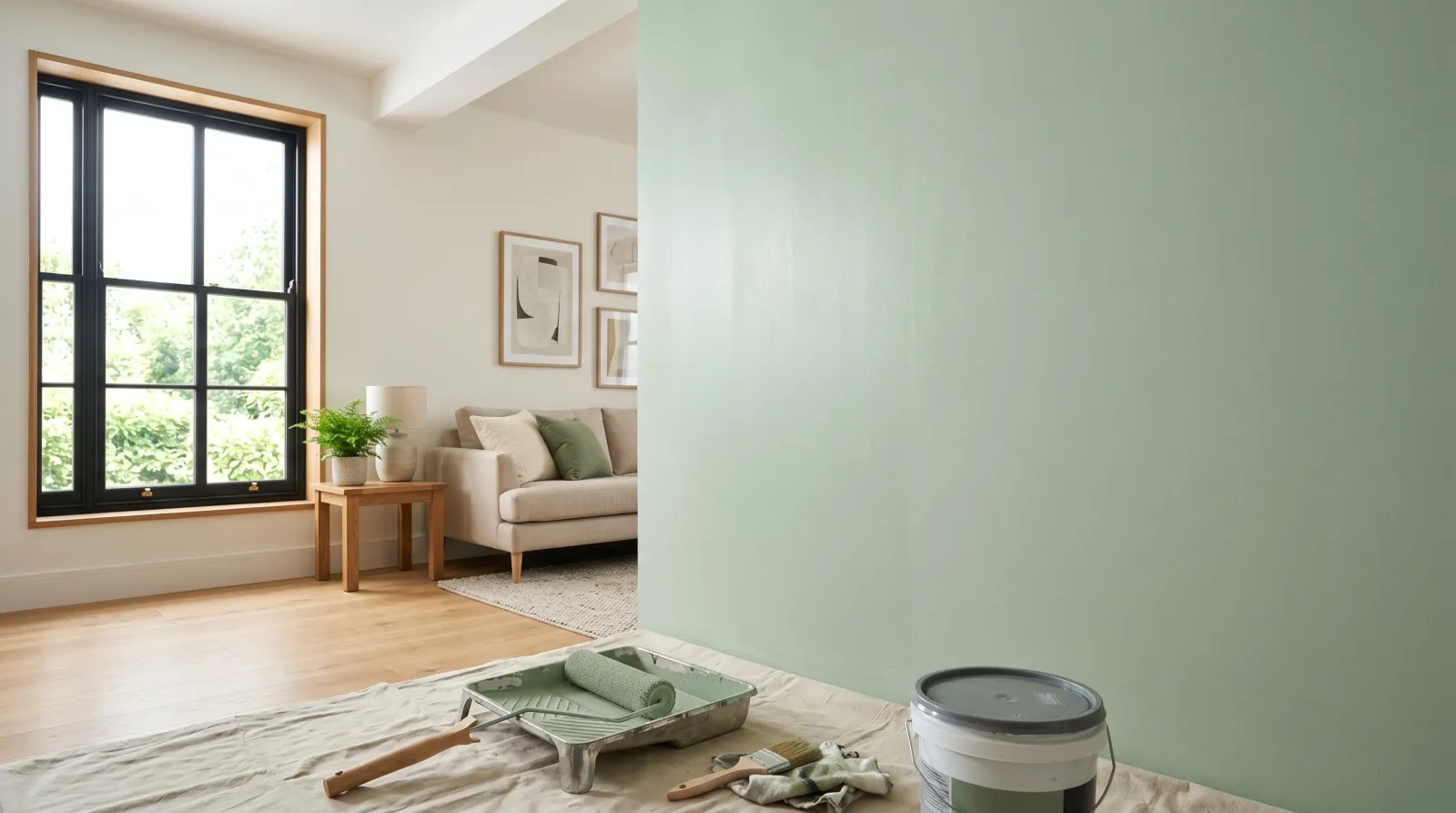
Purdy White Dove2 sheens
FabricWoven Dralon
CoreSolvent-resistant polypropylene
Nap options1/4-inch, 3/8-inch, 1/2-inch
Frame sizes4-inch, 4.5-inch mini
Sheens Works with any sheenflat through gloss
Read this first
The Fast Verdict
Buy it for interior walls and ceilings. At $7 to $10, or about $5 a cover in a 3-pack, the woven Dralon sheds almost nothing, so the first coat goes on without a constellation of lint specks to chase before the paint sets. It carries 25 to 35 percent more paint than a commodity cover, which means fewer reloads and fewer lap marks, and it washes out for four or five more sessions. The 3/8-inch nap is the one to buy first.
Best for
Smooth to lightly textured drywall · Interior walls and ceilings · Lint-free first coats · Painters who wash and reuse covers · Oil, stain, and clear work
Skip if
Knockdown and orange-peel texture · Glass-flat doors and cabinet faces · A single tiny throwaway job · You roll fast and hate spatter
What it's good at
- Lint-free first coats — a full wall with no fibers to pick off the wet film
- A big, even paint load; the 25 to 35 percent claim tracks with what shows up in the tray
- A fine, consistent stipple in 3/8-inch that reads smooth from a few feet back
- Washing out and coming back four or five times before the edges fuzz
- Running oil enamel, polyurethane, and stain without the core delaminating
- No roller-tracking ridge at the edges if you keep a wet edge
What it's not good at
- Knockdown, orange peel, and anything heavier than light texture
- Glass-flat door and cabinet finishes
- Fast rolling — it flings fine droplets more than a microfiber does
- Marketplace shopping, where counterfeit multi-packs sit next to the real thing
Same shelf, different cans
Which Nap Should You Buy?
The White Dove finish lives or dies on nap, and most disappointing results trace back to the wrong one. Getting the nap right does more for the finish than spending up on the cover.
1/4-inch nap
Buy it if
Doors, cabinets, dead-flat plaster, metal. Almost no stipple, with a little more capacity than a foam roller.
Avoid if
Normal drywall walls, where you will be back at the tray constantly.
3/8-inch nap
Buy it if
The default, and the one to buy first. Smooth and lightly textured drywall — flattest practical wall finish, good load, even sheen.
Avoid if
Knockdown or orange peel, where it leaves holidays in the valleys.
1/2-inch nap
Buy it if
Light knockdown, sand finish, textured walls and ceilings. It pushes more paint into shallow valleys without leaving holidays.
Avoid if
Smooth drywall, where it stipples more than you want.
Numbers, not adjectives
Spec Sheet
- Fabric
- Woven Dralon (acrylic, nylon-derivative fiber)
- Core
- Solvent-resistant polypropylene
- Nap options
- 1/4-inch, 3/8-inch, 1/2-inch
- Frame sizes
- 4-inch, 4.5-inch mini, 9-inch, 14-inch, 18-inch
- Paint compatibility
- Latex, oil, primers, stains, clears; any sheen
- Best surfaces
- Smooth and lightly textured drywall, plaster, ceilings, doors, trim, floors
- Paint load
- About 25–35% more than a commodity cover
- Reuse
- Four or five wall-paint sessions with care
- Where to buy
- Sherwin-Williams, Home Depot, Lowe's, Amazon, paint stores
- Price
- $7–10 single 9-inch; $5–7 per cover in a 3-pack
Wash It, Reuse It, and Check Who Sold It to You
There is nothing to cure on a roller cover, but two things decide what you actually get for your money. The first is the wash. Rinse it, spin or comb it, and the same 9-inch cover comes back for the next coat or the next room — four or five wall-paint sessions before the edges start to fuzz. That puts the cost per use close to a throwaway, with a better finish every time. The solvent-resistant polypropylene core means it survives oil enamel, polyurethane, and stain too, which most homeowners never need and trim painters are glad of. The second is the seller. Genuine Purdy gets knocked off in marketplace multi-pack listings, and a fake sheds like the bargain cover it actually is, which defeats the whole reason you paid for the name. Buy from Sherwin-Williams, a real paint store, or a first-party big-box listing, and check that the core and fabric look right.
Mid-project panic
When It Goes Wrong, and How to Fix It
Holidays in the valleys on a textured wall
Why it happens. The 3/8-inch White Dove is built for smooth to light texture. On knockdown or orange peel it skips the low spots and you end up back-rolling the same wall twice.
The fix. Size up to the 1/2-inch. If the texture is heavier than light knockdown, change families — a denser knit cover like the Purdy Marathon pushes paint into deep texture better.
Fine paint droplets on the trim and the floor
Why it happens. Roll it fast and the woven fabric flings fine droplets, more than a microfiber does.
The fix. Slow down at the end of the stroke. It is a technique fix rather than a defect, but a rushing first coat will freckle your trim before you notice.
Visible stipple on a flush door or cabinet face
Why it happens. The White Dove is a wall-and-ceiling tool first. Its wall stipple shows on a flat panel that someone looks at from six inches.
The fix. Use a foam or microfiber mini-roller on doors and cabinets and keep the White Dove for the walls. Asking it to finish a door like a sprayer is asking the wrong tool.
Reloading every two minutes on a full wall
Why it happens. White Dove spans more than one SKU, and the 4.5-inch Jumbo Mini looks close enough on the rack to grab by mistake.
The fix. Get the 9-inch single for walls. The Jumbo Mini is for doors, behind toilets, and rolling cabinet boxes.
Side by side
White Dove vs Purdy Marathon vs a Microfiber Mini
These are the three covers a homeowner actually chooses between at the rack, and they are built for three different surfaces.
| Purdy White Dove | Purdy Marathon | Microfiber mini | |
|---|---|---|---|
| Price per cover | $7–10 single, $5–7 in a 3-pack | $4–6 | $6–9 |
| Fabric | Woven Dralon on a solvent-resistant polypropylene core | Knit | Microfiber |
| Best surface | Smooth to lightly textured drywall, plaster, ceilings | Knockdown and heavier texture | Doors, cabinets, flush trim |
| Finish | Fine even stipple; reads smooth from a few feet back | A hair less refined, and it sheds a touch more on smooth walls | Stipple-free, the closest to sprayed |
| Where it wins | The first coat on a wall you actually look at | Deep texture and budget jobs | A flush door or a cabinet face |
Price per cover
Purdy White Dove$7–10 single, $5–7 in a 3-pack
Purdy Marathon$4–6
Microfiber mini$6–9
Fabric
Purdy White DoveWoven Dralon on a solvent-resistant polypropylene core
Purdy MarathonKnit
Microfiber miniMicrofiber
Best surface
Purdy White DoveSmooth to lightly textured drywall, plaster, ceilings
Purdy MarathonKnockdown and heavier texture
Microfiber miniDoors, cabinets, flush trim
Finish
Purdy White DoveFine even stipple; reads smooth from a few feet back
Purdy MarathonA hair less refined, and it sheds a touch more on smooth walls
Microfiber miniStipple-free, the closest to sprayed
Where it wins
Purdy White DoveThe first coat on a wall you actually look at
Purdy MarathonDeep texture and budget jobs
Microfiber miniA flush door or a cabinet face
For interior walls and ceilings that are smooth to lightly textured, the White Dove is the pick and it is not close. The lint-free first coat and the reuse are what the extra two or three dollars buy. The moment the wall is knockdown or heavier, the Marathon is both the better cover and the cheaper one. And for a flush door or a cabinet face, put both down and use a microfiber mini. Most disappointing White Dove results are a wrong-surface problem, not a cover problem.
If not this one
Honest Alternatives
PM
Purdy Marathon$4–6 per cover
Same brand, knit fabric instead of woven, a few dollars less. It handles texture better than the White Dove and comes in more nap depths, so it is the smarter pick for knockdown and heavier surfaces. The trade-off is that it sheds a touch more on a smooth wall and the finish is a hair less refined.
PW
Purdy White Dove Pro-Extra$9–13 per cover
The same Dralon fabric with reinforced edges and a sturdier core built for all-day pro volume. Worth it if you are rolling a whole house and want the cover to hold its edge past the point the standard one starts fuzzing. For a single room it is overkill.
WM
Wooster microfiber mini-roller$6–9 per cover
A different job entirely. When you want a near-spray, stipple-free finish on doors, cabinets, and trim, a microfiber mini beats the White Dove flat. Use it where the surface is small and flush and the finish reads at six inches, and keep the White Dove for the walls.
Questions people actually ask
White Dove Questions, Answered
Is the Purdy White Dove worth it?
For interior walls and ceilings, yes. At $7 to $10, or about $5 a cover in a 3-pack, it lays a lint-free finish and washes out for four or five more sessions, which puts the cost per use near a throwaway with a better finish every time. It is not worth it for heavy texture or for a glass-flat door, where it is simply the wrong tool.
What nap should I buy for smooth walls?
Get the 3/8-inch for typical smooth-to-lightly-textured drywall. It lays the flattest film and is the one most painters reach for indoors. Drop to 1/4-inch for doors, cabinets, and dead-flat plaster where you want almost no stipple. Save 1/2-inch for knockdown or orange-peel texture.
Is the White Dove worth more than a cheap store-brand roller?
Yes, if you care about the finish or the cleanup. A bargain cover sheds lint into the first coat and tears apart in the wash bucket. The White Dove leaves a lint-free film and survives several wash-and-reuse cycles, so the cost per use lands close to the throwaway. For one small closet, a cheap cover is fine. For a whole room you want flat, buy the Purdy.
How many times can I reuse a White Dove cover?
Four or five wall-paint sessions is realistic. Rinse it out, spin or comb it, and it comes back for the next coat or the next room until the edges start to fuzz. The solvent-resistant polypropylene core is what lets it survive the washes instead of collapsing like a cardboard-tube cover.
Can I use the White Dove with oil-based paint?
Yes. The woven Dralon fabric and solvent-resistant polypropylene core handle latex, oil, primers, stains, and clears in any sheen. Oil cleanup means mineral spirits rather than water, which is slower and uses more solvent, so for a one-off oil job a disposable cover can make more sense. For repeat oil work the White Dove cleans up and lasts.
Does the White Dove work on knockdown texture?
Not well. The 3/8-inch leaves holidays in the valleys, and even sized up to 1/2-inch a denser knit cover like the Marathon pushes paint into deep texture better. Keep the White Dove on smooth-to-light surfaces where it shines and buy a knit cover for the rough stuff.
White Dove or a foam roller for a glassy finish?
For walls, the White Dove every time. Foam and microfiber mini-rollers are for doors, cabinets, and trim where you want zero stipple. The White Dove leaves a fine, even wall texture that reads smooth from across the room, but it is not the dead-flat finish a foam roller gives on a flush door.
How do I avoid a counterfeit White Dove?
Buy from a Sherwin-Williams store, a real paint store, or a first-party big-box listing, and be careful with third-party marketplace multi-packs, which is where the knock-offs live. A fake sheds like the bargain cover it actually is. Check that the core and the fabric look right when it arrives.
White Dove or Purdy Marathon?
White Dove for smooth and lightly textured walls where the first coat has to be lint-free. Marathon for knockdown and heavier texture, and for budget jobs — it is knit rather than woven, comes in more nap depths, and costs a few dollars less. The Marathon sheds a touch more and finishes a hair less refined on a smooth wall.
Keep exploring
All Purdy brushes and rollers reviewedRoller nap guide by surfaceRoller vs spray for a smooth wallBest paint roller covers tested
We may earn a commission when you buy through the retailer link above. It never changes the score or the verdict.
Ask a Question