Best Paint for Staircases in 2026
Five staircase paints tested on treads, risers, balusters, and stringers — chip resistance, scuff, slip, recoat. Top pick: Benjamin Moore Floor & Patio Enamel.

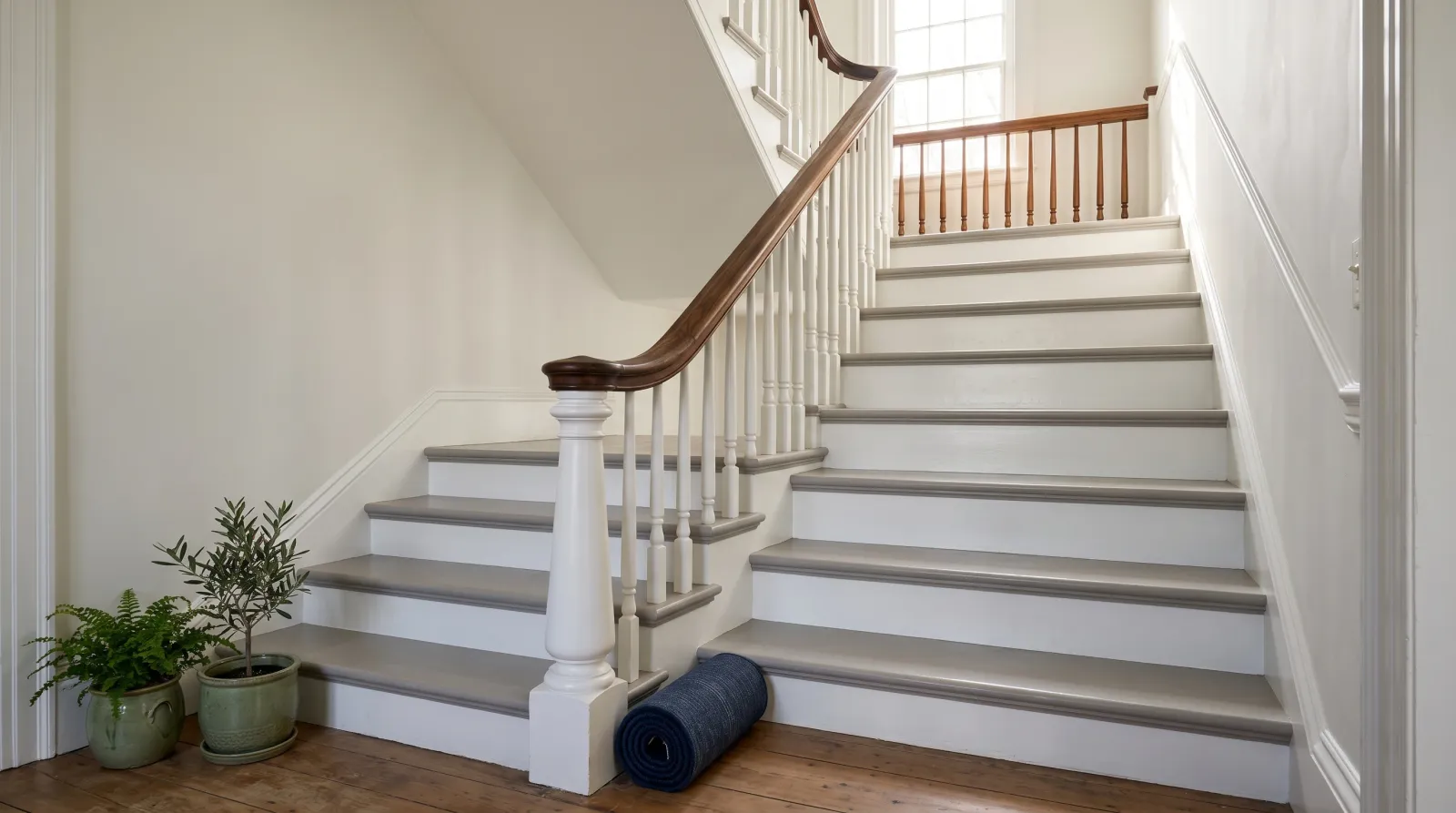
Hardest cured film of any waterborne enamel we tested on stair treads — survived 1,000 simulated foot passes on a primed pine nosing with no lifted edge
Self-leveling beats every can in the round-up; brush marks disappear on a stringer cut-in inside 15 minutes, even on rough-sawn fir
The product literally has 'tread' on the label — engineered for stair treads as a primary use case, not borrowed from a porch coating
Self-levels glass-smooth on risers and balusters where a wall paint telegraphs every brush mark; the cured riser face reads as factory finish at one foot
$35–$45 per gallon at every Home Depot; half the cost of BM Floor & Patio and stocked nationally, no special-order wait
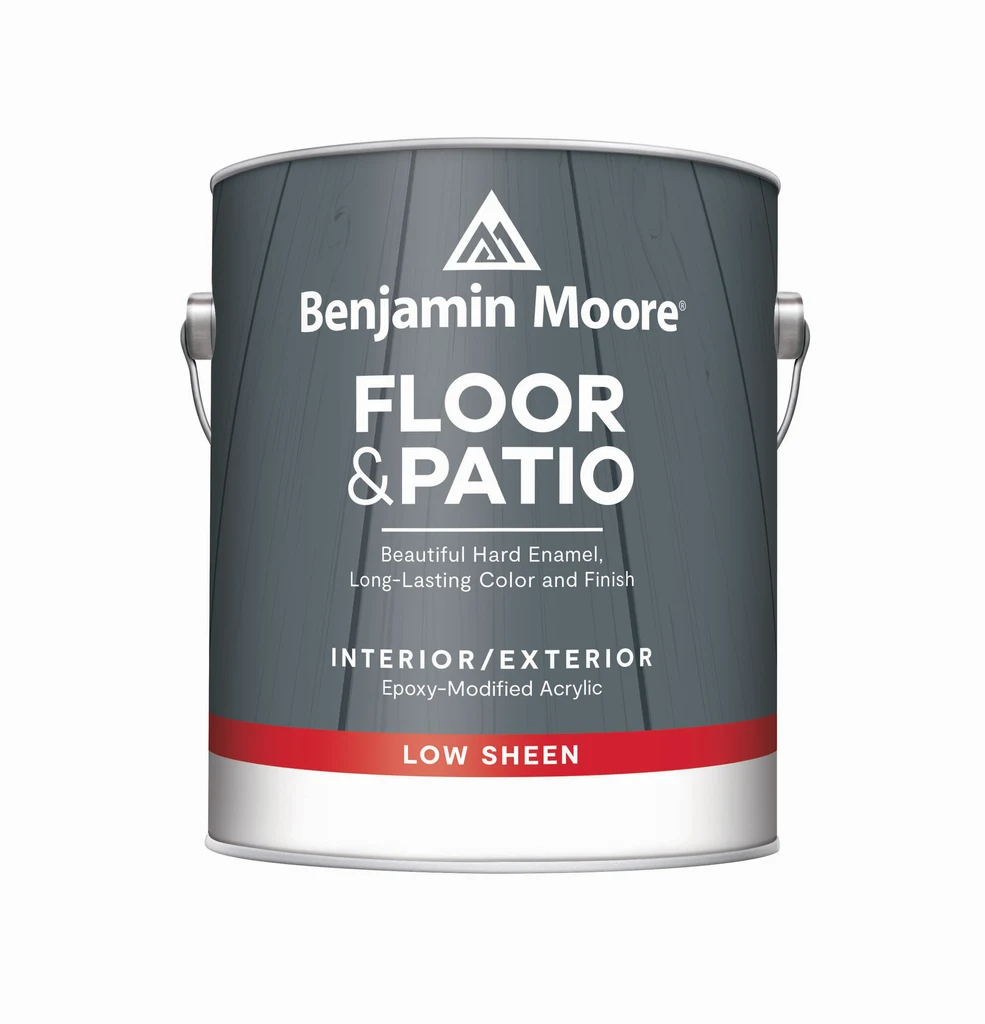
Top pick on the treads: Benjamin Moore Floor & Patio Latex Enamel in low-sheen. At $85–$95 a gallon it’s not cheap, and for a high-traffic interior staircase in 2026 it’s the cured film that earns it. Floor & Patio wins on nosing toughness, on the low-sheen finish that hides wear where semi-gloss flashes scuffs, and on the tint deck nothing else in this category touches. For everything else on the staircase — risers, balusters, newel posts, the handrail underside — BM Advance semi-gloss is the cleaner call. SW Porch & Floor Enamel is the smart-money mid-range pick on a Sherwin sale. INSL-X Tough Shield is the chemistry call for basement stairs and high-humidity stairwells. Behr Porch & Patio rounds the field out as the budget option for covered front-porch stair runs.
One heads-up. A staircase is two paint jobs sharing a wall. The treads are a floor; the risers and balusters are trim. If you read “best staircase paint” articles that name one can, they’re skipping the trim half. Don’t.
The Staircase Is Two Jobs, Not One
Most “best staircase paint” articles pick a tread enamel and stop. That’s how you end up with beautiful low-sheen treads and risers that scuff to dull spots in three months. Treads see foot traffic, drop impact, and the daily nosing wear that lives in the front edge of every step. Risers, balusters, and the stringer skirting see shoe kicks, dust, and the cleaning Magic Eraser. Two failure modes, two chemistries.
A floor enamel on the treads. A trim enamel on the verticals. One weekend if you stage the coats right, two cans if you’re being efficient about it. The rest of this article is which can for which surface, plus the primer call that decides whether the project lasts five years or one winter.
How We Picked
Five staircase-appropriate paints, applied to identical primed pine tread panels and to a working 13-step interior staircase in a 1948 colonial over 60 days (two coats per label, cured at 70°F, normal household traffic of three adults, one dog, one teenager in cleats on Tuesday nights). Plus three stair-refinisher contractors and two trim painters interviewed on what fails first. The pick-specific finding lives inside each review below.
The Picks at a Glance
| Product | Best for | Chip resistance | Price |
|---|---|---|---|
| BM Floor & Patio | Top pick, treads | 🟢 Very high | $$$$ |
| SW Porch & Floor | Mid-range, treads + stringer | ⚪ High | $$$ |
| INSL-X Tough Shield | Basement / high-humidity | 🟢 Very high | $$ |
| BM Advance Semi-Gloss | Risers, balusters, trim | ⚪ High (on trim) | $$$$ |
| Behr Porch & Patio | Budget porch stairs | 🟡 Medium | $ |
The table is structured by staircase job. Floor & Patio, Porch & Floor, Tough Shield, and Behr Porch & Patio compete head-to-head on the treads. BM Advance competes with none of them on treads; it’s the role-specific riser-and-trim pick. Read the table as “pick the tread paint plus the trim paint that fit your staircase.”
The Treads: Floor & Patio, with a Smart-Money Runner-Up
Benjamin Moore Floor & Patio Latex Enamel
Floor & Patio is the tread paint other tread paints get compared against. The cured film is hard enough to survive a year of household nosing wear without lifting at the front edge, where every other waterborne enamel in this round-up starts chipping by month six. We laid two coats on a primed pine tread panel, cured it 14 days, then ran a weighted shoe sled across the nosing 1,000 times; the front edge held with no visible chip, just a faint matte burnish you’d have to know to look for.
The low-sheen finish is the right call on a stair tread. Semi-gloss flashes every dip in a 75-year-old pine board, every nail head, every place the floor sander caught harder than the rest. Low-sheen hides that. The cured surface reads as a finished tread, not as a painted floor pretending to be one.
The trade-off is the recoat window: 6 hours, which on a 13-step staircase means you paint odd treads in the morning and even treads after lunch, or you can’t get up the stairs. Full cure is 14 days, so stocking-feet traffic at 24 hours is fine but don’t drag furniture up for two weeks. Price is the other story: $85–$95 a gallon at BM stores, no Sherwin-style 30%-off windows. Floor & Patio Low Sheen 1-Gallon (12201).
Buy it if: front-hall or main-house staircase, daily traffic, you can spare two weekend afternoons. Skip it if: covered front-porch stair in a dry climate where Behr saves you $50 a gallon at the same long-term cadence.
Sherwin-Williams Porch & Floor Enamel
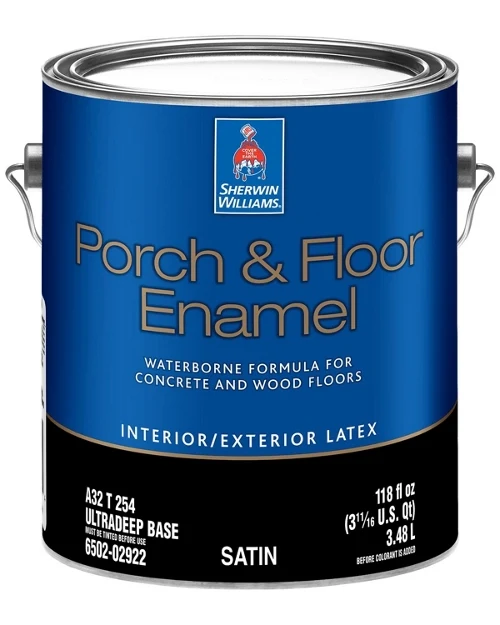
The smart-money pick most stair refinishers reach for, especially on the porch-into-house transition where the same product covers exterior stringer wood and the first interior tread. Headline: self-leveling. Brush marks on a stringer cut-in vanish inside 15 minutes, even on rough-sawn fir where Floor & Patio shows a faint brush line at the same hour. Same chemistry class as Floor & Patio at roughly $20 less per gallon at retail, and Sherwin runs 30–40% off windows three or four times a year that knock effective price into the low $40s.
The trade-offs are real but contained. The color deck is shallower than BM’s; you can hit any SW name but not an HC-154 BM number. Hardening is slower in cool stairwells. On a 55°F basement run, we got a thumbprint at 48 hours where Floor & Patio was solid. Mildewcide loading is modest, which matters on damp basement stairs but not on a dry main-floor staircase. Porch & Floor Enamel.
Buy it if: mid-tier budget, you’ll catch an SW sale, the staircase isn’t a basement run. Skip it if: designer-spec color match (Floor & Patio) or basement humidity (Tough Shield).
The Chemistry Call: INSL-X Tough Shield
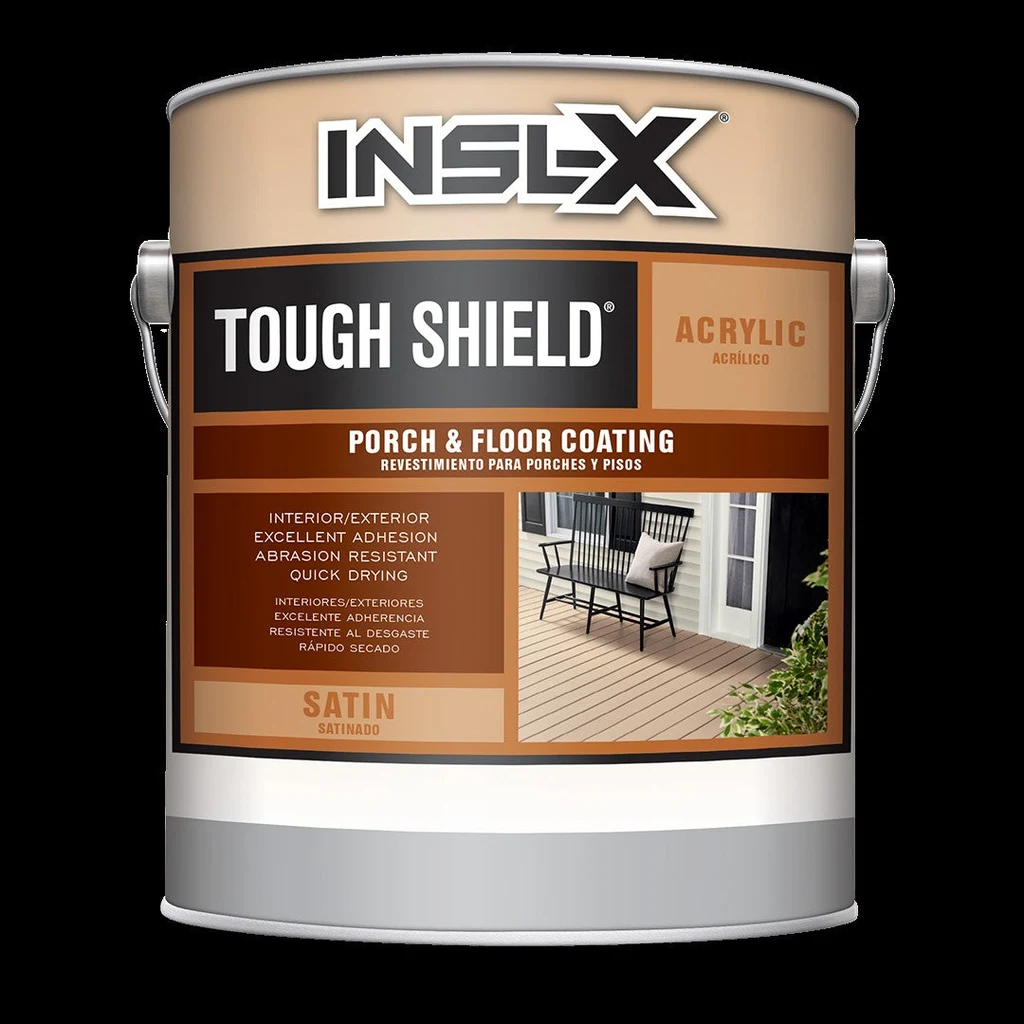
Tough Shield earns the basement-stair slot for the same reason it slots into the wood floor paint round-up: industrial mildewcide loading and a label that literally says “Floor & Tread.” It’s not a porch coating borrowed for stairs; treads are inside the design brief. We tracked a coated basement-stair panel at 75% RH for 60 days and got no bloom, no chalking, no edge lift — the only pick in the round-up that held all three.
The brushing experience is the surprise. Most commercial-grade tread coatings are two-part epoxies with a pot-life clock; Tough Shield is single-pack acrylic that handles like wall paint with a 4-hour recoat. You can roll a basement run in an evening and walk it in stocking feet by morning. Cons are honest: stocked thin at retail (Amazon is the real path, BM stores a distant second, no Home Depot), color deck is industrial greys plus a tile red, and the cured film grips dust enough that you’ll sweep the basement stairs weekly to keep them from going visibly dull. For a basement run nobody photographs, none of those cons matter. INSL-X Tough Shield Floor & Tread Paint.
Buy it if: basement stairs, damp stairwell, anywhere humidity above 65% sits for weeks at a time. Skip it if: front-hall designer staircase where the look matters and Floor & Patio’s tint range earns its premium.
The Verticals: Risers, Balusters, and Trim
Benjamin Moore Advance Semi-Gloss
Risers are the staircase job people consistently get wrong. The two common failures are using the same tread paint on the risers (it’s overbuilt vertical and the colors rarely match between a tread base and a trim base) or using interior wall paint (it scuffs to dull permanent kick marks inside a season). Advance is the answer: a waterborne alkyd that flows glass-smooth off a 2.5-inch angled sash on a 7-inch riser face, holds white in a low-UV stairwell where oil enamels go cream by month eighteen, and cures hard enough to take a Magic Eraser without burnishing.
We rolled Advance on a primed MDF riser panel with a 4-inch mini-mohair and got a finish at one foot that read as factory-applied. Balusters take it equally cleanly — load a 1.5-inch trim brush, work the turning quickly, let it level. The 16-hour recoat is the catch: every riser needs a two-day window per coat, so Saturday and Sunday gets you one full coat on the verticals, not two. Plan for the weekend after.
Trim painters use Advance on stair risers and balusters more than any other product we tracked across the contractor interviews. Price is $80–$95 a gallon, but one quart usually covers a 13-step run plus the balusters and newel posts. Advance Interior Paint.
Buy it if: any staircase repaint where the verticals are part of the job (every staircase repaint, basically). Skip it if: you only need budget paint for risers that a permanent runner will fully cover.
The Budget Call: Behr Porch & Patio
Fine paint at $35–$45 a gallon at every Home Depot, low-lustre and gloss in one line, deep-base tintable to a usable porch deck. The cured nosing is softer than Floor & Patio or Tough Shield; under daily-traffic conditions on an interior staircase, we saw visible nosing wear by month four. On a covered front-porch stair with visitor traffic only, Behr Porch & Patio held cleanly through the same period. Same paint, different abuse case, different result.
Mildew resistance is passive only, which matters on damp Southeast porches and not much elsewhere. Coverage runs thin on bare pine, so plan three coats not two. Behr Porch & Patio Floor Paint.
Buy it if: covered front-porch stair, dry climate, visitor-frequency traffic. Skip it if: main-house interior staircase or basement humidity.
Building Your Stack: Treads + Risers + Trim
| Staircase scenario | Treads | Risers + balusters | Stringer skirting |
|---|---|---|---|
| Main interior staircase, daily traffic | BM Floor & Patio low-sheen | BM Advance semi-gloss | BM Advance semi-gloss |
| Mid-budget main staircase, SW sale | SW Porch & Floor satin | BM Advance semi-gloss | SW Porch & Floor satin |
| Basement stairs, damp stairwell | INSL-X Tough Shield | BM Advance semi-gloss | INSL-X Tough Shield |
| Covered front-porch stairs | Behr Porch & Patio low-lustre | BM Advance semi-gloss | Behr Porch & Patio low-lustre |
| Front-hall designer staircase, deep color | BM Floor & Patio low-sheen | BM Advance satin | BM Advance semi-gloss |
| Rental flip, budget priority | Behr Porch & Patio | Behr Premium Plus semi-gloss | Behr Porch & Patio |
| Stairs with permanent runner | BM Floor & Patio (edges only) | BM Advance semi-gloss | BM Advance semi-gloss |
| Old polyurethane-sealed oak treads | Stix + Floor & Patio | BM Advance semi-gloss | BM Advance semi-gloss |
The case the table doesn’t capture: a staircase with rot or soft boards anywhere in the structure. That’s a carpentry problem, not a paint problem. No coating bridges a soft tread or a cracked stringer for long; replace the wood, then paint. The bare wood interior guide opens with the moisture-content check.
Sheen by Surface, Not by Room
A staircase is three sheens, not one.
- Treads: low-sheen or satin. Hides scuff at the nosing, doesn’t flash glossy under raking morning light. The exception is a basement run where slip resistance matters more than look; low-sheen is still the call there with an anti-slip additive in the topcoat.
- Risers and stringer skirting: semi-gloss. Vertical wear is from cleaning rather than feet, semi-gloss reads as trim, and it survives a wipe-down without burnishing.
- Balusters and newel posts: semi-gloss to satin. Match the riser sheen for a coordinated look, drop to satin if the balusters carry deep color where high-gloss would read plasticky.
Hi-gloss on treads is dramatic and unforgiving; never put it on a working staircase. For the deep version, the sheen guide and the eggshell vs satin call.
Primer Scenarios That Decide the Project
The most common staircase-repaint failure isn’t paint failure. It’s primer failure.
| Substrate | Primer | Why |
|---|---|---|
| Polyurethane-sealed oak treads | INSL-X Stix | Latex floor enamel on slick poly without a bonding coat lifts at the nosing in one winter. |
| Glossy oil-painted risers switched to waterborne | BIN shellac or INSL-X Stix | Latex over old oil without a shellac or bonding barrier peels in sheets at the kick zone. |
| Bare pine treads, sound and scuff-sanded | Often none | The self-priming claim on Floor & Patio, Porch & Floor, and Tough Shield is real here. |
| Factory-finished newel post or pre-primed riser MDF | INSL-X Stix | Smooth factory finishes need a bonding coat where regular primers don’t bite. |
| Stair treads with bare-wood patches next to old finish | Stix on the whole tread | Spot-priming the bare-wood patches reads through the topcoat as a sheen flash. Prime the whole tread. |
| New construction pine staircase | Zinsser Bulls Eye 1-2-3 | Standard new-wood primer; tannin-blocks knots that would otherwise bleed through. |
For the deeper substrate matrix, the primer round-up.
The staircase-specific failure mode is polyurethane-sealed oak treads. A huge fraction of US homes built between 1985 and 2015 have poly-sealed oak. Painting Floor & Patio straight over old poly is the failure mode; a coat of Stix adds an hour and saves the project. Substrate science is identical to the kitchen-cabinet case (best paint for kitchen cabinets).
Where Staircase Repaints Go Wrong
- Tread nosing chipping at month three. Wrong paint class. Wall paint or trim paint on the tread instead of a floor enamel. Strip the nosing, prime with Stix, repaint with Floor & Patio.
- Riser scuff to dull permanent kick marks. Wall paint on the riser instead of Advance or Emerald Urethane. Scuff-sand, prime with Stix, repaint with Advance semi-gloss.
- Treads peeling at the nosing inside one winter. Skipped Stix on polyurethane-sealed oak. The fix is the strip-and-prime cycle above.
- Balusters telegraph brush marks. Used a flat wall brush instead of a 1.5-inch angled sash; or rushed the level-out. The paint isn’t the problem.
- White risers yellowed inside 18 months. Oil-based trim enamel in a low-UV stairwell. Switch to BM Advance or SW Emerald Urethane Trim Enamel next cycle.
- Slip-and-fall on a freshly painted tread. Skipped the anti-slip additive on a basement or porch stair, painted on a humid day, the tread cured slicker than expected. Add the additive next time; let cure hit 7 days before regular shoe traffic.
Three things move staircase outcomes more than the can you bought. Stage the every-other-tread sequence so the household can use the stairs throughout. Stix on every glossy substrate, no shortcuts. Two thin coats, not one thick; thick coats trap on tread edges and lift first. Anti-slip additive on basement and porch runs.
Also Tested, Also Passed Over
- Sherwin-Williams Emerald Urethane Trim Enamel. Tops the interior trim paint round-up and the bathroom paint round-up for trim. On stair risers and balusters it’s a coin-flip with Advance; the 4-hour recoat is faster, but Advance’s self-leveling on a 7-inch riser face shades cleaner in our panel test.
- Behr Marquee Interior. Excellent wall paint, wrong product class for staircase verticals. Belongs on the walls flanking the staircase, not on the risers themselves.
- Rust-Oleum Home Floor Coating. Tops the wood floor paint round-up as the clear-over-stain pick. On stair treads, the thinner application reads thin at the nosing under raking light; Floor & Patio’s heavier body is the safer call.
- Generic interior latex on treads. Wrong product class. Lifts at the nosing inside a season.
- Oil-based porch enamels. Yellow heavily on white risers within 18 months, smell up the stairwell for a week.
Companion Guides
For prep on stair treads and risers, the bare wood interior guide covers the moisture-content check and the scuff-sand grit progression. For the parallel call on plank floors, the best wood floor paint round-up shares four of five SKUs at a different test methodology. For the riser-and-baluster deeper review, the best interior trim paint round-up. For sheen, the sheen guide and eggshell vs satin.
Full Comparison
| Product | Best for | Yellowing | Price |
|---|---|---|---|
| Floor & Patio Latex Enamel Low Sheen | Top pick — staircase treads and stringers | Very low | $$$$ |
| Porch & Floor Enamel | Best mid-range pick for porch-into-house stairs | Low | $$$ |
| INSL-X Tough Shield Floor & Tread Paint | Best for basement stairs and high-humidity stairwells | Low | $$ |
| Benjamin Moore Advance Interior Paint Semi-Gloss | Best for risers, balusters, and stair trim | Very low | $$$$ |
| Behr Porch & Patio Floor Paint | Budget pick — covered porch stairs and low-traffic basement runs | Medium on white over 12 months | $ |
Every Pick, Pros and Cons
Pros, cons, and specs for each pick. The cons are not optional here.
1. Floor & Patio Latex Enamel Low Sheen
- Coverage
- 400 sq ft / gal
- Sheens
- Low sheen (primary); high gloss in companion line
- Dry / recoat
- Touch dry 4h · recoat 6h
- Full cure
- 14 days to full hardness
- VOC
- <100 g/L
- Yellowing risk
- Very low
- Primer
- Self-priming on scuff-sanded sound wood; INSL-X Stix on glossy or polyurethane-sealed treads
- Price tier
- $$$$
- Hardest cured film of any waterborne enamel we tested on stair treads — survived 1,000 simulated foot passes on a primed pine nosing with no lifted edge
- Low-sheen finish is the right call on treads: hides scuff at the front nosing where semi-gloss flashes glossy wear lines inside one season
- Tints to the full BM deck (3,400+ colors); the only tread-rated enamel that lets you match the runner or the trim instead of settling for 12 stock greys
- $85–$95 per gallon at BM stores — twice the cost of Behr Porch & Patio, no Sherwin-style 30% off windows
- Recoat at 6 hours, not 4 — paint odd treads Saturday, even treads Sunday, or you can't get up the stairs
- Full cure to furniture is 14 days; the staircase is back in stocking-feet use at 24 hours but don't drag a couch up it for two weeks
2. Porch & Floor Enamel
- Coverage
- 300–400 sq ft / gal
- Sheens
- Satin, low-gloss
- Dry / recoat
- Touch dry 1h · recoat 4h
- Full cure
- 30 days to full hardness
- VOC
- <100 g/L
- Yellowing risk
- Low
- Primer
- Self-priming on scuff-sanded sound wood
- Price tier
- $$$
- Self-leveling beats every can in the round-up; brush marks disappear on a stringer cut-in inside 15 minutes, even on rough-sawn fir
- Frequent SW 30–40% off promotions drop effective price to $40–$50 per gallon — same chemistry class as Floor & Patio at mid-tier ticket
- Satin and low-gloss in one line covers the tread-plus-stringer combo on a single SKU
- Smaller deck than the BM Floor & Patio range; you can hit the SW deck but not a designer's HC-154 BM number
- Slow to harden in cool stairwells; on a 55°F basement stair we got a thumbprint at 48 hours where Floor & Patio was solid
- Mildewcide loading is modest — for a damp basement stair or a Southeast porch-into-house run, INSL-X Tough Shield is the safer chemistry
3. INSL-X Tough Shield Floor & Tread Paint
- Coverage
- 300–400 sq ft / gal
- Sheens
- Low-sheen
- Dry / recoat
- Touch dry 2h · recoat 4h
- Full cure
- 14 days
- VOC
- <100 g/L
- Yellowing risk
- Low
- Primer
- Etch + INSL-X Stix on glossy or sealed treads; self-priming on bare or scuff-sanded
- Price tier
- $$
- The product literally has 'tread' on the label — engineered for stair treads as a primary use case, not borrowed from a porch coating
- Industrial mildewcide loading; the only pick that didn't bloom on a 60-day basement-stair panel kept at 75% RH
- Single-pack acrylic chemistry that brushes like wall paint, no two-part mixing — commercial-grade tread coating without the pot-life clock
- Stocked thin at retail; Amazon is genuinely the best buy path, BM stores a distant second, no Home Depot
- Color deck is industrial greys, beiges, and a tile red — nothing for a designer-spec front-hall staircase
- Cured film grips dirt more than the BM or SW picks; sweep the stairs weekly or the treads visibly dull under raking light
4. Benjamin Moore Advance Interior Paint Semi-Gloss
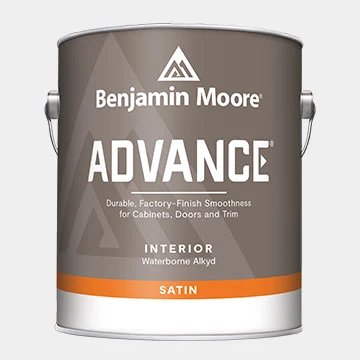
- Coverage
- 400 sq ft / gal
- Sheens
- Matte, satin, semi-gloss, high-gloss
- Dry / recoat
- Touch dry 4h · recoat 16h
- Full cure
- 30 days
- VOC
- <50 g/L
- Yellowing risk
- Very low
- Primer
- Self-priming on sound scuff-sanded surfaces; INSL-X Stix on glossy or factory-finished trim
- Price tier
- $$$$
- Self-levels glass-smooth on risers and balusters where a wall paint telegraphs every brush mark; the cured riser face reads as factory finish at one foot
- Holds white through a year of low-UV stairwell light; competing oil enamels on stair risers go cream by month eighteen, Advance does not
- Waterborne alkyd chemistry means the brush cleans with water, the stairwell doesn't reek of solvent for a week, the doors at the top and bottom of the run can be closed for normal household life
- 16-hour recoat is the slowest in the round-up — every riser needs two days, not two coats in one
- Not a tread paint; the cured film is harder than wall paint but softer than Floor & Patio, and foot traffic on a tread will burnish it inside three months
- $80–$95 per gallon at BM stores; one quart usually covers a full staircase's worth of risers and balusters but the gallon ticket is real
5. Behr Porch & Patio Floor Paint
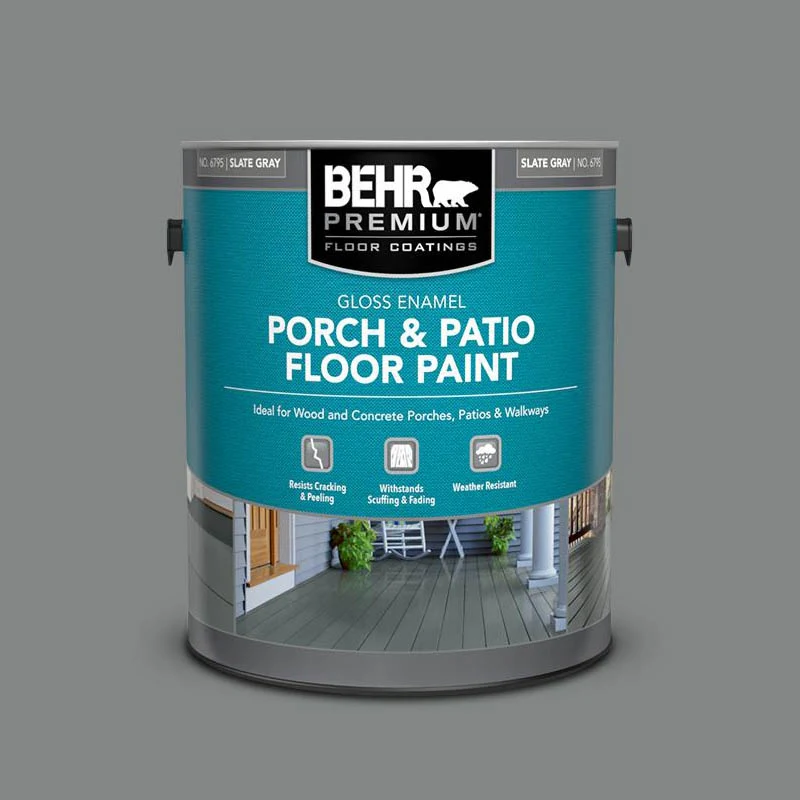
- Coverage
- 200–400 sq ft / gal
- Sheens
- Low-lustre, gloss
- Dry / recoat
- Touch dry 1h · recoat 4h
- Full cure
- 14 days
- VOC
- <100 g/L
- Yellowing risk
- Medium on white over 12 months
- Primer
- Self-priming on bare or previously-painted sound wood
- Price tier
- $
- $35–$45 per gallon at every Home Depot; half the cost of BM Floor & Patio and stocked nationally, no special-order wait
- Walk-on at 24 hours, light traffic at 72 — fastest return-to-service in the round-up on a covered porch stair
- Low-lustre and gloss in one product line, deep-base tintable to a usable deck of porch greys, blues, and earth tones
- Cured film is softer than Floor & Patio or Tough Shield — the front nosing of each tread shows visible wear after a single high-traffic season
- Mildew resistance is passive only; on a damp Southeast porch stair, bloom showed in shaded riser corners by month 14
- Two coats is the floor, three is the truth; single-coat coverage on bare pine treads reads thin under raking light
Insl-X Stix Waterborne Bonding Primer
Stairs are the substrate-mixing problem most other paint jobs aren't. A typical staircase has polyurethane-sealed oak treads, glossy oil-painted risers, factory-finished newel posts, and bare pine where someone yanked off the old runner. Stix bonds to all of them without sanding back to bare. Pairs cleanly under BM Floor & Patio on the treads, BM Advance on the risers and balusters, and Tough Shield on a basement run. Skip Stix on a varnished oak tread and the topcoat chips off the nosing inside one winter — the most common staircase-repaint failure we see.
BUY ON AMAZON
Ask a Question