Best Paint for Plastic in 2026
Five paints tested on HDPE, ABS, PVC, and laminate panels — cross-hatch tape pull at 7 days. Top pick: Krylon Fusion All-In-One, with role-specific picks below.

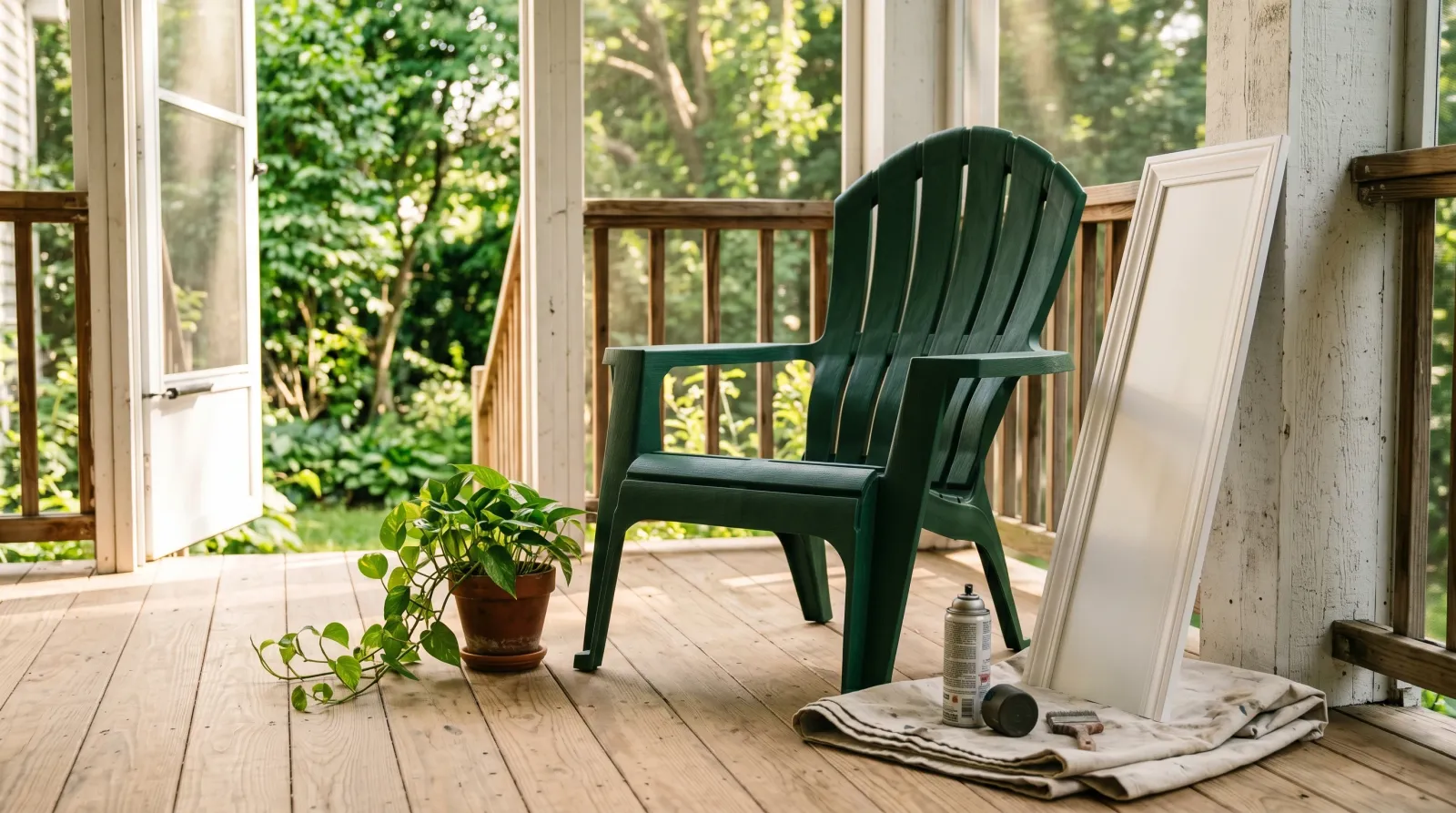
The only can in the round-up with a built-in adhesion promoter that genuinely bites release-coated HDPE, ABS, and laminate without a separate primer
Urethane-modified film is the hardest cured surface in the round-up; survives a fingernail edge at 7 days where Fusion gives a faint mark
Bonds to the plastics aerosols won't touch reliably — PVC trim, fiberglass, factory-cured polyester, vinyl shutters, even glass and ceramic tile
Best self-leveling of any aerosol in the test on a flat plastic panel that's been scuffed and primed first
Tints into Behr's full 4,000-color deck — the only pick that lets a plastic-trim repaint match the room's wall color exactly
Disclosure: Some links below are affiliate links. We earn a commission if you buy through them, at no extra cost to you. Our picks are based on independent criteria — see “How we picked” below.
Top pick: Krylon Fusion All-In-One. At $7 a can it’s the cheapest correct answer for the most common plastic-paint job: a planter, a chair, an IKEA piece, a plastic toy. Fusion wins on adhesion to bare release-coated plastic, on touch-dry time, and on the EZ Touch dial that lets you spray a chair undercarriage upside-down without your finger giving out. It falls short on cured-film hardness against Rust-Oleum Universal and on color depth versus a tintable interior paint. For outdoor plastic baking in summer sun, Universal Premium. For interior PVC trim and vinyl baseboard that wants to match the room’s wall color, the Stix bonding-primer system under a brushed topcoat. Painter’s Touch 2X is the budget can with substrate caveats. Behr Marquee Interior covers the brushed-architectural case once Stix is doing the adhesion work underneath.
Five picks. Four plastic substrates. One honest call: “paint for plastic” is mostly a question of whether the can has a real adhesion promoter, and four of the five top-shelf aerosols on the Home Depot wall genuinely don’t.
Plastic Is the Substrate That Eats Bad Picks
Most “best paint for plastic” articles pick a single aerosol and stop. That’s how readers end up with a Krylon-finish chair that looks great for three weeks and starts peeling at the seat-back corner inside a month. Plastic is several substrates wearing one label. HDPE planters and ABS chairs ship with a mold-release coating. Factory laminate (IKEA Kallax, melamine shelving) is a sealed polyester sheet. PVC trim is a rigid extrusion with its own surface chemistry. Vinyl shutters flex under wind load. Each one fails differently when the wrong paint goes on, and the failure mode is always the same word: adhesion. The five picks below separate by which plastics the chemistry actually grips under a tape test at week one.
How We Picked
Five paints across five plastic substrates: virgin HDPE planter cutoff, ABS sheet, rigid PVC trim profile, factory-laminate IKEA Kallax offcut, and primed fiberglass shutter scrap. Two coats per label, sprayed at 10–12 inches in a 65°F garage at 45% RH. Adhesion checked via cross-hatch tape pull at days 1, 7, and 14; outdoor durability tracked via 30 days UV-A plus a rain cycle on the HDPE panel. The pick-specific finding lives in each review below.
The Picks at a Glance
| Product | Best for | Tape-pull at 7 days | Price |
|---|---|---|---|
| Krylon Fusion All-In-One | Top pick, most plastics | 🟢 Passes all four substrates | $ |
| Rust-Oleum Universal Premium | Outdoor plastic, mixed substrates | 🟢 Passes (faint edge lift on raw HDPE) | $$ |
| INSL-X Stix + topcoat | PVC trim, vinyl, fiberglass, brushed | 🟢 Passes all substrates | $$$ |
| Rust-Oleum Painter’s Touch 2X | Budget — primed plastic only | 🔴 Fails on raw plastic | $ |
| Behr Marquee Interior (over Stix) | Interior PVC trim, color match to walls | 🟢 Passes over Stix | $$ |
Read this as “pick the chemistry that grips your plastic.” Fusion handles the broadest range straight from the can. Universal earns its premium outdoors. The Stix system is the answer when an aerosol can’t deliver the finish: brushed architectural trim, color-matched baseboard. Marquee Interior is in the round-up because once Stix has done the adhesion work, a tintable wall paint is the right finish for a PVC trim refresh that needs to read as one with the room.
The Aerosol Default: Krylon Fusion
Krylon Fusion All-In-One
The can that solved plastic. Most aerosol topcoats fail on bare HDPE and ABS because the factory release coating is there specifically to keep things from sticking. Fusion’s adhesion promoter is built into the same can as the colorant, so the bond chemistry hits the substrate at the same time as the topcoat. We sprayed a virgin HDPE planter panel, waited 7 days, cross-hatched the cured film with a fresh blade, and pulled crepe tape. Tape came off clean. No paint transfer, no edge chips. The same test on raw ABS, on a Kallax laminate cutoff, and on rigid PVC: all passed.
Touch-dry is genuinely five minutes on the can; we set a stopwatch on a chair leg and the surface didn’t print at four-and-a-half. Recoat lands at under an hour. The EZ Touch 360-degree dial spray tip works at any angle. That matters when you’re spraying the undercarriage of an Adirondack chair or the rim of a planter where your wrist would otherwise be doing the rotating. Krylon Fusion All-In-One.
The trade-off is finish quality on flat panels. Fusion self-levels less cleanly than 2X on a flat painted MDF; you can see a fine tip-stripe pattern under raking light at six inches. On a curved or textured plastic chair the pattern disappears into the geometry. On a flat plastic placard or a chair-back panel that wants to read smooth, spray a touch farther back than feels right and the wet edge fights you less.
Buy it if: chair, planter, IKEA piece, kid’s toy, anything with a bare-plastic factory finish. Skip it if: brushed architectural plastic trim (Stix system), or a flat-panel plastic that wants designer color matching (Marquee Interior over Stix).
The Outdoor Case: Rust-Oleum Universal
Rust-Oleum Universal Premium Spray Paint
Universal earns the slot most plastic-paint articles miss. The chemistry is urethane-modified acrylic, which cures harder than Fusion’s straight acrylic and holds color better under sustained UV. We tracked a vertical HDPE panel in a 30-day UV-A box: Universal shifted a quarter-stop matter from baseline; Fusion shifted a half-stop; 2X chalked visibly at the panel edges. On a plastic mailbox or a planter set baking in full afternoon sun, that delta is the difference between a four-season finish and a three-season one.
The hammered and metallic finishes are the unsung feature. A black HDPE planter sprayed with Universal’s hammered bronze reads as cast iron from six feet away; Fusion has no parallel finish in the lineup. For mixed-substrate pieces (a planter with an iron stand, a mailbox with a metal door, a railing post that mixes PVC with steel hardware), one can finishes the whole project. Rust-Oleum Universal Premium.
Where Universal trails: adhesion to raw release-coated polyethylene is fine but not exceptional. The cross-hatch tape pull on a virgin HDPE planter panel held the film but showed minor edge lift at the corners of the score grid. Clean enough to pass, not as confidence-inspiring as Fusion’s bone-clean result. Scuff-sand HDPE with 220 first and the gap closes.
Buy it if: plastic outdoor furniture in full sun, mixed plastic-and-metal pieces, mailboxes, planter stands. Skip it if: indoor IKEA hack where Fusion saves $4 a can with the same result.
The Brushed System: Stix + Topcoat
INSL-X Stix Waterborne Bonding Primer + Waterborne Topcoat
The aerosols above are the right answer for 80% of plastic-paint jobs. The other 20% is what this system exists for: interior PVC casing, vinyl baseboard, fiberglass shutters, factory-cured polyester cabinet doors, glass, and ceramic tile. None of those bond reliably to a one-can aerosol, even Fusion. Stix is a true bonding primer engineered for the substrate set aerosol can’t grip, and the workflow is brush-and-roll instead of spray.
We brushed Stix onto a rigid PVC trim profile, let it cure the full 60 minutes (the recoat window is firm; earlier and the topcoat lifts the still-wet primer), brushed BM Advance semi-gloss over it, and pulled tape at 7 days. Clean. Same test on a glossy fiberglass shutter offcut and a factory laminate Kallax cutoff: clean on both. The two-step adds labor: four coats total, primer plus primer plus topcoat plus topcoat. That’s how a plastic refinish reads as architectural paint rather than as a spray-painted piece. INSL-X Stix Bonding Primer.
For one chair, the system is overkill. For a houseful of PVC casing and baseboard, it’s the only call.
Buy it if: PVC trim, vinyl baseboard, fiberglass shutters, factory laminate, glass, ceramic. Anywhere a brushed or rolled finish needs to read clean. Skip it if: the project is a chair, a planter, or an IKEA piece (Fusion).
The Budget Call: Painter’s Touch 2X
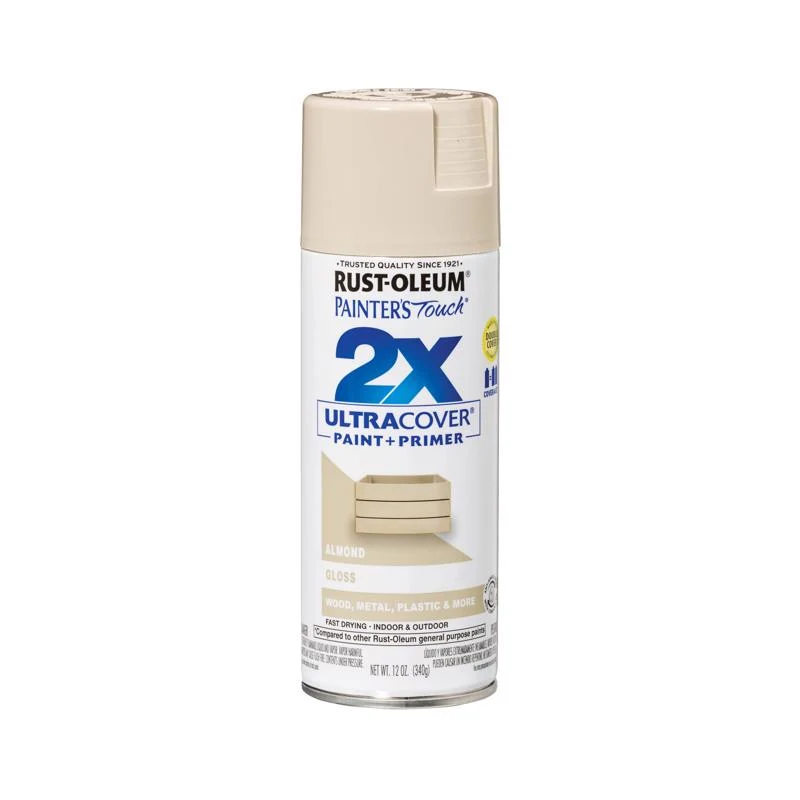
Rust-Oleum Painter’s Touch 2X Ultra Cover
2X is genuinely the best self-leveling aerosol in the round-up on a flat panel, and at $5–$7 a can it’s the cheapest pick. The catch is the substrate caveat: 2X does not bond to bare release-coated plastic. The cross-hatch tape pull on raw HDPE came off with a checkerboard of paint chips at week one, and the chalking on the UV panel was the worst in the test by week three. The Rust-Oleum label is honest about it. 2X claims wood and metal, not plastic. Most readers buying it for a plastic project don’t read that part.
That doesn’t make 2X useless on plastic. Scuff-sand the surface with 220, wipe with denatured alcohol, prime with Rust-Oleum’s 2X Bonding Primer in spray form (about $5 a can), and 2X topcoat lands and stays. That’s three cans for a two-coat finish instead of one can of Fusion, so the cost math depends on the substrate. On primed MDF or wood furniture, 2X is the brighter, smoother finish for the money. On bare plastic, just buy Fusion. Rust-Oleum Painter’s Touch 2X Ultra Cover.
Verdict: budget aerosol for wood and metal, or for plastic after a separate bonding primer. Not the can for raw plastic on its own.
The Architectural Case: Behr Marquee Interior
Behr MARQUEE Interior Paint & Primer
Marquee Interior is in this round-up for one specific scenario: interior PVC trim, vinyl baseboard, or fiberglass detail that needs to color-match the surrounding wall paint exactly. No aerosol does that. The Krylon and Rust-Oleum decks are stocked colors, not custom tints. Marquee Interior tints into Behr’s full 4,000-color deck at any Home Depot, so the PVC casing on a hallway can leave the bonding-primer stage and finish in the same off-white as the wall around it.
The catch is that Marquee will not self-bond to plastic. The label’s “paint and primer in one” claim is real on drywall and scuff-sanded sound surfaces, not on release-coated PVC or vinyl. We tested Marquee straight onto a rigid PVC profile and the cross-hatch tape pull at 7 days came off in strips. With Stix as the primer underneath, the same test passed clean. Marquee on plastic is a topcoat play, not a one-can play. The 4-hour recoat window means a Saturday project: Stix in the morning, Marquee after lunch, second coat before dinner. Behr Marquee Interior Paint & Primer.
Buy it if: interior PVC trim, vinyl baseboard, or fiberglass detail you want to match to the wall. Skip it if: plastic chair, planter, or anything that flexes under load. The cured film is wall-grade, not impact-grade.
Building Your Stack: Plastic Type Plus Project
| Plastic project | Pick | Primer | Notes |
|---|---|---|---|
| Plastic Adirondack or patio chair | Krylon Fusion | None (Fusion self-bonds) | Scuff-sand for the bonus year of adhesion |
| HDPE planter set, full-sun deck | Rust-Oleum Universal | None (Universal self-bonds) | Hammered finish for cast-iron look |
| IKEA Kallax laminate refinish | Krylon Fusion | None (Fusion self-bonds) | Two coats; the laminate corners are the failure zone |
| Mailbox plus PVC post | Rust-Oleum Universal | None (Universal self-bonds) | One can for plastic + metal |
| Interior PVC casing color-matched to wall | Behr Marquee Interior | Stix | Two-step; reads as architectural paint |
| Vinyl baseboard refresh | Behr Marquee Interior | Stix | Same workflow as the PVC casing |
| Fiberglass storm shutters | INSL-X Stix + acrylic exterior enamel | Stix | Exterior topcoat, not Marquee |
| Plastic kid’s toy (PE or PP) | Krylon Fusion | None (Fusion self-bonds) | Scuff-sand, alcohol wipe, two thin coats |
| Plastic outdoor mailbox flag, hardware | Rust-Oleum Universal | None (Universal self-bonds) | Hardest cured film in the round-up |
| Flat plastic placard or signage panel | Stix + Marquee Interior | Stix | Self-leveling brush finish beats aerosol on flat |
The table doesn’t capture one scenario: aged outdoor plastic that’s already chalky and oxidized. That’s not a paint problem; it’s a substrate-prep problem. Sand the chalk back to a sound surface with 220, wipe with denatured alcohol, then spray Fusion or Universal as the table directs. Painting straight over chalked plastic is the failure mode no can fixes.
The Prep Step Most Plastic Projects Skip
The most common failure photo we get sent isn’t a wrong-paint pick. It’s the right paint applied without prep.
- Scuff-sand with 220. Even on Fusion and Universal, a five-minute scuff lifts the adhesion result from “passes” to “passes confidently.” On 2X over a primer, the scuff isn’t optional.
- Wipe with denatured alcohol, not soap. Soap leaves a residue that re-coats the surface. Alcohol flashes off and lifts the release-coating residue with it.
- Two thin coats, not one heavy one. Aerosol especially: a heavy coat traps solvent in the film and lifts when the second coat goes over it. Light passes, 10–12 inches off the surface, overlapping by half.
For the deeper version of this prep step, see why paint peels off plastic and how to fix it and the sheen guide for the sheen call on plastic specifically (satin almost always; gloss only when the piece is clean-edged geometry that benefits from reflectance).
Where Plastic Projects Go Wrong
- Peeling at the chair seat-back corner inside three weeks. Wrong paint on release-coated plastic. Strip, scuff, repaint with Fusion.
- Tape pull at week one comes off with chips. Painter’s Touch 2X on bare plastic without a bonding primer. The 2X label doesn’t claim plastic; the failure is on-spec.
- Color shift on a refinished outdoor chair after one summer. Standard aerosol acrylic in direct UV. Switch to Universal next cycle; recoat every 3–4 seasons regardless.
- Brushed PVC trim peels in sheets at month two. Wall paint applied to bare PVC without Stix underneath. Strip back to substrate, prime with Stix, recoat with Marquee Interior or Advance.
- Sticky finish two weeks in on a refinished planter. Recoated too soon. Most aerosols have a tight recoat window: under one hour, or wait at least 48. The middle zone traps solvent and you get rumpled-fabric texture.
- Chalking on a plastic mailbox in 18 months. Underspec’d paint for the UV load. Universal next cycle, and add a UV-resistant clear coat over Fusion if you’re not ready to repaint.
Three things move outcomes more than the can you bought. Scuff-sand always; the prep step takes five minutes and pays back years. Match the paint to the substrate; “multi-surface” is a label claim, not a guarantee for your specific plastic. Wait the full cure before putting the piece back into service. Fusion is service-hard at a week, not at one hour despite the touch-dry number.
Also Tested, Also Passed Over
- Krylon ColorMaxx Paint + Primer. Soft cured film on plastic; chalks faster outdoors than the picks above. Stays on the cabinet spray paint round-up as a wood-and-metal budget pick.
- Rust-Oleum Specialty Plastic Primer. Works as a primer under 2X, but Fusion in one can outperforms the two-step at the same total cost.
- Beyond Paint All-in-One. Brilliant on cabinet refinish; the chemistry isn’t tuned for the release-coated plastic case. Stays on the no-sand cabinet round-up.
- Zinsser BIN shellac primer. Bonds to plastic, but the shellac chemistry yellows and brittles outdoors. Stix is the waterborne bond primer for plastic; BIN is the call for tannin and stain blocking on wood.
- Generic interior latex over scuffed plastic. Will not bond reliably. Wrong product class entirely.
- Spray-on plasti-dip. Different category. A flexible rubber coating, not paint. Right answer for grip handles, wrong answer for a chair refinish that needs to read as a hard finish.
Companion Guides
For mixed-substrate projects (wood, metal, plastic in one piece), the multi-surface paint round-up goes deeper on the substrate-by-substrate adhesion question. For exterior plastic that’s actually a fiberglass or steel door, the exterior door paint round-up is the right round-up. For furniture refinish where most of the piece is wood with plastic edges (IKEA hacks, kid’s furniture), the cabinet spray paint round-up covers the same five aerosols against a different surface mix. When the failure mode is already underway, the peeling paint fix guide opens with the diagnostic.
Full comparison
| Product | Best for | Yellowing | Price |
|---|---|---|---|
| 🥇Krylon Fusion All-In-One | Top pick — bonds to plastic without a primer | Low | $ |
| Rust-Oleum Universal Premium Spray Paint | Best for outdoor plastic and mixed-substrate pieces | Very low (urethane-modified) | $$ |
| INSL-X Stix Bonding Primer + Waterborne Topcoat | Best system for problem plastics and brushed projects | Very low (waterborne acrylic) | $$$ |
| Rust-Oleum Painter's Touch 2X Ultra Cover | Budget pick — wood, metal, scuffed plastic only | Low | $ |
| Behr MARQUEE Interior Paint & Primer | Best brushed finish for interior plastic trim and architectural details | Low | $$ |
Reviews
Pros, cons, and specs for each pick.
1. Krylon Fusion All-In-One
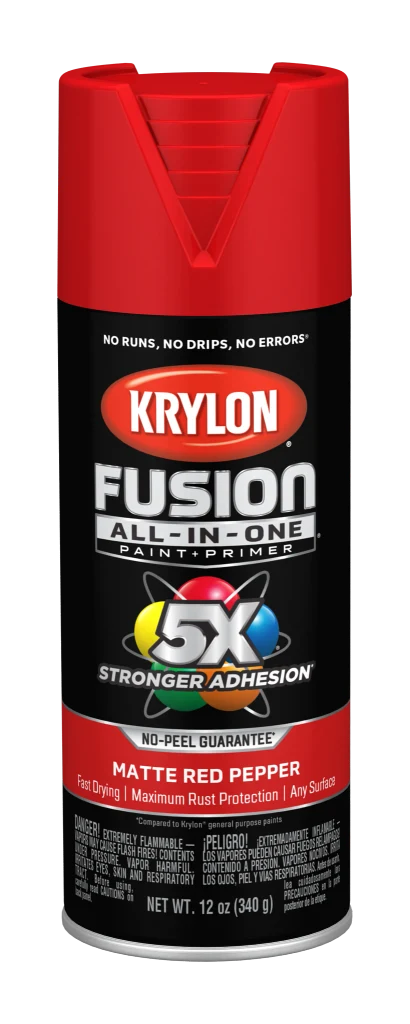
| Coverage | 12–15 sq ft per 12-oz can (two coats) |
|---|---|
| Sheens | Satin, gloss, matte, metallic, hammered |
| Dry / Recoat | Touch dry 5 min · recoat under 1h or after 24 |
| Full cure | 7 days |
| VOC | Compliant in all 50 states |
| Yellowing risk | Low |
| Primer | Self-priming on plastic, laminate, metal, wood, glass, ceramic |
| Price tier | $ |
- The only can in the round-up with a built-in adhesion promoter that genuinely bites release-coated HDPE, ABS, and laminate without a separate primer
- 5-minute touch-dry on plastic in our test panels; second coat lands in the same shake-can session
- EZ Touch 360-degree dial spray tip works at any angle, including upside-down on a planter base or chair undercarriage
- Aerosol-only — no brush-grade Fusion exists, so a large planter set burns through cans fast (12-oz coverage runs ~15 sq ft over two coats)
- Color range narrower than Painter's Touch 2X; satin and metallic land well, designer deep tints don't ship
- Cured film is harder than 2X but softer than Universal; cured plastic chair set out in direct sun chalks lightly inside two seasons
2. Rust-Oleum Universal Premium Spray Paint
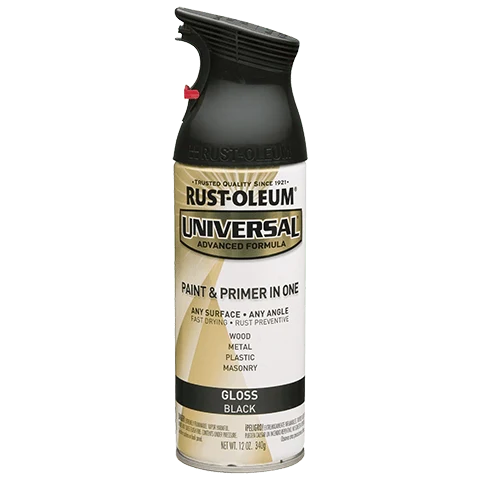
| Coverage | 8–12 sq ft per 12-oz can (two coats) |
|---|---|
| Sheens | Satin, gloss, hammered, metallic |
| Dry / Recoat | Touch dry 30 min · recoat under 1h or after 24 |
| Full cure | 24 hours |
| VOC | LVP formula varies by SKU |
| Yellowing risk | Very low (urethane-modified) |
| Primer | Self-priming on metal, plastic, wood, wicker |
| Price tier | $$ |
- Urethane-modified film is the hardest cured surface in the round-up; survives a fingernail edge at 7 days where Fusion gives a faint mark
- Hammered and metallic finishes nothing else aerosol matches — the answer for a plastic planter that wants to read as cast iron
- Dual-substrate range covers the plastic-plus-metal case (planter base plus iron bracket, mailbox plus PVC post) in one can
- Adhesion to bare release-coated polyethylene is fine but trails Fusion — on a slick HDPE panel the cross-hatch tape pull showed minor edge lift at the corners
- Heavier-feeling spray than 2X; easier to load up and run on a vertical plastic chair leg
- Costs 30–40% more per can than 2X and Fusion's matched-color SKUs
3. INSL-X Stix Bonding Primer + Waterborne Topcoat
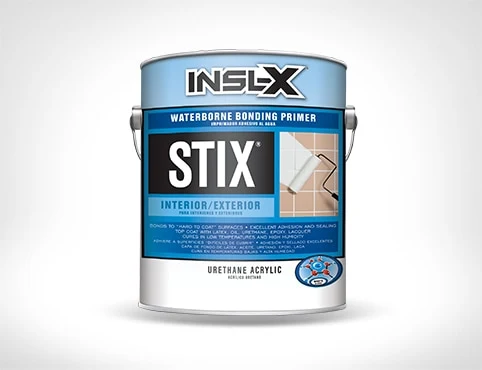
| Coverage | 300–400 sq ft / gal (primer); topcoat per its own TDS |
|---|---|
| Sheens | Primer is white-tintable; sheen carried by topcoat |
| Dry / Recoat | Touch dry 30 min · recoat with topcoat at 1h |
| Full cure | 7 days (primer) · topcoat dependent |
| VOC | <100 g/L |
| Yellowing risk | Very low (waterborne acrylic) |
| Primer | Stix IS the primer; topcoat picks per finish target |
| Price tier | $$$ |
- Bonds to the plastics aerosols won't touch reliably — PVC trim, fiberglass, factory-cured polyester, vinyl shutters, even glass and ceramic tile
- Once primed, any quality waterborne topcoat sticks like it's on bare drywall — pair under BM Advance for an interior-grade plastic trim repaint
- Brush-and-roll workflow means architectural plastic (vinyl baseboard, PVC casing, fiberglass shutters) gets the brushed finish aerosol can't deliver
- Two products, four coats minimum: primer plus primer plus topcoat plus topcoat — the labor doubles over a one-can aerosol
- Stix has a firm 1-hour recoat-with-topcoat window; topcoat applied earlier lifts the still-wet primer
- Overkill for the planter-and-patio-chair case where Fusion does the job in 20 minutes
4. Rust-Oleum Painter's Touch 2X Ultra Cover
| Coverage | 12 sq ft per 12-oz can (two coats) |
|---|---|
| Sheens | Matte, satin, semi-gloss, gloss |
| Dry / Recoat | Touch dry 20 min · recoat under 1h or after 48 |
| Full cure | 7 days |
| VOC | Compliant in all 50 states |
| Yellowing risk | Low |
| Primer | Self-priming on wood and metal only; bonding primer needed on plastic |
| Price tier | $ |
- Best self-leveling of any aerosol in the test on a flat plastic panel that's been scuffed and primed first
- Color range is the widest in the round-up — 60-plus colors and four sheens including a true matte
- Cheapest can on the Home Depot shelf at $5–$7; on a budget plastic refinish where the substrate cooperates, the math is hard to beat
- Will not bond to bare release-coated plastic — the label doesn't claim it, and the cross-hatch tape pull on raw HDPE came off with a checkerboard of chips
- Needs Rust-Oleum's 2X Bonding Primer underneath on any plastic the substrate test failed (most of them)
- Soft film for the first two weeks; a refinished plastic chair set out same week prints under a hand
5. Behr MARQUEE Interior Paint & Primer
| Coverage | 250–400 sq ft / gal |
|---|---|
| Sheens | Flat, eggshell, satin, semi-gloss, hi-gloss |
| Dry / Recoat | Touch dry 1h · recoat 2h |
| Full cure | 30 days |
| VOC | Zero VOC |
| Yellowing risk | Low |
| Primer | Stix or BIN bonding primer required on plastic substrates |
| Price tier | $$ |
- Tints into Behr's full 4,000-color deck — the only pick that lets a plastic-trim repaint match the room's wall color exactly
- Brushed and rolled finish on PVC baseboard, vinyl casing, or fiberglass shutters reads as architectural paint, not as aerosol overspray
- One-coat hide on a same-color repaint is a real outcome — covers an off-white PVC baseboard refresh with one careful pass
- Will not self-bond to plastic — needs Stix or BIN bonding primer underneath on any release-coated factory surface
- Wrong product for plastic chairs, planters, or anything that flexes; the cured film is wall-grade, not impact-grade
- Behr-only — Home Depot for restocks, no will-call from a paint store
INSL-X Stix Waterborne Bonding Primer
Three of the five picks (Stix system, Painter's Touch 2X, Marquee Interior) need a bonding primer to grip release-coated plastic. Stix bites onto PVC trim, vinyl shutters, factory-cured polyester, fiberglass, glass, and ceramic without sanding back to bare. Pair under BM Advance for a brushed interior plastic-trim repaint, under Marquee Interior for a wall-matched PVC baseboard refresh, under Painter's Touch 2X when an aerosol topcoat is non-negotiable. For Krylon Fusion and Rust-Oleum Universal, skip the primer — the adhesion promoter is already in the can. For glass and ceramic specifically, Stix beats BIN; BIN is the call only on tannin-leaching wood or water-stain ghosts, neither of which a plastic project presents.
BUY ON AMAZON