Best Furniture Wax
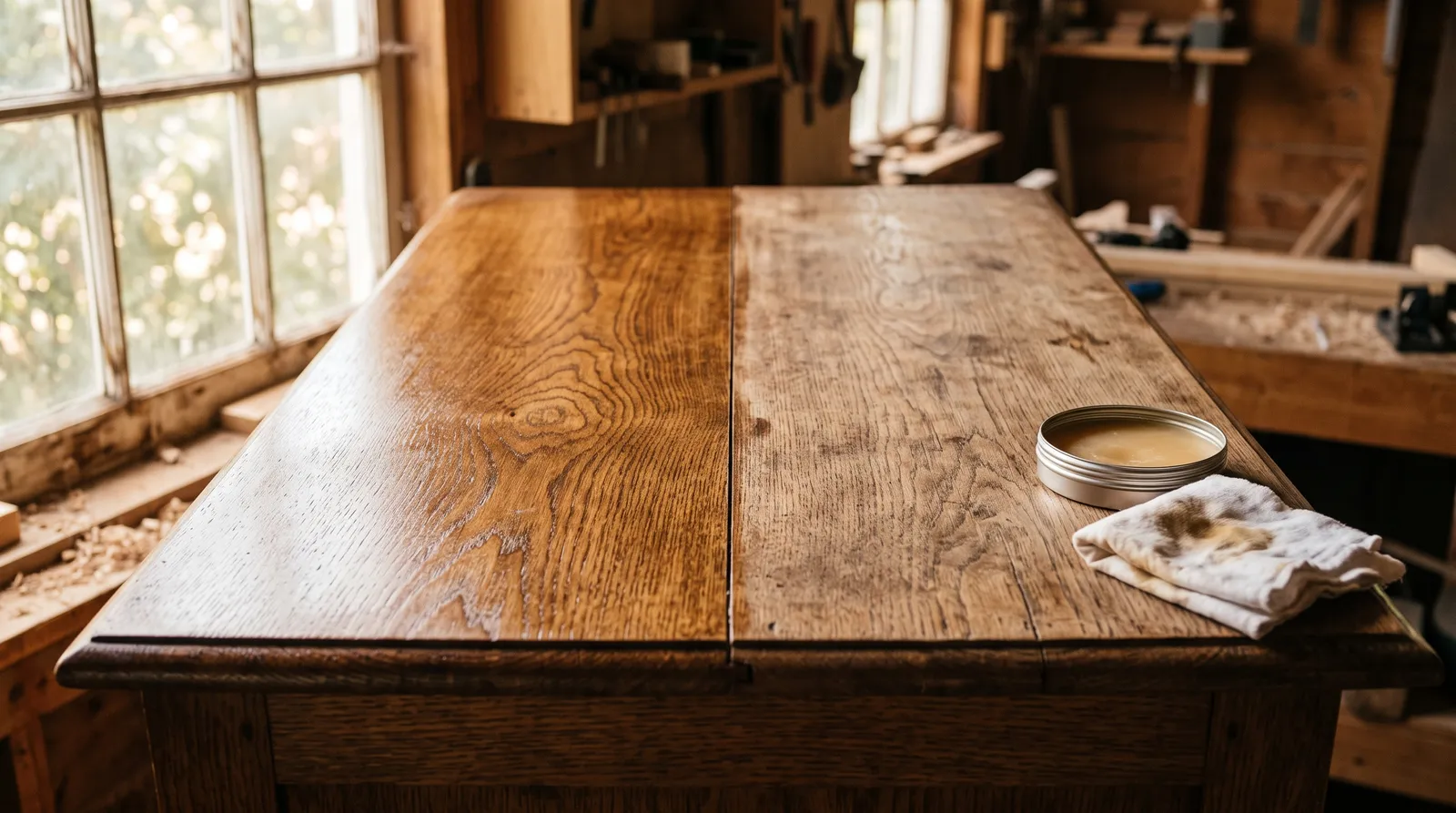
Five furniture waxes tested on oak, chalk-painted poplar, and shellacked mahogany for water rings, heat marks, and buff-out. Top pick: Minwax Paste Finishing Wax.

500 sq ft per 1-lb can at $13 to $18 makes it the cheapest wax per square foot in the round-up by a wide margin
Highest carnauba load of the five. Only wax in the test that left no visible mark under a 140F mug at 20 minutes
13 tints including Antique Mahogany, Golden Oak, Tudor Brown, Ebony, and two grays. Nothing else in the round-up comes close on color
Soft enough to spread over porous chalk paint without dragging pigment, which is exactly where Minwax and Briwax pull color onto the cloth
About $12 for 16 oz, and it wipes on with a rag in the time it takes to make coffee
Disclosure: Some links below are affiliate links. We earn a commission if you buy through them, at no extra cost to you. Picks are based on the criteria in “How I Judged Them”. No brand pays for placement.
Top pick: Minwax Paste Finishing Wax. A 1-pound can runs $13 to $18, covers about 500 sq ft, and gave the closest thing to a real hand-rubbed antique sheen of anything I tested. Minwax wins on cost per square foot, on the widest buff window of the five, and on being stocked in every hardware store in America. It falls short on color, since Natural and Dark is the entire range, and on heat, where a 140F mug left a faint ring at 20 minutes. Runner-up depends on the job. Howard Citrus-Shield Premium Paste Wax is the hardest, most water-resistant film here. Briwax Original owns the antique and toning work with 13 tints. Dixie Belle Best Dang Wax is the one to use on chalk paint. Howard Feed-N-Wax is a monthly conditioner, not a protective coat, and I picked it knowing that.
Wax is not a topcoat. The furniture-flipping internet keeps calling it one and it keeps producing dressers with water rings on them by month three. Wax is a soft, buffable, sacrificial layer you renew with a rag once or twice a year. Anything that needs to survive a hot mug or a spilled drink needs a film finish instead.
What Wax Actually Buys You
Three things, and none of them is durability.
Depth. A waxed surface scatters light differently than a bare or a poly-coated one. Grain reads deeper, carving reads softer, and the piece looks like it has been in a house for forty years instead of coming off a truck last Tuesday. That look is the product.
Repairability. Scratch a poly finish and you sand a whole panel. Scratch a waxed finish and you rub more wax into it. Every wax on this page renews over itself with no stripping, no sanding, no chemistry to match.
Feel. Waxed wood is dry and slick under a hand. Poly is faintly plasticky. If you have ever wondered why old furniture feels different, this is most of the reason.
What wax does not buy you is water, heat, or alcohol resistance. Every product below failed at least one of those tests, and the honest ones fail all three. If your piece is a kitchen table or a bathroom vanity, close this page and read the wax versus poly comparison instead, then buy a clear coat.
How I Judged Them
Five waxes on three substrates: bare red oak sanded to 220, poplar with two coats of chalk mineral paint cured 14 days, and a shellacked mahogany offcut from a 1940s dresser. Three panels each, applied at 70F and 45% relative humidity on each brand’s own haze-and-buff schedule, one coat on finished wood and two on bare. I ran a 30-minute cold water drop, a 140F ceramic mug for 20 minutes, a coin-edge scratch, gloss reads after one, two, and three buff passes, and I weighed the cloth after buffing the chalk-painted panels to see how much pigment each wax dragged off. Then I left the panels alone for six months and re-waxed every one without stripping to see what melted back in.
The Five Waxes Side by Side
| Product | Best for | Wax base | Buff window | Price |
|---|---|---|---|---|
| Minwax Paste Finishing Wax | Sealed wood, antiques, general use | Carnauba and paraffin in mineral spirits | 🟢 10–15 min | $ |
| Howard Citrus-Shield | Heat and water resistance | Carnauba and beeswax in orange oil | 🟡 3–5 min | $$ |
| Briwax Original | Antiques, toning, scratch blending | Beeswax and carnauba in toluene | 🟡 3–5 min | $$$ |
| Dixie Belle Best Dang Wax | Chalk-painted furniture | Soft blended paste | 🟢 15–20 min | $ |
| Howard Feed-N-Wax | Monthly maintenance | Beeswax and carnauba in orange oil | ⚪ 20+ min | $ |
Buff window is the number that surprises people. It is how long you have between the wax hazing over and the wax getting hard enough to fight you. Minwax gives you fifteen forgiving minutes. Briwax gives you five and means it.
Pick by Job
- A dresser, bookcase, or trim run in finished wood: Minwax Paste Finishing Wax.
- A piece that will see mugs, glasses, or a humid room: Howard Citrus-Shield.
- An antique with scratches, patina, or a color you want to shift: Briwax Original.
- Anything you just painted with chalk paint: Dixie Belle Best Dang Wax.
- Dried-out old wood that needs feeding, not protecting: Howard Feed-N-Wax.
The Picks in Detail
Minwax Paste Finishing Wax, Top Pick
The default answer, and the one I keep on the bench. Carnauba and paraffin in a mineral-spirits carrier, 1-pound can, two colors, roughly 500 sq ft of coverage per can. Cost per square foot lands somewhere near three cents, which is not a number the other four can approach.
What earns it the top slot is the buff window. Minwax hazes over in 10 to 15 minutes, and when I deliberately walked away for 40 minutes on the oak panel it still buffed clean with normal cotton-cloth pressure. Briwax at 40 minutes was a scrubbing job. If you are waxing a whole dresser, a whole set of dining chairs, or a run of window casing, that forgiveness is the difference between a pleasant afternoon and a fight.
Sheen control is the other thing it does well. One buff pass on shellacked mahogany read as a soft satin. Three passes climbed to a low gloss that looked like the original 1940s finish. Nothing else in the round-up moved that far under a cloth.
Where it loses. The 140F mug test left a faint ring on the oak panel at 20 minutes, visible from an angle, gone after a re-wax but visible all the same. Citrus-Shield left nothing on the same test. And the color range is Natural and Dark, full stop. If the piece needs a gray, an ebony, or a mahogany tone, this is the wrong can.
The smell is the last honest note. Petroleum distillate hangs in a closed room for a couple of hours. Open a window.
Buy it if you are waxing finished wood, want the cheapest good option, and you are new enough to this that a wide buff window matters. Skip this if the piece needs a tint or is going somewhere warm and wet.
Howard Citrus-Shield Premium Paste Wax, Best for Heat and Water
The hard one. Howard loads more Brazilian carnauba into Citrus-Shield than anything else here, and carnauba is the hardest natural wax that exists. The test results follow the chemistry directly.
On the 30-minute cold water drop on bare sanded oak, Citrus-Shield was the only pick that left no ring and no raised grain. On the 140F mug test, it was the only pick that left nothing visible at 20 minutes. That is two clean sweeps in the two tests that actually matter for furniture people use.
The carrier is orange oil rather than petroleum distillate, which sounds like marketing until you wax a headboard in a bedroom with the door closed and realize the room smells like a fruit stand rather than a paint locker.
Two real costs. The first is money: about $20 for 11 oz, roughly three times the Minwax cost per square foot. The second is time pressure. The buff window is 3 to 5 minutes, and hardened carnauba is not something you talk your way out of. Work one drawer front, one chair back, or one square foot of tabletop at a time. On a big tabletop, plan sections and keep moving.
It is neutral only, so it will not tone or hide anything. Citrus-Shield protects, Briwax colors, and there is no overlap.
Buy it if the piece will see hot drinks, humidity, or hands. Skip this if you are waxing something large and you know you work slowly.
Briwax Original, Best for Antiques and Toning
The restorer’s can. Thirteen tints (Antique Mahogany, Golden Oak, Tudor Brown, Ebony, Rustic Pine, Slate Grey, Silver Grey, and more), a beeswax-and-carnauba body, and a toluene solvent that does something none of the others do.
Toluene softens old wax and old shellac on contact. On the 1940s mahogany panel, a coin-edge scratch that Minwax merely filled with clear wax genuinely disappeared under Antique Mahogany Briwax, because the solvent re-flowed the surrounding finish and carried tinted wax into the scratch until the edges blended. That is the whole reason antique dealers keep this can and not another.
It also takes the highest shine of anything tested. Three buff passes on mahogany put it well past every other pick on the gloss read. If you want that deep glow people associate with old furniture, this is where it comes from.
Now the warnings, because they are not small. Toluene is a real inhalation hazard. Cross-ventilate, wear gloves, keep kids and pets out of the room, and do not use it in a closed garage in August. The same solvent that blends patina will also soften some modern lacquers and lift some painted finishes, so test on the back of a leg first. Every time, not just the first time.
Price is $26 for a 16 oz tin. Briwax sells a Toluene Free version that swaps in a slower solvent; it is safer and it does not blend scratches nearly as well. Pick your trade-off knowingly.
Buy it if you work on real antiques, need a tint, or want the highest achievable shine. Skip this if you cannot ventilate properly, or if the finish underneath is a modern factory lacquer you cannot afford to soften.
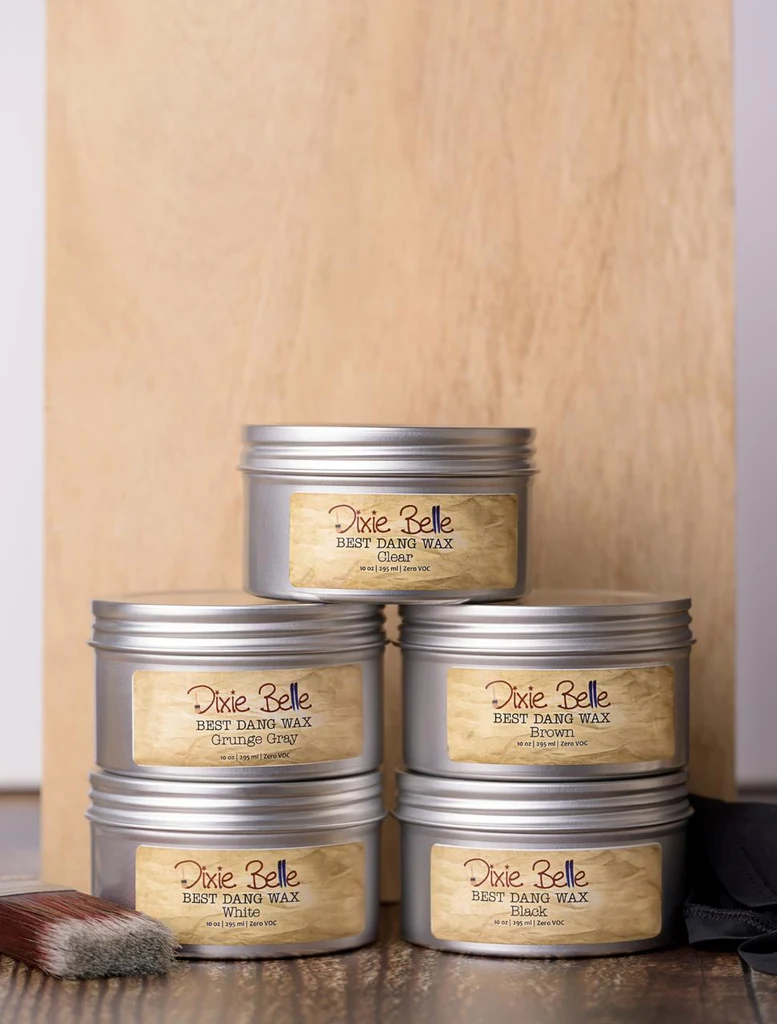
Dixie Belle Best Dang Wax, Best for Chalk-Painted Furniture
Chalk paint changes the problem. A cured chalk mineral film is porous and pigment-loaded, and a hard paste wax dragged across it pulls color onto the cloth. On my chalk-painted poplar panels, the Minwax cloth came off visibly tinted and weighed 0.4 g heavier after buffing one panel. The Best Dang Wax cloth came off nearly clean.
Softness is the whole design. It spreads without dragging, it works into brush texture instead of skating over it, and the 15-to-20-minute buff window suits the slow careful pace that painted furniture wants anyway. Five colors, including Black, Brown, White, and Grunge Gray, which lets the sealing coat and the antiquing coat be the same pass.
The 10 oz tub is $14.95 and it went further than I expected. One tub sealed a full dresser plus two nightstands with wax left in the bottom.
Two things to know before you buy. The cure is 21 to 30 days, not 24 hours. Set a lamp on a waxed dresser in week one and you will lift a print out of it, and I have done exactly that. And water resistance is the weakest of the paste waxes here: a 30-minute drop on the painted panel left a dull patch that a re-wax mostly, not entirely, fixed.
Dark tints go blotchy on white paint if you skip a clear coat underneath. Clear first, dark second, wipe back with clear on a fresh cloth.
Buy it if you painted a piece with chalk paint and want the classic soft waxed look. Skip this if the painted piece will get wet, in which case a water-based clear coat is the honest answer. Our chalk paint round-up covers the topcoat side of that decision.
Howard Feed-N-Wax, Budget Pick
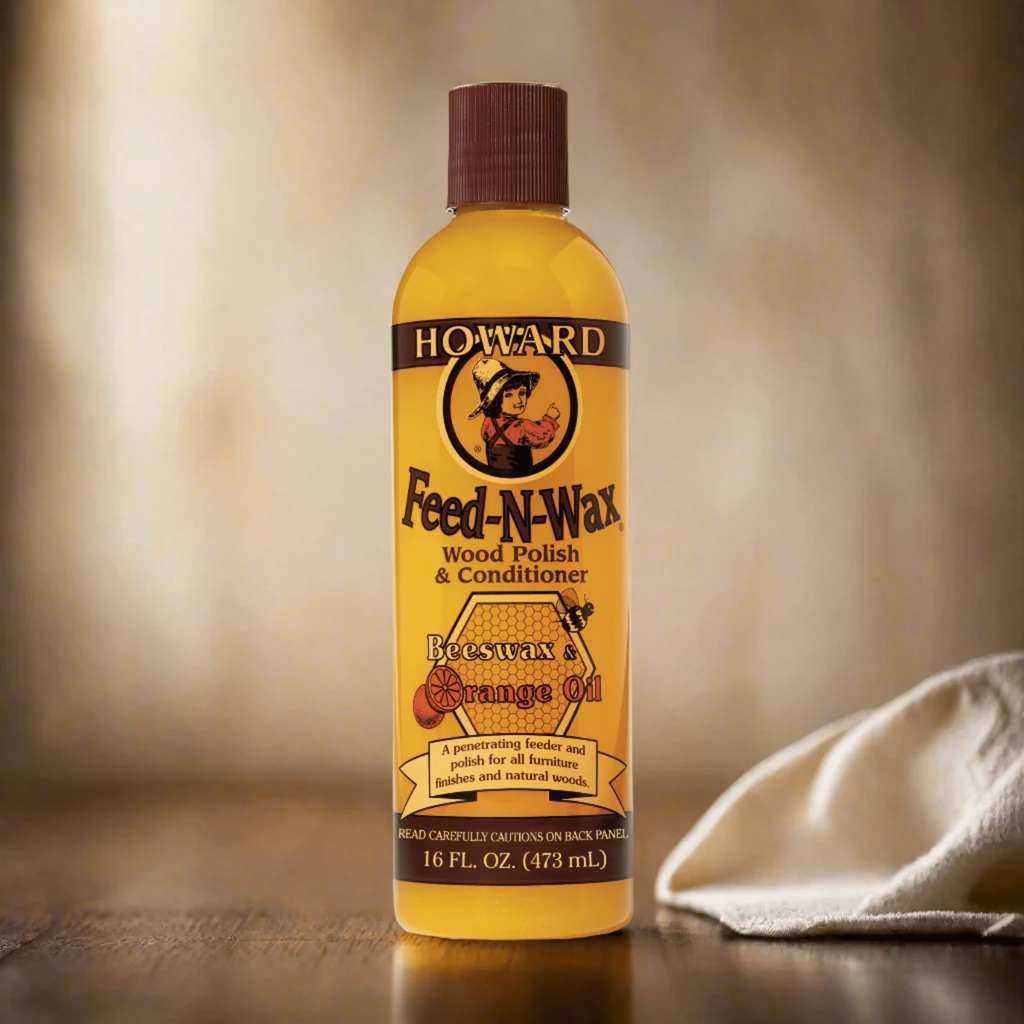
Roughly $12 for 16 oz, and it is a conditioner with wax in it rather than a protective wax. I picked it anyway, because for the job it actually does, nothing else here competes.
That job is feeding dry wood. Beeswax and carnauba suspended in orange oil, wiped on, left 20 minutes, wiped back and buffed. On the shellacked mahogany from the old dresser, the panels that had gone chalky and dry came back to a deep even color in a single application. The hard paste waxes sat on top of that same dryness and made it look glossy without fixing it.
It failed the 30-minute water drop on every substrate. Every one. Do not buy this expecting protection.
The maintenance schedule is the product plan: every 4 to 8 weeks on pieces that live in dry winter air. No silicone and no linseed oil in the formula, which matters if that piece is ever going to be refinished, since silicone polishes cause fisheye craters in a new finish years later.
Buy it if you have old dried-out furniture that needs feeding, or you want a five-minute monthly ritual. Skip this if you thought you were buying a sealer.
Where Wax Jobs Go Wrong
Most wax failures come from three mistakes and one misunderstanding.
- Too much wax. A thin coat is the whole technique. Thick wax never fully hardens, stays tacky, collects dust, and produces the sticky gray film people find on inherited furniture. Load the cloth lightly, work it in, wipe back.
- Buffing too late. Every product here has a stated window. Miss it and you are removing hardened wax rather than polishing soft wax. Set a timer for the first panel until you know the feel.
- Waxing over a finish that is not cured. New paint or new poly needs its full cure before wax goes on. Chalk paint wants 24 to 48 hours minimum, water-based clear coats want a week. Wax over an uncured film traps solvent and the whole thing stays soft.
- Expecting wax to be a topcoat. This is the misunderstanding, and it accounts for most of the disappointed reviews on every product on this page. Wax is renewable protection against dust, handling, and dry air. It is not a barrier.
There is a fifth one worth its own line. Wax under a future finish is the single most common adhesion failure in furniture work. If a piece has ever been waxed and you now want polyurethane on it, strip with mineral spirits and a gray pad, wipe until the rag comes off dry, then scuff at 220 grit. A quick water-drop test tells you the truth: beading means wax is still there. The polyurethane versus polycrylic comparison covers what goes on after that.
Application Notes
- Clean first, and clean means degreased. Old furniture carries decades of silicone polish and kitchen grease. Mineral spirits on a cloth, then dry cotton. Wax over grease never hardens.
- Two coats on bare wood, one on finished wood. Bare oak drinks the first coat and shows nothing. The second coat is the one you see.
- Cotton for application, cotton for buffing, no microfiber. Microfiber loads with wax and stops cutting after about a square foot. Old white T-shirt works, folded flannel gives the best final shine.
- Work in sections sized to the buff window. One drawer front for Briwax and Citrus-Shield. Half a tabletop for Minwax.
- For carved detail, use a brush and cheesecloth. A stiff natural-bristle brush pushes wax into profiles and cheesecloth wipes it back without leaving lint in the corners.
- A random-orbit polisher with a white pad halves your buff time on any surface bigger than a nightstand. Low speed, light pressure, keep it moving.
- Sand to the sheen you want before you wax. Wax amplifies whatever surface is under it. 220 grit reads soft, 320 reads glassy. Our sandpaper guide covers the grit progression for furniture work.
For the full prep sequence on a piece you are painting first, see the furniture repaint project guide, and for pieces with an existing stained finish, the painting over stained wood guide.
Also Tried, Not Picked
- Annie Sloan Soft Wax. Excellent product, genuinely the benchmark for chalk-paint wax, and the reason Dixie Belle exists. Stockist-only distribution in the US keeps it off this list, since half our readers do not have a stockist within an hour’s drive.
- Howard Chalk-Tique Paste Wax. Close second for the chalk-paint slot. Dixie Belle spread easier on porous paint and costs less per ounce.
- Briwax Toluene Free. Safer, and the right call if ventilation is genuinely impossible. It gives up the scratch-blending behavior that makes Briwax Original worth buying, which puts it in an awkward middle.
- Renaissance Wax. Museum-grade microcrystalline, non-yellowing, and priced like it. If you are conserving something with actual provenance, buy it. For a dresser from Facebook Marketplace, it is a lot of money for a marginal gain.
- Generic “beeswax furniture polish” tins on Amazon. The category is full of unlabeled soft waxes with no stated composition and no SDS. Several I tried never fully hardened. Buy a brand that publishes what is in the can.
If the piece is finished wood and you want it to look older and feel better, buy the Minwax. If it will hold a coffee cup, buy the Citrus-Shield. If it is an antique with a scratch in it, buy the Briwax in the closest tint and test it on the back of a leg first.
Full Comparison
| Product | Best for | Yellowing | Price |
|---|---|---|---|
| Minwax Paste Finishing Wax | Top pick — best all-around paste wax | Low in Natural; Dark is a pigmented tint by design | $ |
| Howard Citrus-Shield Premium Paste Wax | Best hard wax for heat and water resistance | Very low, neutral tint | $$ |
| Briwax Original Furniture Wax | Best for antiques, toning, and hiding scratches | N/A. Tinted product; color is the point | $$$ |
| Dixie Belle Best Dang Wax | Best for chalk-painted furniture | Low in Clear; tinted versions are pigmented on purpose | $ |
| Howard Feed-N-Wax Wood Polish and Conditioner | Budget pick — best for monthly maintenance | Very low | $ |
Every Pick, Pros and Cons
Pros, cons, and specs for each pick. The cons are not optional here.
1. Minwax Paste Finishing Wax
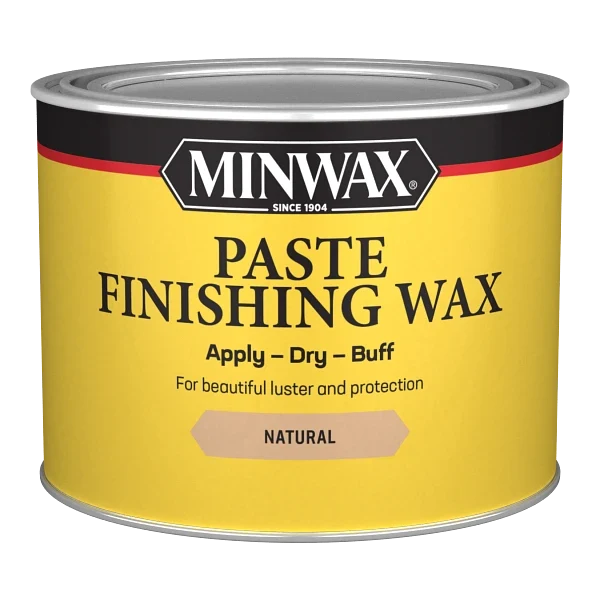
- Coverage
- 500 sq ft per 1-lb can
- Sheens
- Soft satin; climbs toward low gloss with a third buff
- Dry / recoat
- Haze 10 to 15 min, then buff
- Full cure
- Solvent flashes in about 30 min; re-wax every 6 to 12 months
- VOC
- Solvent-based (mineral spirits carrier); ventilate
- Yellowing risk
- Low in Natural; Dark is a pigmented tint by design
- Primer
- None. Goes over cured finish or bare sanded wood, never under a topcoat
- Price tier
- $
- 500 sq ft per 1-lb can at $13 to $18 makes it the cheapest wax per square foot in the round-up by a wide margin
- Widest haze window of the five: 10 to 15 minutes before buffing, and it still buffs clean at 40 minutes if you get pulled away
- Stocked at Home Depot, Lowes, Ace, Walmart, and Amazon, so a Saturday project does not wait on shipping
- Two colors only, Natural and Dark. No grays, no black, no mahogany tint
- Softest heat resistance of the paste waxes tested. A 140F mug left a faint ring at 20 minutes where Citrus Shield left nothing
- Petroleum-distillate carrier means real ventilation, and the smell hangs in a closed room for a couple of hours
2. Howard Citrus-Shield Premium Paste Wax
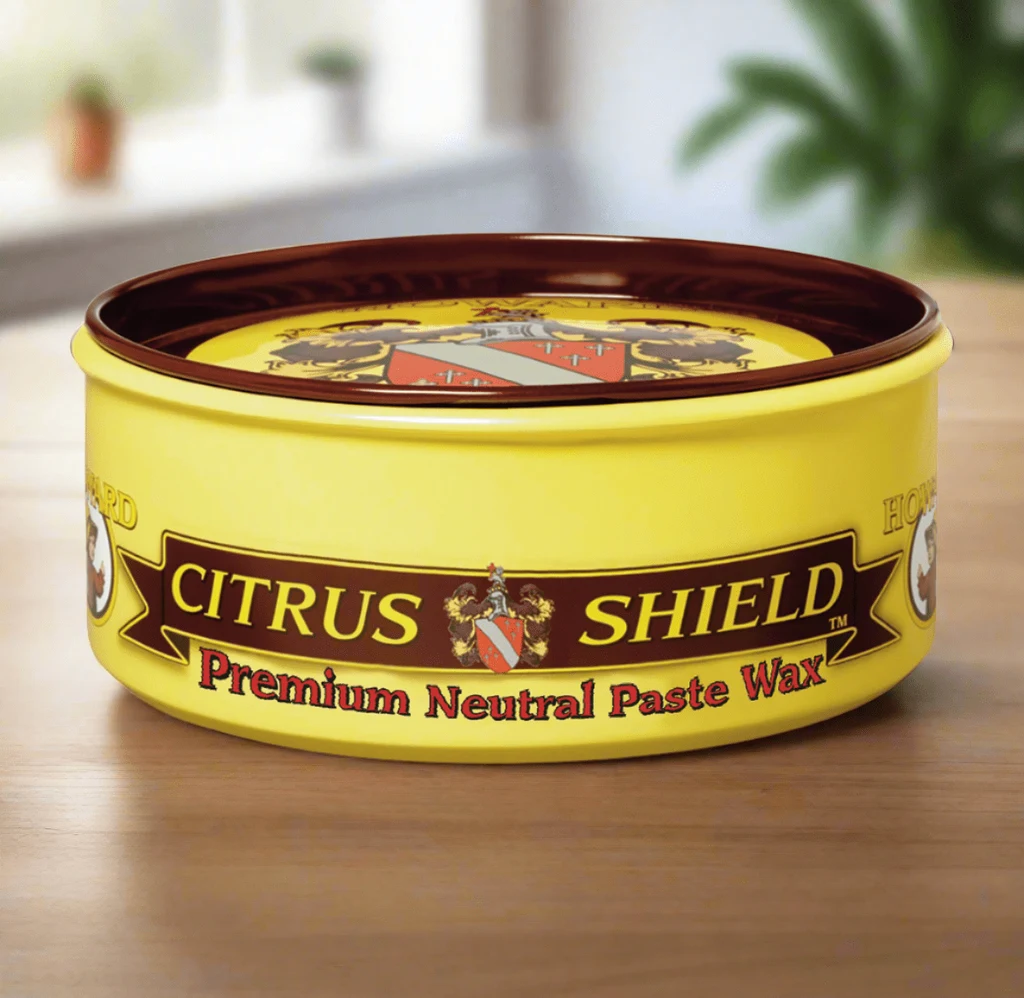
- Coverage
- Roughly 100 to 150 sq ft per 11-oz can
- Sheens
- Satin to low gloss; hardest final film in the round-up
- Dry / recoat
- Haze 3 to 5 min, then buff
- Full cure
- Hardens fully within an hour; re-wax every 9 to 12 months
- VOC
- Orange-oil carrier, no silicone, no linseed oil
- Yellowing risk
- Very low, neutral tint
- Primer
- None. Bare wood takes two coats, finished wood takes one
- Price tier
- $$
- Highest carnauba load of the five. Only wax in the test that left no visible mark under a 140F mug at 20 minutes
- Beat every other pick on the 30-minute cold water drop on bare sanded oak: no ring, no raised grain
- Orange-oil carrier instead of petroleum distillate, so it is the one wax you can use in a closed apartment without opening a window
- $20 for 11 oz puts it at roughly 3x the Minwax cost per square foot
- Buff window is 3 to 5 minutes. Walk away and you are scrubbing hardened carnauba off a tabletop
- Neutral only. It will not tone, darken, or hide a scratch the way Briwax does
3. Briwax Original Furniture Wax
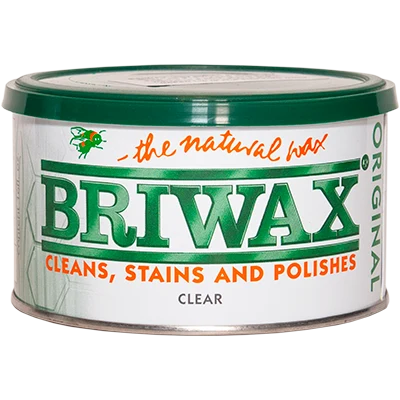
- Coverage
- Roughly 150 to 250 sq ft per 16-oz tin
- Sheens
- Satin to high shine depending on buff passes
- Dry / recoat
- Haze 3 to 5 min, then buff before it hardens
- Full cure
- Solvent flashes in about 20 min; re-wax every 12 months
- VOC
- Toluene-based; a Toluene Free version uses a slower solvent
- Yellowing risk
- N/A. Tinted product; color is the point
- Primer
- None. Best over shellac, old wax, or bare wood
- Price tier
- $$$
- 13 tints including Antique Mahogany, Golden Oak, Tudor Brown, Ebony, and two grays. Nothing else in the round-up comes close on color
- The toluene carrier softens and re-flows old wax and shellac, so it blends a scratch into surrounding patina instead of just filling it
- Beeswax and carnauba blend takes a genuinely high shine on mahogany and walnut, the look people buy antiques for
- Toluene. Cross-ventilation, gloves, no kids in the room, and never on a hot day in a closed garage
- $26 for 16 oz, the most expensive per ounce here, and Briwax runs $200+ on the 3.5-liter tin
- The solvent that makes it blend also attacks some modern lacquers and painted finishes. Test on the back of a leg first, every single time
4. Dixie Belle Best Dang Wax
- Coverage
- Roughly 75 to 100 sq ft per 10-oz tub
- Sheens
- Low satin; will not go glossy no matter how long you buff
- Dry / recoat
- 15 min to 1 hour, then buff
- Full cure
- 21 to 30 days to full hardness
- VOC
- Low-odor soft paste; usable indoors
- Yellowing risk
- Low in Clear; tinted versions are pigmented on purpose
- Primer
- None, but a clear coat before dark wax stops blotching on light paint
- Price tier
- $
- Soft enough to spread over porous chalk paint without dragging pigment, which is exactly where Minwax and Briwax pull color onto the cloth
- Five colors including Black, Brown, White, and Grunge Gray, so the antiquing and the sealing happen in one pass
- $14.95 for a 10-oz tub, and one tub sealed a full dresser plus two nightstands in our test with wax left over
- 21 to 30 day cure. Set a lamp on it in week one and you will lift a print
- Weakest water-ring hold-out of the paste waxes tested. A 30-minute water drop on chalk-painted poplar left a visible dull patch
- Dark tints go blotchy fast on white paint if you skip a clear coat first
5. Howard Feed-N-Wax Wood Polish and Conditioner
- Coverage
- Roughly 200 sq ft per 16-oz bottle
- Sheens
- Soft low luster, not a buffable shine
- Dry / recoat
- Wait 20+ min, wipe back, then buff
- Full cure
- No hard cure; reapply every 4 to 8 weeks
- VOC
- Orange-oil carrier, low odor
- Yellowing risk
- Very low
- Primer
- None. Works on finished and unfinished wood
- Price tier
- $
- About $12 for 16 oz, and it wipes on with a rag in the time it takes to make coffee
- The orange oil actually penetrates dried-out antique wood, which the hard paste waxes do not do
- No silicone and no linseed oil, so it will not haze a future refinish the way lemon-oil polishes do
- This is a conditioner with wax in it, not a protective wax. It failed the 30-minute water drop on every panel
- The wax content is low enough that a monthly reapplication is the whole product plan
- Leaves a slick film on unfinished wood if you do not wipe back hard at 20 minutes
Ask a Question