Best Exterior Caulk
Six exterior caulks tested on cedar lap siding, fiber cement, and a concrete expansion joint through a full freeze-thaw year. Top pick: Sashco Big Stretch.

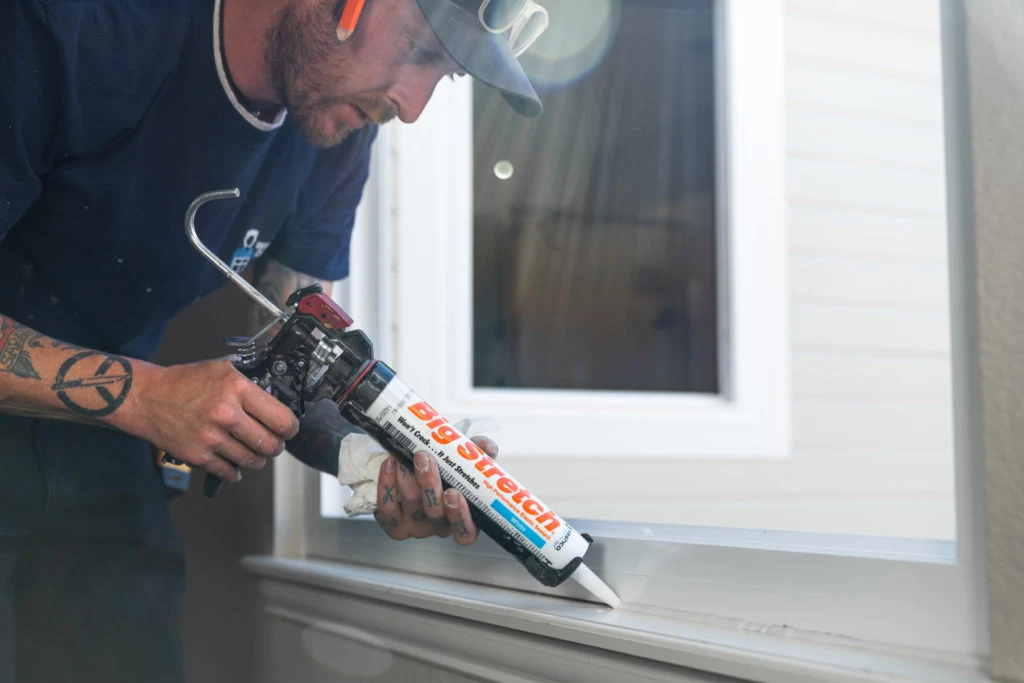
500% published elongation, and in practice the only bead in our set with zero cohesive splits at the cedar-to-trim joint after a full freeze-thaw winter
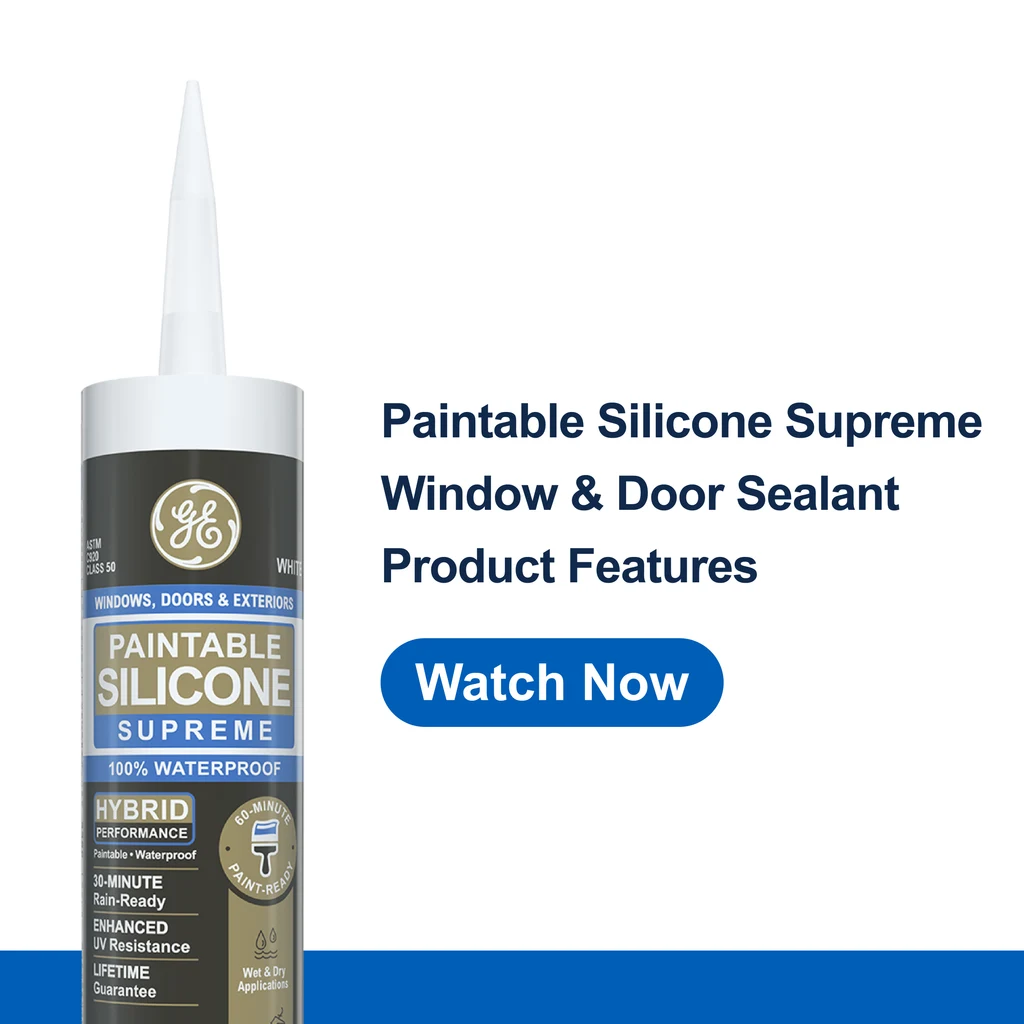
60-minute paint-ready and 30-minute rain-ready, the fastest pair in the round-up; caulk the casing before lunch and cut in the trim after
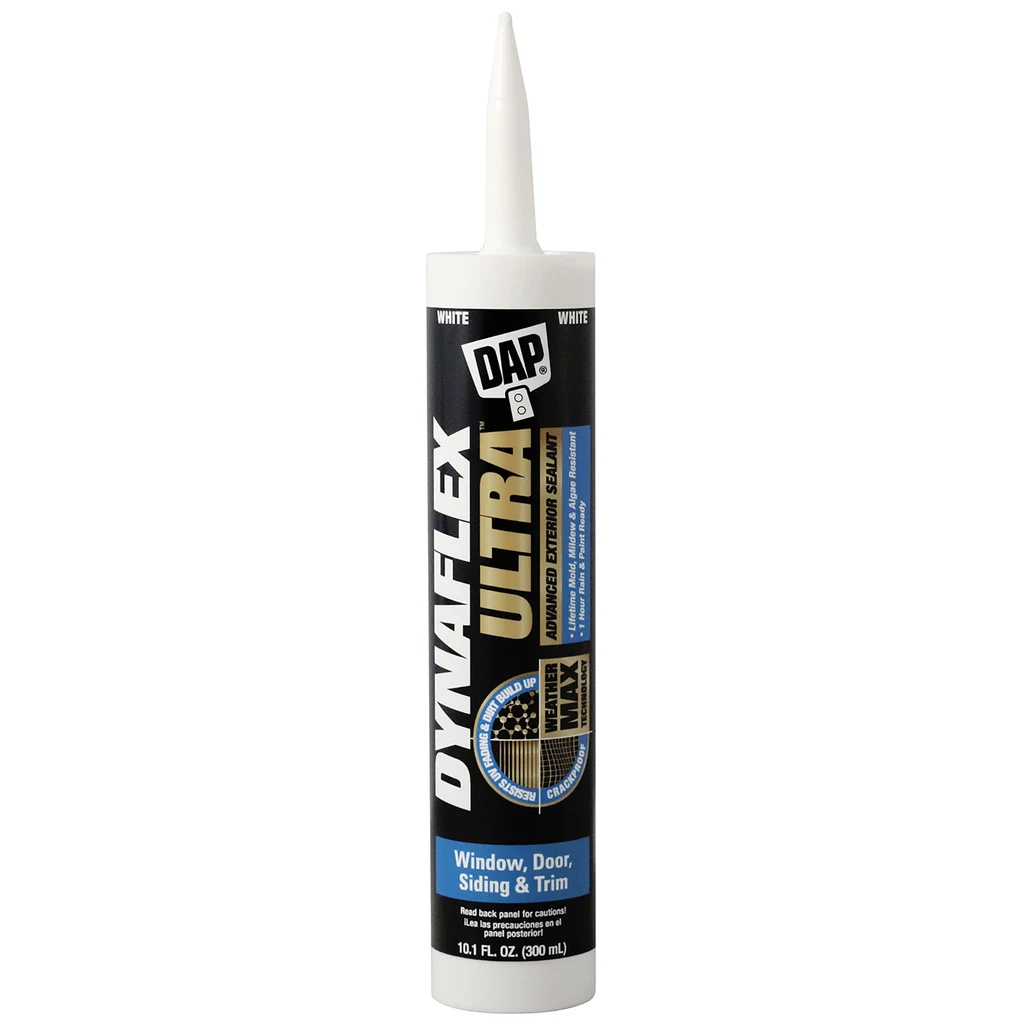
12 stock colors in the 10.1-oz size (White, Clear, Beige, Med Beige, Clay, Iron Gray, Light Gray, Dark Bronze, Brown, Cedar Tan, Black) — the broadest color deck on a big-box shelf
100% silicone, ASTM C-920 Class 35, and the only pick in the round-up that will not chalk, harden, or lose grip on glass and anodized aluminum over a decade
Dries water-clear, not the milky translucent that clear acrylic latex settles into. On a stained cedar joint it genuinely disappears
Textured gray finish that reads as concrete instead of a shiny black stripe across the driveway
Disclosure: Some links below are affiliate links. We earn a commission if you buy through them, at no extra cost to you. Picks are based on the criteria in “How We Picked”. No brand pays for placement.
Top pick: Sashco Big Stretch. At $11–$14 a 10.5-ounce tube it costs about double the rack acrylic sitting beside it, and on painted siding, corner boards, and window casing it was the only bead in our set that came through a full zone 6 freeze-thaw year with no cohesive splits and no peel at either face. Big Stretch wins on elongation, on a 14-color deck that lets a siding joint disappear without paint, and on how forgivingly it tools at 45°F. It falls short on through-cure in damp weather, and on gap width, since anything past half an inch still needs backer rod. If you need the fastest paint-and-rain window, GE Paintable Silicone Supreme goes to 30 minutes rain-ready and 60 minutes paint-ready. For a whole-house re-caulk on a home-center budget, DAP Dynaflex Ultra at $6–$8 a tube in 12 colors. For joints that will never see a brush, GE Advanced Silicone 2. For visible clear joints, Sashco Lexel. For a cracked driveway or a sidewalk expansion joint, Sashco Slab.
Three of six slots here go to Sashco. That is not sponsorship, and Sashco doesn’t run an affiliate program we participate in. It’s what a category looks like when one small specialist has spent thirty years on elastomeric sealant chemistry while the big brands optimize for shelf price.
Exterior Caulk Doesn’t Wear Out, It Gets Torn Apart
A caulk joint fails from movement, not from age. A ten-foot cedar lap siding board picks up and gives off moisture with the seasons, and its width changes by something like 1/16 of an inch across the year. PVC trim moves with temperature instead of moisture, and a white PVC casing on a south wall can grow 1/8 inch over a 100-degree summer swing. Those two materials meet at a joint, moving on different schedules, and the sealant in between has to absorb the whole difference without letting go of either face.
That’s the entire job. Everything else on a tube’s label is secondary.
Which is why elongation is the number that matters most on a spec sheet. A sealant rated at 25% movement can stretch a quarter-inch joint by 1/16 inch before it starts to fail. A sealant rated at 500% has an order of magnitude more room. Movement class is published as an ASTM C-920 rating on silicones and as a percentage stretch figure on acrylics, and the two are not measured the same way, which makes cross-chemistry comparison rough. The direction of the number still tells you what you need to know.
UV is the second killer, and it works on unpainted beads. Acrylic latex chalks on a south elevation within three or four years if it’s left bare. Paint over the bead and the same product runs a decade. That single fact is why the color-matched-and-unpainted approach that looks so tidy on a siding joint has a shorter life than a painted one, and why the best exterior paint round-up matters to your caulk’s lifespan as much as the tube does.
Four Chemistries, Four Different Jobs
Acrylic latex is the default. Water-based, paintable, soap-and-water cleanup, tools with a wet finger. Cheap versions are stiff and shrink; premium versions like Big Stretch and Dynaflex Ultra carry elastomeric polymers that keep the cured bead rubbery. Weakness: it needs above-freezing temperatures to cure, and it pulls back into the joint as the water leaves.
100% silicone is the durability champion and the paint refusenik. It stays elastic for twenty years, doesn’t chalk, and grips glass and anodized aluminum that nothing else holds. Weakness is absolute: paint will not stick to it, and nothing sticks to cured silicone, so every future repair starts with a razor knife.
Silicone hybrids (siliconized acrylics, “paintable silicone,” modified polymer sealants) split the difference. GE Paintable Silicone Supreme is the strongest example here at 50% movement with a 60-minute paint window. The trade-off: they still can’t be re-caulked over with plain acrylic later, so you’ve committed the joint.
Polyurethane is the professional exterior sealant for masonry and concrete work, sold as Sikaflex and NP1 and similar. Enormous adhesion, brutal cleanup, long cure, and a strong smell. For a homeowner sealing a driveway crack, the acrylic version (Sashco Slab) is easier to live with and close enough on performance. For a structural masonry joint on a commercial building, urethane is still the answer and this round-up is the wrong page.
How We Picked
Six sealants went onto matched joint assemblies built from cedar lap siding, fiber cement plank, PVC trim, painted aluminum, and a sawn 3/8-inch joint in poured concrete, all with closed-cell backer rod at a 3/8 x 3/8 inch joint profile. Half the assemblies were built at 72°F and half at 45°F to catch cold-weather tooling behavior, then cured, topcoated at each manufacturer’s stated paint-ready time, and racked south-facing and north-facing in a zone 6 climate for twelve months across more than 40 freeze-thaw cycles. We measured bead depth change, adhesion loss at each face, cohesive splitting, topcoat cracking, color shift, and mildew on the shaded rack. Pick-specific findings live inside each review below.
The Six Picks Side by Side
| Product | Best for | Stretch | Paint-ready | Price |
|---|---|---|---|---|
| Sashco Big Stretch | Siding, trim, window and door casing | 🟢 500% | ⚪ 2–24 h | $$ |
| GE Paintable Silicone Supreme | Fast turnaround, unsettled weather | ⚪ 50% | 🟢 60 min | $$ |
| DAP Dynaflex Ultra | Whole-house re-caulk on a budget | ⚪ Elastomeric latex | 🟢 1–2 h | $ |
| GE Advanced Silicone 2 | Joints that stay unpainted | ⚪ 35% (Class 35) | 🟡 Never | $$ |
| Sashco Lexel | Clear joints you can see | 🟢 400% | 🟡 24 h+ | $$$ |
| Sashco Slab | Concrete cracks, expansion joints | 🟢 High-flex | ⚪ 2–4 h | $ |
None of these takes a primer. Bare wood underneath them does; see the primer note above.
Which Tube for Which Joint
- Painted wood siding, corner boards, trim-to-siding, window and door casing: Big Stretch.
- Vinyl or aluminum meeting wood, or any joint you need painted the same day: GE Paintable Silicone Supreme.
- Forty joints, one weekend, a budget: DAP Dynaflex Ultra.
- Vinyl window frame to vinyl siding, glass to frame, storm doors, anything staying unpainted: GE Advanced Silicone 2.
- Stained cedar, a visible seam you don’t want to see, a gutter joint in damp weather: Sashco Lexel.
- Driveway crack, sidewalk expansion joint, garage slab-to-wall: Sashco Slab.
The Picks in Detail
Sashco Big Stretch, Top Pick
The one contractors keep on the truck. 100% acrylic, water-based, 500% published elongation, and a 14-color deck that includes the Woodtone, Redwood, and Sandstone shades that let a bead on stained cedar sit unpainted without shouting.
What it did in practice: on our cedar-lap-to-PVC-trim assembly, the joint that historically kills acrylic caulk because the two materials move on different schedules, Big Stretch showed zero adhesion loss and zero cohesive splitting at month twelve. The Dynaflex Ultra assembly beside it had two hairline splits at the PVC face by month nine. That’s the whole argument for the price difference, and it’s the reason this is the top pick rather than the runner-up.
Cold tooling is the underrated win. Our 45°F assemblies went down without the drag and tear that makes cheap acrylic skid across a joint instead of filling it. Since most American exterior caulking happens in April or October, that matters more than a lab number.
The honest weakness is cure time. In a 55°F, 70%-humidity shoulder-season week, the bead skinned in under an hour but was still soft underneath at 48 hours. Paint it in that window and the topcoat wrinkles as the bead keeps shrinking. Sashco’s own guidance says to check the TDS and adjust for temperature and humidity, which is a polite way of saying wait longer than you want to. On a warm dry day it’s paintable in two hours. On a cool damp one, give it overnight or longer.
Buy it for painted or stained wood siding, trim joints, corner boards, soffit and eave work. Skip this if the joint stays wet, sits under water, or is on a roof; Sashco’s own label rules those out.
GE Paintable Silicone Supreme Window & Door, Best for Fast Turnaround
The tube for a Saturday with rain in the forecast. 30-minute rain-ready and 60-minute paint-ready is the fastest pair in the round-up by a wide margin, and on a real job that changes the sequence: caulk the whole elevation in the morning, come back at lunch and cut in the trim, be done before the weather turns.
50% joint movement with a lifetime guarantee and a shrink-proof claim, and the shrink claim held up. Our depth-gauge readings on the GE assemblies showed under 5% bead depth loss at 30 days where the standard acrylics gave up 10–14%. That difference shows on painted trim as the faint shadow line you see on old caulk joints where the bead sank and the paint followed it down.
It bonds to vinyl, aluminum cladding, glass, masonry, and wood, which is the practical reason to reach for it. Mixed-material joints are where pure acrylics let go first.
Three real limits. White only, so any color joint gets painted. It reads slightly glossier than flat siding paint once cured, visible up close and invisible from the sidewalk. And the permanent one: once a silicone hybrid is in a joint, you cannot re-caulk over it later with plain acrylic latex. The next maintenance cycle means cutting it out. Buy it knowing that.
DAP Dynaflex Ultra, Budget Pick
$6–$8 a tube at every Home Depot and Lowe’s, 12 stock colors in the 10.1-ounce size, and Weather Max chemistry that takes rain sooner than ordinary acrylic latex. For a whole-house re-caulk, this is the tube most people should actually buy, because 40 tubes of Big Stretch is $480 and 40 tubes of this is $280.
The color deck is the standout and it’s genuinely broader than anything else on a big-box shelf: White, Clear, Beige, Med Beige, Clay, Iron Gray, Light Gray, Dark Bronze, Brown, Cedar Tan, and Black. DAP also runs a color-match tool on their site that maps siding brands to tube colors, which saves a trip.
Where it falls short is exactly where you’d expect at half the price. Movement capability isn’t published as a number, and our fiber-cement-to-PVC assembly showed two hairline adhesion splits at the PVC face by month nine. Not failure, not water intrusion, but the beginning of it. On a joint that moves a lot, this is a 5-to-8-year product where Big Stretch is a 10-to-15-year product.
Two shelf traps. It will not stick over 100% silicone, per DAP’s own FAQ, so old silicone joints get cut out first. And Dynaflex Ultra sits inches from Dynaflex 230 with nearly identical packaging. Read the band.
GE Advanced Silicone 2 Window & Door, Best for Unpainted Joints
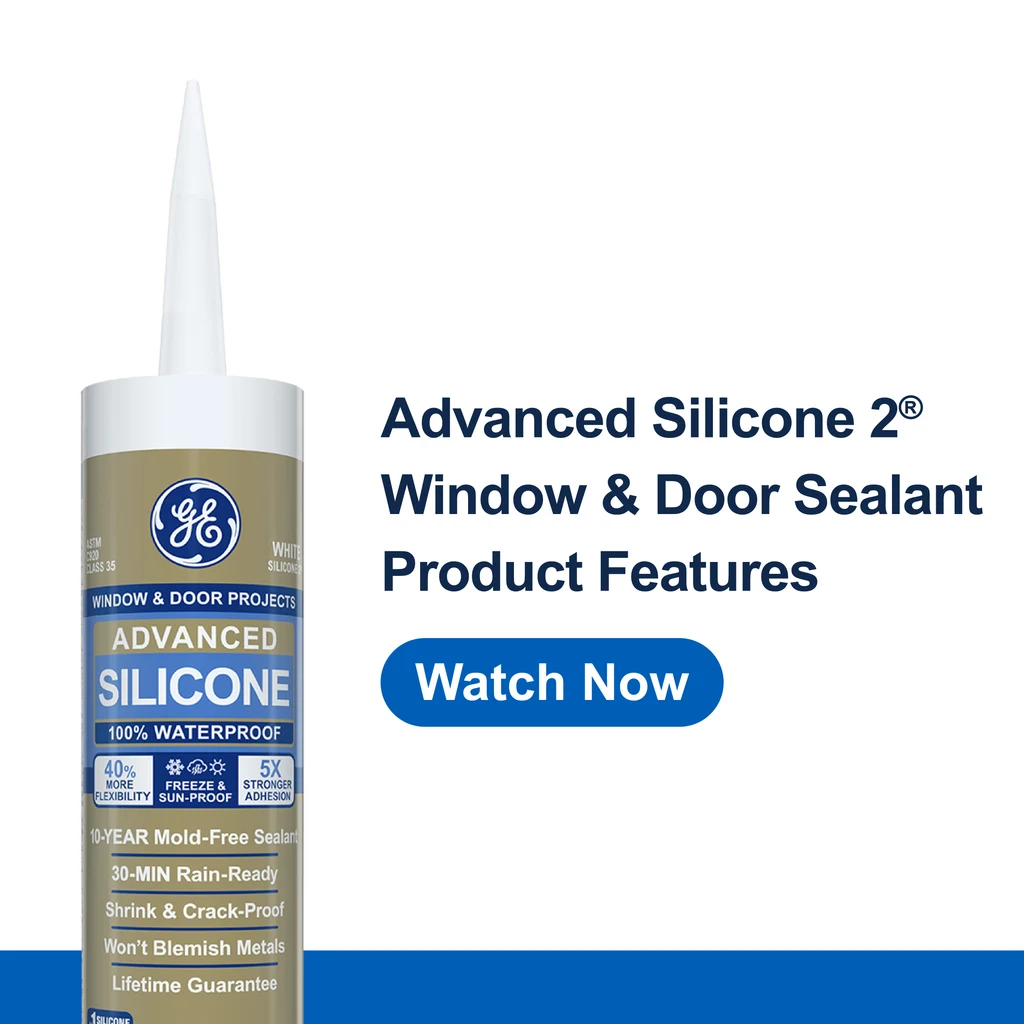
The specialist. 100% silicone, ASTM C-920 Class 35, 30-minute rain-ready, lifetime guarantee, six colors. It’s the wrong product for painted trim and the right product for a vinyl window frame, a glass-to-sash edge, a storm door, or an aluminum-clad casing that’s staying the color it is.
Ten years from now, this bead will still be soft. That’s the pitch, and the chemistry backs it. Silicone doesn’t chalk, doesn’t harden, doesn’t lose grip on non-porous surfaces the way acrylics eventually do. On our painted-aluminum coupon, the acrylics all showed some edge lift by month twelve and the silicone showed none.
The cost is total commitment. Paint will not stick to it, so a homeowner who caulks vinyl-clad trim with silicone and later decides to paint the trim has a scraping job ahead. Nothing bonds to cured silicone either, so the next re-caulk starts with a razor knife and a solvent wipe. And at 35% movement it has the least stretch in this round-up, which is fine on a tight window perimeter and thin on a wide siding butt joint.
Buy it for vinyl, glass, aluminum, and any joint that stays unpainted. Skip this if there is any chance a brush touches that joint.
Sashco Lexel, Best Clear
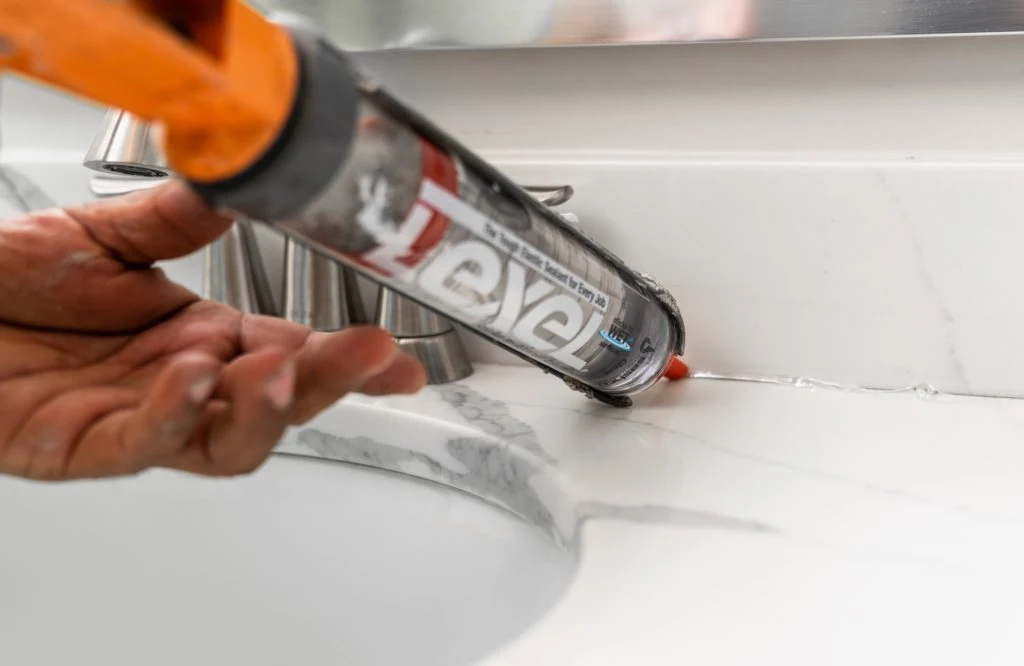
The clear one that’s actually clear. Ordinary clear acrylic latex dries to a milky translucent that reads as a smear on stained cedar; Lexel dries water-clear and disappears. 400% elongation, grips damp surfaces, and unlike the silicones it competes with, it takes paint.
The damp-surface grip is the sleeper feature. Gutter seams, storm-window edges, and downspout straps are the joints you end up sealing when the weather is already bad, and Lexel is the tube that holds under those conditions.
It’s a solvent co-polymer, so cleanup is mineral spirits, the smell is strong for the first hour, and the material is stringy out of the nozzle. Tooling it with a wet finger, the habit every acrylic user has, makes it worse. Use a solvent-dampened rag and a light touch, or don’t tool it at all and lay a neat bead.
At $14–$18 a tube it’s the priciest per ounce here. Buy one tube for the visible joints and use something cheaper everywhere else.
Sashco Slab, Best for Concrete Joints
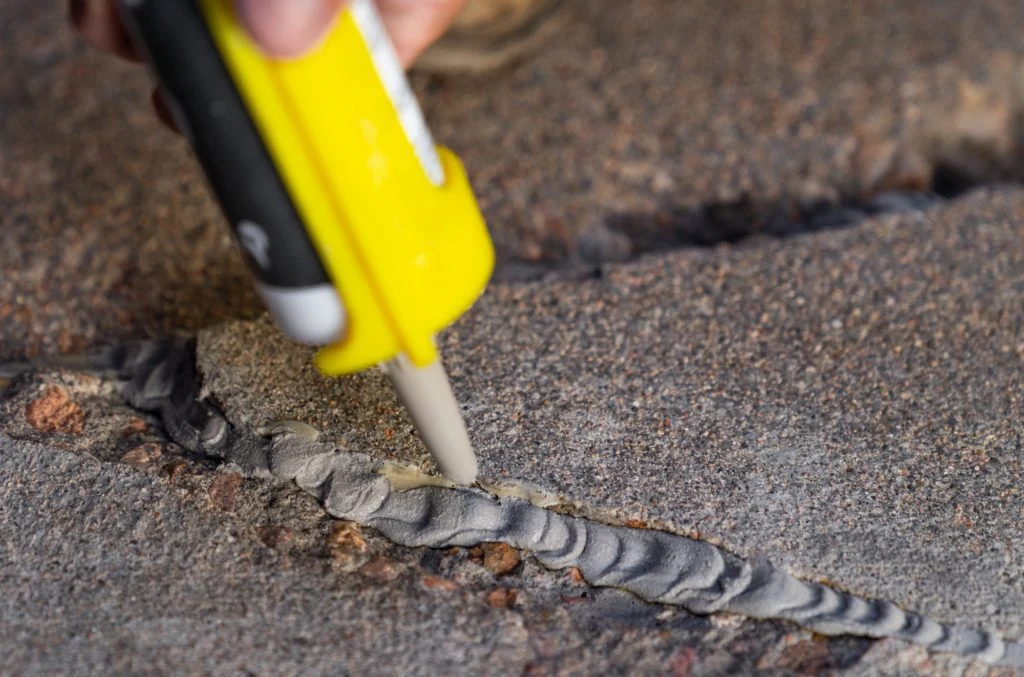
Different category, same page, because “exterior caulk” for most people includes the crack running across the driveway. Slab is a textured gray water-based acrylic that reads as concrete rather than a glossy black stripe, and it stays elastic through slab heave.
On our sawn expansion joint in a poured paver, Slab followed a winter of freeze heave without splitting from either face. No isocyanates, no solvents, water cleanup, which makes it far more pleasant to work with than the urethane self-levelers that own this niche at the pro level.
Two practical limits. It’s not self-leveling, so horizontal joints need tooling and a deep crack needs sand or backer rod under it or you’ll be back with a second tube. And it’s gray-only in a 10.5-ounce cartridge, which means a long driveway joint eats tubes at a rate that stops being cheap.
Distribution is thin. Sashco direct and Amazon, mostly. Order it before the weekend rather than expecting a rack facing.
Joint Design Beats Product Choice
Half the caulk failures I look at aren’t the tube’s fault.
A sealant bead needs to bond to two faces and stretch across the gap between them, like a rubber band anchored at both ends. The rule of thumb is a 2:1 width-to-depth ratio, so a 1/2-inch gap wants a 1/4-inch-deep bead. Closed-cell backer rod pushed to depth sets that geometry and gives the bead a surface it won’t stick to at the back.
Pack that same gap solid with caulk and the bead bonds on three faces. Now it can’t stretch, because the back is glued down. The first hard cold snap tears it, usually right down the middle, and that’s the split you see on old joints where somebody emptied half a tube into a gap.
Gaps over an inch aren’t a caulk problem. That’s trim that needs replacing or a piece of wood that needs to go in first.
Where Exterior Caulk Jobs Go Wrong
- New bead splits down the middle in the first winter. Joint packed solid with no backer rod, bonded on three faces. Cut it out, install rod, re-caulk at a 2:1 ratio.
- Bead peels off one face cleanly, leaving a mirror-smooth surface. Adhesion failure. Either the joint was dusty, damp, or oily, or it was bare wood that sucked the water out of the bead. Prime bare wood first.
- Painted bead cracks along the top while the caulk underneath stays soft. Topcoat went on before the bead cured. The paint film hardened while the caulk kept shrinking. Wait for the paint-ready time, then wait longer in damp weather.
- New caulk won’t stick to the old joint. Old bead is silicone. Nothing sticks to cured silicone. Razor knife, solvent wipe, start over.
- Bead sank into the joint and left a shadow line. Shrink-back. Cheap acrylic with a high water content in a deep joint. Backer rod reduces depth and reduces shrink.
- Chalky white powder on a south-facing bead at year three. UV on unpainted acrylic. Paint the bead or accept the maintenance cycle.
- Mildew streaking on the north-side beads. Shaded surface holding moisture. Wash with a detergent solution before recoat; a pressure washer at low pressure handles it on siding.
For the wider diagnostic when the paint around the joint is also failing, see the exterior peeling paint fix.
Application Notes That Move Outcomes
- Cut the tip small and at 45 degrees. Start smaller than you think. You can always cut more; you can’t uncut.
- Prime bare wood before you caulk it. Raw cedar and fresh end grain pull water out of an acrylic bead and leave a chalk bond. Oil-base primer, two hours, then caulk.
- Use backer rod on anything over a quarter inch. Closed-cell, sized about 25% larger than the gap, pushed to depth with a blunt tool.
- Tool within five minutes. Acrylics skin fast in sun and wind. A tooled bead is a bonded bead; an untooled one is a bead resting in a gap.
- Watch surface temperature, not air temperature. Sunlit south siding can be 25 degrees above ambient. Acrylics want 40°F and rising with no overnight freeze coming.
- Wait the full paint-ready time, then some. Cool damp weather doubles it. See the paint drying times chart for how humidity moves every number on a label.
- Don’t caulk the bottom edge of lap siding. Those laps are drainage. Sealing them traps water behind the cladding, which is how you turn a paint problem into a rot problem.
For the full prep sequence on cedar and fiber cement, see the exterior wood substrate guide. For interior baseboard and crown joints, the paintable caulk round-up covers a different set of tubes.
Also Considered, Also Rejected
- DAP Alex Plus / Alex Fast Dry. The $3 rack tube. Fine for a garage door stop, cracked at the PVC face by month six on our test assembly. It’s interior-grade chemistry in an exterior-labeled tube.
- OSI Quad Max. Genuinely strong siding sealant with an excellent color-match program. Left out because OSI’s site is currently serving a certificate mismatch, and we don’t publish a pick we can’t link readers to a live manufacturer page for.
- Sikaflex and Sonolastic NP1 polyurethanes. The right products for structural masonry joints and the wrong ones for a homeowner on a ladder. Solvent cleanup, long cure, and real fume load.
- Sashco Through the Roof. A good clear elastomeric that bonds on wet surfaces and seals active leaks, but it’s a roofing sealant, not a siding sealant. It earns a spot on a roof-repair page, not here.
- “Lifetime” 50-year silicone acrylics at $4 a tube. The warranty covers the tube, not the joint or the labor. Read what’s actually being promised.
If you’re caulking painted wood siding and trim on a house you plan to keep, buy Big Stretch and buy backer rod with it. If you’re doing forty joints in one weekend and the budget is the constraint, Dynaflex Ultra in a matched color will hold for the next repaint cycle. Prime the bare wood first either way; that step does more for the joint than the difference between any two tubes on this page.
Full Comparison
| Product | Best for | Yellowing | Price |
|---|---|---|---|
| Big Stretch Acrylic Sealant | Top pick — best all-around exterior caulk | Very low; white stays white through UV | $$ |
| Paintable Silicone Supreme Window & Door Sealant | Best for fast turnaround and unsettled weather | Low | $$ |
| Dynaflex Ultra Advanced Exterior Sealant | Budget pick — best home-center value and color range | Low on white; Clear dries translucent, not water-clear | $ |
| Advanced Silicone 2 Window & Door Sealant | Best for joints that will never be painted | Very low; Clear stays clear | $$ |
| Lexel Clear Elastic Sealant | Best clear sealant for joints you can see | Very low; stays clear under UV | $$$ |
| Slab Concrete Crack Repair Sealant | Best for concrete cracks and driveway expansion joints | N/A — pigmented gray | $ |
Every Pick, Pros and Cons
Pros, cons, and specs for each pick. The cons are not optional here.
1. Big Stretch Acrylic Sealant
- Coverage
- ~55 linear ft per 10.5-oz cartridge at a 1/4-inch bead
- Sheens
- Flat matte bead; takes latex topcoat
- Dry / recoat
- Skins 30–60 min · paint-ready 2–24 h depending on temperature and humidity
- Full cure
- 2–4 weeks on a deep bead
- VOC
- Low (water-based acrylic)
- Yellowing risk
- Very low; white stays white through UV
- Primer
- None on painted surfaces; prime bare wood before caulking
- Price tier
- $$
- 500% published elongation, and in practice the only bead in our set with zero cohesive splits at the cedar-to-trim joint after a full freeze-thaw winter
- 14 colors including Woodtone, Redwood, Sandstone, Slate Gray and Charcoal, so a siding-to-corner-board joint can go uncaulked-looking without a topcoat
- 100% water-based acrylic: soap-and-water cleanup, no solvent smell on a ladder, and later coats of latex paint bond to it without a bonding primer
- Slow through-cure. In a damp 55-degree shoulder-season week the bead was still soft under the skin at 48 hours, and painting it early leaves a rubbery wrinkle
- Joints wider than 1/2 inch or deeper than 1/2 inch need backer rod; unsupported, a fat bead sags before it skins
- $11–$14 per 10.5-oz tube, roughly double the rack acrylic beside it. On a whole-house re-caulk that difference is real money
2. Paintable Silicone Supreme Window & Door Sealant
- Coverage
- ~50 linear ft per 10.1-oz cartridge at a 1/4-inch bead
- Sheens
- Low satin bead; accepts latex topcoat
- Dry / recoat
- Rain-ready 30 min · paint-ready 60 min
- Full cure
- 24 h for full weather performance
- VOC
- Low odor hybrid silicone
- Yellowing risk
- Low
- Primer
- None; clean dry joint only
- Price tier
- $$
- 60-minute paint-ready and 30-minute rain-ready, the fastest pair in the round-up; caulk the casing before lunch and cut in the trim after
- 50% joint movement rating with a lifetime guarantee and shrink-proof claim, so the bead does not sink into the joint and leave a hairline shadow line
- Bonds to vinyl, aluminum cladding, glass, and masonry, which covers the mixed-material joints that trip up pure acrylics
- White only. There is no color range, so every joint has to be painted or accepted as white
- Once it is on the joint, the next re-caulk cannot be plain acrylic latex over the top; you cut it out or you fight it
- The cured bead reads slightly glossier than a flat siding paint. At six feet nobody sees it, at eighteen inches you do
3. Dynaflex Ultra Advanced Exterior Sealant
- Coverage
- ~50 linear ft per 10.1-oz cartridge at a 1/4-inch bead
- Sheens
- Flat bead; takes latex topcoat
- Dry / recoat
- Skins ~20 min · paint-ready 1–2 h
- Full cure
- 7 days
- VOC
- Low (acrylic latex)
- Yellowing risk
- Low on white; Clear dries translucent, not water-clear
- Primer
- None on painted surfaces; prime bare wood first
- Price tier
- $
- 12 stock colors in the 10.1-oz size (White, Clear, Beige, Med Beige, Clay, Iron Gray, Light Gray, Dark Bronze, Brown, Cedar Tan, Black) — the broadest color deck on a big-box shelf
- $6–$8 a tube at Home Depot and Lowe's, which is what makes a 40-tube whole-house re-caulk financially sane
- Rapid-set chemistry takes rain sooner than standard acrylic latex and tools clean with a wet finger like ordinary caulk
- Movement capability is not published as a percentage, and on our fiber-cement-to-PVC-trim joint it showed two hairline adhesion splits by month nine where Big Stretch showed none
- Will not stick over 100% silicone, per DAP's own FAQ. Old silicone joints have to be cut out first
- The Dynaflex Ultra and Dynaflex 230 tubes look nearly identical on the shelf and sit inches apart. Read the band, not the shape
4. Advanced Silicone 2 Window & Door Sealant
- Coverage
- ~50 linear ft per 10.1-oz cartridge at a 1/4-inch bead
- Sheens
- Satin silicone bead
- Dry / recoat
- Rain-ready 30 min · tack-free ~30 min
- Full cure
- 24 h
- VOC
- Low odor neutral-cure silicone
- Yellowing risk
- Very low; Clear stays clear
- Primer
- None; joint must be clean, dry, and oil-free
- Price tier
- $$
- 100% silicone, ASTM C-920 Class 35, and the only pick in the round-up that will not chalk, harden, or lose grip on glass and anodized aluminum over a decade
- 30-minute rain-ready and a genuine lifetime guarantee with 10-year mold-free product protection on the cured bead
- Six colors (White, Clear, Almond, Black, Light Gray, Brown) cover most vinyl window and storm-door frames without paint
- Not paintable. Not sort-of paintable. Paint beads off it and peels in strips, so this is a decision you make before the tube is open
- Nothing bonds to cured silicone, including more silicone in some cases. Future maintenance means a razor knife and a solvent wipe
- 35% movement is the lowest number in the round-up. On a wide siding butt joint that opens and closes with the seasons, Big Stretch has more room
5. Lexel Clear Elastic Sealant
- Coverage
- ~55 linear ft per 10.5-oz cartridge at a 1/4-inch bead
- Sheens
- Glossy clear bead
- Dry / recoat
- Skins 2–4 h · paint-ready 24 h+
- Full cure
- 2–4 weeks
- VOC
- High (solvent co-polymer)
- Yellowing risk
- Very low; stays clear under UV
- Primer
- None; bonds to damp and dry surfaces
- Price tier
- $$$
- Dries water-clear, not the milky translucent that clear acrylic latex settles into. On a stained cedar joint it genuinely disappears
- 400% elongation and it grips damp surfaces, which is why it holds on a gutter seam or a storm-window edge in weather that would defeat acrylic
- Paintable, unlike the silicones it competes with, so a clear repair on painted trim can still get a topcoat later
- Solvent-based co-polymer, so cleanup is mineral spirits or xylene and the smell is strong for the first hour
- $14–$18 a tube, the priciest per-ounce pick here
- Stringy out of the nozzle. Tooling it takes a solvent-dampened rag and a light touch, and a wet finger makes it worse
6. Slab Concrete Crack Repair Sealant
- Coverage
- ~30 linear ft per 10.5-oz cartridge at a 3/8-inch joint
- Sheens
- Textured matte, concrete-look gray
- Dry / recoat
- Skins 1–2 h · paint-ready 2–4 h
- Full cure
- 1–2 weeks depending on joint depth
- VOC
- Low (water-based acrylic)
- Yellowing risk
- N/A — pigmented gray
- Primer
- None; joint must be clean, dry, and free of loose concrete
- Price tier
- $
- Textured gray finish that reads as concrete instead of a shiny black stripe across the driveway
- Water-based acrylic latex with no isocyanates and no solvents, so it goes down without the fume load of a urethane self-leveler
- Stays elastic through slab movement; on our sidewalk expansion joint it followed a winter of heave without splitting from either face
- Gray only, one size (10.5 oz). A long driveway joint eats tubes fast
- Not self-leveling. Horizontal joints need tooling, and a deep crack needs sand or backer rod under it or you will refill it twice
- Distribution is thin. Sashco direct and Amazon mostly; do not expect a rack facing at your local big box
Zinsser Cover Stain Oil-Base Primer-Sealer
Caulk does not take a primer, but the joint often does. Bare exterior wood is the substrate where acrylic caulk fails first, because raw end grain and weathered cedar pull the water out of the bead before it can build film strength, and the resulting bond is chalk. Prime the bare wood first with an oil-base sealer, let it dry, then caulk over the primed surface. Cover Stain penetrates raw cedar and redwood, seals tannin so it cannot bleed through the bead or the topcoat later, and dries to recoat in about two hours so the prime-and-caulk sequence fits in one afternoon. A quart covers all the cut ends, casing rabbets, and freshly scraped trim on a typical elevation. On previously painted, sound, clean trim you can skip this entirely and caulk straight to the old paint film. On new trim, replaced corner boards, and anywhere a scraper took you to bare wood, priming first is the difference between a bead that lasts eight years and one that lets go in two.
BUY ON AMAZON
Ask a Question