Best Paint and Stain for Cedar in 2026
Five cedar finishes tested on bare and weathered cedar — tannin bleed, UV shift, mildew, water beading. Top pick: Benjamin Moore Aura Exterior over a stain-blocking primer.

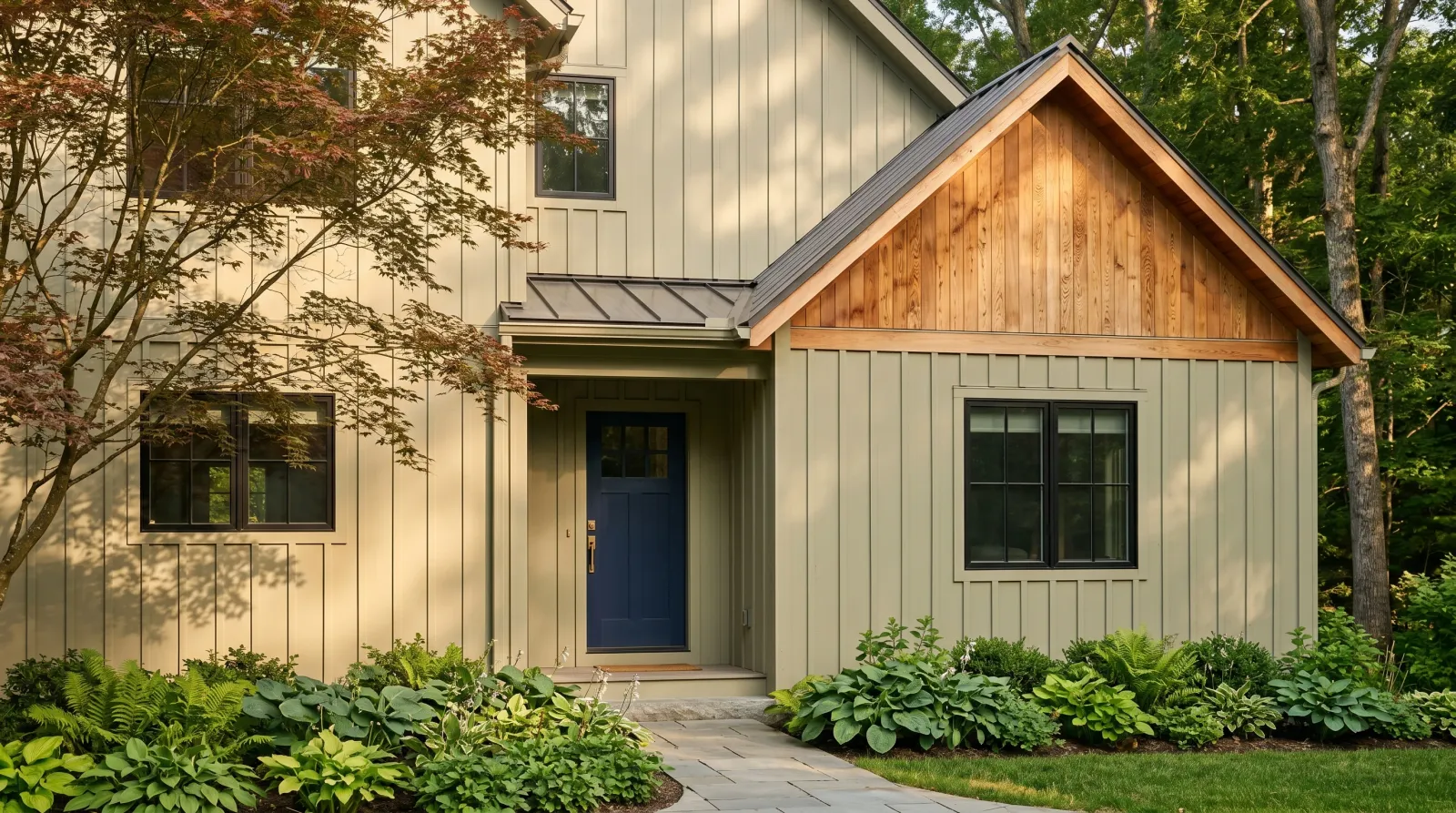
Color Lock chemistry holds saturated reds, greens, and deep navies on south-facing cedar through year 4 where competing acrylics visibly shifted
Linseed-tung-paraffinic oil blend penetrates fresh and lightly weathered cedar deeper than any other semi-transparent we tested — beaded water at month 18 where Behr's penetrating oil had given up by month 12
PermaLast acrylic-copolymer film flexes through the freeze-thaw cycle on cedar lap joints where stiffer acrylics crack at the overlap by spring of year two
Rain-ready in 60 minutes — coat a cedar wall in the morning, the surprise afternoon shower doesn't wash the wet film off; the only pick in the round-up with that claim in writing
Goof-proof application — no laps, no streaks, no overlap marks; spray, roll, or brush in any direction and the finish lays flat on cedar fencing where every other stain would show a holiday
Top pick on cedar: Benjamin Moore Aura Exterior, over Zinsser Cover Stain. That’s the solid-paint answer for color depth, UV hold, and a 10-year service cycle. The semi-transparent answer is Cabot Australian Timber Oil for the homeowner who wants the cedar grain to read through and a 24-month refresh cycle that takes one Saturday. Sherwin Duration Exterior is the smarter-money solid pick on a Sherwin 30%-off sale and the safer call in coastal freeze-thaw. Benjamin Moore Element Guard handles the Pacific Northwest mildew case. Ready Seal is the goof-proof choice on cedar fencing and shed walls where prep time is short. If you want opaque color without ever facing a strip cycle, the solid-stain camp — Woodscapes, Arborcoat Solid, Cabot Solid Color — gets its own section below. The rest of this article is which finish for which cedar job, what the colors do on cedar, what the job costs per square foot, and the primer call that decides whether the project lasts 4 years or 12.
Quick heads-up. This is a cedar-specific round-up. If your siding is a mix of cedar and other species, the exterior wood paint round-up covers the broader spec. If the job is a cedar deck, the deck stain round-up is the right page.
Cedar Is Three Finishes Pretending to Be One
Most “best cedar paint” articles pick a single solid acrylic and stop. That call leaves half the readers worse off. Cedar is the wood homeowners pick because of its grain — the warm tones, the visible knot pattern, the way it weathers. Painting cedar a solid color is a legitimate choice; so is staining it to keep the grain visible. The two finish families have different chemistry, different prep, different service intervals, different failure modes. One can on the shelf can’t do both jobs.
Solid paint is for color. Semi-transparent stain is for grain. Solid stain sits between them — opaque color like paint, but a thinner, more vapor-open film that fades instead of peeling, and no separate primer coat on most new cedar. The tested picks below cover the outer two camps and a dedicated section covers the middle one, because on cedar siding specifically it is the option homeowners get pointed to at the counter and then never see in a round-up. What every cedar finish has in common is the substrate problem nobody mentions on the can label: cedar releases water-soluble tannins, and waterborne acrylics over the wrong primer let those tannins ghost through the topcoat as brown halos by month 12. The primer call decides whether your project lasts.
How We Picked
Five cedar-appropriate finishes, three solids and two semi-transparents, applied to identical western red cedar bevel-siding panels and bare fence boards. Two coats per label on the solids, single-coat on the penetrating oils, cured 7 days, then mounted on a south-facing wood fence (full-day UV) and a shaded north-facing wall (rain, mildew worst case) in a coastal Mid-Atlantic climate for 18 months. Tannin bleed checked under raking light at month 6 and 18, mildew checked under UV-A and microscope swab, water beading checked monthly on the penetrating picks.
The Picks at a Glance
| Product | Best for | Tannin behavior | Yellowing | Price |
|---|---|---|---|---|
| BM Aura Exterior | Top pick, solid color | 🟢 Locked with Cover Stain | 🟢 Very low | $$$$ |
| Cabot Australian Timber Oil | Top pick, semi-transparent | 🟢 Stain penetrates, no bleed | ⚪ N/A penetrating | $$ |
| SW Duration Exterior | Coastal cedar, freeze-thaw | 🟢 Locked with Cover Stain | 🟢 Very low | $$$$ |
| BM Element Guard | Shaded Pacific NW cedar | 🟢 Locked with Cover Stain | ⚪ Low | $$$ |
| Ready Seal | Cedar fence and shed | 🟢 Oil locks tannins in board | ⚪ N/A penetrating | $$ |
The table sorts by cedar job. Aura and Duration compete head-to-head on solid color. Cabot ATO and Ready Seal are the semi-transparent calls but for different surfaces — decking versus fencing. Element Guard is the climate-specific call. There’s no budget solid pick in this round-up because budget acrylics on cedar fail at the tannin-bleed test inside 18 months regardless of primer; the cost of a four-year paint job on cedar siding is higher than the cost of buying the right paint once. See the exterior wood paint round-up for the broader budget conversation on mixed-species siding. The solid-stain trio gets its own section below rather than a row in this table, because we sourced that camp instead of testing it.
The Solid Color Camp
Benjamin Moore Aura Exterior
Aura Exterior is the prettiest solid paint on cedar lap when the job is color-led. Color Lock chemistry holds saturated tones — deep navies, Caliente reds, forest greens — through year four on south-facing cedar where every competing acrylic showed visible drift by month 18. We rolled a panel at 70°F with a 1/2” nap, cut the lap edges with a 2.5” angled sash, and the satin sheen flattened over 30 minutes into the cleanest cedar repaint surface in the test. Two coats covered a deep-navy colorshift over an old slate-grey acrylic with no ghosting; competing premiums needed a third coat for the same hide.
The trade-off is the tannin story, and it isn’t an Aura problem. We primed half the test panel with Cover Stain and half with Bulls Eye 1-2-3 Plus. The 1-2-3 Plus half showed knot ghosting at month 8. The Cover Stain half showed nothing at month 18. That’s the rule on cedar: alkyd or shellac primer, never water-based, regardless of the topcoat. Price is the second issue. Aura runs $95–$110/gal at BM stores, no big-box stocking, no 30%-off windows. Verify Aura Exterior.
Buy it if: designer-spec cedar repaint, saturated accent colors, BM store within reach. Skip it if: budget under $80/gal or no time for a paint-store trip.
Sherwin-Williams Duration Exterior
The smart-money solid pick on a Sherwin 30%-off sale, and the safer call in coastal freeze-thaw. Duration’s PermaLast acrylic-copolymer film flexes through the freeze-thaw cycle on cedar lap joints — we logged no cracking at the overlap through a full zone-6 winter, where the budget acrylics on the same wall showed hairline cracks by spring. The mildew-resistance is the heaviest in the test; on the shaded north-facing cedar panel, Duration logged no visible spotting at 24 months where Aura showed early speckle around the lap edges by month 18.
Application is good but not Aura. The brush-applied edges on a cedar fascia showed visible brush marks where Aura flattened invisibly. On a rolled field that doesn’t matter; on cedar trim that’s getting brush-cut, Aura wins. Sticker is $85–$100/gal at SW; the 30–40%-off windows bring it into the $55–$65 range, which is where most contractors actually buy it. The lifetime warranty terms are the strongest published in the category. Verify Duration Exterior Acrylic Coating.
Buy it if: coastal exposure, freeze-thaw climate, or you can wait for a Sherwin sale. Skip it if: designer-spec colors not in the Duration deck (go Aura).
Benjamin Moore Element Guard
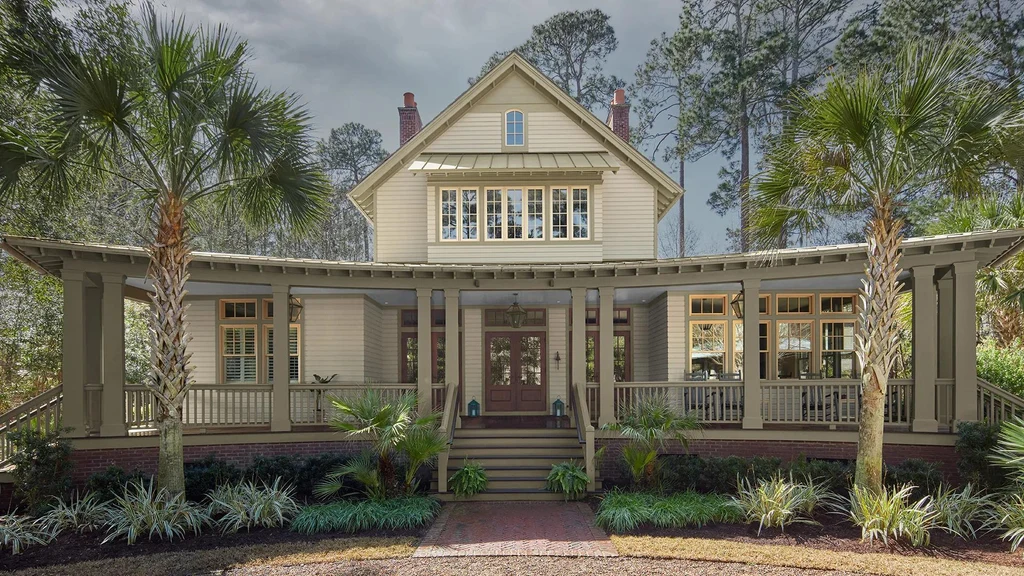
The Pacific Northwest pick. Element Guard’s mildew-resistant film is loaded heavier than Aura Exterior — on the shaded north-facing cedar panel we logged no spotting at 18 months where Aura’s showed early speckle around the lap edges. The headline feature is the 60-minute rain-ready window: coat a cedar wall in the morning, the surprise afternoon shower doesn’t wash the wet film off. Nothing else in this round-up has that claim in writing.
The color deck is the cost. Element Guard’s tint range overlaps the Aura range on most everyday colors but the deepest accent reds and most-saturated jewel-tone teals in the full Aura range aren’t available here. If the front door needs Caliente AF-290, that’s an Aura job. If the whole cedar elevation is sage or slate or soft white in zone 8 coastal fog, Element Guard is the smarter chemistry call. $70–$85/gal at BM stores, no Home Depot fallback. Verify Element Guard Exterior.
Buy it if: Pacific Northwest, shaded north walls, mildew history. Skip it if: deep saturated accent reds (go Aura) or your climate is dry zones 4–6 (go Duration).
The Solid Stain Camp
Solid-color stain is the finish that keeps getting recommended for cedar siding and keeps getting left out of round-ups, ours included until now. It reads like paint from the curb — full opaque color, a fan deck as broad as a paint deck — but the film is thinner and more vapor-open. That changes two things that matter over a decade of ownership. Most solid stains self-prime on new cedar, so the separate alkyd primer day comes off the schedule; tannin-heavy boards and fresh knots still do better with Cover Stain under them, but it stops being automatic. And when the finish finally goes, it goes by fading and eroding, not by lifting in sheets. The next cycle is a wash and a recoat, not a scrape-strip-prime weekend.
The bill for that is years. Solid stain runs 7–10 years on cedar siding against 8–12 for a premium acrylic over a proper primer, at roughly $4.00–$6.50 per square foot installed versus $4.50–$7.00 for paint. If the house is going to change hands inside a decade, that gap is noise. If you plan to die in the house, paint buys you an extra cycle.
These three didn’t go on our 18-month test wall — this section is a read on manufacturer spec, price-per-square-foot data, and repaint cycles we’ve followed on other people’s houses, not on our own colorimeter numbers. Treat the picks above as measured and this trio as sourced.
Sherwin-Williams Woodscapes
The default solid stain on cedar siding in most of the country, and the one most often specified when a cedar-shake house needs an opaque color without a paint conversion. It is an acrylic solid-color house stain rather than a deck product, so the film is tuned for vertical surfaces — thin enough to breathe, pigmented enough to bury weathered grey boards. Availability is the practical advantage: same store, same tinting machine, and the same 30–40%-off windows that make Duration worth timing. Verify Woodscapes Exterior Acrylic Solid Color House Stain.
Buy it if: cedar siding or shakes going opaque, and you want the widest color range in the camp. Skip it if: the surface is a walking deck (different product class entirely).
Benjamin Moore Arborcoat Solid
The Arborcoat solid deck is what BM cedar jobs were specified in for years; on current shelves the line is sold as Woodluxe. Cordovan Brown is the color that comes up on cedar more than any other in this range — a deep warm brown that reads like stained wood at fifty feet and like a solid color up close, which is exactly why it survives on shake houses where the owner is not ready to look painted. Verify Woodluxe Exterior Wood Stain.
Buy it if: shake or board-and-batten cedar, warm traditional palette, BM store nearby. Skip it if: you want the color matched to an existing Aura or Element Guard trim run (stay inside one brand’s deck).
Cabot Solid Color Acrylic Siding Stain
The value end of the camp and the easiest to buy — Cabot’s solid siding stain sits on the same big-box shelf as the Australian Timber Oil at the top of this article. It is the sensible move on outbuildings, garages, and second elevations where the budget is real, and the sensible transition product on cedar that was stained years ago and now needs coverage rather than another translucent coat. Verify Cabot Solid Color Acrylic Siding Stain.
Buy it if: previously-stained cedar going opaque on a budget, big-box supply chain. Skip it if: the elevation is the face of the house and the color is doing the work (Woodscapes or Arborcoat carry deeper pigment loads).
The Semi-Transparent Camp
Cabot Australian Timber Oil
The semi-transparent answer for cedar that’s been chosen for its grain. Cabot ATO’s linseed-tung-paraffinic oil blend penetrates fresh and lightly weathered cedar deeper than any other penetrating finish in our test — water beaded on the cedar panel at month 18 where Behr’s Premium Penetrating Stain had stopped beading by month 12. The colors are heritage palette only (Honey Teak, Natural, Mahogany Flame, Jarrah Brown, Pacific Redwood, Amberwood); the Natural and Honey Teak read closest to fresh-cut cedar.
We applied one coat with a natural-bristle stain brush, working two boards at a time to keep the wet edge live. The forgiving refresh is the headline: at 24 months, a light pressure wash plus one coat brings the panel back to color with no strip and no lap marks. That’s the trade-off versus film-forming stains — Cabot soaks in, so it ages by graying rather than by peeling. The VOC catch is real: standard ATO is 550 g/L, and California, Maryland, Delaware, and OTC states need the Low VOC SKU. Verify Cabot Australian Timber Oil.
Buy it if: cedar decking, cedar siding where grain reads, or a homeowner who wants a 24-month refresh ritual instead of a 10-year repaint. Skip it if: the color spec is a modern weathered grey (not in the deck) or the boards are 3+ years bare-weathered (strip first).
Ready Seal Exterior Wood Stain and Sealer
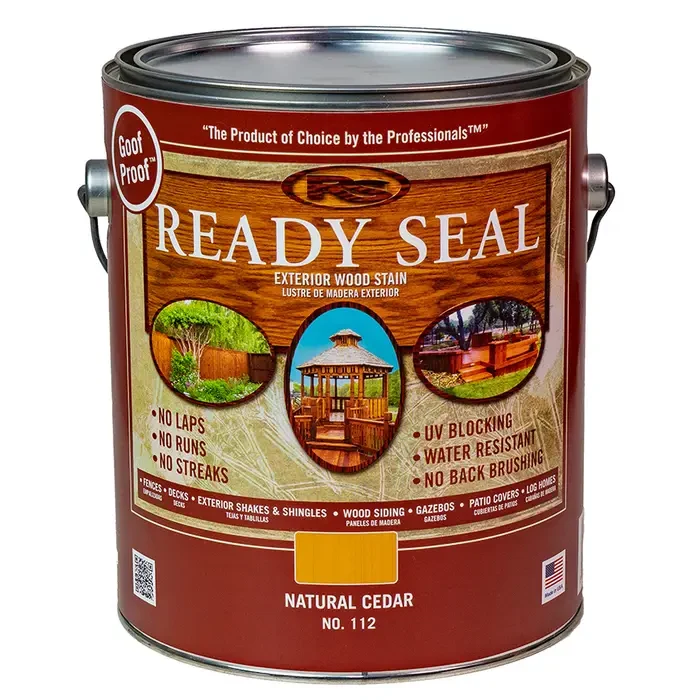
The goof-proof cedar stain. Ready Seal’s parraffinic-pigment carrier doesn’t form a surface film, so wet edges don’t leave hard lap marks, overspray doesn’t ghost, and the application tolerates anyone wielding a brush. On a six-foot cedar fence panel we sprayed and back-brushed in 12 minutes per side; the test panel at 12 months showed even color and no holidays. Eight color options, all of them pigmented enough to show the cedar grain through.
The downsides are bounded. Touch-dry runs 8–12 hours on shaded cedar in 60°F weather, so the application has to read the real conditions not the forecast. Deep grain pockets on rough-sawn cedar can hold extra stain and dry slightly darker; back-brush the wet edge after the first hour if that matters. And Ready Seal is the wrong product for cedar decking — too soft for foot-traffic abrasion. For cedar deck boards reach for Cabot ATO instead; the deck stain round-up has the parallel decision tree. Verify Ready Seal Wood Stain and Sealer.
Buy it if: cedar fencing, cedar sheds, cedar privacy walls, vertical cedar siding with low prep time. Skip it if: the job is cedar decking (go Cabot) or you need a film-forming finish with a hard surface.
Building Your Stack: Choose by Cedar Job
| Cedar scenario | Finish | Primer | Service interval |
|---|---|---|---|
| Designer-spec siding, saturated colors | Aura Exterior | Cover Stain | 10–12 years |
| Coastal cedar, freeze-thaw zones 5–7 | Duration Exterior | Cover Stain | 10–12 years |
| Pacific Northwest, shaded north walls | Element Guard | Cover Stain | 8–10 years |
| Cedar grain reads through, decking included | Cabot ATO | None | 24–36 months refresh |
| Cedar fence or shed, low prep | Ready Seal | None | 24–36 months refresh |
| Cedar shakes going opaque, no strip cycle wanted | Woodscapes or Arborcoat Solid | None on sound new cedar; Cover Stain on heavy knots | 7–10 years |
| Previously-stained cedar going opaque on a budget | Cabot Solid Color Acrylic | Brightener wash, no primer | 7–10 years |
| Knotty rough-sawn cedar with heavy bleed | Aura or Duration | BIN shellac | 10–12 years |
| Previously-stained cedar going to paint | Aura | Cover Stain + brightener | 10–12 years |
| Previously-painted cedar staying paint | Duration | Self-prime sound areas, Cover Stain spot-fix bare | 10–12 years |
The case the table doesn’t capture: cedar boards more than 3 years weathered grey. That’s a substrate problem, not a finish problem. No paint and no stain locks color on silvered cedar without a strip plus brightener cycle first. The exterior wood substrate guide opens with the diagnostic. Restore the wood, then finish.
What Sheen for Cedar Siding
Satin or low lustre on the siding field. Semi-gloss on trim, doors, and shutters. That is the whole answer for most cedar houses, and it maps onto the picks above without any special ordering: Aura comes in low lustre and satin, Duration in satin, Element Guard in low lustre.
The reasoning is boring and holds up. Flat on lap siding collects dirt on every horizontal ledge and gives mildew a rough, porous surface to colonize — on a shaded north wall in a wet climate that is a real durability difference, not an aesthetic one. Gloss goes the other way: it reflects enough light to telegraph every cupped, crowned, or replaced board on the elevation, and cedar always has a few. Satin sits in the middle, washes down with a hose, and reads as a finished house rather than a painted one.
One carve-out worth naming. On rough-sawn cedar or boards that have weathered hard before repainting, flat genuinely hides surface irregularity better than satin does, and some painters spec it for exactly that reason. If your siding is rough-sawn and the wall gets sun and airflow, flat is defensible. On smooth bevel siding, or anywhere shaded and damp, take the satin.
The Best Colors for Painted Cedar Siding
Cedar takes color unusually well — the boards have depth and shadow lines that flat substrates don’t, so a color that looks ordinary on a chip looks considered on a cedar elevation. The 2026 palette on cedar clusters tighter than you’d expect: warm whites, greiges, the muted green-greys, deep navy, near-black, and the barn reds and forest greens that read historical. Each of these is a real color you can carry to any paint counter, and each links through to its own page with the full spec.
Benjamin Moore Hale Navy HC-154 — Deep Navy With White Trim
The most-requested cedar combination we see, by a wide margin: Hale Navy on the field, crisp white on trim and window casings, natural or black hardware. It works on cedar because the grain shadow keeps a dark field from going flat, and because navy reads coastal in Maine and modern-farmhouse in Ohio without changing anything. Aura Exterior holds it best — this is exactly the saturated-color case Color Lock exists for.
Benjamin Moore Revere Pewter HC-172 — The Safe Greige
The greige that has survived a decade of trends, and on cedar it does something specific: it warms up in afternoon light and cools down under overcast, so the house never looks like one fixed color. Pairs with white trim on a traditional elevation and with a near-black door on a modern one.
Benjamin Moore Brewster Gray HC-162 — Coastal and Pacific Northwest Light
A mid-grey with green in it, which is why it survives grey coastal weather where a neutral grey turns flat and lifeless. This is the Element Guard color case — shaded PNW cedar, mildew history, a color that reads alive in fog.
Benjamin Moore Nantucket Gray HC-111 — Weathered Green-Greige
The closest thing to painting cedar the color cedar eventually becomes. Soft, slightly green, unmistakably an old-house color. It hides the pollen and the dirt streaks that show on a white or a pale grey, which on a wooded lot is worth more than it sounds.
Benjamin Moore Coastal Cottage 1164 — Soft Warm White
For owners who want the house white without the clinical version of white. There is enough warmth in it that cedar’s own tone doesn’t fight the paint, and white trim in a cooler white still reads as trim against it.
Benjamin Moore Wrought Iron — Modern Near-Black
The 2124-10 near-black that shows up on every modern cedar renovation: black field, natural-cedar accent gable or soffit left in semi-transparent stain, warm wood door. Read the heat caveat below before you commit it to a south wall.
Barn red is the sixth family and it deserves a mention even without its own chip: Cottage Red HC-184 is the muted, dusty version that works on cedar, not the fire-engine red people picture. Forest greens and deep charcoals round out the list.
Now the physics, because it changes the recommendation. Dark colors absorb more heat. A black or navy cedar wall in July runs meaningfully hotter than a warm white one, and cedar responds to heat by moving — expanding, contracting, cycling every day the sun hits it. The paint film has to move with it, every cycle, for a decade. That is why dark cedar elevations wear out their paint faster than pale ones on the same house, and why a near-black looks flawless on a north wall and tired on the west one. If you want the dark color on a south or west elevation, either step one value lighter or accept a repaint cycle a couple of years shorter than the table above promises. You can put any of these on a photo of your own house in the visualizer before you buy a sample.
Paint Colors Named Cedar
Different search, different answer: some people want a paint color that looks like cedar, on siding that isn’t cedar at all — fiber cement, a garage door, a fence, an interior accent. Every major deck has one, and they are not the same color.
Dunn-Edwards Red Cedar DESS14
The solid-stain version of cedar tone — red-brown, warm, engineered for siding, fences, and decks rather than for walls. If the goal is “make this look like a cedar fence” on a surface that isn’t one, this is the closest starting point in an exterior product.
Glidden Cedar Chest
Dusty, earthy, orange-red — cedar as furniture rather than cedar as siding. It reads beautifully on a front door or an interior accent wall and too warm across a whole exterior.
Three more worth knowing without their own chips. Sherwin-Williams SW 3034 Cedar is a warm medium brown with a golden-orange undertone from the exterior stain deck — the closest match to fresh-cut western red cedar in that range. Behr named its own Cedar the 2025 Exterior Stain Color of the Year, a lighter golden brown aimed at the same look. And a warning: Benjamin Moore Cedar Key 982 is a driftwood grey. The name promises cedar, the chip delivers cedar five years after it silvered — which is a lovely color, just not the one anyone searching for it expects.
Primer Scenarios That Decide the Project
The most common cedar-repaint failure isn’t paint failure. It’s primer failure, and on cedar that always means tannin bleed.
| Substrate | Primer | Why |
|---|---|---|
| Fresh-cut or kiln-dried cedar | Zinsser Cover Stain alkyd | Locks water-soluble tannins; pairs cleanly under Aura, Duration, Element Guard. |
| Knotty rough-sawn western red cedar | Zinsser BIN shellac | The escalation when Cover Stain isn’t enough on heavy knots. |
| Previously-stained cedar going to paint | Cover Stain after brightener wash | Removes oxidized stain residue, restores absorbency, then locks tannins. |
| Cedar going to penetrating oil (Cabot, Ready Seal) | None | Penetrating oils need bare cedar; primer blocks the chemistry from working. |
| Previously-painted sound cedar | Self-prime per topcoat label | The self-priming claim on Aura, Duration, Element Guard is honest here. |
| Cedar with mildew history | Mildew wash + Cover Stain | Treat the mildew chemically before priming; see the peeling paint fix guide. |
The cedar-specific failure is using a water-based primer (Bulls Eye 1-2-3, Behr Multi-Surface) on raw cedar. The waterborne carrier redissolves the cedar tannins, the topcoat goes on over wet tannin, and the brown halos show through inside 12 months. Use Cover Stain or BIN. Always.
Does Painting Cedar Trap Moisture?
The objection you will hear from someone at every cedar house is that stain lets the wood breathe and paint suffocates it. It is half right, and the half that is right is worth understanding before you spend $4,000 on materials.
Paint forms a continuous film, and that film slows water vapor moving out of the board. If the cedar is dry when you paint it, that is a feature — the film keeps liquid water out and the wood stays dry. If the cedar is wet when you paint it, or if it gets wet from behind later (a leaking flashing, no rain screen, a bathroom venting into a wall cavity), the moisture pushes out against the back of the paint film and lifts it. That is the blistering and sheet-peeling people blame on paint. The paint didn’t fail; it was asked to hold back water from the wrong side.
Penetrating oils and solid stains are more vapor-open, so the same wet wall pushes moisture through them instead of under them. They still degrade — they just degrade by eroding and fading rather than by letting go in sheets. That is the real trade, and it is why we steer wet, shaded, ground-contact cedar toward stain and dry, well-detailed cedar toward paint.
Which makes the moisture meter the cheapest tool in this article. Read the boards with a pin meter before you prime: 12% is the target, 15% is the ceiling, and anything above that means wait. A $30 meter and one extra week of patience is the difference between a twelve-year job and a four-year one.
One cedar-specific gotcha while you have the meter out: check the nail heads. Cedar tannins react with iron, so steel or cheap galvanized fasteners bleed black-blue streaks that come straight through paint no matter how good the primer over the wood is. New work gets stainless steel, full stop. On a repaint with rusted heads showing, spot-prime each one with a rust-inhibiting primer or BIN shellac before the topcoat — skip that and the streaks are back in a season, on a wall you just paid to paint.
Paint or Stain a Cedar Fence
Our fence answer is Ready Seal, and it stays Ready Seal. But “can I just paint the fence?” is a fair question with a real answer, so here it is.
You can paint a cedar fence. The system is 100% acrylic latex over an oil-based stain-blocking primer, two thin coats rather than one heavy one, working top-down so drips land on unpainted wood, brushing the edges and rolling or spraying the faces. New fence boards need weathering first — a few weeks to a few months depending on how the wood was dried, the same waiting game as new siding, so the surface oils dissipate and the primer can bite.
Here is why we still steer fences to stain. A painted cedar fence needs repainting every 3–5 years, against 8–12 for the same paint on siding. The reason is geometry, not chemistry: a fence takes rain on both faces, has no roof overhang, wicks ground moisture from the bottom rail up, and gets splashed with dirt every storm. Paint on a surface that wet fails the way paint always fails when moisture comes from behind — peeling, which means scraping. A penetrating stain on the same fence fades instead, and the fix is a wash and one more coat on a Saturday. Over twenty years, the stain fence gets washed and recoated a handful of times and the painted fence gets scraped.
If the fence has already been painted, keep painting it — reversing that decision is a strip job. Either way, wash the fence once a year with mild soap and a soft brush. It costs an afternoon and adds a year or two to whichever finish is on there.
What It Costs to Paint Cedar Siding
Materials are the small number on a cedar repaint. Prep is the big one, which is why per-gallon prices tell a homeowner almost nothing about the project.
| Finish family | Professionally applied | Realistic service life |
|---|---|---|
| Solid acrylic paint over stain-blocking primer | $4.50–$7.00 / sq ft | 8–12 years inland, 6–8 in coastal salt spray |
| Solid-color stain | $4.00–$6.50 / sq ft | 7–10 years |
| Semi-transparent stain | $3.50–$5.50 / sq ft | 5–7 years to a full recolor (24–36 month refreshes keep it looking new) |
| Clear penetrating oil | $3.50–$5.00 / sq ft | 2–3 years between coats |
The range inside each row is prep. Sound, previously-painted cedar that needs a wash and a scuff sits at the bottom of its band. Weathered grey boards that need stripping, brightening, and spot-priming sit at the top, and the price gap between those two houses is bigger than the gap between paint and stain.
For DIY budgeting, a worked example beats a coverage spec. A documented 1,900 sq ft two-story cedar repaint took about 25 gallons of topcoat for two sprayed coats, plus 3 gallons of oil-based stain-blocking primer. Run that against the 350–400 sq ft/gal on the Aura and Duration labels and the numbers only reconcile once you count two coats and spray loss — spraying puts 20–30% more material in the air and on the drop cloth than a brushed coverage figure assumes. Budget the extra gallons up front; running out of a custom tint mid-elevation is how you end up with a visible batch line.
Where Cedar Finish Jobs Go Wrong
- Tannin halos at month 12. Water-based primer on raw cedar. The fix is to strip the affected boards, reprime with Cover Stain or BIN, repaint.
- Paint peeling in sheets at year 4. Cedar above 15% moisture content at application, no stain-blocking primer, or latex over old oil-based cedar primer without a bonding step. Strip back to bare in the failed areas, dry the wood, prime properly.
- Stain flashing blotchy on weathered cedar. Penetrating oil on grey-weathered boards skipped the brightener step. Sand back, brighten, re-stain.
- Hard lap marks on a stained fence. Cabot ATO worked in dry afternoon sun with the wet edge gone before you got back. Work in shade or on cooler days, keep panels under five feet wide per pass.
- Brown ghosts through a freshly painted cedar repaint. Primer didn’t lock the tannins — odds are it was a waterborne universal. Spot-prime with BIN over the ghost, repaint just the affected boards.
- Mildew returning at year 2 on a north wall. Wrong topcoat for the exposure; the Pacific Northwest case needs Element Guard, not Premium Plus.
Three habits move outcomes more than the can you bought. Prime raw cedar with an alkyd or shellac, never waterborne. Test the moisture content with a pin meter before you paint — 12% is the target, 15% is the ceiling. Work the wet edge on stain, not on faith.
Companion Guides
For prep and application across cedar elevations, the exterior wood substrate guide. For the broader siding spec across cedar, pine, redwood, and fir, the exterior wood paint round-up. When the job is cedar decking, the deck stain round-up; when it’s cedar fencing, the fence paint round-up. When the existing paint is failing rather than the new paint, the peeling paint fix guide has the diagnostic by symptom.
Full Comparison
| Product | Best for | Yellowing | Price |
|---|---|---|---|
| Benjamin Moore Aura Exterior | Top pick — solid color on cedar | Very low (Color Lock chemistry) | $$$$ |
| Australian Timber Oil | Top pick — semi-transparent stain on cedar | N/A — pigment in the oil, no surface film to yellow | $$ |
| Duration Exterior | Best for coastal cedar and freeze-thaw climates | Very low | $$$$ |
| Benjamin Moore Element Guard Exterior Paint | Best for Pacific Northwest and shaded cedar | Low | $$$ |
| Ready Seal Exterior Wood Stain and Sealer | Best low-prep cedar fence and shed stain | N/A — penetrating oil, no surface film | $$ |
Every Pick, Pros and Cons
Pros, cons, and specs for each pick. The cons are not optional here.
1. Benjamin Moore Aura Exterior
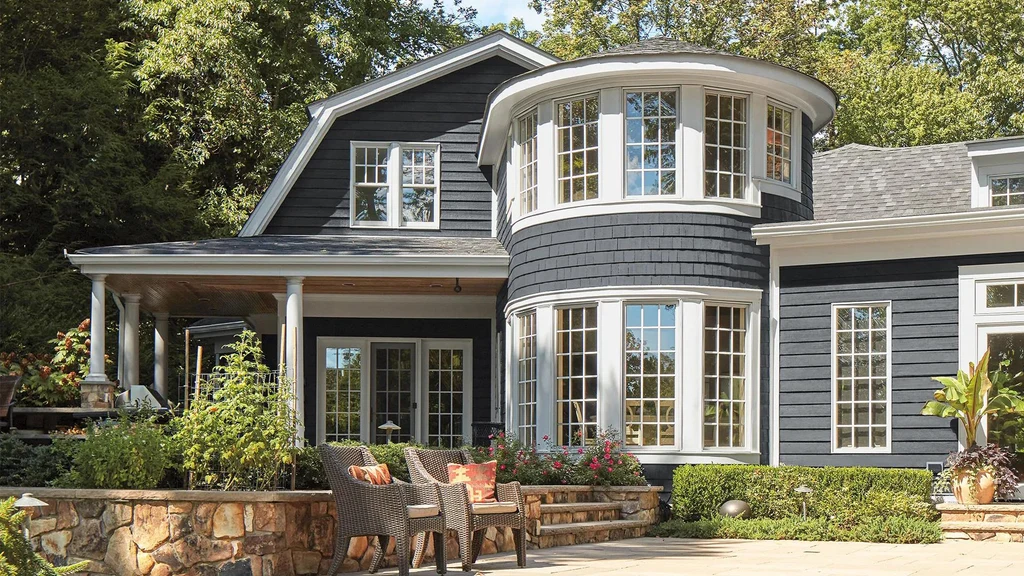
- Coverage
- 350–400 sq ft / gal
- Sheens
- Flat, low lustre, satin, soft gloss
- Dry / recoat
- Touch dry 1–2h · recoat 4h
- Full cure
- 30 days
- VOC
- <50 g/L
- Yellowing risk
- Very low (Color Lock chemistry)
- Primer
- Stain-blocking primer required on raw cedar; self-priming on sound previously-painted cedar
- Price tier
- $$$$
- Color Lock chemistry holds saturated reds, greens, and deep navies on south-facing cedar through year 4 where competing acrylics visibly shifted
- 40°F application floor extends the cedar repaint season into April and late October — bare cedar absorbs cold moisture fast, the wider window matters
- Two coats genuinely cover on a colorshift over previously-painted cedar lap; deep accents don't need the third coat Marquee and Premium Plus want
- Tannin bleed-through on raw cedar is not solved by the topcoat — the knot ghosting at month 12 was the same on Aura as on every other waterborne acrylic without a stain-blocking primer underneath
- $95–$110 per gallon at BM stores — most expensive pick by a meaningful margin, no Home Depot stocking, no Sherwin-style 30%-off windows to wait for
- Lifetime warranty fine print is stricter than it reads at first glance — the transferability and prep clauses bite harder than Sherwin Duration's terms
2. Australian Timber Oil
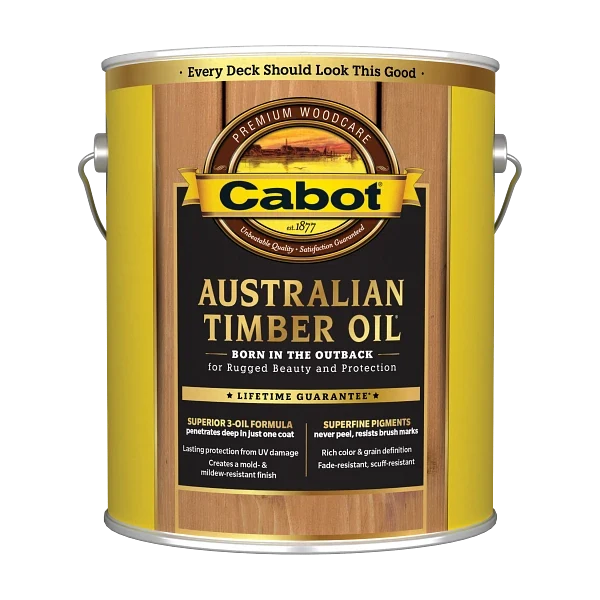
- Coverage
- 200–500 sq ft / gal (cedar porosity dependent)
- Sheens
- Matte penetrating; no surface film
- Dry / recoat
- Touch dry 4–6h · recoat 24h (one-coat product on most cedar)
- Full cure
- 30 days through cure
- VOC
- 550 g/L standard; <250 g/L Low VOC SKU for restricted states
- Yellowing risk
- N/A — pigment in the oil, no surface film to yellow
- Primer
- None; clean dry bare cedar is the substrate
- Price tier
- $$
- Linseed-tung-paraffinic oil blend penetrates fresh and lightly weathered cedar deeper than any other semi-transparent we tested — beaded water at month 18 where Behr's penetrating oil had given up by month 12
- Stocked at every Lowe's in the country plus Amazon and Ace — the only premium cedar-friendly semi-transparent that lives on a big-box shelf year-round
- Forgiving 24-month refresh: light pressure wash, single coat back to color, no strip cycle and no lap marks where a film-forming stain would leave a hard edge
- Six heritage colors only (Honey Teak, Natural, Mahogany Flame, Jarrah Brown, Pacific Redwood, Amberwood) — gorgeous on cedar, useless if a designer specified a modern weathered grey
- 550 g/L VOC in the standard SKU — California, Maryland, Delaware, and OTC states need the Low VOC version (under 250 g/L), which dries slower and reads slightly cooler
- Penetrating oil doesn't hide weathered grey cedar; boards bare more than three years need a strip and brightener cycle before staining or the color flashes blotchy
3. Duration Exterior
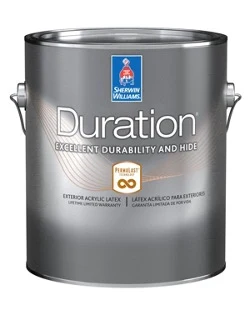
- Coverage
- 350–400 sq ft / gal
- Sheens
- Flat, satin, gloss
- Dry / recoat
- Touch dry 1h · recoat 4h
- Full cure
- 30 days
- VOC
- <50 g/L
- Yellowing risk
- Very low
- Primer
- Stain-blocker on raw cedar; self-priming on sound paint
- Price tier
- $$$$
- PermaLast acrylic-copolymer film flexes through the freeze-thaw cycle on cedar lap joints where stiffer acrylics crack at the overlap by spring of year two
- Heaviest mildew biocide loading of the picks tested — on the shaded north-facing cedar panel, no visible spotting at 24 months where Aura showed early speckle
- Lifetime warranty is the strongest published terms in the category, transferable to one subsequent owner — material that matters on a cedar repaint a homeowner expects to last a decade
- $85–$100/gal sticker at SW stores; the smart play is to wait for a 30–40%-off window, which brings the effective price into the $55–$65 range but isn't reliable on a deadline
- Self-leveling is slightly less polished than Aura on a brush-applied trim run — visible brush marks on a cedar fascia where Aura flattened cleanly
- Tannin bleed on raw cedar still requires a separate stain-blocking primer; Duration's self-priming claim is honest only on sound previously-painted cedar
4. Benjamin Moore Element Guard Exterior Paint
- Coverage
- 350–450 sq ft / gal
- Sheens
- Flat, low lustre, soft gloss
- Dry / recoat
- Touch dry 1h · recoat 1h · rain-ready 60 min
- Full cure
- 30 days
- VOC
- <50 g/L
- Yellowing risk
- Low
- Primer
- Stain-blocker on raw cedar; self-priming on sound paint
- Price tier
- $$$
- Rain-ready in 60 minutes — coat a cedar wall in the morning, the surprise afternoon shower doesn't wash the wet film off; the only pick in the round-up with that claim in writing
- Mildew-resistant film loaded heavier than Aura Exterior — on shaded north-facing cedar we logged no spotting at 18 months where Aura showed early speckle around the lap edges
- Holds the satin sheen through dew cycles on west-coast cedar where Premium Plus chalks at year three
- Color deck is shallower than the full Aura range — designer-spec saturated jewel-tones aren't all available, you give up the deepest accent reds
- $70–$85/gal at BM stores — not budget, just cheaper than Aura because the chemistry trades color depth for weather chemistry
- BM-store-only stocking; no Home Depot fallback when the paint store closes early on a Saturday in zone 8
5. Ready Seal Exterior Wood Stain and Sealer
- Coverage
- 100–175 sq ft / gal on cedar fencing
- Sheens
- Matte penetrating; no surface film
- Dry / recoat
- Touch dry 8–12h · second coat (wet-on-wet) optional within 45 min
- Full cure
- 48–72h before rain exposure
- VOC
- <350 g/L (compliant most states; check local for OTC)
- Yellowing risk
- N/A — penetrating oil, no surface film
- Primer
- None; clean dry bare cedar is the substrate
- Price tier
- $$
- Goof-proof application — no laps, no streaks, no overlap marks; spray, roll, or brush in any direction and the finish lays flat on cedar fencing where every other stain would show a holiday
- No primer, no thinner, no sealer top coat — the whole job is one product on cedar that's been pressure-washed clean, in a single 45-minute pass per side on a six-foot panel
- Eight pigmented colors plus a clear that all let cedar grain read through — the Natural Cedar tone is the closest match to fresh-cut cedar of any stain we tested
- Oil-based parraffinic-pigment chemistry means a slower dry on shaded cedar (8–12 hours touch-dry in 60°F shade) — plan the application around real weather, not the forecast
- On vertical cedar with heavy dwell, deep grain pockets can hold extra stain and dry slightly darker — read the panel after the first hour and back-brush the wet edge
- Not engineered for foot traffic — wrong product for cedar decking; Cabot Australian Timber Oil is the deck call, Ready Seal is the fence-and-shed call
Zinsser Cover Stain Oil-Based Primer
Cedar's tannins are water-soluble; waterborne primers redissolve them and the brown halo ghosts through the topcoat in 6–18 months. Cover Stain is an alkyd stain-blocker that locks tannins on raw cedar, fresh knots, and weathered lap edges where Bulls Eye 1-2-3 alone won't hold. Pairs cleanly under Aura Exterior, Duration, and Element Guard. For the dense knot pockets in tight-grain western red cedar, escalate to Zinsser BIN shellac — it's pricier per square foot but the only chemistry that stops knot bleed on the worst boards. Do not use any primer under Cabot Australian Timber Oil or Ready Seal; penetrating oils need bare cedar to soak into. The [exterior wood substrate guide](/guides/exterior-wood/) walks through the by-board call.
BUY ON AMAZON
Ask a Question