The 8-Inch Paint Rule, Explained
The 8-inch paint rule, explained: paint a sample at least 8-inch by 8-inch, on the wall, in your own light, before you ever commit a gallon.

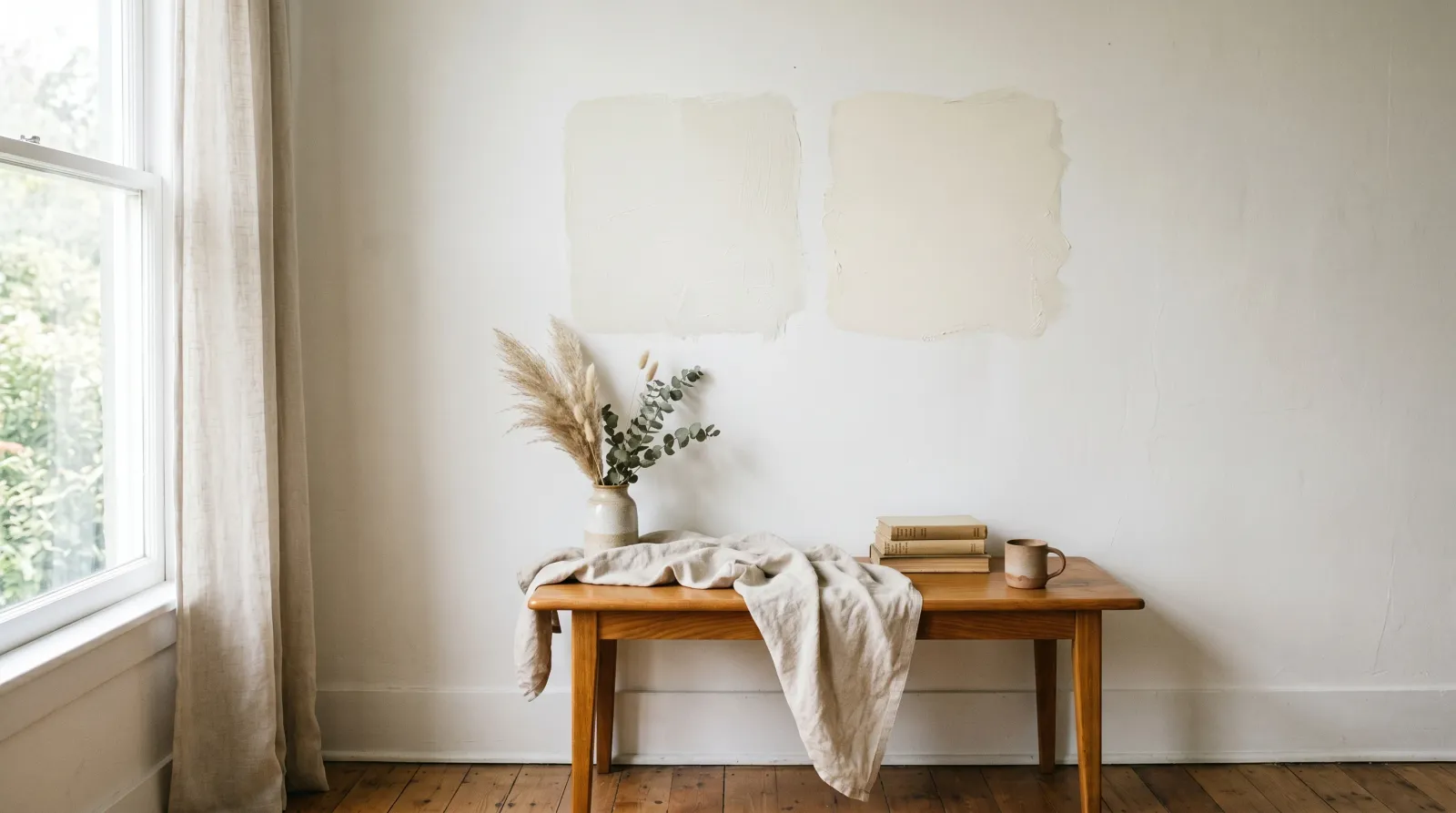
The 8-inch paint rule is a simple piece of guard-rail advice: never judge a color from a chip, test it at 8-inch by 8-inch or larger first. Paint a patch at least 8 inches square, on the wall or on a board you can move, before you spend money on a gallon. A standard paint chip is only about 1 to 2 inches across, and at that size the wall around it leaks in and lies to your eye. Eight inches is the smallest patch big enough to read a color honestly. Twelve inches or a full poster board reads truer still.
The rule exists because the chip and the wall are two different experiences. A color you loved in the store can go grey by a north window, or warm two shades deeper across a sunny living room. The paint never changed. The scale and the light did.
TL;DR
- Test every color at 8-inch square minimum before buying a gallon. Bigger is better.
- A 1 to 2-inch chip is too small. The surrounding wall bleeds in and skews the color.
- Paint two coats on a board or wall patch, then look at it morning, midday, and night.
- Color deepens and often warms at full room scale because light bounces between walls.
- The rule saves you the cost and labor of repainting a room that looked right on a chip.
Why a Chip Lies and 8 Inches Tells the Truth
A paint chip is the size of a playing card, printed or sprayed, and lit by whatever runs overhead at the store. Your eye can’t hold a color steady at that size. The greys and whites of the rack around it, the fluorescent overhead, the dozen other chips in your hand, all of it presses in and shifts what you think you see.
Scale things up to 8 inches and the color finally has room to be itself. There’s enough of it that your eye stops borrowing from the edges and settles on the color alone. This is the threshold where an undertone stops hiding. A warm white that looked clean on the chip starts to read its real cream. A greige shows you whether it leans green or pink. For why those undertones surface the way they do, the guide to paint undertones walks through it.
There’s a second reason a full-size patch reads deeper. Light bounces. In a finished room, color on one wall reflects onto the next, and the whole space drinks itself a little richer. A mid-tone blue can go a full step darker once it’s covering real square footage. The chip can’t show you that because there’s nothing for the color to bounce off. Eight inches starts to. A 2-foot patch shows it plainly.
When to Use the 8-Inch Rule
Use it for:
- Any whole-room repaint. This is where a wrong color costs the most. Test before you buy gallons.
- Whites, greiges, and grays. The quiet colors hide their undertone hardest, so they need the most surface to read. A larger patch is non-negotiable here.
- North-facing rooms. Cool, indirect light exaggerates blue and green undertones. A small chip won’t warn you; a big sample will.
- Choosing between two close colors. Paint both side by side at 8 inches and the difference you couldn’t see on the chips jumps out.
- An accent wall or a painted door, where the color is meant to be bold and a misread is loud. The accent wall project guide leans on this same test-first step.
When NOT to Use It
The rule is about judging color, not about every paint decision. Skip it when:
- You’re matching an existing color exactly. A computer match from a chip or a scraping doesn’t need a beauty test. Buy it and go.
- You’re touching up the same can you already used. No new color to judge.
- The surface is too small to matter, like the inside of a closet or a utility shelf. Read the chip and move on.
- You’re choosing a clear coat or primer, where there’s no finished color to evaluate.
How the 8-Inch Rule Compares to Other Sampling Methods
| 8-inch wall patch | 1 to 2-inch chip | Peel-and-stick sample | Full poster board | |
|---|---|---|---|---|
| Reads true color | Yes | No | Mostly | Best |
| Shows scale/light bounce | Some | None | Some | Yes |
| Movable around the room | No | Yes | Yes | Yes |
| Cost | A sample pot | Free | $3 to $6 each | A sample pot |
| Leaves marks on wall | Yes | No | No | No |
A poster board painted in two coats is the upgrade most people skip. It gives you a big, honest sample you can carry from the north window to the west window to the hallway. For the full picture on how light rewrites a color, the explainer on LRV and reflectance pairs naturally with this rule.
Common Mistakes
- Painting one coat and judging it wet. Wet paint and a single coat both read off. Let the white board or old wall stop ghosting through. Two coats, fully dry, then look.
- Testing in only one light. A sample that’s lovely at 4pm can go flat and cool at breakfast. Look at it morning, midday, and night before you decide.
- Sampling on white primer. Bright primer skews the temperature the same way a chip does. Use a neutral board or a patch over a similar existing color, not stark white.
- Going smaller than 8 inches to save paint. A 3-inch dab is barely better than the chip. The whole point is enough surface for your eye to read the color clean.
- Ignoring the floor and trim. Hold the sample where it’ll actually live. A greige that’s fine on bare drywall can turn green next to honey oak or pink beside red brick.
What It Looks Like
 Two warm-whites painted at roughly 8 inches each, side by side on the wall. At this size the one on the left reads its real cream while the one on the right stays cooler. On a chip, you’d never separate them.
Where to Buy and What to Look For
You don’t need anything special. Most paint counters sell sample pots for a few dollars, enough to cover two or three 8-inch patches or a poster board in two coats. Color is mix-on-demand at any tinting machine, so you can sample almost any shade you want for the price of a coffee before committing a gallon.
Buy a couple of white foam or poster boards, a cheap brush, and two or three sample pots of the colors you’re torn between. Paint each board in two coats, label the back, and move them around the room across a full day. When you’ve found the one that holds steady in your light, then figure out how many gallons the room actually needs and buy the real paint.
Pick the color that quietly agrees with your floor, your trim, and the hour you use the room. That’s the one the 8-inch rule is built to find.
Ask a Question