How to Paint Plastic — The Substrate Side
Plastic doesn't fail paint — the wrong primer does. HDPE, ABS, PVC, polypropylene: surface energy, the right bonding system, and what'll bite you in two years.

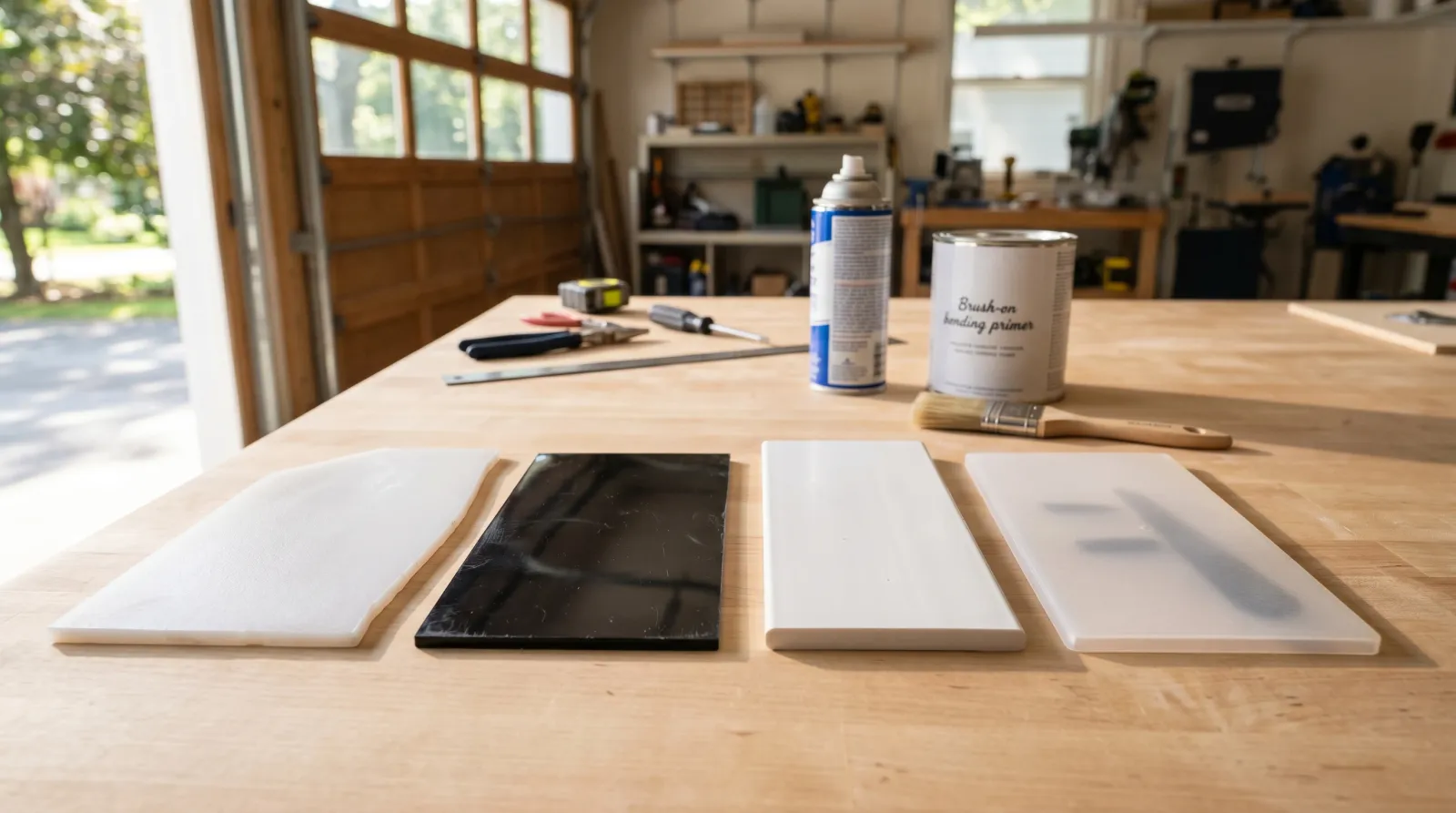
Plastic doesn’t fail paint. The wrong primer fails plastic. Get the surface energy right and a five-dollar can holds for years; get it wrong and even Sherwin’s best comes off in sheets by spring.
TL;DR
- Identify the plastic first. HDPE and PP need the most prep; ABS and PVC the least
- Clean: 91% isopropyl alcohol, lint-free rag, twice
- Scuff: red Scotch-Brite or 320-grit, then wipe again
- Primer: Krylon Fusion or Rust-Oleum 2X for aerosol; INSL-X Stix for brush
- Paint: any acrylic over Stix; the Fusion / 2X cans are paint-and-primer in one
- Cure: 24 hours before light handling, 7 days before flex or full use
What Is Plastic, as a Painter Sees It?
To a chemist, plastic is dozens of polymers. To someone with a brush, it’s a sliding scale of surface energy: how willing the surface is to let liquid grab and stay. High energy means paint wets out and bonds. Low energy means it beads up and walks away.
The plastics you’ll meet on a job, easiest to hardest: ABS, rigid PVC, polycarbonate, HDPE, polypropylene. Memorize the bottom two. Those are the ones that bite.
Tools and Materials
Materials
- 91% isopropyl alcohol (drugstore quart)
- Lint-free shop rags or microfiber cloths
- Red Scotch-Brite pad or 320-grit sandpaper
- Plastic-bonding primer (aerosol or brush, see Step 3)
- Topcoat paint (acrylic, urethane, or aerosol enamel)
- Painter’s tape (3M Blue or yellow Delicate)
Tools
- Drop cloth (canvas, not plastic; plastic on plastic stays static)
- Tack rag for post-scuff cleanup
- 2-inch angled sash brush (for brush work)
- Foam mini-roller (smooth plastic panels)
- Respirator (organic vapor cartridge for aerosols)
- Nitrile gloves
Why Plastic Is Different from Drywall
Drywall is porous. Paint mechanically locks into the gypsum and the binder does the rest. Plastic is the opposite. Sealed, low-energy face, no porosity, no chemistry inviting the binder in. Skip the bonding step and the topcoat sits there like a sticker. A sticker is exactly how it comes off.
Plastic also moves. Outdoor chairs flex in the wind. PVC trim expands and contracts with temperature. A rigid primer-paint stack that doesn’t move with the substrate cracks at the stress points, and crack equals water equals peel.
The Four Plastics You’ll Actually Paint
HDPE — High-Density Polyethylene
Milky-white or color-throughout, waxy to the touch. Recycling code 2. Adirondack chairs, kayaks, planter boxes, exterior shutters.
Surface energy around 31 mN/m. Floats in water. Feels slippery for a reason. You need a real bonding primer and an alcohol prep. Skip either and the paint comes off the first time someone sits in the chair.
Polypropylene — PP
Recycling code 5. Lawn chairs, automotive bumper trim, the soft-flex parts of luggage. About 30 mN/m, lower than HDPE, and more flex on top of that.
Of the four, PP is the one most people fail on. Mold-release residue from the factory stays on the surface for months. Aggressive solvent wipe (IPA, twice) is non-negotiable, and even then, only a bonding primer rated for PP (Fusion, 2X, Stix) holds.
ABS — Acrylonitrile Butadiene Styrene
Glossy black or color-throughout, hard, rigid. LEGO bricks, automotive interior parts, drain pipes, RV exterior panels. About 42 mN/m and rigid, so paint sticks more readily and stays put.
ABS is the easiest of the four. A scuff and a wipe is enough for aerosol bonding paints; Stix under any acrylic is bulletproof.
PVC — Polyvinyl Chloride
Rigid PVC trim, fence boards, vinyl siding, electrical conduit, plumbing pipe. Recycling code 3. High 30s mN/m. Paints reasonably well after a scuff, but PVC expands and contracts more than ABS with temperature. On exterior PVC trim, choose a light color (LRV > 55) or you’ll buckle the boards by year three.
Vinyl siding is PVC, but warranties void if you paint it darker than the original. The panel heats past spec, expands, warps. Stick to the manufacturer’s vinyl-safe color range. Most major paint brands publish one.
Surface Energy — The Whole Story in One Table
| Plastic | Code | Surface energy | Paintability | Notes |
|---|---|---|---|---|
| ABS | 7 (mixed) | ~42 mN/m | 🟢 Easy | Scuff and prime, done |
| PVC (rigid) | 3 | ~39 mN/m | 🟢 Easy | Light colors only on exterior |
| Polycarbonate | 7 | ~46 mN/m | 🟢 Easy | Don’t use ammonia cleaners |
| HDPE | 2 | ~31 mN/m | 🟡 Hard | Bonding primer mandatory |
| Polypropylene | 5 | ~30 mN/m | 🔴 Hardest | Bonding primer + extra IPA cleaning |
Anything below 38 mN/m is “low-energy.” That’s the threshold where ordinary paint won’t wet out. Both HDPE and PP sit below it, and that’s why they get their own products on the shelf.
Step 1 — Identify Then Clean
Find the recycling triangle on the part. Stamped on the underside of chairs, inside containers, back of trim. Match the number to the table above. No stamp? Float test in a sink. HDPE and PP float; ABS, PVC, and PS sink. If it floats, prep harder.
Wipe the whole surface with 91% IPA on a lint-free rag. Then again with a fresh rag. The first wipe pulls dirt and skin oil; the second pulls what the first smeared around. On polypropylene, do it a third time.
Skip dish soap. It leaves a film that defeats primer wetting. IPA flashes off clean.
Step 2 — Scuff
Red Scotch-Brite, circular motion, whole face. You’re not removing material; you’re breaking the molecular skin so the primer keys in. Glossy goes to uniform dull. Shiny spots? Hit them again.
For textured plastics (patio furniture, faux-wicker resin), use a stiff-bristle nylon brush instead. The pad rides the texture and leaves the low spots glossy.
Wipe with IPA one more time after scuffing. Scuff dust is contamination if you don’t pull it off.
Step 3 — Prime — The Decision Tree
This is the step everyone skips and everyone regrets. Two paths:
Aerosol path: Krylon Fusion All-In-One or Rust-Oleum 2X. Combined bonding primer and topcoat in one can. Bonds to HDPE, PP, ABS, PVC, vinyl, and metal without a separate primer step. Two light coats, 5 minutes apart, then a heavier finish coat at 15 minutes. Touch dry at 20 minutes. Use Fusion when you can find the color you want; Rust-Oleum 2X has a deeper deck.
Brush path: INSL-X Stix Waterborne Bonding Primer. Quart or gallon, brush or roll. Stix bonds to glossy, slick, and low-energy surfaces that nothing else will hold. One coat is enough. Recoat at 4 hours. Topcoat with any quality acrylic or waterborne alkyd. Stix is the move for larger parts, interior PVC trim, and any project where you want a custom color outside the aerosol decks.
The decision tree, plain:
- Small part, off-the-shelf color, no flex concern → Krylon Fusion
- Small part, deeper color choice → Rust-Oleum 2X
- Large part (full chair, trim run, shutter) or custom color → Stix + acrylic topcoat
- HDPE or PP with high flex (kayak, soft-bumper trim) → Fusion only, two coats, full cure
- ABS or rigid PVC, indoor → Stix + any acrylic, easy life
Stix is brushable, rollable, and tints to any color in the brand deck. Fusion and 2X are aerosol-only, fixed colors, but their bond chemistry on raw PP is genuinely better than anything brush-applied. That’s the trade.
Step 4 — Topcoat
Over Fusion or 2X: nothing more needed. The can is the system.
Over Stix: any quality 100% acrylic latex (Behr Marquee, BM Aura, SW SuperPaint) or waterborne alkyd (BM Advance, SW Emerald Urethane). Two thin coats with proper flash time between them. Foam mini-roller for flat panels, 2-inch angled brush for corners and detail. Don’t overload. Plastic doesn’t absorb paint the way wood does, and a thick coat sags before it tacks.
For SKU picks across the aerosol and brush options, see the best paint for plastic round-up. Five tested products with adhesion and tape-pull data.
Step 5 — Dry, Recoat, Cure
Real numbers from the can data sheets, not vibes:
- Touch dry: Fusion 20 minutes, 2X 30 minutes, Stix 30 minutes, acrylic topcoat 1 hour
- Recoat: Fusion 2X 15 minutes (or after 24 hours, never between), Stix 4 hours, acrylic 4 hours
- Light handling: 24 hours for all systems
- Full mechanical cure (flex, sit on, wipe down): 7 days for aerosol systems, 5 days for Stix + acrylic
The seven-day flex cure is non-negotiable on outdoor chairs and any HDPE / PP part. Sit on it on day three and the paint stress-cracks at the flex point. Your eye won’t see it, but moisture and UV will, and a year out you’re stripping it.
Common Mistakes
- Skipping the IPA wipe. Mold release on PP defeats every primer. Two wipes minimum, three on parts straight from a factory.
- Sanding instead of scuffing. Heavy grit cuts grooves the paint won’t fill smooth. Red Scotch-Brite or 320-grit, no coarser.
- Painting in cold. Below 50°F, Fusion and 2X don’t atomize and Stix won’t level. Wait for the day.
- Krylon Fusion on top of Stix, or vice versa. Pick one system. Stacking the two confuses the chemistry and you get a soft layer in the middle that fails at flex points.
- Dark colors on exterior PVC or vinyl. The substrate heats past spec, expands, and warps. LRV 55+ outdoors unless the manufacturer says otherwise.
- One heavy aerosol coat instead of two-to-three light ones. Heavy coats run, sag, and trap solvent under a tacky skin. You’ll be picking fingerprints out of the finish for a week.
Maintenance and Longevity
Outdoor painted plastic furniture lasts 5–7 years in zones 5 and 6 if the prep was real. First failure is UV chalking on the topcoat color, not adhesion loss. Wipe down with a damp cloth twice a season and you buy yourself another year. Indoor PVC trim over Stix lasts as long as the drywall paint next to it: 10+ years.
Touch-up is easy on Fusion and 2X. Buy a second can when you do the original project, label it, store it. Stix touch-ups need a fresh quart matched to the original color code. Edges peeling on year two means the primer wasn’t bonding-rated or the IPA wipe got skipped. Strip the affected area, re-prep, re-prime. Don’t paint over a failing edge.
Where Painted Plastic Still Loses
Some applications shouldn’t get painted at all:
- Food-contact surfaces. Cutting boards, storage containers. Paint isn’t food-safe.
- High-flex parts under load. A bumper that gets parking-lot dings. Paint can’t flex to match real impact.
- Vinyl siding darker than the original. Warps the panels, voids the warranty.
- Plastic plumbing under continuous water contact. The film traps moisture against a substrate that’s already fine.
If the application crosses one of those lines, painting isn’t the right tool. Replace the part in a substrate the paint will hold on.
What’ll Bite You in Two Years
The peel that surprises you isn’t the chair you painted in June. It’s the trim board the previous owner painted with the wrong primer in 2020, the one you painted right over in 2024. The old failing bond pulls your new system off with it. Always check what’s already on the plastic before you add a coat. If a fingernail lifts the existing paint, strip it back to bare substrate. Otherwise you’re just renting the finish from the old job, and the lease runs out fast.
Ask a Question