How to Clean Dried Paint Off Any Surface
How to clean dried paint off glass, wood, carpet, clothes, metal, and tile without wrecking the surface under it. The right solvent for each, from a 22-year contractor.

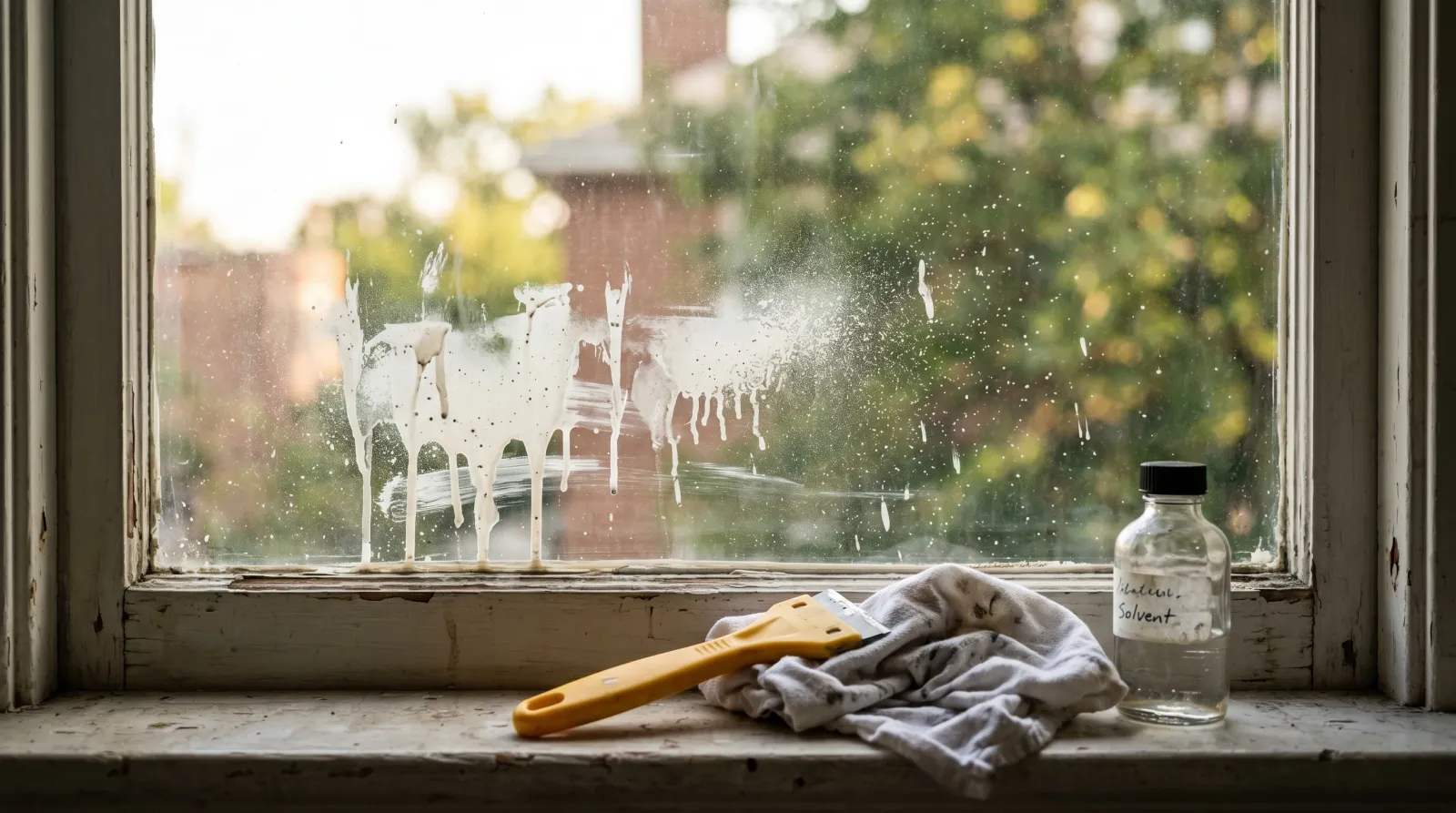
Two questions before you touch a dried paint spot. What’s the paint, and what’s under it. Get those wrong and you trade a paint problem for a scratched window or a bleached carpet. Get them right and most of this is a ten-minute cleanup.
TL;DR
- Figure out the paint first. Water-based (latex/acrylic) softens with water, alcohol, or warm vinegar. Oil-based needs mineral spirits or a stripper.
- Match the tool to the surface. Plastic razor on glass and tile. Mineral spirits on metal. Soap and blotting on carpet and clothes.
- Soften before you scrape. Paint should peel up in a curl, not chip off in flakes.
- Test in a hidden spot before you put any solvent on finished wood, plastic, vinyl, or fabric.
- Never mix solvents or cleaners. No bleach with ammonia, vinegar, or peroxide. Ventilate.
- Fresh beats dried every time. A wet rag now saves you a stripper later.
Does This Match What You’re Seeing?
Look at the spot before you grab anything. The kind of paint and how hard it’s cured decide the whole approach.
- Glossy, hard, plasticky drip you can’t dent with a fingernail: cured oil-based or alkyd. Solvent job.
- Flatter drip that softens and goes tacky when you press a wet rag on it: latex or acrylic. Water, alcohol, or vinegar will move it.
- Fine misty speckle over a wide area: roller or sprayer overspray. Usually latex, sits on top, scrapes off glass and tile easily.
- Paint sitting in the grain or weave (wood, carpet, fabric): it soaked in. Porous-surface rules apply, not glass rules.
- White or grayish powder, not a drip: that’s not spilled paint. That’s efflorescence on masonry, a different problem entirely.
If a drop of rubbing alcohol on a cotton swab makes the paint tacky in a minute, it’s water-based. If it does nothing, treat it as oil.
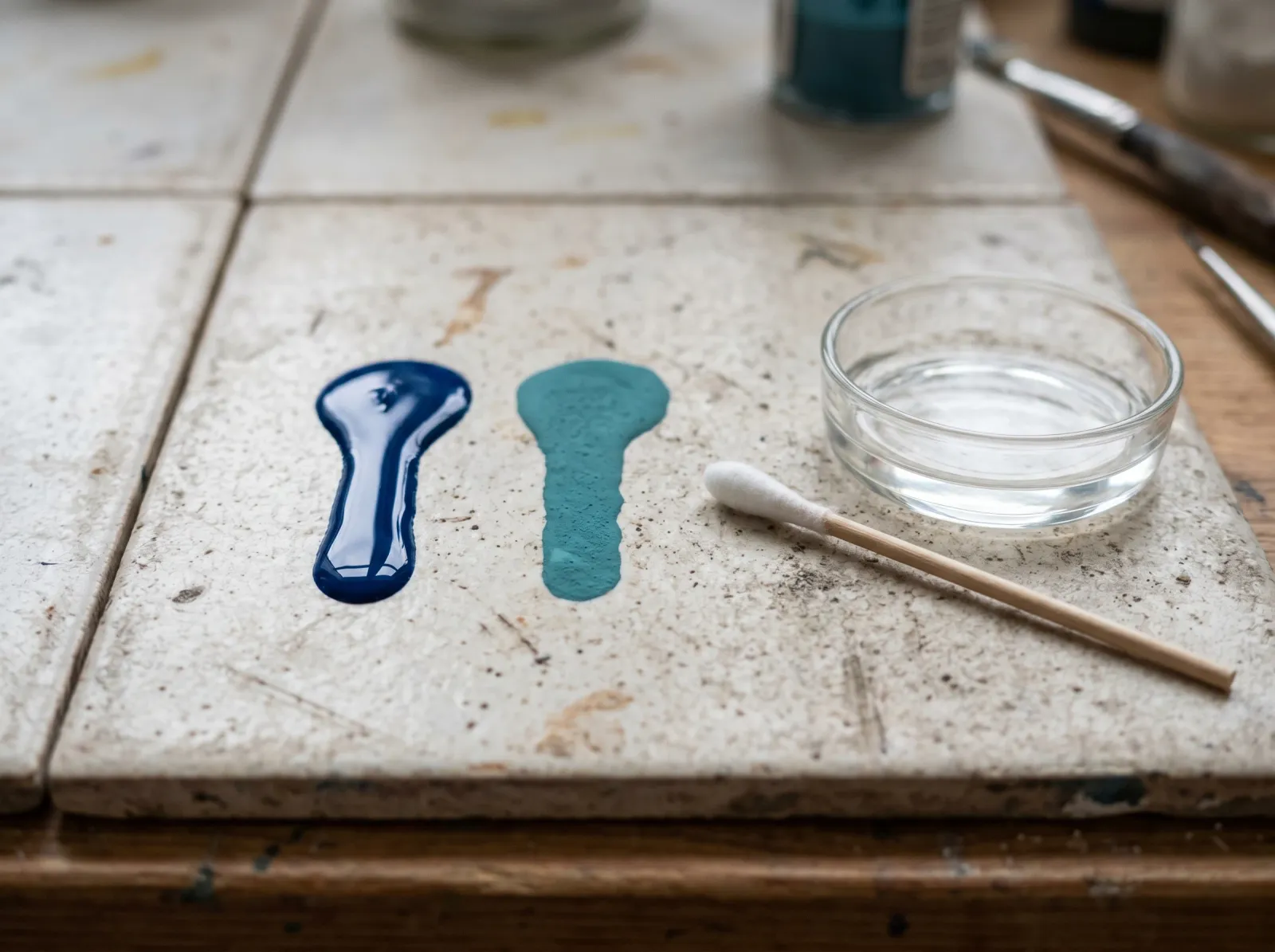 A dab of rubbing alcohol tells you whether you’re fighting latex or oil before you pick a solvent.
How Serious Is This?
Cosmetic, almost always. Dried paint where it doesn’t belong is annoying, not structural. The risk isn’t the paint. It’s the cleanup.
Same-afternoon fix: latex spatter on glass, tile, metal, sealed countertops. Soften, scrape, wipe, done.
Slower and riskier: oil-based paint on a finished wood floor, paint soaked into carpet, anything on a surface the solvent itself can damage. Those need a test patch and a light hand. Stop and reconsider if the surface is antique, a clear-coated finish you can’t match, or a pre-1978 painted surface you’d be sanding. Lead changes the rules.
Why This Is Happening (root Cause)
Paint cures by one of two mechanisms, and that’s the whole story for cleanup.
Water-based paint (latex, acrylic) dries by losing water. The binder particles fuse into a film. Early on that film is still soft and re-wettable, which is why a wet rag pulls fresh latex right off glass. It toughens over a few weeks but never crosslinks as hard as oil. Water, isopropyl alcohol, and warm vinegar all swell that film enough to break its grip on a slick surface.
Oil-based and alkyd paint cure by oxidation. The oils crosslink with oxygen into a hard, solvent-resistant film. Water does nothing to it. You need a petroleum solvent (mineral spirits, turpentine) or a chemical stripper to lift it.
The second variable is the surface. Non-porous surfaces (glass, glazed tile, metal, sealed stone) hold paint on top, so you can scrape. Porous surfaces (raw wood, carpet, fabric, drywall) let paint sink into pores or fibers, so scraping does nothing and you have to dissolve and blot. Match your method to both, paint type and surface type, and you stop guessing.
One more thing the can won’t tell you. Time matters most. The same latex drip wipes off with water at one hour, needs alcohol at one day, and needs a plastic razor plus patience at one month. When you see it, deal with it.
Safety First
Never mix cleaners or solvents. No bleach with ammonia, vinegar, or hydrogen peroxide. That combination makes toxic gas. Never combine paint solvents with each other hoping for more punch.
Solvents and strippers off-gas. Cross-ventilate, open a window, run a fan. Nitrile gloves, not latex, because latex gloves break down in mineral spirits. Eye protection when you’re scraping overhead. Solvent-soaked rags can self-heat and ignite in a pile; lay them flat outside to dry, or seal them in a water-filled metal can before trashing.
Pre-1978 surface? If you’d be sanding or scraping the paint that’s bonded to the surface, test for lead before you touch it. See the RRP rules in the peeling-paint guide before any sandpaper comes out.
The Fix
Same order for every surface. Identify, soften, lift, clean the residue. Only the solvent and scraper change.
Step 1. Identify and Test
Confirm the paint type with the alcohol-swab test above. Then pick a hidden spot of the surface and test your chosen solvent there for a minute. You’re checking that the solvent doesn’t dull, melt, or discolor the surface before you commit to the visible area. Skip this on plastics and clear-coated wood at your peril.
Step 2. Soften the Paint
Lay a solvent-soaked rag or paper towel directly on the dried paint and leave it. Don’t scrub yet. Give water five to ten minutes, alcohol two to three, mineral spirits five, warm vinegar ten to fifteen. The paint should go tacky or rubbery. Re-wet if it dries before it softens.
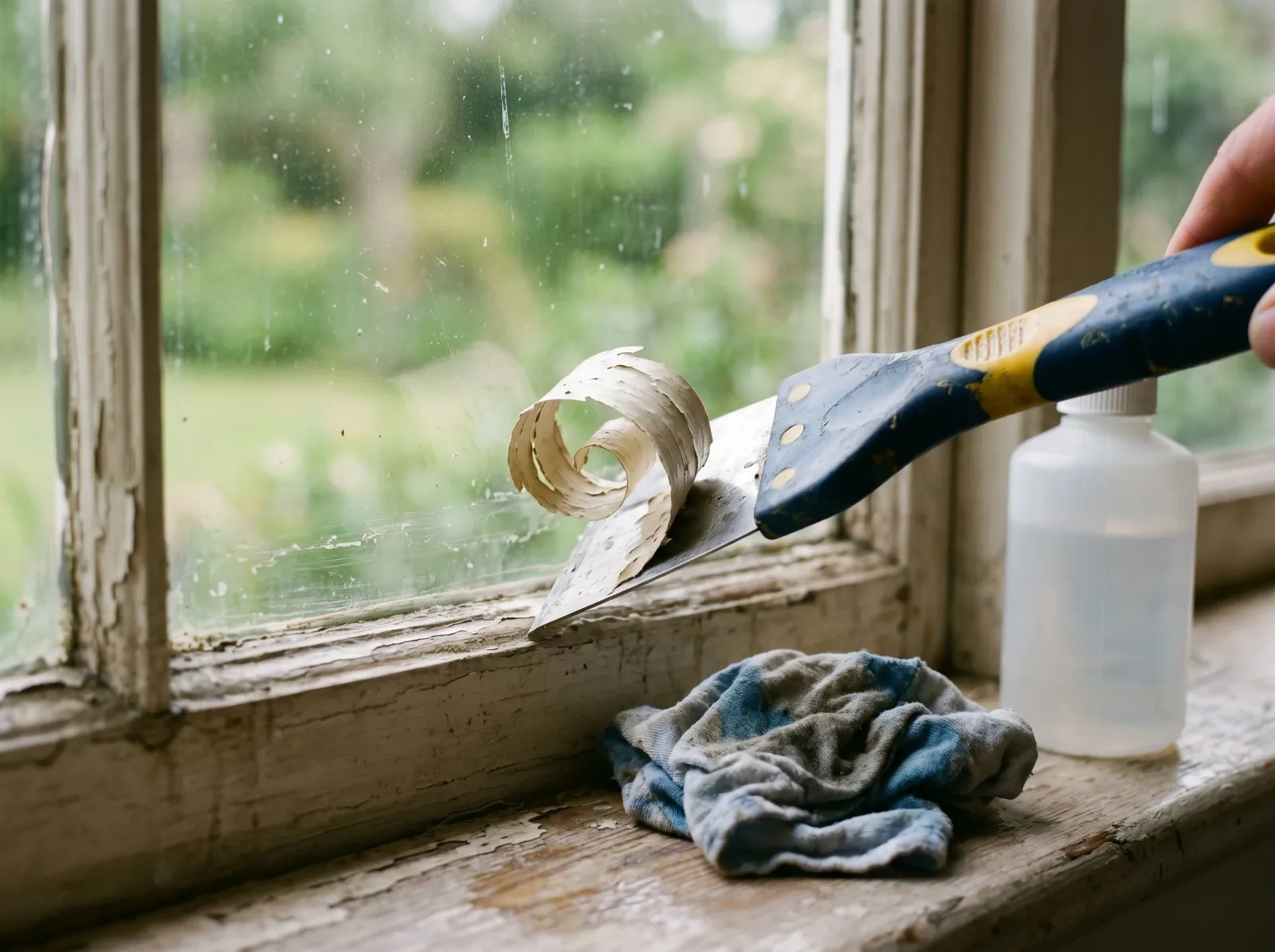 Soften first, scrape at a low angle with a plastic blade. The paint should release, not chip.
Step 3. Lift It Off
On glass, tile, and metal, use a plastic razor scraper held at a low angle, around 30 degrees, and push under the softened edge. A metal razor works on glass but it scratches if you tilt it wrong, so plastic first. On porous surfaces, you blot instead of scrape: press a clean cloth into the softened paint and lift, working from the outside of the stain inward so you don’t spread it.
Reapply solvent and repeat. Patience beats force. If you’re chipping flakes instead of lifting curls, the paint isn’t soft enough yet.
Step 4. Clean the Residue
Solvent leaves a film. Wash the spot with dish soap and warm water (after water or alcohol), or degrease with soap and water after mineral spirits or vinegar. On glass, a final pass with glass cleaner kills the haze. Dry it so no solvent sits on a finished surface.
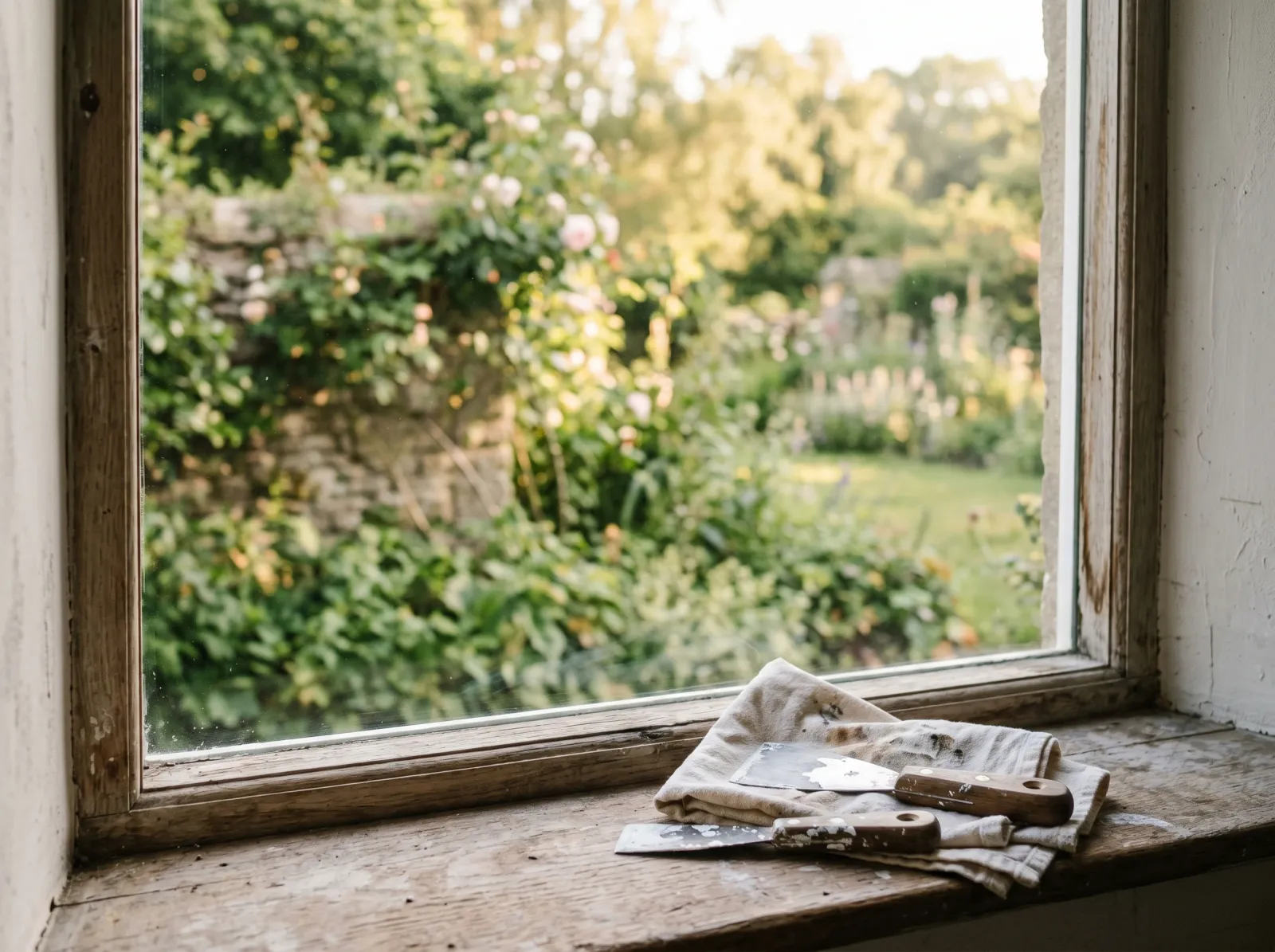 Glass after: clear, no haze, no scratch. The whole job took ten minutes.
Surface-by-Surface Cheat Sheet
Same four steps, different solvent and tool. This is the table I’d tape inside a cabinet.
| Surface | Latex / acrylic | Oil-based | Tool | Watch out for |
|---|---|---|---|---|
| Glass / window | Warm soapy water, then alcohol | Mineral spirits | Plastic razor, low angle | Tilt on a metal razor scratches |
| Glazed tile / ceramic | Soapy water or alcohol | Mineral spirits | Plastic razor | Grout lines hold paint; pick it out |
| Metal / hardware | Alcohol or warm vinegar | Mineral spirits | Plastic razor, soft cloth | Vinegar can etch raw aluminum |
| Finished hardwood | Soapy water, then alcohol | Mineral spirits, sparingly | Plastic scraper, rag | No acetone or lacquer thinner; melts the finish |
| Laminate / vinyl floor | Soapy water, then alcohol | Mineral spirits, quick wipe | Plastic scraper | Solvent dwell time softens the top layer |
| Carpet | Warm water + dish soap, then alcohol | Mineral spirits, blot | Cloth, scissors for the tip | Blot, never scrub; rubbing frays pile |
| Clothing | Soap or alcohol, back of stain | Turpentine / mineral spirits | Old toothbrush | No hot dryer until the stain is gone |
A few notes past the table. Carpet and clothing are blot jobs, never scrub jobs; the fibers fray and the stain spreads. Work from the back of fabric so you push paint out the way it came in. On laminate and vinyl, get the solvent off fast, or it lifts the printed wear layer. Raw, unfinished wood is the hard case: the paint soaks into open grain and any solvent that lifts it also raises the grain. Often the honest answer is to sand it out and refinish, which is its own sanding job.
Common Mistakes
- Scraping before softening. Dry paint chips and gouges. Soften, then lift.
- Metal razor on the wrong angle. A blade tilted too steep on glass leaves micro-scratches you only see at night under a lamp. Plastic first.
- Scrubbing carpet or fabric. Spreads the stain and frays the pile. Blot from the outside in.
- Acetone or lacquer thinner on a finished floor. It strips the paint and the polyurethane under it in one pass, leaving a bare spot to refinish.
- Skipping the test patch. Solvents dull some clear coats and melt some plastics. Thirty seconds in a hidden spot saves the surface.
- Tossing solvent rags in a pile. They self-heat. Lay them flat outside or seal them in water.
- Heat-drying a painted garment. A hot dryer bakes the stain in for good.
Prevention
The cleanup you skip is the one you prep for.
- Mask before you open the can. Quality painter’s tape on glass edges, hardware, and trim lines. See the painter’s tape guide for which tape holds a clean edge and which one bleeds.
- Cover the floor for real. Canvas drop cloths over the whole work zone, not a folded sheet under the ladder. Spray and roller overspray travel further than you think.
- Wipe spatter while it’s wet. A damp rag in your pocket. Fresh latex comes off with water; the same drip in a week needs alcohol and a razor.
- Back-roll and load the roller right so you’re not flinging spray. Half of what lands on the glass is from an overloaded roller. The roller-marks guide covers loading and pressure.
- Know your paint going in. Water-based or oil decides your whole cleanup kit. The oil-based versus water-based breakdown lays out the difference.
When to Call a Pro
- Antiques, leaded or stained glass, or any irreplaceable finished surface where a test patch itself is too risky.
- Pre-1978 painted surfaces where removal means sanding or scraping bonded lead paint. Test first, then follow EPA RRP practice or hire a certified contractor.
- Large carpet or upholstery areas soaked with oil-based paint. A cleaning pro has extraction gear you don’t.
- Solvent-sensitive flooring (some luxury vinyl, engineered finishes) where the manufacturer voids the warranty over the wrong cleaner.
What’ll Bite You in Two Years
The drip you painted over. Flat-looking latex spatter on a windowpane or a trim edge feels like nothing, so people roll a finish coat over it and move on. It’s still there under the paint, a hard bump catching light at a low angle, and every coat after it makes the bump more obvious, not less. Clean it while it’s a rag-and-solvent job. Once it’s buried under two coats of trim enamel, the only fix is to sand the whole edge flat and start over.
Ask a Question