Behr Ultra vs Marquee: Which to Buy
Behr Ultra vs Marquee on one-coat hide, scuff resistance, workability, and the real labor math — plus where Premium Plus and Dynasty land on the same ladder.

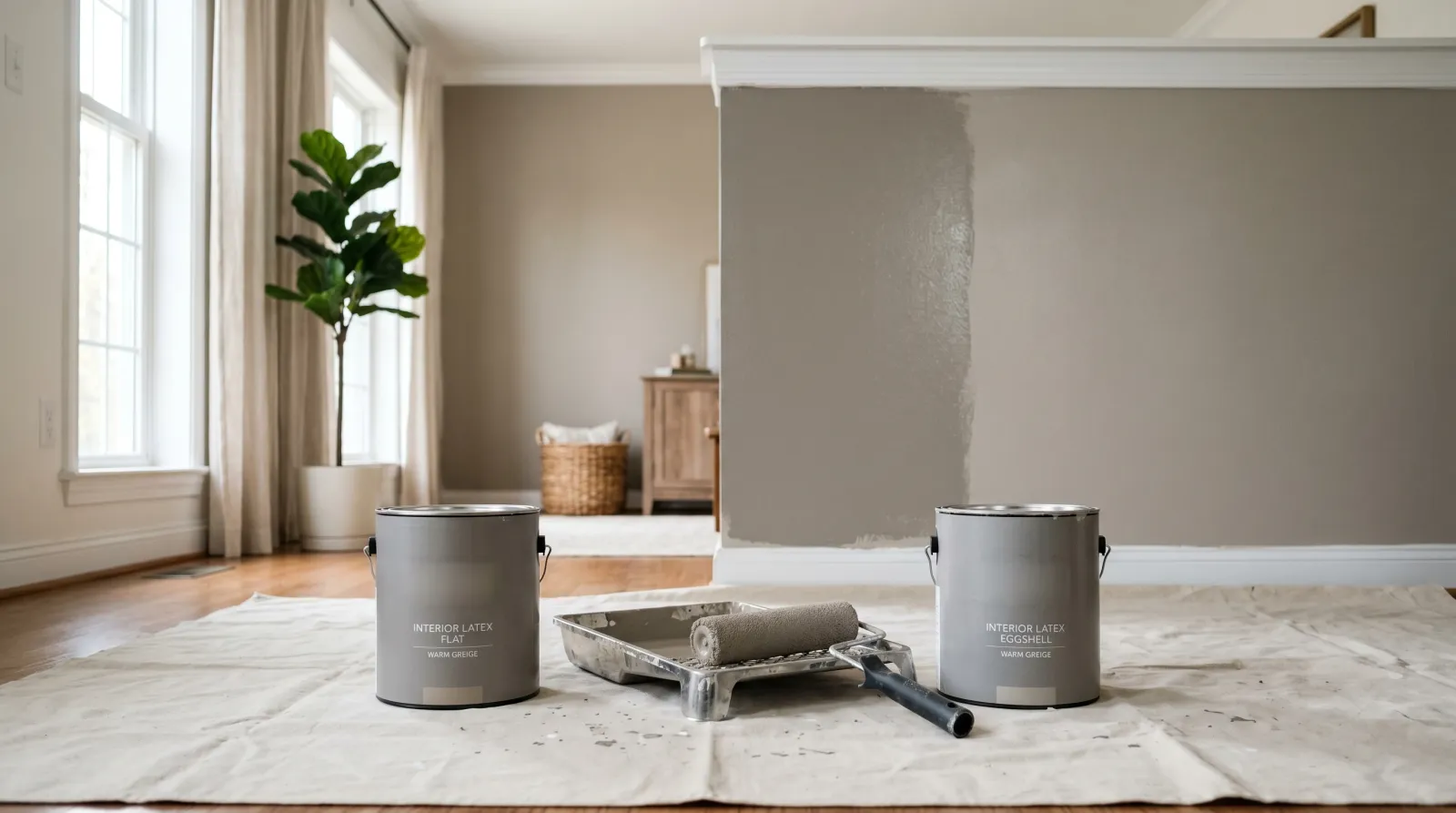
The 30-Second Answer
For a low-traffic room in a same or similar color, Behr Ultra. It hides most walls in one coat, runs about $10 a gallon cheaper, rolls easier, and it’s the can that actually carries Behr’s scuff-resistance and mildew-resistant package. For a big color change, a hard-wear room where hide matters more than handling, or a paid job, Marquee. Its one-coat hide is warranty-backed on 1,000-plus listed colors, and independent testers keep putting it at the top of the interior field. The whole decision comes down to two questions: how far is the color moving, and are you paying somebody for the labor? Yes to either, and Marquee earns the upgrade. If you want the most washable wall paint Home Depot sells and the money is there, that’s Dynasty, one rung higher — see below.
At a Glance
| Behr Ultra | Behr Marquee | |
|---|---|---|
| Price (gal, interior) | $40-50 | $50-60 |
| Price (gal, exterior) | $50-55 | $65-70 |
| One-coat hide | Often, not guaranteed | Yes on 1,000+ listed colors (warranty-backed) |
| One-coat hide (big color change) | Plan two coats | Often one, sometimes two |
| Volume solids | 37-44% | 41-46% |
| Scuff-and-mar additives | Yes (Scuff Defense) | No |
| Stain-blocking | Built in | Built in |
| Mildew-resistant formula | Antimicrobial, built in | Standard |
| Handling | Spreads like normal paint, forgiving | Thick, sticky, fast-setting, streaks if overworked |
| Touch dry / recoat | 1h / 2h | 1h / 2h |
| Full cure | 14-21 days | 14-21 days |
| VOC | <50 g/L | <50 g/L (GREENGUARD Gold) |
| Color deck | Full Behr library (1,400+ interior) | Full Behr library (1,400+ interior) |
| Warranty | Standard guarantee | Lifetime limited |
| Sheens (interior) | Flat, Eggshell, Satin, Semi-Gloss | Matte, Eggshell, Satin, Semi-Gloss (enamel) |
How to Tell Which Can You Already Have
If you didn’t paint the room yourself, here’s the 30-second read. Marquee labels itself “One Coat” right on the can and carries the lifetime-warranty line; Ultra reads “Paint & Primer” with no one-coat guarantee; Dynasty carries the stain-repellent and scuff-resistance callouts and a heavier lid. The lid stamp and the Home Depot receipt SKU prefix differ across all of them. On the wall, the tell is wear pattern rather than tier: grey scuff marks that wipe off cleanly point to a scuff-resistant can, and shiny halos where a cloth works the same spot point to a flat or matte sheen more than to a cheap paint. None of this changes what you buy next, but it tells you why the old wall is wearing the way it is.
Where These Two Sit in the Behr Line
Marquee used to be the top of the shelf. It isn’t anymore. Behr Dynasty arrived in 2021 and sits a rung above it, so the consumer ladder now reads Premium Plus, Ultra, Marquee, Dynasty, with contractor-only Behr Pro underneath at $22-28 a gallon. Here is the whole thing in one table.
| Premium Plus | Ultra | Marquee | Dynasty | |
|---|---|---|---|---|
| Price (gal, interior) | $30-40 | $40-50 | $50-60 | $60-70 |
| Price (gal, exterior) | $44-48 | $50-55 | $65-70 | Interior is the main line |
| Volume solids | 33-43% | 37-44% | 41-46% | 40-43% |
| One-coat guarantee | No | No | Yes, 1,000+ listed colors | Yes, select colors |
| Scuff-and-mar package | No | Yes | No | Yes |
| VOC | <5 g/L | <50 g/L | <50 g/L | <50 g/L |
| Interior high-gloss | Yes | No | No | No |
| Fade resistance | Weakest of the four | Good | Very good | 10-year claim |
| Coverage | 250-400 sq ft/gal | 250-400 sq ft/gal | 250-400 sq ft/gal | 250-400 sq ft/gal |
| Dry / recoat | 1h / 2h | 1h / 2h | 1h / 2h | 1h / 2h |
Two things fall out of that table. First, all four are waterborne acrylic paint-and-primer pulling from the same 1,400-plus interior color deck, so the color you picked is available in any of them — you’re buying resin and pigment load, not a palette. Second, the jumps are not evenly spaced in what they deliver. Premium Plus to Ultra buys a real stain-block and scuff package. Ultra to Marquee buys hide and a warranty. Marquee to Dynasty buys wear resistance back.
For context on the mid-range benchmark: ordinary big-box paint runs 35-38% volume solids. Marquee’s 41-46% is genuinely high, and it’s why it hides — and, as you’ll see below, why it handles the way it does.
Most upgrade questions stop at Premium Plus versus Marquee. Ultra is the quieter middle option a lot of buyers skip right past, and it’s often the smarter call. It buys most of Marquee’s hide for $10 less and hands back scuff resistance Marquee never had. If you’ve already read the Marquee versus Premium Plus breakdown, or the Premium Plus versus Ultra math one rung down, think of Ultra as the rung that splits the difference.
One footnote most ladder charts skip: Behr also sells Copper Force at $45-48, an interior-only EPA-registered paint that kills 99.9% of viruses and bacteria on the surface within two hours. It’s a specialty can for clinics, rentals, and immune-compromised households, not a rung on this ladder.
The cans look close on the shelf. The price and the fine print are where they part ways.
One-Coat Hide
This is the headline both cans chase, and the gap is real but narrower than the price suggests.
Ultra carries a paint-and-primer formula with solid pigment load. Over a same-tone or lighter wall, it pulls clean in one pass with a 3/8-inch microfiber roller. I rolled a 12-foot living-room wall going from one warm greige to a slightly deeper greige and got a single-coat finish with no flashing at the cut lines. Where Ultra slips is the hard color change. Light over a dark accent wall, or over a patchwork of drywall repairs, and coat one reads streaky. Plan two coats and a primer for anything dramatic.
Marquee’s advantage isn’t that it hides better in every case. It’s the guarantee, and it’s bigger than most people realize: the One-Coat Color Collection covers 1,000-plus specific colors out of the 1,400-plus in the interior deck. If a listed color doesn’t cover in a single coat, Home Depot replaces the can. I pulled a beige-to-deep-navy wall clean in one pass with a listed Marquee color, no primer. Ultra would have needed two coats and a primer for that same jump.
Independent testers back the hide claim rather than the marketing. Consumer Reports scored Marquee 89 out of 100 with top marks for hiding and stain resistance. The Washington Post put it first out of 21 interior paints it ran through its own testing. Country Living named it its best-coverage interior pick. Three different methodologies, same headline: coverage is the thing Marquee genuinely leads on.
The fine print cuts both ways. The guarantee excludes lighter shades going over dark and heavily textured surfaces, so the two hardest jobs on a wall are the two the warranty won’t cover. And step outside the One-Coat collection and Marquee’s hide drops to “very good,” the warranty stops backing the one-coat claim, and you’re often back to two coats anyway. Plenty of owners report a second coat even on a listed color, especially on trim. At that point Ultra closes most of the gap.
Winner: Marquee on guaranteed coverage and big color changes. On a same-tone refresh, it’s close enough that Ultra takes the value.
Washability and Scuff Resistance
This is the dimension most people get backwards, including an earlier version of this page. Paying more does not automatically buy you a tougher wall in the Behr line.
Two different kinds of damage get lumped together as “washability.” One is scrubbing — dragging a wet cloth over a cured film, the thing ASTM D2486 measures with a weighted abrasive brush. The other is scuffing and marring, the grey streak a shoe, a chair back, or a vacuum head leaves behind. Behr treats them as separate problems and sells separate answers.
The scuff-and-mar additives live in Ultra and in Dynasty. Marquee does not carry that package. Ultra also carries built-in stain-blocking and an antimicrobial mildew-resistant formula, which is the reason it keeps getting pointed at bathrooms and laundry rooms. Marquee’s formula is tuned for hide and stain resistance on a wiped surface, not for shrugging off a scuffed baseboard corner.
So the honest split is this: for a wall that gets marked up — a kid’s hallway, a mudroom, a stairwell where the vacuum bangs the drywall — Ultra is the better-armed can, and it’s the cheaper one. For a wall that gets wiped down more than it gets hit, Marquee’s stain resistance is genuinely excellent and Consumer Reports gave it top marks there. For a wall that gets both, that’s the argument for Dynasty.
Burnishing is the other thing to watch, and it’s a sheen problem more than a tier problem. Burnishing is the matte texture polishing shiny under friction — you can’t wipe it off, and the only fix is repainting the wall plane corner to corner. It shows up on flats and mattes in any tier. Going one sheen up, to eggshell or satin, does more to prevent it than moving a rung up the price ladder does.
In a low-touch room none of this matters. Nobody wipes a dining-room wall.
Winner: Ultra on scuff and mildew resistance. Marquee on stain resistance in a wiped zone. Not the lopsided win the price gap implies.
Color Retention
Both cans tint from the same Behr library and hold color well indoors. The gap only opens under hard light.
In a north-facing or interior room with indirect light, Ultra and Marquee read identical at year three on greiges, off-whites, and pastels. Neither drifts inside a normal repaint cycle. Push to a south-facing room with strong afternoon sun and a saturated dark wall, and Marquee holds a hair cleaner. Ultra in a deep navy reads faintly chalky a bit sooner; Marquee in the same color stays truer. The difference is small, and it only shows on saturated darks in direct sun.
On exterior work the gap widens, and there the difference is worth paying for — see the exterior section further down. Dynasty’s 10-year fade claim is the only hard number anybody in the Behr line puts on this, and it’s an interior claim.
Winner: Marquee, marginally, and only on saturated darks in strong light. A tie everywhere else.
Workability
These two do not lay down the same way, and this is where a first-time DIYer should pay the most attention.
Marquee’s high solids load is the same thing that buys the hide, and it comes at a cost in the can. It’s noticeably thicker and stickier than Ultra — the paint-desk staff at Home Depot describe it as gooey, and that’s a fair word for it. It drags on the roller, it loads heavy, and it sets fast. That combination punishes overworking. Go back over a section that has started to set and you’ll pull streaks and roller marks into the finish that don’t level out. Cut lines want a confident single pass, not a fussed one. On trim it’s harder still, which is where most of the “I needed a second coat anyway” reports come from.
Ultra feels like paint most people are used to. It spreads smoother, it moves under the brush longer, and it forgives a hesitant back-roll. If this is your first room, or you’re working alone on a hot day, or you’re cutting a lot of trim, Ultra is the more forgiving can by a wide margin — and it’s the cheaper one, which makes the choice easy.
The timing is the same for both, contrary to the shelf talk: Behr lists touch dry in about an hour and recoat at two hours for both lines. Nothing about Marquee gets you back online faster. For low-odor work in an occupied house, both stay under 50 g/L VOC; the deeper context on that number lives in the VOC explainer. If near-zero VOC is the priority, Premium Plus is the only Behr wall tier under 5 g/L.
Winner: Ultra. For most people, in most rooms, it’s the easier can to get a clean wall out of.
Price-To-Value
Here’s where the spec sheet turns into a budget, and where Ultra makes its strongest case.
A typical four-bedroom interior repaint runs about 8 gallons of wall paint. Run the two cans:
- Ultra at $45 a gallon, two coats on the big color changes and one on the same-tone rooms, averages roughly $310 in paint.
- Marquee at $55 a gallon, one coat on listed colors and two elsewhere, averages roughly $400.
- Dynasty at $65 a gallon on the same plan lands closer to $470.
Pure paint cost, Ultra saves about $90 across the house against Marquee. That’s the easy half.
The hard half is labor. A contractor charges $200-400 a room for two coats, with the second coat the bigger labor block. A guaranteed one-coat Marquee on a listed color saves roughly $150 a room versus two-coat Ultra. Across six rooms that’s $900, and Marquee’s $90 paint premium disappears against it. On a paid job with real color changes, Marquee wins the math hard. On a paid job that’s mostly same-tone refreshes, the saved coat never materializes and the premium is just cost.
DIY flips it further. Your weekend isn’t billable, so the labor savings collapse to zero. Now it’s $310 of Ultra against $400 of Marquee, and Ultra wins by $90 on a wall that will look the same and handle scuffs better.
Winner: Marquee on a paid job with color changes. Ultra on a DIY repaint.
Where Dynasty Fits
If you came here to find the best interior paint Home Depot sells, the answer stopped being Marquee in 2021. Dynasty launched that year as the tier above it, priced around $60-70 a gallon — roughly $7 over Marquee — and aimed squarely at Benjamin Moore Aura and Sherwin-Williams Emerald rather than at anything else on the Behr shelf.
What the extra $7 actually buys:
- Scuff-and-mar resistance Marquee doesn’t have. This is the headline. Dynasty carries the same class of scuff additives Ultra does, on top of a much heavier resin package.
- Advanced stain-blocking plus a stain-repellent surface. Marquee blocks stains; Dynasty is built to keep them from keying in at all.
- A 10-year color-fade protection claim. Marquee makes no equivalent promise.
- Block resistance. Doors and windows painted in Dynasty can close without sticking to the jamb about four hours in. That’s a real workday advantage on trim and doors, and it’s the spec Marquee is weakest on.
- Better handling. Home Depot staff describe Dynasty as smoother and thinner than Marquee, and faster-drying. After the workability section above, that should read as a feature, not a downgrade.
What it doesn’t buy:
- A wider sheen bench. Marquee runs matte, eggshell, satin, and semi-gloss. Dynasty’s interior line is narrower, built around matte, eggshell, and semi-gloss enamel — satin availability varies by store and SKU, so check the shelf before you plan a satin hallway around it. Neither line carries an interior flat; that’s Ultra’s and Premium Plus’s territory.
- More hide, on paper. Dynasty’s volume solids run 40-43% (matte 43%, eggshell 42%, semi-gloss 40%) against Marquee’s 41-46% (matte 46%, eggshell 45%, satin 42%, semi-gloss 41%). Marquee is the thicker, higher-solids paint. Dynasty carries a one-coat guarantee on select colors the same way Marquee does, but it is not the better hider of the two.
- A cheaper job. At $65 a gallon it’s the most expensive wall paint on the aisle.
The practical verdict: Dynasty for high-traffic interior walls where scuffs, kids, and repeat cleaning are the real enemy. Marquee if you need a satin sheen, a big color change buried in one coat, or you’d rather keep the $7. And Ultra if the room is ordinary — which most rooms are. The full breakdown lives in the Behr Dynasty single-product review.
Exterior: Marquee by Default
Everything above is an interior conversation. Outside, the ladder is shorter, and Dynasty is not the story it is indoors — Behr’s exterior push is built around Marquee.
Marquee Exterior runs about $65-70 a gallon in flat, satin, and semi-gloss, with a 700-plus exterior color deck and the same 250-400 sq ft per gallon coverage as the interior line. Volume solids sit at 45% flat, 41% satin, 39% semi-gloss. Ultra Exterior lands at $50-55, Premium Plus Exterior at $44-48.
That $15-a-gallon gap between Ultra and Marquee matters more outside than it does inside, because the failure mode outside is UV and weather rather than a cloth and a switchplate. On a south or west elevation in strong sun, on a saturated body color, or on siding you don’t want to touch again for a decade, Marquee Exterior is the sensible top of the Behr range. On a north-facing garage, a fence, or a rental, Ultra Exterior does the job for less.
Sheen matters more outside too, and the sheen guide covers how flat, satin, and semi-gloss weather differently before you commit a whole house to one.
Where Each One Loses
Ultra loses on the hard color change. Light over a dark accent wall, or a saturated color over a patchwork of drywall repairs, and you’re buying a primer and a second coat that a listed Marquee color would have skipped. It also gives up the warranty entirely, which matters on a job you’re billing someone for.
Marquee loses twice. First on value in the boring rooms: a same-color refresh in a low-traffic bedroom doesn’t use a thing Marquee charges extra for, and you’re paying $10 a gallon for a guarantee you’ll never call in. Second, and less obvious, it loses on the roller. It’s the stickiest, fastest-setting can of the four, it’s the least forgiving on trim, and it’s the one most likely to leave a first-timer with visible roller marks on a wall that a $10-cheaper Ultra would have laid down clean. It also has no scuff-and-mar package, so the “top of the line” reputation it still carries on the shelf doesn’t cover the damage most family walls actually take.
Both lose to Dynasty on wear resistance, and Dynasty loses to both on price.
One more Marquee note: its semi-gloss enamel can read slightly warm against cool white trim in a north-facing room. Mild but real on a 2024-era can. Ultra’s whites stay cleaner there.
The Verdict by Use Case
- Pick Marquee if: the wall going on is a big color change from the wall coming off, the job is paid work where one guaranteed coat saves a coat of labor, you want a satin sheen at the top of the range, you want the lifetime warranty on a primary living space, or you’re painting the outside of the house.
- Pick Ultra if: the refresh is the same or a similar color, the room takes scuffs more than scrubs (kid hallways, mudrooms, stairwells), it’s a bathroom or laundry where the mildew-resistant formula earns its keep, this is your first room with a roller, or the labor is your free Saturday and you’d rather keep $10 a gallon.
- Pick Dynasty if: it’s a high-traffic interior wall you want to stop repainting, you’re doing doors or trim and want them closed the same afternoon, and the extra $7 a gallon doesn’t change the plan.
- Pick Premium Plus if: you need near-zero VOC (under 5 g/L), you want interior high-gloss, or it’s a rental, a closet, or a ceiling where nothing above the base tier gets used.
- It’s basically a tie when: it’s a normal-use adult bedroom in a DIY repaint with a moderate color shift. Both will look right. Decide on the color jump, not the room. Big jump, Marquee. Modest jump, Ultra.
Top Picks by Side
Going with Marquee? For the warranty fine print, sub-scores, and the SKU map, see the Behr Marquee single-product review. For a kitchen-specific pick list where Marquee goes up against Aura, Emerald, and Cashmere, the best kitchen paint round-up is the next read.
Going with Ultra? Match it to the room. Its mildew-resistant formula holds up in a normal bathroom, though a dedicated moisture-spec’d paint from the bathroom paint round-up still beats it in a windowless shower room. If you’re weighing the rung below instead, Premium Plus versus Ultra runs that math. And if you’re unsure which sheen to put on the wall before you commit to any can, the sheen guide sorts matte through semi-gloss by room and traffic.
Thinking about Dynasty instead? The Behr Dynasty review covers the sheens, the block-resistance claim, and where it lands against Aura and Emerald — the two paints it was actually built to fight.
FAQ
Is Behr Ultra the same paint as Marquee? No. Ultra is the paint-and-primer mid-tier at roughly $40-50 a gallon; Marquee is the one-coat line at $50-60 with a lifetime limited warranty. Marquee carries more solids, so it hides better and handles worse. Ultra carries the scuff-and-mar and antimicrobial mildew-resistant package Marquee doesn’t. Same brand, same color deck, different formula.
Will Ultra cover in one coat like Marquee? Often, over a same-tone or lighter wall. Going light over dark, or over patched drywall, plan two coats and a primer. Marquee’s edge is the guarantee — on one of the 1,000-plus listed colors, Home Depot replaces the can if it doesn’t cover in one. Ultra gives you no such backstop.
Can I use Ultra in a kitchen? Yes. It holds up well, and its scuff resistance is better than Marquee’s. Marquee’s kitchen advantage is hide on a color change and stain resistance on a wiped wall, not toughness against marks. If the kitchen is staying roughly the same color, Ultra is the smarter can.
What is the order of Behr paint lines from cheapest to most premium? Interior, per gallon: Premium Plus $30-40, Ultra $40-50, Marquee $50-60, Dynasty $60-70. All four are acrylic paint-and-primer, cover 250-400 sq ft a gallon, and tint from the same 1,400-plus color deck. Premium Plus is the only near-zero-VOC tier and the only one in interior high-gloss.
Is Behr Dynasty better than Marquee and Ultra? For wear, yes. Dynasty has topped the line since 2021, adds the scuff-and-mar resistance Marquee lacks, claims 10-year fade protection, and lets doors close without sticking after about four hours. It also applies smoother than Marquee. Marquee still holds slightly higher volume solids, so it remains the better hider, and it carries the wider sheen bench.
Is Behr Marquee hard to apply? It’s thicker and stickier than Ultra, and it sets fast, so overworking a section can leave streaks. Trim is where most people notice it. Ultra spreads like paint most people are used to and is the more forgiving can for a first room.
Related
- Behr Marquee vs Premium Plus: the other rung of the same upgrade question
- Best kitchen paint: where Marquee competes against Aura, Emerald, and Cashmere
- Best bathroom paint: the moisture-spec’d picks that beat both Behr cans
- Behr Marquee — full single-product review: warranty fine print and sub-scores
- Behr Dynasty — full single-product review: the tier that took Marquee’s crown in 2021
- Behr Premium Plus vs Ultra: the rung below this one
- Sheen guide: matte through gloss, by room and traffic