Urethane Cement Floor for Food Plants: Specifier's Guide (2026)
Urethane cement floor systems for food and beverage plants, compared by DFT, thermal-shock rating, and USDA/FDA acceptance. ICRI CSP prep, MVE limits, contractor path.

Disclosure: Affiliate links to retailers and manufacturer-direct programs. Recommendations are spec-driven, not commission-driven.
Use Case
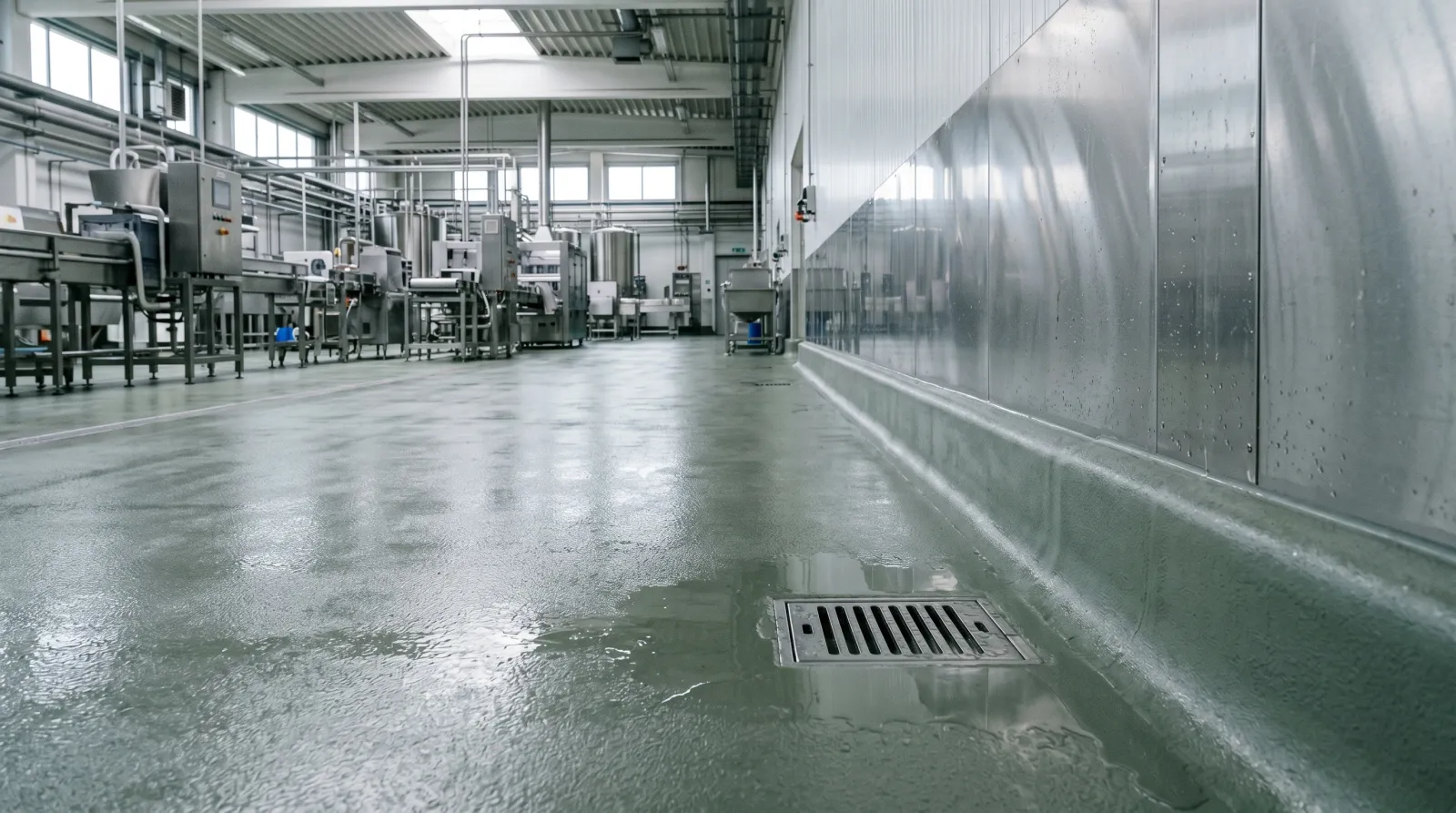
A urethane cement floor is the working surface in food and beverage production: meat and poultry plants, dairies, breweries, commercial bakeries, beverage bottling lines, commissary kitchens, and cold-storage process rooms. The asset is a concrete slab that has to survive a punishment list no architectural coating addresses. Steam and hot-water wash-down at 180–200°F. Boiling product spills. Animal fats, blood, lactic acid, and the sodium hydroxide and quaternary cleaners run through clean-in-place cycles every shift. Forklift and pallet-jack traffic over the same surface. Standing water on a sloped slab that drains to channel grates. The floor also carries a regulatory job: USDA and FDA require a non-absorptive, cleanable, drainable surface with no joints that shelter bacteria.
Urethane cement is a three-component chemistry: urethane resin, hardener, and a cementitious aggregate filler. The cement content is what makes it work in a food plant. It shares concrete’s coefficient of thermal expansion, so a 200°F steam line hitting a 50°F floor does not shear the coating off the slab the way it shears epoxy. It is vapor-permeable, so it installs over young or damp concrete that epoxy cannot tolerate. The aggregate body gives it compressive strength above 6,000 psi and an abrasion resistance that outlasts thin-film coatings under wheeled traffic.
Service life expectations: 10–15 years on a properly installed 1/4-inch slurry-broadcast system in a heavy wash-down process room, 15–20 years on a troweled mortar floor in a dry or moderate zone, and 6–8 years on a thin self-leveling build in a light-traffic area before the texture needs a refresh broadcast. Service life is set in the prep and the cove detail, not the topcoat. A floor that fails early almost always failed at the drain termination or the wall junction, not in the field.
Zoned Recommendation Matrix
A food plant is not one floor. The right build changes room to room:
| Zone | Recommended system | Why |
|---|---|---|
| Kill floor / raw process (wet, hot wash-down) | System A (1/4-inch slurry broadcast, full cove) | Thermal shock, blood/fat, lactic acid, OSHA wet anti-slip |
| Cook / steam-kettle room | System A with high-temp topcoat | Boiling spills and steam at 200°F-plus |
| Cooler / blast freezer | System B (heavy-duty mortar rated to -40°F) | Sub-zero cure and thermal cycling; standard epoxy cracks |
| Dry storage / packaging | System C (self-leveling, lighter build) | Light pallet traffic, no sustained wet exposure |
| CIP / caustic wash bay | System A with chemical-resistant seal | Sustained sodium hydroxide and acid dwell |
| Loading dock (heated) | System B mortar, slip-broadcast at the threshold | Hot-tire pickup, chloride from yard de-icing |
| Office / QA lab | Epoxy or polyaspartic (separate spec) | No food process exposure; lower cost justified |
For a single-zone build-out (a standalone walk-in cooler, a small commissary kitchen), skip the matrix and run System A across the slab. The cove detail and drain slope matter more than zoning at small scope.
Spec Requirements
| Spec | Value |
|---|---|
| Dry film thickness — slurry broadcast | 1/4-inch (≈250 mils) body + 12–20 mils seal coat |
| Dry film thickness — troweled mortar | 3/16-inch to 3/8-inch (188–375 mils) |
| Coverage at spec’d build | sold by the kit; ≈40–55 sq ft per kit at 1/4-inch |
| VOC | 0–65 g/L (100% solids, near-zero VOC); SCAQMD Rule 1113 compliant |
| Standards | ASTM C580 (flexural/compressive), ASTM C413 (absorption), ASTM C722 (thermal shock), ASTM F1869 (MVE), ASTM D4060 (abrasion) |
| Certifications | USDA-acceptable; FDA 21 CFR 175.300 incidental food contact; NSF/ANSI 51 on select SKUs |
| Substrate prep — concrete | ICRI CSP 5–6 — diamond-grind or shotblast aggressive; mortar systems need a deep mechanical key |
| Surface prep | SSPC-SP13 mechanical; saw-cut termination keys at all perimeters, drains, doorways |
| Moisture vapor emission ceiling | Up to 12–15 lb/1000 sq ft/24h or 98% RH (verify per product); test with ASTM F1869 / F2170 |
| Concrete cure before coating | 5–7 days minimum (vs 28 days for epoxy) |
| Service temp (cured) | -40°F to 250°F continuous; 280°F intermittent steam on high-temp systems |
| Cure to service | Foot traffic 8–12h · full service 24–48h · chemical resistance 3–5 days |
| Ambient at application | 50°F to 85°F; substrate ≥5°F above dew point; humidity <90% |
| OSHA anti-slip COF | 0.5 wet minimum (1910.22); aggregate broadcast required in all process zones |
Three details separate a passing food-plant floor from a failed one: the ICRI CSP profile (5–6, not the CSP 3 an epoxy floor accepts), the saw-cut termination key at every perimeter, and the integral coved base. The cove is not cosmetic. A 4-inch radius cove run up the wall and tied into the floor eliminates the 90-degree wall-floor joint where water pools and bacteria colonize. USDA inspectors look for it first.
System Chemistry Compared
Choose the chemistry class before the product. These are the floors that get pitched for a food plant:
| Chemistry | Pot life | Recoat / cure | Service temp | Thermal shock | $/sq ft installed | Best for |
|---|---|---|---|---|---|---|
| Urethane cement (this guide) | 15–30 min | 8–48 hr | -40°F to 250°F | 🟢 survives steam | $9–18 | Wet/hot food process, USDA plants |
| Standard epoxy | 1–4 hr | 8–24 hr | up to 140°F | 🔴 debonds under steam | $4–9 | Dry warehouse, chemical zones |
| Polyaspartic | 20–45 min | 30 min–4 hr | -40°F to 250°F | ⚪ mid; thin-film | $6–10 | Showrooms, fast-cycle commercial |
| MMA (methyl methacrylate) | 5–15 min | 1 hr | -40°F to 200°F | 🟢 good | $14–28 | Freezer install, 1-hour cure emergencies |
Urethane cement is the only chemistry on this list built for both the heat and the moisture of a wash-down food plant. Epoxy is cheaper and smoother, and it fails the thermal-shock test at the first steam cleaning. Polyaspartic is a thin-film coating, not a mortar — it has no business taking forklift point loads in a kill room. MMA cures fast enough for an overnight freezer install and is the alternate when 24-hour downtime is not available, at roughly double the material cost. For a federally inspected plant, the answer is urethane cement; the only open question is which build and which manufacturer.
Recommended Systems
Three full multi-coat stacks at different build levels. All three reference the same ICRI CSP 5–6 prep, saw-cut termination keys, and integral coved base.
System a — Sherwin-Williams General Polymers FasTop (premium wet Process)
| Layer | Product | DFT |
|---|---|---|
| Body coat | General Polymers FasTop 12 Urethane Mortar | 3/16-inch (≈188 mils) |
| Broadcast | Aluminum oxide / quartz aggregate to refusal | (into wet mortar) |
| Seal coat | FasTop SL or FasTop TG Urethane Topcoat | 12–20 mils |
| Total | ≈200–250 mils |
Service life 12–15 years in a heavy wash-down process room. The FasTop line is the most widely spec’d urethane cement in US meat and poultry plants and carries USDA acceptance plus FDA 21 CFR food-contact chemistry. The seal coat ships in standard and high-temp grades. Specify TG for steam-kettle and cook rooms. General Polymers flooring at Sherwin-Williams.
System B — BASF Ucrete UD200 (heavy-duty Thermal-Shock)
| Layer | Product | DFT |
|---|---|---|
| Body coat | Ucrete UD200 Heavy-Duty Urethane Mortar | 1/4-inch (≈250 mils) |
| Topcoat (optional) | Ucrete DP10 Flow-Applied Topcoat | 40–60 mils |
| Total | 250–310 mils |
Service life 15–20 years. Ucrete is the heavy-duty answer for freezers, blast cells, and the most aggressive thermal-cycling zones. The UD200 mortar is rated for steam cleaning and continuous service from -40°F to 250°F, and it installs in cold rooms where other systems will not cure. This is the system when the floor sees both sub-zero storage and hot wash-down on the same shift. MasterTop / Ucrete from Master Builders Solutions.
System C — Sika Sikafloor PurCem (self-Smoothing, lighter Build)
| Layer | Product | DFT |
|---|---|---|
| Body coat | Sikafloor-21 PurCem Self-Smoothing | 3/16-inch to 3/8-inch |
| Broadcast + seal | Sikafloor-29 PurCem broadcast + Sikafloor-31 PurCem seal | 15–25 mils seal |
| Total | 190–280 mils |
Service life 8–12 years in dry storage, packaging, and moderate-traffic process support areas. The PurCem self-smoothing grade installs faster than a troweled mortar and gives a cleaner finish for packaging and QA rooms that still need food-grade chemistry without the full kill-floor build. Skip the self-smoothing grade in any standing-water zone; specify the broadcast version there. Sika heavy-duty flooring product page.
Systems Compared
| System | Total build | $/sq ft installed | Service life | Best for |
|---|---|---|---|---|
| A — SW FasTop | ≈200–250 mils | $11–16 | 12–15 years | Wet/hot process, kill floors, CIP zones |
| B — BASF Ucrete UD200 | 250–310 mils | $13–18 | 15–20 years | Freezers, blast cells, thermal-cycling |
| C — Sika PurCem | 190–280 mils | $9–14 | 8–12 years | Dry storage, packaging, process support |
Installed pricing assumes a 3,000+ sq ft scope through a manufacturer-certified flooring contractor with diamond-grind prep, coved base, and drain detailing included. The cove and drain work is 15–25% of the installed cost and is where low bids cut corners. Sub-1,000 sq ft jobs run 30–50% higher per foot on every system.
Application and Contractor Path
Urethane cement is not a DIY product class. The body coat is a three-component mortar with a 15-to-30-minute pot life, placed by gauge rake and finished by power trowel or by hand to a controlled thickness, then broadcast to refusal before it kicks. A crew that misses the pot life leaves a cold joint that telegraphs through the floor and fails at the drain. Specify a contractor with SSPC-QP1 certification at minimum, and require the manufacturer’s installer-certified roster — Sherwin-Williams General Polymers, BASF Master Builders, and Sika all publish certified-applicator lists by region.
Four contractor-qualifying questions before you sign:
- Has the crew placed this specific urethane cement line in a USDA plant in the last 12 months? Mortar placement technique does not transfer cleanly across manufacturers.
- How are terminations detailed? Every perimeter, drain, and doorway needs a saw-cut anchor key, not a feathered edge. A feathered edge chips and lifts under a floor scrubber inside a year.
- Is the integral cove formed in the same pour as the floor, or applied as a separate band later? Same-pour monolithic cove is the USDA-defensible detail; a glued-on cove base is a joint waiting to fail.
- What is the MVE and dew-point protocol? Urethane cement tolerates high moisture, but it has a ceiling. Document ASTM F1869 readings and confirm the substrate sits 5°F above dew point during placement.
There is no light-DIY tier here the way there is for a small epoxy garage. The smallest food-plant floor still needs mortar-placement skill and a monolithic cove. If a buyer is coating a dry, non-process back room, a food-grade epoxy or polyaspartic from the epoxy warehouse floor guide is the cheaper correct answer, not a thinned-down urethane cement.
Failure Modes
Five failures account for nearly every urethane cement warranty claim in a food plant. Each is set in the specification and prep phase, not the chemistry.
- Edge lift and chipping at terminations. Cause: feathered edges at drains, doors, and walls instead of saw-cut anchor keys. A floor scrubber or pallet wheel catches the thin edge and peels it. Prevention: saw-cut a 1/4-inch by 1/4-inch key at every perimeter and drain, lock the mortar into it.
- Cove-base separation. Cause: cove applied as a separate band after the floor cured, creating a cold joint at the wall. Bacteria colonize the gap and the inspector flags it. Prevention: form the integral cove in the same placement as the floor, monolithic, 4-inch radius minimum.
- Thermal-shock cracking at steam lines. Cause: undersized build under a localized 200°F heat source, or a standard topcoat where a high-temp grade was needed. Prevention: specify the high-temp seal (FasTop TG, Ucrete DP) and full mortar build in cook and kettle zones.
- Surface debonding from contamination. Cause: residual fat, blood, or cleaning-chemical film left in the slab pores before placement; the mortar bonds to grease, not concrete. Prevention: degrease, then diamond-grind to CSP 5–6 to remove the contaminated surface layer, vacuum twice.
- Slip-and-fall from a worn or over-smoothed surface. Cause: aggregate broadcast skipped or worn out in traffic lanes, or a seal coat applied too glossy in a wash-down zone. Prevention: broadcast to refusal, specify OSHA 1910.22 wet COF 0.5, and schedule a refresh broadcast at year 6–8 in high-traffic lanes.
The first two — terminations and cove — produce the majority of the field claims I see in food plants. Both are detailing decisions made before any product is mixed. Inspect the drain and wall details during the install, not after.
Where to Buy / Spec
| Channel | Best for | Path |
|---|---|---|
| Sherwin-Williams General Polymers rep | USDA plant spec, full system warranty, FasTop | SW General Polymers flooring |
| BASF Master Builders / Ucrete rep | Freezer and thermal-shock builds, federal facility work | MasterTop product page |
| Sika PurCem distributor | Self-smoothing builds, packaging and support zones | Sika heavy-duty flooring |
| Industrial distributor / Amazon Business | Topcoat refresh kits, small patch repairs, aggregate | (search by manufacturer; verify food-grade SKU) |
Manufacturer-direct is the only channel that makes sense above 1,000 sq ft. The rep network runs a free pre-bid site visit that catches the MVE reading, the drain layout, and the cove detail before the bid lands. For a USDA plant, ask the rep for the USDA acceptance documentation and the FDA 21 CFR 175.300 statement in writing. The inspector will want it in the file.
FAQ
The buyer questions are in the frontmatter. The short version: urethane cement is the USDA-default floor for wet, hot food process; it tolerates more moisture and far more heat than epoxy; the spec lives in the cove, the drain key, and the CSP 5–6 prep, not the topcoat brand.