Antifouling Bottom Paint: Marine Hull Specifier's Guide (2026)
Antifouling paint specified for commercial and fleet hulls. Ablative vs hard, copper vs copper-free, DFT, haul-out cycle, substrate prep, and the contractor path.

Disclosure: Affiliate links to retailers and manufacturer-direct programs. Recommendations are spec-driven, not commission-driven.
Use Case
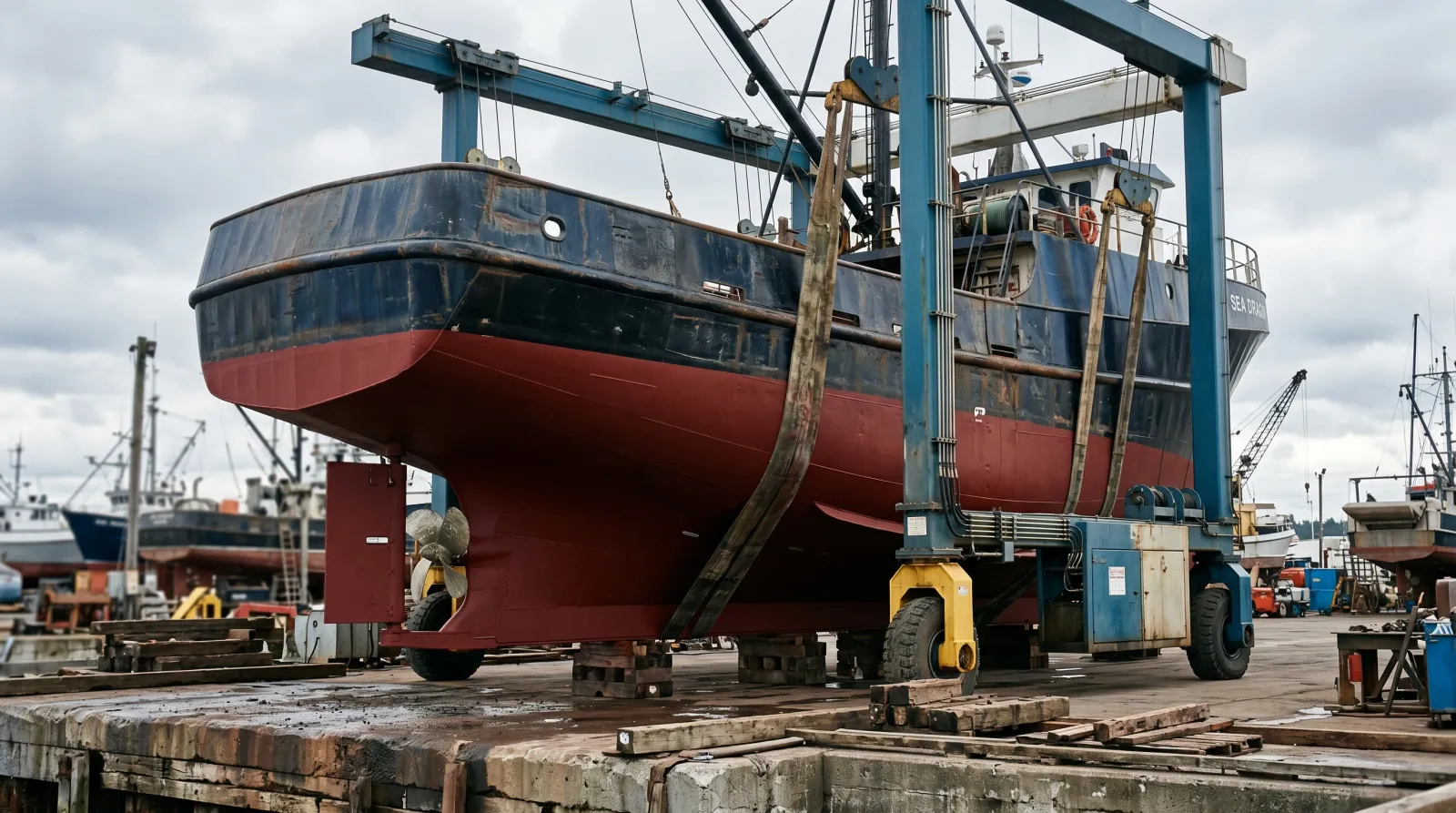
Antifouling bottom paint is the biocidal coating below the waterline that keeps barnacles, tube worms, slime, and weed off a hull. The asset is the wetted bottom of a vessel: a charter fishing boat, a harbor tug, a pilot launch, a workboat, a ferry, or a fleet of patrol craft that have to make rated speed and hold a fuel-burn target. Fouling is not cosmetic. A film of slime adds drag; a crop of barnacles can cost a planing hull several knots and add double-digit fuel burn. For a commercial operator, the bottom paint is a fuel-economy line item and a haul-out-schedule line item before it is anything else.
The coating is a registered pesticide. Every antifouling sold in the US carries an EPA FIFRA registration number on the can, because the active ingredient (cuprous oxide in most paints, Econea and zinc pyrithione in the copper-free grades) is a biocide that leaches into the water at a controlled rate to keep the hull surface inhospitable. That leach rate is the whole point of the product, and it is why the paint is consumed over a season rather than lasting like a topside enamel.
Service life is measured in haul-out cycles, not years of film integrity. A commercial hull in warm, high-fouling water (the Gulf, South Florida, the Caribbean) runs a 12-month cycle. The same hull in cooler northern water stretches to 18 or 24 months. Fast hulls and hulls that run daily foul slower than hulls that sit idle in a slip, because moving water and a self-polishing film keep the surface fresh. The spec calls for matching the paint chemistry to the duty cycle: a fixed annual dry-dock favors a hard high-copper paint, an in-service hull that rarely hauls favors a copolymer ablative.
Spec Requirements
The spec block before any product name. Numbers move with the manufacturer and the specific grade; the categories hold.
| Spec | Value |
|---|---|
| Dry film thickness (DFT) | 4–8 mils dry per coat; 8–16 mils total in 2 coats; add a 3rd coat at the waterline, rudder, and leading edges |
| Coverage @ spec’d DFT | 400–500 sq ft/gal per coat by brush/roll; less by spray with overspray loss |
| VOC | 330–400 g/L solvent-borne; CARB/SCAQMD cap antifouling near 400 g/L — confirm the regional formula before a California haul-out |
| Standards | ASTM D3623 antifouling raft test; ASTM D6442 copper-in-film; ASTM D4541 / D3359 adhesion |
| Registration | EPA FIFRA pesticide registration number on every can; state pesticide rules govern application and waste |
| Substrate prep — sound old paint | Wash, light sand to 80–120 grit, solvent wipe; recoat with compatible paint |
| Substrate prep — bare/blistered laminate | Strip to gelcoat, dry the laminate, apply epoxy barrier (InterProtect 2000E, Pettit Protect 4700, Tuff Stuff) to 8–10 mils before antifouling |
| Substrate prep — bare metal | SSPC-SP10 near-white blast on steel; dedicated metal-safe primer on aluminum (no cuprous oxide directly on aluminum — galvanic corrosion) |
| Ambient at application | 50°F to 90°F; relative humidity <85%; surface ≥5°F above dew point |
| Recoat / launch window | Recoat per TDS (commonly 4–16 hours between coats); many ablatives require a minimum and a maximum dry time before splash |
| Cure to service (launch) | Most paints splash 16 hours to a few days after the final coat; ablatives have a launch window that closes if the paint dries too long |
Three numbers govern the job: the cuprous oxide loading (drives fouling resistance and price), the total DFT (drives how many haul-out cycles the film survives), and the barrier-coat integrity (drives whether the hull blisters from the laminate up). Miss the barrier on a wet or blistered hull and the antifouling fails from underneath no matter how good the paint is.
System Chemistry Compared
Three chemistries cover almost every commercial antifouling spec. Copper loading and polishing behavior separate them.
| Chemistry | Recoat / launch | Service water | UV / topside exposure | $/sq ft band | Best for |
|---|---|---|---|---|---|
| Hard modified-epoxy (contact-leaching) | 🟢 Wide launch window; can dry indefinitely before splash | 🟢 Warm, high-fouling, fast hulls | 🔴 Below waterline only; chalks if left dry | $1.50–3.00 | Fixed-schedule fleet hauls, fast/planing hulls, racing bottoms |
| Self-polishing copolymer (ablative) | 🟡 Has a maximum dry time before splash | 🟢 In-service hulls, multi-season | 🔴 Below waterline only | $1.20–2.50 | Hulls that run often, missed-haul-out tolerance, low buildup |
| Copper-free (Econea / zinc pyrithione) | 🟡 Follow TDS launch window | 🟢 Copper-restricted jurisdictions; aluminum hulls | 🔴 Below waterline only | $2.00–3.50 | Washington/California copper rules, aluminum hulls, environmental specs |
Hard paint wins on raw fouling resistance and on hulls that get burnished smooth for speed, and it forgives a hull that sits dry between coats. Ablative wins on low paint buildup over a decade and on hulls that stay in the water. Copper-free is the compliant answer wherever local rules restrict copper-leaching paint, and the required answer on bare aluminum, where cuprous oxide drives galvanic corrosion.
Recommended Systems
Three full systems at different duty cycles. Each is a stack: barrier coat where the hull needs it, then antifouling at spec’d DFT. Verify the current grade and EPA registration against your haul-out state before bid.
System a — Pettit Trinidad SR (hard High-Copper, Fixed-Schedule Fleet)
| Layer | Product | DFT |
|---|---|---|
| Barrier (bare/blistered hull) | Pettit Protect 4700/4701 epoxy barrier | 8–10 mils in 4 coats |
| Tie coat / primer | Pettit 6627 Primer | 1–2 mils |
| Antifouling (2–3 coats) | Trinidad SR hard modified-epoxy, ~65% cuprous oxide | 8–16 mils |
| Total (over barrier) | 17–28 mils |
Trinidad SR carries one of the highest cuprous oxide loadings on the market, which is why fleets in warm, high-fouling water specify it for a fixed annual haul-out. The hard film can be burnished for speed and survives bottom scrubbing between dives. It builds up over years if you never strip, so write a strip-and-rebuild into the long-cycle plan. Pettit Trinidad SR product page.
System B — Interlux Micron CSC (copolymer Ablative, In-Service Hulls)
| Layer | Product | DFT |
|---|---|---|
| Barrier (bare/blistered hull) | InterProtect 2000E epoxy barrier | 10 mils in 5 coats |
| Antifouling (2 coats) | Micron CSC self-polishing copolymer, cuprous oxide | 6–8 mils |
| Total (over barrier) | 16–18 mils |
Micron CSC is the workhorse ablative for hulls that stay in service and run often. The film polishes as the vessel moves, exposing fresh biocide and leaving far less paint buildup than a hard paint over the same number of seasons. It tolerates a missed haul-out better than hard paint because the polishing keeps a fresh surface. Watch the launch window: a copolymer left to dry too long before splash loses some of its self-polishing behavior. Interlux Micron CSC product page.
System C — Sea Hawk Cukote (self-Polishing Ablative, Value Fleet)
| Layer | Product | DFT |
|---|---|---|
| Barrier (bare hull) | Sea Hawk Tuff Stuff Bottomkote epoxy primer | 6–8 mils in 3 coats |
| Antifouling (2 coats) | Cukote self-polishing copolymer ablative | 6–10 mils |
| Total (over barrier) | 12–18 mils |
Cukote is the value ablative on this list and a yard favorite for charter and rental fleets that haul on a predictable schedule and want a forgiving paint at a lower per-gallon cost. It supports multi-season use and haul-and-relaunch without a full repaint, which suits operators who pull boats for off-season storage. Sea Hawk’s regional distribution is strongest on the US coasts and the Gulf. Sea Hawk Cukote product page.
Systems Compared
| System | Total DFT (over barrier) | $/sq ft installed | Service life | Best for |
|---|---|---|---|---|
| A — Pettit Trinidad SR | 17–28 mils | $4–8 | 12–24 months / haul-out | High-fouling water, fast hulls, fixed annual dry-dock |
| B — Interlux Micron CSC | 16–18 mils | $4–7 | 12–24 months / haul-out, multi-season | In-service hulls, low long-term buildup |
| C — Sea Hawk Cukote | 12–18 mils | $3–6 | 12–24 months / haul-out | Charter/rental fleets, value, haul-and-relaunch |
Pricing assumes a hauled hull through a boatyard or marine coatings contractor, barrier coat included where the laminate calls for it. Owner-applied recoat over a sound bottom runs well below these bands because it carries only material plus the haul-and-block fee. The copper loading, not the brand label, drives the per-gallon cost: a 65% cuprous-oxide hard paint costs more per gallon than a mid-copper ablative, and a copper-free paint costs more than either.
Application and Contractor Path
A single-vessel owner can apply antifouling in a yard that permits owner work, and roller application over a sound, cleaned bottom is within reach. Fleet work is a contractor call. The spec calls for a boatyard or marine coatings contractor when the hull needs an epoxy barrier over blistered or bare laminate, when the job involves spray, or when the yard enforces EPA pesticide-handling rules on bottom-paint dust, overspray, and washdown runoff.
Antifoulings are EPA-registered pesticides. The sanding dust, the spent paint, and the pressure-wash effluent off a fouled hull are regulated waste in most coastal states, and a commercial yard handles them under a stormwater permit with a contained washdown pad. An owner sanding a copper bottom on open ground is a compliance problem a fleet manager does not want on the books.
Qualify the contractor on three points before signing:
- Does the yard run a contained, permitted washdown pad and collect bottom-paint solids? Open washdown of antifouling is a Clean Water Act exposure.
- Has the crew applied this specific paint over this barrier system? Switching a hull from hard paint to ablative without the right tie-coat strategy is a delamination risk.
- Who confirms the launch window? Ablatives have a maximum dry time before splash; a yard that blocks a freshly painted hull for two weeks before a launch slot can compromise the self-polishing behavior.
Both Pettit and Interlux run a technical-service line and a network of authorized yards. Use the pre-job call to confirm barrier-to-antifouling compatibility and the recoat schedule for your water temperature. Catching an incompatible stack before the first coat costs a phone call; catching it after launch costs a haul-out.
Failure Modes
Five failures cover most premature antifouling problems on a commercial hull.
- Osmotic blistering from below. Cause: antifouling applied over wet or unbarriered laminate, so water migrates into the gelcoat and lifts the coating from underneath. Prevention: dry the laminate (moisture-meter the hull before recoat), apply a full epoxy barrier (InterProtect 2000E, Pettit Protect, Tuff Stuff) to 8–10 mils on bare or blistered hulls. The diagnosis-and-fix path for lifted paint is the same family as topside paint blistering.
- Galvanic corrosion on aluminum. Cause: a cuprous-oxide paint applied directly to an aluminum hull or outdrive, setting up a copper-aluminum galvanic cell that pits the metal. Prevention: never put copper-based antifouling on aluminum; specify a copper-free paint (Pacifica Plus, Trilux 33) over the correct metal primer.
- Premature exhaustion / heavy slime. Cause: too few coats, too thin a film, or a low-copper paint on a high-fouling hull that sits idle. Prevention: spec total DFT to the duty cycle, add the third coat at the waterline and leading edges where leaching is heaviest, and match copper loading to the water.
- Recoat delamination. Cause: recoating an incompatible paint over the old stack, or recoating a hard paint over an ablative without the right strategy, or skipping the sand-and-wash. Prevention: confirm compatibility on the manufacturer chart, sand to profile, solvent-wipe, and follow the recoat window.
- Lost self-polishing / chalking. Cause: an ablative blocked dry too long before launch, or a below-waterline paint left exposed to sun and air on the hard. Prevention: hit the launch window on the TDS; don’t strand a freshly painted ablative hull on the blocks past its splash window.
Blistering from an unbarriered laminate is the failure I see most on hulls that got a cheap recoat over a wet bottom. The barrier coat is the line item owners cut to save money, and it is the one that protects the structure, not just the paint.
Where to Buy / Spec
| Channel | Best for | Path |
|---|---|---|
| Amazon Business | Owner-applied recoats, small fleets stocking gallons | Search the paint line by name; verify EPA registration on the listing |
| Manufacturer-direct (Pettit, Interlux, Sea Hawk) | Spec’d fleet work, barrier-to-antifouling compatibility, tech support | Pettit Trinidad SR · Interlux Micron CSC · Sea Hawk Cukote |
| Marine distributor (West Marine Pro, Defender, Fisheries Supply) | Bulk gallons, contractor accounts, regional stock | Distributor account with fleet pricing |
| Boatyard / haul-out yard | Contractor-applied, permitted washdown, barrier work | Local yard with a contained washdown pad |
Manufacturer-direct is the channel for any fleet spec where the barrier coat and antifouling have to be a compatible stack. The technical-service line confirms the recoat schedule for your water temperature and the launch window for the ablatives, which a retail listing will not.
FAQ
How long does antifouling bottom paint last? A 12-month haul-out cycle in warm, high-fouling water; 18 to 24 months in cooler northern water or on a hull that runs often. Hard high-copper paints hold the most biocide for fixed annual hauls; ablatives stretch the interval on in-service hulls by polishing fresh biocide as the boat moves.
Can I apply it myself? On a single hauled hull in a yard that permits owner work, yes. For fleet work, when the hull needs an epoxy barrier, or when spray and EPA pesticide-waste handling are involved, spec a boatyard or marine coatings contractor.
Do I have to strip the old paint? Not for a routine recoat over a sound, cleaned bottom. Wash, light sand, and recoat with a compatible paint. Strip to the gelcoat only when the stack is cracking and flaking, when switching hard-to-ablative, or when blistering means the hull needs a fresh barrier.
Does it comply with California and Washington copper rules? Standard cuprous-oxide paints do not meet copper-restricted jurisdictions. Specify a copper-free paint (Pettit Hydrocoat Eco, Interlux Pacifica Plus) where Washington State or California rules restrict copper-leaching bottom paint. Confirm the regional VOC formula at the same time.
Can I put copper antifouling on an aluminum hull? No. Cuprous oxide on aluminum drives galvanic corrosion. Use a copper-free antifouling (Interlux Trilux 33, Pacifica Plus) over the correct metal-safe primer on aluminum hulls and outdrives.