Farrow & Ball Green SmokevsSherwin-Williams Pewter Green
Why this comparison: The Farrow & Ball cult green against Sherwin-Williams’ budget-friendlier twin. Green Smoke and Pewter Green are close but distinct (ΔE 9.71). Visible difference on the wall, especially in flat daylight.

Built from our full reviews of both colors — same measured data, same real-room photos. About the testing process →
The Numbers
Green Smoke is slightly lighter (LRV 19 vs 12, 7-point delta).
What Each Color Really Is
Green Smoke (No. 47) reads as green / cool at LRV 19 — dark, dramatic.
A dark gray-green where the gray does most of the talking. Saturation sits around four percent, which in plain terms means the green is a direction, not a statement — put a chip of Pewter Green next to a true charcoal and the green appears immediately; put it on a wall by itself and most visitors will call it gray. What surprises people is that it swings in two directions, not one. In bright rooms with white cabinets around it, it cools off and can read almost blue-sage. Under warm bulbs and next to oak, the same paint goes soft and olive. Both are the real color; neither is a mistake in the can.
At LRV 12 it returns about twelve percent of the light in the room, and that number decides everything about how it behaves. Set it beside Evergreen Fog (SW 9130) at LRV 30 and the difference is not "a bit darker" — Evergreen Fog is a paint you can put on four walls of an average room and still see the room. Pewter Green is a paint that eats light and gives back depth. That is a trade, and it is a good one on a cabinet run or a small bathroom, where the darkness reads as intentional. Across a big dim room it just reads as dark.
Specs Side by Side
| Spec | Green Smoke | Pewter Green |
|---|---|---|
| Brand | Farrow & Ball | Sherwin-Williams |
| SKU | No. 47 | SW 6208 |
| Hex | #6F7B71 | #5E6259 |
| RGB | 111, 123, 113 | 94, 98, 89 |
| LRV | 19 | 12 |
| Undertone | green / cool | true neutral |
| Family | Green | Gray |
How Light Changes Them
With an LRV of 19, Green Smoke is a deep, dramatic shade. It soaks up light in north-facing rooms and looks richest where strong daylight hits it. Because it carries almost no measurable hue, it stays a true neutral and pairs cleanly with nearly any trim or floor. Warm artificial light softens it; cool LED can make it look flat, so match your bulbs to the mood you want.
The green finally shows and the color reads rich instead of gray. Its best case.
Grays down and drifts slightly blue. Fine on cabinets, tricky on four walls.
2700K bulbs push it warm and olive — flattering. Cool LEDs make it hard and flat.
With no daylight there is nothing to reflect. It stops reading as a color. Go lighter.
Both Colors in Real Rooms
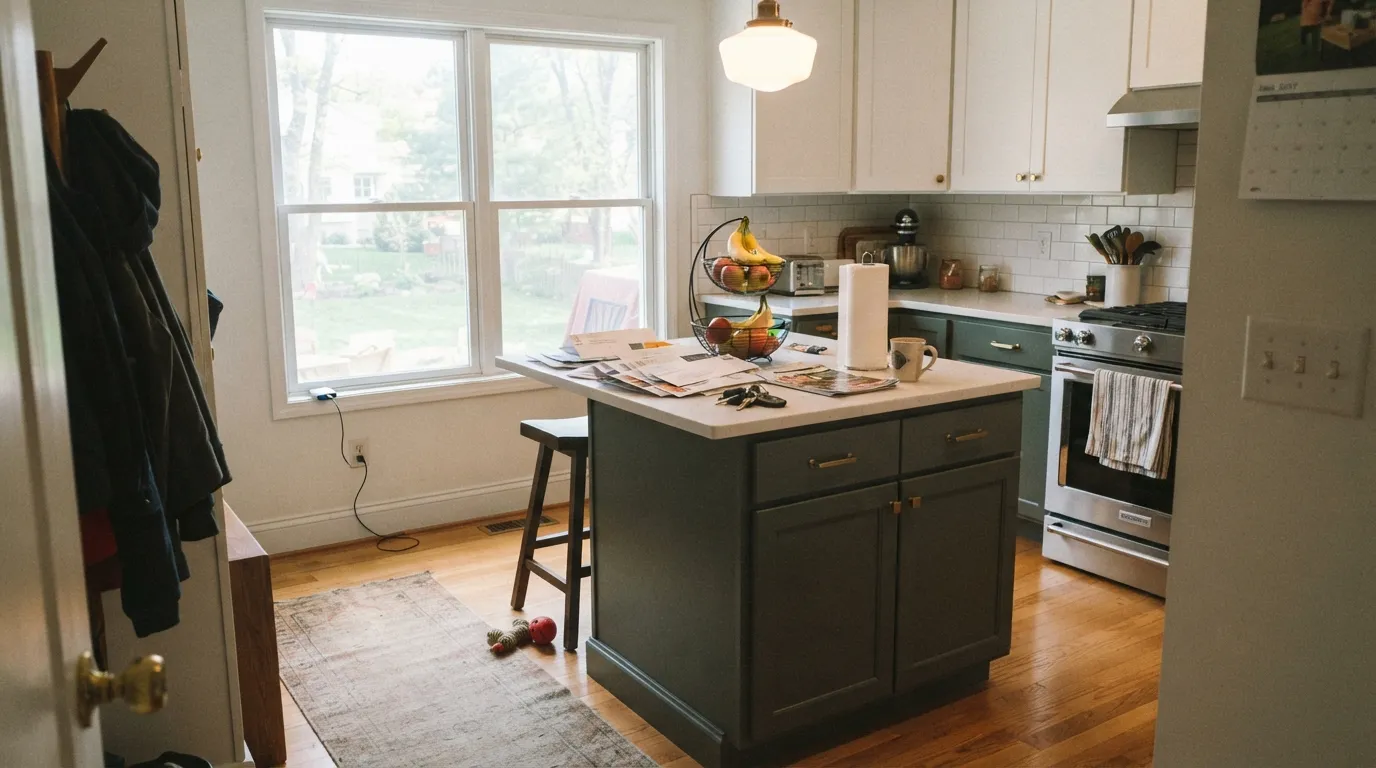
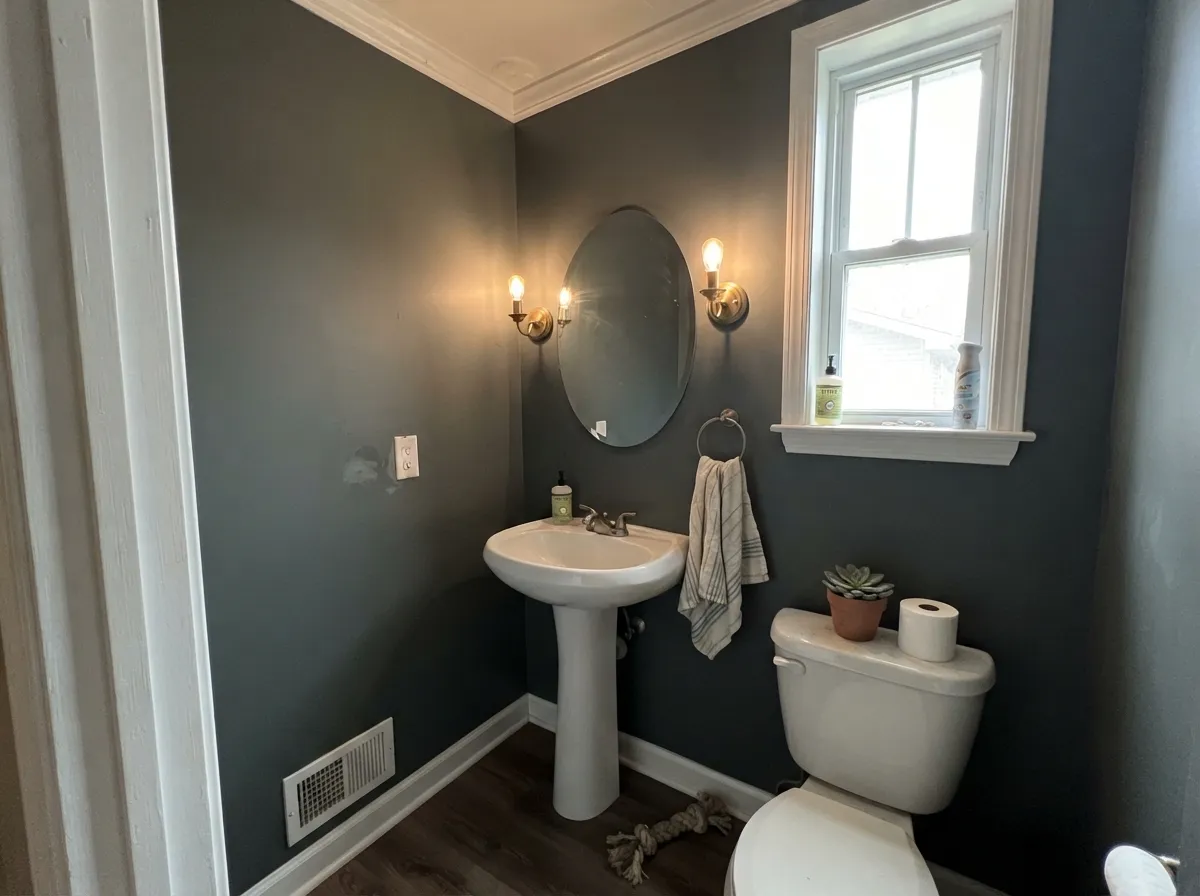
Photos from our full reviews — the same rooms and captions, so you can judge each color where it actually lives, not on a chip.
When to Pick Which
Best when you want the slightly lighter, airier read.
Kitchen islands and lower cabinets · powder rooms you are willing to light well · built-ins and library walls · exteriors and front doors
The room has no window · you want people to see an obvious green · your counters are dark granite or soapstone · you are painting every cabinet in a small kitchen
No comparison page can see your light. Upload one photo of your room and try both colors on the same walls, seconds apart.
Green Smoke vs Pewter Green FAQ
Which is lighter, Green Smoke or Pewter Green?
Green Smoke is lighter: LRV 19 vs 12. Green Smoke is slightly lighter (LRV 19 vs 12, 7-point delta).
Which is warmer, Green Smoke or Pewter Green?
Neither is warm — Green Smoke leans cool (green / cool) while Pewter Green stays true neutral.
How similar are Green Smoke and Pewter Green?
Green Smoke and Pewter Green are close but distinct (ΔE 9.71). Visible difference on the wall, especially in flat daylight. The only reliable test is seeing both in your own room and light — a side-by-side on a screen or chip flattens the difference.
Can I use Green Smoke and Pewter Green together in one house?
Yes, in separate rooms. They are close enough to feel related but different enough to notice, so give each its own room and connect them with a shared trim white. Avoid putting them on adjoining walls.
Ask a Question