Benjamin Moore Grant BeigevsBenjamin Moore Manchester Tan
Why this comparison: BM’s two classic beiges; Grant Beige is grayer, Manchester Tan yellower. Grant Beige and Manchester Tan are very close (ΔE 3.17). The difference shows up most in side-by-side comparison and under specific light.

Built from our full reviews of both colors — same measured data, same real-room photos. About the testing process →
The Numbers
Manchester Tan is slightly lighter (LRV 63 vs 56, 7-point delta).
What Each Color Really Is
Grant Beige is not a trend color — it is older than the word greige. Benjamin Moore released it in 1976 as part of the Historical Colors collection, a deck built around America's landmark buildings, and it spent the next three decades as one of the most-used exterior and whole-house beiges in the country, especially on the stucco and vinyl-sided tract homes of the 1990s and early 2000s. That history is the whole story: it was never picked for a magazine spread, it was picked because it worked on thousands of ordinary houses at once.
The undertone is the part reviewers actually argue about, and the most consistent answer across paint-color sites and designers is green — a quiet, grayed-down green that keeps the beige from tipping peachy or orange the way a straight yellow-based tan does. At LRV 56 it reflects roughly half the light that hits it, so it reads noticeably lighter in open daylight and settles into a deeper, warmer tan under evening light. A minority of reviewers report a faint pink-gray cast in cool north light instead — both are the same paint being honest about a color that sits almost exactly between beige and gray, with nothing strong enough on either side to pin it down completely.
A real tan, not a greige. The chip sits in the warm yellow-to-orange range at moderate saturation, so on a big wall you read sand and warmth, not gray. What surprises people is the second half of that yellow: in cool light it can lean toward olive. This is the single most-repeated thing homeowners say about Manchester Tan — "is mine looking green?" — and it is not a mistint. Warm light pulls the orange side forward and it reads tan; cool light drains the orange and leaves the yellow, and yellow plus gray light is olive.
At LRV 63 it sits at the exact middle of the light scale, which is deeper than most people expect from a fan-deck chip. Next to Edgecomb Gray (HC-173) at LRV 63 it is clearly the darker, warmer, more colored wall, and even against Revere Pewter (HC-172) at 56 it reads a step heavier. That depth is the point in a foyer or dining room, where you want the walls to feel like a color. It is also the reason a windowless hallway can end up looking closed in.
Specs Side by Side
| Spec | Grant Beige | Manchester Tan |
|---|---|---|
| Brand | Benjamin Moore | Benjamin Moore |
| SKU | HC-83 | HC-81 |
| Hex | #CEC5B0 | #DBD2BC |
| RGB | 206, 197, 176 | 219, 210, 188 |
| LRV | 56 | 63 |
| Undertone | red-orange / warm | red-orange / warm |
| Family | Neutral | Neutral |
How Light Changes Them
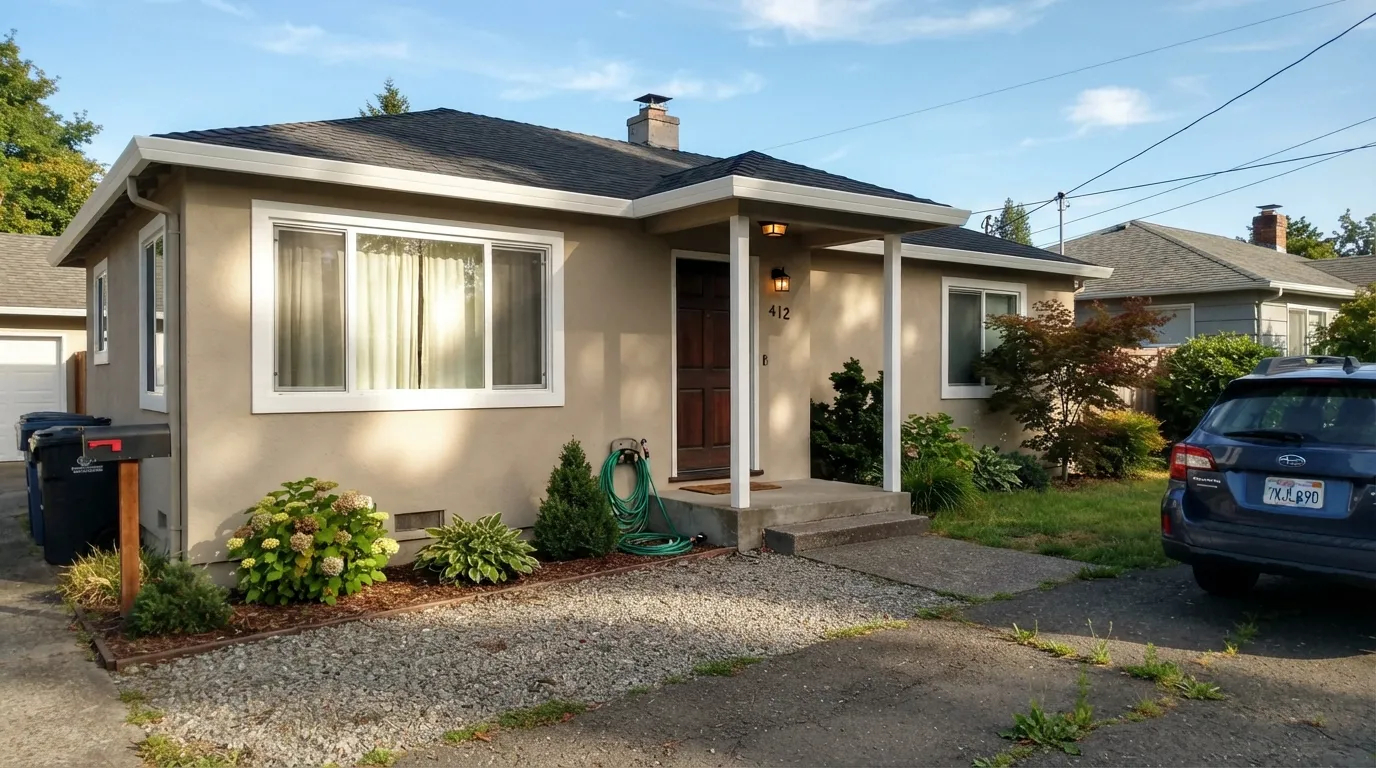
Low warm sun brings the tan forward and settles the green pull — the most flattering hour on siding and exterior walls alike.
Cool, indirect light exposes the green undertone and can push it toward a muddy olive. Sample it on the actual shaded wall, not just the sunny side.
Warmer and tanner at the sun hours, quieter and more gray-green mid-day. The swing is real but gentle — most owners read it as one settled color.
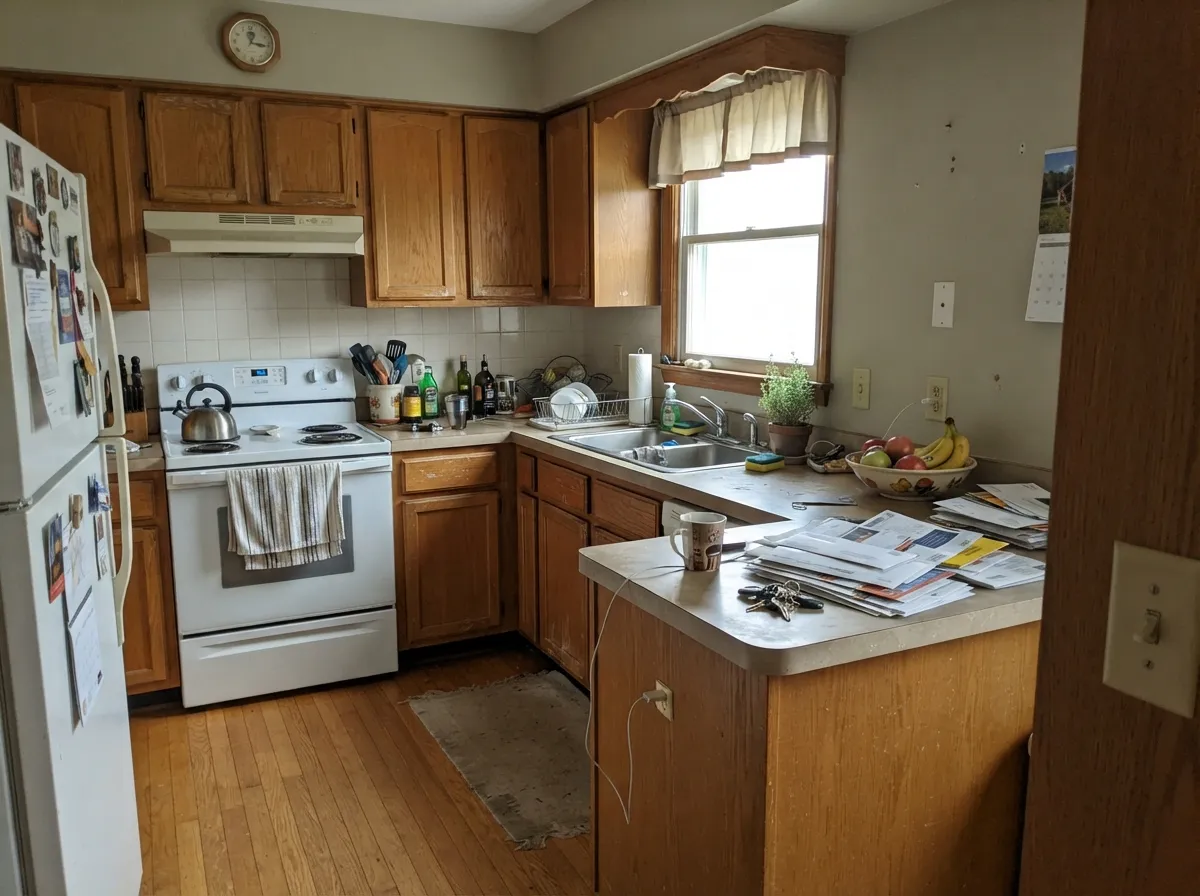
2700K bulbs keep it firmly on the beige side. Cool white LEDs pull it toward gray-green — swap the bulb before you second-guess the paint.
Warm sun brings the orange side forward. Rich, sandy, never olive — this is the color at its best.
Cool gray daylight strips the orange and leaves yellow, which reads olive. The number one complaint.
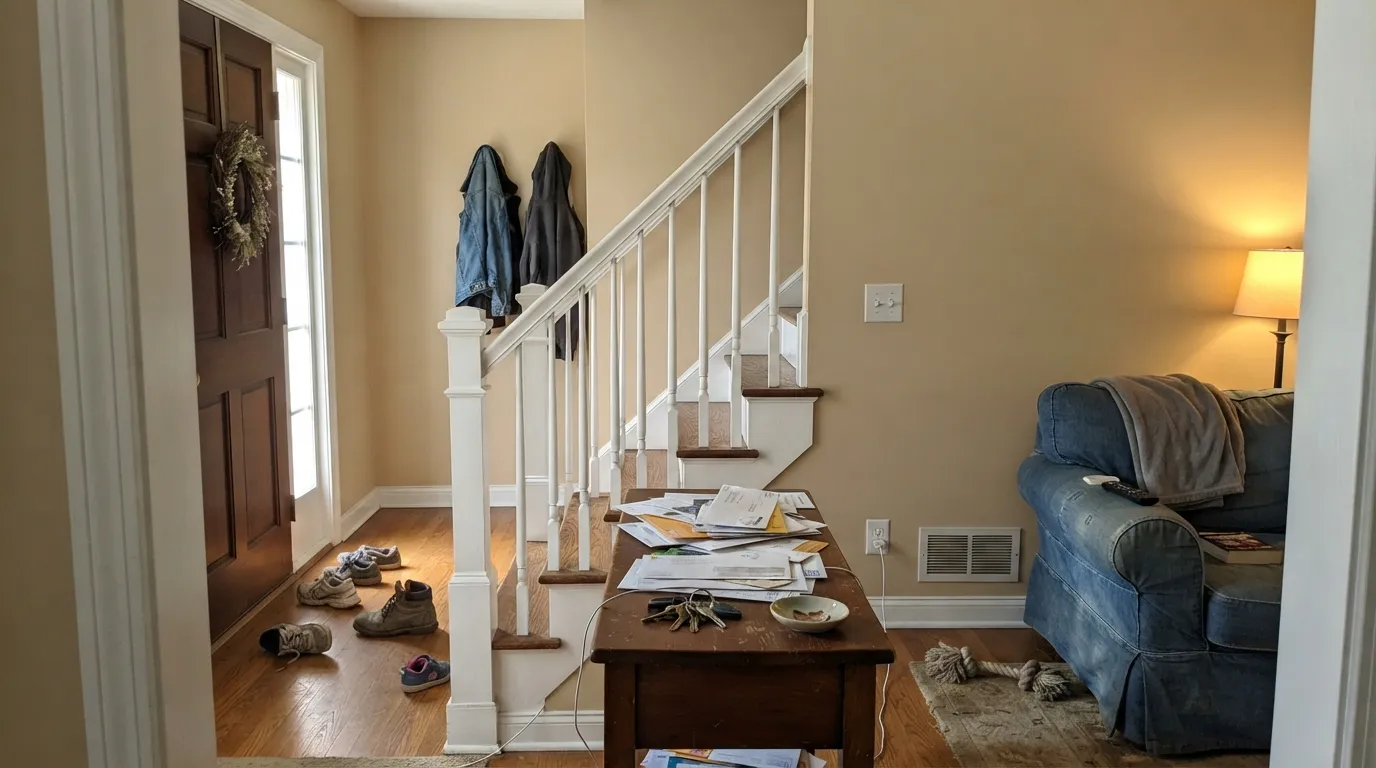
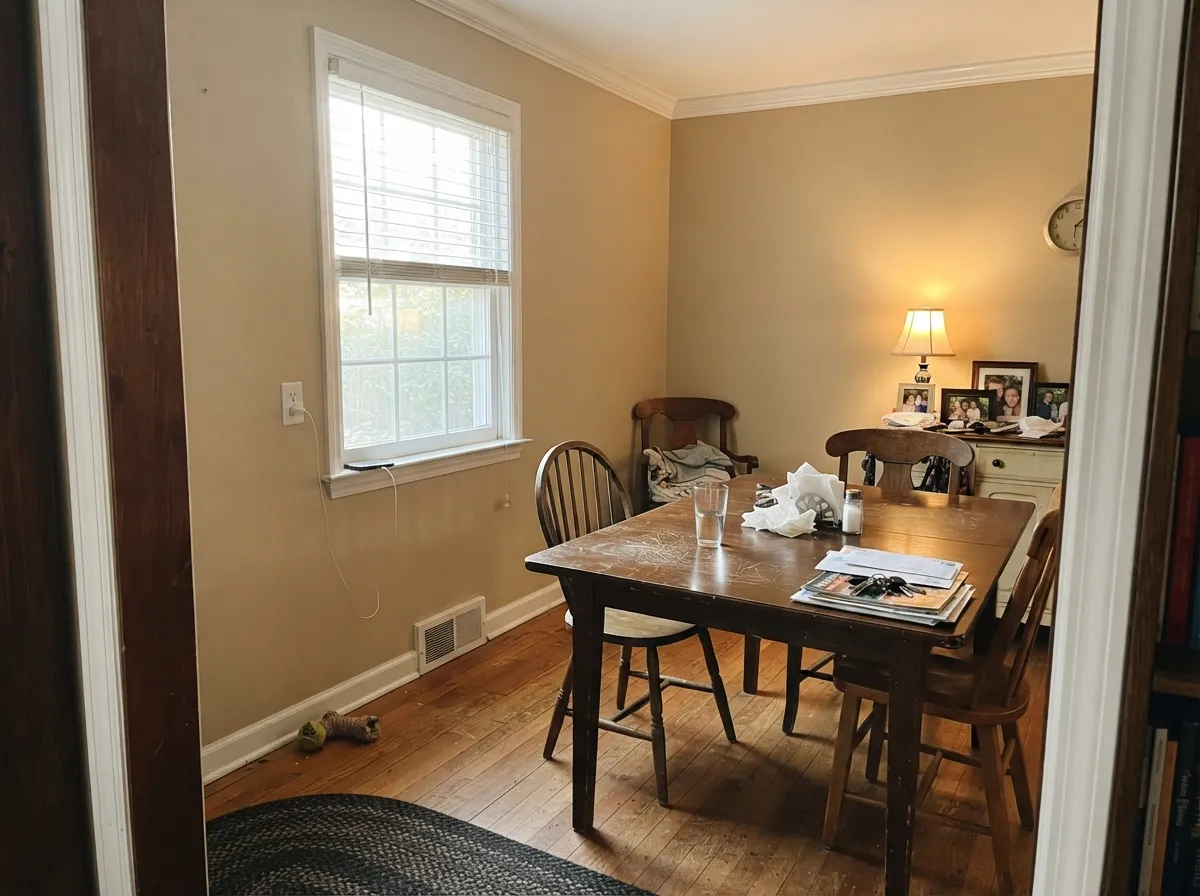
2700K bulbs deepen it to warm khaki — cozy in a dining room, heavy in a bedroom. 3000K is the sweet spot.
Lawn or leaves right at the window bounce green in all summer. Same wall looks fine in winter.
Both Colors in Real Rooms
Photos from our full reviews — the same rooms and captions, so you can judge each color where it actually lives, not on a chip.
When to Pick Which
Ranch, Mediterranean and traditional-style exteriors · kitchens with honey oak you're not replacing · period-correct repaints of 1990s–2000s houses · anyone who wants warm without tipping orange
You want the current gray-forward trend look · your exterior stone or brick leans pink or orange · the wall or siding sits in heavy shade with cool bulbs nearby · you're actively trying to erase a "builder beige" look
Foyers, dining rooms and traditional millwork · houses with honey oak floors, doors or trim · open main floors that need one calm warm color · anyone who finds gray cold and true beige too yellow
Your room is north-facing and dim · your floors or tile are cool gray · you want a light, airy off-white · you run 4000K daylight bulbs
No comparison page can see your light. Upload one photo of your room and try both colors on the same walls, seconds apart.
Grant Beige vs Manchester Tan FAQ
Which is lighter, Grant Beige or Manchester Tan?
Manchester Tan is lighter: LRV 63 vs 56. Manchester Tan is slightly lighter (LRV 63 vs 56, 7-point delta).
Which is warmer, Grant Beige or Manchester Tan?
They share the same undertone family — both read red-orange / warm. The difference between them is lightness and depth, not temperature.
How similar are Grant Beige and Manchester Tan?
Grant Beige and Manchester Tan are very close (ΔE 3.17). The difference shows up most in side-by-side comparison and under specific light. The only reliable test is seeing both in your own room and light — a side-by-side on a screen or chip flattens the difference.
Can I use Grant Beige and Manchester Tan together in one house?
Not in the same room, and be careful in the same house. At ΔE 3.17 they are so close that two walls in each will read as a tinting mistake, not a design choice. Pick one, or keep them on different floors where they are never seen together.
Ask a Question