Product review · Zinsser · Updated August 11, 2026
Peel Stop Triple ThickZinsser paint review
8.4/10Buys back a wall you almost had to strip — as long as you understand it binds chalk and edges, not the paint you should have scraped.
The binding sealer that glues down chalk and the edges of scraped paint — and its high-build headline version that fills what weathering cracked. Neither can rescues paint you should have scraped; both rescue the wall you almost had to strip.

David Chen · Formulation Lead & Resident Chemist · Updated August 11, 2026
Polymer chemist by training, six years in industrial coatings R&D before joining CompositePaint's formulation team. David writes the binder pieces — why a styrenated acrylic grips a gloss door a plain latex primer slides off, and why the same film lets nicotine walk right through. About the testing process →
Zinsser Peel Stop Triple Thick
Dry and recoatTouch 30 min
VOCTriple Thick under 100 g/L
Read this first
The Fast Verdict
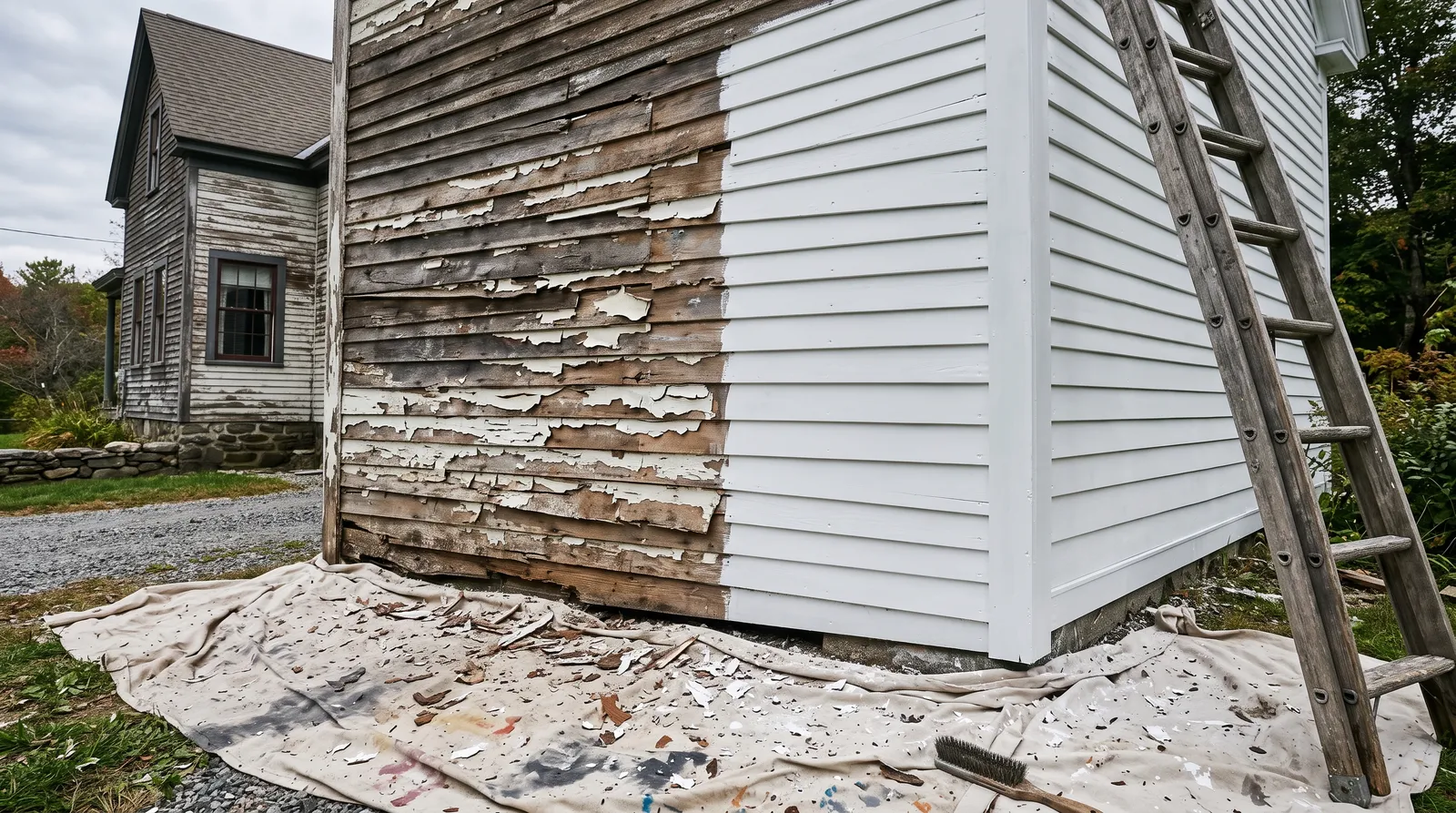
Worth it, decisively, for the job on the label: a peeling, chalky, or checked exterior after honest scraping. The thin acrylic wicks into the chalk layer and under the exposed edges of surviving paint, then dries into a flexible glue that locks both down — and the Triple Thick version lays up to 30 mils wet, so the same coat fills surface checking and levels scrape ridges into a paintable white ground. At $38–48 a gallon that is the cheapest labor on the job, against days of stripping. It is not a shortcut over paint that is still loose, it fixes nothing between intact layers (latex peeling off old oil is a bonding-primer problem), and it blocks no stains — knots and tannin need BIN or Cover Stain underneath it.
Best for
Peeling exterior siding after scraping · Chalky old paint · Checked, weathered wood · Scrape ridges and alligatored edges · Old fences and outbuildings · Historic-house repaints
Skip if
Paint still coming off in sheets · Latex-over-oil intercoat failure · Active moisture behind the wall · Stains, tannin, or knots · Decks and horizontal surfaces · A sound surface that just needs a normal primer
What it's good at
- Gluing down chalk — the thin resin wicks into the oxidized powder layer and locks loose pigment to the sound film below, which is why our chalking-repair sequence is built around it
- Sealing the exposed edges of scraped paint, the beachhead where every new peel starts — the difference between a repaint that lasts two years and one that lasts eight
- Filling weathered checking: 30 wet mils of high-build acrylic leveled the cracks in grey checked fir that every standard primer telegraphed straight through
- Flexing with exterior wood — the cured film stretches with seasonal movement instead of cracking, the property that makes it exterior-rated where rigid sealers are not
- Speed for a specialist product: touch dry in 30 minutes, topcoat in 2 hours at normal build — seal in the morning, finish the same afternoon
- Sticking to the whole mixed-material side of an old house — wood, masonry, stucco, aluminum siding, galvanized gutters, PVC, fiberglass
- Costing less than the alternative — $38–48 a gallon against days of stripping is the cheapest labor on the job
What it's not good at
- Rescuing paint you should have scraped — it binds edges of sound film; anything a putty knife moves comes off first, and the can's own prep instructions open with the scraper
- Intercoat adhesion failures like latex sheeting off glossy oil — that failure lives between intact layers where a penetrating binder cannot reach; it is a bonding-primer job
- Anything stain-shaped: knots, tannin, rust, and water rings migrate through both versions and the topcoat above them
- Walls with active moisture behind them — sealing over a water problem relocates the failure to next spring
- Hide and texture — the white is contrast, not coverage, and the heavy film leaves a light stipple a satin topcoat shows more than a flat one
- Horizontal surfaces — thick films on decks, sills, and porch floors are the classic peel failure; vertical surfaces and trim only
- Coverage math if you skim the label: Triple Thick's honest 3× build means an honest fraction of the coverage, 50–200 sq ft a gallon
Same shelf, different cans
Which Peel Stop Are You Buying?
Three cans share the name and the price gap is real. The decision rule: run your hand over the scraped wall. Powdery but flat, the cheap clear does the whole job. If you can feel the topography — checking, scrape ridges, the stepped shoreline where old paint meets bare wood — that is what Triple Thick exists to bury.
Peel Stop Triple Thick (this review)
BaseWhite high-build water-based acrylic — up to 30 mils wet per coat
RecoatTouch 30 min · recoat 2 hr; a full 30-mil coat needs 3 hr touch, 6 hr recoat
Buy it if
The surface is cracked, checked, alligatored, or heavily scraped and needs fill as well as binding. Coverage runs 50–200 sq ft/gal depending on build.
Avoid if
The wall is chalky but smooth — you would be paying double for build you do not need.
Peel Stop Clear Binding Sealer
BaseClear vinyl-acrylic copolymer, near-zero build
RecoatTouch about 30–60 min · recoat 2 hr
Buy it if
Chalky-but-smooth walls and light edge-sealing at 300–400 sq ft/gal for about $22–30 — half the price, four times the coverage.
Avoid if
You need the surface leveled; it has almost no film build and fills nothing.
Peel Stop Triple Thick Spray, 12-oz
BaseSame high-build acrylic in an aerosol
RecoatTouch 30 min · recoat 2 hr
Buy it if
One windowsill or one patch, where dragging out a brush is not worth it.
Avoid if
Any real area — coverage per dollar is a fraction of the gallon.
Numbers, not adjectives
Spec Sheet
- Type
- Water-based binding primer / sealer — Triple Thick is a high-build acrylic with titanium dioxide; the standard version is an unpigmented vinyl-acrylic copolymer
- Dries to
- Triple Thick: flat white for contrast · standard Peel Stop: clear matte
- Coverage
- Triple Thick 50–200 sq ft/gal depending on build · clear 300–400 sq ft/gal
- Max wet film
- 30 mils per coat on Triple Thick — exceeding it risks mud-cracking or sagging
- Dry and recoat
- Touch 30 min · recoat 2 hr at 70–80°F; a full 30-mil coat stretches to 3 hr touch, 6 hr recoat
- Solids by volume
- Triple Thick 23.9% · clear 18.2%
- VOC
- Triple Thick under 100 g/L · clear under 60 g/L
- Application window
- 40–90°F, surface at least 5°F above the dew point, humidity 85% or lower
- Topcoat
- Any latex or alkyd paint; outside, pair with a 100% acrylic finish
- Stain blocking
- None — spot-prime knots with BIN and water or tannin stains with Cover Stain first
- Surfaces
- Previously painted wood and siding, trim, windows, doors, fences, plywood, brick, stucco, masonry, plaster, aluminum siding, gutters, galvanized steel, PVC, fiberglass; interior and exterior
- Sizes
- Triple Thick: quart, gallon, 5-gallon, 12-oz spray · clear: quart, gallon, 5-gallon
- Price
- Triple Thick $38–48 / gal street · clear about $22–30 / gal
Application Settings That Work
- Brush
- Use a quality synthetic brush and treat application as a working motion, not a laying-on: back-brush the material into cracks, checking, and the edges of old paint, because penetration into those features is the entire mechanism. Triple Thick carries like a heavy-bodied paint; the clear version is thin and runs, so roll it out lean and keep a rag close.
- Airless
- Sprays through an airless around 2,500 psi, and spraying is the sane way to do a whole elevation — but always back-roll or back-brush to push the film into the surface. Sprayed-and-left, a binding sealer sits on top of the chalk it was supposed to penetrate.
- Thinning
- On severely peeled, porous surfaces, Zinsser's own sheet says to thin the first Triple Thick coat 10% with water and work it in — a thinner first pass penetrates deeper — then follow with full-bodied coats for the fill.
- Primer
- Prep is the product's whole contract: scrape everything loose, wash off dirt and chalk dust with detergent, sand remaining edges smooth, kill exterior mildew, and let the surface dry completely. Bare wood weathered more than 4 weeks needs a light sanding to remove dead grey fibers first. Test a small area for adhesion before committing a wall.
Two Hours to Recoat — Unless You Used the Thickness
At normal build, both versions run the same friendly clock: touch dry in about 30 minutes, topcoat in 2 hours at 70 to 80°F. The number that surprises people is what happens when Triple Thick is doing its actual job. A full 30-mil wet coat is roughly three normal primer coats' worth of water that has to leave through the top of the film, and the schedule stretches to 3 hours to touch and 6 hours before recoating. The reason for that is simple physics — evaporation scales with film thickness, and a high-build film is all thickness. Cold, humidity, and a surface near the dew point push every number later; the label's 40–90°F window with the surface at least 5°F above dew point is a real constraint on fall exterior work, not boilerplate. If the afternoon is marginal, seal today and topcoat tomorrow — the film loses nothing overnight, and a topcoat over a soft high-build primer drags and prints.
Mid-project panic
When It Goes Wrong, and How to Fix It
The paint peeled again — taking the Peel Stop with it
Why it happens. Almost always one of two prep failures. Either the sealer went over paint that was still loose — it glues edges of sound film, it cannot re-attach flakes, so the whole sandwich released together — or the wall has an active moisture source (a bathroom venting into the cavity, failed gutters, ground splash) pushing the film off from behind. No sealer chemistry survives water arriving from the wrong side.
The fix. Scrape until a putty knife moves nothing, then seal what survived. And find the water before recoating — a peel that keeps returning in the same spot is a moisture diagnosis, not a primer choice.
The old paint edges still show through the finished topcoat
Why it happens. Either the clear version was used where the wall needed fill — it has almost no build and follows the surface exactly — or the edges were left as unfeathered cliffs. Triple Thick levels topography; it does not erase a hard step in the film.
The fix. Sand the worst edges toward smooth before sealing, then use Triple Thick, laid on heavy and back-brushed. For furniture-grade flatness there is no substitute for feathering first — the high build just turns a weekend of it into an hour.
The thick coat cracked as it dried, like dried mud
Why it happens. Mud-cracking is the classic over-application failure of any high-build waterborne film. Past about 30 mils wet, the surface of the film skins over while the depths are still shrinking as water leaves, and the skin splits.
The fix. Stay at or under 30 mils wet per coat — a heavy, worked-in pass, not a poured-on one. Where the damage needs more fill, two coats two hours apart beat one overloaded coat every time. Scrape out and re-coat any cracked areas; do not paint over them.
A stain or knot bled straight through the white primer
Why it happens. There is no stain-blocking chemistry in either can. Tannin, knot resin, rust, and water rings are soluble in the water carrier or migrate through an acrylic film, and Triple Thick's white makes the bleed easier to see, not harder to happen.
The fix. Spot-prime knots and severe stains with BIN shellac and bleeding woods or water stains with Cover Stain before the Peel Stop coat — that sequence is straight from Zinsser's own data sheet.
Latex keeps peeling off the old oil trim even after sealing
Why it happens. That failure lives between two intact layers — the latex never bonded to the glossy oil surface. A penetrating binder works on loose material at the surface; it cannot reach an adhesion interface buried under a sound film.
The fix. Different tool: scuff-sand the gloss and use a bonding primer (Bulls Eye 1-2-3 or INSL-X Stix), then repaint. Peel Stop was never the right can for this one.
The finish sheen looks different from one part of the wall to another
Why it happens. The topcoat's sheen telegraphs the porosity of whatever is underneath. Where Peel Stop meets a different primer — or bare unsealed patches — the finish flashes at a glancing angle.
The fix. Prime the whole elevation with one product before topcoating, and do not interleave Peel Stop and Cover Stain on the same face. Where a wall needs both, split them by elevation or run the stain blocker under the binder across the full field.
Side by side
Peel Stop vs Zinsser Gardz vs Cover Stain
Three Zinsser cans, three different failures. The sorting question: is the problem loose material, a weak porous interior surface, or a stain?
| Peel Stop / Triple Thick | Zinsser Gardz | Zinsser Cover Stain | |
|---|---|---|---|
| Chemistry | Flexible water-based acrylic binder | Penetrating sealer that cures rigid and moisture-resistant | Oil-base alkyd |
| The failure it fixes | Peeling edges, chalk, and checking on exteriors | Torn drywall paper, powdery plaster, wallpaper-glue residue | Tannin bleed, water stains, knots, bare weathered wood |
| Cured film | Stays flexible and breathable — moves with wood | Hard and rigid — braces weak interior surfaces | Hard oil film that penetrates bare grain |
| Exterior use | Yes — its home turf | No | Yes |
| Stain blocking | None | None | Strong — the reason to buy it |
| Build | Triple Thick: up to 30 mils wet | None — soaks in | Standard |
| Street price per gallon | $38–48 (clear version $22–30) | $22–28 | $35–40 |
| Where it wins | Scraped, chalky, checked siding and trim | Interior walls whose surface itself is failing | Bare wood spots, bleeding species, one-product elevations |
Chemistry
Peel Stop / Triple ThickFlexible water-based acrylic binder
Zinsser GardzPenetrating sealer that cures rigid and moisture-resistant
Zinsser Cover StainOil-base alkyd
The failure it fixes
Peel Stop / Triple ThickPeeling edges, chalk, and checking on exteriors
Zinsser GardzTorn drywall paper, powdery plaster, wallpaper-glue residue
Zinsser Cover StainTannin bleed, water stains, knots, bare weathered wood
Cured film
Peel Stop / Triple ThickStays flexible and breathable — moves with wood
Zinsser GardzHard and rigid — braces weak interior surfaces
Zinsser Cover StainHard oil film that penetrates bare grain
Stain blocking
Peel Stop / Triple ThickNone
Zinsser GardzNone
Zinsser Cover StainStrong — the reason to buy it
Build
Peel Stop / Triple ThickTriple Thick: up to 30 mils wet
Zinsser GardzNone — soaks in
Zinsser Cover StainStandard
Street price per gallon
Peel Stop / Triple Thick$38–48 (clear version $22–30)
Zinsser Gardz$22–28
Zinsser Cover Stain$35–40
Where it wins
Peel Stop / Triple ThickScraped, chalky, checked siding and trim
Zinsser GardzInterior walls whose surface itself is failing
Zinsser Cover StainBare wood spots, bleeding species, one-product elevations
Bind, seal, or block — pick by the failure. Flaking paint on wood or anything outdoors takes Peel Stop, whose cured film flexes with the substrate. Weak paper, plaster, or compound inside takes Gardz, whose rigid film braces what is left. Stains, knots, and bare bleeding wood take Cover Stain, the only one of the three with blocking chemistry. On a scraped exterior that exposes bare cedar or fir, use both — Cover Stain on the bare spots, Peel Stop across the chalky field — but split them by elevation, because the sheen difference between the two films telegraphs through a topcoat on the same face.
If not this one
Honest Alternatives
XP
XIM Peel Bond$40–50 / gal
The other high-build binding primer and the closest true rival. It dries clear rather than white — some pros want to keep sight of the substrate, others prefer Triple Thick's white contrast for tracking coverage. Chalk performance is comparable; pick by film color and what your shelf actually stocks.
ZC
Zinsser Cover Stain$35–40 / gal
Where scraping exposed real areas of bare cedar, redwood, or knotty pine, the oil penetrates the grain and locks tannin — chemistry no waterborne binder carries. Many exterior jobs run both products, split by elevation.
Full review →ZG
Zinsser Gardz$22–28 / gal
The same binding idea with the opposite film: rigid and moisture-resistant, right for torn drywall paper and powdering plaster inside, wrong on anything that flexes or lives outdoors.
Full review →ZB
Zinsser Bulls Eye 1-2-3$28–32 / gal
A faint chalk dusting on otherwise sound siding does not need a specialist binder. The everyday styrenated acrylic handles mild oxidation under a latex topcoat at normal coverage numbers and a lower price.
Full review →Questions people actually ask
Peel Stop Triple Thick Questions, Answered
Does Zinsser Peel Stop really stop peeling paint?
It stops the peel from spreading — after you remove what already failed. The sealer flows into the exposed edges where sound paint stops, glues them down, and bridges them so moisture and the next topcoat cannot lift them further. It does not re-attach loose flakes; scraping them is still your job, and the label says so.
What is the difference between Peel Stop and Peel Stop Triple Thick?
Build. Standard Peel Stop is a thin, clear vinyl-acrylic sealer — 300 to 400 sq ft a gallon and invisible on the wall — made to glue down chalk and light edges. Triple Thick is a white high-build acrylic laid up to 30 mils wet, so it also fills surface checking and levels scrape ridges, at 50 to 200 sq ft a gallon. Smooth-but-chalky walls take the clear; cracked and checked ones take Triple Thick.
Do you still have to scrape before using Peel Stop?
Yes — Zinsser's own prep sequence is scrape loose paint, wash, sand the remaining edges smooth, and let the surface dry. The sealer binds what survived the scraper, not what should have come off. Anything that releases under hand pressure was never a candidate for gluing down.
How long before you can paint over Peel Stop?
Two hours at 70 to 80°F for a normal coat of either version, touch dry in about 30 minutes. A full 30-mil wet coat of Triple Thick stretches to 3 hours touch and 6 hours recoat, and cold or humid weather pushes everything later — on a marginal day, seal today and topcoat tomorrow.
Can you leave Peel Stop unpainted as a finish?
No. Both versions are primers: the clear film is not UV-stable as a finish, and Triple Thick dries to a flat white that chalks if left exposed. Topcoat with any latex or alkyd; outside, a 100% acrylic finish is the right pairing.
Does Peel Stop block stains, tannin, or knots?
No — there is no stain-blocking chemistry in either can, and this is the most common misuse. Water rings, cedar and redwood tannin, and knot resin migrate straight through a plain acrylic film. Zinsser's data sheet says to spot-prime knots and severe stains with BIN shellac and bleeding woods with Cover Stain before Peel Stop goes on.
Peel Stop or Gardz — which one do I need?
Both are clear binders that glue down weak material; the cured films behave opposite ways. Peel Stop stays flexible and breathable, rated for exterior wood that moves with the seasons. Gardz cures rigid and moisture-resistant, which is what torn drywall paper and powdery plaster need. Outdoors or on wood: Peel Stop. Interior surface damage: Gardz.
Can you use Peel Stop Triple Thick on a deck?
No. High-build films do not survive on horizontal surfaces — standing water, grit, and foot traffic fail a thick soft primer film fast and take the finish with it. Keep both versions on vertical surfaces and trim; a deck wants a penetrating deck-specific coating.
Will Triple Thick hide the edges of the old paint completely?
It levels them; it does not erase them. A 30-mil coat fills checking and softens scrape ridges enough that the topcoat reads uniform from a few feet away, but a hard unfeathered edge still shows at a glancing angle. Sand the worst edges first — the high build turns a weekend of feathering into an hour, not into zero.
Keep exploring
Zinsser primer brand guideZinsser Gardz review (the interior problem-surface sealer)Zinsser Cover Stain review (the oil stain blocker)How to fix peeling exterior paintHow to fix chalking exterior paint
We may earn a commission when you buy through the retailer link above. It never changes the score or the verdict.
Ask a Question