Product review · Valspar · Updated August 7, 2026
SeasonFlex ExteriorValspar paint review
7.8/10A sensible mid-tier exterior for freeze-thaw walls — not the can for a deep color on a hot south face.
The flex is the whole pitch, and on a wall that bakes in July and freezes in January it is a real one. The fine print is a 40°F application floor and mid-tier color hold.

Mark Thompson · Pro Contractor & Field Editor · Updated August 7, 2026
22 years running residential and light commercial repaints across the Midwest. Mark judges an exterior by how the lap joints look in year three, not by what the sell sheet promises. About the testing process →
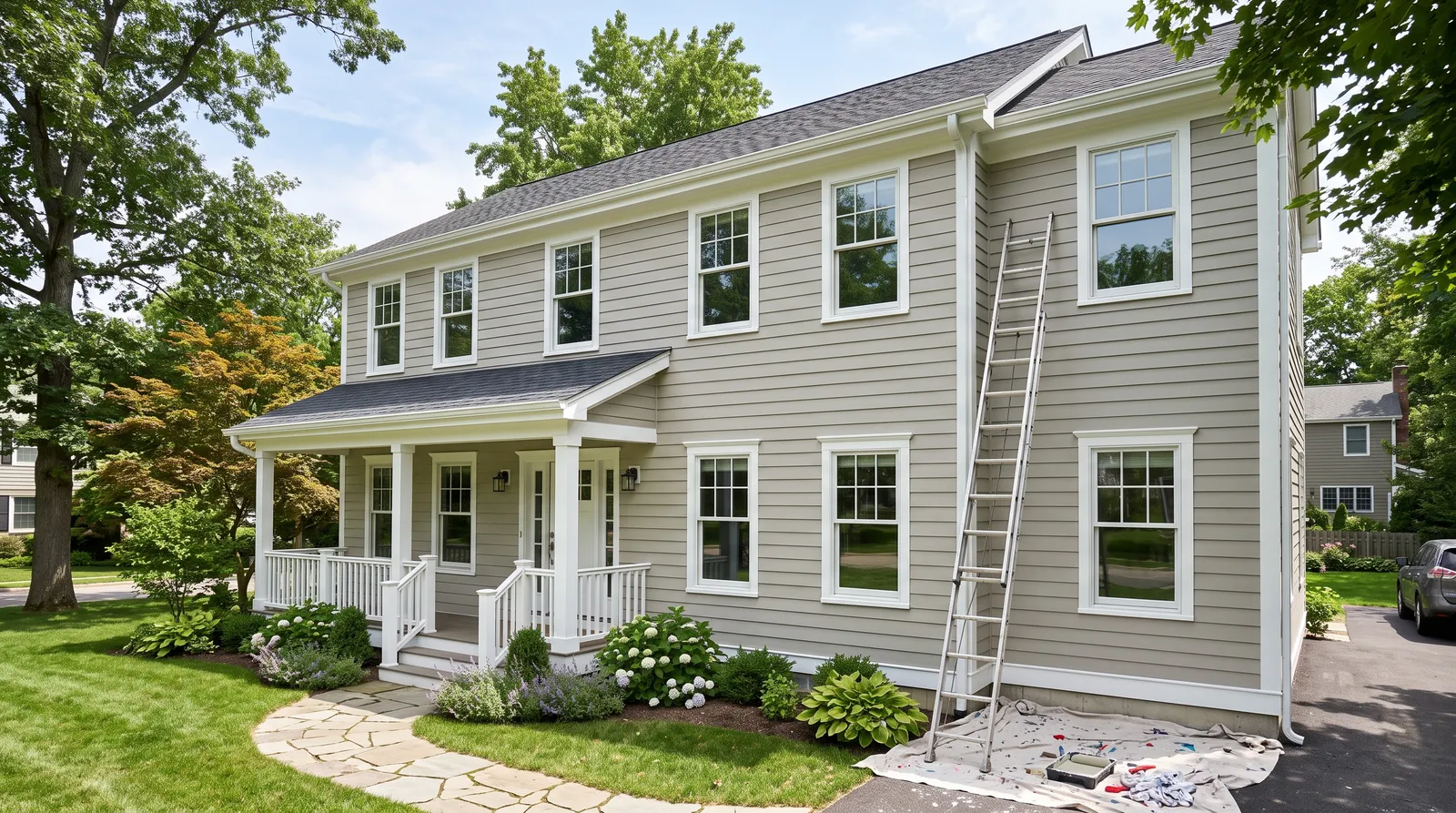
Valspar SeasonFlex Exterior3 sheens
Coverage300–400 sq ft / gal
Recoat4 hr at 77°F and 50% RH
Sheens FlatSatinSemi-Gloss
Read this first
The Fast Verdict
In a climate that swings hard between July and January, this is a fair $40 to $48 a gallon. The elastic film rides the movement that splits brittle paint at the lap joints, and the mildewcide is cured into the film rather than washed out by the first rain. Color hold is the weak spot: south and west walls show visible fade by year 7 or 8, sooner on deep reds and blues. The 40°F application floor is warmer than the name suggests.
Best for
Freeze-thaw climates · Sound painted siding · Hardboard and fiber cement · Mid-tone colors · Stucco, brick, and primed metal · Budget-conscious repaints
Skip if
Bare cedar you will not prime · Deep colors on a south or west wall · Driving rain and coastal damp · Painting below 40°F · Bottom-dollar rental jobs
What it's good at
- Flexing with the wall — the elastic film rides freeze-thaw movement instead of splitting at the lap joints
- Shaded north walls, where the mildewcide is cured into the film rather than washed out by the first rain
- Covering almost any exterior substrate from one can — wood, fiber cement, vinyl, stucco, brick, primed metal
- Spraying, brushing, and back-rolling without fighting the can or thinning it
- Shedding a passing shower once the coat has set in warm, dry weather
- Counter tinting at any Lowe's, so color choice is never the constraint
What it's not good at
- Living up to paint-and-primer on bare wood, chalky paint, raw fiber cement, or cedar
- Holding deep reds, blues, and greens on a south or west wall past year 7 or 8
- Cold-weather work — the 40°F floor is warmer than its own cheaper and pricier siblings
- Bridging hairline checks the way Duramax's thicker film does
- Driving rain and coastal damp, where Defense's water beading is the reason to spend up
- One-coat coverage; it is two real coats every time
Numbers, not adjectives
Spec Sheet
- Coverage
- 300–400 sq ft / gal, two coats every time
- Sheens
- Flat, Satin, Semi-Gloss
- Base
- 100% acrylic latex
- Touch dry
- 1–4 hr
- Recoat
- 4 hr at 77°F and 50% RH
- Application temp
- 40–90°F, surface and air, rising not falling
- Primer
- Paint + primer on sound siding; bare, chalky, or tannin-prone surfaces still need a real primer
- Tech
- Flexible crack and peel-resistant finish · Rain Ready · mildew-resistant film
- Surfaces
- Wood and metal siding, trim, hardboard, fiber cement, vinyl, shakes, primed metal, brick, cement, cured cinder block, stucco
- Sizes
- Quart, gallon, 5-gallon
- Price
- About $40–48 / gal at Lowe's; confirm at the counter
Application Settings That Work
- Brush
- Brushes and back-rolls clean. It drags a little on a long brush pull in summer heat, so work shorter runs on a hot wall and keep a wet edge. The body is enough to fill a textured surface on a back-roll without three passes.
- Airless
- Moves through an airless without thinning trouble. Spray and back-roll on rough cedar, shakes, or stucco — the back-roll is what pushes the film into the texture and kills holidays.
- Thinning
- None needed. It sprays and brushes as it comes out of the can.
- Primer
- Self-primes on sound, previously painted siding in good shape. It does not replace a primer on bare wood, chalky old paint, raw fiber cement, or tannin-prone cedar. Wash the wall, let it dry, and rub-test for chalk before you decide.
Dry Times and the Temperature Floor
Touch dry runs 1 to 4 hours and recoat is 4 hours at 77°F and 50 percent humidity. Cool or damp air stretches both. Read the application temp line twice: the floor is 40°F and rising, not 35°F, and that is a higher floor than the cheaper StormCoat and the pricier Duramax and Defense all clear. The name reads like an all-season paint. It is not. Rain Ready buys you a margin against a passing shower once the coat has had warm, dry, breezy weather to set — treat it as insurance against one cloud, not permission to paint ahead of a front. Plan the job for a warm stretch with two mild days behind it.
Mid-project panic
When It Goes Wrong, and How to Fix It
Bleed-through or peeling sheets two years after a repaint
Why it happens. The paint-and-primer label got trusted on a surface it does not cover. It self-primes on sound, previously painted siding and nothing else. Bare wood, chalky old paint, raw fiber cement, and tannin-prone cedar all still need a real primer.
The fix. Rub the siding with a dark cloth before you buy anything. If the cloth comes up white, the wall is chalking and you are priming first. Spot-prime knots and bare patches, full-prime bare cedar and raw fiber cement, then two coats of SeasonFlex over it.
Deep red or blue siding gone dusty by year seven
Why it happens. Mid-tier pigment load means mid-tier color hold. The flex is good; the UV resistance is average for the price. South and west exposures show the drop first, and deep reds, blues, and greens go fastest.
The fix. Keep this can for mid-tone and lighter colors, especially on the sun sides. If you want a deep color that stays deep on a hot wall, step up to Duramax and pay the $5 to $20 more a gallon. No topcoat trick fixes a faded film — you are repainting.
The film never toughened up after a cold-snap paint job
Why it happens. The label says 40°F and rising for surface and air. Painting on the last warm afternoon before a cold front means the film is trying to form as the temperature drops, and it never gets there.
The fix. Wait for a warm stretch with mild weather behind it and check the surface temperature, not just the air. A north wall in the shade can sit 10 degrees under what the thermometer on the porch says. If your window is genuinely 35 to 40°F, this is the wrong can in the Valspar lineup.
A shower ran the fresh coat
Why it happens. Rain Ready holds in warm, dry, breezy weather. In cool or humid air the film needs longer than the marketing implies, and a fresh coat that has not set will run and watermark.
The fix. Read the forecast, not the label. Do not start a wall with a front coming in that afternoon. In cool or damp weather give the coat several more hours than you would in July before you trust it with rain.
Side by side
SeasonFlex vs Duramax vs StormCoat
Three Valspar exteriors sit within about $20 a gallon of each other on the same Lowe's rack, and the names do not tell you the order. Here is the ladder and what each rung actually buys.
| SeasonFlex | Duramax | StormCoat | |
|---|---|---|---|
| Price per gallon | About $40–48 | $45–65 | $30–42 |
| Where it sits | Mid-tier flexible finish | The step up, under the Defense flagship | The budget rung |
| Film build | Elastic, flexes over movement | Thicker, bridges hairline checks | Thin — two real coats always |
| Dark color hold in full sun | Visible fade by year 7–8, sooner on deep reds and blues | Holds dark colors longer on full-sun walls | Deep colors go dusty by year 4–5 |
| Self-priming | On sound painted siding only | Mid-tier exterior with better dirt and fade resistance | No — not a true self-primer at any price |
| Application temp floor | 40°F and rising | Clears 35°F | 35°F |
| Pick it when | Sound siding, big temperature swings, mid-tone color, moderate budget | Forever home, dark color, or a harder climate | Rental, flip, or big square footage in a mild climate |
Where it sits
SeasonFlexMid-tier flexible finish
DuramaxThe step up, under the Defense flagship
StormCoatThe budget rung
Film build
SeasonFlexElastic, flexes over movement
DuramaxThicker, bridges hairline checks
StormCoatThin — two real coats always
Dark color hold in full sun
SeasonFlexVisible fade by year 7–8, sooner on deep reds and blues
DuramaxHolds dark colors longer on full-sun walls
StormCoatDeep colors go dusty by year 4–5
Sound siding in a freeze-thaw climate and a mid-tone color: SeasonFlex is the right rung and the flex is worth the few dollars over StormCoat. Deep color on a hot south face, or a house you plan to keep: pay up to Duramax for the thicker film and the better fade hold. Rental or flip in a mild climate where the budget leads: StormCoat saves real money on work SeasonFlex will not visibly beat. And if the wall fights driving rain or coastal damp, none of these three is the answer — that is Defense.
If not this one
Honest Alternatives
VD
Valspar Duramax$45–65 / gal
Same brand, next rung up. Thicker, crack-bridging film and better dark-color hold on full-sun walls. For a few dollars more a gallon it is the call on a forever home, a dark color, or a harder climate.
Full review →VD
Valspar Defense$65–71 / gal
Valspar's flagship, with Advanced Water Beading Technology and a stronger mold-and-mildew package. The reason to jump two rungs is water — driving rain, deep shade, coastal damp. On a dry-climate wall it is tech you pay for and never use.
Full review →VS
Valspar StormCoat$30–42 / gal
The budget rung below, also 100% acrylic. You give up film build and the flexible-finish tuning, and it is not a self-primer. The right call on a rental, a flip, or big square footage in a mild climate.
Full review →BP
Behr Premium Plus Exterior$35–45 / gal
The Home Depot answer if you shop there instead of Lowe's. Comparable mid-tier acrylic exterior with a fair price and a lifetime warranty. A touch behind SeasonFlex on the dedicated flex tuning, but on a moderate-climate wall the gap is small.
Full review →SW
Sherwin-Williams SuperPaint Exterior$55–70 / gal
The pro-store step up, from the same parent company. Heavier, more fade-resistant film and self-primes on more substrates, but you pay $15 to $25 more a gallon and drive to a Sherwin store. Right when film life beats per-gallon price.
Full review →Questions people actually ask
SeasonFlex Exterior Questions, Answered
Is Valspar SeasonFlex worth it?
In a climate with big temperature swings, on siding that is sound, yes. Roughly $40 to $48 a gallon buys an elastic film that rides the summer-to-winter movement that splits cheaper exterior paint at the lap joints, plus a mildewcide cured into the film for shaded walls. It is not worth it on a sun-hammered south wall in a deep color, where the mid-tier pigment load fades by year 7 or 8.
SeasonFlex vs Duramax — which exterior?
Duramax sits a rung up. It builds a thicker, crack-bridging film, holds dark colors longer on full-sun walls, and runs $5 to $20 more a gallon. SeasonFlex is the mid-tier flexible finish for a moderate climate and a sound wall on a budget. Big temperature swings and sound siding, SeasonFlex does the job. Deep color on a hot south face, pay up for Duramax.
Is SeasonFlex the same as the old SeasonPlus?
Close. SeasonFlex is the current catalog name for Valspar's flexible-finish exterior; older cans carried the SeasonPlus name before the line was updated and renamed. There is no separate Seasons line to hunt for. If a store still has SeasonPlus on the shelf, it is the same slot in the lineup, just the previous label.
Does Valspar SeasonFlex need a primer?
On sound, previously painted siding in good shape, no. The paint-and-primer claim holds there. On bare wood, chalky old paint, raw fiber cement, or tannin-prone cedar, yes. Spot-prime or full-prime first. Skipping it because the can says plus primer is how bleed-through and peeling show up in two years.
How long does SeasonFlex last on a house?
Figure 8 to 10 years on a prepped, shaded wall in a moderate climate. Full sun pulls that shorter, and the color goes before the film does — south and west exposures show visible fade by year 7 or 8. Prep and exposure decide this number far more than the can does.
How cold can you paint SeasonFlex?
40°F, surface and air, rising not falling. That is a higher floor than the cheaper StormCoat and the pricier Duramax and Defense, which all clear 35°F. The word Season in the name buys you less cold-weather window than its own siblings, not more. Check the surface temperature on a shaded wall, not the air temperature on the porch.
Do you need two coats of SeasonFlex?
Yes. Coverage is 300 to 400 sq ft a gallon and rough cedar and stucco eat the low end. Two real coats every time, recoating at 4 hours in normal conditions. Do not trust a one-coat read on an exterior wall — the film build is where longevity comes from.
What surfaces can SeasonFlex go on?
Wood and metal siding, trim, hardboard, fiber cement, vinyl, shakes, primed metal, brick, cement, cured cinder block, and stucco. One gallon covering a lap-sided wall, a stucco chimney, and a metal storm door is a real convenience. Prime the ones that need priming and the substrate list stops mattering.
Keep exploring
Valspar brand hub — every line, reviewedValspar Duramax exterior — the step up, reviewedValspar StormCoat exterior — the budget rung, reviewed
We may earn a commission when you buy through the retailer link above. It never changes the score or the verdict.
Ask a Question