Product review · Valspar · Updated August 7, 2026
StormCoatValspar paint review
7.0/10A budget exterior that does the budget exterior job — full acrylic at a vinyl-acrylic price, and not a self-primer no matter where it sits on the shelf.
The cheapest way to put real 100% acrylic on a house — as long as you buy the primer to go with it. Skip that and a cheap paint job becomes a do-it-twice paint job.

Mark Thompson · Pro Contractor & Field Editor · Updated August 7, 2026
22 years running residential and light commercial repaints across the Midwest. Mark has rolled budget exteriors on rentals and scraped the ones that went on over chalk, which is why he leads with the primer. About the testing process →
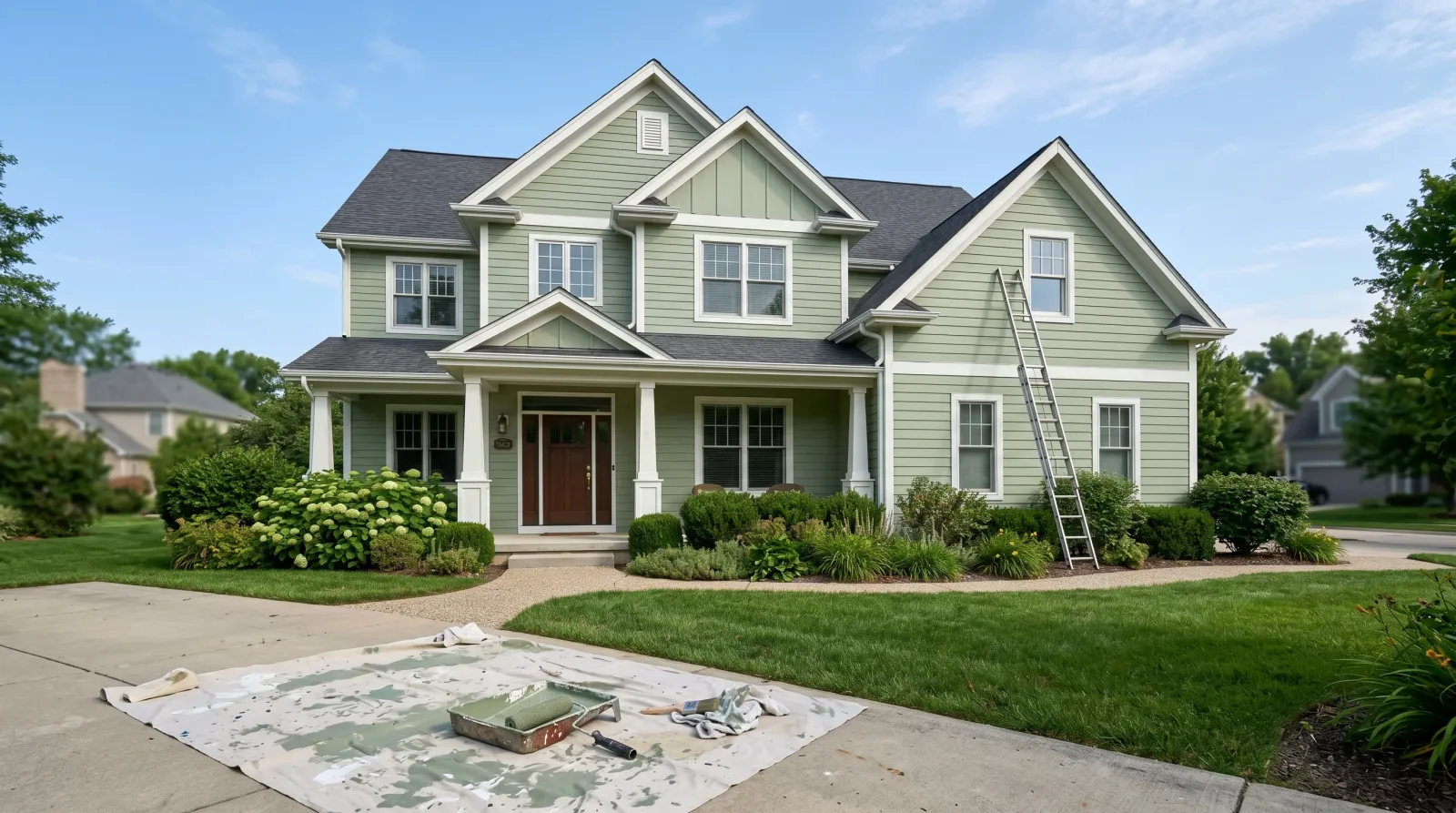
Valspar StormCoat3 sheens
Coverage350–450 sq ft / gal on a smooth primed wall
Recoat4–24 hr
VOCUnder 50 g/L
Full cureAbout 30 days
Sheens FlatSatinSemi-Gloss
Read this first
The Fast Verdict
Buy it for a rental, a flip, or a budget repaint in a mid-tone color, and buy a primer with it. At $30 to $42 a gallon it is the cheapest full 100% acrylic Lowe's stocks, and primed and two-coated it holds 7 to 10 years in a mild climate. It is not a paint-and-primer despite the Valspar Pro shelf. Deep colors on south and west walls fade by year four or five, and the 15-year warranty excludes exactly that.
Best for
Rentals and flips · Big square footage · Fiber cement and hardboard · Mid-tone and lighter colors · Mild to moderate climates · 5-gallon whole-house jobs
Skip if
Your forever home · Deep colors on a sun-hammered wall · You will not buy a primer · Decks and porch floors · You want 15 years out of one coat job
What it's good at
- Being real 100% acrylic at a vinyl-acrylic price — it flexes through freeze-thaw instead of cracking at the laps
- Sticking to almost anything outside: wood, fiber cement, vinyl, shakes, primed metal, brick, stucco, cinder block
- Back-rolling on texture — rough cedar and stucco lay down even with no holidays
- Mildew resistance that earns its keep on a shaded north wall in a humid zone
- The 5-gallon math on a whole-house repaint, where it is the cheapest full-acrylic bucket Lowe's stocks
- Holding 7 to 10 years on prepped fiber cement or hardboard in a mild climate
What it's not good at
- Priming itself — bare, chalky, or stained surfaces all need a separate primer coat
- Holding deep reds, blues, and dark grays on south and west walls past year four or five
- One-coat coverage; the film is thin and it is two real coats every time
- Touch-ups after a season of UV, where the flat sheen shifts and patches flash
- Backing up its 15-year warranty on the failures people actually get
- Anything you walk on — decks, porch floors, and steps are the wrong category
Numbers, not adjectives
Spec Sheet
- Coverage
- 350–450 sq ft / gal on a smooth primed wall; less on texture
- Sheens
- Flat, Satin, Semi-Gloss
- Base
- 100% acrylic exterior latex
- Touch dry
- 1–2 hr
- Recoat
- 4–24 hr
- Full cure
- About 30 days
- VOC
- Under 50 g/L
- Application temp
- 35–90°F
- Primer
- Not a true self-primer; prime bare, chalky, or stained surfaces first
- Surfaces
- Wood and metal siding, trim, hardboard, fiber cement, vinyl, shakes, brick, cement, cinder block, stucco
- Sizes
- 1-gallon, 5-gallon
- Warranty
- 15-year limited; excludes fade and prep failures
- Price
- $30–42 / gal at Lowe's, with sale dips lower
Application Settings That Work
- Brush
- Rolls and brushes clean with no fighting the can. Not buttery, but no tip-drag complaints either. Cut in, roll while the cut-in is still wet, and do not stop in the middle of a wall.
- Airless
- Sprays fine and back-rolls well on texture. Spray-and-back-roll on rough cedar or stucco lays down even, with no holidays and no sags if you keep the gun moving. The paint has enough body to fill a textured surface without three passes.
- Primer
- This is the step people skip and the reason the paint gets bad reviews. Bare wood, chalking siding, and tannin-bleeding cedar all need a primer coat first. Wash, dry, rub-test for chalk, then prime what fails the test. Sound previously painted siding in good shape can go straight to two coats.
Dry Times in the Real World
Touch dry in 1 to 2 hours, recoat anywhere from 4 to 24 hours depending on weather, full cure about 30 days. The label clears 35°F but do not trust the bottom of that range. Acrylic needs heat to coalesce and form a film. Below about 50°F the cure slows, the film stays soft longer, and a soft film picks up dirt and stays vulnerable to early-morning dew. Paint it on a warm dry stretch with two mild days behind it, not on the last warm afternoon before a cold snap. On a wall that is still curing, hold off on the hose and the pressure washer for the month.
Mid-project panic
When It Goes Wrong, and How to Fix It
Peeling sheets by year three
Why it happens. Rolled straight over bare wood, chalking old siding, or tannin-bleeding cedar. StormCoat is paint, not a paint-and-primer, no matter that it sits in the Valspar Pro section. This is the number-one failure with this can.
The fix. Spend the extra $30 on a primer. Bare wood, chalky siding, and cedar all get a primer coat first. Over a sound, previously painted surface in good shape you can skip it. When in doubt, prime — the primer is cheaper than the second paint job.
The new coat lifted off old chalky siding
Why it happens. Chalk is a powdery layer of failed binder and pigment. Paint bonds to the chalk, the chalk lets go of the wall, and the whole system comes off together.
The fix. Wash the wall, let it dry, then rub a dark cloth across it. If the cloth comes up white, it is still chalking and you need a bonding or masonry primer before any topcoat. Straight over chalk is a guaranteed peel.
Deep charcoal or red gone dusty and uneven by year four
Why it happens. Light pigment load is where the low price comes from. Deep reds, blues, and dark grays fade on south and west exposure, and a west-facing gable taking afternoon sun all summer is the worst case.
The fix. Keep StormCoat for mid-tone and lighter colors. If you want a dark house that stays dark, go up a tier to Duramax for the fade resistance. Note that UV fade is explicitly excluded from the warranty, so there is nothing to claim.
The gallon ran out halfway through the wall
Why it happens. The 350 to 450 sq ft coverage number is honest only on a smooth, primed surface. Rough cedar, shakes, and stucco eat the low end, and the film build is thin enough that one coat is never enough outside.
The fix. Budget two real coats on every surface and buy for the low end of the coverage range on anything textured. On a whole-house job the 5-gallon bucket is both cheaper per gallon and insurance against running short mid-wall.
It scuffed and peeled off a porch floor in a season
Why it happens. Wrong category. This is a vertical siding and masonry paint, not a floor coating. Foot traffic scuffs it fast and standing water undercuts it.
The fix. Use a dedicated porch-and-floor enamel on a painted porch, and a stain rather than paint on a wood deck. Save StormCoat for the walls.
Side by side
StormCoat vs Duramax vs Sherwin-Williams Emerald Exterior
The gap between the cheapest full-acrylic exterior and the premium one is about $55 a gallon. On a 2,000 sq ft repaint at two coats, that is real money — so it is worth being honest about what each tier buys.
| Valspar StormCoat | Valspar Duramax | SW Emerald Exterior | |
|---|---|---|---|
| Price per gallon | $30–42 | $45–55 | $85–95 |
| Where you buy it | Lowe's, tinted at the counter | Lowe's, tinted at the counter | Sherwin-Williams store |
| Self-priming | No. Prime bare, chalky, or stained surfaces | Thicker film, but prep still rules | Self-priming on most sound surfaces |
| Dark color hold | Fades on south and west walls by year 4–5 | Meaningfully better fade hold on dark colors | Best-in-class fade and dirt resistance |
| Film build | Thin — two real coats always | Thicker; covers rough siding in fewer passes | Heavy build that survives a north-Midwest freeze-thaw |
| Realistic life | 7–10 years prepped, in a mild climate | Years more color life on hot exposures | The wall you do not want to touch for 15 years |
| Pick it when | Rental, flip, big square footage, mid-tone color | The house is yours and the color is dark | Forever home, and you are done thinking about it |
Where you buy it
Valspar StormCoatLowe's, tinted at the counter
Valspar DuramaxLowe's, tinted at the counter
SW Emerald ExteriorSherwin-Williams store
Self-priming
Valspar StormCoatNo. Prime bare, chalky, or stained surfaces
Valspar DuramaxThicker film, but prep still rules
SW Emerald ExteriorSelf-priming on most sound surfaces
Dark color hold
Valspar StormCoatFades on south and west walls by year 4–5
Valspar DuramaxMeaningfully better fade hold on dark colors
SW Emerald ExteriorBest-in-class fade and dirt resistance
Film build
Valspar StormCoatThin — two real coats always
Valspar DuramaxThicker; covers rough siding in fewer passes
SW Emerald ExteriorHeavy build that survives a north-Midwest freeze-thaw
Realistic life
Valspar StormCoat7–10 years prepped, in a mild climate
Valspar DuramaxYears more color life on hot exposures
SW Emerald ExteriorThe wall you do not want to touch for 15 years
Pick it when
Valspar StormCoatRental, flip, big square footage, mid-tone color
Valspar DuramaxThe house is yours and the color is dark
SW Emerald ExteriorForever home, and you are done thinking about it
Budget and square footage fighting each other, mid-tone color, and you will prime what needs priming: StormCoat is a genuinely sensible dollar, especially on fiber cement or hardboard. The house is yours and the color is dark: spend the extra $15 a gallon on Duramax, because the fade gap is the thing you notice in year five. You never want to look at the wall again: Emerald, at three times the price. What you should not do is buy StormCoat, skip the $30 primer, and pay for the job twice.
If not this one
Honest Alternatives
GP
Glidden Premium Exterior$25–32 / gal
Roughly the same money or a touch less. It is a vinyl-acrylic blend, not full acrylic, so it chalks and cracks faster on a moving wood substrate. The right pick only when StormCoat is out of stock and the budget is truly bottom-dollar. On fiber cement, where the wall barely moves, the gap closes.
Full review →VD
Valspar Duramax$45–55 / gal
Same brand, next rung up. Better dirt pickup resistance, meaningfully better fade hold on dark colors, and a thicker film that covers rough siding in fewer passes. About $15 more a gallon buys years of color life on hot exposures.
Full review →SW
Sherwin-Williams Emerald Exterior$85–95 / gal
The premium pick for a wall you do not want to touch for 15 years. Best-in-class fade and dirt resistance, self-priming on most sound surfaces, and film build that survives a north-Midwest freeze-thaw. Three times the price. Worth it on a forever home, overkill on a rental.
Full review →Questions people actually ask
StormCoat Questions, Answered
Is Valspar StormCoat worth it?
For a rental, a flip, or a big house on a tight budget, yes. It is a full 100% acrylic exterior at $30 to $42 a gallon from Lowe's, and primed and two-coated it holds 7 to 10 years in a mild climate. It stops being worth it on a forever home or a dark color on a south or west wall, where it fades by year four or five. And it is only worth it if you buy the primer too.
Does Valspar StormCoat need a primer?
Yes, on anything bare, chalky, or stained. StormCoat is paint, not a self-priming paint-and-primer, despite the shelf placement. Bare wood, chalking old siding, and tannin-prone cedar all need a primer coat first. Over a sound, previously painted surface in good shape you can usually skip it. When in doubt, prime — skipping it is the number-one reason this paint peels early.
How long does StormCoat last on a house?
Plan on 7 to 10 years on prepped siding in a mild climate, less on sun-blasted south and west walls. Valspar lists a 15-year warranty, but that number assumes perfect prep and rarely matches real wear. Well-applied StormCoat holds past year eight on north-facing fiber cement. South-facing wood that was not primed right chalks by year four.
Is StormCoat the same as Valspar Duramax or Reserve?
No. StormCoat is Valspar's budget exterior, sold in the Pro lineup at Lowe's. Duramax is the mid-tier exterior with better dirt and fade resistance. Reserve is the top interior and exterior line with the strongest hide and color hold. StormCoat is the one you buy when budget and square footage are the constraint, not the one you buy for a forever home.
Can I paint StormCoat in cold weather?
Down to 35°F per the label, but do not trust the bottom of that range. Acrylic needs heat to coalesce and form a film. Below about 50°F the cure slows and the film stays soft longer, which means it picks up dirt and stays vulnerable to early-morning dew. Paint it on a warm, dry stretch with two days of mild weather ahead.
Is the 15-year warranty real?
It is a product-replacement backstop, not a promise your house stays painted. It covers the original residential purchaser, on a prepped surface, applied per label, for a manifest paint defect. It does not cover fade, it does not cover failures from skipped primer, and it never pays labor to scrape and repaint. Keep the receipt and photograph the prep.
Does StormCoat work over old chalky paint?
Only after you handle the chalk. Wash the wall, let it dry, then rub a dark cloth across it. If the cloth comes up white, it is still chalking and you need a bonding or masonry primer first. StormCoat straight over chalk is a guaranteed peel.
Can I use StormCoat on a deck or porch floor?
No. It is a vertical-surface siding and masonry paint, not a floor coating. Foot traffic will scuff and peel it fast. For a porch floor you want a dedicated porch-and-floor enamel, and for a wood deck you want a stain, not paint.
Is StormCoat worth the savings over Duramax?
On a rental, a flip, or a budget repaint in a mild climate with mid-tone colors, yes. The full-acrylic base is the same idea; you are trading fade life and film build for about $15 a gallon. On a forever home or a dark color on a hot exposure, no. The fade-resistance gap is the thing you actually notice in year five.
Keep exploring
Valspar brand overview and product linesBest exterior paint — full round-upHow to fix chalking exterior paintPainting in cold weather without ruining the film
We may earn a commission when you buy through the retailer link above. It never changes the score or the verdict.
Ask a Question