Product review · Valspar · Updated August 7, 2026
Duramax ExteriorValspar paint review
8.2/10The best price-to-result exterior paint Lowe's sells, as long as the siding is sound and the sunny wall is not a saturated color.
The value rung on the Lowe's exterior rack: it does most of what Sherwin Duration does for $30 to $40 less a gallon, and the thick film fills the surface checking on old hardboard that cheap paint just sits in. Sun and prep are where it costs you.

Mark Thompson · Pro Contractor & Field Editor · Updated August 7, 2026
22 years running residential and light commercial repaints across the Midwest. Mark has sprayed and back-rolled Duramax onto twenty-year-old hardboard and been called back to look at the walls where somebody skipped the primer. About the testing process →
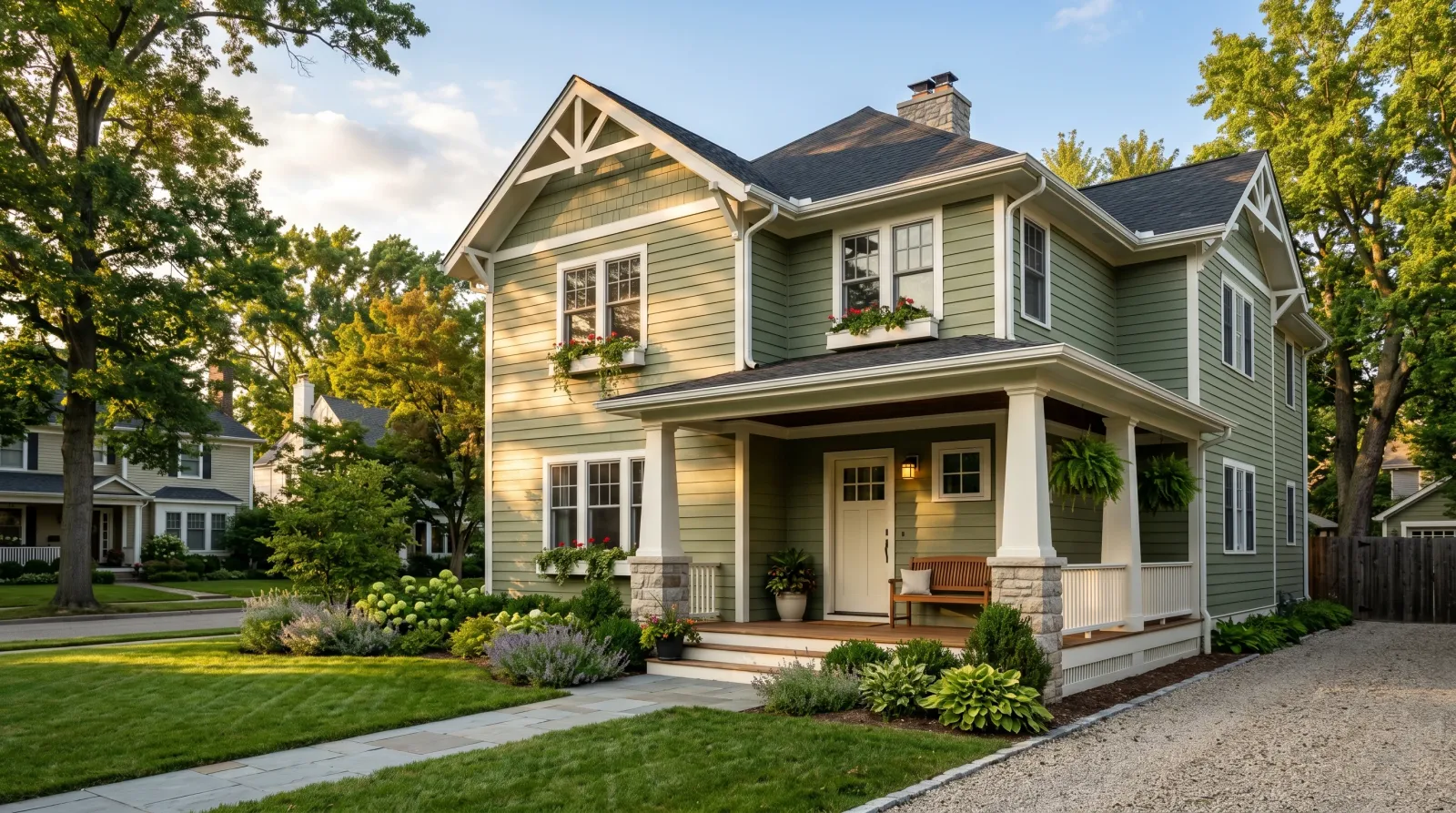
Valspar Duramax Exterior3 sheens
Coverage300–400 sq ft / gal
Recoat4 hr
VOCUnder 50 g/L
Full cure30 days
Sheens FlatSatinSemi-Gloss
Read this first
The Fast Verdict
For most exterior repaints, buy it. At $45 to $65 a gallon it does most of what Sherwin Duration does for $30 to $40 less, and the high-build FlexShield365 film fills the fine surface checking on old hardboard that cheaper paint just sits in. The mildew resistance is cured into the film, and the 35°F floor stretches the season into late fall. It is the wrong buy on bare cedar, in salt air, or on a full-sun south wall in a saturated color.
Best for
Sound previously painted siding · Old hardboard with surface checking · North walls that grow mildew · Late-fall repaints down to 35°F · Whole-house budget jobs · Spray-and-back-roll work
Skip if
Bare cedar or raw fiber cement · Chalky old paint you will not prime · Salt air or high-UV desert exposure · Deep saturated colors on a south wall · A shed or fence you will recoat in five years
What it's good at
- Bridging hairline cracks — on 20-year-old hardboard it fills and seals the fine surface checking under two coats
- Mildew resistance cured into the film, so it does not wash out with the first hard rain on a north wall
- A 35°F application floor that stretches the painting season into late fall and early spring
- Price against the pro-store paints — most of what Duration does for $30 to $40 less a gallon
- Moving through an airless without thinning trouble and back-rolling clean on rough siding
- Holding a grade: lab weathering had it at 5 out of 5 at the 3-year mark and 4 out of 5 at both 6 and 9 years
What it's not good at
- Full-sun walls — south and west exposures show visible color loss by year 8, sooner on deep reds, blues, and greens
- Bare cedar, chalky old paint, and raw fiber cement, where the plus-primer claim does not replace a real primer
- Warranty remedies — product defects on the original homeowner's house, not weathering, not prep, not labor
- Semi-gloss touch-ups on trim, which flash brighter under raking sun after a few months
- Long brush pulls in the heat, where the thick body drags
- Salt-air coastal zones and high-UV desert exposure, where film life beats per-gallon price
Numbers, not adjectives
Spec Sheet
- Coverage
- 300–400 sq ft / gal
- Sheens
- Flat, Satin, Semi-Gloss
- Touch dry
- 1 hr
- Recoat
- 4 hr
- Full cure
- 30 days
- VOC
- Under 50 g/L
- Application temp
- 35–90°F, surface and air
- Primer
- Self-priming on sound prepped siding; bare, chalky, or stain-prone surfaces need a real primer first
- Surfaces
- Wood, metal, hardboard, fiber cement, vinyl, primed metal, shakes, brick, cement, cinder block, stucco
- Sizes
- Quart, gallon, 5-gallon
- Warranty
- Limited lifetime, original homeowner
- Price
- $45–65 / gal at Lowe's; sale dips to $40
Application Settings That Work
- Brush
- Brushes and rolls fine, but it drags a little on a long pull in the heat. Cut in on the shaded side of the house, keep the pulls short, and reload more often than you would with a thinner exterior paint.
- Airless
- It moves through an airless without thinning trouble and back-rolls clean on rough siding — the thick body that fills the checks does not fight you at the gun the way some high-build elastomerics do. Spray and back-roll rather than spraying alone: the roller pushes the film into the grain, and that is where film life comes from.
- Primer
- Self-priming on sound, previously painted siding in good shape, and that claim holds there. On bare wood, chalky old paint, raw fiber cement, or tannin-prone cedar it does not replace a real primer. Spot-prime or full-prime those first — skipping it because the can says plus primer is how bleed-through and peeling show up two years later.
Dry, Recoat, and the 35-Degree Floor
Touch dry in an hour, recoat at four, full cure at 30 days. The number that changes your calendar is the 35°F application floor, and it stretches the painting season into late fall and early spring when most exterior latex quits at 50°F. Read it the way the label means it, though: the surface, the air, and the paint all need to be at 35°F or above and rising, not falling. Late fall is where people get burned. A 50°F afternoon that drops to 38°F at dusk can leave the film half-cured, and half-cured exterior paint does not recover in the spring. Paint in a warming window, not a cooling one, and stop early enough in the day that the coat gets a few warm hours before the temperature turns.
Mid-project panic
When It Goes Wrong, and How to Fix It
Peeling around year two
Why it happens. Almost every one of these traces back to prep, not chemistry. Homeowners read the plus-primer on the can and skip the primer step on chalky old paint, bare wood, or raw fiber cement. Duramax self-primes on a sound, previously painted surface. It does not replace a real primer on any of those three, and tannin-prone cedar bleeds through inside a year.
The fix. Rub the siding with your hand. If it chalks, you are washing and priming first. Wash off chalk, dirt, and mildew, scrape and feather any peeling edges, then spot-prime bare wood, exposed fiber cement, knots, and cedar with the right primer before the topcoat goes on.
The sunny side faded years before the shaded sides
Why it happens. This is the real weakness. South and west exposures that take all-day sun show visible color loss by year 8, sooner on deep reds, blues, and greens — owner reviews report some greens drifting toward gray inside two years. The fade resistance is decent for the tier, but it is not Duration or Aura Exterior.
The fix. Pick a lighter color for the elevations that take all-day sun, and save saturated colors for shutters and doors where a repaint is an afternoon instead of a scaffold job. If the color is non-negotiable on a full-sun wall, budget to recoat that side before the shaded sides need it.
The brush drags on a long stroke in the heat
Why it happens. You cannot have the film build without the drag. The thick body that bridges hairline checks is the same body that pulls at the end of a long brush pull on a hot afternoon.
The fix. Chase the shade around the house and cut in on the cool side. Shorter pulls, more reloads, and keep a wet edge. If you are spraying, this stops being a problem — it moves through an airless without thinning trouble.
The semi-gloss touch-up on the trim reads brighter
Why it happens. On trim in direct sun, a semi-gloss touch-up spot reads brighter than the surrounding film once it has weathered a few months. Flat and satin blend fine.
The fix. Use satin on trim you expect to touch up. If it has to be semi-gloss, recoat to a natural break — the whole board, corner to corner — rather than dabbing a spot in the middle of a run.
Side by side
Duramax vs Defense vs SeasonFlex
These three get crossed constantly at the rack. All carry lifetime warranties, all come in flat, satin, and semi-gloss, and Duramax and SeasonFlex both cover 300 to 400 sq ft a gallon. The difference is what each one is built to survive.
| Valspar Duramax | Valspar Defense | Valspar SeasonFlex | |
|---|---|---|---|
| Gallon at Lowe's | $51–58 typical, street $45–65, sale near $40 | $65–71 | $30–48 |
| Headline tech | FlexShield365 high-build, crack-bridging film | Advanced Water Beading plus a rain-ready film | Rain Ready Technology on a flexible 100% acrylic |
| Application temp | 35–90°F | 35–90°F | 40–90°F |
| Dry and recoat | Touch 1 hr · recoat 4 hr | Rain-ready in about an hour | Touch 1–4 hr · recoat 4 hr |
| Coverage | 300–400 sq ft / gal | Same rack, thinner spread on deep colors | 300–400 sq ft / gal |
| Best at | Old checking siding, a cold painting window, all-around weather and UV | Driving rain, coastal damp, deep shade that grows algae | Painting when showers could hit the same day |
Gallon at Lowe's
Valspar Duramax$51–58 typical, street $45–65, sale near $40
Valspar Defense$65–71
Valspar SeasonFlex$30–48
Headline tech
Valspar DuramaxFlexShield365 high-build, crack-bridging film
Valspar DefenseAdvanced Water Beading plus a rain-ready film
Valspar SeasonFlexRain Ready Technology on a flexible 100% acrylic
Dry and recoat
Valspar DuramaxTouch 1 hr · recoat 4 hr
Valspar DefenseRain-ready in about an hour
Valspar SeasonFlexTouch 1–4 hr · recoat 4 hr
Coverage
Valspar Duramax300–400 sq ft / gal
Valspar DefenseSame rack, thinner spread on deep colors
Valspar SeasonFlex300–400 sq ft / gal
Best at
Valspar DuramaxOld checking siding, a cold painting window, all-around weather and UV
Valspar DefenseDriving rain, coastal damp, deep shade that grows algae
Valspar SeasonFlexPainting when showers could hit the same day
Simple rule at the rack. Wet, unpredictable forecast where rain could land within hours: SeasonFlex, and its Rain Ready film keeps the surprise shower from leaving runs and watermarks. Walls that fight water year-round — driving rain, coastal damp, a north wall under a tree that never dries: Defense, and the roughly $20 a gallon is worth every dollar there. Everything else — sound siding in a dry or moderate climate, old hardboard with fine checking, a late-October Saturday at 38°F — is Duramax. On a 15-gallon house the spread against Defense is around $300, which buys a lot of caulk and a sprayer rental.
If not this one
Honest Alternatives
VD
Valspar Defense$65–71 / gal
The flagship, about $20 more a gallon, with a water-beading film and a rain-ready window Duramax does not claim. Worth it in rain country, on coastal damp, and on shaded walls that grow algae. In a dry or moderate climate on sound siding it is chemistry the weather never asks for.
Full review →VS
Valspar SeasonFlex$30–48 / gal
The flexible acrylic with Rain Ready Technology, so a shower a few hours after the last coat does not leave runs or watermarks. Same coverage, same sheens, same lifetime warranty, thinner film and a 40°F floor. The right call when the forecast, not the siding, is your problem.
Full review →GP
Glidden Premium Exterior$25–35 / gal
Available at every Home Depot, half the Duramax price, two-thirds the film. Thinner build, weaker mildew package, faster chalk. The right call on a fence, a shed, or a detached garage where the finish does not have to read perfect or last twelve years.
Full review →SW
Sherwin-Williams Duration Exterior$75–90 / gal
Thicker, more elastic film, better fade resistance on full-sun walls, and a self-priming claim that holds on more substrates. Costs $30 to $40 more a gallon and you are driving to a Sherwin store. The right call on a forever home or a south-facing wall in a hot climate.
Full review →BP
Behr Premium Plus Exterior, or a true elastomeric on cracked stucco$35–45 / gal
For cracked stucco or masonry that needs genuine bridging, a true elastomeric beats any standard acrylic, Duramax included. Duramax bridges hairline checks, not the wide cracks an old stucco wall opens up.
Full review →Questions people actually ask
Duramax Exterior Questions, Answered
Is Valspar Duramax worth it?
For a whole-house repaint on sound siding, yes. The thick, crack-bridging film and the cured-in mildew package show their value by year three on a shaded wall, and at $45 to $65 a gallon it does most of what Sherwin-Williams Duration does for $30 to $40 less. It is not worth it on bare cedar or raw fiber cement that still needs a dedicated primer, and it is not the pick in salt air, desert sun, or on a south wall in a saturated color, where visible fade by year 8 is the honest limit.
Is Valspar Duramax actually self-priming?
On sound, previously painted siding in good shape, yes. The paint-and-primer claim holds up there. On bare wood, chalky old siding, raw fiber cement, or anything with bleed-through, no. Spot-prime or full-prime first. Self-priming is a marketing line that assumes a perfect substrate, and exterior substrates are rarely perfect.
How long does Duramax last on exterior siding?
Figure 8 to 12 years on a properly prepped surface in a moderate climate. South and west walls that take all-day sun fade faster, closer to the 8-year end. North walls easily clear 12. The lifetime warranty sounds longer than the real-world film life because it covers product defects, not normal weathering.
Can I apply Duramax in cold weather?
Down to 35°F, per the label, as long as the surface, the air, and the paint are all at least 35°F and rising, not falling. Late fall is risky. A 50°F afternoon that drops to 38°F at dusk can leave the film half-cured. Paint in a warming window, not a cooling one.
What is the difference between Valspar Duramax and SeasonFlex?
Duramax is the thicker FlexShield365 film that bridges hairline cracks and applies down to 35°F. SeasonFlex is a flexible 100% acrylic with Rain Ready Technology that protects fresh paint from runs and watermarks if showers start the same day, but its floor is 40°F. Both cover 300 to 400 sq ft per gallon in flat, satin, or semi-gloss with a lifetime warranty. Pick SeasonFlex when the forecast is unpredictable and rain could hit within hours. Pick Duramax for old checking siding, a colder painting window, and the stronger all-around weather package.
Is Duramax or Valspar Defense better?
Defense is the tier above Duramax, about $20 more per gallon at $65 to $71 against $51 to $58, and its water-beading, rain-ready film earns that gap in wet climates and on shaded walls that stay damp. On sound siding in a dry or moderate climate, Duramax does the same visible job for less, and it applies down to 35°F. Buy Defense for rain country, Duramax for value on a standard repaint.
How does Duramax compare to Sherwin-Williams Duration?
Duration builds a thicker, more elastic film, resists fade better on full-sun walls, and costs $30 to $40 more a gallon at a Sherwin store. Duramax is the value pick that covers a whole house from a Lowe's counter trip. Forever home in a harsh climate, go Duration. Budget repaint on sound siding, Duramax does the job.
How does Valspar Duramax score in independent tests?
In accelerated weathering tests, where one lab year approximates about three years on a vertical wall, Duramax scored 5 out of 5 for appearance at the 3-year mark and 4 out of 5 at both the 6- and 9-year marks, placing it among the top big-box exterior paints tested. It holds nearly new-looking for the first stretch, drops one grade, then stays at that grade rather than falling off a cliff. That lines up with the 8-to-12-year real-world film life on properly prepped siding.
Is Valspar Reserve Exterior still available?
No. Reserve is Valspar's interior flagship today. An exterior Reserve existed years back and old cans and old test write-ups still turn up, so the name is not imaginary — it is just no longer the line to buy. For exterior work now the rungs are Defense, Duramax, SeasonFlex, and StormCoat. Valspar 2000 and 4000 are not siding paints either, whatever the price tag says.
Keep exploring
Valspar brand hub — every line, reviewedBest exterior paint — full round-upHow to fix chalking exterior paint before you recoatValspar Defense — the rung above Duramax, reviewedValspar SeasonFlex — the rain-window rung, reviewed
We may earn a commission when you buy through the retailer link above. It never changes the score or the verdict.
Ask a Question