Product review · Valspar · Updated August 7, 2026
Concrete & Garage Floor 1-Part EpoxyValspar paint review
7.4/10An easy, low-odor acrylic floor coating with epoxy in the recipe — judged against floor paint it looks good, judged against a 2-part kit it cannot win.
The name is doing work the chemistry does not. This is a waterborne acrylic with epoxy blended into the binder, not a catalyzed 2-part kit — which decides everything about how it behaves under a hot tire.

David Chen · Formulation Lead & Resident Chemist · Updated August 7, 2026
Polymer chemist by training, six years in industrial coatings R&D before joining CompositePaint's formulation team. David writes the film-formation pieces — why a thermoplastic coating softens under a warm tire, and why cross-link density is the number that matters. About the testing process →
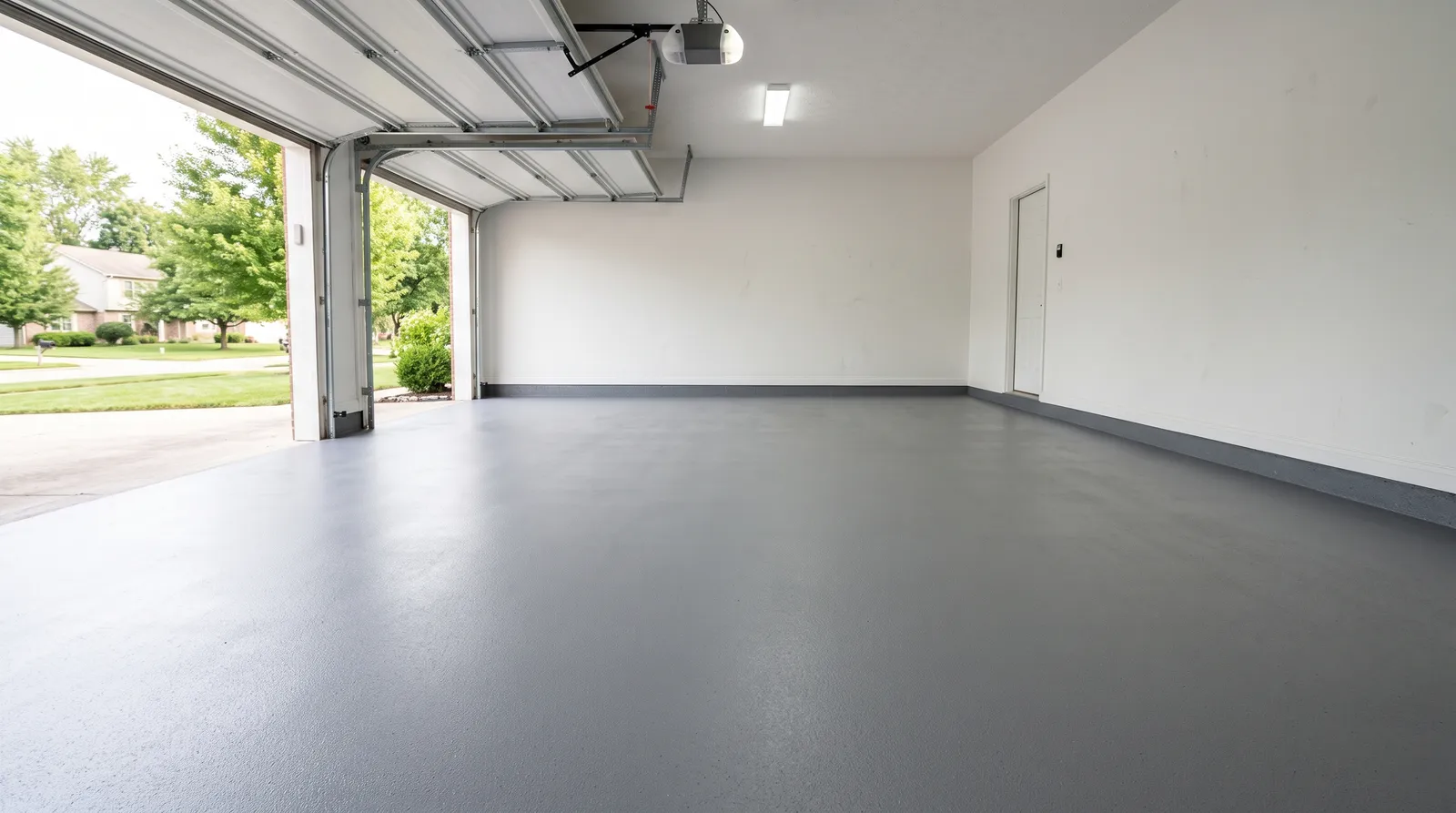
Valspar Concrete & Garage Floor 1-Part Epoxy1 sheen
Coverage350–500 sq ft / gal per coat
Recoat4–6 hr at 77°F and 50% RH
Sheens Satin
Read this first
The Fast Verdict
For a light-use garage, a basement slab, or a patio, this is a fair $48 a gallon. One bucket, no part A and part B, no pot life racing a clock, water cleanup, low odor, and more than a thousand tintable colors. It is worth it only if you do the prep honestly: etch the bare concrete until it feels like 120-grit, add the recommended bonding primer, and keep tires off it for the full five days. Hot daily-drivers and spilled solvents belong on a true 2-part epoxy.
Best for
Light-use garages · Basement floors · Patios and driveways · Enclosed spaces where odor matters · Color choice beyond gray and tan · Sound, etchable slabs
Skip if
Hot daily-drivers park on it · Gas and solvents get washed off the floor · The slab fails a moisture test · New concrete under 30 days · You will not etch or prime
What it's good at
- Single-component ease — no part A and part B, no pot life ticking while you panic
- Low odor and water cleanup, which is the right chemistry for an enclosed basement slab
- Hiding a tired slab: the satin film evens out patchy gray, old oil shadows, and patch marks
- Color range — 1,000-plus tintable Valspar colors against the gray-or-tan choice most garage coatings give you
- Resisting hot tires noticeably better than plain concrete floor paint, because the fortifier stiffens the film
- Bonding hard to a slab that was properly etched, primed, and dry
What it's not good at
- Defeating hot-tire pickup — a thermoplastic film still softens under a warm daily-driver
- Standing up to brake fluid, gas, and harsh degreasers left sitting
- Priming itself; the etch and the recommended bonding primer are both real steps
- Matching the mil thickness and chemical armor of a catalyzed 2-part build
- Coverage honesty — the headline number is per coat and two coats are recommended
- Rewarding impatience; tires need the full five days, longer when it is cold or damp
Numbers, not adjectives
Spec Sheet
- Type
- Waterborne acrylic with epoxy resin blended into the binder — not a catalyzed 2-part kit
- Coverage
- 350–500 sq ft / gal per coat; two coats recommended, so about half that for a finished floor
- Finish
- Satin
- Touch dry
- 1–2 hr
- Recoat
- 4–6 hr at 77°F and 50% RH
- Vehicle traffic
- 5 days
- Prep
- Clean and etch bare or sealed concrete with Valspar Fast Prep until it feels like 120-grit; new concrete cures 30 days first
- Self-priming
- No — a bonding primer is a recommended step
- Colors
- Light Gray, Ultra White, plus 1,000+ tintable Valspar colors
- Clear topcoat
- Sold separately (Valspar Concrete & Garage Floor Clear Coat, gloss or satin)
- Sizes
- 1-gallon, 5-gallon
- Price
- About $48 / gal at Lowe's
Application Settings That Work
- Brush
- Stir it, cut in the edges with a brush, then roll the field. Back-roll the second coat to even the film. The chemistry that limits durability is the same chemistry that makes it forgiving to apply: a thermoplastic film tolerates a slower, less precise hand than a curing 2-part system does, because nothing is racing a pot life.
- Primer
- This one is not self-priming, and that is the step people skip. Clean the slab, etch bare or sealed concrete with Valspar Fast Prep until it feels like 120-grit and drinks water, rinse, and dry fully. Then apply the recommended bonding primer before the color coats. New concrete cures 30 days before anything goes on it.
The Cure Reality — Why Five Days Before You Park
Touch dry at one to two hours is the number that gets people in trouble. Recoat is four to six hours, and vehicle tires need a full five days. The reason is film formation: a waterborne acrylic dries by coalescence, meaning the water evaporates and the binder particles crowd together and fuse into a continuous film. That fusing keeps going long after the surface feels hard, and the film keeps gaining hardness through it. Cold or humid weather slows both stages, so five days in a chilly November garage is not the same five days as in July. Park a hot tire on a film that has not finished and the rubber can grab and lift it in a ring. The flash-dry surface tempts you to park early. Parking early is how you pull the coating up.
Mid-project panic
When It Goes Wrong, and How to Fix It
The coating delaminated in sheets, usually under the tires
Why it happens. A waterborne acrylic bonds to concrete mostly mechanically — it needs surface texture, a profile, to key into. A power-troweled garage slab is polished nearly to glass, and a film cannot grip glass. Without a profile there is simply nothing for the coating to hold onto.
The fix. Clean the slab, then etch with Valspar Fast Prep until the surface feels like 120-grit sandpaper and drinks water on contact. Rinse and dry fully. Then use the recommended bonding primer — this product is not self-priming, and that primer coat measurably improves adhesion.
A ring of coating lifted where the car parks
Why it happens. This is hot-tire pickup. An epoxy-fortified acrylic is still thermoplastic: it softens slightly when warm. A tire coming off the highway in summer is genuinely hot, that heat soaks into the film, and as the rubber cools and contracts its grip on the softened coating can exceed the coating's adhesion to the slab.
The fix. Give it the full five days before any vehicle, longer in cold or humid weather. Let hot tires cool before pulling into the garage where you can. If you drive a hot daily-driver year-round, the honest answer is that this tier resists hot-tire pickup rather than defeating it — a 2-part epoxy or a polyaspartic is the right chemistry.
Stains and soft marks where fluids sat
Why it happens. The epoxy fortifier raises the film's chemical resistance over plain concrete paint, but it does not build the dense cross-linked network a catalyzed system does. Cross-link density is what drives chemical resistance, and this film does not have a 2-part kit's.
The fix. Wipe brake fluid, gas, and degreaser off promptly rather than letting them sit. Adding the separate Valspar clear coat gives you a sacrificial top layer that takes the damage instead of the color coat. For a garage that routinely sees solvents, this is the wrong tier.
The gallons ran out before the floor was finished
Why it happens. The 350 to 500 sq ft coverage headline is per coat, and Valspar recommends two coats. The honest finished-floor number is closer to half the headline.
The fix. Do the real math before you buy: floor area divided by the per-coat number, doubled. A two-car garage usually means the 5-gallon pail. Buy it all at once so the tint batch matches, and remember to budget the etcher and the bonding primer on the same trip.
The coating never bonded on a new or damp slab
Why it happens. Fresh concrete is still releasing moisture and alkalinity, and moisture moving up through a slab pushes a film off from underneath no matter how well the top was prepped.
The fix. Let new concrete cure a full 30 days before any coating. On an older slab, tape a square of plastic sheeting down overnight — condensation underneath means the slab is passing moisture and you should solve that before you coat it.
Side by side
Valspar 1-Part vs Behr 1-Part vs a True 2-Part Epoxy
Two of these are the same class of coating with one prep difference between them. The third is a different chemistry entirely, and that is where the durability gap comes from — not from branding.
| Valspar 1-Part Epoxy | Behr Premium 1-Part Epoxy | Rust-Oleum EpoxyShield 2-Part Kit | |
|---|---|---|---|
| Chemistry | Waterborne acrylic with epoxy fortifiers; dries by coalescence, stays thermoplastic | The same epoxy-fortified acrylic class | Resin plus amine hardener that cross-link into a dense thermoset network |
| Price | About $48 / gal | About $48 / gal | $70–120 / kit |
| Self-priming on an etched slab | No — a separate bonding primer is recommended | Yes | Kit system with its own prep routine |
| Hot-tire resistance | Resists it, does not defeat it; softens under a hot daily-driver | Same class, same limit | Genuine hot-tire resistance from high cross-link density |
| Application | One bucket, no pot life, water cleanup, low odor | One bucket, etch and roll | Mix on a timer; a pot life you cannot dawdle in |
| Best fit | Light-use garage, basement, patio, and a color you actually want | Same job; pick on color range and what your store stocks | A garage that works for a living |
Chemistry
Valspar 1-Part EpoxyWaterborne acrylic with epoxy fortifiers; dries by coalescence, stays thermoplastic
Behr Premium 1-Part EpoxyThe same epoxy-fortified acrylic class
Rust-Oleum EpoxyShield 2-Part KitResin plus amine hardener that cross-link into a dense thermoset network
Price
Valspar 1-Part EpoxyAbout $48 / gal
Behr Premium 1-Part EpoxyAbout $48 / gal
Rust-Oleum EpoxyShield 2-Part Kit$70–120 / kit
Self-priming on an etched slab
Valspar 1-Part EpoxyNo — a separate bonding primer is recommended
Rust-Oleum EpoxyShield 2-Part KitKit system with its own prep routine
Hot-tire resistance
Valspar 1-Part EpoxyResists it, does not defeat it; softens under a hot daily-driver
Behr Premium 1-Part EpoxySame class, same limit
Rust-Oleum EpoxyShield 2-Part KitGenuine hot-tire resistance from high cross-link density
Application
Valspar 1-Part EpoxyOne bucket, no pot life, water cleanup, low odor
Behr Premium 1-Part EpoxyOne bucket, etch and roll
Rust-Oleum EpoxyShield 2-Part KitMix on a timer; a pot life you cannot dawdle in
Best fit
Valspar 1-Part EpoxyLight-use garage, basement, patio, and a color you actually want
Behr Premium 1-Part EpoxySame job; pick on color range and what your store stocks
Rust-Oleum EpoxyShield 2-Part KitA garage that works for a living
Between the two 1-part cans, real-world durability is a wash — Behr self-primes on an etched slab and Valspar asks for a separate bonding primer, which is one more step but genuinely helps adhesion. Buy on color and what your local store carries. The decision that actually matters is the one above them: if hot daily-drivers park on the slab or solvents get washed off it, cross-link density is the property you need, and only a true 2-part epoxy or a polyaspartic has it. Buying a 1-part for a hot-tire garage is buying a touch-up schedule.
If not this one
Honest Alternatives
BP
Behr Premium 1-Part Epoxy Garage Floor PaintAbout $48 / gal
The closest direct competitor — same epoxy-fortified acrylic class, same etch-and-roll routine, same price, same satin finish. The one meaningful difference is prep: Behr's is self-priming on an etched slab while Valspar recommends a separate bonding primer. Real-world durability is a wash; pick on color range and what your store stocks.
RO
Rust-Oleum EpoxyShield Garage Floor Kit$70–120 / kit
A true 2-part epoxy — resin plus hardener that cross-link into a dense thermoset film with genuine hot-tire and chemical resistance, plus an optional decorative chip. You pay for it in more prep and a pot life you cannot dawdle in, but it is the floor that survives a garage that works for a living.
RO
Rust-Oleum RockSolid Polyaspartic / Polycuramine Kit$150–250 / kit
A high-build polyurea-class system that cures harder and faster than epoxy, shrugs off hot tires, and lasts a decade with proper prep. It costs three to five times this can and demands the cleanest, most profiled slab you can give it. The move when you want it done once.
Questions people actually ask
Concrete & Garage Floor 1-Part Epoxy Questions, Answered
Is Valspar 1-part garage floor epoxy worth it?
For a light-use garage, a basement slab, or a patio, yes. About $48 a gallon buys a clean satin floor in any of a thousand tinted colors, with water cleanup, low odor, and no pot life ticking. It is worth it only if you do the prep honestly: etch the bare concrete until it feels like 120-grit, add the recommended bonding primer, and keep tires off it for the full five days.
Is Valspar 1-part epoxy as durable as a 2-part kit?
No, and the chemistry is the reason. Valspar's 1-part is an acrylic film with epoxy fortifiers; it forms by coalescence and stays thermoplastic, so it softens under heat. A 2-part kit chemically cross-links a resin and an amine hardener into a dense thermoset network that is far harder, more chemical-resistant, and far better at hot-tire resistance. The 1-part is the easier DIY coating; the 2-part is the floor that survives a decade.
Valspar vs Behr garage floor epoxy — which?
They are the same class — both 1-part epoxy-fortified acrylics, both etch-and-roll, both about $48 a gallon. The real split is prep: Behr's is self-priming on an etched slab, while Valspar is not and recommends a separate bonding primer. That is one more step for Valspar, but a primer coat genuinely improves adhesion. Buy on color and what your store stocks; performance is a wash.
Do I have to etch the concrete first?
Yes, on bare or sealed concrete. The film grips a profile, not a polish, and a power-troweled slab is effectively glass. Etch with Valspar Fast Prep until the surface feels like 120-grit sandpaper and drinks up water. Skip it and the coating delaminates, usually under the tires, usually within a season. New concrete also needs a full 30 days to cure before any coating goes down.
How long before I can park a car on it?
Five days, in warm, dry conditions. The film is touch-dry in an hour or two and recoats in four to six, but vehicle tires need the full five days for the film to harden enough to resist hot-tire pickup. Cold or humid weather stretches that number, because coalescence and the final hardening both slow down when it is cool or damp. Park hot tires on it at day three and you will pull the coating up with them.
How much do I need for a two-car garage?
Do the real math, not the label math. The 350 to 500 sq ft coverage figure is per coat and two coats are recommended, so the finished-floor number is closer to half that per gallon. A two-car garage usually lands on the 5-gallon pail. Buy the Fast Prep etcher and the bonding primer on the same trip, because neither is included.
Can I use it on a basement floor or a patio?
Yes, and a basement is where the waterborne chemistry earns its keep — low odor means you are not driven out of the house the way a solvent-based system would. It is rated for interior and exterior concrete, so driveways and patios are in scope too. The same rules apply: cured slab, clean, etched, primed, and dry.
Do I need the separate clear coat?
Not to finish the floor, but it is a useful add-on. The Valspar Concrete and Garage Floor Clear Coat, in gloss or satin, gives you a sacrificial top layer that takes the marking and abrasion instead of the color coat. On a floor that sees fluids or drag marks, recoating a clear layer later is easier than redoing the color.
Keep exploring
Valspar brand hub — every line, reviewedBehr 1-part epoxy garage floor — the cross-brand comparisonBest garage floor paint — full round-up
We may earn a commission when you buy through the retailer link above. It never changes the score or the verdict.
Ask a Question