Product review · Rust-Oleum · Updated August 7, 2026
Universal All SurfaceRust-Oleum paint review
7.8/10The best adhesion-per-dollar in the aerosol aisle, and it never cures to a hard enamel.
There is no Rust-Oleum Fusion — Fusion is Krylon's name. The can most people searching for it actually want is Universal All Surface, and it bonds to bare plastic for about $10 with no primer.

Maya Patel · Reviews Editor & Product Tester · Updated August 7, 2026
Maya spent five years running comparative product testing at a consumer testing nonprofit before joining CompositePaint. She tape-pulled and fingernail-scratched this can against a craft enamel on the same faded plastic planter to see which one actually bit. About the testing process →
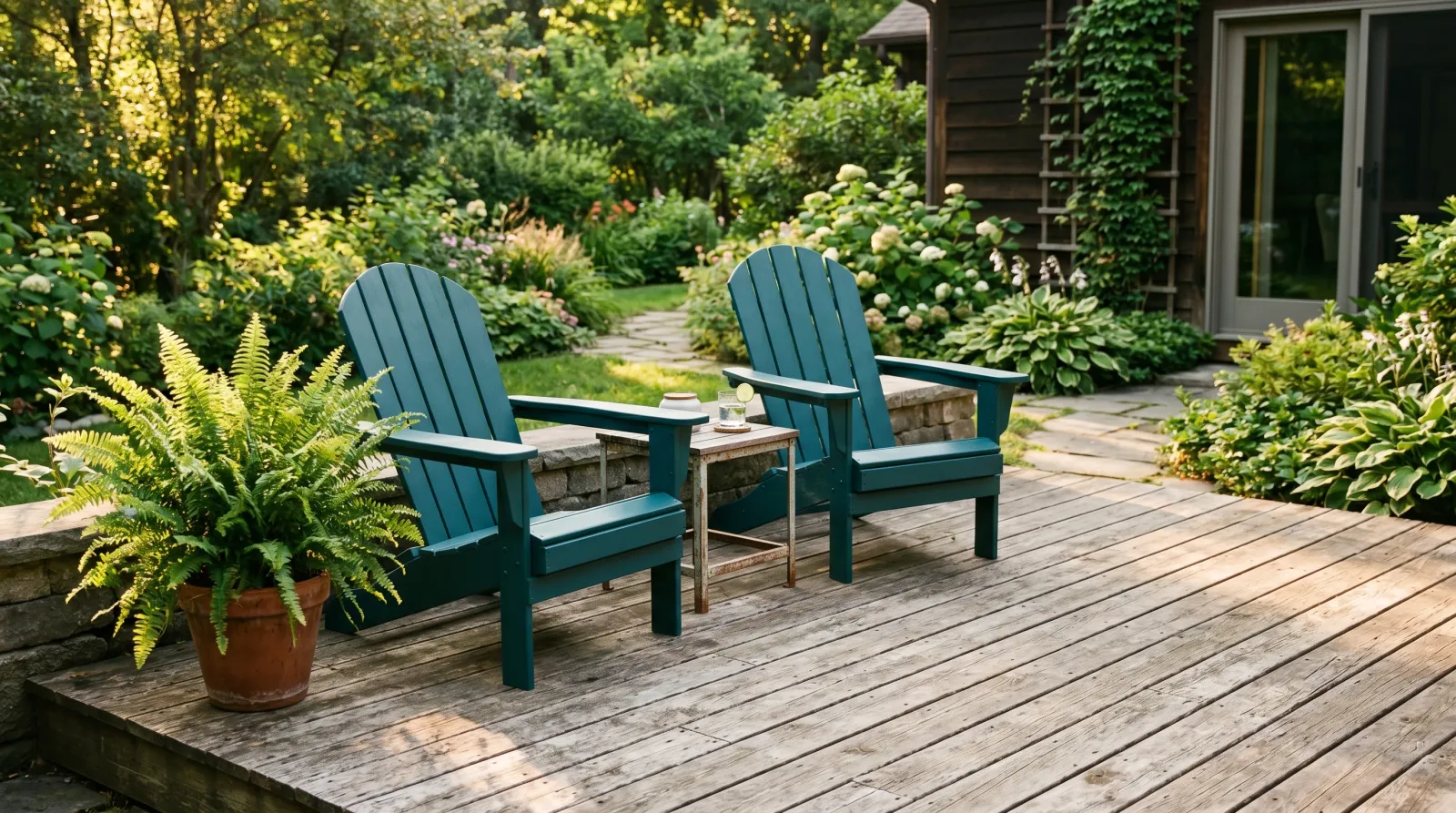
Rust-Oleum Universal All Surface5 sheens
CoverageAbout 12–15 sq ft per 12-oz can
RecoatWithin 1 hr, or after 48 hr
VOCSolvent-borne
Full cureSeveral days
Sheens FlatSatinGlossMetallicHammered
Read this first
The Fast Verdict
For plastic and metal yard pieces, yes. One $10 can bonds to bare, dull plastic with no separate primer and covers a whole Adirondack chair, which is the best adhesion-per-dollar in the aerosol aisle. It is not worth it for anything you scrub weekly or leave in all-day sun: the film never cures to a hard enamel and deep reds and blues dull by the third summer. Past about four chairs the aerosol math stops working, since six to eight cans runs $60 to $80.
Best for
Plastic lawn chairs and planters · Metal patio furniture · Mailboxes and garden pieces · Wicker and fiberglass · Small one-can weekend jobs · Light grays, whites, and earth tones
Skip if
The piece gets scrubbed or dragged daily · You are covering four chairs or more · Deep reds and blues in unshaded sun · You need a low-VOC product for indoors
What it's good at
- Bonding to bare, dull plastic with no separate primer — it passed a fingernail scratch and a tape pull where a craft enamel peeled
- The any-angle trigger, which sprays fully inverted into lattice without cramping your finger
- Finishing a chair, a couple of planters, or a small metal table from one $10 can
- Sheen range, including a Hammered finish that hides dings and mold lines on old metal furniture
- Actually working on the surfaces it claims — plastic, metal, wood, concrete, fiberglass, wicker
- Holding color outdoors better than craft-store spray
What it's not good at
- Curing hard — the film stays soft for days and a fingernail prints it in the first week
- Anything scrubbed, dragged, or climbed on weekly
- Big projects, since 12-oz aerosol only means six to eight cans and $60 to $80 for a four-chair set
- Deep reds, bright blues, and bright greens in unshaded sun, which dull by summer three
- Low-VOC or indoor work; it is solvent-borne with no GREENGUARD or CARB credential
- Spray touch-ups, which halo unless you feather them and keep the same lot
Same shelf, different cans
Which Can Are You Actually Holding?
The all-surface plastic spray shelf is a pile of similar-looking cans from two brands, and the label people search for does not exist. Here is which is which, and which one this review covers.
Rust-Oleum Universal All Surface (this review)
BaseSolvent-borne paint-and-primer in one, 12-oz aerosol
SheensFlat, Satin, Gloss, Metallic, Hammered
RecoatWithin 1 hr, or after 48 hr
Buy it if
The project is bare, slick plastic or old metal and you want one can that does primer and color.
Avoid if
The piece takes daily abuse or the set is big enough that six to eight cans stops making sense.
Krylon Fusion All-In-One
BaseKrylon's all-surface aerosol — the actual product named Fusion
Buy it if
You have used Fusion before and trust it, or your store stocks the color you want in Krylon and not Rust-Oleum.
Avoid if
Nothing performance-related — it is close enough that store stock usually decides.
Rust-Oleum Painter's Touch 2X Plastic
BaseCheaper everyday consumer aerosol
Buy it if
The plastic is already painted, or you are priming it yourself anyway.
Avoid if
The surface is bare slick plastic — it skips the all-surface bonding chemistry.
Rust-Oleum Specialty Plastic Primer
BasePrimer only, no color
Buy it if
You want a dedicated base coat under a topcoat that does not bond on its own.
Avoid if
You expected a finish. It is a base coat and nothing else.
Numbers, not adjectives
Spec Sheet
- Coverage
- About 12–15 sq ft per 12-oz can, one coat
- Sheens
- Flat, Satin, Gloss, Metallic, Hammered
- Touch dry
- About 30 min
- Recoat
- Within 1 hr, or after 48 hr
- Handle
- 1–2 hr
- Full cure
- Several days; treat it gently the first week
- VOC
- Solvent-borne; not a low-VOC or GREENGUARD product
- Primer
- Paint-and-primer in one; none needed on clean, dull plastic
- Surfaces
- Plastic, metal, wood, aluminum, concrete, fiberglass, wicker
- Sizes
- 12-oz aerosol only — no brush-on, no quart
- Price
- $8–12 per 12-oz can
Application Settings That Work
- Primer
- None on clean, dull plastic — the paint-and-primer formula bites well enough on planters, lawn chairs, and storage bins. Slick plastic is the exception: polypropylene, vinyl, and anything with a release coating need a gray Scotch-Brite scuff and a denatured alcohol wipe first. Skip that on slick plastic and it peels in a season.
The Recoat Window and the Soft-Film Week
Two timing facts decide whether this job goes well. First, the recoat window: inside one hour, or after a full 48 hours. Hit it at the three-hour mark and the fresh solvent lifts and wrinkles the coat underneath. That is the single most common way a Universal job goes wrong, and it is true of most solvent aerosols. Second, the cure. Touch dry at 30 minutes and handleable in one to two hours sounds finished, but the film stays soft for days and never hardens into a scrubbable enamel. A fingernail prints it in the first week. So stack nothing on a freshly painted chair, do not drag it across a patio, and do not wipe it down with anything abrasive until it has had several days. For a planter that just sits there, none of this matters. For a kid's chair, it does.
Mid-project panic
When It Goes Wrong, and How to Fix It
The second coat wrinkled and lifted the first
Why it happens. You recoated in the dead zone. The window is inside one hour or after 48 hours, and the three-hour mark is exactly where fresh solvent softens a half-set film.
The fix. Recoat within the hour while you are still working, or walk away for two days. If it already wrinkled, let it cure hard, sand the ruined area smooth, and rebuild inside the window.
It peeled off slick plastic in a season
Why it happens. Polypropylene, vinyl, and anything carrying a release coating or a film of oil are too slick for the paint-and-primer chemistry to bite on its own.
The fix. Scuff with a gray Scotch-Brite pad and wipe with denatured alcohol before you spray. On clean, dull plastic — planters, lawn chairs, storage bins — you can skip that step safely.
A fingernail prints the paint a week later
Why it happens. The film cures soft and never gets as hard as a baked enamel. That is a property of the product, not a defect in your can.
The fix. Give it several days before real use and keep it off high-wear pieces. If the item gets dragged, climbed on, and wiped weekly, step to an epoxy-based coating built for abuse instead.
The touch-up left a halo
Why it happens. Spray touch-up always halos, and aerosol lots vary just enough that a fresh can from a different lot will not match a can you sprayed last month.
The fix. Feather the touch-up out rather than hitting a spot, and keep a can from the same lot with the project. If the halo shows, repaint the whole piece — it is one can.
The color faded after two or three summers
Why it happens. It resists fading better than craft-store spray, but it is not UV armor. Deep reds, bright blues, and bright greens dull visibly in unshaded sun.
The fix. Pick light grays, whites, and earth tones for pieces that bake in the sun — they hold longest untopped. If you want a deep color out there, add a clear UV topcoat and expect to refresh it.
Side by side
Universal All Surface vs Krylon Fusion vs Painter's Touch 2X
Two all-surface cans and one budget can that is not. The difference only matters when the plastic is bare and slick.
| Rust-Oleum Universal All Surface | Krylon Fusion All-In-One | Rust-Oleum Painter's Touch 2X | |
|---|---|---|---|
| Bonds to bare slick plastic | Yes, on clean dull plastic with no separate primer. | Yes — the direct rival, and the actual product called Fusion. | No. It needs the Specialty Plastic Primer underneath. |
| Price per can | $8–12 | $7–10 | $5–7 |
| Sheen range | Flat, Satin, Gloss, Metallic, Hammered. | Strong satin range. | Everyday consumer range. |
| Lay-down on plastic | Good; any-angle trigger sprays inverted into lattice. | Arguably a touch smoother on plastic. | Fine over an already-painted or primed surface. |
| Film hardness | Soft for days; never a hard scrubbable enamel. | Comparable consumer aerosol film. | Comparable consumer aerosol film. |
| Where it wins | Bare plastic and mixed-material yard pieces from one can. | When your store has the color in Krylon and not Rust-Oleum. | When the surface is not slick or you are priming anyway. |
Bonds to bare slick plastic
Rust-Oleum Universal All SurfaceYes, on clean dull plastic with no separate primer.
Krylon Fusion All-In-OneYes — the direct rival, and the actual product called Fusion.
Rust-Oleum Painter's Touch 2XNo. It needs the Specialty Plastic Primer underneath.
Price per can
Sheen range
Rust-Oleum Universal All SurfaceFlat, Satin, Gloss, Metallic, Hammered.
Krylon Fusion All-In-OneStrong satin range.
Rust-Oleum Painter's Touch 2XEveryday consumer range.
Lay-down on plastic
Rust-Oleum Universal All SurfaceGood; any-angle trigger sprays inverted into lattice.
Krylon Fusion All-In-OneArguably a touch smoother on plastic.
Rust-Oleum Painter's Touch 2XFine over an already-painted or primed surface.
Film hardness
Rust-Oleum Universal All SurfaceSoft for days; never a hard scrubbable enamel.
Krylon Fusion All-In-OneComparable consumer aerosol film.
Rust-Oleum Painter's Touch 2XComparable consumer aerosol film.
Where it wins
Rust-Oleum Universal All SurfaceBare plastic and mixed-material yard pieces from one can.
Krylon Fusion All-In-OneWhen your store has the color in Krylon and not Rust-Oleum.
Rust-Oleum Painter's Touch 2XWhen the surface is not slick or you are priming anyway.
If the surface is bare, slick plastic and you want one can to do primer and color, Universal is the Rust-Oleum answer and the any-angle trigger is a real advantage on a lattice-back chair. Krylon Fusion is close enough that store stock usually decides it — buy whichever has your color on the shelf. Painter's Touch 2X only makes sense when the plastic is already painted or you are priming it yourself, because saving three dollars a can and then buying a primer is not a saving.
If not this one
Honest Alternatives
RO
Rust-Oleum Painter's Touch 2X$5–7 per can
Same brand, a couple of dollars less, and fine on plastic that is already painted or that you have primed yourself. It skips the all-surface bonding chemistry, so on bare slick plastic you want the Specialty Plastic Primer underneath. The right call when the surface is not slick.
Full review →KF
Krylon Fusion All-In-One$7–10 per can
The actual Fusion people search for, and Universal's closest direct rival. It arguably lays down a touch smoother on plastic and has a strong satin range. Performance is close enough that store stock usually decides which one you buy.
Full review →TP
Two-part appliance or epoxy enamelVaries by kit
When the plastic gets handled hard — a toy box lid, a frequently grabbed bin — no consumer aerosol cures hard enough. An epoxy-based coating costs more, smells worse, and takes prep, but it survives where Universal scratches.
Questions people actually ask
Universal All Surface Questions, Answered
Is Rust-Oleum Universal All Surface worth it?
For plastic and metal yard pieces, yes. One $10 can bonds to bare, dull plastic with no separate primer and covers a whole Adirondack chair, which is the best adhesion-per-dollar in the aerosol aisle. It is not worth it for anything you scrub weekly or leave in all-day sun, because the film never cures to a hard enamel and deep reds and blues dull by the third summer. Past about four chairs the aerosol math stops working, since six to eight cans runs $60 to $80.
Is Rust-Oleum Fusion the same as Krylon Fusion?
No. Fusion is Krylon's name — Fusion All-In-One. Rust-Oleum's plastic-bonding all-surface spray is sold as Universal All Surface. Most people typing 'rust oleum fusion plastic' want a spray that sticks to plastic without sanding, and that is exactly what Universal does. If you specifically want the Krylon can, that is a different label on the same shelf.
Does it really stick to plastic without sanding or priming?
On clean, dull plastic — planters, lawn chairs, storage bins — yes. The paint-and-primer formula bites well enough to skip a separate primer. On slick or oily plastic such as polypropylene lids, vinyl, or anything with a release coating, scuff it with a gray Scotch-Brite pad and wipe with denatured alcohol first. Skip that step on slick plastic and it peels in a season.
How many cans do I need for a plastic chair?
One 12-oz can per Adirondack-style chair for a single light color, two if you are going dark over a light chair or want full hide. Each can covers roughly 12 to 15 square feet at the thin, even passes the label wants. Stacking chairs and detailed lattice eat more than you would guess. Buy one extra.
Is it safe to use on something outdoors?
Yes, it is rated for exterior use and resists fading and chipping better than craft-store sprays. UV will still dull deep reds and bright blues over two to three summers. For furniture that bakes in direct sun all day, a clear UV topcoat buys another year or two of color. Light grays, whites, and earth tones hold up best untopped.
How long before I can recoat?
Within one hour, or after a full 48 hours. The three-hour mark is the trap: fresh solvent lifts and wrinkles the half-set coat underneath. Plan to shoot all your coats in one session, or come back in two days. Touch dry is about 30 minutes and it is handleable at one to two hours.
How hard does the film get?
Not very. It stays soft for days and never cures to a hard, scrubbable enamel. A fingernail prints it in the first week. For a planter that sits there, that is fine. For a kid's chair that gets dragged and wiped weekly, expect edge wear inside a season and use an epoxy-based coating instead.
Can I use it on metal patio furniture?
Yes, and the Hammered finish is the sleeper pick there. It reads as a deliberate texture and hides the dings and mold lines on old metal furniture instead of highlighting them. Same rules apply: clean the surface, respect the recoat window, and give it several days before hard use.
Can I spray it indoors?
No. It is solvent-borne with no GREENGUARD or CARB low-VOC credential, and the fumes are real. Spray outside or in a garage with the door open, wear a respirator for anything bigger than a planter, and keep it out of closed rooms. If indoor air quality is the priority, this is not your can.
Keep exploring
Rust-Oleum brand hub and product reviewsBest paint for plastic, testedWhat acrylic paint actually is
We may earn a commission when you buy through the retailer link above. It never changes the score or the verdict.
Ask a Question