Product review · Rust-Oleum · Updated August 7, 2026
Specialty High HeatRust-Oleum paint review
7.8/10The best $8 you can spend on a chalky orange grill, if you actually do the heat-cure.
A $7 to $9 silicone enamel that keeps flat black on a grill lid where ordinary spray paint chars at the vents. It only becomes a finish after you fire the thing up — and that is the step nobody reads.

Maya Patel · Reviews Editor & Product Tester · Updated August 7, 2026
Maya spent five years running comparative product testing at a consumer testing nonprofit before joining CompositePaint. She built the round-up protocol the team uses, and she is stubborn about testing coatings the way people actually use them, cure step and all. About the testing process →
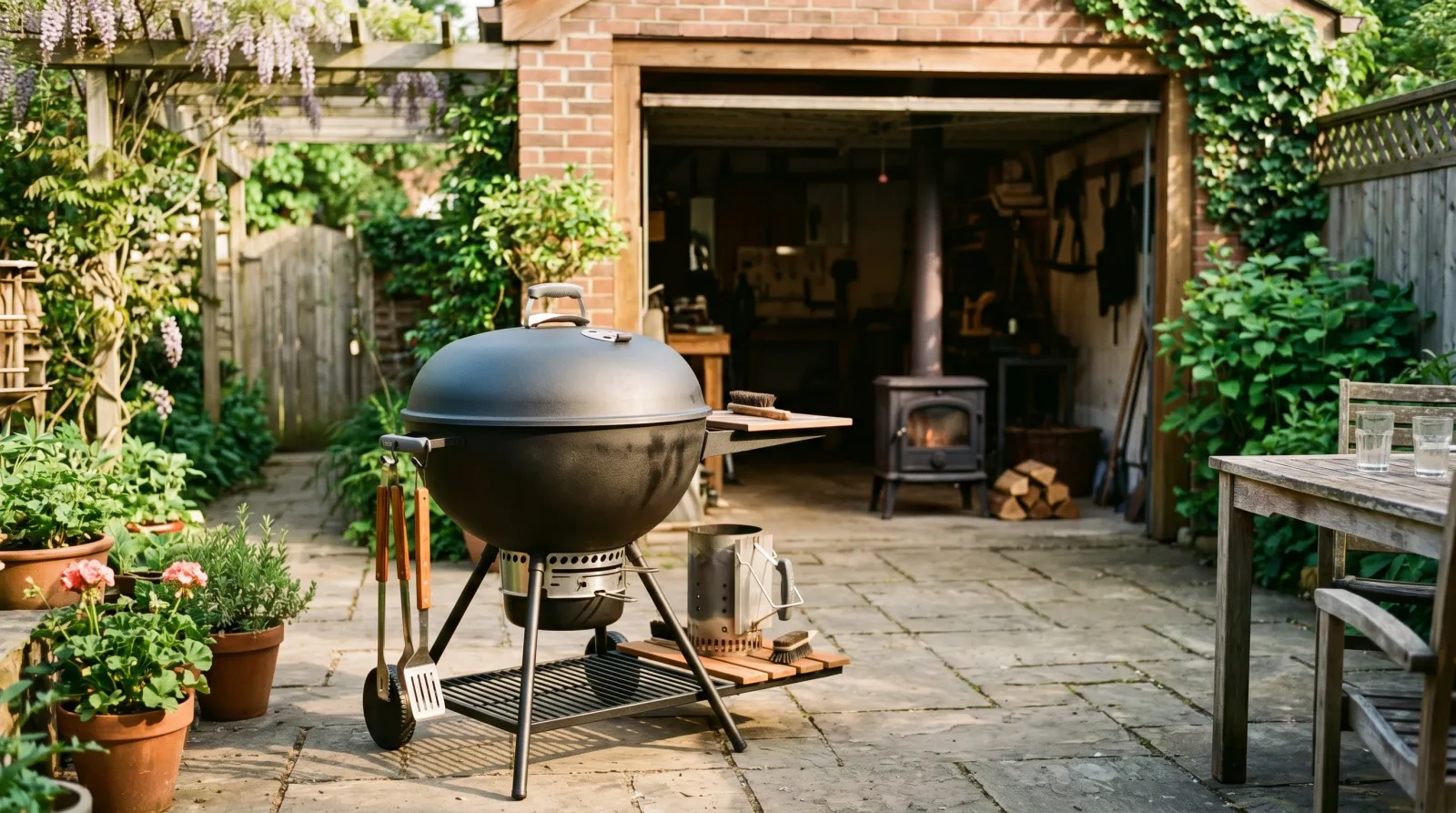
Rust-Oleum Specialty High Heat2 sheens
Coverage5–7 sq ft per 12 oz can
Dry / RecoatTouch 30 min
VOCSolvent-based aerosol
CureHeat-cure: air-dry 1 hour
Sheens FlatSatin
Read this first
The Fast Verdict
For the outside of a grill, smoker, wood stove, radiator, or fire pit, yes. At $7 to $9 a can it is the cheapest way to get flat black back on hot metal, it self-primes on clean steel, and it holds color through real heat cycles for several seasons where ordinary spray paint chars at the vents. It is not worth it for headers, manifolds, calipers, or anything past 1200F or in direct flame, and it is only worth it if you do the heat-cure step.
Best for
Grill and smoker shells · Wood stoves · Cast-iron radiators and registers · Fire pits · Stove legs and carts · Lightly rusted clean steel
Skip if
Headers and exhaust manifolds · Brake calipers · Firebox and grill interiors · You need a color outside black and four metallics · You will not heat-cure it
What it's good at
- Surviving real heat cycles — a resprayed kettle lid still flat black after a full season of cooks
- Self-priming on clean or lightly rusted steel, so the job is scuff, wipe, spray, cure
- Wiping down with a degreaser rag once it has been through one heat cycle
- The flat Bar-B-Que Black hiding dings and old pitting better than the satin
- Slowing new rust on sound metal under a grill cover
- Being cheap enough at $7 to $9 to keep a can on the shelf for the next hot thing
What it's not good at
- The cure step, which loses people and produces most of the it-never-dried complaints
- Coverage — 5 to 7 sq ft a can, so a full kettle needs two and a barrel smoker three
- Color choice; flat black plus four satin metallics is the entire list
- Heavy passes, which run immediately and have to be sanded out
- Anything past 1200F — headers, manifolds, calipers all want the 2000F can
- Direct flame contact, so firebox and grill interiors are out
Same shelf, different cans
Which Rust-Oleum High Heat Are You Buying
Rust-Oleum sells three different high-heat products and they are not interchangeable. People buy the wrong one constantly, paint a header with the grill can, and watch it smoke off on the first drive.
Specialty High Heat (1200F) — this review
BaseSilicone-modified enamel, 12 oz aerosol
SheensFlat (Bar-B-Que Black); Satin in black, silver, copper, aluminum
RecoatWithin 1 hour, or after 48 hours
Buy it if
Grills, smokers, wood stoves, radiators, fire pits — anything that gets hot but does not glow. Self-priming on clean or lightly rusted steel.
Avoid if
The part glows red, sits in direct flame, or you need a color this short list does not carry.
Automotive High Heat (2000F)
Buy it if
Exhaust manifolds, headers, and the hottest engine surfaces, which cycle past what the Specialty can holds. Costs about the same as the Specialty can.
Avoid if
It is a backyard grill — the extra rating buys you nothing there.
High Performance V2100 (Industrial), up to 1200F
Buy it if
Industrial stacks, boilers, and commercial equipment specified off an industrial data sheet.
Avoid if
This is a consumer job — the Specialty can is the same ceiling and easier to buy.
Numbers, not adjectives
Spec Sheet
- Coverage
- 5–7 sq ft per 12 oz can
- Sheens
- Flat (Bar-B-Que Black), Satin (Black, Silver, Copper, Aluminum)
- Dry / Recoat
- Touch 30 min; recoat within 1 hour or after 48 hours
- Cure
- Heat-cure: air-dry 1 hour, then bring the part up to temperature slowly
- Heat rating
- 1200F, for surfaces that get hot but are not in direct flame contact
- VOC
- Solvent-based aerosol; not low-VOC, no GREENGUARD or green cert
- Primer
- Self-priming on clean bare or lightly rusted metal; no separate primer needed
- Surfaces
- Grills, smokers, wood stoves, radiators, engine blocks, exhaust, fire pits
- Sizes
- 12 oz aerosol only
- Price
- $7–9 per 12 oz can street price
Application Settings That Work
- Primer
- No separate primer. Wire-brush or wire-wheel to clean, sound metal, wipe it down, and spray — the silicone enamel self-primes on bare or lightly rusted steel and that one-system simplicity is the whole appeal for a Saturday grill job. Keep it off the cooking grates, and stay off firebox interiors and anything in direct flame contact, which this product is not made for.
Heat-Cure: The Step Everyone Skips
The single most common failure with this paint is not a paint defect, it is a process miss. The silicone enamel air-dries to the touch in 30 minutes, but air-dry is not cure — the resin only crosslinks and locks down when the part is brought up to temperature the first time. The sequence that works: spray two or three light coats, recoating within the hour; let it air-dry at least an hour and do not touch it; then bring the part up to operating temperature slowly, so a grill gets lit and held at cooking heat for an hour, and a wood stove gets a slow first burn. Expect some smoke and smell on that first heat — that is the carrier burning off, it is normal, and it stops. Once it has been through one heat cycle the film is hard, wipes down with a degreaser rag, and is done. Skip the cure and you have a soft coating that marks and lifts, and every complaint that it never dried traces back to here.
Mid-project panic
When It Goes Wrong, and How to Fix It
It smears when you wipe it the next morning
Why it happens. The part was never heat-cured. Air-dry gets it touch-dry in 30 minutes, but the silicone resin does not harden until the metal has been brought up to temperature. Half the one-star reviews online are this exact mistake, and Rust-Oleum only says it in small type on the can.
The fix. Fire the thing up. Light the grill or run a slow first burn in the stove and hold it at operating temperature for about an hour. The film hardens during that cycle. If the smeared area is bad, let it cure, scuff it, re-spray, then heat-cure properly.
Runs and sags on a vertical panel
Why it happens. The pattern is fine but the product will not take a heavy pass. Lay it on thick and it runs immediately, which is also why real coverage lands at 5 to 7 sq ft rather than the number the math suggests.
The fix. Two or three light passes, all inside the first hour so you stay out of the recoat dead zone. Keep the can moving and accept that the color builds over passes. A run has to be sanded out after the film is hard.
You ran out of paint mid-job
Why it happens. A 12 oz can does about 5 to 7 sq ft in the light passes this product needs. That is one grill lid and nothing else. A full kettle wants two cans and a barrel smoker three.
The fix. Buy two cans up front for anything bigger than a lid. Waiting on a second can breaks the one-hour recoat window and leaves an uneven cure line you will see once the piece has been through a heat cycle.
The new coat lifted off an old rusty grill with the scale under it
Why it happens. This paint slows rust on sound metal because it seals the surface, but it is not a rust converter. Heavy flaking rust is not a surface the film can hold onto — it holds onto the scale, and the scale lets go.
The fix. Wire-wheel the loose rust down to sound metal first, then wipe and spray. On clean or lightly oxidized steel it self-primes and holds for several seasons. On a rust-pitted hulk it buys you a season, not a decade.
The finish discolored and let go on a header
Why it happens. Wrong can. The Specialty 1200F product is the grill-and-stove version. A header can hit 1000F-plus at the collector and cycle hard, and the Specialty film discolors and releases on the hottest section first.
The fix. Strip it and use the Automotive 2000F can, which costs about the same and is built for manifolds and headers, or VHT Flameproof if you want show-quality with an oven bake. When you are unsure how hot a part runs, go up a rating, not down.
Side by side
Specialty 1200F vs Automotive 2000F vs VHT Flameproof
People treat every high-heat can as one product. They are not, and picking wrong is the difference between a finish that holds and one that smokes off on day one.
| Specialty High Heat | Rust-Oleum Automotive 2000F | VHT Flameproof | |
|---|---|---|---|
| Heat rating | 1200F | 2000F | 2000F |
| Price per can | $7–9 | $8–11 | $10–14 |
| Built for | Grill shells, smoker bodies, fire-pit rings, cast-iron radiators, stove legs. | Exhaust manifolds, headers, the hottest engine surfaces. | Headers and high-temp engine work you want to look show-quality. |
| How you cure it | Air-dry an hour, then bring the part up to temperature slowly on its own first run. | Same rattle-can process at a higher ceiling. | Wants a controlled oven bake for a glass-hard finish. |
| Color range | Flat Bar-B-Que Black plus satin black, silver, copper, aluminum. That is the list. | The automotive line's own range. | More colors than either Rust-Oleum can. |
| Skip it when | The part glows, sits in direct flame, or you need a color it does not make. | It is a backyard grill — overkill. | It is a backyard grill — overkill, and more demanding to apply. |
Heat rating
Specialty High Heat1200F
Rust-Oleum Automotive 2000F2000F
VHT Flameproof2000F
Price per can
Specialty High Heat$7–9
Rust-Oleum Automotive 2000F$8–11
VHT Flameproof$10–14
Built for
Specialty High HeatGrill shells, smoker bodies, fire-pit rings, cast-iron radiators, stove legs.
Rust-Oleum Automotive 2000FExhaust manifolds, headers, the hottest engine surfaces.
VHT FlameproofHeaders and high-temp engine work you want to look show-quality.
How you cure it
Specialty High HeatAir-dry an hour, then bring the part up to temperature slowly on its own first run.
Rust-Oleum Automotive 2000FSame rattle-can process at a higher ceiling.
VHT FlameproofWants a controlled oven bake for a glass-hard finish.
Color range
Specialty High HeatFlat Bar-B-Que Black plus satin black, silver, copper, aluminum. That is the list.
Rust-Oleum Automotive 2000FThe automotive line's own range.
VHT FlameproofMore colors than either Rust-Oleum can.
Skip it when
Specialty High HeatThe part glows, sits in direct flame, or you need a color it does not make.
Rust-Oleum Automotive 2000FIt is a backyard grill — overkill.
VHT FlameproofIt is a backyard grill — overkill, and more demanding to apply.
For a grill, smoker, wood stove, radiator, or fire pit, the Specialty 1200F can is the right buy and is genuinely over-spec'd for the job in the best way — a grill lid never sees 1200F on the outside. For a manifold or a header, the Automotive 2000F can costs a dollar or two more and is the only right answer when the part glows. VHT is the enthusiast pick when you want a header to look show-quality and you will do the oven bake. When you are unsure how hot the part runs, go up a rating; the extra ceiling is cheap insurance.
If not this one
Honest Alternatives
GS
Generic store-brand high-heat spray$5–7 / can
Lowe's, Walmart, and auto-parts house brands all sell a 1200F BBQ black for a couple of dollars less. Fine on a single throwaway grill job. They run thinner, the black is less consistent batch to batch, and the finicky silicone cure behaves the same.
RO
Rust-Oleum Automotive 2000F High Heat$8–11 / can
Same brand, same aisle, much higher ceiling. This is the can for exhaust manifolds, headers, and engine parts that cycle past 1200F. Overkill for a grill, and the only right answer when the part glows.
VF
VHT Flameproof header paint$10–14 / can
The enthusiast pick for headers and high-temp engine work, rated to 2000F and built to take a controlled oven bake for a glass-hard finish. More colors, more demanding to apply, more reward if you do it right.
Questions people actually ask
Specialty High Heat Questions, Answered
Is Rust-Oleum High Heat worth it?
For the outside of a grill, smoker, wood stove, radiator, or fire pit, yes. At $7 to $9 a can it is the cheapest way to get flat black back on hot metal, it self-primes on clean steel, and it holds color through real heat cycles for several seasons where ordinary spray paint chars at the vents. It is not worth it for headers, manifolds, calipers, or anything past 1200F, and it is only worth it if you actually do the heat-cure step.
Can I use Rust-Oleum High Heat inside my grill or fireplace?
No. It is rated to 1200F but it is not made for surfaces in direct flame contact. Rust-Oleum says to keep it off the inside of grills, fireboxes, oven interiors, and stovetops. Use it on the outside shell, the lid, the legs, and the cart. For the firebox itself you want a stove polish or a furnace cement, not spray paint.
Does it really need to be heat-cured before use?
Yes, and skipping this is the number one reason people think the paint failed. Let it air-dry an hour, then bring the part up to temperature slowly the first time. The film only hardens once it has been heated. Paint a cold grill, fire it up that evening, and the coating cures properly. Wipe a cold uncured panel with a rag and it smears.
How does it compare to VHT or the 2000F automotive version?
VHT is the hotter, more demanding header and caliper paint that wants an oven bake. Rust-Oleum's 2000F Automotive line is the pick for exhaust manifolds and headers. This 1200F Specialty can is the grill-and-stove product: easier to apply, cheaper, and plenty for anything that does not glow red. Match the can to the heat.
Will it stop rust on an old grill?
It slows rust on lightly oxidized clean metal because it is self-priming and seals the surface. It is not a rust converter. Heavy flaking rust has to come off with a wire wheel first, or the new coat lifts with the scale under it. On sound metal it holds for a few seasons; on a rust-pitted hulk it buys you a season, not a decade.
How many cans do I need for a grill?
One 12 oz can does 5 to 7 square feet in the light passes this product demands, which is a grill lid and nothing else. Budget two cans for a full kettle and three for a barrel smoker. Running out mid-job means you miss the one-hour recoat window and end up with a cure line you can see.
Is it normal for it to smoke and smell on the first burn?
Yes. That is the carrier burning off during the heat-cure, and it stops. Do the first heat outdoors, expect some smoke and smell, and let the cycle run for about an hour. After that the film is hard and the smell is gone.
What colors does it come in?
Flat Bar-B-Que Black is the volume color and the only flat option. Satin comes in black, silver, copper, and aluminum, and that is the whole list. If you want a high-heat red or anything outside those, this line does not have it — the automotive and VHT lines carry more.
Can I spray it in the garage?
Not really. This is an old-school solvent aerosol: it stinks, the overspray drifts, and there is no low-VOC or green certification here. Spray outside, downwind, on a drop cloth, and keep it well away from food prep and off the cooking grates entirely.
Keep exploring
Rust-Oleum brand reviews and product guideBest paint for plastic and odd surfacesHow to stop rust from bleeding through paint
We may earn a commission when you buy through the retailer link above. It never changes the score or the verdict.
Ask a Question