Product review · Rust-Oleum · Updated August 7, 2026
Specialty Glow in the DarkRust-Oleum paint review
7.2/10A real glow for craft money — as long as you expect stars, not a lamp.
Ten to eighteen dollars buys a real green glow that recharges every night forever. It is a soft accent, not a nightlight, and it needs a white base coat under it to work at all.

Emily Roberts · DIY Editor & First-Timer's Guide · Updated August 7, 2026
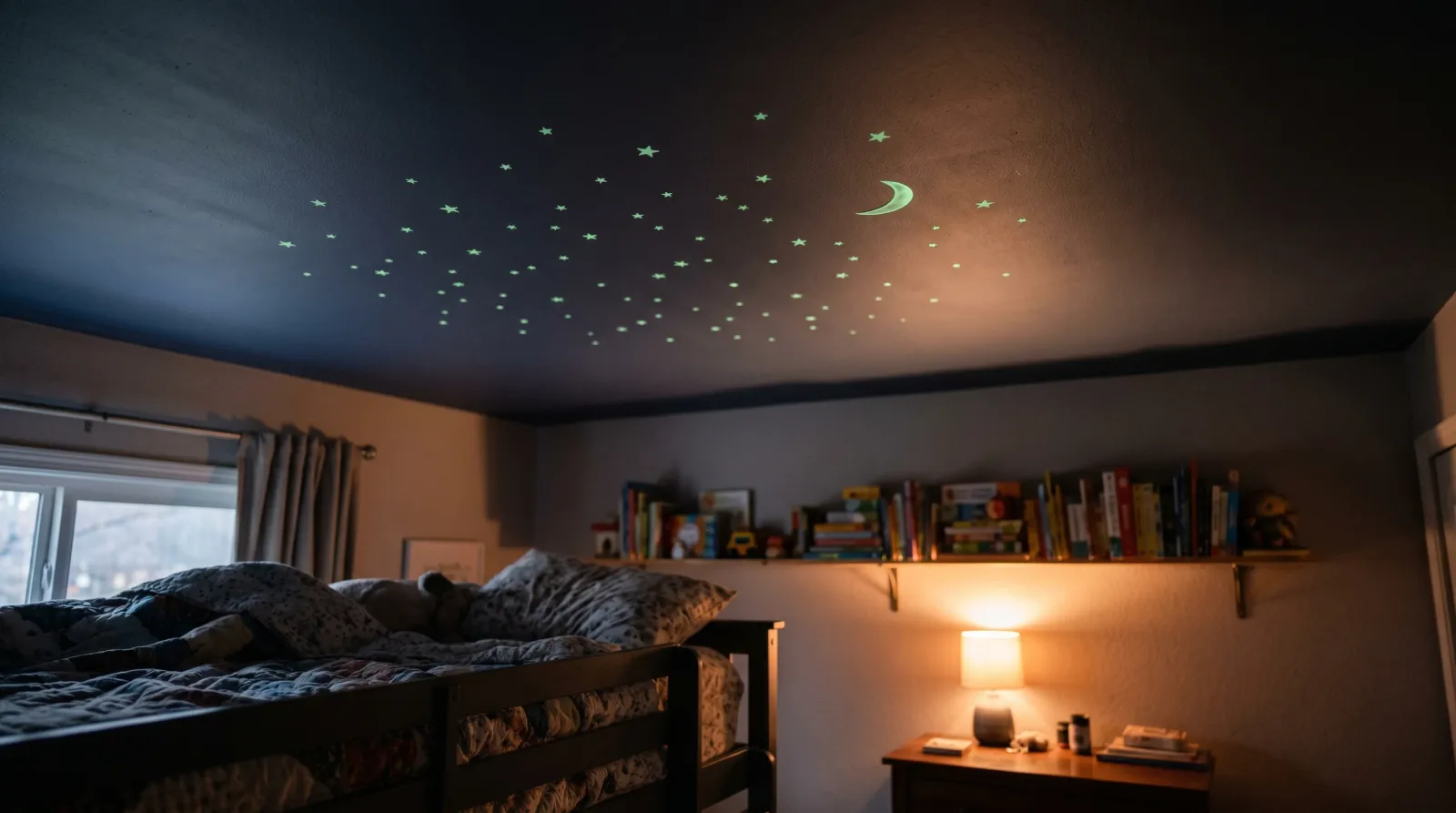
Emily painted her first room at 24, hated every minute of it, and got better. She writes the guides she wishes she'd had, and she has brushed glowing stars onto a bedroom ceiling and learned the hard way that they need a white base coat underneath. About the testing process →
Rust-Oleum Specialty Glow in the Dark2 sheens
CoverageUp to 25 sq ft per 7-fl-oz brush-on can
RecoatAbout 1 hour
VOCLow-VOC water-based latex in the brush-on
Sheens One finish onlyno sheen choice
Read this first
The Fast Verdict
For a kid's ceiling, a craft piece, or a few marked light switches, yes. It is $10 to $18, it goes on like normal latex with water cleanup, and the glow really does come back every time light hits it. It is not worth it if you expect a nightlight. The brush-on glows for up to 2 hours and is brightest for the first 20 minutes, it needs a white base coat underneath to glow at all, and the film is not built for floors, doorknobs, or weather.
Best for
Kids' room ceilings · Painted stars and constellations · Craft and costume projects · Light switches and stair edges · Precise small designs · First-time painters
Skip if
You want enough light to see by · You need an all-night glow · Floors, doorknobs, or anything handled daily · Outdoor surfaces · You expected blue or purple
What it's good at
- Being beginner-proof — normal water-based latex, brush washes in the sink, touch-dry in 45 minutes
- Actually glowing, and recharging every night the light hits it
- A pigment that does not use itself up, so the glow keeps coming back for years
- Precision: a small brush puts stars, a moon, or lettering exactly where you want them
- Being cheap and genuinely findable, unlike most glow paints, which are mail-order specialty items
- No fumes, no respirator, no special tools
What it's not good at
- Lasting all night — brightest for 15 to 20 minutes, then a faint glow only in a fully dark room
- Working over a dark or bare surface; without a white base coat there is almost nothing to see
- Coverage math — 25 sq ft assumes thin single passes, and you want two coats plus the base
- Competing with ambient light from a streetlight, a hallway, or a phone on the nightstand
- Floors, doorknobs, and anything handled daily, which will wear the film off
- Outdoors, where the brush-on is not rated for weather
- Any color but green — blue or pink glow is a blacklight setup, not this paint
Same shelf, different cans
Which Glow Product Are You Buying
The Glow in the Dark name covers three different products and grabbing the wrong one is the easiest mistake to make. This review is the brush-on, with notes on the sprays where they differ. All three glow green, because green is simply the color the pigment chemistry releases brightest.
Glow in the Dark Brush-On, 7 fl oz (this review)
BaseLow-VOC water-based latex
RecoatAbout 1 hour
Buy it if
Small indoor pieces, ceilings, crafts, switch plates, stair edges — anywhere you want a precise design.
Avoid if
The project is outdoors, on a floor, on a handle, or bigger than a poster.
Glow in the Dark Spray, 10 oz
BaseAerosol; glows 2–4 hours
Buy it if
Bigger or outdoor surfaces, plus drywall and plastic the brush-on is not rated for.
Avoid if
You need a precise design. Spray fogs everywhere and you will be masking for an hour.
Glow in the Dark MAX Spray, 10 oz
BaseAerosol with a heavier dose of higher-grade pigment; glows 4–8 hours
Buy it if
Glow duration is the whole point — a play area or a stairway you want visible deep into the night.
Avoid if
You still need a color other than green, or a base coat step you can skip. Neither changes here.
Numbers, not adjectives
Spec Sheet
- Coverage
- Up to 25 sq ft per 7-fl-oz brush-on can, in thin coats
- Finish
- One luminous-green finish; no sheen options
- Glow time
- Up to 2 hours (brush-on) · 2–4 hours (spray) · 4–8 hours (MAX spray)
- Dry to touch
- About 45 minutes
- Recoat
- About 1 hour
- Charge time
- A few hours under bright light before dark
- VOC
- Low-VOC water-based latex in the brush-on; sprays carry standard aerosol VOC and cautions
- Base coat
- Needs a white or light-colored base coat under it to glow well
- Surfaces (brush-on)
- Indoor wood, metal, plaster, masonry, unglazed ceramic
- Surfaces (spray)
- Adds drywall and plastic; indoor or outdoor
- Sizes
- 7-fl-oz brush-on · 10-oz spray · 10-oz MAX spray
- Price
- $10–18 per brush-on can, $12–16 per spray can
Application Settings That Work
- Brush
- It goes on like any water-based latex: a small brush puts the glow exactly where you point it, which is why it beats the spray for stars, a moon, constellations, or lettering. Two thin coats, about an hour apart, and wash the brush in the sink. Do a test patch on scrap first to see how thick you need to go.
- Primer
- Not self-priming in the way that matters here. It needs a white or light-colored base coat under it to glow at all, so paint the wood, ceiling, or craft piece white first and let it dry before the glow coat. Buy that white at the same time — this is the step people skip and then complain about.
Charging It, and How Long the Glow Really Lasts
The paint itself is easy: touch-dry in about 45 minutes, recoat in about an hour, water cleanup. The part that decides whether you are happy is charging. Phosphorescent pigment charges fastest under bright, blue-white light — daylight or a cool LED bulb, held close for a few hours. A warm, dim lamp across the room barely does anything. So right before lights-out, blast the surface with the brightest light you have for ten minutes, then let the room go fully dark and give your eyes a minute to adjust. That is when the glow is strongest, and it fades as the night goes on. That is normal, not a defect. The brush-on is rated for up to 2 hours and is honestly brightest for the first 15 to 20 minutes. If your test patch glows weakly even after a good charge, the surface underneath is too dark: add another white base coat and a second glow coat, and you will see it jump.
Mid-project panic
When It Goes Wrong, and How to Fix It
It barely glows at all
Why it happens. Almost always a missing base coat. The pigment is cloudy and barely tinted in daylight, so over bare wood or a dark wall there is nothing for it to charge against or reflect off. This is where the angry reviews come from, and it is a step rather than a flaw.
The fix. Paint the surface white or a light color first, let it dry, then put the glow paint on top. Over white it glows noticeably brighter. If a patch is already weak, add another white coat under a fresh glow coat rather than piling on more glow.
The glow is gone twenty minutes after lights-out
Why it happens. Partly the product and partly the charge. The brush-on is rated up to 2 hours, and it is brightest for the first 15 to 20 minutes before settling into a faint glow you only see in a fully dark room. A warm, dim lamp across the room barely charges it at all.
The fix. Charge it under bright, blue-white light — daylight or a cool LED — held close, and hit it with the brightest light you have for ten minutes right before you switch off. If you need genuinely long glow, the MAX spray is the version that runs 4 to 8 hours.
You cannot see it at bedtime even though it worked in a test
Why it happens. Ambient light. A streetlight through the curtains, a hallway light, or a phone charging on the nightstand is enough to wash out a faint glow.
The fix. Test in a genuinely dark room and give your eyes a full minute to adjust before you judge it. Then set expectations with whoever the project is for — a child expecting stars that last until morning will be a little sad, and saying so up front saves the disappointment.
The can runs out halfway through the ceiling
Why it happens. Up to 25 sq ft assumes thin single passes. In real life you want two glow coats for a glow worth seeing, plus the white base coat underneath, so one 7-fl-oz can covers much less area than the number suggests.
The fix. Buy more than you think for anything ceiling-sized, and pick up a separate can of plain white latex or spray for the base coat at the same time. Running out mid-project is the worst version of this job.
It wears off a stair tread, a doorknob, or an outdoor sign
Why it happens. The brush-on is an indoor decorative film. The pigment itself is strontium aluminate and does not wear out, but the film is not built for foot traffic, hands, or weather.
The fix. Keep the brush-on on low-touch indoor surfaces. For an outdoor path marker or anything exposed, use the spray, which is rated for indoor and outdoor use, and still keep it off high-wear spots.
Side by side
Brush-On vs Spray vs MAX Spray
Same green pigment, three very different cans. Glow duration and where you can use it are what separate them, and both push in the same direction as the project gets bigger.
| Glow in the Dark Brush-On | Glow in the Dark Spray | Glow in the Dark MAX Spray | |
|---|---|---|---|
| Glow time | Up to 2 hours | 2–4 hours | 4–8 hours |
| Price | $10–18 per 7-fl-oz can | $12–16 per can | A few dollars more than the regular spray |
| Surfaces | Indoor wood, metal, plaster, masonry, unglazed ceramic | Adds drywall and plastic | Same as the spray |
| Indoor or outdoor | Indoor only | Indoor or outdoor | Indoor or outdoor |
| Control | A small brush goes exactly where you point it | Fogs everywhere — mask off the whole area | Same masking problem as the spray |
| Best job | Stars and constellations on a ceiling, switch plates, stair edges, craft pieces | A big surface, drywall, plastic, or anything outdoors | When glow duration is the whole point — a play area or a stairway |
Glow time
Glow in the Dark Brush-OnUp to 2 hours
Glow in the Dark Spray2–4 hours
Glow in the Dark MAX Spray4–8 hours
Price
Glow in the Dark Brush-On$10–18 per 7-fl-oz can
Glow in the Dark Spray$12–16 per can
Glow in the Dark MAX SprayA few dollars more than the regular spray
Surfaces
Glow in the Dark Brush-OnIndoor wood, metal, plaster, masonry, unglazed ceramic
Glow in the Dark SprayAdds drywall and plastic
Glow in the Dark MAX SpraySame as the spray
Indoor or outdoor
Glow in the Dark Brush-OnIndoor only
Glow in the Dark SprayIndoor or outdoor
Glow in the Dark MAX SprayIndoor or outdoor
Control
Glow in the Dark Brush-OnA small brush goes exactly where you point it
Glow in the Dark SprayFogs everywhere — mask off the whole area
Glow in the Dark MAX SpraySame masking problem as the spray
Best job
Glow in the Dark Brush-OnStars and constellations on a ceiling, switch plates, stair edges, craft pieces
Glow in the Dark SprayA big surface, drywall, plastic, or anything outdoors
Glow in the Dark MAX SprayWhen glow duration is the whole point — a play area or a stairway
For a kid's ceiling of stars or anything that needs a precise shape, brush it. The brush is the only one of the three that puts glow exactly where you want it, and it is the cheapest way to try the whole idea. Go to the regular spray when the surface is big, when it is drywall or plastic, or when it lives outdoors. Pay the extra few dollars for MAX when the glow needs to still be visible late in the night. All three are green and all three need a white base coat, so neither of those changes with the can you pick.
If not this one
Honest Alternatives
RO
Rust-Oleum Glow in the Dark Spray$12–16 per can
Same family, same green, faster to lay down over a big area. It glows a touch longer at 2 to 4 hours and works on drywall and plastic, indoor or outdoor. You lose precision, so mask off everything around your target.
RO
Rust-Oleum Glow in the Dark MAX SprayA few dollars over the regular spray
The line's top option, with the longest glow Rust-Oleum offers at 4 to 8 hours thanks to a heavier dose of higher-grade pigment. Worth it if glow duration is the whole point, like a play area or a stairway. Still green, still needs a light base.
AD
A dedicated strontium-aluminate hobby glow paintTwo to four times the price of a hardware-store can
If you want the brightest, longest glow money can buy and you are willing to mail-order, hobby-grade paints built on pure strontium-aluminate pigment outshine any hardware-store can by a wide margin. Not on a local shelf, but they are the real glows-for-hours products.
Questions people actually ask
Specialty Glow in the Dark Questions, Answered
Is Rust-Oleum glow-in-the-dark paint worth it?
For a kid's ceiling, a craft piece, or a few marked light switches, yes — it is $10 to $18, it goes on like normal latex, and the glow really does come back every time light hits it. It is not worth it if you expect a nightlight. The brush-on glows for up to 2 hours and is brightest for the first 20 minutes, it needs a white base coat underneath to glow at all, and the film is not built for floors, doorknobs, or weather.
How long does Rust-Oleum glow in the dark paint actually glow?
The brush-on glows for up to 2 hours and fades fast in the first 20 minutes. The regular spray runs 2 to 4 hours, and the MAX spray claims 4 to 8. None of them stay bright all night. They start strong, dim quickly, then hold a faint glow you only see in a fully dark room. Charge it under bright light right before lights-out for the best result.
Do I need a white base coat under it?
Yes, and skipping this is the number-one reason people are disappointed. The glow pigment is slightly cloudy and barely tinted, so over a dark or bare surface there is almost nothing to charge or reflect. Paint your wood, ceiling, or craft piece white or a light color first, let it dry, then put the glow paint on top. Over white it glows noticeably brighter.
How do I charge it properly?
Bright, blue-white light held close — daylight or a cool LED bulb — for a few hours. A warm, dim lamp across the room barely does anything. Right before you turn the lights off, blast the surface with the brightest light you have for ten minutes, then let the room go fully dark and give your eyes a minute to adjust. That is when the glow is strongest.
Is the brush-on or the spray version better?
Brush-on for small indoor things you want control over: a craft piece, switch plates, stair edges, a moon on a ceiling. Spray for larger or outdoor surfaces and for the longest glow, since MAX spray outlasts the brush-on. Spray goes on more even but you cannot aim it precisely, so mask everything. For a kid's ceiling of stars, brush it.
Why is it always green?
Green is simply the color the pigment chemistry releases brightest, which is why almost every glow paint on the market, from any brand, glows the same yellow-green. That is not Rust-Oleum being lazy. If someone shows you blue or pink glow, that is usually a UV blacklight setup rather than paint charged by ordinary light.
How much do I need for a ceiling?
More than the label suggests. Up to 25 sq ft assumes thin single passes, and in real life you want two glow coats plus a white base coat underneath. For a whole ceiling, buy a multipack and grab a separate can of plain white latex or spray for the base, because running out mid-project is the worst part of this job.
Will it glow forever or does it wear out?
The pigment itself is strontium aluminate and does not really wear out — it recharges every time light hits it. What fails is the paint film. The indoor brush-on is not built for floors, doorknobs, or anything handled, and outdoors it is not rated for weather. Use the spray outside, keep the brush-on on low-touch surfaces, and the glow keeps coming back for years.
Can I use it outside?
Not the brush-on. It is an indoor decorative film and it will weather off. The spray versions are rated for indoor and outdoor use and add drywall and plastic to the surface list, so for a path marker or an outdoor sign the MAX spray is the right can. Even then, keep it off high-wear spots.
Is it bright enough to see by?
No, and this is the expectation worth fixing before you buy. It is a soft accent glow, clearly visible in a properly dark room but nowhere near bright enough to light a path or read by. Think stars on a ceiling, a findable light switch, or a marked stair edge — not a lamp.
Keep exploring
All Rust-Oleum reviews and specialty coatingsBest multi-surface paint for odd projectsBest paint for plastic that actually sticks
We may earn a commission when you buy through the retailer link above. It never changes the score or the verdict.
Ask a Question