Product review · Olympic · Updated August 7, 2026
WaterGuardOlympic paint review
7.6/10The right category of product for masonry and bare wood — and the wrong one entirely if your problem is gray wood.
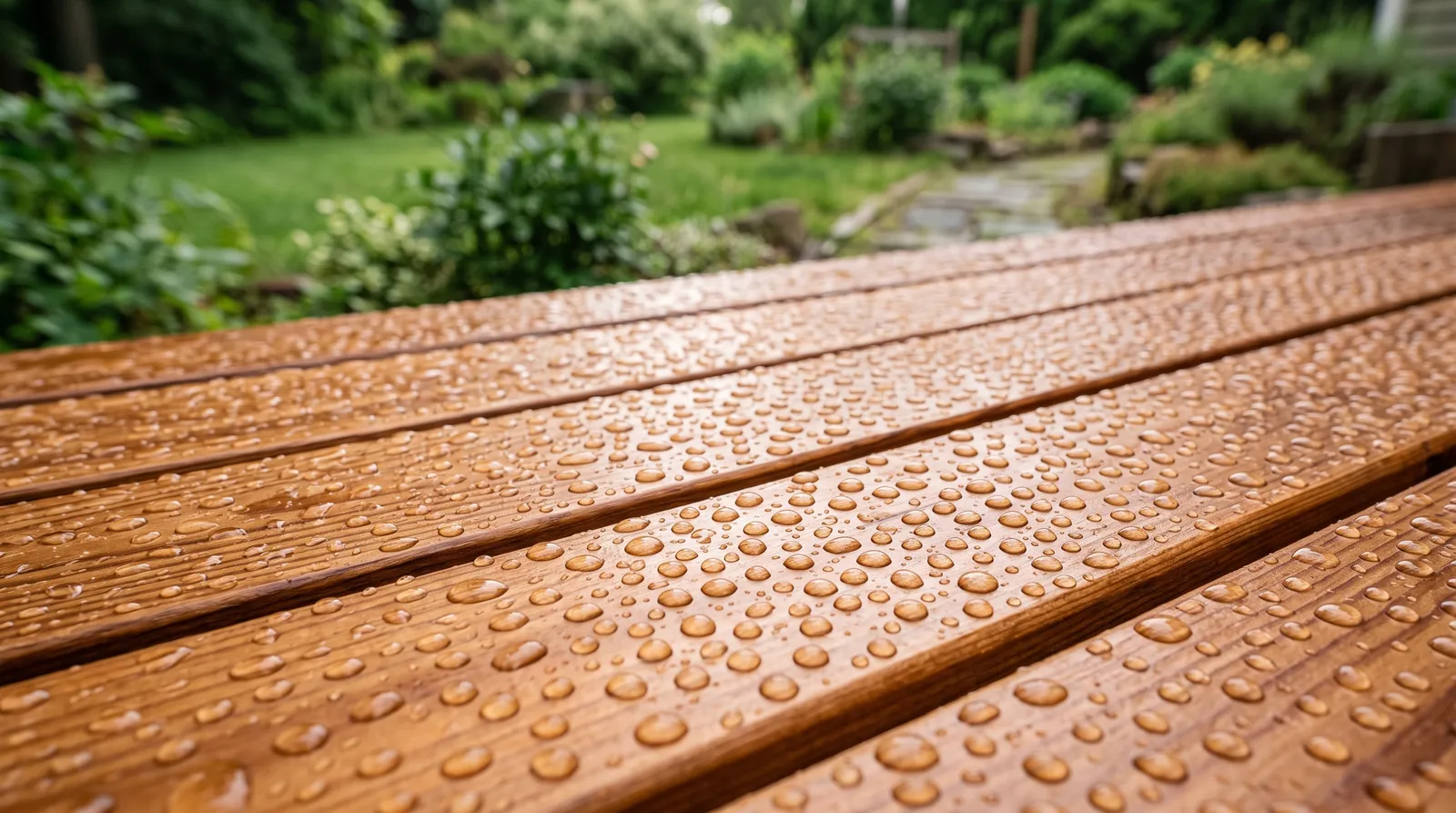
The rare Olympic can where the label does not oversell what is inside. It penetrates instead of filming, so it beads water hard and cannot peel — and with no pigment, your cedar still goes gray right on schedule.

Mark Thompson · Pro Contractor & Field Editor · Updated August 7, 2026
22 years running residential repaints across the Midwest. Mark seals more masonry than wood these days, and he has watched enough clear sealer go tacky on a deck to know it is almost always an application sin. About the testing process →
Olympic WaterGuard2 sheens
Dry time12–24 hr at 50–90F
VOCLow-VOC under 100 g/L
Sheens No sheenclear penetrating finish
Read this first
The Fast Verdict
Buy it when you want water to stop soaking into brick, concrete, masonry, or bare wood and you do not want to change the color. It penetrates rather than forming a film, so it cannot peel, blister, or sheet off — the failure mode is it stops beading. Coverage is stingy at 100 to 150 square feet a gallon on rough surfaces, so measure first. Skip it if the real problem is wood going gray. A clear sealer stops water. It does not stop the sun.
Best for
Brick, block, concrete, and stucco · Patios and foundation skirts · New pressure-treated lumber · Bare wood you want to keep natural · Cutting freeze-thaw spalling and efflorescence · Owners who will reseal on a water test
Skip if
You want a fence or deck to hold a color · Fighting gray, weathered wood · A sealed, painted, or non-porous surface · Serious water intrusion on foundation walls · You want to coat it once and forget it
What it's good at
- Masonry, brick, and concrete, where you want water out and no color at all
- Cutting freeze-thaw spalling and efflorescence on block and brick
- New pressure-treated and bare wood you want to keep natural until you pick a stain
- Not being able to peel — there is no film to lift, blister, or sheet off
- No color to commit to, so no lap-flash and no wrong brown
- Going onto a damp surface after a wash, which saves a drying day
- Water cleanup and low odor, brush, roller, or pump sprayer
What it's not good at
- Stopping wood from graying — no pigment means no UV protection
- Coverage, at a stingy 100 to 150 sq ft a gallon on rough wood and masonry
- Lasting. A sun-hit deck floor stops beading inside a year or two
- Bonding to sealed, painted, or non-porous surfaces
- Being over-applied — the surplus stays tacky and grabs dirt all summer
- Serious water intrusion on foundation walls, which wants a dedicated waterproofer
Same shelf, different cans
Which WaterGuard Are You Buying?
Olympic puts the WaterGuard name on more than one product and they are not interchangeable. Grab the wrong can and you will seal when you meant to stain, or stain when you meant to seal. This review covers the clear multi-surface waterproofer.
WaterGuard Clear Multi-Surface Waterproofer
BaseWater-based acrylic penetrating sealer, no pigment
Buy it if
You are sealing masonry, brick, concrete, stucco, a patio, or bare and pressure-treated wood and you want the look unchanged.
Avoid if
The surface is painted, previously sealed, or non-porous. It has to soak in, and if it cannot it sits on top and stays tacky.
WaterGuard Clear Wood Sealer
BaseWood-only clear version
Buy it if
The job is wood only and you want the wood-specific label, which markets a SUNBLOCK UV claim.
Avoid if
You also have masonry or concrete in the same job. The multi-surface can covers both.
WaterGuard Semi-Transparent Wood Stain & Sealer
BasePigmented stain, not a clear sealer
Buy it if
Graying is the problem. The pigment gives color and the UV protection a clear sealer cannot.
Avoid if
You want the wood to look exactly as it does now. This one commits you to a tone.
WaterGuard Aerosol
BaseSame clear formula, 11-oz spray can
Buy it if
Small jobs and touch-ups — a step, a sill, a patch you missed.
Avoid if
A patio or a full deck. Buy the gallon or the 5-gallon and use a brush or a pump sprayer.
Numbers, not adjectives
Spec Sheet
- Product type
- Water-based acrylic penetrating sealer, clear
- Coverage
- 100–150 sq ft / gal on porous rough wood and masonry; 250–350 on smooth surfaces
- Sheen
- None; clear penetrating finish with a faint wet-look on wood
- Dry time
- 12–24 hr at 50–90F
- Foot traffic
- 24–48 hr before light traffic or replacing furniture
- VOC
- Low-VOC under 100 g/L
- Primer
- None. Clean the bare or weathered surface first; never over an old finish
- Surfaces
- Brick, concrete, masonry, stucco, grout, mortar, terrazzo, and porous wood
- Weather window
- No rain for 24 hr; air and surface 40–90F, out of hot sun
- Sizes
- 1-gallon, 5-gallon, 11-oz aerosol
- Warranty
- Olympic limited warranty, contingent on proper prep
- Price
- $35–50 / gal at Home Depot and Lowe's
Application Settings That Work
- Brush
- Brush, roller, or a garden-type pump sprayer all work. Back-brush anything that will not soak in on its own, and work board to board so you do not leave a lap line. It will go onto a damp surface after a rinse, which saves you a drying day.
- Thinning
- Do not thin it and do not lay it on thick. One thin coat, no puddling on horizontal boards. More on top does not mean more in the wood.
- Primer
- None. Clean first — strip any old finish and wash off dirt, mildew, and loose fiber with Olympic Deck Cleaner. It cannot soak into a dirty or sealed surface. Give new concrete or block about 30 days to cure.
Dry Times and the Reseal Clock
It dries in 12 to 24 hours at 50 to 90F and takes light foot traffic or furniture at 24 to 48. Pick a dry window: no rain for 24 hours, air and surface between 40 and 90F, and keep it out of direct hot sun. The longer clock is the one people ignore. This is a maintenance product, not a one-time coating. Test it with a cup of water — the day it soaks in instead of beading up, you are due. On a horizontal deck floor taking full sun and foot traffic, that is roughly once a year. On vertical wood like fences and siding, and on masonry, it holds two to three years. There is no coat-it-once-and-forget-it version of a clear sealer, and anyone selling you one is selling you a film that will peel instead.
Mid-project panic
When It Goes Wrong, and How to Fix It
Still tacky 12 hours later
Why it happens. It did not soak in. A penetrating sealer only works if it penetrates, so laying it on too thick, or putting it on a surface that will not drink it, leaves the excess sitting on top. Olympic's own sheet says it straight: if it is still tacky after 12 hours, that surface will not take it.
The fix. Back-brush hard to work the surplus into the grain or the pores while it is still wet. Where it has already gone sticky, the surface is sealed, painted, or non-porous and needs a different product. Next time: one thin coat, no puddles on horizontal boards.
It stopped beading after one season
Why it happens. That is the designed failure mode, not a defect. Repellency wears off a horizontal deck floor taking sun and traffic inside a year, sometimes two. Vertical wood and masonry hold longer.
The fix. Reseal on the water test rather than a guess: splash water on the surface, and the day it soaks in instead of beading, clean and recoat. Because there is no film, you are not stripping anything — wash it and put another thin coat down.
The cedar went gray anyway
Why it happens. This is the one buyers get burned on. A clear sealer adds no pigment, and pigment is what blocks UV. So WaterGuard keeps water out of your fence and lets the sun turn it driftwood gray right on schedule.
The fix. If holding a color is the actual goal, you are on the wrong product — a semi-transparent stain gives you pigment, UV protection, and water repellency in one can. Clean and brighten the gray first, then stain; sealing over silvered wood just locks the gray in.
It will not bond to a surface you already coated
Why it happens. Olympic's data sheet is blunt: not for recently painted or sealed surfaces, and not for non-porous surfaces. The whole job is penetration. If it cannot soak in, it sits on top and stays sticky.
The fix. Strip the old finish and wash off dirt, mildew, and loose fiber with Olympic Deck Cleaner, then let it dry. New concrete or block needs about 30 days to cure before you seal it. On a truly non-porous surface, no penetrating sealer is the answer.
Side by side
WaterGuard vs Thompson's WaterSeal Clear vs a Semi-Transparent Stain
Two clear sealers off the same shelf and the pigmented product people should have bought instead. What you are trying to stop — water or sun — decides this before price does.
| Olympic WaterGuard | Thompson's WaterSeal Clear | Semi-transparent stain | |
|---|---|---|---|
| What it stops | Water. Beads hard on fresh porous wood and masonry | Water, in the same ballpark | Water and sun — pigment gives UV protection |
| Effect on color | None; a faint wet-look on wood that mostly fades | None | Commits you to a tone, and holds it |
| Coverage | 100–150 sq ft/gal rough; 250–350 smooth | Similar clear-sealer coverage | 250–350 sq ft/gal semi-transparent |
| Price per gallon | $35–50 | $20–30 | $35–48 for Olympic Maximum |
| Reseal interval | About a year on a sun-hit deck floor; 2–3 on vertical and masonry | Also a reseal-every-year-or-two product | 1–3 years on a deck floor, 3–4 on a fence |
| Best surfaces | Masonry, brick, patios, foundation skirts, new pressure-treated wood | Fences, sheds, patios where price decides | Cedar fences and decks you want to hold a color |
What it stops
Olympic WaterGuardWater. Beads hard on fresh porous wood and masonry
Thompson's WaterSeal ClearWater, in the same ballpark
Semi-transparent stainWater and sun — pigment gives UV protection
Effect on color
Olympic WaterGuardNone; a faint wet-look on wood that mostly fades
Thompson's WaterSeal ClearNone
Semi-transparent stainCommits you to a tone, and holds it
Coverage
Olympic WaterGuard100–150 sq ft/gal rough; 250–350 smooth
Thompson's WaterSeal ClearSimilar clear-sealer coverage
Semi-transparent stain250–350 sq ft/gal semi-transparent
Price per gallon
Olympic WaterGuard$35–50
Thompson's WaterSeal Clear$20–30
Semi-transparent stain$35–48 for Olympic Maximum
Reseal interval
Olympic WaterGuardAbout a year on a sun-hit deck floor; 2–3 on vertical and masonry
Thompson's WaterSeal ClearAlso a reseal-every-year-or-two product
Semi-transparent stain1–3 years on a deck floor, 3–4 on a fence
Best surfaces
Olympic WaterGuardMasonry, brick, patios, foundation skirts, new pressure-treated wood
Thompson's WaterSeal ClearFences, sheds, patios where price decides
Semi-transparent stainCedar fences and decks you want to hold a color
Sealing masonry, brick, a patio, or new pressure-treated lumber you have not picked a color for: WaterGuard, and it penetrates masonry a little better than the budget option. Sealing a shed or a fence where you just want water beading and price is the deciding factor: Thompson's WaterSeal Clear is cheaper and lands in the same ballpark. Trying to stop wood from going gray: neither. That is a semi-transparent stain's job, and no clear sealer will ever do it. And if the masonry is fighting real water pressure on a foundation wall, step up to a dedicated waterproofer — WaterGuard is a maintenance repellent, not a foundation fix.
If not this one
Honest Alternatives
TS
Thompson's WaterSeal Clear$20–30 / gal
The budget benchmark on the same big-box shelf. Clear water repellent for wood and masonry, dead simple to put down, and cheaper per gallon. Repellency lands in the same ballpark, which means it is also a reseal-every-year-or-two product. WaterGuard penetrates masonry a little better; Thompson's wins on cost.
OM
Olympic Maximum semi-transparent stain$35–48 / gal
If wood graying is the real problem, a clear sealer is the wrong tool. A semi-transparent stain adds pigment, which means color you can see and the UV protection the wood needs, while still sealing against water. It costs more and you commit to a tone.
BP
Behr Premium Concrete & Masonry Waterproofer, or a silane-siloxane sealer$30–60
For foundation walls, below-grade block, or masonry fighting real water pressure, a dedicated masonry waterproofer beats a general multi-surface sealer. Use a Drylok-style coating on interior block walls, or a penetrating silane-siloxane on driveways, patios, and pavers.
Questions people actually ask
WaterGuard Questions, Answered
Is Olympic WaterGuard worth it?
For masonry, brick, concrete, patios, and bare or pressure-treated wood you want to keep natural, yes — it penetrates instead of forming a film, so it beads water hard and cannot peel. For fighting gray wood, no: with no pigment there is no UV protection, so cedar still silvers on schedule. Budget for stingy coverage of 100 to 150 square feet a gallon on rough surfaces.
How often do I reapply WaterGuard?
It depends on the surface and the sun, not on a number on the can. Test it: splash water on the surface, and the day it soaks in instead of beading up, it is time to reseal. On a horizontal deck floor taking full sun and foot traffic, plan on roughly once a year. On vertical wood and masonry it holds longer, often two to three years.
Will it change the color of my wood or concrete?
It is a clear, no-pigment sealer, so it will not add color. On bare wood you will see a slight wet-look darkening while it is fresh, and that mostly fades as it dries. On concrete and masonry it can leave a very faint darkening or low sheen. What it will not do is stop graying — with no pigment there is no UV protection.
Can I use it on concrete and brick, not just wood?
Yes. It is a multi-surface sealer rated for brick, concrete, masonry, stucco, grout, mortar, terrazzo, and pressure-treated wood, as long as the surface is porous and not already sealed. New concrete or block needs to cure about 30 days first. It will not work on non-porous, painted, or previously sealed surfaces.
Why is my deck still tacky the next day?
It went on too thick, or the surface will not drink it. Olympic's sheet is blunt: if it is still tacky after 12 hours, that surface will not take the product. Back-brush the surplus in while it is wet, and next time put down one thin coat with no puddles on horizontal boards.
Can I put it over a deck that is already stained or sealed?
No. It has to penetrate, and it will not bond to a recently painted, sealed, or non-porous surface. Strip the old finish and wash off dirt, mildew, and loose fiber with Olympic Deck Cleaner first, then let it dry. Sealing over an old finish is how you end up with a sticky deck that grabs dirt all summer.
How much do I need?
More than you think. Figure 100 to 150 square feet a gallon on rough wood and masonry, stretching to 250 or 350 only on smooth, less porous surfaces. Measure the surface and step up to the 5-gallon pail for a patio, a long fence run, or a full deck. Do not buy a single gallon and hope.
Does it need to be dry before I apply it?
It can go on a damp surface after a rinse, which saves you a drying day, but never onto standing water. Pick a window with no rain for 24 hours, air and surface between 40 and 90F, and keep it out of direct hot sun.
Will it fix a leaking foundation wall?
No. WaterGuard is a maintenance repellent, not a foundation fix. For below-grade block or masonry fighting real water pressure, use a Drylok-style coating on interior walls or a dedicated penetrating silane-siloxane outside. Use this for patios, skirts, and general porous masonry where you just want water out of the surface.
Keep exploring
Olympic stains and sealants — brand overviewOlympic Maximum Stain + Sealant — full reviewBest deck stain — full round-up
We may earn a commission when you buy through the retailer link above. It never changes the score or the verdict.
Ask a Question