Olympic
Olympic is PPG's big-box exterior wood brand, and it splits hard by surface: reliable on fences and siding, unreliable on deck floors. Here is the full line ladder, the real prices, the failures owners keep reporting, and where the money is better spent elsewhere.

Maya spent five years running comparative product testing at a consumer testing nonprofit before joining CompositePaint. She built the round-up protocol the team uses, and she has tracked Olympic's stains through the switch from oil to waterborne, the 2018 Lowe's split, and the return under the ASSURE label. About the testing process →
The Fast Verdict
Olympic is a mid-tier PPG stain brand that is worth buying for vertical wood and worth skipping for horizontal wood. On fences, siding, pergola posts, and railings, Maximum and Elite hold color for three years or more and cost $35 to $60 a gallon. On a deck floor, especially a south-facing one, owners keep reporting a refresh at one to two years, not the four the label implies. Buy it for a fence. For a deck, price Cabot and Ready Seal first.
- Vertical wood is the brand's real strength: owners report fences, siding, and pergola posts still looking right at three to six years
- WaterGuard clear sealer is the cheapest honest answer for new pressure-treated fencing and masonry, and it is the highest-rated product in our Olympic set
- One family covers every opacity — clear, toner, transparent, semi-transparent, semi-solid, solid — so you can step up hide without changing brands
- Distribution is wide again: Home Depot, Lowe's, Walmart, Menards, Amazon, and independent PPG dealers all carry parts of the line
- Solid-color versions outlast the semi-transparents by years on the same boards, which makes Olympic a fair pick for tired fences you have stopped trying to show grain on
- The prep chemicals — deck cleaner, brightener and wash, stain stripper — sit in the same aisle and work under any brand of stain
- ASSURE puts a zero-VOC interior gallon on the shelf near $25, which is real money saved on a rental turnover
- Deck floors are the weak spot, and the complaints are consistent: fading, graying, or peeling inside two summers
- Rescue It sits in the thick-resurfacer category that failed publicly for Behr and Rust-Oleum too, and it drew the same consumer complaints
- The oil-based versions that built the brand's reputation keep thinning out of stock, and the waterborne replacements are not the same product
- Real coverage on rough or weathered wood lands near 150 to 200 square feet a gallon against a 250 to 350 label claim
- There is no premium interior tier — ASSURE is a budget line, and that is the whole interior offer
- Too many overlapping names on the shelf (Maximum, Elite, Wood Protector, WaterGuard, SmartGuard) with claims that read almost identically
The Line Ladder: Which Olympic Stain to Buy
This is the block most people came for. Prices are per gallon at Home Depot and Lowe's in 2026. Olympic does not run a sale calendar, so the sale column is honest about that. Every row gets one blunt verdict.
 Premium exterior stain
Best for Fences, siding, railings
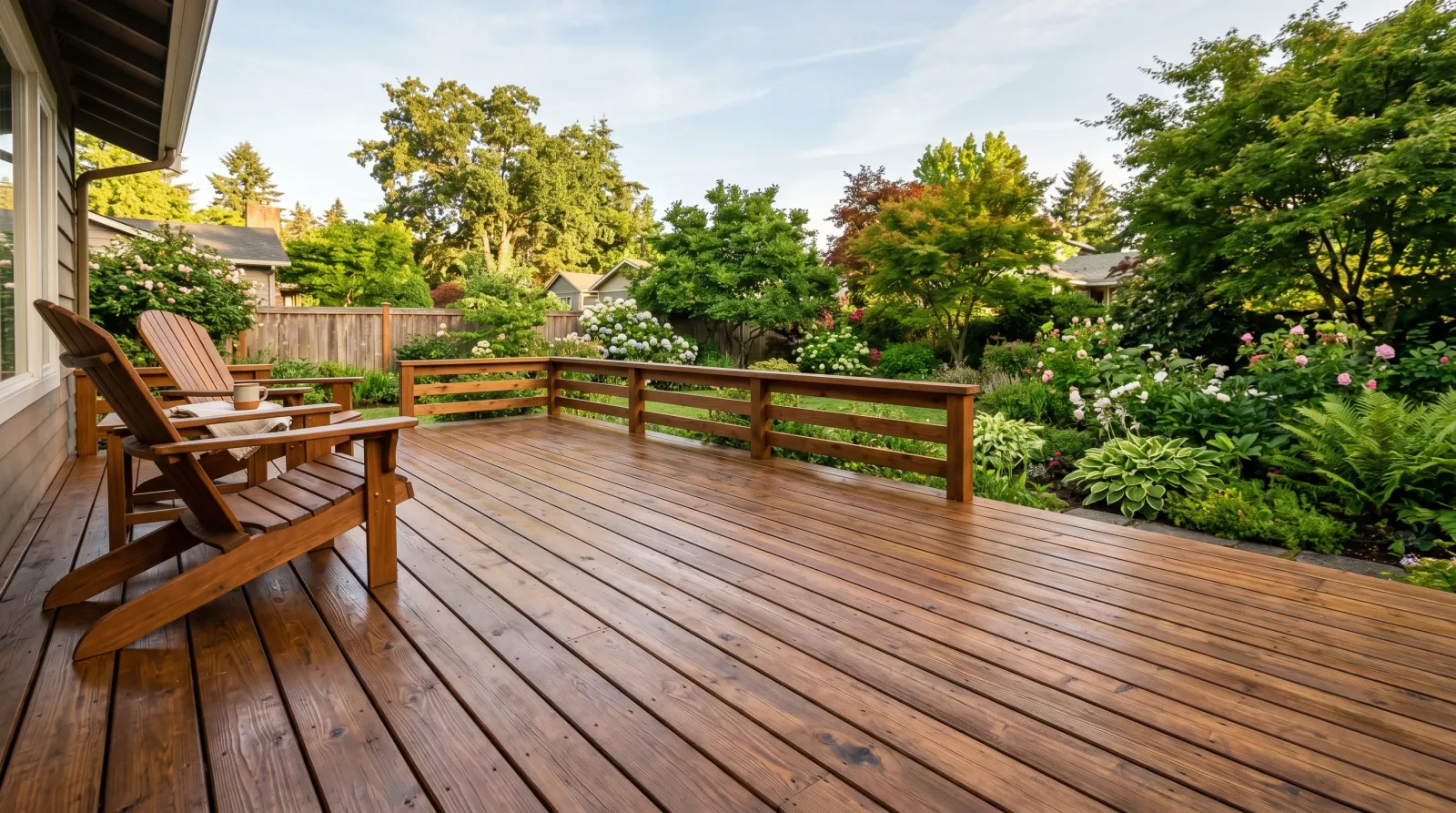
The heavier pigment load is real and it shows on vertical wood at year two. On a deck floor it fails the same way Maximum does, just $15 a gallon later.
Full review →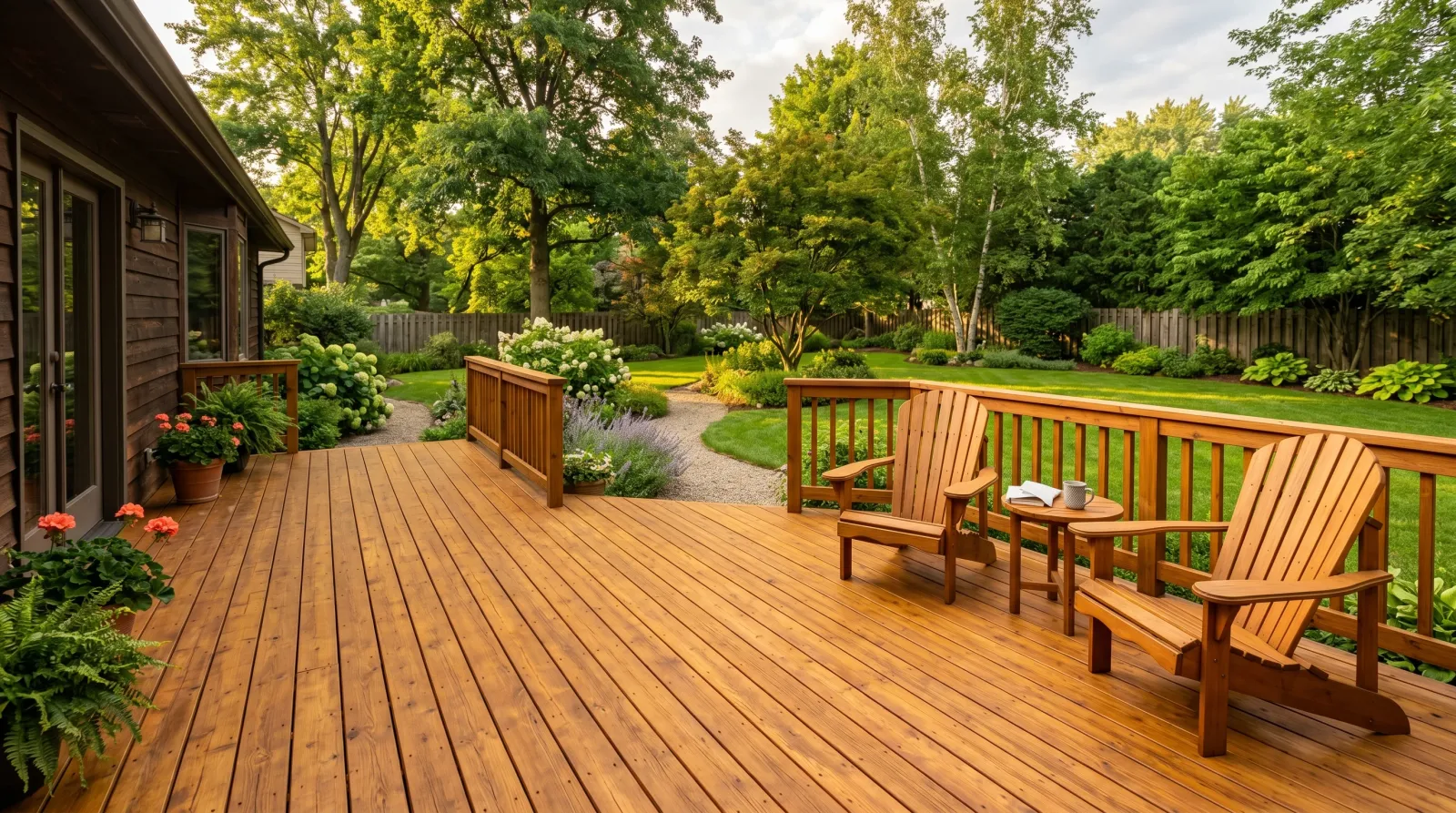 Mid-tier workhorse
Best for Fence runs and siding
The volume seller and the fair-value pick for a long fence. Buy the solid or semi-solid if you want the cycle to stretch; semi-transparent on a deck is a two-year commitment.
Full review →Best for Big fence jobs on a budget
The cheaper shelf-mate of Maximum with a bolder durability claim on the label. Treat the claim as marketing and the product as a step below Maximum.
 Clear and tinted sealer
Best for New pressure-treated wood, masonry
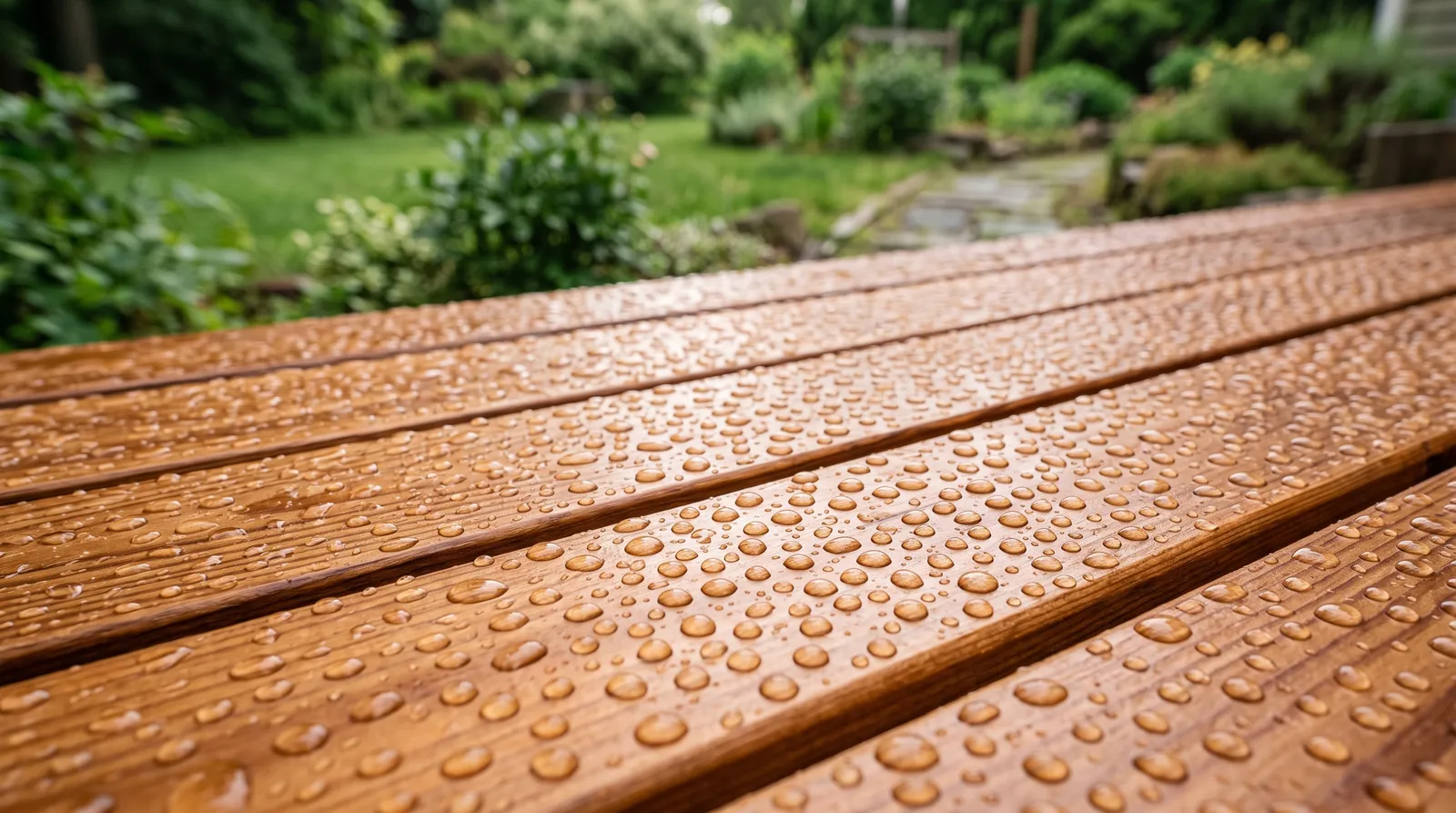
The best-behaved product in the line because it promises the least. Clear means no UV pigment, so expect graying on schedule and reapply.
Full review →Best for Same-day water protection
A concentrate that dries in about an hour and can go on damp wood. Water repellency only — it adds no color and does nothing for sun damage.
 Thick deck resurfacer
Best for Splintered wood you plan to replace
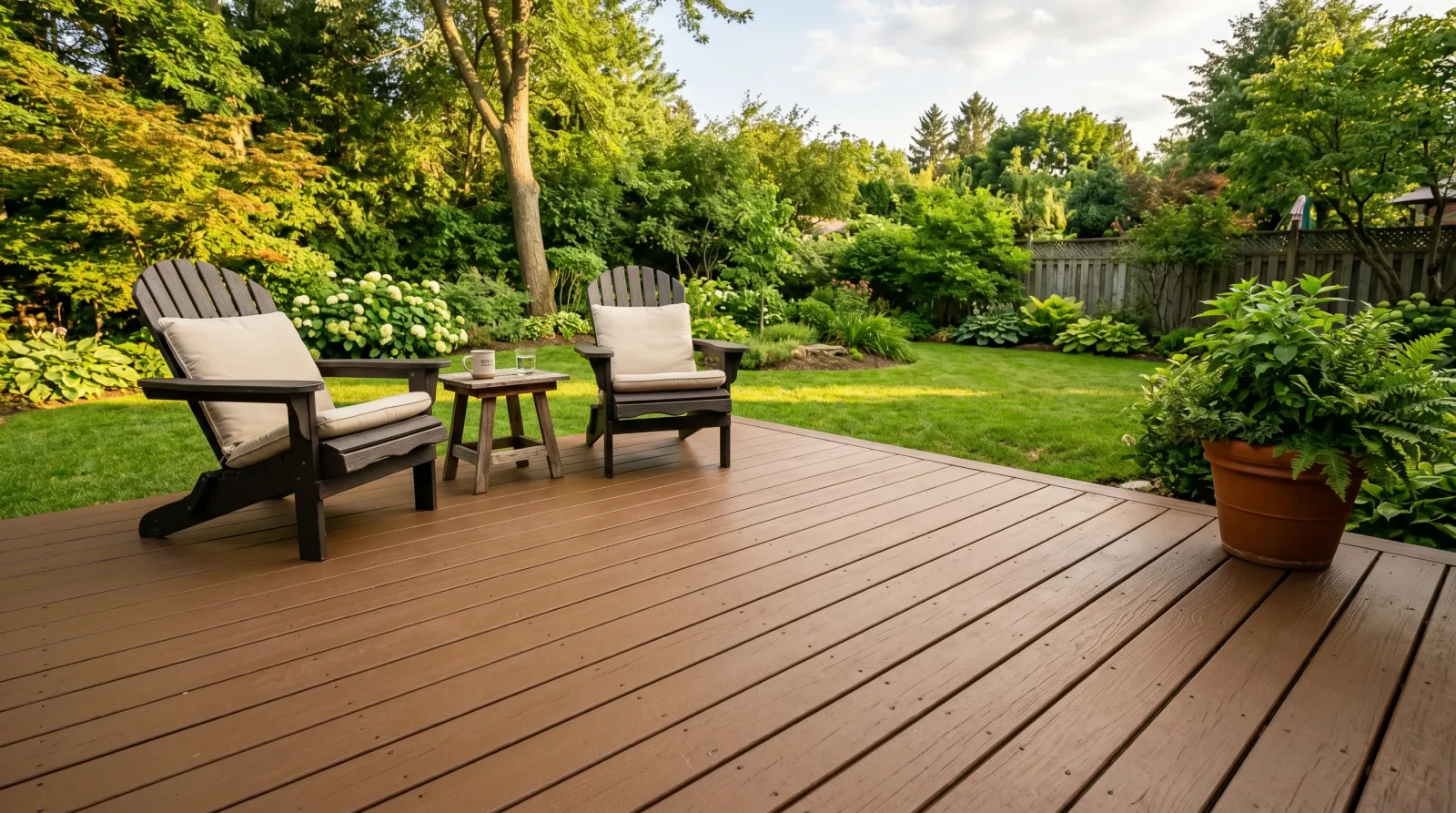
The lowest-rated product in our Olympic set. Thick film over horizontal wood peels, and stripping it later is worse work than replacing boards.
Full review →Best for Prep before any brand of stain
Ordinary percarbonate cleaner and oxalic-acid brightener at a fair price. Skipping the brightener step is the most common reason a fresh coat flashes blotchy.
There Is No Sale Calendar — Here Is a Fair Price
Olympic has no equivalent of the Sherwin-Williams 30 to 40 percent weekend. It sells through big-box shelves and PPG dealers, and the shelf price is the price. The only real discount windows are the general spring and Memorial Day deck-season promotions at Home Depot and Lowe's, which usually show up as a few dollars off a gallon or a mail-in rebate rather than a third off the sticker.
So judge it on the everyday number. A fair 2026 price is $35 to $48 a gallon for Maximum, $45 to $60 for Elite, $35 to $50 for WaterGuard, and roughly $20 to $28 for an ASSURE interior gallon. Above those bands you are paying a convenience premium; the same money buys Cabot or Ready Seal, and on a deck floor that is the better trade.
The one lever that actually saves money is the container size. Five-gallon pails run well under five times the gallon price, and a 200-foot fence eats four to five gallons per coat once you account for rough-sawn wood drinking twice the label rate. Measure the job, buy the pail, and keep enough for the touch-up you will want in year two.
The Cons Only Forums Talk About
Deck Floors Fail Years Early
This is the complaint that repeats across deck forums, Home Depot reviews, and field tests: a semi-transparent Olympic coat on a horizontal deck looks fine through the first winter and is visibly gray or blotchy by the second summer. South-facing boards go faster. One long-running field test scored the waterborne Maximum well under its own label claim at two years, with most of a test deck lightened. The same product on the fence in the same yard often still reads right. Plan on a one to two year deck cycle or use a different brand.
The Waterborne Reformulation Cost It Fans
Olympic moved its main stains from oil to low-VOC waterborne, and long-time users say performance dropped with the switch. Threads on painting and garage forums track people hunting for the oil-based Elite because the waterborne version does not soak into weathered cedar the same way. Some of the worst peeling reports — coatings lifting within weeks, or washing off in a rainstorm hours after application — cluster on the low-VOC formulas. If you liked Olympic in 2012, the can on today's shelf is a different product.
Rescue It Belongs to the Failed Resurfacer Class
Thick acrylic deck resurfacers — Rescue It, Behr DeckOver, Rust-Oleum Restore — all share one failure mode: the heavy film traps moisture in horizontal wood, then bubbles and peels in sheets. Olympic drew the same wave of consumer complaints and legal attention its competitors did, with owners reporting bubbling and chipping within a year against a decade-long durability pitch. Removal is the real punishment. Stripper, scraper, and pressure washer all lose to a cured resurfacer film.
Coverage Math Does Not Match the Can
The label says 250 to 350 square feet per gallon. Owners staining weathered cedar, rough-sawn fence pickets, or pressure-treated pine consistently report 150 to 200. That is not a defect — thirsty wood drinks more — but it means a first-timer who buys by the label runs out mid-fence and comes back for a second batch that may be a different tint lot. Buy about a third more than the label math suggests, and box multiple cans together before you start.
The Shelf Is Confusing on Purpose
Maximum, Elite, Wood Protector, WaterGuard, SmartGuard, Rescue It, and in Canada Summit, Ascent, Triumph, and Canadian Wood Oil. Several of these are stain-plus-sealer products in overlapping opacities with near-identical claims, split across retailers so the two stores near you stock different halves of the line. Add the 2018 break with Lowe's and the later return with ASSURE, and buyers reasonably ask whether the brand still exists. It does — the catalog is just wider than it is deep.
The Questions Between Two Cans
Elite carries more pigment and a tougher resin package, so it holds color noticeably better at the two-year mark. That gap only pays for itself on vertical wood that stays coated. On a deck floor both need refreshing on roughly the same short cycle, so Maximum is the smarter buy there — spend the difference on prep instead.
All comparisons →Both are inexpensive clear water repellents for fences, decks, and masonry, and neither adds meaningful UV color protection. WaterGuard covers a wider mix of surfaces and reads slightly less wet-look on wood; Thompson's is easier to find and cheaper by the gallon. On new pressure-treated wood either one buys you a season, not a solution.
Full comparison →On horizontal deck boards Cabot's penetrating oils still hold longer than Olympic's waterborne semi-transparents, which is the whole reason we keep steering deck projects away from Olympic. Flip it for a fence: Olympic's price per gallon and vertical color hold make it the better value there. Read the surface, not the badge.
All comparisons →If the deck is splintered enough to need a resurfacer, the honest math usually favors new boards. A gallon of Rescue It covers about 75 square feet in two coats, so a mid-size deck runs several hundred dollars in coating that may peel inside two years and then costs a weekend of stripping. Resurfacer buys time on a deck you have already decided to replace.
All comparisons →Summit is part of the Canadian Olympic lineup alongside Ascent, Triumph, and Canadian Wood Oil; Maximum is the US shelf name. They are cousins, not the same can, and colors and opacity names do not map one to one across the border. Buy from the lineup your store actually stocks rather than trying to match a US color card in Canada.
All comparisons →Olympic Questions, Answered
Is Olympic paint still available?
Yes. Olympic is a PPG brand and it is still in production. Lowe's dropped Olympic in 2018 when it made Sherwin-Williams its main paint supplier, which is why so many people think the brand died. Olympic stains are on shelves at Home Depot, Walmart, Menards, Amazon, and independent PPG dealers today, and Lowe's carries the ASSURE interior paint line.
Who makes Olympic stain?
PPG. Olympic started as a Pacific Northwest wood-stain brand and has been part of PPG's consumer coatings business for decades, alongside Glidden and PPG Paints. Product development, color cards, and technical data all come from PPG, which is why Olympic color codes and PPG store systems talk to each other.
Is Olympic stain good?
On vertical wood, yes. Fences, siding, railings, and pergola posts commonly hold three years or more, and the price per gallon is fair. On deck floors, no — the reports cluster hard around fading and peeling in the first two summers, and south-facing boards go fastest. Buy Olympic for the fence and price a penetrating oil for the deck.
Olympic Elite or Olympic Maximum — which should I buy?
Elite for vertical wood you want to leave alone for a few years; Maximum for volume jobs and anything you accept recoating sooner. Elite has the heavier pigment and the better two-year color hold, and costs roughly $10 to $15 more per gallon. On a deck floor the two land close enough that Maximum is the better value.
How long does Olympic stain actually last?
Split it by surface and opacity. Semi-transparent on a deck floor realistically wants a refresh at one to two years despite longer label claims. The same semi-transparent on a fence often runs three years or more. Solid and semi-solid last considerably longer than transparent versions on both surfaces because there is more pigment blocking sunlight.
Where can I buy Olympic paint and stain?
Home Depot carries the widest Olympic stain assortment — Maximum, Elite, WaterGuard, Wood Protector, and Rescue It. Lowe's carries ASSURE interior paint plus some sealers. Walmart, Menards, and Amazon stock common colors in gallons and five-gallon pails, and independent PPG dealers can order across the line. No single store carries all of it.
Is Olympic sold in Canada?
Yes, but under different names. The Canadian lineup includes Summit, Ascent, Triumph, and Canadian Wood Oil rather than the US Maximum and Elite labels. Opacity levels are broadly comparable, colors are not identical, and a US color code will not reliably cross the border. Match to the Canadian card at the store rather than to olympic.com's US pages.
Does Olympic have a color visualizer?
PPG runs color tools on the Olympic site where you can browse stain colors on sample decks and fences, which is useful for opacity but not for your actual wood. Stain color shifts hard with species and age, so pull two or three sample sizes and test on the real boards. Our own visualizer is built for painted walls and siding rather than penetrating stain.
Is Olympic deck paint or solid stain any good?
Solid-color Olympic stain is the most durable thing in the line and a reasonable pick for a tired deck where hiding grain is fine. Rescue It, the thick resurfacer, is a different product and a different risk — it belongs to the resurfacer category that failed publicly across brands. Solid stain, yes; thick resurfacer, only on a deck you plan to replace.
Do I have to strip old Olympic stain before recoating?
Not if the old coat is a semi-transparent that has worn thin and faded evenly — clean, brighten, let it dry two days, and recoat. Strip if the finish is peeling, flaking, or glossy in patches, because the new coat only sticks as well as the layer beneath it. Solid stain over failing solid stain is the most common cause of a peeling mess.
Why did my Olympic stain peel or stay tacky?
The three repeat causes in owner reports are wood that was still wet inside, a coat applied too thick on dense or previously sealed boards, and rain arriving before the film set. Waterborne versions are especially unforgiving here. Wait 48 hours after washing, apply thin and wipe back the excess, and check that no rain is coming for a full day.
Is Olympic ASSURE interior paint worth buying?
For rentals, flips, and closets, yes. It is a zero-VOC gallon at roughly $20 to $28 with a full tint deck at the Lowe's counter, and it covers acceptably in two coats over a similar color. For a kitchen, a hallway, or anywhere that gets scrubbed, step up — this is a five-year wall paint, not a ten-year one.
Ask a Question