Product review · Olympic · Updated August 7, 2026
Elite Advanced Stain + SealantOlympic paint review
7.2/10Worth the upgrade on a fence. On a horizontal deck floor you are paying premium money for average longevity.
Maximum with a heavier pigment load, and the pigment does real work — one independent two-year test came back around 70 percent color retention. On a deck floor it still wears out in one to two years, at a premium price.

Mark Thompson · Pro Contractor & Field Editor · Updated August 7, 2026
22 years running residential repaints across the Midwest, and enough deck seasons to know which stains fail from the can and which fail from the prep. Mark still strips and brightens his own boards before he stains anything. About the testing process →
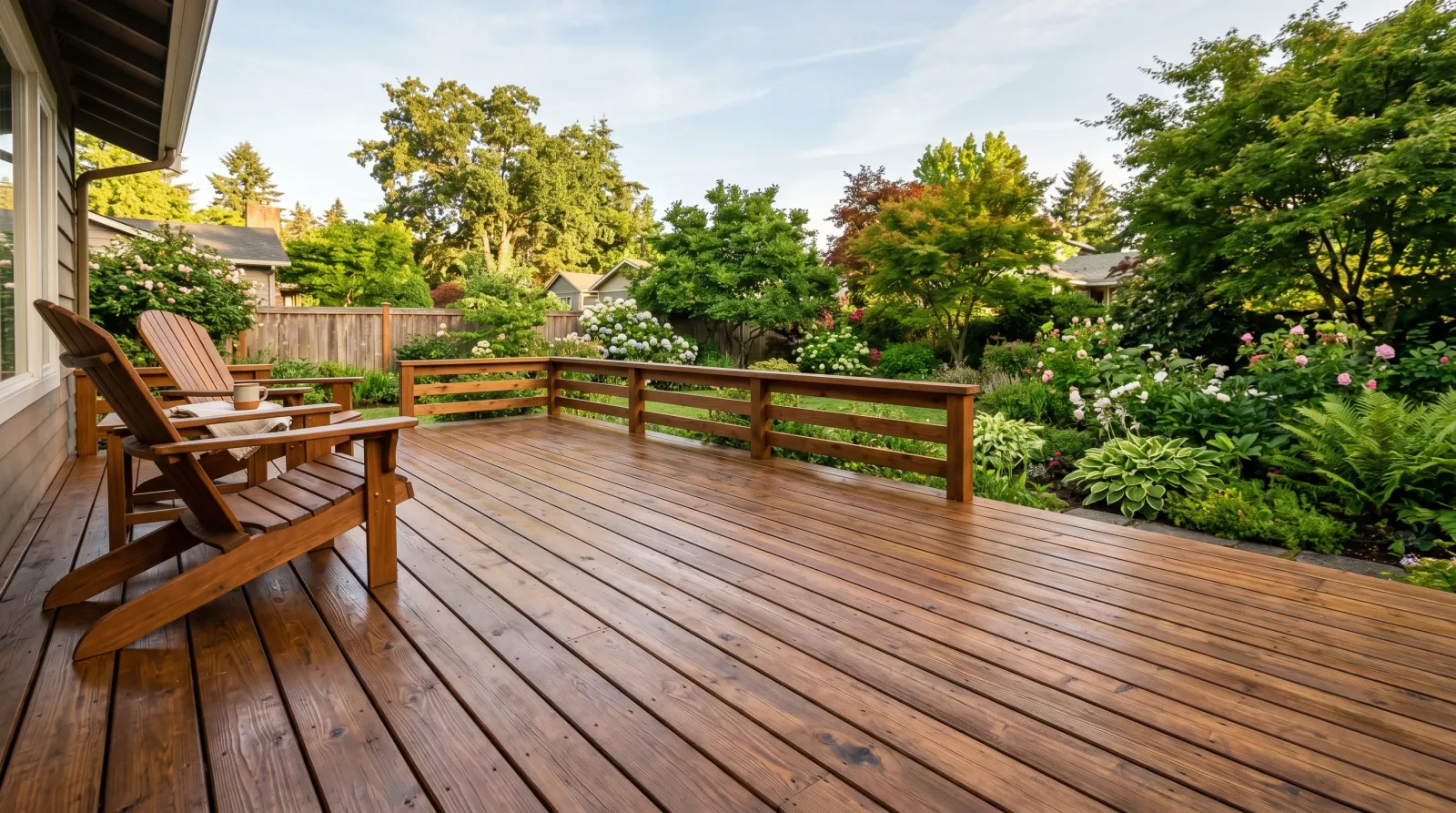
Olympic Elite Advanced Stain + Sealant5 sheens
VOCWater-based under 100 g/L
Full cureSeveral weeks
Sheens No sheenopacities: transparentsemi-transparentsemi-solidsolid
Read this first
The Fast Verdict
Buy Elite for fences, railings, and siding, or for a deck where color depth matters more to you than years between coats. The heavier pigment gives it visibly better UV hold than Maximum, and $45 to $60 a gallon buys that depth for less than a premium penetrating oil. What it does not buy is the number on the front of the can. On sun-baked horizontal boards, plan on 12 to 24 months. Prep decides the rest.
Best for
Cedar fences and railings · Wood siding · Semi-transparent and semi-solid color depth · Owners who will strip, wash, and brighten first · Low-odor water cleanup · Weekend one-step jobs
Skip if
A south-facing deck floor you want to coat once for five years · You will not strip an old finish first · Damp boards or a wet forecast · A plain fence run where color depth is not the point · Dense exotic hardwood
What it's good at
- UV color hold — one independent two-year test showed roughly 70 percent color retention
- Reading richer at two years than the same color in Maximum, thanks to the heavier pigment
- Fences, railings, and siding, where there is no foot traffic or standing water
- Color depth for the money against a premium penetrating oil
- One-step convenience: stain and sealer in the same can, no separate clear coat
- Low odor and water cleanup on the water-based version
- Spot-coating a worn board without a hard lap line, the way a film paint would leave
What it's not good at
- Horizontal deck floors, where 12 to 24 months is the real range
- Living up to the multi-year all-climate branding on the label
- Forgiving bad prep — stain over an old finish or damp wood and it lifts in sheets
- Value on a plain fence, where Maximum costs $10 to $15 less and looks nearly the same
- Shaded, damp boards, which gray and speck with mildew before the color fully fades
- Evening out color across new and weathered boards
Same shelf, different cans
Which Opacity Are You Buying?
The opacity choice matters as much as the line does. More pigment means more color and more UV protection, and also more resin sitting near the surface where a bad prep job can turn it into a film that peels. Pick for the condition of the wood, not the chip.
Woodland Oil (transparent)
BaseOil-based, under 600 g/L
Buy it if
Old, thirsty, weathered wood where penetration matters more than color, and oil is still legal where you live. It digs deeper than the water-based versions.
Avoid if
You want the wood to hold its color. Barely any pigment means the sun grays it faster, and the oil is restricted in many regions and smells strong.
Semi-transparent
BaseWater-based, low-VOC under 100 g/L
Buy it if
The popular pick, and the right one for a deck you want to still look like wood. Shows the grain, carries enough pigment to hold color for a season or three.
Avoid if
Boards too far gone to show off. Grain you do not want visible is grain a semi-transparent will show anyway.
Semi-solid
BaseWater-based, low-VOC under 100 g/L
Buy it if
A sun-exposed deck you still want reading as wood. More pigment than semi-transparent, so it reads richer and resists UV longer.
Avoid if
Prep you cannot do properly. The heavier pigment and resin bridge into a film, and a film that cannot soak in peels.
Solid
BaseWater-based, low-VOC under 100 g/L
Buy it if
Wood too far gone to show grain. It covers like a paint and hides what a semi-transparent would put on display.
Avoid if
You want grain. It is also the most peel-prone opacity in the line if the wood cannot drink it.
Numbers, not adjectives
Spec Sheet
- Coverage
- 250–350 sq ft / gal depending on wood texture and porosity
- Opacities
- Transparent (Woodland Oil), semi-transparent, semi-solid, solid
- Sheen
- None; penetrating matte finish
- Touch dry
- 24 hr at 50–85F
- Foot traffic
- 24–48 hr
- Full cure
- Several weeks
- VOC
- Water-based under 100 g/L; oil-based under 600 g/L
- Primer
- None. Strip, clean, and brighten bare or weathered wood first
- Surfaces
- Exterior wood decks, fences, siding, railings, outdoor furniture
- Sizes
- Half-pint, gallon, 3-gallon, 5-gallon
- Warranty
- Lifetime guarantee per label — read the fine print
- Price
- $45–60 / gal at Home Depot and Lowe's
Application Settings That Work
- Brush
- Brush or roll it on and back-brush every board into the grain. Board to board, full length, no stopping mid-run. Low odor and water cleanup on the water-based version.
- Thinning
- Do not thin it, and do not lay it on heavy. One thin coat is the whole technique. Thick stain sits on top of the wood instead of in it, and that is what fails.
- Primer
- None — this is a penetrating stain, not a film paint. What it needs instead is prep: strip any old film-forming finish, wash the wood, brighten it to open the grain, then let it dry two clear days.
Dry Times in the Real World
The clock that matters starts before you open the can. The wood needs two clear dry days after washing and brightening — damp wood is the fastest road to a peel, and no amount of good weather afterward fixes it. Once it is on, touch dry is about 24 hours at 50 to 85F, light foot traffic at 24 to 48, and full cure runs several weeks. Keep the furniture off and the dog inside for two days. One thin coat, back-brushed into the grain. Do not lay it on thick to get more protection — thick stain sits on top, stays soft, and lifts. And check the forecast: rain on a stain that has not set is the other way people end up stripping a deck twice.
Mid-project panic
When It Goes Wrong, and How to Fix It
Stain lifting in sheets inside a year
Why it happens. A penetrating stain that sits on top instead of soaking in will peel. It happens when the boards still had an old film-forming finish, when they were sealed or damp, or when the coat went on too thick. Semi-solid and solid opacities are the most prone, because they carry the most pigment and resin to bridge into a film.
The fix. Strip the old finish completely, wash, brighten to open the grain, and let the wood dry two clear days. Then one thin coat, back-brushed. If it has already peeled, there is no coating over it — it comes off first.
Lap marks that show when the sun moves
Why it happens. You stopped mid-board. A penetrating stain darkens where a wet edge overlaps a set one, and on deck boards that line runs the length of the plank and lights up the second the sun crosses it.
The fix. Work board to board, full length, and never stop in the middle of a run. Keep a wet edge, stage your breaks at the end of a board, and stay off a deck in direct midday sun where the stain flashes before you can feather it.
Graying and mildew specks on a shaded deck
Why it happens. North-facing boards and anything that stays wet wear differently. The color does not so much fade as gray, and mildew shows at the seams first. It is a moisture-and-sun problem, not a defect, but the all-climate branding sets an expectation the product does not meet on a damp deck.
The fix. Clean the boards and use a wood brightener before every recoat, and keep the deck clear of leaves and planters that hold water on the wood. A shaded, damp deck needs a wash more often than a sunny one needs a recoat.
New boards a different color than the old ones
Why it happens. The stain takes unevenly on wood that is not uniformly prepped. Fresh lumber is tight and drinks less; weathered boards are open and drink more. Same can, two colors.
The fix. Brighten the entire surface, not just the repairs, so the whole deck drinks the same. Expect some drift regardless on a mixed-age deck, and choose a semi-solid if you want it evened out.
Side by side
Olympic Elite vs Olympic Maximum vs Cabot Australian Timber Oil
Two of these come off the same shelf and share family DNA. The third is what you buy when the deck floor is the whole project and you want a stain that actually hits its rated life.
| Olympic Elite | Olympic Maximum | Cabot Australian Timber Oil | |
|---|---|---|---|
| Price per gallon | $45–60 | $35–48 | $45–60 |
| Pigment and color hold | Heavier pigment; about 70 percent retention at two years in an independent test | Lighter pigment; grays and fades a little faster | Rich, deep color that holds on dense wood |
| Deck floor lifespan | 12–24 months on high-traffic sun-exposed boards | 12–18 months in the same spot | Better real-world longevity on a deck floor |
| Vertical lifespan | 3–4 years on fences and railings | 3–4 years, and hard to tell apart from Elite | Long, and it is overkill on a plain fence |
| Prep tolerance | Punishing. Peels readily if it cannot penetrate | Same weakness, same prep routine | Penetrating oil, and it digs into dense wood Olympic struggles with |
| Where you buy it | Home Depot and Lowe's, tinted at the counter | Same shelf, one rung down | Big box, but a step up in price and smell |
| Buy it when | The surface is mostly vertical, or color depth is worth the premium | The surface is vertical and you want to save the $10 to $15 | It is a high-value ipe, mahogany, or well-built cedar deck |
Pigment and color hold
Olympic EliteHeavier pigment; about 70 percent retention at two years in an independent test
Olympic MaximumLighter pigment; grays and fades a little faster
Cabot Australian Timber OilRich, deep color that holds on dense wood
Deck floor lifespan
Olympic Elite12–24 months on high-traffic sun-exposed boards
Olympic Maximum12–18 months in the same spot
Cabot Australian Timber OilBetter real-world longevity on a deck floor
Vertical lifespan
Olympic Elite3–4 years on fences and railings
Olympic Maximum3–4 years, and hard to tell apart from Elite
Cabot Australian Timber OilLong, and it is overkill on a plain fence
Prep tolerance
Olympic ElitePunishing. Peels readily if it cannot penetrate
Olympic MaximumSame weakness, same prep routine
Cabot Australian Timber OilPenetrating oil, and it digs into dense wood Olympic struggles with
Where you buy it
Olympic EliteHome Depot and Lowe's, tinted at the counter
Olympic MaximumSame shelf, one rung down
Cabot Australian Timber OilBig box, but a step up in price and smell
Buy it when
Olympic EliteThe surface is mostly vertical, or color depth is worth the premium
Olympic MaximumThe surface is vertical and you want to save the $10 to $15
Cabot Australian Timber OilIt is a high-value ipe, mahogany, or well-built cedar deck
Staining a fence, a railing run, or siding: Maximum is the honest buy and you would struggle to see the difference. Staining a deck where the color depth matters more to you than the calendar: Elite, and pay the $10 to $15 for pigment you can see at arm's length. Staining a south-facing deck floor you want to leave alone for five years: neither of them. That deck wants a penetrating oil like Cabot Australian Timber Oil or a deck-specific stain like Restore-A-Deck, and no amount of prep gets a box-store water-based stain there.
If not this one
Honest Alternatives
OM
Olympic Maximum Stain + Sealant$35–48 / gal
Same brand, same one-step idea, one rung down. Lighter pigment, so it grays and fades a little faster than Elite, but on a fence the difference is hard to spot and you save real money. The right call when the surface is mostly vertical.
Full review →CA
Cabot Australian Timber Oil$45–60 / gal
A penetrating oil that digs into the dense and exotic hardwoods Olympic struggles with. Richer color, deeper penetration, better real-world longevity on a deck floor. Costs meaningfully more and the oil smell is real, so ventilate. The right call for a high-value deck.
Full review →RA
Restore-A-Deck Wood Stain$45–55 / gal
A contractor-and-enthusiast favorite sold direct, not at the big box. Semi-transparent penetrating formula built specifically for decks, with a matched cleaner-and-brightener prep system. Worth the hunt when the deck floor is the whole project.
Questions people actually ask
Elite Advanced Stain + Sealant Questions, Answered
Is Olympic Elite worth it?
On vertical wood, yes. On a deck floor, no. The heavier pigment gives Elite better UV color hold than Maximum — one independent two-year test showed roughly 70 percent color retention — so on a fence, railing, or siding job the extra $10 to $15 a gallon buys color you can see. On horizontal, sun-baked deck boards it still wears in one to two years, so you are paying premium money for average longevity.
Is Elite worth the upgrade over Olympic Maximum?
On vertical surfaces the gap is small and Maximum saves you money. On a deck floor, Elite's heavier pigment and resin load buy a little more fade and UV resistance, so it is the better of the two in the sun. Neither one hits the label's multi-year promise on horizontal boards. Staining a fence, save the cash and buy Maximum.
How long does Olympic Elite really last on a deck?
The label markets multi-year all-climate protection. Real-world, plan on 1 to 2 years on a high-traffic horizontal deck floor before the worn boards need a refresh. Vertical surfaces like railings and fences run longer, often 3 to 4 years. There are documented reports of peeling in 5 to 8 months when the prep was wrong or the wood was damp.
Does Olympic Elite need a primer?
No. It is a penetrating stain, not a film paint, so there is no primer step. What it needs is real prep: strip any old film-forming finish, wash the wood, and use a wood brightener to open the grain. Stain over a sealed or glossy board and it sits on top instead of soaking in. That is the number-one cause of the early peeling you read about.
Water-based low-VOC or oil-based Elite?
The low-VOC water-based version under 100 g/L is what most stores stock and what most states allow. It dries fast and cleans up with water. The oil-based Woodland Oil transparent under 600 g/L penetrates deeper into old, thirsty wood and tends to hold a bit longer, but it is restricted in many regions and smells strong. If oil is legal where you live and the wood is weathered, oil is the stronger pick.
Which opacity should I choose?
Semi-transparent for a deck you want to still look like wood — it shows the grain and is the popular pick. Semi-solid when the deck takes hard sun and you want more pigment working for you. Solid only when the boards are too far gone to show off. The transparent Woodland Oil barely colors, so the sun grays the wood faster underneath it.
Why did my Elite peel after a few months?
Because it never penetrated. Either the wood still had an old finish on it, it was sealed, the boards were damp, or the coat went on too thick and sat on top. There are documented complaints at 5 to 8 months, including an HOA-scale failure across more than a hundred homes inside five months, and most of them trace back to prep. Strip, brighten, dry two clear days, then one thin coat.
How do I make it last as long as it can?
Strip any old film-forming finish completely. Wash the deck, then hit it with a wood brightener to open the grain. Let the wood dry two clear days. Apply one thin coat and back-brush it into the grain. Work board to board, full length, and do not stop mid-board. That routine puts you at the top of the realistic range instead of the bottom.
How much do I need?
Figure 250 to 350 square feet a gallon, and lean toward the low end on rough or weathered wood, which drinks more. A gallon or two does a small deck. For a long fence run or a large deck the 5-gallon pail saves a few dollars a gallon and keeps you in one tint batch, which matters more than the money.
Keep exploring
Olympic stains and sealants — brand overviewBest deck stain — full round-upTransparent vs semi-transparent stain — which opacity to pick
We may earn a commission when you buy through the retailer link above. It never changes the score or the verdict.
Ask a Question