Product review · Dutch Boy · Updated June 19, 2026
Maxbond Plus ExteriorDutch Boy paint review
7.4/10The best exterior Dutch Boy makes, and a smart dollar on sound siding that already has a coat on it.
Extreme Adhesion Technology is built to grip chalky, dirty, glossy old siding without a power-wash or a sanding pass. That labor saving is the whole reason to buy it — and full sun is the whole reason not to.

Maya Patel · Reviews Editor & Product Tester · Updated June 19, 2026
Maya spent five years running comparative product testing at a consumer testing nonprofit before joining CompositePaint. She built the round-up protocol the team uses, and she prices the same gallons at list and on rebate to see what the discount is actually worth. About the testing process →
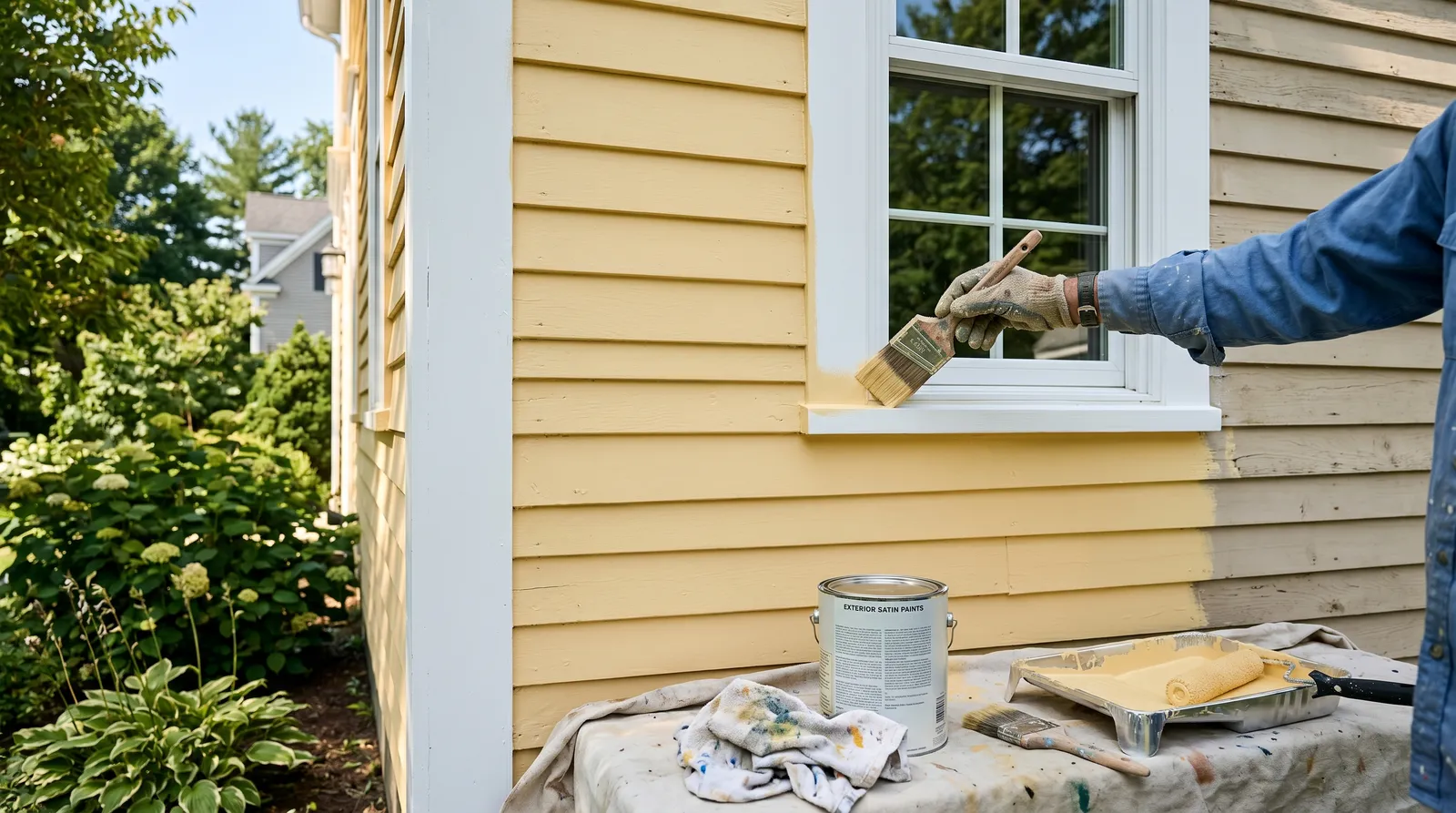
Dutch Boy Maxbond Plus Exterior3 sheens
Coverage250–400 sq ft / gal
Recoat4 hours — longer than a premium exterior
VOCUnder 50 g/L
Sheens FlatSatinSemi-Gloss
Read this first
The Fast Verdict
Worth it on the right wall. Extreme Adhesion Technology bonds over sound siding that has gone chalky, dirty or glossy without a sanding or power-wash pass, it sheds rain in about 90 minutes, it applies down to 35°F, and the mildew- and algae-resistant film earns its keep on a shaded north wall. With the recurring 11% Menards rebate it undercuts Behr and Valspar on the gallon. It is not worth it on bare wood expecting it to self-prime, or on a baking west wall you want to hold color for a decade.
Best for
Sound previously painted lap siding · Trim and window casings · Aluminum and vinyl siding · Masonry, brick and stucco · Cold damp climates · Shaded north walls
Skip if
Bare cedar or raw masonry with no primer plan · Peeling or alligatored paint · A high-UV west or south wall you want to hold color ten years · You are nowhere near a Menards
What it's good at
- Gripping chalky, glossy, dirty coated siding without a sanding or power-wash step
- Shedding rain in about 90 minutes, which buys schedule margin against a pop-up shower
- Going on down to 35°F, which stretches the painting season at both ends
- Mildew and algae resistance on a shaded, damp north wall
- One gallon covering both lap siding and the window casings around it
- Undercutting Behr and Valspar on the gallon once the 11% Menards rebate lands
What it's not good at
- Full-sun color retention on a west or south wall in a high-UV zone
- Bare cedar and redwood, which push tannins through without a real primer
- Peeling, alligatored or chalky-failing paint, which still needs scraping and spot-priming
- Top-tier longevity — it is a mid-tier film, not a 15-year-warranty coating
- A quick two-coat day, since the 4-hour recoat is longer than a premium exterior's
- Availability outside Menards' Midwest-heavy footprint
- Designer-collection depth on the exterior deck, where the bigger brands have the richer palette
Numbers, not adjectives
Spec Sheet
- Type
- Acrylic exterior paint-and-primer with Extreme Adhesion Technology
- Coverage
- 250–400 sq ft / gal; rough cedar and porous stucco pull toward the low end
- Sheens
- Flat, Satin, Semi-Gloss
- Touch dry
- About 1 hour
- Recoat
- 4 hours — longer than a premium exterior, so plan the second wall
- Rain resistance
- Sheds rain in about 90 minutes
- Application temperature
- Rated down to 35°F
- VOC
- Under 50 g/L
- Film
- Mildew- and algae-resistant; resists cracking and peeling; dirt- and fade-resistant color claim
- Primer
- Self-primes over sound, non-peeling siding that is chalky, dirty or glossy. Bare wood, failing paint and fresh masonry still need a dedicated primer
- Surfaces
- Wood, hardboard, aluminum and vinyl siding, masonry, brick, stucco, fiber cement panels, metal. Not floors
- Price
- $$ mid-tier mass exterior; Menards is the home base and the recurring 11% mail-in rebate is what makes the price argument work
Application Settings That Work
- Primer
- Self-primes over sound, previously painted siding that has gone chalky, dirty or glossy, with no power-wash or sanding pass. That is the labor saving you are paying for. Bare cedar wants a real exterior primer, chalky failing or peeling paint wants scraping and a spot-prime, and new masonry or fresh stucco wants a masonry conditioner. Fewer-coat, not no-prep.
Dry Times in the Real World
Two of these numbers are the reason to buy this paint in a cold, wet climate. It is dry to touch in about an hour and sheds rain in roughly 90 minutes, which on a Midwest spring repaint where a pop-up shower can wreck a fresh coat buys real schedule margin. It is also rated for application down to 35°F, which stretches the painting season at both ends. The number that costs you is the recoat: four hours, longer than a premium exterior's window. That is not a deal-breaker on a weekend job, but it is a thing to know before you start the second wall at 3pm, because a two-coat day takes planning and you do not want to be chasing daylight on the last elevation.
Mid-project panic
When It Goes Wrong, and How to Fix It
Tannin bleed and early failure on bare cedar
Why it happens. The self-priming claim carries a qualifier that does all the work: it self-primes over sound, previously painted siding. Bare cedar and redwood push tannins through a topcoat, and raw wood gives the film nothing sealed to grip.
The fix. Prime bare cedar and redwood with a real exterior primer before you topcoat. Treat Maxbond Plus as a fewer-coat, fewer-step paint on surfaces that already have a sound coat, not a no-prep paint. Skip that and you are back up the ladder in two years.
New paint lifted along with the old coat
Why it happens. Extreme Adhesion is genuinely good at gripping a stable old coat that is chalky, dirty or glossy. It cannot grip paint that is already failing. Chalky-and-failing, peeling and alligatored surfaces are all outside the claim.
The fix. Scrape back to sound paint, feather the edges, and spot-prime the bare areas with an exterior primer. Prep the bare and failing spots and the self-priming claim holds up on everything else.
One coat did not cover the way the shelf tag implied
Why it happens. Dutch Boy advertises one-coat coverage, but the fine print reads when tinted with the Dutch Boy one-coat color palette. Outside that palette, on a color change, or on a porous wall, you are on two coats. It is the same trap every mass brand sets with a one-coat headline.
The fix. Check your color is in the one-coat palette before tinting, and buy for two coats on any color change. Estimate gallons off the middle of the 250-to-400 range — rough cedar and porous stucco land at the bottom of it.
The west wall dulled years before the shaded sides
Why it happens. Fade resistance is solid for the tier and better than Dutch Boy's budget exteriors, but it does not match a premium exterior like Sherwin-Williams Duration or Behr Marquee Exterior in full western sun. This is a mid-tier film, not a 15-year-warranty coating.
The fix. In a high-UV zone, plan to recoat a hot wall sooner than the shaded elevations, or spend up to a premium exterior on the sun-punished side. On well-prepped shaded surfaces Maxbond Plus holds a good while.
New masonry or stucco is not holding the paint
Why it happens. Fresh masonry and new stucco are alkaline and still curing. No exterior paint-and-primer is a substitute for the conditioning step on a raw mineral surface.
The fix. Use a masonry conditioner or a dedicated masonry primer first, let the substrate cure, then topcoat. Maxbond Plus handles masonry, brick and stucco fine once the surface is prepped for it.
Side by side
Maxbond Plus vs Behr Exterior vs Valspar Duramax
Same shelf position at three different stores, which is the comparison that actually matters. Duramax is the closest fight; Behr wins the sun and the map.
| Dutch Boy Maxbond Plus | Behr Marquee / Dynasty Exterior | Valspar Duramax | |
|---|---|---|---|
| Store | Menards, plus some independents | Home Depot, nationwide | Lowe's, nationwide |
| Adhesion over chalky old paint | Extreme Adhesion Technology, the strongest thing it does | Solid, with the usual prep expectations | A self-priming pitch of its own; right there with Maxbond |
| Full-sun fade resistance | Solid for the tier; dulls sooner on a hot wall | A clear step above on color retention and chalk resistance | A slight edge over Maxbond Plus |
| Cold-weather application | Rated down to 35°F | Standard exterior window | Strong cold-weather application story |
| Rain resistance | Sheds rain in about 90 minutes | Standard for the premium tier | Standard for the tier |
| Warranty language | Mid-tier film, no 15-year premium coating claim | More aggressive exterior warranty language | Mass-premium exterior claims |
| Price after promotions | Undercuts both when the 11% Menards rebate is running | Full shelf price | Full shelf price |
Store
Dutch Boy Maxbond PlusMenards, plus some independents
Behr Marquee / Dynasty ExteriorHome Depot, nationwide
Valspar DuramaxLowe's, nationwide
Adhesion over chalky old paint
Dutch Boy Maxbond PlusExtreme Adhesion Technology, the strongest thing it does
Behr Marquee / Dynasty ExteriorSolid, with the usual prep expectations
Valspar DuramaxA self-priming pitch of its own; right there with Maxbond
Full-sun fade resistance
Dutch Boy Maxbond PlusSolid for the tier; dulls sooner on a hot wall
Behr Marquee / Dynasty ExteriorA clear step above on color retention and chalk resistance
Valspar DuramaxA slight edge over Maxbond Plus
Cold-weather application
Dutch Boy Maxbond PlusRated down to 35°F
Behr Marquee / Dynasty ExteriorStandard exterior window
Valspar DuramaxStrong cold-weather application story
Rain resistance
Dutch Boy Maxbond PlusSheds rain in about 90 minutes
Behr Marquee / Dynasty ExteriorStandard for the premium tier
Valspar DuramaxStandard for the tier
Warranty language
Dutch Boy Maxbond PlusMid-tier film, no 15-year premium coating claim
Behr Marquee / Dynasty ExteriorMore aggressive exterior warranty language
Valspar DuramaxMass-premium exterior claims
Price after promotions
Dutch Boy Maxbond PlusUndercuts both when the 11% Menards rebate is running
Behr Marquee / Dynasty ExteriorFull shelf price
Valspar DuramaxFull shelf price
For a hot west or south wall in a high-UV zone, buy the Behr exterior flagship and accept the upcharge — color retention is where Maxbond Plus gives ground and no amount of rebate fixes that. Against Valspar Duramax it is a genuine fight: level on adhesion over chalky old paint, Duramax slightly ahead in full sun, and price decided by whose promotion is running. Where Maxbond Plus pulls clear is a cold, damp climate on already-coated siding, because the 90-minute rain window and the 35°F floor are worth more on a Midwest spring repaint than a glossy brochure claim. The value case is real, and it is rebate-dependent and store-dependent. That is the whole story of this paint.
If not this one
Honest Alternatives
BM
Behr Marquee or Dynasty ExteriorPremium exterior tier · Home Depot
A clear step above on color retention and chalk resistance in hard sun, with more aggressive warranty language, and available everywhere Home Depot is. The pick for a punished west or south elevation, or if Menards is not your store.
Full review →VD
Valspar DuramaxPremium exterior tier · Lowe's
The closest fight. Strong cold-weather application story and a self-priming pitch of its own, level with Maxbond Plus on adhesion over chalky old paint and slightly ahead in full sun. Price separates them more than performance does.
Full review →SW
Sherwin-Williams DurationPremium exterior tier · Sherwin-Williams stores
The spend-up for maximum longevity and full-sun color retention. If the goal is a hot wall that holds its color for a decade, this is the class of coating that does it, and Maxbond Plus is not pretending to compete.
Full review →DB
Dutch Boy Dura Clean or Dura Fighter Exterior$ to $$ value exterior · Menards
The consumer-tier 100% acrylic exteriors below Maxbond Plus. Cheaper and thinner, fine on a fence or a shed. Maxbond Plus is the one to spend up to when the job is the whole house.
Full review →Questions people actually ask
Maxbond Plus Exterior Questions, Answered
Is Dutch Boy Maxbond Plus worth it?
On the right wall, yes. Its Extreme Adhesion Technology bonds over sound siding that has gone chalky, dirty or glossy without a sanding or power-wash pass, it sheds rain in about 90 minutes, it applies down to 35°F, and the mildew- and algae-resistant film earns its keep on a shaded north wall. With the recurring 11% Menards rebate it undercuts Behr and Valspar on the gallon. It is not worth it if you are coating bare wood expecting it to self-prime, if you need full-sun color retention for a decade, or if you cannot get to a Menards.
Is Maxbond Plus really a paint and primer in one?
Over a sound, previously painted surface that is chalky, dirty or glossy, yes. Extreme Adhesion Technology lets it bond without a separate primer or a sanding pass, which is the honest selling point. On bare wood, raw masonry, or paint that is peeling or alligatored, the self-priming claim runs out. Spot-prime bare and failing areas with a real exterior primer first. Self-priming exterior means fewer-coat, not no-prep.
How does Maxbond Plus hold up to mildew and fading?
The film carries a mildew- and algae-resistant additive, and on a shaded, damp north wall that is the feature that earns its keep. Fade resistance is solid for the tier and better than Dutch Boy's budget exterior lines. It does not match a premium exterior like Sherwin-Williams Duration or Behr Marquee Exterior on color retention in full western sun. In a high-UV zone, plan to recoat a hot wall sooner.
What surfaces can Maxbond Plus go on?
Wood, hardboard, aluminum and vinyl siding, masonry, brick, stucco, cement composition panels, and metal. Not floors. It is a true house-and-trim exterior, so the same gallon handles lap siding and the window casings around it. Prep is the usual: clean, dry, dull, and spot-primed where bare.
Can I paint with it in cold weather?
Down to 35°F, which is the spec that makes it interesting in a cold climate. Combined with rain resistance in about 90 minutes, it stretches the painting season at both ends and gives you margin when the forecast will not hold still. Watch the four-hour recoat though, because short cold days make a two-coat schedule tight.
Does it really cover in one coat?
Only inside Dutch Boy's one-coat color palette, which is the same fence every mass brand builds around a one-coat headline. Outside that palette, on a color change, or on a porous wall, plan on two coats. Coverage runs 250 to 400 square feet a gallon, with rough cedar and porous stucco at the low end and smooth previously coated siding near the top.
How long before rain is safe?
About 90 minutes, and that is the number that surprised me in a good way. On a spring repaint where a pop-up shower can wreck a fresh coat, a film that is rain-ready in an hour and a half is real schedule margin, not a brochure line.
Where do I buy Dutch Boy exterior paint?
Mostly Menards, which stocks the Maxbond Plus deck plus the value Dura Clean and Dura Fighter exterior lines, and where the recurring 11% mail-in rebate makes the price work. Some independent dealers carry it. It is not a Home Depot or Lowe's brand, so if those are your only stores, Behr or Valspar exterior are the realistic picks instead.
Keep exploring
Best exterior paint round-upBest cold-climate exterior paintDutch Boy brand hubDutch Boy Platinum Plus review
We may earn a commission when you buy through the retailer link above. It never changes the score or the verdict.
Ask a Question