Product review · Diamond Vogel · Updated August 8, 2026
Palisade Ultra Premium ExteriorDiamond Vogel paint review
8.2/10Premium-grade exterior performance without the premium-tier receipt, if a counter near you carries it.
A flexible, fade-resistant exterior that goes on at 35°F, which buys real paint days in freeze-thaw country. It performs a tier above what you pay for it, and the thing holding it back is the map.

Mark Thompson · Pro Contractor & Field Editor · Updated August 8, 2026
22 years running residential and light commercial repaints across the Midwest. Mark has rolled enough regional store-brand paint to know when a counter brand actually competes with the nationals, and he still takes side jobs to keep the numbers honest. About the testing process →
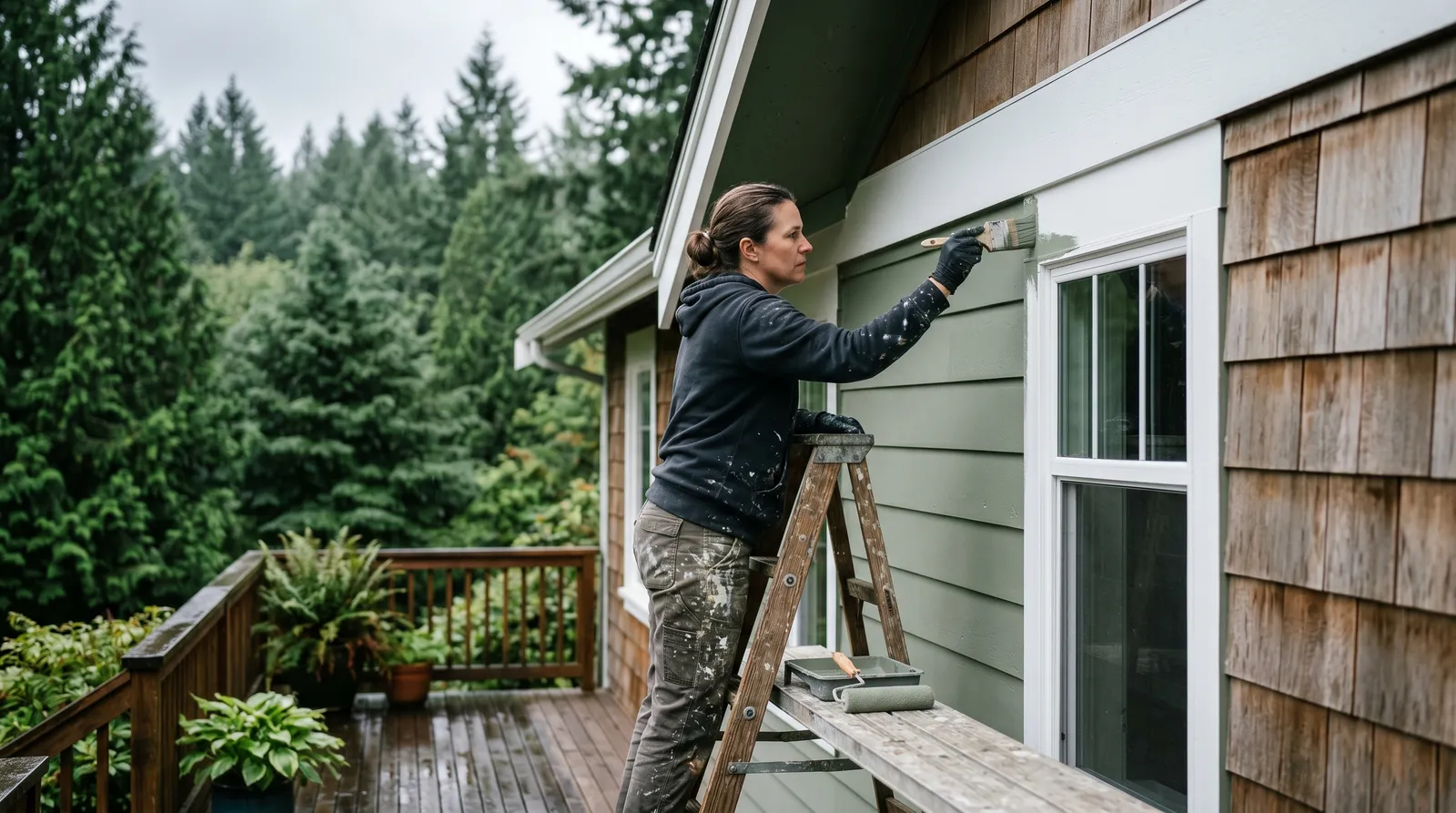
Diamond Vogel Palisade Ultra Premium Exterior3 sheens
RecoatRoughly 2-4 hours in good weather
VOCLow-VOC architectural acrylic
Sheens MatteSatinSemi-Gloss
Read this first
The Fast Verdict
Buy it if you are inside the Midwest and Plains footprint with a wood or fiber-cement repaint. The film is flexible enough to move with siding through a full freeze-thaw cycle instead of cracking at the bottom of every board, fade hold on a west face is better than I expected from a regional brand, and 35°F application adds weeks to your paint season on both ends. The lifetime peel-and-blister guarantee is real, with the usual prep clause. Availability is the catch, and it overrides everything.
Best for
Wood and fiber-cement siding · Trim and exterior wood · Freeze-thaw climates · Cold-weather spring and fall work · Prepped masonry and stucco · Regional pro repaints
Skip if
No Spectrum or Hirshfield's counter within a sane drive · Multi-state jobs on one brand · A deep saturated color that must hold dead-true for fifteen years · You want a big-box pickup
What it's good at
- Flexing with siding through a full freeze-thaw cycle instead of cracking at the laps
- Going on at 35°F, which saves the October job that would otherwise get tarped until May
- Holding color on a west face taking full afternoon sun instead of going blotchy by season three
- Flowing out clean with low brush drag and a wet edge that keeps a wall moving
- Landing a clear tier under SW Duration and BM Aura Exterior on price
- Backing it with a lifetime peel-and-blister guarantee on a properly prepped surface
- Coming with a real pro counter that matches a fleck off your old siding
What it's not good at
- Being available. No big-box shelf, no real online cart, Midwest and Plains only
- Multi-state work, since a national contractor cannot standardize on it
- Deep-color longevity against Duration and Aura Exterior over ten-plus years
- Sealing bare cedar, raw fiber-cement, or chalky siding on its own
- Name recognition at the kitchen table
- Being easy to find since Diamond Vogel exited its own stores in late 2025
Numbers, not adjectives
Spec Sheet
- Coverage
- Roughly 300-400 sq ft per gallon on prepped siding; less on rough or porous wood
- Sheens
- Matte, Satin, Semi-Gloss
- Binder
- 100% acrylic latex
- Low-temp application
- Down to 35°F, where most premium exteriors quit at 50°F
- Touch dry
- About 1 hour
- Recoat
- Roughly 2-4 hours in good weather
- VOC
- Low-VOC architectural acrylic; confirm the exact g/L on the current can label
- Warranty
- Lifetime peel-and-blister guarantee; proper prep required, parts only, no labor
- Primer
- Self-priming over sound, previously coated siding; bare or chalky wood still needs a real exterior primer
- Surfaces
- Wood and fiber-cement siding, trim, exterior wood, properly prepped masonry and stucco
- Sizes
- Gallon and 5-gallon, through the Spectrum Paint and Hirshfield's counters that took over Diamond Vogel's architectural retail
- Price
- $$ regional store-brand pricing, a clear tier below SW Duration and BM Aura Exterior
Application Settings That Work
- Brush
- Roll and back-brush on lap siding. Brush drag is low and the wet edge holds long enough to keep a wall moving without lap marks, and it does not rope up on a hot south wall the way cheap exterior does.
- Airless
- Spray and back-roll on a long run so the film gets worked into the siding instead of laid on top of it. Either method flows out clean; the back-roll is what buys the adhesion.
- Primer
- Self-primes over sound, previously coated siding. It does not self-prime bare cedar, raw fiber-cement, or chalky old siding. Spot-prime the bare spots with a real exterior primer, prime the whole wall if it is mostly raw, and chalk-bind after a pressure wash.
Mid-project panic
When It Goes Wrong, and How to Fix It
Brown rust-colored streaks down fresh white siding after the first rain
Why it happens. Tannin bleed out of bare cedar. Self-priming means it bonds to sound, previously painted siding. It does not seal raw wood, and cedar pushes tannin straight through a finish coat the first time the wall gets soaked.
The fix. Spot-prime bare spots with a real exterior primer before you paint, and prime the whole wall if it is mostly raw. If the streaks are already there, wash them down, prime, and recoat that section.
New paint sheeting off old siding
Why it happens. Chalk. Old weathered paint leaves a powder layer on the surface, and your new coat bonds to the powder instead of the wood. Then the powder lets go and takes your work with it.
The fix. Pressure-wash the wall down, then use a chalk-binding primer before Palisade. Raw fiber-cement needs a primer to seal and bond too, full stop. Skip this because the label said primer and you are back up the ladder in two springs.
Mildew bloom on a shaded north wall every spring
Why it happens. A north or shaded wall never dries out. Quality exterior acrylic carries mildewcide in the film, and on a chronically damp wall that is not always enough. I see it in zones 5 and 6 on every brand.
The fix. Wash the wall down before you paint, and do not paint mildew shut and call it gone. On a chronic shade-and-damp wall, ask the counter about their mildew-resistant additive before you tint.
One coat skips through on rough cedar and flashes at repairs
Why it happens. Good hide is not one-coat coverage. On a color change or over patchy old paint, one coat rides the high spots of rough siding and shows every repair. That is true of every exterior on the market.
The fix. Two coats. Always two coats. Buy on the low end of the coverage range, around 300 square feet a gallon, so you do not run short on a Saturday.
Side by side
Palisade vs SW Duration vs BM Aura Exterior
On film quality Palisade is in the conversation with the national premiums. The differences that decide a job are cold-weather range, deep-color hold, and whether there is a store you can reach.
| Palisade Ultra Premium | SW Duration | BM Aura Exterior | |
|---|---|---|---|
| Cold-weather application | Down to 35°F. Adds weeks to the paint season on both ends | Follows the usual 50°F-and-up rule for premium exteriors | Follows the usual 50°F-and-up rule for premium exteriors |
| Deep-color hold over ten-plus years | Good, and better than the bargain lines, but a hair behind these two on saturated blues and barn reds | Holds deep color truer over the long run | Holds deep color truer over the long run |
| Price tier | A clear tier below both. Real money across a whole house | Premium tier | Premium tier |
| Where you buy it | Spectrum Paint and Hirshfield's counters across the Midwest and Plains. No big-box, no real online cart | A store on nearly every corner | A store on nearly every corner |
| Best for | Regional wood and fiber-cement repaints in freeze-thaw country, on a budget that has to work | A national job, or a forever-color statement on the front of the house | A national job, or a forever-color statement on the front of the house |
Cold-weather application
Palisade Ultra PremiumDown to 35°F. Adds weeks to the paint season on both ends
SW DurationFollows the usual 50°F-and-up rule for premium exteriors
BM Aura ExteriorFollows the usual 50°F-and-up rule for premium exteriors
Deep-color hold over ten-plus years
Palisade Ultra PremiumGood, and better than the bargain lines, but a hair behind these two on saturated blues and barn reds
SW DurationHolds deep color truer over the long run
BM Aura ExteriorHolds deep color truer over the long run
Price tier
Palisade Ultra PremiumA clear tier below both. Real money across a whole house
SW DurationPremium tier
BM Aura ExteriorPremium tier
Where you buy it
Palisade Ultra PremiumSpectrum Paint and Hirshfield's counters across the Midwest and Plains. No big-box, no real online cart
SW DurationA store on nearly every corner
BM Aura ExteriorA store on nearly every corner
Best for
Palisade Ultra PremiumRegional wood and fiber-cement repaints in freeze-thaw country, on a budget that has to work
SW DurationA national job, or a forever-color statement on the front of the house
BM Aura ExteriorA national job, or a forever-color statement on the front of the house
Inside the footprint, with a wood or fiber-cement repaint and a short paint season, Palisade is the smart buy. The 35°F range and the price gap under SW and BM are real, and the counter that matches a fleck off your old siding beats a big-box aisle. Outside the Midwest, or when a deep saturated color has to stay dead-true for fifteen years, buy the national premium and do not look back.
If not this one
Honest Alternatives
DV
Diamond Vogel DurangoValue tier, under Palisade
The value exterior for new construction or a budget repaint. Flat and satin only, and it gives up Palisade's fade tech and the semi-gloss option. Fine when the paint has to be adequate and cheap.
DV
Diamond Vogel EverCrylContractor tier, under Palisade
The contractor-grade workhorse for high-volume jobs. Also flat and satin only, and also without Palisade's fade tech. Buy it when you are moving gallons and the color is a plain body shade.
SW
Sherwin-Williams DurationPremium tier, above Palisade
The step up and out of the brand. More money, a store on every corner, and a hair more deep-color hold over ten-plus years. The pick if you work across states or the front of the house is the whole point.
Full review →BM
Benjamin Moore Aura ExteriorPremium tier, above Palisade
The other national premium. Same story as Duration: costs more, available everywhere, holds a saturated deep color truer over the long run.
Full review →Questions people actually ask
Palisade Ultra Premium Exterior Questions, Answered
Is Diamond Vogel Palisade worth it?
Yes, if you can reach a counter that carries it. Palisade is a flexible, fade-resistant exterior acrylic that applies down to 35°F, which buys real spring and fall paint days in freeze-thaw country, and it lands a clear tier below Sherwin-Williams Duration and Benjamin Moore Aura Exterior on price. It is held back by the map, not the film: no big-box shelf, no real online cart, and since late 2025 it is sold through Spectrum Paint and Hirshfield's counters. Skip it if there is no store within a sane drive, or if you need a deep saturated color to hold dead-true for fifteen years.
Where do I buy Diamond Vogel Palisade?
This changed in late 2025. Diamond Vogel exited its own architectural retail and sold the stores: Spectrum Paint took the Iowa-and-adjacent locations, Hirshfield's took the Minnesota-and-adjacent ones. Both still carry and tint Diamond Vogel's architectural paint, Palisade included, so you buy it at a Spectrum or Hirshfield's counter now. It is still a Midwest-and-Plains footprint, still not at Home Depot or Lowe's, and there is still no real buy-online path. Call ahead and confirm they stock it before you plan a job around it.
Does Palisade hold up to freeze-thaw and cold-climate winters?
That is where it earns its keep. Palisade is rated for application down to 35°F, which buys you real spring and fall paint days in zones 5 and 6 when most exteriors want 50°F-plus. The flexible film is built to move with siding through freeze-thaw without cracking at the laps and trim joints. Prep still rules: paint over a clean, dry, sound surface or the cold and the moisture will find the weak spot by the second winter.
Is Palisade really self-priming on bare wood?
No. Self-priming means it bonds to sound, previously painted siding without a separate primer coat, and at that it is fine. Bare cedar, raw fiber-cement, or chalky old siding still wants a real exterior primer first. Skip the primer on bare or chalky wood and you will see it peel and bleed inside two years. Spot-prime the bare spots, prime the whole wall if it is raw.
How does Palisade compare to Sherwin-Williams Duration or Benjamin Moore Aura Exterior?
On film quality it is in the conversation. Aura Exterior and SW Duration still edge it on deep-color retention and the longest fade hold, and both have a store on nearly every corner. Palisade competes on price and on a local contractor counter that actually knows your jobs. If you are inside the footprint and want strong exterior performance without the premium-tier receipt, it is a fair trade. Outside the Midwest, buy the national brand.
How many coats does Palisade need?
Two. The can and the counter will both tell you Palisade has good hide, and it does, but good hide is not one-coat coverage on a color change or over patchy old paint. One coat skips through on the high spots of rough cedar and flashes at every repair. Two coats is the working spec on every exterior, and this is no exception.
What sheens does Palisade come in?
Matte, satin, and semi-gloss. Matte for the body of most siding, satin where you want a little wipe-down on a porch wall, semi-gloss for trim and doors. That is the right range, and it is one thing the value lines below it give up, since Durango and EverCryl come flat and satin only.
What does the lifetime guarantee actually cover?
Peel and blister, backed for as long as you own the house, on a properly prepped surface. It is parts not labor, like every paint warranty. The prep clause matters: every lifetime exterior guarantee on the market voids the second you paint over chalk, dirt, or bare wood you did not prime. Wash it, scrape it, prime the bare spots, then paint.
How much does a gallon cover?
Roughly 300 to 400 square feet on prepped siding, and less on raw wood that drinks the first coat. Figure on the low end when you buy and you will not run short on a Saturday. On a whole-house exterior, take the 5-gallon: the per-gallon drop is worth it and the batch stays consistent.
Will it stop mildew on a shaded wall?
It helps, but do not count on paint alone. A quality exterior acrylic carries mildewcide in the film, and a north or shaded wall that never dries out is where you find out whether that is enough. I see mildew bloom every spring on shaded north siding in zones 5 and 6, on every brand. Wash the wall before you paint, and ask the counter about a mildew-resistant additive if the wall is chronically damp.
Keep exploring
Diamond Vogel brand hubDiamond Vogel interior paint reviewBest exterior paint round-upBest cold-climate exterior paint
We may earn a commission when you buy through the retailer link above. It never changes the score or the verdict.
Ask a Question