Product review · Behr · Updated August 7, 2026
Marquee ExteriorBehr paint review
8.0/10Ten to twelve years on a moderate wall for $65 a gallon. On a south wall, spend the other ten dollars on Dynasty.
A full exterior repaint costs $4,000 to $7,000. Marquee's extra five years over Premium Plus skips one of them. That is the whole argument, and it stops working the moment the wall takes all-day sun.

Mark Thompson · Pro Contractor & Field Editor · Updated August 7, 2026
22 years running residential and light commercial repaints, most of the summers spent outside on ladders. Mark judges an exterior by how it behaves on a cool damp morning and how the wall looks in year six, not by the sell sheet. About the testing process →
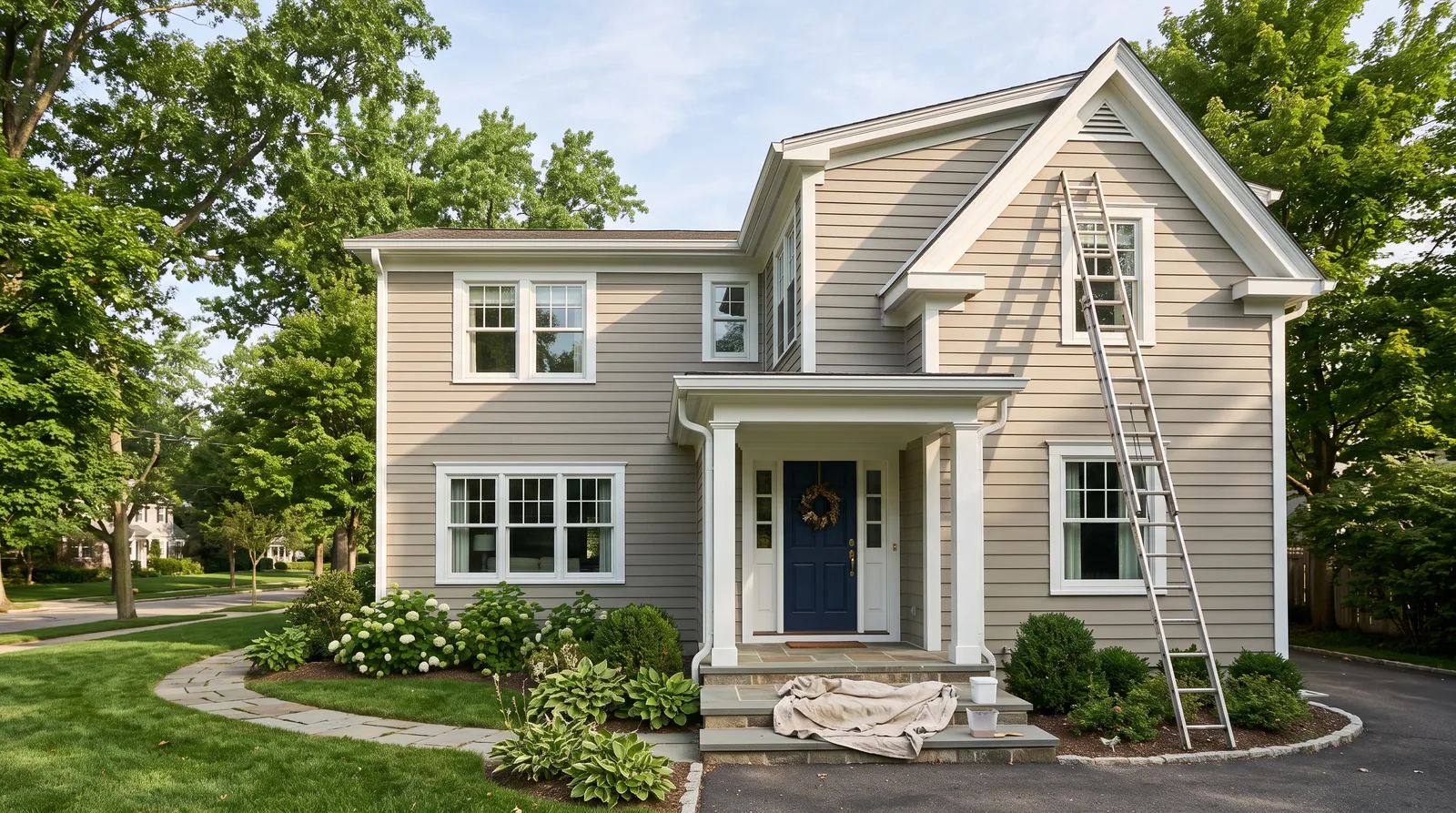
Behr Marquee Exterior3 sheens
Coverage250–400 sq ft / gal by texture
Dry / RecoatTouch 1–2 hr
VOCUnder 50 g/L excluding colorants
Sheens FlatSatin EnamelSemi-Gloss Enamel
Read this first
The Fast Verdict
Buy it for moderate or shaded exposure. Ten to twelve years against Premium Plus's five to seven is what the extra twenty dollars a gallon buys, and skipping one repaint cycle pays for that several times over. The 35°F application floor and 60-minute rain resistance stretch your season, and the current formula grips lightly chalked acrylic without a separate primer coat. On siding that bakes in all-day south or west sun, buy Dynasty instead.
Best for
Wood, vinyl, fiber cement, stucco, and masonry · Moderate or shaded exposure · Cool spring and fall mornings · Repaints over sound or lightly chalked acrylic · Mid-tone and deeper colors · Homeowners near a Home Depot
Skip if
All-day south or west sun · Moving stucco cracks that need bridging · Porch floors, foundations, below grade · Light-color rental repaints where Ultra looks the same · No Home Depot within reach
What it's good at
- One-coat hide inside the 700-plus color collection, over a sound similar color, with a 1/2-inch nap
- Cool-weather work: a 35°F floor buys the spring and fall mornings commodity exterior cannot cure in
- Shrugging off a surprise shower, with rain resistance about 60 minutes after application
- Dirt shedding, so pollen, road dust, and gray north-wall film come off with a hose and a soft brush
- Gripping lightly chalked acrylic after a wash, which used to be an automatic primer job
- Ten to twelve years on a well-prepped moderate wall, against five to seven for Premium Plus
What it's not good at
- Price position: at $65 to $70 it sits only about ten dollars under Dynasty, which is the better buy on a full-sun wall
- Living up to one-coat outside the collection, over a color change, or on bare substrate
- Bridging cracks. It is not elastomeric, and a moving stucco crack telegraphs back through in a season
- Waterproofing. No below-grade walls, no foundations, no porch or deck floors
- Brush feel. Thick body, short open time on a hot wall, and harder cut lines on detailed trim than Dynasty
- Availability. Behr lives at Home Depot and nowhere else, and tinting only happens at the counter
Same shelf, different cans
Which Marquee Exterior Sheen Are You Buying?
Three sheens, and nobody at the counter tells you which one goes where. Get it wrong and you lose either the look or the washability.
Flat
Buy it if
Older, patched, or rough siding, and stucco. It scatters light instead of bouncing it, so dents, filled nail holes, and wavy old lap siding disappear. It also shows lap marks least, which is the forgiving choice if you are rolling a big wall alone.
Avoid if
The wall you want to hose clean. Flat gives up the slick dirt-shedding film that makes the satin worth buying.
Satin Enamel
Buy it if
The body of the house. This is the default. The slightly slick film is the whole dirt-shedding story, and it is the sheen that rinses clean with a garden hose and survives a wash without burnishing. If you only buy one sheen, buy this one.
Avoid if
Old, wavy, patched siding where you need the flaws to disappear more than you need the wash-down.
Semi-Gloss Enamel
Buy it if
Trim, doors, shutters, and fascia. It gives you the contrast line against satin siding, takes scrubbing where hands and hose ends land, and is the toughest of the three against wear.
Avoid if
A mirror-finish front door. Marquee stops at semi-gloss; inside Behr's exterior lineup, High-Gloss only lives on Premium Plus Exterior.
Numbers, not adjectives
Spec Sheet
- Coverage
- 250–400 sq ft / gal by texture; smooth siding at the top, stucco and weathered cedar at the bottom
- Expected life
- 10–12 yr moderate climate · ~8 yr on deep colors · 8–10 yr coastal with touch-ups
- Sheens
- Flat, Satin Enamel, Semi-Gloss Enamel
- Dry / Recoat
- Touch 1–2 hr · recoat ~2 hr in ideal conditions · rain-resistant in 60 min
- Application temp
- 35°–90°F air and surface; must stay above 35°F for 4 hours after
- VOC
- Under 50 g/L excluding colorants; 100% acrylic
- Primer
- Self-priming on sound coated siding and over light chalk; prime heavy chalk, bare wood, and tannin-prone species
- One-coat colors
- 700+ exterior colors in the Dynasty and Marquee One-Coat Hide Collection
- Surfaces
- Wood, vinyl siding, fiber cement, stucco, brick, masonry, primed metal, trim
- Not for
- Below-grade and foundation walls, standing water, porch and deck floors
- Sizes
- Gallon, 5-gallon (the bucket works out a few dollars a gallon under singles)
- Price
- $65–70 / gal at Home Depot in 2026; sales run lower
Application Settings That Work
- Brush
- The body is thick. It skips and drags under a dry brush, and cut lines on detailed trim are harder than they are with Dynasty. Load the brush properly and work small sections. Treat it like a cheap gallon and it fights you.
- Airless
- It sprays fine, but sprayed film sits on the surface instead of being worked into it. Back-roll while it is still wet, right behind the gun, not two walls later. Skip that and the lap lines show on siding.
- Primer
- Self-priming on sound coated siding, and the current formula grips lightly chalked acrylic after a good wash, which is a primer coat you no longer buy. Heavy chalk that comes off thick on your palm still gets a bonding primer, and so do bare wood and tannin species like cedar and redwood.
Dry Times and the Weather Window
Touch dry in one to two hours, recoat at about two in good conditions, rain-resistant in sixty minutes. Full cure to hardness and mildew resistance takes about thirty days. The number that decides jobs is the 35°F floor: air and surface, and it has to stay above 35 for four hours after the paint goes on. Watch the overnight low, not the afternoon high. A 55-degree day that drops to 36 while the film is still wet gives you a coat that never cures right and chalks early. And read rain-resistant in an hour for what it is: a scheduling feature, not a waterproofing claim.
Mid-project panic
When It Goes Wrong, and How to Fix It
Lap marks on a sunny wall
Why it happens. The open time is short and it gets shorter in sun and wind. The body is thick, so a section that has started to tack drags instead of blending. This is the pros' most consistent complaint about the paint, and it is about the hand, not the film.
The fix. Work two or three courses of siding at a time and keep a wet edge. Chase the shade around the house instead of painting the wall the sun is standing on.
The one-coat color still needed two coats
Why it happens. One-coat coverage applies inside the One-Coat Hide collection, over a sound similar color, at the recommended spread rate. Untinted Ultra Pure White is excluded outright. A color change, a lighter shade, or bare siding puts you at two coats by the label's own terms, which is why the most repeated homeowner review is great coverage, but I still did two coats.
The fix. Plan and price two coats from the start. Behr's own label wants two for full durability and to keep the warranty intact. Treat one coat as the exception, not the plan.
Thin hide and early chalking
Why it happens. Over-spreading. You want roughly 8 mils wet, which dries to about 3.2 mils, and that is the film thickness the durability numbers and the warranty assume. Squeezing 400 square feet out of a gallon on a textured wall feels efficient and is not.
The fix. Stop at about 250 sq ft per gallon on smooth siding and 200 on texture. Use a 1/2-inch nap on smooth siding, 3/4-inch on stucco and rough-sawn cedar, and keep the roller loaded.
Stucco cracks came back within a season
Why it happens. Marquee Exterior is a high-end 100% acrylic, not an elastomeric coating, whatever you have read. It will not bridge a moving hairline crack in stucco or masonry.
The fix. A moving wall wants a true elastomeric. Repainting the crack with acrylic buys you one season and no more.
A half-shade stripe between gallons
Why it happens. Tint machines are accurate, not identical, and a minority of painters report batch-to-batch variance. The drift between gallon three and gallon four shows up as a stripe on a sunlit wall.
The fix. Box your gallons. Pour every tinted gallon of the same color into a five-gallon bucket, stir it, pour back. Five minutes of work that saves a wall.
Side by side
Marquee vs Dynasty vs Ultra Exterior
Three Behr exteriors, about thirty dollars a gallon end to end. Exposure decides which one, not the label.
| Behr Marquee Exterior | Behr Dynasty Exterior | Behr Ultra Exterior | |
|---|---|---|---|
| Price per gallon | $65–70 | $75–80 | $44–48 |
| Volume solids | 38–42% | About 40% and up | 32–36% |
| Fade guarantee | Limited lifetime warranty, no stamped fade rating | 10-year fade guarantee on the Color Fade Protection palette | None |
| UV and dirt package | Heavier UV absorber load than Ultra; dirt and pollen hose off | Best dirt- and stain-shedding film Behr makes | Lighter UV load: deep colors hold roughly 30–40% less long than Marquee |
| One-coat colors | The 700+ One-Coat Hide collection | The same 700+ collection | No one-coat claim |
| When to pick it | Moderate and shaded exposure, mid-tone and deeper colors, a wide application window. | Full south and west sun, deep saturated colors, and doors that close the same day. | Light colors, rentals, and low-exposure walls with little pigment to fade. |
Volume solids
Behr Marquee Exterior38–42%
Behr Dynasty ExteriorAbout 40% and up
Behr Ultra Exterior32–36%
Fade guarantee
Behr Marquee ExteriorLimited lifetime warranty, no stamped fade rating
Behr Dynasty Exterior10-year fade guarantee on the Color Fade Protection palette
UV and dirt package
Behr Marquee ExteriorHeavier UV absorber load than Ultra; dirt and pollen hose off
Behr Dynasty ExteriorBest dirt- and stain-shedding film Behr makes
Behr Ultra ExteriorLighter UV load: deep colors hold roughly 30–40% less long than Marquee
One-coat colors
Behr Marquee ExteriorThe 700+ One-Coat Hide collection
Behr Dynasty ExteriorThe same 700+ collection
Behr Ultra ExteriorNo one-coat claim
When to pick it
Behr Marquee ExteriorModerate and shaded exposure, mid-tone and deeper colors, a wide application window.
Behr Dynasty ExteriorFull south and west sun, deep saturated colors, and doors that close the same day.
Behr Ultra ExteriorLight colors, rentals, and low-exposure walls with little pigment to fade.
Marquee is the value sweet spot for the body of the house. Dynasty is the pick for full sun and deep, saturated colors, and it blocks faster too, so if the job includes doors and windows that close the same day it earns the ten dollars by itself. Ultra is the honest saving on a light-color repaint of a rental, because whites and pale greiges have almost no pigment to fade and Marquee's UV package has nothing to protect. A common split on a real job: Marquee on the siding, Dynasty on the south gable and the front door.
If not this one
Honest Alternatives
BD
Behr Dynasty Exterior$75–80 / gal
Same brand, same counter, one rung up. The stamped 10-year color-fade rating and a tougher dirt-shedding film, which is where the money goes on a full-sun south or west wall in deep color. It also blocks faster, so doors and windows can close the same day.
Full review →BU
Behr Ultra Exterior$44–48 / gal
The real cross-shop, twenty dollars a gallon cheaper and sitting on the same shelf. Two coats of Ultra on a light-color rental or low-exposure wall looks identical for years, because pale colors have almost no pigment to fade. Spend the difference on prep.
Full review →BP
Behr Premium Plus Exterior$44–48 / gal
The budget rung, a clean low-VOC 100% acrylic for sound previously painted siding. It chalks faster in hard sun and gives up color hold, but it is also the only Behr exterior with a High-Gloss sheen, which makes it the answer for a hard, shiny front door.
Full review →SW
Sherwin-Williams Duration ExteriorAbout $86 / gal list
The true like-for-like cross-shop nobody names. A self-priming, thick-build acrylic sold on the same one-coat-repaint pitch, with an expected life around 8 to 10 years. Go there when you want the concept from a dealer-network brand with color matching and job advice across the counter.
Full review →SW
Sherwin-Williams Emerald Exterior$80–95 / gal
The paint Marquee is measured against. It wins on long-haul color retention, dirt resistance, and how smoothly it lays off under a brush on trim. Marquee delivers roughly 80 to 90 percent of that for about three-quarters of the price, so Emerald earns the jump on a hard-sun showpiece wall or brushed trim, not a controlled DIY repaint.
Full review →Questions people actually ask
Marquee Exterior Questions, Answered
Is Behr Marquee exterior worth it?
On a moderate or shaded wall, yes. You get 10 to 12 years against Premium Plus's 5 to 7 for about twenty dollars more a gallon, and skipping one $4,000 to $7,000 repaint cycle pays for that many times over. On siding that takes all-day south or west sun, put the next ten dollars a gallon into Dynasty and its stamped 10-year fade rating instead. And on a light-color repaint of a rental, Ultra Exterior looks the same for less, since pale colors have little pigment to fade.
Marquee exterior vs Dynasty exterior, which one?
Dynasty if the wall takes hard south or west sun. It carries the stamped 10-year fade rating and a tougher dirt-shedding film, so deep colors hold longer where paint gets cooked. Marquee Exterior saves about ten dollars a gallon and does the same job on north and shaded walls, garages, and sheds. On a full-sun forever home, pay up for Dynasty.
Is the one-coat claim real outside?
Only on a color from the One-Coat Hide collection, going over a sound, similar color. Change colors, go lighter, go deeper, or cover bare siding and it is a two-coat job. Behr's own label wants two coats for full durability and the warranty. Plan and price for two. One coat is the exception, not the plan.
How cold can you paint Behr Marquee exterior?
Down to 35°F air and surface, and it has to stay above 35°F for at least four hours after you put it on. Watch the overnight low, not the afternoon high. A 55-degree day that drops to 36 at night while the film is still wet is how you get a coat that never cures right and chalks early.
How long does Behr Marquee exterior last?
Plan on 10 to 12 years on a well-prepped wall in a moderate climate. Deep, dark colors absorb more heat and UV and drop to about 8 years, and coastal or high-humidity walls want touch-ups every 4 to 5 years with a full repaint around year 8 to 10. That still beats Premium Plus by roughly five years, which is where Marquee's extra cost per gallon pays for itself.
Do you need primer over chalky old paint?
Not anymore for light chalking. The current Marquee Exterior formula adds adhesion chemistry that grips lightly chalked acrylic, so you can skip the separate primer coat after a good wash. Heavy chalk that wipes off thick on your palm, bare wood, and tannin-bleeding species like cedar still want a dedicated bonding or stain-blocking primer first.
What roller should you use with Marquee exterior?
A quality 1/2-inch nap on smooth siding, 3/4-inch on stucco or rough texture. The paint is heavy-bodied, so keep the roller loaded, do not stretch it past about 250 square feet a gallon on smooth surfaces, and back-roll right away if you spray. Over-spreading is how the one-coat hide fails and how you break the spread-rate condition on the warranty.
Is Behr Marquee exterior waterproof?
No. It is highly water-resistant, and rain-resistant about 60 minutes after application, but it is not a waterproofing product. Do not use it below grade, on foundation walls, or anywhere with standing water; those need a masonry waterproofer. It is also not rated for horizontal walking surfaces, so a porch or deck floor wants a dedicated porch and floor coating.
Can you paint vinyl siding with Behr Marquee exterior?
Yes, vinyl siding is an approved surface after a good wash. The one rule that matters: do not go darker than the siding's original color unless the shade is verified vinyl-safe, because a dark coat absorbs enough heat to warp panels, buckle them at the seams, and pull them off the nailing hem. Ask the Home Depot color counter to confirm vinyl-safe status before tinting, and plan two coats on any color change.
What do real reviews say about Behr Marquee exterior?
Homeowner reviews at Home Depot run strongly positive, with the most common complaint being great coverage, but I still did two coats, which matches the fine print on the one-coat guarantee. Professional painters on trade forums land on not a bad paint rather than the best: they grant the durability and dirt shedding but knock the thick body that drags under a brush and the short open time on hot walls. Most application complaints trace to over-spreading a heavy-bodied paint, not to the formula.
Keep exploring
Behr paint brand guideBehr Marquee Interior reviewBehr Dynasty Exterior reviewBehr Ultra Exterior review
We may earn a commission when you buy through the retailer link above. It never changes the score or the verdict.
Ask a Question