Product review · Sherwin-Williams · Updated August 7, 2026
Duration ExteriorSherwin-Williams paint review
8.6/10Best film build and color hold in the $65 to $95 tier — if the weather gives you a clean three-day window.
Sherwin claims roughly 70 percent more film build than ordinary top-line exterior paint, and on a sound repaint that shows. The cure window is what catches people out.

Mark Thompson · Pro Contractor & Field Editor · Updated August 7, 2026
22 years running residential and light commercial repaints across the Midwest. Mark has sprayed and back-rolled Duration on more siding than he can count, and has watched enough rushed spring jobs streak to be blunt about the weather window. About the testing process →
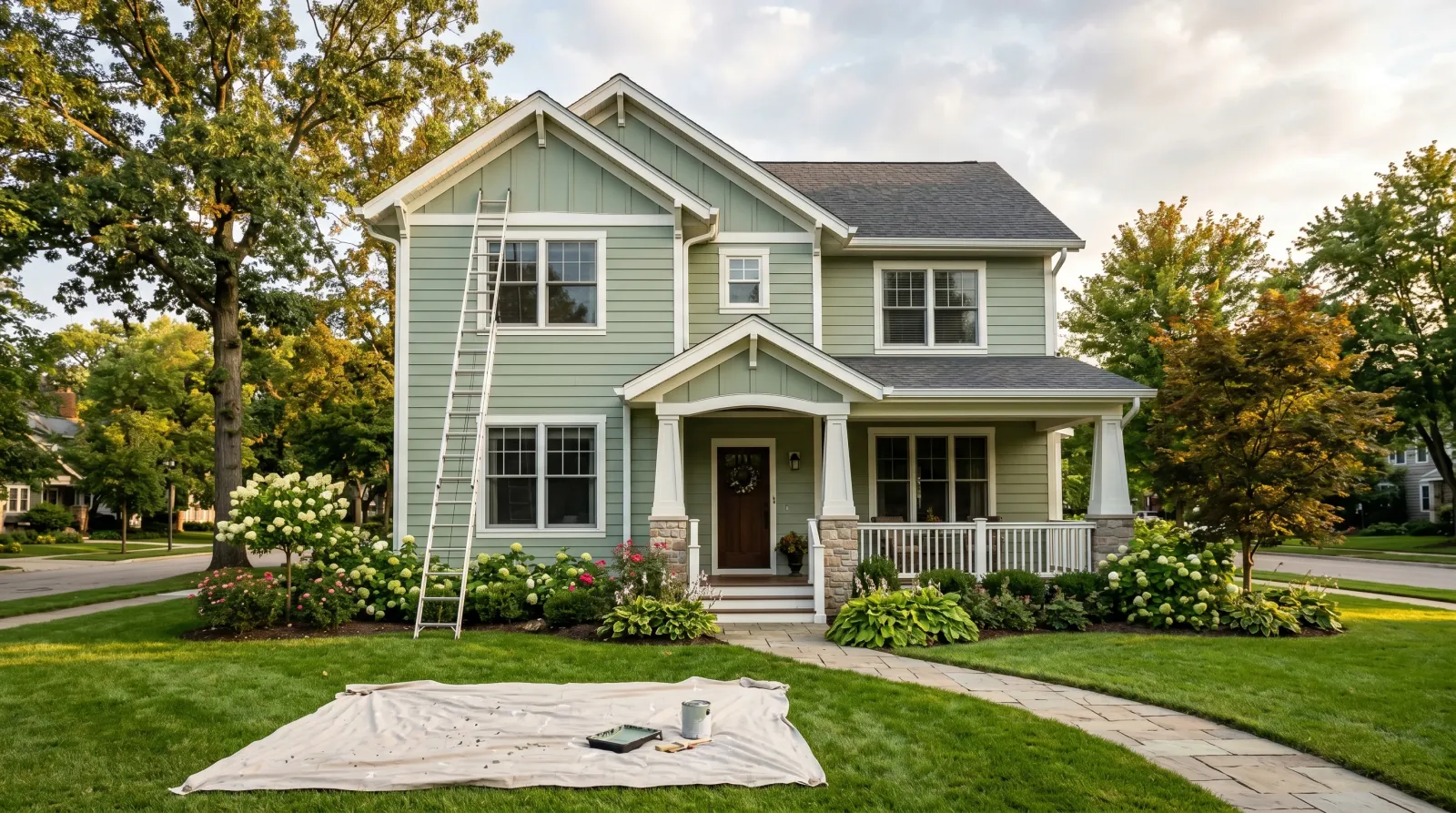
Sherwin-Williams Duration Exterior4 sheens
Coverage250–400 sq ft / gal
RecoatAbout 4 hr at 77F and 50% RH
Full cureAbout 30 days
Sheens FlatLow LustreSatinGloss
Read this first
The Fast Verdict
On a house you plan to keep, yes. The PermaLast film build and the color hold are the best argument in the $65 to $95 tier, and the lifetime limited warranty is real. On a flip, a rental, or a job you have to squeeze in ahead of weather, no. SuperPaint does that work for $20 to $30 a gallon less. The rain-safe window is about four hours in ideal weather. Wait for a clear three-day stretch.
Best for
Wood and fiber-cement siding · Trim and fascia · Repaints over sound paint · South and west walls in full sun · Shaded north elevations that grow mildew · Owners keeping the house 12-plus years
Skip if
Flips and rentals · A tight weather window · Deck boards and horizontal wear · Bare cedar or chalky alkyd with no primer · Dark off-list colors on vinyl · Budget is the hard constraint
What it's good at
- Film build that fights peeling — one coat on a clean repaint lays down what most paints need two coats to match
- Color hold in full sun, where deep reds and navies still read close to original at year six
- Mildew resistance on a shaded north elevation under heavy tree cover
- Flash rust resistance over primed metal railings and fasteners
- A 35F application floor that stretches the season into a Midwest fall
- A store on most corners for a re-tint match three years later, and a warranty counter you can walk back to
What it's not good at
- The cure window — four hours rain-safe only in ideal weather, and rushed spring jobs streak
- Working by hand; the thick film drags on the brush and loads a roller fast
- Bare cedar, chalky old alkyd, or tannin bleed, where the self-prime claim breaks
- Value on a house you will sell in five years — you pay for durability you never collect
- Deck boards and horizontal wear surfaces, which want a stain or a porch enamel
- Dirt pickup on a flat sheen on a damp, shaded north wall
Same shelf, different cans
Which Duration Are You Buying?
Duration spans interior and exterior, and people grab the wrong can all the time. The resins are built for opposite jobs. This review covers the exterior acrylic coating.
Duration Exterior Acrylic Coating
BasePermaLast acrylic co-polymer, roughly 70% more film build than ordinary top-line exterior paint
SheensFlat, Low Lustre, Satin, Gloss
RecoatAbout 4 hr at 77F and 50% RH
Buy it if
Siding, trim, and masonry outdoors, on a house you own and plan to keep. VinylSafe colors for vinyl. This is the can this review covers.
Avoid if
Anything indoors, and any horizontal wear surface like deck boards.
Duration Home Interior Acrylic Latex
BaseCross-linking interior acrylic
SheensFlat, Matte, Satin, Semi-Gloss
Recoat2 hr
Buy it if
Washable interior walls — kitchens, mudrooms, kid rooms.
Avoid if
Siding. Interior film chemistry will not survive UV and freeze-thaw. If you bought a Duration Home gallon for your siding, return it.
Numbers, not adjectives
Spec Sheet
- Coverage
- 250–400 sq ft / gal, depending on substrate and sheen
- Sheens
- Flat, Low Lustre, Satin, Gloss
- Touch dry
- About 1 hr
- Recoat
- About 4 hr at 77F and 50% RH
- Full cure
- About 30 days
- Low-temp application
- Down to 35F
- VOC
- Under 50 g/L in most flat and low-lustre bases; check the tinted can
- Primer
- Self-priming on sound coated siding; bare wood, chalk, and stains need a real primer
- Surfaces
- Wood, fiber cement, hardboard, brick, stucco, masonry, primed metal; VinylSafe colors for vinyl
- Sizes
- 1-gallon, 5-gallon
- Warranty
- Lifetime limited, original residential owner
- Price
- $65–95 / gal retail; lower on a contractor account
Application Settings That Work
- Brush
- It is heavy to work. The thick film drags on a 4-inch brush and the stroke stops releasing clean toward the end of a long fascia line. Plan more reloads and a slower pace by hand than you would with SuperPaint.
- Airless
- Spray and back-roll on big siding runs. That is the move. The film loads a roller fast, and back-rolling is what pushes it into the grain and evens the build instead of leaving it sitting on the surface.
- Primer
- Self-priming is honest on sound, previously painted siding — two coats on new work, one on a repaint. It is not honest on bare cedar, chalky 1990s alkyd, or anything bleeding tannin. Prime those with Cover Stain or a peel-bonding primer. Duration over chalk peels in two years.
The Rain Window, Not the Dry Time
Touch-dry in an hour reads fast on the can. Ignore it. The rain-safe window is roughly four hours, and only at 77F and 50 percent humidity. Cold and damp stretch that fast. At 50F you want a full dry day. Full cure is 30 days. Paint a cool, damp morning with rain coming that afternoon and you get surfactant streaking or partial washoff. I see it every spring on rushed jobs in zones 5 and 6. Wait for a clear three-day stretch. Do not trust a rain-in-three-hours forecast and paint anyway.
Mid-project panic
When It Goes Wrong, and How to Fix It
Streaks or washed-off paint the day after you sprayed
Why it happens. Rain landed inside the cure window. Touch-dry in an hour is not rain-safe. Four hours is the number, and only in ideal weather. Cool, damp mornings stall the film and rain that afternoon takes it back off the wall.
The fix. Wait for a clear three-day stretch. At 50F give it a full dry day, not four hours. If it already streaked, hose the surfactant off before it sets and re-coat the affected elevation once the wall is dry and the forecast is clean.
Peeling sheets two years after a repaint
Why it happens. Self-priming oversells the prep. On sound old paint it is honest. On bare cedar, chalky 1990s alkyd, or anything bleeding tannin, it is not. Duration over chalk peels in two years. The can will not tell you that.
The fix. Wash and scrape to sound paint, then prime. Cover Stain or a peel-bonding primer over bare wood and chalk. Two coats on new work, one on a sound repaint. Prep is what buys you the twelve years, not the resin.
The brush stops releasing clean on a long fascia line
Why it happens. It is heavy to work. The same thick film that helps coverage drags on a 4-inch brush and loads a roller fast. Workability scores 7 out of 10 for exactly this.
The fix. Plan more reloads and a slower pace by hand. On big siding runs, spray and back-roll instead of brushing it out. Cut in shorter sections and keep the brush loaded rather than trying to stretch a stroke.
Vinyl siding buckling in summer sun
Why it happens. A dark off-list color absorbs too much heat and warps the vinyl. Sherwin-Williams lists about 100 VinylSafe shades engineered not to do that. Paint outside that deck and the siding moves.
The fix. Stay on the VinylSafe deck. Clean the siding well first and it holds. If you want a dark body color, put it on wood or fiber cement, not vinyl.
Side by side
Duration Exterior vs SuperPaint Exterior vs Emerald Exterior
Three rungs of the same exterior ladder, same store, same warranty network. The gap between them is film thickness and how long the color holds in real sun.
| Duration Exterior | SuperPaint Exterior | Emerald Exterior | |
|---|---|---|---|
| Street price per gallon | $65–95 | $45–65 | $90–110 |
| Film build and coverage | PermaLast, roughly 70% more film build. One coat on a clean repaint hides where lesser paint needs two. | Thinner film. Less paint on the wall per coat. | Top of the line, and the smoothest of the three to apply. |
| Color and gloss hold in full sun | Deep reds and navies still read close to original at year six where cheaper paint chalked by year four. | Fine for a 7-to-10-year cycle; less hold where the wall takes sun abuse. | Better than Duration in brutal sun. |
| Expected repaint cycle | 12-plus years on sound wood or fiber cement. | 7 to 10 years. | The upgrade pick for coastal exposure and high UV. |
| Working it by hand | Heavy. Drags on the brush, loads the roller fast. Back-roll after spraying. | Brushes easier — there is less paint to push. | The smoothest of the three to apply. |
| Where it wins | Owner-occupied wood and fiber-cement siding facing real sun and weather. | Rentals, flips, and shaded elevations that do not take sun abuse. | High-end homes, deep-color statement walls, and coastal UV and salt. |
Film build and coverage
Duration ExteriorPermaLast, roughly 70% more film build. One coat on a clean repaint hides where lesser paint needs two.
SuperPaint ExteriorThinner film. Less paint on the wall per coat.
Emerald ExteriorTop of the line, and the smoothest of the three to apply.
Color and gloss hold in full sun
Duration ExteriorDeep reds and navies still read close to original at year six where cheaper paint chalked by year four.
SuperPaint ExteriorFine for a 7-to-10-year cycle; less hold where the wall takes sun abuse.
Emerald ExteriorBetter than Duration in brutal sun.
Expected repaint cycle
Duration Exterior12-plus years on sound wood or fiber cement.
SuperPaint Exterior7 to 10 years.
Emerald ExteriorThe upgrade pick for coastal exposure and high UV.
Working it by hand
Duration ExteriorHeavy. Drags on the brush, loads the roller fast. Back-roll after spraying.
SuperPaint ExteriorBrushes easier — there is less paint to push.
Emerald ExteriorThe smoothest of the three to apply.
Where it wins
Duration ExteriorOwner-occupied wood and fiber-cement siding facing real sun and weather.
SuperPaint ExteriorRentals, flips, and shaded elevations that do not take sun abuse.
Emerald ExteriorHigh-end homes, deep-color statement walls, and coastal UV and salt.
Own the house and you are repainting siding that faces real sun? Duration. The film build and the color hold are the best argument in the tier, and the warranty has a counter you can walk back to. Selling in five years, or turning a rental? SuperPaint Exterior, and keep the $20 to $30 a gallon. Coastal, high UV, or a deep-color body you want reading rich at year six? Pay up for Emerald. Whatever you buy, deck boards get a stain or a porch enamel, not any of these three.
If not this one
Honest Alternatives
SW
Sherwin-Williams SuperPaint Exterior$45–65 / gal
Same store, same warranty network, thinner film. Holds 7 to 10 years against Duration's 12-plus, and it brushes easier because there is less paint to push. The right call on a rental, a flip, or a shaded elevation that does not take sun abuse.
Full review →SW
Sherwin-Williams Emerald Exterior$90–110 / gal
The top of the line. Better color and gloss retention than Duration in brutal sun, and the smoothest of the three to apply. Worth the jump on a high-end home, a deep-color statement wall, or a coastal exposure where UV and salt punish a coating.
Full review →BM
Benjamin Moore Aura Exterior$85–100 / gal
The strongest competitor outside the Sherwin family. Color depth in deep tones edges out Duration and the film holds gloss well at year three. Pick it if you are already a BM-store household or you want the richest reading on a dark navy or charcoal body.
Full review →Questions people actually ask
Duration Exterior Questions, Answered
Is Duration Exterior worth it over SuperPaint?
On siding you want to repaint in 12-plus years, yes. Duration lays down a thicker film and holds color and gloss longer in full sun. SuperPaint is fine for a 7-to-10-year repaint cycle, a rental, or a flip, and it runs $20 to $30 less a gallon. For a forever home in a hot or coastal climate, the Duration upgrade earns its keep.
Does Duration Exterior really self-prime?
On sound, previously painted siding in good shape, mostly yes. Two coats on new work, one on a repaint, and you can skip a separate primer. Bare wood, chalky old alkyd, tannin-prone cedar or redwood, and any stain bleed still need a real primer first. Self-priming is a marketing line, not a substitute for prep.
How long before it can rain on fresh Duration?
Plan on four hours dry at 77F and 50 percent humidity before light rain is survivable, and longer if it is cool or damp. Cold and humidity stretch that window fast. At 50F you want a full day of dry weather. Do not trust a rain-in-three-hours forecast and paint anyway — surfactant streaking and washoff happen on rushed jobs.
Can I use Duration Exterior on vinyl siding?
Only in a VinylSafe color. Sherwin-Williams lists about 100 VinylSafe shades engineered not to warp vinyl by absorbing too much heat. Paint vinyl a dark off-list color and it can buckle in summer sun. Stay on the VinylSafe deck, clean the siding well, and it holds.
How cold can I paint with Duration Exterior?
Down to 35F, which is what stretches the painting season into a Midwest fall. Understand the trade though: cold slows the film. The rain-safe window that is four hours at 77F becomes a full dry day at 50F, so a cold week needs a much cleaner forecast than a warm one.
How long does Duration Exterior last?
Twelve-plus years on sound wood or fiber-cement siding with real prep. The PermaLast thickness is what carries a south wall through ten summers without cracking at the lap edges. Skip the primer on chalky old alkyd and you will be scraping it off in two, so the number depends more on prep than on the can.
Why is my fresh Duration streaking?
Rain or heavy dew hit it inside the cure window. Touch-dry in an hour is not rain-safe, and a cool damp morning stalls the film. That is when surfactant streaks or partial washoff show up. Hose it off before it sets, then re-coat that elevation once the wall is dry and the forecast is clear for three days.
Can I use Duration Exterior on a deck?
No. Deck boards and horizontal wear surfaces are the wrong job entirely for this product. Use a deck stain or a porch enamel built for foot traffic. Duration belongs on siding, trim, fascia, and masonry — vertical surfaces that take weather, not shoes.
Should I brush, roll, or spray it?
Spray and back-roll on big siding runs. The thick film loads a roller fast and back-rolling is what works it into the grain. By hand, expect drag on a 4-inch brush and a stroke that stops releasing clean at the end of a long fascia line. Plan more reloads and a slower pace.
Keep exploring
Sherwin-Williams brand guide and product linesBest exterior paint, field-tested round-upHow to deal with chalking exterior paint
We may earn a commission when you buy through the retailer link above. It never changes the score or the verdict.
Ask a Question