Product review · Sherwin-Williams · Updated August 7, 2026
Emerald ExteriorSherwin-Williams paint review
8.4/10The best color retention Sherwin-Williams sells a homeowner — on the walls the sun actually hits, and nowhere else.
Color retention is what you are buying, and you see it at year seven on the walls the sun beats on. Here is where the $90 to $110 gallon earns it, where SuperPaint does the same job for $25 less, and why a lot of painters spend Emerald money on Duration instead.

Mark Thompson · Pro Contractor & Field Editor · Updated August 7, 2026
22 years running residential and light commercial repaints across the Midwest. Mark has sprayed and brushed Emerald Exterior on siding, fascia, and fiber cement since it launched, including a west-facing zone 5 job he has watched hold color since 2019. About the testing process →
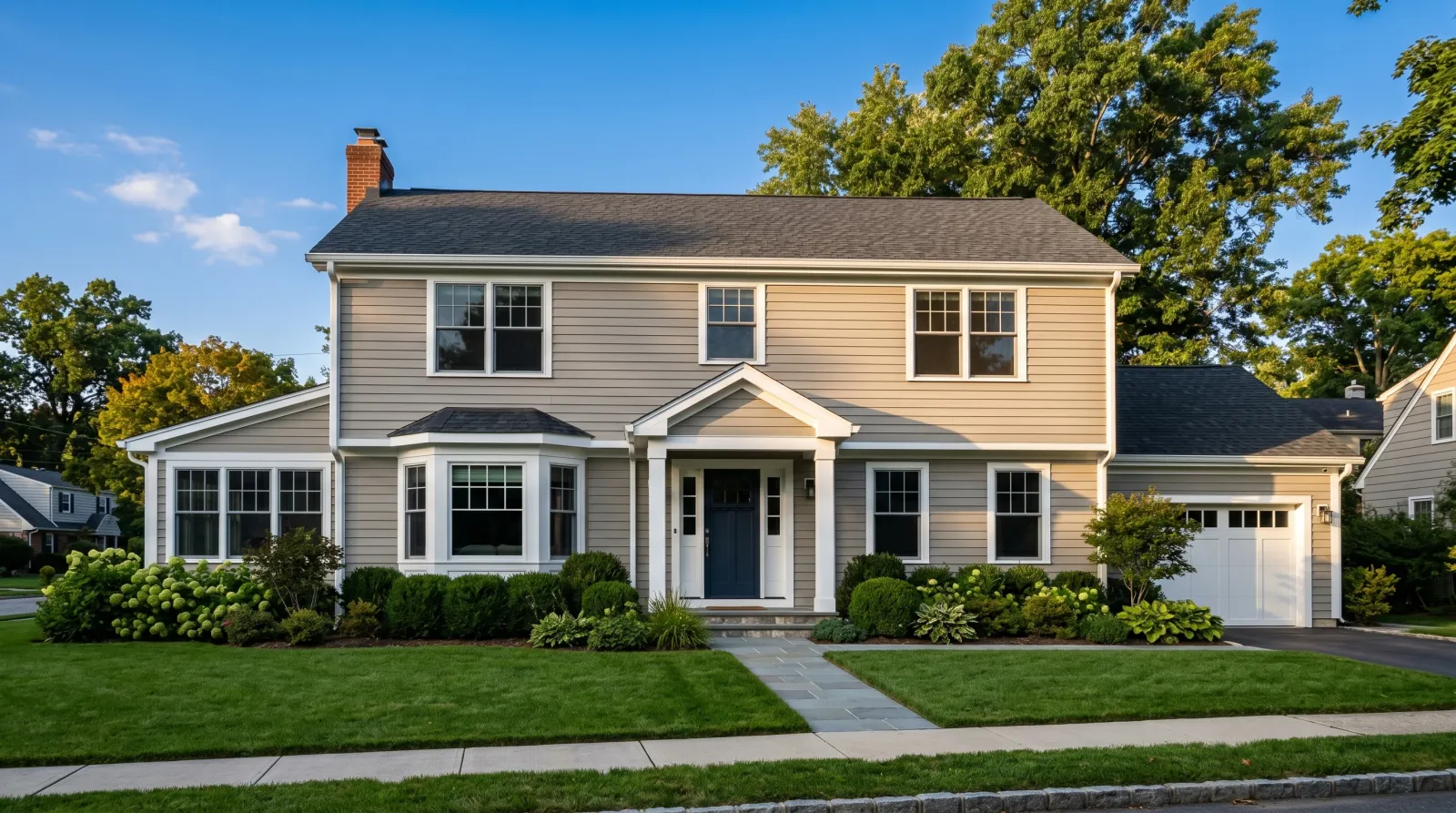
Sherwin-Williams Emerald Exterior3 sheens
Coverage350–400 sq ft / gal per coat
Recoat4 hr
VOCUnder 50 g/L
Full cureAbout 30 days
Sheens FlatSatinGloss
Read this first
The Fast Verdict
Buy it for siding, trim, and fascia that take real sun, in a climate with hard freeze-thaw or brutal summers. The cross-linking resin holds color and fights chalking where mid-tier paint goes pale by year four, and the 35°F application floor buys you spring and fall mornings other paints make you skip. Skip it on shaded elevations, outbuildings, and flips, where SuperPaint costs $25 less and you will not see the gap. And price Duration Exterior before you sign off.
Best for
South and west siding · Fiber cement and sound primed wood · Fascia and exterior trim · Hard freeze-thaw climates · Cool-weather spring and fall days
Skip if
Shaded north walls · Sheds and outbuildings · Rentals and flips · You need a true semi-gloss · You want maximum film build and a lifetime warranty
What it's good at
- Color retention on south and west walls — a 2019 slate blue still reads as the color I mixed
- Peel and blister resistance on fiber cement and sound primed wood
- Self-priming over clean, dull, sound previously painted siding
- A 35°F application floor that stretches the season on both ends
- Brushing, rolling, and spraying clean once the paint is at temperature
- One-stop sourcing — tint, primer, sheen advice, and brushes from the same counter
What it's not good at
- The price — 12 to 15 gallons on a 2,500 sq ft two-story runs north of $1,200 before trim
- Living up to the paint-and-primer claim on bare cedar, raw fiber cement, or chalking paint
- Sheen choice — three sheens only, and the satin-to-gloss jump reads shinier than most people want on fascia
- Working clean down near the 35°F floor, where it thickens and drags
- Film build and warranty against Duration, which beats it on both for less money
- Touch-ups after a season of UV, where the fresh spot flashes against the weathered wall
Same shelf, different cans
Which Emerald Can Are You Buying?
The Emerald name covers a pile of products and people grab the wrong can all the time. This review is the standard exterior acrylic latex. Here is where to go if you need something else.
Emerald Exterior Acrylic Latex (this review)
BaseExterior acrylic latex with cross-linking resin
SheensFlat, Satin, Gloss
Buy it if
Siding, trim, fascia, or masonry that takes sun, and you want the color to still read right at year seven.
Avoid if
The wall is shaded, the building is a shed, or you need a true semi-gloss on trim.
Emerald Rain Refresh Exterior
BaseExterior acrylic latex with a hydrophobic self-cleaning film
Buy it if
Dirt, pollen, algae, or road film is the real enemy, and rain reaches the walls that get filthy.
Avoid if
The house stays clean on its own, or you want the wider standard Emerald color deck.
Emerald Interior Acrylic Latex
BaseInterior wall paint
Buy it if
Interior walls and ceilings, especially rooms that get wiped down.
Avoid if
Anything outdoors. Interior film cracks out there inside two seasons.
Emerald Designer Edition
BaseInterior wall paint on a curated 200-color deck
Buy it if
Deep, saturated interior color from the curated collections, with a flat that still wipes clean.
Avoid if
You are painting exterior anything, or you want a color from outside the collections.
Emerald Urethane Trim Enamel
BaseWaterborne urethane-modified alkyd enamel
Buy it if
Cabinets, interior trim, doors, and millwork — and it is rated for exterior trim too.
Avoid if
You are covering broad siding fields. Wrong tool and wrong price per square foot.
Numbers, not adjectives
Spec Sheet
- Coverage
- 350–400 sq ft / gal per coat
- Sheens
- Flat, Satin, Gloss
- Touch dry
- 1–2 hr
- Recoat
- 4 hr
- Full cure
- About 30 days
- Application temp
- 35°F and rising (low-temp formula)
- VOC
- Under 50 g/L (acrylic latex base)
- Primer
- Self-priming on sound, prepped surfaces; prime bare wood, raw fiber cement, and chalky old paint
- Surfaces
- Wood, fiber cement, hardboard, primed metal, masonry, stucco, vinyl, aluminum
- Sizes
- Quart, gallon, 5-gallon
- Price
- $90–110 / gal; sale dips near $75
Application Settings That Work
- Brush
- Brushes and rolls smooth and sprays clean once it is at temperature. It runs a little thick out of the can in cool weather, so warm the paint before you start rather than thinning your way out of it. Two full coats on a big color jump — hide is good over a close color, but there are no shortcuts going light over dark.
- Primer
- Self-priming holds on sound, clean, dull, previously painted siding, and that is a real labor save on a repaint. It does not hold on bare wood, raw fiber cement, or chalking paint. Spot-prime knots and end grain with a stain-blocking primer, use the right primer on raw fiber cement, and bond-prime or condition anything still chalking after a wash. The prep is the job; the paint is the easy part.
Dry Times, Rain, and the 35-Degree Floor
Touch dry runs 1 to 2 hours and you can recoat at 4, which means a wall a day is realistic on most houses. Full cure is about 30 days. The number that decides your schedule is rain: give it roughly four hours before a light shower can hit it, longer in cool or humid weather, and do not start a wall with weather inside that window. The 35°F floor is real and it is useful — most exterior latex wants 50°F to cure right, and I have cut in fascia at 40°F in late October with this and had it set fine. Watch the dew point, not just the thermometer, and stop early enough in the afternoon that the film sets before the temperature drops. Down near the floor the paint goes stiff in the can and drags on a brush, so let it warm up before you fight it.
Mid-project panic
When It Goes Wrong, and How to Fix It
Brown weeping and stains bleeding through at the laps
Why it happens. Bare cedar or redwood tannins coming through the topcoat. The paint-and-primer line trips people up here: self-priming means the film bonds and builds on a sound, previously painted surface without a separate primer. It is not a stain blocker and it is not a tannin sealer.
The fix. Spot-prime knots, end grain, and any bare wood with a stain-blocking primer before the topcoat, and do it before the first coat, not after you see the stain. If it already bled, the stained area has to be primed and recoated — Emerald over the top of a bleeding tannin will just do it again inside a year.
New paint letting go on old chalky siding
Why it happens. Chalk kills adhesion no matter what the topcoat claims. A weathered film breaks down to a powder, and paint applied over powder is bonded to the powder, not the substrate. Raw fiber cement causes a similar failure for a different reason — the alkaline surface needs the right primer or you get efflorescence and adhesion trouble.
The fix. Wash, then scuff, then rub the surface with a dark cloth. If chalk still comes off, prime with a masonry conditioner or a bonding primer before you topcoat. On raw fiber cement, use the primer the substrate calls for rather than counting on the paint-and-primer claim.
Brush marks and drag on a cold morning
Why it happens. Near that 35°F floor the paint gets thick in the can and stops releasing off the brush cleanly. It will still cover, but you are dragging a stiffening film and leaving ridges behind you.
The fix. Let the cans warm indoors overnight and start on the sun side of the house. Do not fight gummy paint at 38°F just to bill the day. If the film is already ridged, sand it back flat once it has cured and recoat in warmer conditions.
A touch-up patch that flashes against the rest of the wall
Why it happens. Normal exterior behavior, but it surprises people. Inside the first month a touch-up blends fine. After a season of UV, the surrounding film has weathered a little and the fresh spot reads brighter and slightly different in sheen, especially in raking afternoon light.
The fix. Do not spot-dab a weathered wall. Recoat to a natural break — the full board run to a corner, the whole trim piece, the whole elevation if that is what it takes. Keep a labeled gallon from the job so the color is at least right when you do.
Side by side
Emerald Exterior vs Duration vs SuperPaint
This is the decision that actually gets made in the store, and the counter does not always frame it honestly. All three are Sherwin-Williams exterior paints, and they win on different things.
| Emerald Exterior | Duration Exterior | SuperPaint Exterior | |
|---|---|---|---|
| Street price per gallon | $90–110 | About $5 less than Emerald | $55–70 |
| Color retention on the sun side | The reason you buy it. Holds where mid-tier paint has gone flat by year four. | Strong, with painters reporting five-year jobs still looking new. | Fades faster on a south or west gable. |
| Film build | Standard premium build. | PermaLast — roughly 70 percent thicker film. | Mid-tier build. |
| Warranty | No lifetime limited warranty on this line. | Lifetime limited warranty. | Mid-tier warranty. |
| Sheens | Flat, Satin, Gloss — no true semi-gloss. | Full exterior range. | Full exterior range. |
| Cold-weather window | 35°F and rising. | Standard exterior window. | Standard exterior window. |
| Where it wins | Sun-beaten siding, trim, and fascia where the color has to still read right at year seven. | Houses that take hail and hard winters, where film build and warranty matter most. | Shaded and north-facing elevations, sheds, rentals. |
Street price per gallon
Emerald Exterior$90–110
Duration ExteriorAbout $5 less than Emerald
SuperPaint Exterior$55–70
Color retention on the sun side
Emerald ExteriorThe reason you buy it. Holds where mid-tier paint has gone flat by year four.
Duration ExteriorStrong, with painters reporting five-year jobs still looking new.
SuperPaint ExteriorFades faster on a south or west gable.
Film build
Emerald ExteriorStandard premium build.
Duration ExteriorPermaLast — roughly 70 percent thicker film.
SuperPaint ExteriorMid-tier build.
Warranty
Emerald ExteriorNo lifetime limited warranty on this line.
Duration ExteriorLifetime limited warranty.
SuperPaint ExteriorMid-tier warranty.
Sheens
Emerald ExteriorFlat, Satin, Gloss — no true semi-gloss.
Duration ExteriorFull exterior range.
SuperPaint ExteriorFull exterior range.
Cold-weather window
Emerald Exterior35°F and rising.
Duration ExteriorStandard exterior window.
SuperPaint ExteriorStandard exterior window.
Where it wins
Emerald ExteriorSun-beaten siding, trim, and fascia where the color has to still read right at year seven.
Duration ExteriorHouses that take hail and hard winters, where film build and warranty matter most.
SuperPaint ExteriorShaded and north-facing elevations, sheds, rentals.
Buy Emerald when color retention on a sun-beaten wall is the whole point and you want the deck and sheen options that come with it. If what you actually want is film build and weather armor on a house that takes hail and hard winters, price Duration first and make the store justify the switch — it carries PermaLast, a roughly 70 percent thicker film, and a lifetime limited warranty Emerald Exterior does not have, for about five dollars a gallon less. And on a lot of houses the smartest spec is both: Emerald on the elevations the sun cooks, SuperPaint on the shaded ones.
If not this one
Honest Alternatives
SW
Sherwin-Williams SuperPaint Exterior$55–70 / gal
SW's mid-tier exterior, and a genuinely good paint. Self-priming, mildew-resistant, and fine on shaded and north-facing walls. It loses on color retention and chalk resistance on the sun side. The smart move on most houses is Emerald on the sun-beaten walls and SuperPaint on the rest.
Full review →SW
Sherwin-Williams Duration ExteriorAbout $5 / gal under Emerald
The one the store will not raise. PermaLast builds a roughly 70 percent thicker film and it carries a lifetime limited warranty Emerald Exterior does not, for less money. Painters with five-year Duration jobs in snow, hail, and hard sun keep saying the finish still looks new.
Full review →BM
Benjamin Moore Aura Exterior$90–105 / gal
The closest premium rival. On deep, saturated colors Aura's color-lock resin holds dark tones a step better. Costs about the same, sometimes a touch more, and you need a BM dealer instead of an SW store.
Full review →SW
Sherwin-Williams Emerald Rain Refresh$100–115 / gal
The sibling built for moisture. The self-cleaning film sheds dirt with rainfall and holds up better in damp weather, which matters where mildew and grime are the real enemy. Costs more than standard Emerald and the color deck is narrower.
Full review →Questions people actually ask
Emerald Exterior Questions, Answered
Is Emerald Exterior worth it over SuperPaint?
On a south or west wall that bakes in the sun, yes. Emerald holds its color longer and resists fading and chalking better than SuperPaint. On a shaded north wall or a detached shed you will repaint in eight years anyway, SuperPaint at $25 less a gallon does the job. Pay up for the walls the sun hits.
Does Emerald Exterior really not need primer?
On sound, previously painted siding that is clean and dull, yes — the self-priming claim holds there. On bare wood, raw fiber cement, or chalky old paint, it does not. Spot-prime knots, end grain, and bare patches first. Self-priming is a topcoat feature, not a substitute for prep on raw substrates.
How long before rain can hit it?
About four hours of dry time before it can shed a light shower, longer in cool or humid weather. Do not start a wall with rain inside that window. If you routinely have to beat weather, Emerald Rain Refresh is the sibling built to handle moisture sooner and to self-clean over time.
What sheen should I use on siding?
Satin for most lap siding and fiber cement — it cleans better than flat and hides more than gloss. Flat on older walls with surface flaws you would rather not advertise. Gloss for doors, shutters, and railings where you want the shine and the wipe-ability. There is no true semi-gloss in this line, so plan the sheen before you tint.
Emerald Exterior or Duration Exterior?
Emerald if color retention on sun-beaten siding is the point. Duration if film build and weather armor are — it carries PermaLast, builds a roughly 70 percent thicker film, and backs a lifetime limited warranty Emerald Exterior does not have, for about five dollars a gallon less. Plenty of working painters spend Emerald money on Duration for exactly that reason.
How cold can I paint with it?
35°F and rising, which is a real advantage over the 50°F floor most exterior latex carries. That buys you spring and fall mornings other paints make you skip. Watch the dew point, warm the cans before you start, and stop early enough that the film sets before the evening drop.
How many coats does it take?
Two. It hides in two coats over a close color, and a big color jump still wants two full coats with no shortcuts. Recoat is 4 hours, so a wall a day is realistic on most houses.
How much paint does a two-story house take?
Roughly 12 to 15 gallons on a 2,500 sq ft two-story at 350 to 400 sq ft per gallon per coat, which is north of $1,200 in Emerald before you touch the trim. Time the buy to one of SW's 30 to 40 percent sales and buy 5-gallon buckets; on 12-plus gallons that difference is real money.
Can I use Emerald Interior outside, or Emerald Exterior inside?
No on the first one. The exterior resin is built to flex and breathe through freeze-thaw and summer expansion, and interior film cracks out there inside two seasons. Exterior paint indoors is the wrong price and the wrong sheen range for a wall, so use the interior line for interior work.
Keep exploring
All Sherwin-Williams paint reviewsBest exterior paint, testedHow to stop exterior chalkingAura vs Emerald, head to head
We may earn a commission when you buy through the retailer link above. It never changes the score or the verdict.
Ask a Question