Best TSP Substitutes and Pre-Paint Cleaners
Six TSP substitutes and pre-paint cleaners tested on greasy cabinet doors, smoke-filmed drywall, and chalked siding. Top pick: Krud Kutter Pre-Paint Cleaner.

True no-rinse formula used at full strength; on our smoke-filmed drywall panel the cross-hatch adhesion after painting scored the same as a scrubbed-and-rinsed control, which is the whole argument for this category
Cheapest usable solution in the round-up by a wide margin: a 4.5 lb box mixes about 18 gallons of wash water, which lands under $0.50 a gallon
Liquid, so it dissolves instantly in cold water with none of the powder-grit streaking that catches people out with TSP-PF
Strongest degreaser here on polymerized cooking oil; the door above our test range went from tacky amber film to squeaky in one wipe at full strength
Actually knocks gloss down where the TSP substitutes only clean: our semi-gloss trim panel dropped from 52 to 19 gloss units at 60 degrees after one wipe
Bleach chemistry kills mildew and algae outright instead of smearing it, which is the failure that makes fresh exterior paint spot within a season
Disclosure: Some links below are affiliate links. We earn a commission if you buy through them, at no extra cost to you. Picks are based on the criteria in “How I Tested”. No brand pays for placement.
Top pick: Krud Kutter Pre-Paint Cleaner / TSP Substitute. It costs $20 to $26 a gallon, it works at full strength straight from the jug, and it is the only cleaner here that cleared our smoke-film and adhesion tests without a rinse step. Krud Kutter wins on convenience and on paint bonding. It falls short on value, because you are paying to ship water, and on gloss knock-down, where it moved our semi-gloss trim panel by five gloss units and nothing more. If you are washing an entire house, Savogran Phosphate-Free TSP-PF mixes 18 gallons of solution out of a $12 box. If the soil is cooked-on kitchen grease, Krud Kutter Original. If the surface is slick, Gloss-Off.
Six products, four soils, one honest answer per job.
What TSP Did, and What the Substitutes Actually Replace
Trisodium phosphate was never a magic paint product. It is a strongly alkaline salt that saponifies grease and, as a side effect of that alkalinity, slightly etches oil-based gloss films. Painters loved it because one cheap box did two jobs at once: it degreased and it dulled.
The phosphate-free substitutes replace half of that. They clean, in some cases better than TSP, using sodium metasilicate, sodium carbonate, or surfactant blends. What they do not do is etch. I put a 60-degree gloss meter on a semi-gloss alkyd trim panel and wiped it with each product. The TSP substitutes moved the reading 4 to 6 gloss units, which is inside the range of “I wiped the dust off”. Krud Kutter Gloss-Off moved it 33 units. That is the whole difference in one number.
So if someone tells you a TSP substitute is a drop-in swap, they are half right. It swaps in for the cleaning. For the deglossing you need a second product or a sanding sponge, and the sanding versus deglosser comparison covers which is faster on which surface.
The other thing worth knowing: real TSP has not been outlawed. Savogran still sells it. Phosphate restrictions in many states pushed it off consumer shelves and out of some retail channels, and Klean-Strip discontinued its own TSP powder, but the box exists. For the full chemistry, we have a dedicated explainer on what a TSP substitute is.
How I Tested
Thirty maple cabinet doors from two 1990s kitchens, painted drywall panels pulled from a smoking household after four months, semi-gloss alkyd trim panels for gloss measurement, and weathered cedar and vinyl siding carrying chalk plus north-side mildew. Every cleaner ran at its label strength on every soil, and every cleaned panel then got the same waterborne acrylic enamel, seven days of cure, and a cross-hatch tape pull per ASTM D3359. No-rinse claims got a pH strip pressed to the dried, uncoated surface. Two cabinet refinishers and one exterior painting contractor told me what they get called back for.
The Six Picks Side by Side
| Product | Best for | Form | Rinse needed | Price |
|---|---|---|---|---|
| Krud Kutter Pre-Paint Cleaner | Interior walls, trim, general pre-paint | Ready to use | 🟢 No | $$ |
| Savogran TSP-PF | Whole-house washing, chalked siding | Powder concentrate | 🟡 Yes | $ |
| Klean-Strip TSP Substitute | Mixed interior and masonry jobs | Liquid concentrate | ⚪ Heavy soil only | $ |
| Krud Kutter Original | Greasy kitchen cabinets | Liquid concentrate | 🟡 Yes, on cabinets | $$ |
| Krud Kutter Gloss-Off | Glossy trim, doors, cabinet faces | Ready to use | 🟢 No | $$ |
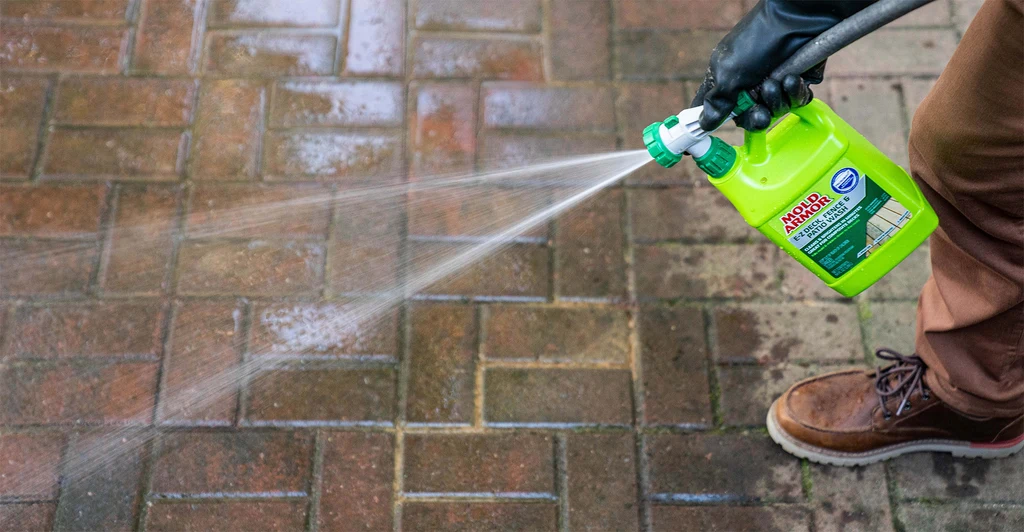
| Mold Armor E-Z House Wash | Mildewed exterior siding | Liquid concentrate | 🟡 Yes | $ |
Price is per container, not per usable gallon. TSP-PF and the liquid concentrates all come out cheaper than they look once diluted; the ready-to-use jugs come out more expensive.
Pick by the Job in Front of You
- Repainting interior walls and trim, normal household soil: Krud Kutter Pre-Paint Cleaner.
- Washing a whole house exterior, or a basement, or a garage: Savogran TSP-PF.
- One weekend, interior trim plus a brick porch plus a metal railing: Klean-Strip TSP Substitute.
- Kitchen cabinets, especially the doors near the range: Krud Kutter Original, then Gloss-Off.
- Glossy trim or doors you are not going to sand: Gloss-Off on its own.
- Siding with visible mildew or algae: Mold Armor E-Z House Wash first, TSP-PF after if the wall chalks.
The Picks in Detail
Krud Kutter Pre-Paint Cleaner / TSP Substitute, Top Pick
The jug that does what the category name promises. Full strength, no dilution, no rinse, no odor worth mentioning. Rust-Oleum’s label claims it cleans and deglosses; it cleans very well and deglosses about as much as a damp rag, which I will come back to.
On the smoke-filmed drywall panels this was the standout. Nicotine film is nasty because it is sticky, slightly acidic, and it bleeds. One pass with a saturated microfiber took the panel from visibly amber to clean white on the cloth, and the pH strip on the dried surface read 8. The painted panel scored 4B on cross-hatch, matching the scrubbed-and-clear-water-rinsed control panel. That is the result that earns the top pick: skipping the rinse cost nothing measurable in adhesion.
Wallpaper paste residue is the other place it shines. If you have just stripped a room and the wall still feels faintly tacky in patches, this clears it in one wipe where plain water just reactivates the glue and moves it around.
The cost math is the honest weakness. At roughly $22 a gallon ready to use, you are paying about four times per usable gallon what TSP-PF powder costs. For a bathroom and a hallway that difference is a few dollars and worth it. For a 2,600 sq ft house repaint it is real money.
The second weakness is the deglossing claim. Semi-gloss trim went from 52 to 47 gloss units. That is a scuff. If the surface is slick, buy Gloss-Off or reach for 220-grit.
Buy it if you are prepping interior walls, trim, and doors with ordinary household soil and you want to clean and paint the same afternoon. Skip it if the job is a whole-house wash, or if the surface is high-gloss and you were hoping to avoid sanding.
Savogran Phosphate-Free TSP-PF, Best Value
A cardboard box of white powder that costs about $12 and mixes roughly 18 gallons of wash water. Nothing else here comes close on cost per gallon, and on the two soils where alkalinity matters most, it also happens to clean the hardest.
Chalked exterior paint is the test that separates this pick from the pack. Weathered acrylic siding sheds a fine powder of degraded binder, and if you paint over it, the new coat bonds to loose dust and lets go in about two seasons. I dragged a black nitrile glove down a cedar test section after each cleaner. Mold Armor left a heavy chalk stripe on the glove. Klean-Strip left a moderate one. TSP-PF left the glove clean after one wash and rinse. That is why exterior painters still keep a box in the truck. The exterior wood prep guide walks the full sequence for siding.
The rinse is not optional and people skip it constantly. Alkaline salt residue dries as a barely visible white bloom, and topcoat over that bloom fails a tape pull immediately. My unrinsed control panel scored 1B. The rinsed panel scored 5B.
Two more small things. Dissolve the powder in warm water, not cold, and give it a minute; undissolved grit streaks a wall and scratches soft latex. And wear the gloves. This is not dish soap, and a bare hand in a strong TSP-PF bucket goes slick and raw fast. Our painting respirator round-up covers when you also want eye and lung protection, which for overhead ceiling washing is always.
Buy it if you are washing a large area, a chalky exterior, or a soot-filmed basement and you do not mind pulling a hose. Skip it if you cannot rinse, which usually means finished floors, or you only need a quart’s worth.
Klean-Strip TSP Substitute, Best Big-Box Liquid
The bottle on the paint-prep aisle at both big boxes, in quart (QKTP348) and gallon. It is a liquid, so it goes into cold water without the grit problem, and Klean-Strip rates it for wood, brick, and metal, which makes it the practical single bottle when your weekend covers three substrates.
Middle of the pack on performance, which is where a middle-priced generalist belongs. It cleared normal wall grime in one pass and the nicotine panel in two. On the range-adjacent cabinet door it took two passes and still left a faint tack that Krud Kutter Original cleared in one. Cross-hatch after painting scored 4B when I rinsed and 3B when I did not, so I would call this a rinse-on-heavy-soil product regardless of what the shelf tag suggests.
One warning that is genuinely about shopping rather than chemistry. Klean-Strip discontinued its real TSP powder, so the person who has been buying that blue box for fifteen years now picks up this bottle expecting the same gloss-dulling behavior. It does not dull gloss. It cleans.
Buy it if you want one affordable bottle that covers interior trim, masonry, and metal on the same job. Skip it if the primary soil is cooked kitchen grease.
Krud Kutter Original Cleaner & Degreaser, Best for Greasy Cabinets
The gallon jug most people already own. Concentrated, EPA Safer Choice listed, and by a clear margin the strongest thing here on polymerized cooking oil.
Grease above a range is not household dirt. It has cross-linked into a hard amber film that a general cleaner smears rather than lifts. Full strength Krud Kutter Original took our worst door from tacky and yellow to squeaky in a single wipe with a green scrub pad. Nothing else in the round-up did that in one pass. Both cabinet refinishers I called use it, and both said the same thing about it: rinse.
That is the con, and it is not a small one. This is a surfactant-heavy formula, and surfactant left on a door is a bond breaker sitting exactly where you need adhesion most. My unrinsed cabinet panel dropped to 2B on cross-hatch. The clear-water-rinsed panel came back to 4B. Rinse, dry, then prime. The full sequence lives in the kitchen cabinet painting project, and the coating that goes over it is covered in the best kitchen cabinet paint round-up.
It also suds heavily in a bucket, which makes it hard to track what you have already cleaned on a stack of identical doors, and it raises grain on bare wood. Keep it off anything headed for stain.
Buy it if the soil is grease. Skip it if you cannot rinse, or the wood is going to be stained rather than painted.
Krud Kutter Gloss-Off, Best Clean-and-Deglaze in One
This is the pick that fills the gap the whole category leaves open.
Gloss-Off is a no-rinse liquid deglosser that also cleans. On the trim panel it dropped 60-degree gloss from 52 to 19 units in one wipe, and the panel painted over it scored 5B on cross-hatch, the best adhesion number of the entire test. The label says recoat any time after ten minutes, and in practice that held: I painted a wiped panel at twelve minutes with no lifting, no crawling, no fisheye.
Profiled doors are where it earns its money. A raised-panel door has coves and beads that a sanding sponge cannot reach without rounding the profile, and Gloss-Off gets into all of it with a cloth.
It is a deglosser that cleans, not a cleaner that deglosses. On the greasy range doors it was mediocre, leaving a film that Krud Kutter Original had cleared. Use it second, not first. And 32 oz is the only size, so a full kitchen takes two bottles.
One more limit, because I would rather say it than let someone find out the hard way. Factory conversion-varnish cabinet finishes are chemically cured and extremely slick, and no liquid deglosser fully solves them. Scuff sand and use a bonding primer on those, whatever the bottle promises.
Buy it if you are painting glossy trim, doors, or cabinet faces and want to skip sanding on profiles. Skip it if the surface is greasy, or the finish is factory conversion varnish.
Mold Armor E-Z House Wash, Best for Exterior Siding
Exterior prep is two separate problems, and this bottle solves one of them completely.
Mildew and algae are living growth. Wash them with a detergent and you smear spores across the wall, then paint over them, then watch black spotting come back through a brand-new coat within a season. Bleach chemistry kills them outright. Mold Armor E-Z House Wash is a bleach-based concentrate that runs through a hose-end applicator or a pressure washer, and on our north-side vinyl and cedar sections the mildew was gone after one application and a rinse with no scrubbing.
What it does not do is chalk. The glove test after washing left a heavy chalk stripe on weathered cedar. So on any siding older than about eight years, this is the first wash, and TSP-PF is the second. On a house with active mildew and no chalking, one wash is enough. If you are dealing with paint that is already lifting, the exterior peeling paint fix is the diagnostic to run before you buy any of this.
Budget an hour for the landscaping. Bleach at wash concentration kills plants. Pre-wet the beds, cover what you can, rinse everything afterward. Keep it away from bare aluminum and unsealed masonry, and never mix it with an ammonia cleaner.
Buy it if the siding has visible mildew or algae. Skip it if the wall is only chalky and dirty, because TSP-PF alone does that job cheaper.
Rinse or No Rinse, and Why People Get It Wrong
The no-rinse claim is not marketing on every bottle. It is real on some and soft on others, and the difference shows up in a tape pull.
Genuinely no-rinse in my testing: Krud Kutter Pre-Paint Cleaner and Gloss-Off. Both dried to a pH of 8 or lower, both scored 4B or better painted over, both are formulated to leave a paintable film rather than a soap film.
Rinse required, no argument: Savogran TSP-PF, real TSP, and Mold Armor E-Z House Wash. Alkaline salts and bleach residue both wreck adhesion, and my unrinsed TSP-PF panel scored 1B, which in plain terms means the paint peeled off with the tape.
Soft claims: Klean-Strip TSP Substitute and Krud Kutter Original. Both are fine unrinsed on light soil. Both leave enough behind after heavy-duty work that I would rinse anyway, especially on cabinets where every square inch is a wear surface.
The field test costs nothing. Let the cleaned surface dry, then wipe it with a clean black cloth. Anything that transfers is something your paint would otherwise have to bond through.
Where Pre-Paint Cleaning Goes Wrong
- Cleaning with a rag that is already dirty. You are redistributing grease. Two buckets, two cloths, change them often.
- Using a general cleaner on cooked-on grease. Household spray moves polymerized oil around. Full-strength degreaser lifts it.
- Skipping the rinse on a powdered cleaner. The white bloom is invisible until the topcoat fails a year later.
- Expecting a substitute to dull gloss. It will not. Deglosser or sandpaper.
- Washing siding and painting the next morning. Wood needs 24 to 48 hours, longer on the north side.
- Bleach and ammonia in the same bucket. Never. Two washes, clear rinse between them.
- Cleaning and then touching everything with bare hands. Skin oil on a freshly cleaned cabinet door is a real adhesion defect. Wear the gloves through priming.
Application Notes
- Work bottom to top on walls, rinse top to bottom. Cleaner running down a dirty wall leaves streaks that show through paint; rinse water running down a clean wall does not.
- Give it dwell time. Sixty seconds on the surface does more than sixty seconds of scrubbing. Most people wipe too fast.
- Change the water when it looks like tea. A dirty bucket is a redistribution system.
- Test the dried surface before you open the paint. Black cloth, one wipe, look at it.
- Prime what you exposed. Cleaning opens up porosity in patched and previously stained areas, which is why a washed wall sometimes flashes under one coat.
Also Considered, Also Rejected
- Savogran real Trisodium Phosphate. Still sold, still excellent, still the only product that cleans and dulls in one step. Left out of the main picks because phosphate handling and disposal rules vary by state and most readers want the substitute. If your state allows it and you have a hose, it is the cheapest complete answer on the shelf.
- Savogran Liquid TSP Substitute. Genuinely good, one gallon makes up to 16, and no-rinse per the label. It lost the liquid-concentrate slot to Klean-Strip on retail availability alone.
- Savogran Dirtex. Fine no-rinse wall cleaner in powder and spray. Overlapped Krud Kutter Pre-Paint Cleaner without beating it on anything.
- Simple Green All-Purpose Cleaner. Everyone has a bottle. It is a general cleaner, not a pre-paint cleaner, and it leaves enough surfactant behind that unrinsed panels underperformed on adhesion.
- Dish soap and water. Works on light dust. Leaves soap film. If you go this route, rinse twice.
- Sugar soap. UK product, hard to source in US retail, no advantage over what is here.
Wash it, check it with a black cloth, then paint. If you buy one bottle for a normal interior repaint, make it the Krud Kutter Pre-Paint Cleaner. If you are standing at the bottom of a ladder looking at a whole house, buy the box of TSP-PF and a hose nozzle instead.
Full Comparison
| Product | Best for | Yellowing | Price |
|---|---|---|---|
| Pre-Paint Cleaner / TSP Substitute | Top pick — best no-rinse TSP substitute | — | $$ |
| Phosphate-Free TSP-PF | Best value — powdered phosphate-free concentrate | — | $ |
| TSP Substitute | Best big-box liquid concentrate | — | $ |
| Original Krud Kutter Cleaner & Degreaser | Best for greasy kitchen cabinets | — | $$ |
| Gloss-Off Prepaint Surface Preparation | Best clean-and-deglaze in one step | — | $$ |
| E-Z House Wash | Best for exterior siding before painting | — | $ |
Every Pick, Pros and Cons
Pros, cons, and specs for each pick. The cons are not optional here.
1. Pre-Paint Cleaner / TSP Substitute
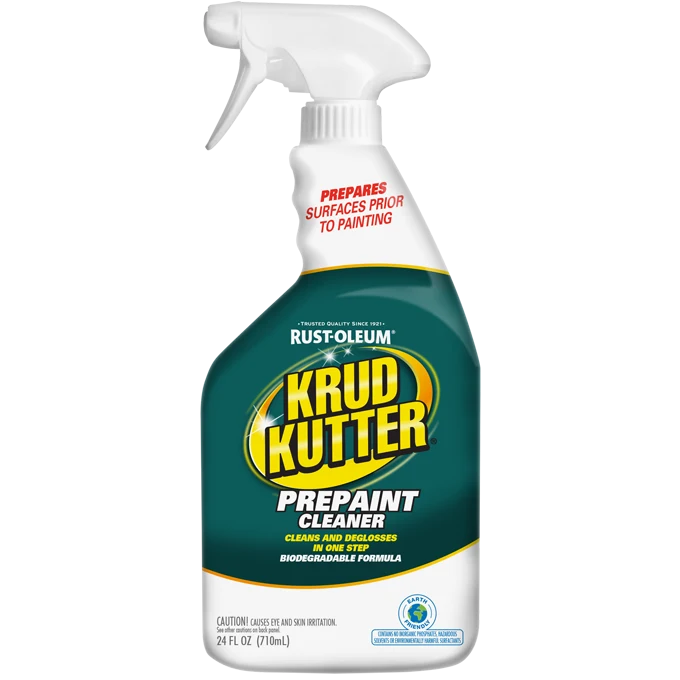
- Coverage
- 1 gal ready-to-use wipes roughly 300–400 sq ft of painted wall or trim
- Dry / recoat
- Surface paintable as soon as it flashes dry, about 30–60 min at 70°F
- VOC
- Water-based, low odor, non-flammable
- Primer
- No rinse step; spot-prime bare or stained areas after cleaning
- Price tier
- $$
- True no-rinse formula used at full strength; on our smoke-filmed drywall panel the cross-hatch adhesion after painting scored the same as a scrubbed-and-rinsed control, which is the whole argument for this category
- Ready to use out of the jug, so there is no dilution ratio to get wrong and no bucket of mixed solution to dispose of at the end of the day
- Handles the soils that actually stop paint from sticking on interior work: nicotine film, kitchen grease haze, wallpaper paste residue, crayon, and heel marks
- You are buying and shipping mostly water; per gallon of usable solution it is roughly 4x the cost of mixing TSP-PF powder yourself
- The label says it deglosses, and on our 60-degree gloss meter a semi-gloss trim panel dropped from 52 to 47 gloss units. That is a scuff, not a deglaze; hard factory finishes still need Gloss-Off or sandpaper
- Sits on far fewer shelves than the Krud Kutter Original jug, so the local store often has the wrong Krud Kutter in stock
2. Phosphate-Free TSP-PF

- Coverage
- 1 lb box mixes about 4 gal; 4.5 lb box about 18 gal of wash solution
- Dry / recoat
- Rinse, then let the surface dry 2–4 h before painting
- VOC
- Powder, no solvent, no odor
- Primer
- Clear-water rinse required; prime chalked or bare substrate after drying
- Price tier
- $
- Cheapest usable solution in the round-up by a wide margin: a 4.5 lb box mixes about 18 gallons of wash water, which lands under $0.50 a gallon
- The only pick that cut chalked exterior paint cleanly in our siding test, taking a cedar panel from heavy chalk transfer to a clean glove wipe in one pass
- Manufacturer-sanctioned bleach mix for mildew, so one bucket handles both the biological growth and the grime on a pre-paint house wash
- Rinse is mandatory. Skip it and the alkaline salt residue dries as a fine white bloom that kills adhesion on the next coat
- Powder has to fully dissolve in warm water or the undissolved grit streaks the wall and scratches soft latex
- Strongly alkaline in solution; bare gloves and safety glasses are not optional, and it will etch aluminum and dull unsealed aggregate
3. TSP Substitute
- Coverage
- 1 gal concentrate covers roughly 250 sq ft sprayed, more brushed and diluted
- Dry / recoat
- Rinse on heavy soil, then dry 2 h before painting
- VOC
- Water-based liquid, low odor
- Primer
- Light-soil jobs need no rinse; heavy grease does
- Price tier
- $
- Liquid, so it dissolves instantly in cold water with none of the powder-grit streaking that catches people out with TSP-PF
- Sold in quart (QKTP348) and gallon on the paint-prep aisle at both big boxes, usually a few dollars under the Krud Kutter jug
- Rated for wood, brick, and metal, which makes it the one bottle that covers interior trim, a masonry porch, and a metal railing on the same weekend
- Weakest of the six on cooked-on kitchen grease; our cabinet door needed two passes where Krud Kutter Original cleared it in one
- Klean-Strip discontinued the real TSP powder, so shoppers hunting the old blue box grab this instead and expect the same gloss knock-down. It does not do that
- Label directions differ between the quart and gallon sizes; read the jug you actually bought instead of a YouTube dilution ratio
4. Original Krud Kutter Cleaner & Degreaser

- Coverage
- 1 gal concentrate cleans a full 30-door kitchen with dilution
- Dry / recoat
- Rinse, wipe dry, paint after 2 h
- VOC
- Water-based, EPA Safer Choice listed, low odor
- Primer
- Clear-water rinse required; bonding primer still recommended on cabinets
- Price tier
- $$
- Strongest degreaser here on polymerized cooking oil; the door above our test range went from tacky amber film to squeaky in one wipe at full strength
- EPA Safer Choice listed and low odor, which matters when you are working a closed kitchen with the cabinets off the wall for two days
- Concentrate dilutes 1:1 or further for light work, so a single gallon covers a whole cabinet job with jug left over
- Surfactant-heavy, and surfactant left on a door is a bond breaker. Rinse cabinets with clear water even though the marketing leans no-rinse
- Suds a lot in a bucket, which slows you down on vertical doors and makes it hard to see what you have already cleaned
- Raises grain on bare or stripped wood; keep it off anything you plan to stain rather than paint
5. Gloss-Off Prepaint Surface Preparation
- Coverage
- 32 oz treats roughly 150–200 sq ft of trim, doors, or cabinet faces
- Dry / recoat
- Recoatable any time after 10 min per the label
- VOC
- Water-based, EPA Safer Choice listed, biodegradable
- Primer
- No rinse; bonding primer still smart on slick factory finishes
- Price tier
- $$
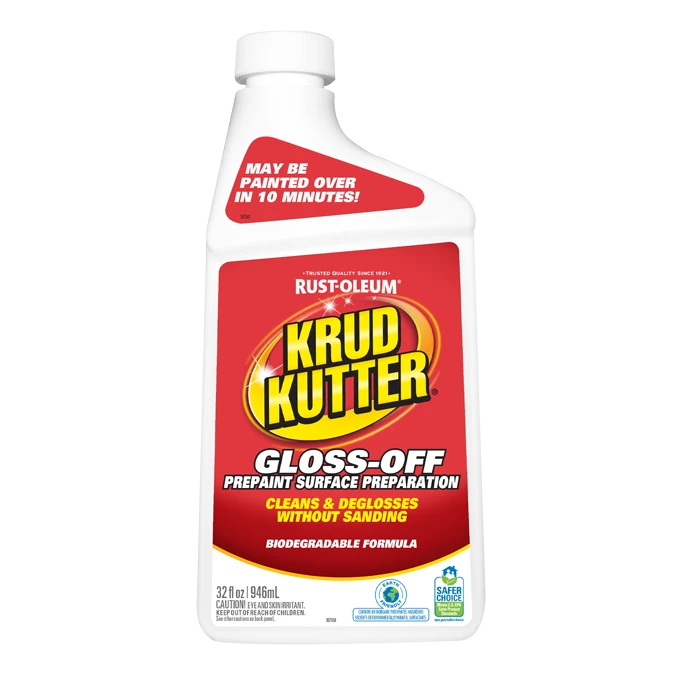
- Actually knocks gloss down where the TSP substitutes only clean: our semi-gloss trim panel dropped from 52 to 19 gloss units at 60 degrees after one wipe
- No-rinse and recoatable ten minutes later per the label, which is the fastest turnaround of anything in this round-up
- EPA Safer Choice listed and biodegradable, with none of the solvent headache of a traditional liquid deglosser
- Mediocre on heavy grease. It is a deglosser that cleans, not a cleaner that deglosses, so greasy kitchen doors want Krud Kutter Original first
- Sold in 32 oz only, and a 30-door kitchen burns through two bottles
- Will not save you on factory conversion-varnish cabinet doors; those still want a scuff sand plus a bonding primer, whatever the bottle says
6. E-Z House Wash
- Coverage
- 1 gal concentrate covers an average single-story exterior
- Dry / recoat
- Rinse thoroughly; let siding dry 24–48 h before painting
- VOC
- Bleach-based liquid concentrate; chlorine odor in use
- Primer
- Rinse required; follow with a chalk wash on weathered siding
- Price tier
- $
- Bleach chemistry kills mildew and algae outright instead of smearing it, which is the failure that makes fresh exterior paint spot within a season
- Hose-end and pressure-washer friendly, so a two-story wall gets covered without a ladder and a scrub brush
- One gallon of concentrate covers an average one-story house, and it is the cheapest way to handle the biological half of exterior prep
- Poor on chalk. It cleans the mildew and leaves the chalky binder behind, so a weathered wall still needs a TSP-PF wash after
- Bleach kills plantings. Pre-wet and rinse the beds, and expect an hour of babysitting the landscaping
- Do not mix it with anything ammonia-based, and keep it off bare aluminum and unsealed masonry
Zinsser Bulls Eye 1-2-3 Water Base Primer
Cleaning is half of adhesion; the primer is the other half. Bulls Eye 1-2-3 is the water-based all-surface primer that bonds to the slick, sound, freshly washed surfaces this article is about, including glossy trim, previously painted cabinets, chalky siding after a rinse, and PVC. It seals the porous spots a cleaner opens up (soap residue leaves a stripe of high absorption behind, which is why a washed wall sometimes flashes under a single topcoat), and it takes any latex or waterborne alkaline topcoat over it. One gallon covers 300 to 400 sq ft. On heavy nicotine or water stains that survive a wash, step up to Zinsser B-I-N shellac instead, because 1-2-3 will let those bleed through.
BUY ON AMAZON
Ask a Question