Best Paint for Sheds in 2026
Five shed paints tested across cedar, T1-11, and metal — UV chalk, freeze-thaw, splatter, and topcoat life. Top pick: Benjamin Moore Aura Exterior.

Color Lock resin holds saturated tones across 5+ years of full-sun exposure — a barn red still reads barn red, not faded clay
Genuinely covers in one coat on a primed-or-tinted-to-near base — the one-coat claim isn't marketing on T1-11 in mid-tones
Self-cross-linking acrylic chemistry — the cured film bonds to itself and to a properly primed galvanized panel better than competing exterior latex
Penetrates into cedar grain instead of forming a surface film — won't peel, ever, because there's no film to fail
$35–$45/gal stocked everywhere; a whole 100 sq ft shed costs under $50 in paint
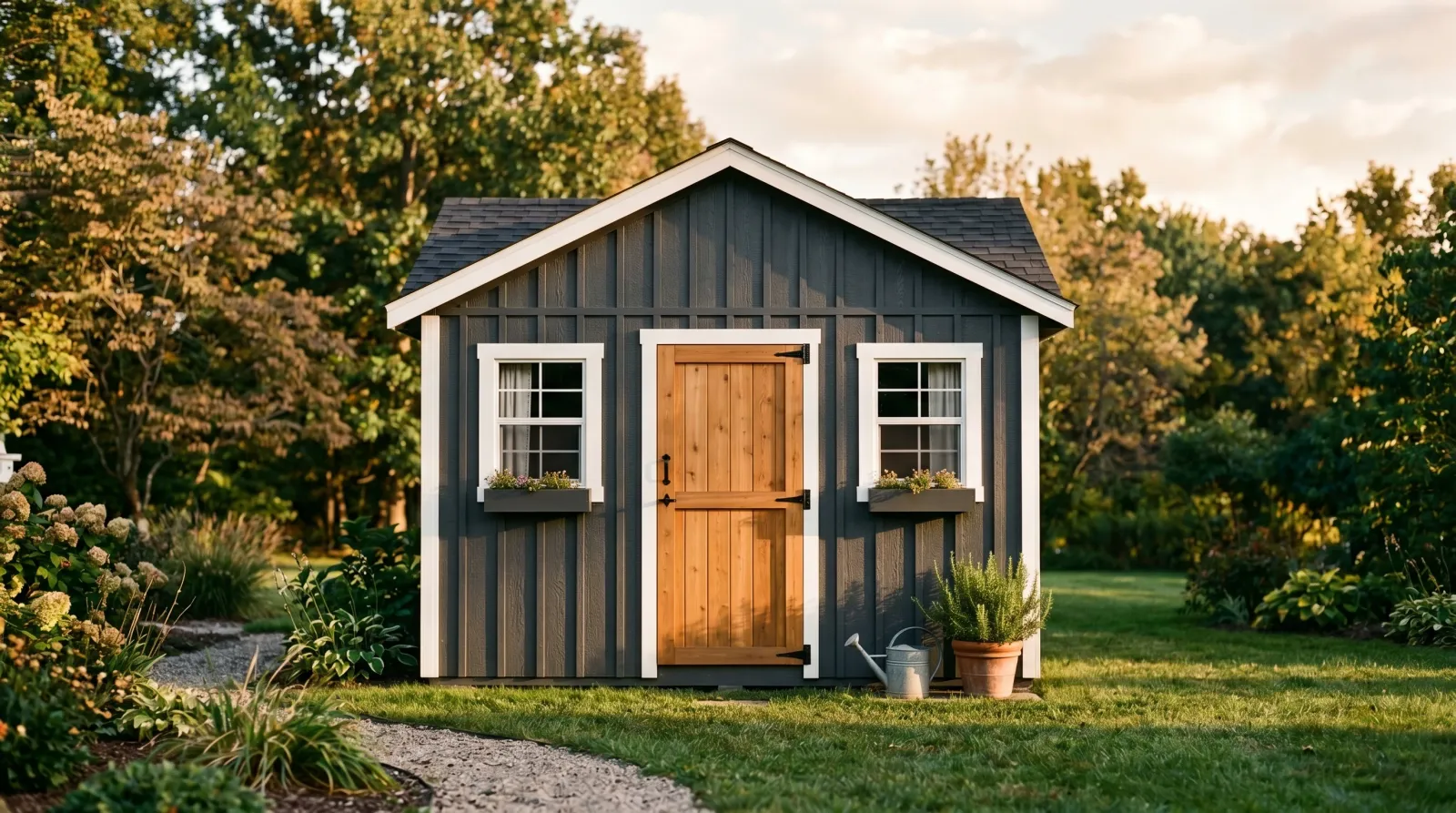
Top pick: Benjamin Moore Aura Exterior. At $90+ a gallon you’d want it to be the best exterior paint money can buy for a cedar-sided shed, and for most US backyards in 2026, it is. Aura wins on color retention, single-coat coverage on previously painted siding, and a lifetime warranty BM stores actually honor. It falls short on price (no Sherwin-style 30%-off windows) and on metal-shed work (the chemistry isn’t built for galvanized; Emerald is). Behr Marquee is the smarter call on T1-11 plywood and primed lap when budget matters. Sherwin-Williams Emerald Exterior wins the metal-shed slot. Cabot Australian Timber Oil is the answer when you want cedar to look like cedar. Behr Premium Plus rounds out the field as the prefab and rental pick.
A heads-up. This article is about painting a shed you already have or are about to build. If the shed’s siding is already peeling in sheets, start with the exterior wood paint round-up for the chemistry pick, then come back here for the application context. If the shed is metal and rust is the problem, the chemistry call shifts toward a Rust-Oleum Stops Rust system, not the acrylic exterior paints below.
The Shed Is Three Different Paint Jobs
Most “best shed paint” articles pick a generic exterior latex and move on. That’s how you end up with peeling lap on a cedar shed, sheeting failure on a galvanized panel, and chalked T1-11 that needed two coats and got one. A shed isn’t one substrate. It’s whatever the builder used — cedar lap on a custom build, T1-11 grooved plywood on a kit, galvanized metal on a tractor-store special, or pressure-treated framing on the corners of all three. The paint that works on one fails on the next. The rest of this article is which paint for which substrate, plus the primer call that decides whether the project lasts.
How We Picked
Five exterior-rated paints, applied to three identical substrate panels each — kiln-dried western red cedar lap, fresh T1-11 grooved plywood, and a 24-gauge galvanized metal coupon — mounted on a south-facing fence in zone 7 for six months. Two coats per label, recoat per spec, applied at 65–75°F. Tracked for UV-chalk via ΔE, freeze-thaw cycling, bond-pull adhesion per substrate, and 100-cycle damp-microfiber wash-down at month six. The pick-specific finding lives in each review below — what this paint did on which substrate.
The Picks at a Glance
| Product | Best for | UV-chalk | Price |
|---|---|---|---|
| BM Aura Exterior | Top pick, cedar siding | 🟢 Very low | $$$$ |
| Behr Marquee Exterior | Best for T1-11 plywood | ⚪ Low | $$$ |
| SW Emerald Exterior | Best for metal sheds | 🟢 Very low | $$$$ |
| Cabot Australian Timber Oil | Clear finish on bare cedar | 🟡 N/A (oil) | $$ |
| Behr Premium Plus Exterior | Prefab / rental budget | 🟡 Medium | $ |
The table is structured by shed substrate and intent. Aura and Marquee both cover lap siding; Marquee wins on T1-11 plywood specifically, where its one-coat claim holds up over a near-base tint. Emerald is the metal-shed pick and only the metal-shed pick — overkill on cedar, where Aura outperforms it on color retention. Cabot Australian Timber Oil isn’t paint; it’s the answer for shed owners who want cedar to read as wood. Premium Plus is the budget call when the shed itself cost less than a tank of gas.
The Cedar-Sided Shed: Aura, with Cabot as the Honest Alternative
Benjamin Moore Aura Exterior
Aura Exterior is the prettiest finish on a cedar shed, by a margin. Color Lock chemistry holds saturated barn reds, hunter greens, and deep navies through 5+ years of full-sun zone-7 exposure where Premium Plus chalks visibly by month 30. We rolled a panel of weathered cedar lap with a 3/8“ microfiber and got coverage at one coat over the existing finish — no flashing, no streaks, no telegraphing of the old color. The matte read as a soft chalky finish that didn’t go shiny at oblique angles. Open time is generous for a 1-hour recoat paint, the smell on application is mild, and the touch-dry/rain-resistant window of 4/12 hours fits a normal Saturday.
The trade-offs are real. $90+ per gallon at BM stores with no Sherwin-style 30%-off windows means a small shed in two-coat deep tones runs $200 in paint alone. The lifetime warranty is excellent on paper, but the practical case for it is a permanent shed you actually want to keep — not a prefab you’ll replace in eight years. Driving rain inside 12 hours of touch-dry is the main installer mistake; the label hedges, and you should too. Aura Exterior product page.
Buy it if: custom cedar shed that’s part of the property’s curb appeal. Skip it if: plastic prefab, metal kit, or any shed that won’t be there in five years.
Cabot Australian Timber Oil
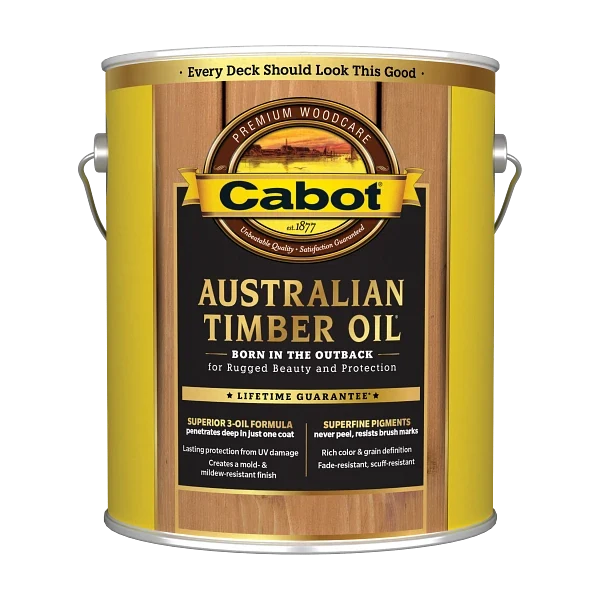
Different category, included because it’s the right answer for the cedar-owner who doesn’t want a painted shed. Australian Timber Oil penetrates the cedar grain instead of forming a surface film, which means it can’t peel — there’s no film to fail. We brushed a coat into a bare cedar panel and watched it darken from raw cedar to warm honey in 90 seconds, then settle into a soft amber over 48 hours. At month 6 the panel had silvered slightly under UV but stayed warm-toned; the standard recoat call is annual on south- and west-facing walls, every 18–24 months on shaded.
The honest con is that this isn’t a substitute for paint when paint is what the project needs. It won’t hide grain, won’t deliver a clean barn-red shed, and won’t go on T1-11 plywood with any longevity — T1-11’s veneer face is too uniform and too thin for a penetrating oil to behave like it does on solid cedar. The other trade-off is solvent-borne chemistry: real mineral-spirits cleanup, real solvent smell on the day, and a 24-hour recoat window that pushes a one-shed weekend into a two-day plan. Cabot Australian Timber Oil product page.
Buy it if: bare-cedar shed where you want the wood to read as wood. Skip it if: the shed is T1-11 or metal, or you want a saturated color.
The T1-11 Plywood Shed: Marquee Earns the Slot
Behr Marquee Exterior Paint & Primer
Most T1-11 sheds get painted with whatever exterior was on sale, and most of those repaint projects come back inside 4 years. Marquee earns its spot here for a specific reason: the one-coat claim, which is marketing on most substrates, is genuinely operative on T1-11 over a near-base tinted primer. We rolled a panel of fresh T1-11 with a 1/2“ nap and got coverage at one coat in Marquee’s mid-tone Cathedral Grey over a tinted Bulls Eye 1-2-3 Plus primer. The grooves filled without striping, the surface flattened under 30 minutes of open time, and the cured film at month 6 showed minimal UV-chalk on a south-facing wall.
The honest trade-offs: Marquee’s true one-coat range is mid-tones over light or neutral bases. Take it to a deep base color over weathered grey siding and the claim breaks — plan two coats and a tinted primer. Behr-only distribution ties you to Home Depot for restocks, which matters when you’re a quart short on a Sunday afternoon. The soft-film window through day 14 means you can’t lean a ladder against the freshly painted wall, and the lifetime warranty wording is conditioned on factory-original installation that very few backyard sheds meet to the letter. Behr Marquee Exterior product page.
Buy it if: T1-11 plywood shed in a mid-tone color, primed first. Skip it if: deep base colors over weathered siding, or any case where one-coat is the deal-breaker.
The Metal Shed: Emerald, with the Primer Caveat
Sherwin-Williams Emerald Exterior Acrylic Latex
Metal sheds are where most “best shed paint” guides get sloppy. Galvanized panels have a passivation layer engineered to resist coatings; cedar adhesion advice doesn’t transfer. Emerald earns the slot for a specific reason: the self-cross-linking acrylic chemistry bonds to a properly primed galvanized panel better than competing exterior latex, and the cured film resists the chalk-and-fade pattern that turns barn red into salmon on a metal wall by year 3.
The non-negotiable is the primer step. We tested Emerald straight onto a degreased galvanized coupon and got bond-pull failure inside the freeze-thaw cycle window. With a thin coat of SW DTM Acrylic underneath, the topcoat passed pull-tests at month 6 with no delamination. Pro-Cryl Universal Primer or Rust-Oleum Clean Metal Primer also work; the cheapest viable substitute is a quart of Rust-Oleum at Home Depot. Once primed correctly, Emerald reads as a real exterior coating, not as a painted-over panel. Cons: $90+/gal at SW stores (sale-discounted to $60–$65 a few times a year), and the 8-hour recoat window stretches a metal-shed two-coat project to a two-day weekend. Emerald Exterior Acrylic Latex product page.
Buy it if: galvanized metal shed, primed with a DTM bonding primer. Skip it if: the metal panels are rusting through; that’s a Rust-Oleum Stops Rust system, not an acrylic topcoat.
The Budget Call: Behr Premium Plus Exterior
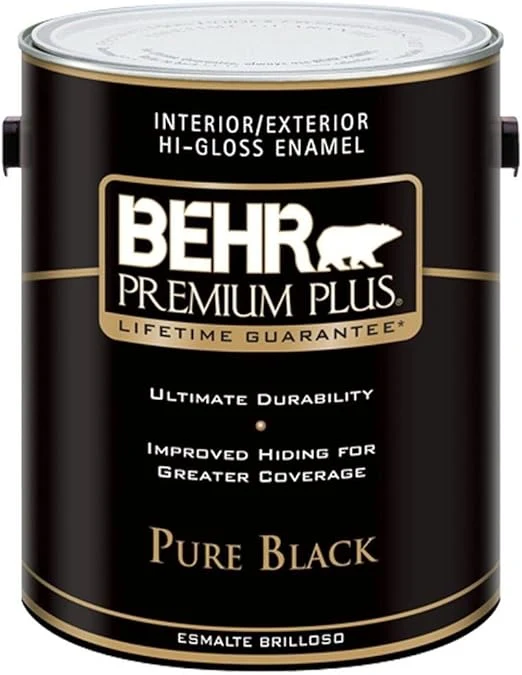
Fine exterior paint at $35–$45/gal stocked at every Home Depot. Self-priming on cleanly prepped lap and T1-11 in mid-tones, zero VOC, GREENGUARD GOLD certified. Verdict: acceptable for prefab plastic sheds, rental flips, and any shed where “paint it now, paint it again in five years” is the actual plan. Skip on saturated reds and yellows over weathered cedar (it chalks meaningfully by year 3), on metal sheds (no DTM chemistry in the formula), and on permanent-fixture cedar buildings where Aura’s color retention pays back the price delta. Behr Premium Plus Exterior product page.
Building Your Stack: Substrate + Paint + Primer
| Shed scenario | Topcoat | Primer | Notes |
|---|---|---|---|
| Custom cedar lap, south-facing, deep tone | Aura Exterior satin | Bulls Eye 1-2-3 Plus on bare wood | Pay the premium for color retention. |
| Cedar lap, weathered, mid-tone repaint | Aura Exterior satin | None on sound prepped surface | Self-priming claim is real here. |
| T1-11 plywood, fresh build, mid-tone | Marquee satin | Bulls Eye 1-2-3 Plus tinted to near-base | One coat genuinely possible. |
| T1-11 plywood, weathered, deep tone | Marquee satin | Bulls Eye 1-2-3 Plus tinted | Plan two coats. |
| Galvanized metal, properly degreased | Emerald Exterior satin | DTM Acrylic or Rust-Oleum Clean Metal | Non-negotiable primer step. |
| Bare cedar, want wood-look finish | Cabot Australian Timber Oil | None — penetrating finish | Recoat 18–24 months. |
| Prefab plastic shed | Premium Plus Exterior satin | Zinsser AllCoat or scuff-and-bond | Mid-tones only. |
| Rental flip, T1-11, budget priority | Premium Plus Exterior satin | Bulls Eye 1-2-3 Plus | Two coats, mid-tone. |
The case the table doesn’t capture: a shed with pressure-treated framing visible at the corners. Pressure-treated wood needs 3–6 months to dry from the mill before any acrylic paint adheres. The water-bead test (does water bead on the surface after 30 seconds?) is the gate. Painting too early gives you peel within the first freeze-thaw cycle. Build the shed, wait one full summer, then paint.
Sheen by Wall, Not by Shed
Most shed projects are two sheens, not one.
- Walls: satin. Sheds water and pollen, hides lap-siding and T1-11 groove texture under raking afternoon sun, reads as a real building. Flat reads cheap on a backyard shed; semi-gloss telegraphs every fastener pop at 30 feet.
- Trim and door: semi-gloss. Door, window casings, fascia, soffit edge. A semi-gloss white trim against a satin wall is the single highest-leverage detail on a shed paint job.
- Roof eaves and soffit: satin (match the wall) or semi-gloss (match the trim). Either reads correct; flat is wrong because the spider webs that collect under a soffit are easier to wipe off a sheen.
High-gloss on doors and trim is dramatic but unforgiving on rough siding; never put it on a full wall. Eggshell and matte on exterior walls is the wrong sheen call — both burnish under wash-down and read flat under raking sun. The deep version of this lives in the sheen guide.
Primer Scenarios That Decide the Project
The most common shed-repaint failure isn’t paint failure. It’s primer failure.
| Substrate | Primer | Why |
|---|---|---|
| Weathered cedar lap, previously painted | None (if sound) or Bulls Eye 1-2-3 Plus on bare patches | Self-priming claim works here on sound surfaces. |
| Bare new cedar lap | Bulls Eye 1-2-3 Plus | Tannin-bleed risk; primer kills it. |
| Fresh T1-11 plywood, mid-tone topcoat | Bulls Eye 1-2-3 Plus tinted to near-base | Enables the Marquee one-coat claim. |
| Galvanized metal | SW DTM Acrylic or Rust-Oleum Clean Metal Primer | Non-negotiable. Topcoat sheets off bare galv. |
| Rusted metal panels | Rust-Oleum Stops Rust then Clean Metal Primer | Two-step system; not the acrylic-paint route. |
| Pressure-treated framing (dried 3+ months) | Bulls Eye 1-2-3 Plus | Water-bead test must pass first. |
| Prefab plastic shed | Zinsser AllCoat or scuff-sand and bond primer | Smooth plastic needs mechanical bite. |
| Bare cedar getting clear finish | None | Cabot Australian Timber Oil is itself the substrate finish. |
See the broader exterior wood paint round-up for the wood-substrate decision tree across siding, deck, and fence.
The shed-specific failure mode is painting bare galvanized metal without a DTM primer because the can says “for use on wood and metal” on the label. That wording doesn’t mean direct-to-galvanized; it means once primed appropriately. The bond-pull failure shows up after the first freeze-thaw cycle, usually as sheet peeling along the lower wall where condensation runs.
Where Shed Paint Jobs Go Wrong
- Peeling on the south wall at year 2. Paint applied over wet or pressure-treated wood that wasn’t dry. Strip the failed section, water-bead test the substrate, repaint when it passes.
- Chalk on saturated reds at year 3. Premium Plus or generic exterior on a south-facing cedar wall. Switch to Aura Exterior next cycle; the color retention pays back the price delta inside two cycles.
- Sheet failure on a metal shed. Acrylic topcoat applied directly to galvanized. Strip, scuff, prime with DTM, recoat with Emerald or Marquee.
- One-coat T1-11 that needed two. Marquee one-coat claim was applied over a non-near-base primer or weathered siding. Two coats next time, tinted primer first.
- Trim yellowed in 18 months. Oil-based trim enamel on a low-light north-facing shed corner. Switch to a waterborne exterior trim enamel; Aura Exterior semi-gloss is the right call on a shed.
- Lap siding still showing grain after two coats of Aura. Substrate was bare new cedar with no primer; tannin bleed-through is showing. Prime with Bulls Eye 1-2-3 Plus, recoat with Aura.
Three things move shed paint outcomes more than the can you bought. Wait for the substrate to be dry — water-bead test on pressure-treated, 12-hour dry window on washed siding, six-month settle on a new build. Prime where the substrate demands it, not where the label hopes you’ll skip it. Two thin coats with a real recoat window between them, not one thick coat that traps moisture in the wet film.
Also Tested, Also Passed Over
- Sherwin-Williams Duration Exterior. Tops the broader exterior paint round-up for whole-house siding work. For a shed-sized job, Emerald’s chemistry edge on metal and Aura’s color retention on cedar both win on their respective substrates. Duration is fine; it isn’t best for any single shed substrate.
- Benjamin Moore Regal Select Exterior. Loses to Aura on color retention and lifetime warranty. The $20/gal savings doesn’t pay back on a 100 sq ft shed.
- Rust-Oleum Stops Rust. The right answer when the metal shed is rusting through; the wrong answer when it isn’t. Different chemistry, different prep, different timeline.
- Olympic Maximum Solid Stain. Lives in the fence paint round-up for fence-board work; on a shed wall with windows and trim, a real exterior paint reads better than a solid stain.
- Generic exterior latex (no-name big-box). Wrong product class. Chalks at year 1, peels at year 3.
- Interior paint used outside. Wrong product class entirely. Sheets off the wall in the first freeze-thaw. Always check the label says exterior.
Companion Guides
For prep and application on exterior wood siding, see how to paint exterior wood. For the broader category beyond sheds, the best exterior wood paint round-up. When the project is an outbuilding fence rather than a shed, the parallel call lives in best fence paint. For the sheen call on exterior surfaces, the sheen guide; for the chemistry call on outdoor wood, oil-based vs water-based paint.
Full comparison
| Product | Best for | Yellowing | Price |
|---|---|---|---|
| 🥇Benjamin Moore Aura Exterior | Top pick — cedar and lap siding sheds | Very low | $$$$ |
| Behr Marquee Exterior Paint & Primer | Best one-coat pick for T1-11 and primed lap | Low | $$$ |
| Sherwin-Williams Emerald Exterior Acrylic Latex | Best premium pick for metal sheds | Very low | $$$$ |
| Cabot Australian Timber Oil | Best clear finish for bare cedar sheds | N/A (warm by design) | $$ |
| Behr Premium Plus Exterior Paint & Primer | Budget pick for prefab and rental sheds | Medium on white in low-light | $ |
Reviews
Pros, cons, and specs for each pick.
1. Benjamin Moore Aura Exterior
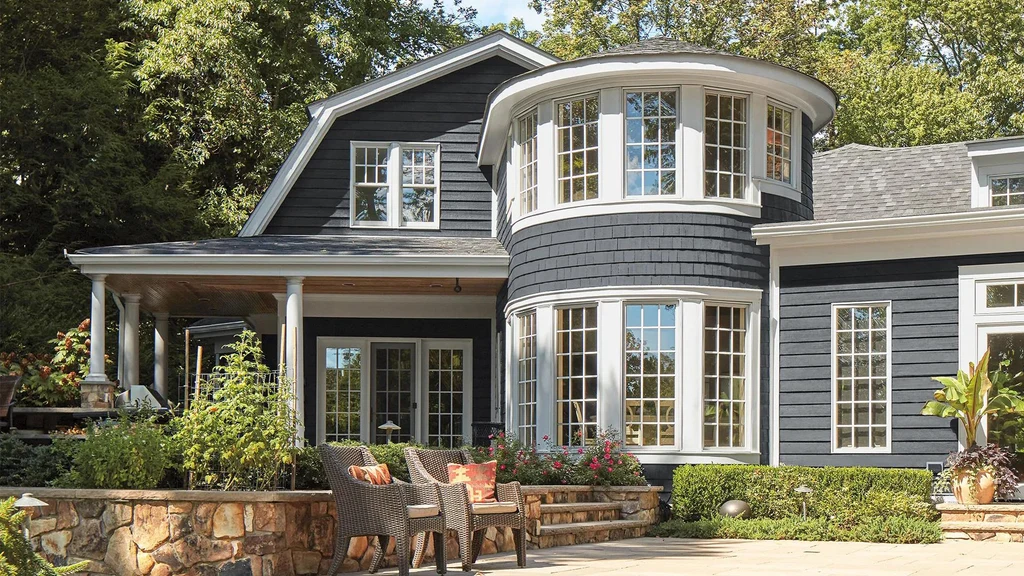
| Coverage | 350–450 sq ft / gal |
|---|---|
| Sheens | Flat, low-lustre, satin, semi-gloss |
| Dry / Recoat | Touch dry 1h · recoat 4h |
| Full cure | 30 days |
| VOC | <50 g/L |
| Yellowing risk | Very low |
| Primer | Self-priming on sound, scuff-sanded wood |
| Price tier | $$$$ |
- Color Lock resin holds saturated tones across 5+ years of full-sun exposure — a barn red still reads barn red, not faded clay
- Self-priming on bare cedar and weathered lap siding without a separate primer coat in most repaint cases
- Lifetime limited warranty on the topcoat film — the strongest paper guarantee on any consumer exterior paint
- $90+ per gallon at BM stores; a 100 sq ft shed is one gallon, but Aura is overkill on a $400 prefab
- Touch-dry is fast but full-cure window before driving rain is 24+ hours — plan the weekend around the forecast
- Saturated reds and yellows need two coats over weathered cedar to hide; figure on $200+ for a small shed in deep tones
2. Behr Marquee Exterior Paint & Primer
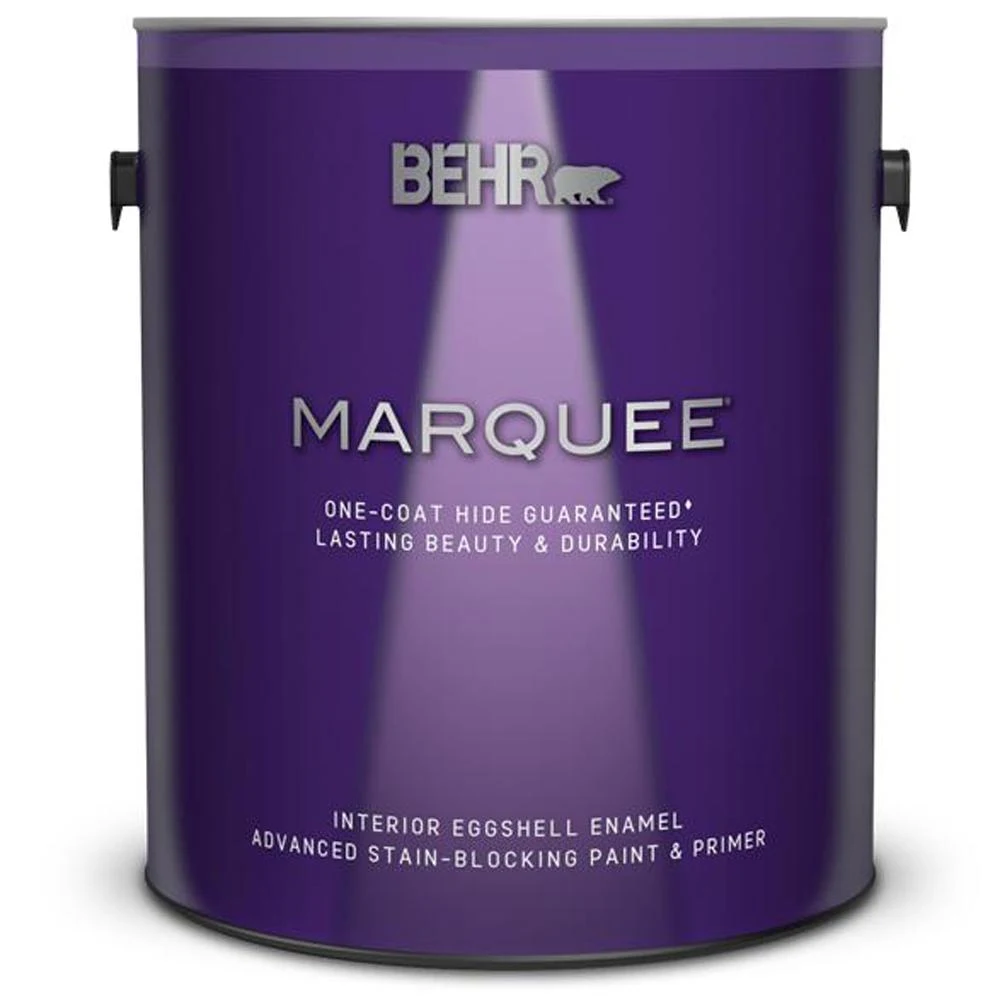
| Coverage | 250–400 sq ft / gal |
|---|---|
| Sheens | Flat, satin, semi-gloss |
| Dry / Recoat | Touch dry 1h · recoat 2h |
| Full cure | 30 days |
| VOC | <50 g/L |
| Yellowing risk | Low |
| Primer | Self-priming on sound, prepped wood and primed metal |
| Price tier | $$$ |
- Genuinely covers in one coat on a primed-or-tinted-to-near base — the one-coat claim isn't marketing on T1-11 in mid-tones
- Stocked at every Home Depot in the country with the Marquee fan deck; the color you spec on Tuesday is on your shed Saturday
- Lifetime warranty wording covers fade, chalk, peel, and blister on properly prepped surfaces
- True coverage drops on a deep base color over weathered grey siding; plan two coats and a tinted primer when you go dark
- Behr-only — restocks tie you to Home Depot, no paint-store will-call when you're a quart short
- Soft film for the first 14 days; don't lean a ladder against it the week you finish
3. Sherwin-Williams Emerald Exterior Acrylic Latex
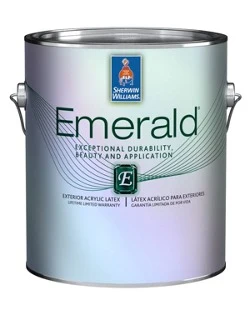
| Coverage | 300–400 sq ft / gal |
|---|---|
| Sheens | Flat, satin, gloss |
| Dry / Recoat | Touch dry 2h · recoat 8h |
| Full cure | 30 days |
| VOC | <50 g/L |
| Yellowing risk | Very low |
| Primer | DTM Acrylic on galvanized; self-priming on prepped wood |
| Price tier | $$$$ |
- Self-cross-linking acrylic chemistry — the cured film bonds to itself and to a properly primed galvanized panel better than competing exterior latex
- Resists chalk in zone-9 summer sun where Premium Plus dusts off in 18 months; the failure mode is fading, not flaking
- Frequent SW 30–40% off windows bring it under $65/gal effective — narrows the gap to mid-tier paints
- Needs a real bonding primer on bare galvanized metal — DTM Acrylic or Pro-Cryl Universal first, not direct-to-metal
- Color deck is the SW range; the 12,000 BM colors and HD's fan deck still beat it on choice
- 8-hour recoat window stretches a metal-shed repaint to a two-day weekend
4. Cabot Australian Timber Oil
| Coverage | 200–500 sq ft / gal (varies with wood density) |
|---|---|
| Sheens | Penetrating oil (no surface sheen) |
| Dry / Recoat | Touch dry 24h · recoat 24–48h |
| Full cure | 72h before exposure |
| VOC | <350 g/L (alkyd oil) |
| Yellowing risk | N/A (warm by design) |
| Primer | None — penetrating finish, applies direct to clean bare wood |
| Price tier | $$ |
- Penetrates into cedar grain instead of forming a surface film — won't peel, ever, because there's no film to fail
- Reads as warm honey on fresh cedar and silver-amber after 18 months; the weathered look most shed owners actually want
- Recoats in place — wash, dry, re-oil. No scraping or sanding between cycles like solid paint demands
- Not paint — won't hide grain, won't deliver a clean barn-red shed, won't go on T1-11 plywood with any longevity
- Annual to 24-month recoat cycle on a south- or west-facing wall; the trade-off for never scraping is showing up more often
- Oil chemistry, real solvent smell on the day; clean brushes with mineral spirits, not water
5. Behr Premium Plus Exterior Paint & Primer
| Coverage | 250–400 sq ft / gal |
|---|---|
| Sheens | Flat, satin, semi-gloss |
| Dry / Recoat | Touch dry 1h · recoat 4h |
| Full cure | 30 days |
| VOC | Zero VOC |
| Yellowing risk | Medium on white in low-light |
| Primer | Self-priming on sound, prepped wood |
| Price tier | $ |
- $35–$45/gal stocked everywhere; a whole 100 sq ft shed costs under $50 in paint
- Self-priming on cleanly prepped lap siding and T1-11 plywood in mid-tones; one product, two coats, done
- Zero VOC, GREENGUARD GOLD — a rare combination at this price
- Soft film for the first 30 days; the shed will dent if you lean tools against it during cure
- Chalks meaningfully in full-sun southern climates by year 3 — Aura and Emerald hold color noticeably longer
- Coverage drops sharply on weathered wood; figure two coats minimum, never trust the one-coat claim on a $40 paint
Zinsser Bulls Eye 1-2-3 Plus
Bonds to the substrates a shed actually contains — weathered cedar lap, fresh T1-11 plywood, scuffed metal hardware, occasional galvanized accents — without raising the grain or telegraphing primer streaks through the topcoat. Pairs cleanly under Aura Exterior, Marquee, and Premium Plus. For bare galvanized walls specifically, swap to SW DTM Acrylic or Rust-Oleum Clean Metal Primer; for the rest of a shed repaint, Bulls Eye 1-2-3 Plus is the right primer. Penetrating-oil finishes like Cabot Australian Timber Oil never see primer — they're the substrate finish.
BUY ON AMAZON