Best Pro-Grade Paint Brushes for 2026
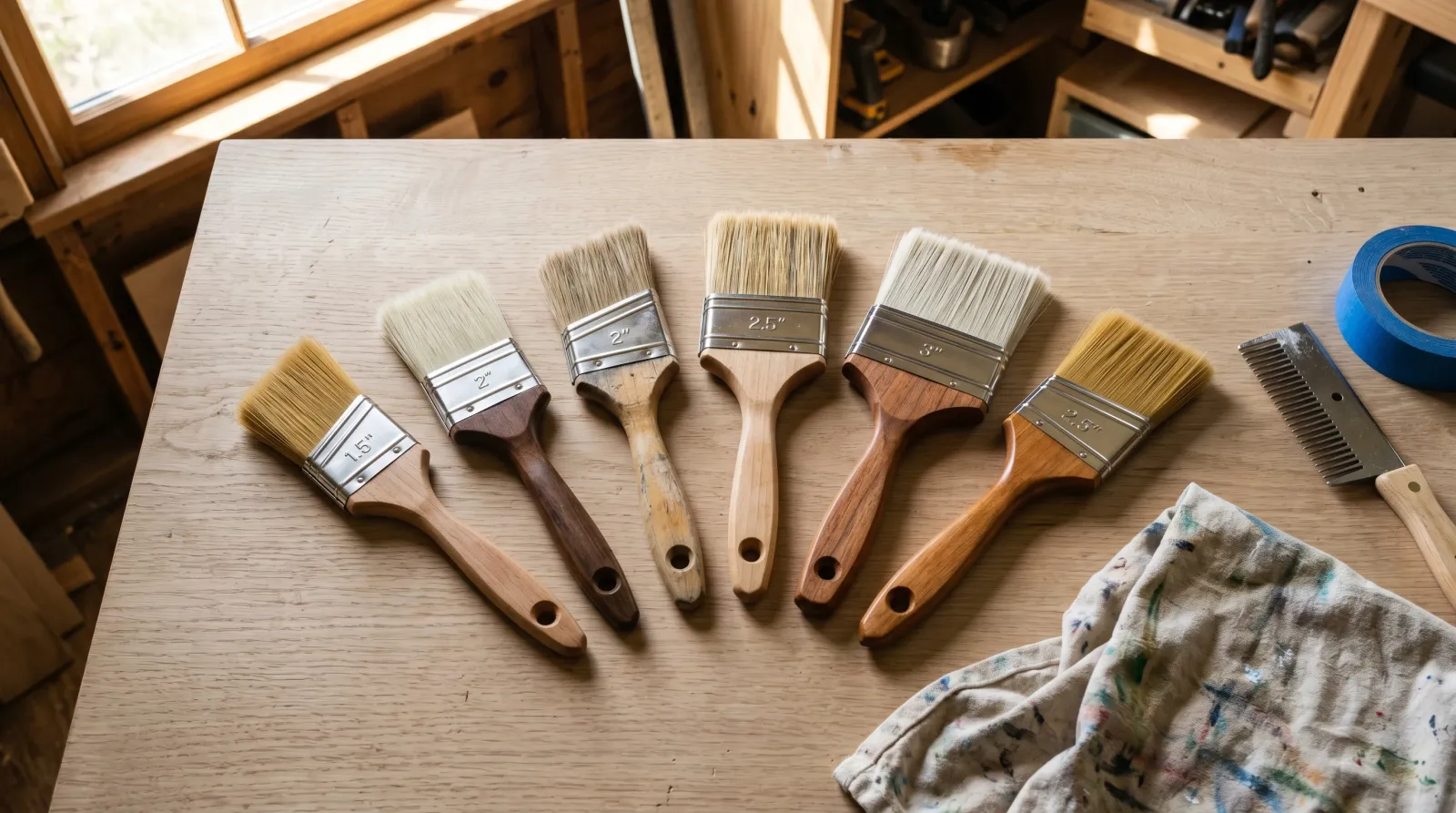
Six pro-grade paint brushes tested on walls, trim, cabinets, and rough siding. Top pick: Purdy Clearcut Elite Glide for the cleanest cut line a brush can lay.

Disclosure: Some links below are affiliate links. We earn a commission if you buy through them, at no extra cost to you.
Top pick: Purdy Clearcut Elite Glide 2.5“. It costs more than a hardware-store brush, and on a pro job it earns the gap. The ultra-stiff nylon/polyester tip lays the sharpest freehand cut line in this test, springs back to its angle on every dip, and holds that edge through a full day. It wins on cut-line precision and recovery. It falls short on finish-grade smoothness, where the soft Purdy Nylox Glide self-levels closer to a sprayed coat. For modern fast-dry and low-VOC paint, the Wooster Chinex FTP drags least and cleans up best. For heavy paint load on abrasive surfaces, the Purdy Pro-Extra Glide carries more per dip. For production wall work, the Wooster Ultra/Pro Firm covers in fewer strokes at a lower price. For tight freehand cut-ins, the Wooster Alpha steers a fine line.
There is no single right pro brush.
Most working painters carry three: a stiff sash brush for the line, a firm wide brush for the walls, and a soft brush for the finish trim.
The Shortlist and Why These Six
I bought six brushes through the channels a working painter actually uses, the pro paint counter and the contractor aisle, and ran them through three real jobs over seven weeks. A whole-floor wall repaint in Benjamin Moore Regal Select. A kitchen cabinet refinish in waterborne enamel on primed MDF. Exterior trim and a run of cedar shake in low-VOC acrylic. Every brush ran the full job, cut-in through second coat, on the same paint the next painter would use.
This round-up is the step up from the everyday brush list. Those picks win on value for a homeowner who paints a couple of weekends a year. These win on a jobsite, where the paint dries faster, the days run longer, and a brush that flags at noon costs you the afternoon.
Three things separated the field: filament grade in fast-dry paint, cut-line precision and tip recovery, and how the brush combed back after a real wash. I weighted them in that order. The role anchors each pick, because a brush that wins on a cabinet door loses on a cedar wall, and the reverse.
How the Testing Actually Ran
Same protocol per brush, per job. Walls: 60 linear feet of ceiling cut-in, half against blue tape, half freehand, photographed under raking LED at 24 hours. Cabinets: ten primed MDF doors, two coats of waterborne enamel, shot at 30 minutes wet and at 24 hours under raking light to read brush stroke. Exterior: every brush hit the cedar shake and the trim run, where fast-dry low-VOC paint exposes a weak filament inside ten minutes.
Paint load measured by linear feet of cut-in per dip on a wall at a working pace. Cut-line sharpness judged on the freehand half against the taped control. Cleanability scored by shape recovery after a soap-and-comb wash. Drag in fast-dry paint is the spec that doesn’t show up on the package, so I tracked it by feel on the second coat of the low-VOC exterior, when the paint tacks up fastest.
I also asked three contractors which of the six they’d buy with their own money. Two named the Clearcut Elite for the line. One named the Chinex FTP for the cleanup. None reached for anything outside this list.
Picking a Pro Brush, in Three Decisions
Filament: Chinex, Tynex, or Standard Blend
The filament is the brush. Standard nylon is fine in slow latex and goes limp the moment fast-dry or low-VOC paint tacks up under it. Chinex is the firm, abrasion-resistant filament built for exactly that paint; it holds its tip, drags less, and washes out faster. Tynex/Chinex blends like the Pro-Extra split the difference, carrying a heavy load while surviving rough surfaces.
The rule on a modern jobsite: if you’re spraying low-VOC and brushing the cut-in to match, Chinex keeps the brush sharp coat after coat. If you’re on slow interior latex, a tight nylon/polyester blend like the Ultra/Pro Firm does the job for less. Soft 100% nylon, like the Nylox Glide, is the finish-trim exception, where self-leveling beats stiffness.
Cut, Shape, and Width
Angular sash wins on cut-ins. The long corner reaches into corners and tracks a ceiling line a flat brush can’t. A stiff angular cuts a sharper freehand line than a soft one, because the tip holds its shape under sideways pressure instead of flexing off the line. That’s why the Clearcut Elite and the Alpha cut clean and the Nylox Glide doesn’t.
Width is pace versus control. A 2.5“ angular covers most cut-in and trim. A 3“ flat or angle, like the Ultra/Pro Firm, moves real square footage on open walls and siding. A 2“ angular steers tight work around mullions and cabinet stiles. Most painters carry all three.
Handle and Ferrule
Less consequential than the filament, but the gap between a throwaway brush and a pro brush shows here too. Stainless steel ferrule that shrugs off solvent cleanups. Hardwood handle that stays tight through years of washing. Every brush here has both. A plastic ferrule and an unfinished handle signal a brush that splays after one job.
At-A-Glance Comparison
| Brand / Model | Filament | Width tested | Best paint type | Best for | Price tier |
|---|---|---|---|---|---|
| Purdy Clearcut Elite Glide | Nylon/polyester, ultra-stiff | 2.5“ angular sash | Latex, low-VOC, primer | Sharpest freehand cut line | Premium |
| Wooster Chinex FTP | 100% Chinex, extra-firm | 2.5“ angular sash | Fast-dry, low-VOC, all paints | Modern fast-set coatings | Premium |
| Purdy Pro-Extra Glide | Tynex/Chinex/polyester | 2.5“ angular sash | Latex on abrasive surfaces | Heavy paint load | Premium |
| Wooster Ultra/Pro Firm | Nylon/polyester, firm | 3“ angular sash | Wall latex, primer | Production wall work | Mid |
| Purdy Nylox Glide | 100% nylon, soft | 2.5“ angular sash | Waterborne enamel | Smooth trim and cabinets | Mid |
| Wooster Alpha | Micro-Tip firm blend | 2“ angular sash | Latex, low-VOC | Tight cut-in precision | Mid |
1. Purdy Clearcut Elite Glide 2.5“, Best Overall
The Clearcut Elite is the brush I grab when the cut line has to be tape-clean and I don’t want to tape. The ultra-stiff nylon/polyester tip holds its shape under sideways pressure, so the long corner of the angular sash tracks a straight ceiling line instead of wandering off it. On the freehand half of the wall test, judged against the blue-tape control under raking LED, the Clearcut Elite laid the sharpest line of the six. It wasn’t close.
The part that separates a pro brush from a good one is recovery. Soft brushes need you to keep nudging the tip back into its angle every few feet. The Clearcut Elite springs back on every dip. You load it, tap the rim, and the tip is already in position. Over a full day of cut-in, that’s the difference between a clean afternoon and a tired wrist fighting a brush that won’t hold its point.
It is not the cabinet brush. On flat-panel doors under raking light at six inches, the stiff bristle leaves more visible texture than the Nylox Glide, which self-levels close to a sprayed film. The same stiffness that cuts a razor line stipples mildly on a finish-grade door. And on long overhead ceiling cut-ins, the firm tip fatigues the wrist faster than a softer brush would. Pair it with a soft brush for the trim and keep the Clearcut Elite on the line.
| Spec | Value |
|---|---|
| Filament | Nylon/polyester blend, ultra-stiff |
| Sizes | 1.5“, 2“, 2.5“, 3“ |
| Best for | Sharp freehand cut lines on walls, trim, ceilings |
| Price tier | Premium |
Buy it if: you cut in freehand and want a tape-quality line without the tape. Skip it if: your work is finish-grade cabinet doors. Reach for the Nylox Glide.
2. Wooster Chinex FTP 2.5“, Best for Fast-Dry and Low-VOC Paint
Low-VOC and fast-recoat acrylics are where standard nylon brushes go to die. The paint tacks up under the brush within minutes, the filament drags, the tip curls, and your cut line turns ropey. The Chinex FTP is built for exactly this. The 100% Chinex filament stays stiff and slick as the paint sets, so it keeps releasing clean instead of pulling.
On the second coat of the low-VOC exterior, brushing the trim to match the sprayed shake, the Chinex FTP dragged noticeably less than every nylon brush in the test. The extra-firm bristle also pushed acrylic into the rough cedar profile without splaying, which a softer brush can’t do on shake. Then it cleaned up faster than anything else here; the Chinex filament doesn’t hold paint in the heel the way nylon does, so it combed back to new after one wash even on the high-solids enamel.
The trade is smoothness. On glass-flat doors the firm Chinex leaves faint texture the soft Nylox Glide doesn’t. And it costs more than a standard blend. For a painter running fast-dry paint daily, the premium pays back in brushes that don’t quit at noon.
Buy it if: you brush low-VOC, fast-recoat, or high-solids paint regularly and want a tip that holds and a brush that washes fast. Premium tier.
3. Purdy Pro-Extra Glide 2.5“, Best for Heavy Paint Load
When the job is volume on rough surfaces, the Pro-Extra Glide is the workhorse. The Tynex/Chinex/polyester blend holds a heavy load and releases it clean, which means fewer trips back to the bucket and more wall per dip. On the cut-in load test it carried more linear feet per dip than the stiffer Clearcut Elite, with enough Chinex in the blend to survive the abrasive trim and masonry that shred a softer brush.
The medium-firm tip holds up through a long production day without hooking or fanning. It’s the brush I’d hand someone cutting in a full floor of textured walls, where capacity and durability matter more than a razor edge.
It gives up a little on the line. The Clearcut Elite cuts sharper freehand, and on finish-grade interior trim the Pro-Extra’s capacity is wasted where smoothness is the whole point. This is a high-volume brush, not a finish brush.
Buy it if: you cut in a lot of square footage on latex and want fewer trips to the bucket on abrasive surfaces. Premium tier.
4. Wooster Ultra/Pro Firm 3“, Best for Production Wall Work
The wide brush for moving paint. The firm nylon/polyester blend releases on contact, so a 3“ flat-sash covers open walls and siding in fewer strokes than a narrower brush. On the bedroom walls it hit full coverage in noticeably fewer dips than the soft Nylox Glide, because firm bristle pushes paint out instead of dragging it. It’s stocked at most pro counters and priced below the Chinex brushes, which is why it ends up in a lot of contractor kits as the everyday wall brush.
The firm tip stipples mildly on smooth enamel, so keep it on walls and primer, not cabinet doors. The wide head is also clumsy in tight cut-ins around switch plates and window mullions; this is a brush for big open runs, not detail.
Verdict: the production wall brush. Buy the 3“ for walls, drop to a 2.5“ for general work.
5. Purdy Nylox Glide 2.5“, Best for Smooth Trim and Cabinets
The finish brush. Soft 100% nylon filament self-levels waterborne enamel close to a sprayed film, which is the opposite of what the stiff brushes do. On the primed MDF cabinet doors, two coats of waterborne enamel shot under raking light at 30 minutes, the Nylox Glide left the flattest brush stroke of the six. The fine flagged tips lay trim and door edges without the ropey marks a firmer brush leaves behind.
The softness that wins on a door loses outside. Thick exterior latex on rough siding bends and skips the Nylox Glide; it can’t push paint into texture. And the soft tip flags faster than the firm brushes under heavy daily use, so it’s a finish brush you protect, not a wall brush you abuse.
Buy it if: you refinish cabinets, doors, and fine trim and want the closest a brush gets to a sprayed face. Mid tier.
6. Wooster Alpha 2“, Best for Cut-In Precision
The Micro-Tip firm-filament blend lays a fine, controlled line along ceilings and into corners, and the 2“ angular is the size that’s narrow enough to steer and wide enough to keep pace. It holds its point through a full room of freehand cut-in without needing constant reshaping. Where the Clearcut Elite is the sharpest line in a wide sash, the Alpha is the precise line in a tight space.
It’s the wrong brush for finish-grade cabinet doors; the firm filament leaves texture there. And it’s a newer line, so shelf stocking is thinner than Purdy and Ultra/Pro at some stores. Order it if your local counter doesn’t carry it.
Buy it if: you want a tight, controllable cut-in brush for corners and detail work. Mid tier.
Brushes We Tried and Dropped
- Purdy Clearcut Glide. The non-Elite version. A fine brush, but the Elite’s stiffer tip cuts a cleaner line for not much more.
- Standard nylon contractor brushes. Acceptable on slow latex, hopeless in fast-dry low-VOC paint where they drag and curl.
- Badger-blend finish brushes. Beautiful on oil varnish, niche and expensive for the waterborne work most painters do now.
- Hardware-store two-packs. Plastic ferrules, loose handles, filament that flags inside one job. Not pro-grade by any measure.
Care, Cleanup, Longevity
These brushes last several seasons of daily use if you wash them, a couple of weeks if you don’t. The cleanup matters more than the logo on the ferrule.
Waterborne paint. Scrape excess back into the can without pushing it deeper into the heel. Rinse warm water from base to tip, working soap into the heel with your fingers, where most paint hides and where neglected brushes die. Rinse until runoff is clear. Comb straight from heel to tip with a steel paint comb. Hang handle-up. Never lay a wet brush flat; it dries with a permanent bend. The Chinex brushes wash fastest because the filament doesn’t trap paint the way nylon does.
Between coats on the same paint. Wrap the head in plastic or foil and store it sealed; refrigerate for latex. Workable the next morning without a full wash. Don’t push past 24 hours; paint sets even cold.
Realistic life on a jobsite: the firm synthetics here hold their edge through a full season of daily cut-in if washed clean. The death signal is permanent fanning that won’t comb out or a tip that hooks and won’t straighten. Once accuracy drops, replace; a fanned brush wastes more in dragged-out cut lines than a new one costs.
Mistakes I Still See
- Standard nylon in fast-dry paint. The filament drags and curls as the paint tacks up, and the line goes ropey. Use Chinex for low-VOC and fast-recoat work.
- A stiff brush on cabinet doors. The same firmness that cuts a clean line stipples a finish face. Switch to the soft Nylox Glide for trim and doors.
- Loading past the heel. Dipping more than a third of the bristle drives paint into the ferrule, where it dries hard and splays the tip for good. Dip the bottom third, tap the rim twice, cut in.
- Dragging across the bucket rim. It wipes paint off the corner you need for the cut line. Tap both sides instead.
- Skipping the wash. A waterborne brush left to dry overnight is a brush you’ve thrown away, premium filament or not.
A Pro Kit That Earns Its Keep
For a working painter: Purdy Clearcut Elite Glide 2.5“ for the line, Wooster Ultra/Pro Firm 3“ for walls, Purdy Nylox Glide 2.5“ for finish trim, and a steel paint comb. Add the Wooster Chinex FTP 2.5“ the day you start brushing low-VOC paint daily; it pays for itself in brushes that don’t quit at noon.
Four brushes cover almost every paint a residential painter touches. For sharper ceiling lines and the cut-in case specifically, see our cutting-in brush picks. For the finish itself, the sheen you’re brushing changes how forgiving the brush needs to be, which the sheen guide walks through.
The brushes are the cheap part of the job. Don’t economize on the brush and waste the paint.
FAQ
What makes a brush pro-grade? Filament and build, not price. A graded synthetic (Chinex, Tynex, or a tight nylon/polyester blend) holds its tip in fast-dry and low-VOC paint where standard nylon goes limp. A stainless ferrule survives solvent; a hardwood handle stays tight. The test: does it still cut a clean line after a full day, and does it comb back to new after a wash?
Is Chinex worth the extra money? For modern low-VOC and fast-drying paint, yes. Chinex resists the drag and tip-curl that nylon develops as quick-set acrylics tack up, and it cleans faster. For occasional weekend latex, a nylon/polyester blend is plenty.
What brush size do pros reach for? A 2.5“ angular sash for most cut-in and trim, a 3“ flat or angle for walls and siding, and a 2“ angular for tight work. Three brushes cover almost every job.
Why does a stiff brush cut a sharper line? A firm tip holds its shape under sideways pressure, so the long corner tracks a straight edge instead of flexing off it. A soft brush wanders, which is why a finish brush is the wrong tool for a freehand cut.