Best Cheap Paint Brushes That Don't Fail
Cheap paint brushes that are actually good, tested on walls, trim, and cut-in. Top pick: Wooster Softip, a smooth-finish synthetic for under eight dollars.

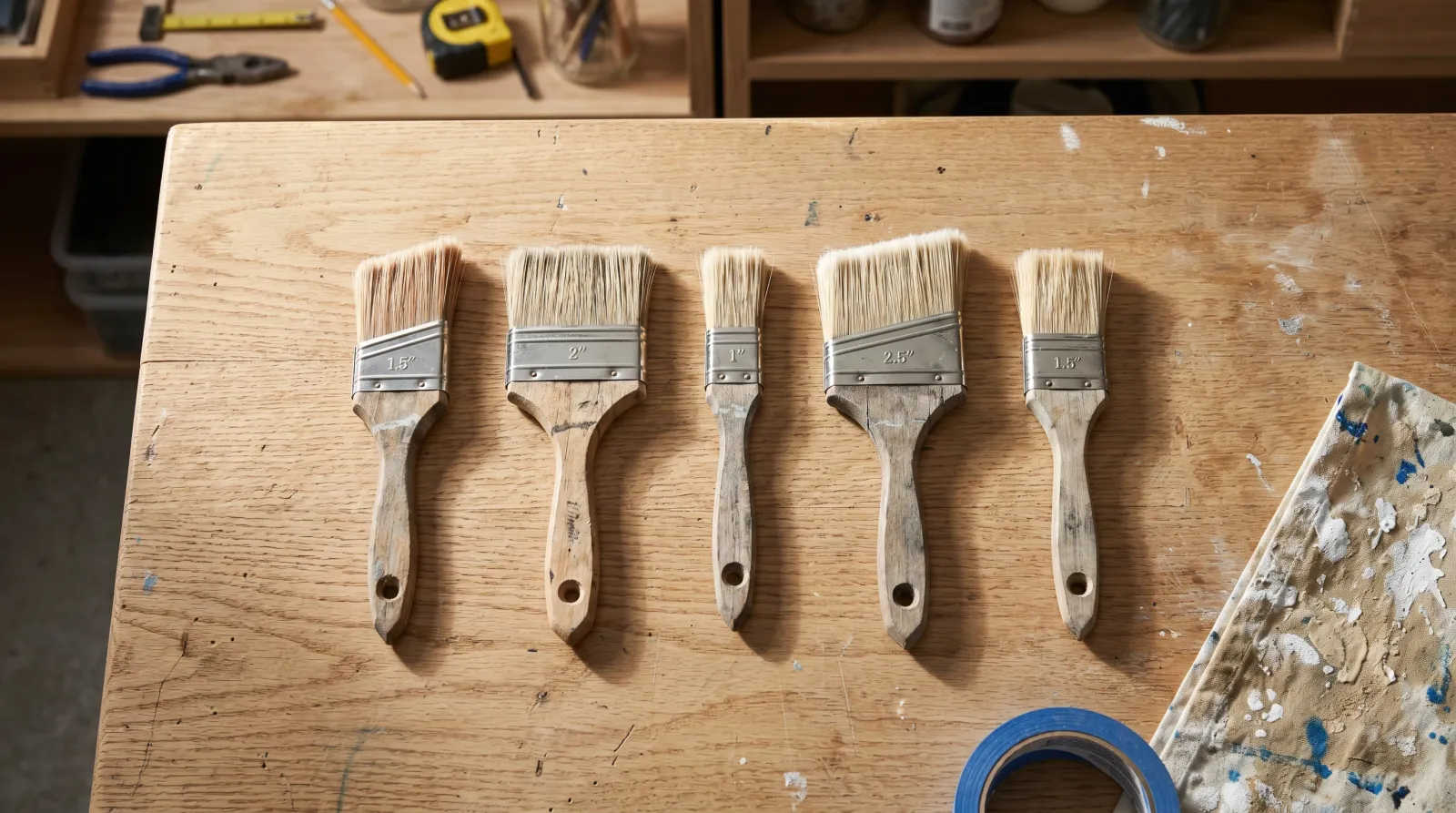
Disclosure: Some links below are affiliate links. We earn a commission if you buy through them, at no extra cost to you.
Top pick: Wooster Softip 2.5” angle sash. It often sells for under eight dollars, and it lays a flatter finish than brushes twice its price. The Softip wins on smoothness, ferrule quality, and shape recovery after a wash. It falls short on rough exterior work, where the soft bristle bends and skips. For walls and high-volume cut-in, the Wooster Gold Edge moves faster. For the sharpest freehand line, the Purdy Clearcut Glide is the stiffer-tip pick. For tight corners, the stubby Wooster Shortcut goes where a full brush can’t. For rough siding and thick paint, the Ultra/Pro Firm is the one that holds its shape.
Cheap doesn’t have to mean bad. It means knowing which cheap brush.
Every brush here costs under fifteen dollars, and three of the five sell under ten.
Why Most Cheap Brushes Fail (and These Don’t)
The bargain-bin brush fails in two predictable places. The bristle and the ferrule.
Bad bristle is loose, untapered filament that sheds the second it gets wet. You see it as hairs stuck in your fresh paint, and you spend the next hour picking them off a tacky wall. Good synthetic bristle is flagged at the tip (split into fine ends) and tapered, so it holds a load and releases it clean. That’s the difference between a Wooster Softip and a dollar-store chip brush, and it’s visible in the first ten minutes.
The ferrule is the metal band that clamps the bristle to the handle. On a real brush it’s stainless steel, crimped tight. On a throwaway brush it’s thin stamped tin or molded plastic, and after one wash it loosens. The bristles splay outward, the brush goes from a chisel tip to a worn-out fan, and it can never cut a clean line again.
Here’s the part that makes this article worth writing. The fix costs almost nothing. A name-brand synthetic sash brush runs seven to thirteen dollars, and it does everything the loose-bristle bargain brush can’t. The cheap-but-good brush exists. You just have to skip the brand-free packs and buy the right model.
How I Tested These
I bought all five off the shelf, the same way a homeowner would, and ran them through three jobs over three weeks. A 11 x 13 bedroom repaint in Benjamin Moore Regal Select eggshell. A hallway trim run in waterborne enamel. A primer coat on a bare patch of new drywall. Each brush did a full cut-in plus a trim section, so every one of them saw real paint on a real edge.
Four things mattered. Cut-line precision, graded against blue tape under raking daylight. Brush-mark visibility, photographed at thirty minutes under a raking LED. Shedding, counted by hand in the first hour. And shape recovery, judged after five wash cycles with warm water, dish soap, and a paint comb.
I’m not going to pretend a budget brush matches a premium one across the board. It doesn’t. The point is which corners each one cuts, and whether those corners matter for what you’re painting.
Picking a Cheap Brush That Lasts
Bristle: Synthetic, Always, for Cheap
For any water-based paint (latex, acrylic, low-VOC, primer), buy synthetic. Nylon, polyester, or a blend. Synthetic holds its shape in water, cleans up under the tap, and survives more washes than a budget natural-bristle brush ever will. Natural hog hair has its place with oil and varnish, but cheap natural brushes are usually the worst of both worlds: floppy, sheddy, and ruined the instant they touch water. Stay synthetic and you avoid the trap.
Within synthetic there’s a softness range, and it decides the job. Soft polyester (the Softip) lays the flattest finish, so it’s the trim-and-wall pick. Firm nylon-polyester (the Ultra/Pro Firm, the Gold Edge) pushes paint harder and cuts faster, so it wins on rough surfaces and big walls. Stiff blends (the Clearcut Glide) carve the cleanest cut line.
Ferrule and Handle: Where the Cheap Tell Hides
This is the fastest way to spot a brush that won’t survive. Look at the ferrule. Stainless steel, tightly crimped, no rust streaks. The handle should be lacquered hardwood, not raw pine or hollow plastic. Every brush in this round-up clears that bar, which is exactly why they last past one room while the true junk brushes don’t.
Width: Two Sizes Cover Almost Everything
A 2.5” angular sash is the everyday brush. Wide enough to move, narrow enough to cut in. Add a 2” angular for tighter spots like door jambs and window mullions. Past that you’re buying for specialty work. For a deeper breakdown of widths and bristle types across the premium tier too, the full paint brush round-up goes wide on the all-rounders.
The Five at a Glance
| Brush | Bristle | Best for | Rough price | Price tier |
|---|---|---|---|---|
| Wooster Softip 2.5” | Soft polyester | Walls and trim, smooth finish | $7–$9 | Budget |
| Wooster Gold Edge 2.5” | Firm CT polyester | Walls and high-volume cut-in | $9–$12 | Budget |
| Purdy Clearcut Glide 2” | Stiff nylon/polyester | Sharp freehand cut lines | $12–$14 | Budget |
| Wooster Shortcut 2” | Polyester, stubby handle | Tight corners and awkward spots | $6–$8 | Budget |
| Wooster Ultra/Pro Firm 2.5” | Firm nylon/polyester | Rough siding, thick paint | $9–$12 | Budget |
1. Wooster Softip 2.5”, Best Overall
The Softip is the brush that makes the case. Wooster sells it under the banner “smooth finish, economy pricing,” and for once the marketing is honest. The soft polyester bristle lays paint down flat enough that, on the hallway trim run, the dried film at thirty minutes showed barely more texture than a brush three times the price. For under eight dollars, that’s the best finish-per-dollar in this group by a clear margin.
It loads well, too. Dip the bottom third, tap the rim twice, and you get a clean four feet of trim per dip in waterborne enamel. The stainless ferrule held tight through five washes, and the tip combed back straight every time. I have one in the kit that’s painted three rooms and still cuts a usable line.
Where it gives ground is on anything rough. The same softness that smooths trim makes the Softip bend and skip on heavy exterior latex over rough siding. Use it indoors, on walls and trim, and it punches well above its price. Push it onto cedar lap and it folds. The tip also flags sooner than a Purdy XL Glide, so a daily-driver contractor would wear one out faster than a homeowner ever could.
| Spec | Value |
|---|---|
| Bristle | Soft polyester, synthetic |
| Sizes | 1”, 1.5”, 2”, 2.5” angle; up to 4” flat |
| Best for | Interior walls and trim, smooth waterborne finishes |
| Rough price | $7–$9 (2.5”) |
Buy it if: you want one cheap brush that lays a clean finish on walls and trim. Skip it if: the job is rough exterior siding. Go firmer.
2. Wooster Gold Edge 2.5”, Best for Walls and Big Jobs
The Gold Edge is the brush I hand someone painting a whole floor in a weekend. Its firm 100% CT polyester releases paint the instant it touches the wall, so a long cut-in goes faster than it does with a soft brush. On the bedroom job it hit full coverage in noticeably fewer dips than the Softip, because firm bristle doesn’t hold paint back the way soft bristle does.
It stays sharp, too. Firm filament doesn’t fan out across a full day, so the tip you start with is roughly the tip you finish with. At nine to twelve dollars, stocked in most pro paint stores, it’s the production brush that doesn’t cost like one.
The trade is finish quality. That firm bristle leaves more visible texture on flat cabinet panels and finish-grade trim than the Softip does. Keep it on walls and primer coats and it’s excellent. Take it to a cabinet door and you’ll see the brush. The tip can also hook after a year of heavy use, so buy two and rotate them rather than running one into the ground.
Buy it if: you’re cutting in a lot of wall and want speed over a glass finish. About $9–$12 for the 2.5”.
3. Purdy Clearcut Glide 2”, Best for Cutting In
This is the splurge of the group, and it’s still under fifteen dollars. The Clearcut Glide runs a stiff Tynex nylon and Orel polyester blend, and that stiffness is the whole point: it lays the sharpest freehand line of any brush here. Pulled along a ceiling line without tape, on a steady-handed day, it cuts an edge clean enough that you can skip the blue tape and save the hour it takes to lay.
The tip springs back to its angle on every single dip. You stop doing that constant little nudge to reshape the bristle that soft brushes force on you. Purdy builds it for latex and low-VOC paint, which is what most people are actually rolling on their walls in 2026.
It stipples mildly on flat panels. That same stiffness that carves a clean cut line leaves faint texture on a cabinet door or a smooth drawer front, so this isn’t your finish brush. Pair it with the Softip if you’re doing a room and its trim. If your cut lines keep wandering, the guide to fixing brush strokes covers technique fixes that no brush swap can solve on its own.
Buy it if: your cut lines need a tape-quality edge freehand. About $12–$14 for the 2”.
4. Wooster Shortcut 2”, Best for Tight Spaces
Every kit needs the weird little brush, and the Shortcut is the cheapest good one. The stubby Shergrip handle is the whole idea: it fits behind a toilet tank, inside a cabinet box, into the back corner of a closet, anywhere a full-length handle jams against the wall before the bristle reaches the surface. At six to eight dollars, it’s cheap enough to buy purely for those spots and leave in the bag the rest of the time.
The soft flexible grip also cuts wrist fatigue on overhead and twisted-angle work, the kind that makes a normal handle dig into your palm.
It’s a specialty tool, and I’m not going to oversell it. The short handle gives up reach and leverage the moment you point it at an open wall or a long baseboard run. Don’t try to paint a room with it. Keep it for the awkward eight percent of the job the big brush can’t reach, and it earns its few dollars on the first bathroom.
Verdict: the corner brush. Buy one, keep it for tight spots, don’t ask it to do more.
5. Wooster Ultra/Pro Firm 2.5”, Best for Rough and Exterior Work
When the surface gets rough, soft brushes quit. The Ultra/Pro Firm is the budget answer. Its firm nylon-polyester blend pushes thick paint down into rough siding, textured plaster, and weathered wood without collapsing the way the Softip does. On a textured surface it holds its chisel shape where a soft brush turns to a wad.
It holds a heavy load and keeps cutting through a long day on exterior trim, which is where cheap brushes usually die. Wooster prices it like a budget brush, but it’s built to take production abuse, so it’s the one I’d send up a ladder.
The firmness costs you on smooth work. On a cabinet door it leaves brush texture a soft brush would level out, so this is the wrong tool for finish-grade interior trim. The stiffer pull also tires the wrist faster on long overhead cut-ins. For exterior wood and rough texture, none of the softer brushes here come close. If you’re prepping bare or weathered siding, the exterior wood prep guide covers the sanding and priming that has to happen before any brush touches paint.
Buy it if: you’re painting rough siding or pushing thick paint into texture. About $9–$12 for the 2.5”.
Brushes I Tried and Wouldn’t Buy Again
- Generic five-piece “value sets.” The two sizes you’d use are fine; the other three are filler, and the bristle sheds. You’re paying for a box.
- Foam brushes. Acceptable for wiping stain on a small piece. Useless on wall paint, where they leave bubbles and streaks.
- Dollar-store chip brushes. Fine for spreading glue or dusting. The bristle leaves the brush and joins your paint film. Not a painting tool.
- Plastic-ferrule “disposable” brushes. They splay after one wash and can’t cut a line. The few dollars saved aren’t worth the room you’ll spend fighting brush marks.
Making a Cheap Brush Last Longer Than the Price Suggests
The brushes above last for years if you wash them, and three weeks if you don’t. Cleanup is what separates a cheap brush that works from a cheap brush you toss.
Latex on a synthetic brush. Scrape the excess back into the can without pushing paint deeper toward the ferrule. Rinse warm water from base to tip, working soap into the heel with your fingers, because the heel is where neglected brushes die. Rinse until the runoff is clear. Comb the bristle straight with a paint comb (about four dollars), then hang it handle-up. Never lay a wet brush flat; it dries with a permanent bend. Four minutes, start to finish.
Between coats on the same day. Wrap the head tight in plastic wrap or foil and stash it. A latex brush keeps overnight in the fridge that way without a full wash. Don’t push past 24 hours; paint sets even cold.
When to retire it. A cheap synthetic is done when the tip fans permanently and won’t comb straight, or when it starts shedding past a few stray bristles. On the budget tier that’s usually after a handful of rooms for the soft brushes and longer for the firm ones. At eight dollars, replacing it doesn’t sting.
The brush is the cheap part of any paint job. The paint and your weekend are the expensive parts. Don’t ruin a forty-dollar gallon and two days of work to save five dollars on the brush.
Mistakes That Waste a Cheap Brush
- Buying on price alone with no name on the ferrule. A brand-free brush at three dollars sheds and splays. A Wooster Softip at eight does neither. The eight-dollar brush is the cheaper one over a year.
- Using a soft brush on rough siding. It bends and skips, you fight it, and you blame the brush. Match the brush to the surface: soft for smooth, firm for rough.
- Skipping the wash. A latex brush left to dry overnight is a brush you threw in the trash. This kills more cheap brushes than anything else.
- Loading past the heel. Dunking more than a third of the bristle drives paint into the ferrule, where it dries hard and splays the brush for good. Dip the bottom third, tap, paint.
- Dragging across the bucket rim. It wipes paint off the very corner you need for cut-ins. Tap both sides against the rim instead of dragging.
A Cheap Kit That Actually Works
For a homeowner doing a couple of weekend rooms a year: Wooster Softip 2.5” ($8), Purdy Clearcut Glide 2” ($13), Wooster Shortcut 2” ($7), a paint comb ($4). About thirty-two dollars for a kit that cuts in, finishes trim, reaches tight corners, and lasts for years.
For exterior or rough work, add the Ultra/Pro Firm 2.5” ($11). For a fast whole-floor repaint, swap the Softip for two Gold Edges and rotate them.
If you’re painting furniture or a small piece and want the finish to look sprayed, the best furniture paint round-up pairs with the Softip for the smoothest hand-brushed result on the budget tier.
FAQ
Can a cheap paint brush actually be good? Yes, if you buy the right one. A Wooster Softip under eight dollars lays a cleaner finish than most no-name brushes at any price, because the bristle is real polyester and the ferrule is stainless. The junk brushes are the shedding chip brushes and the plastic-ferrule packs.
Why are some cheap brushes terrible? Loose, unflagged bristle that sheds into your wet paint, and a thin or plastic ferrule that lets the bristles splay after one wash. Both show up the moment you load paint.
What’s the cheapest brush I should trust for cutting in? The Purdy Clearcut Glide 2”, around thirteen dollars, for the sharpest freehand line. The Wooster Gold Edge cuts a clean-enough line for most rooms a couple dollars under that.
Should I buy a brush set or single brushes? Single brushes. The cheap multipacks pad the box with sizes you won’t use and bristle you don’t want. One 2.5” angle sash plus a 2” covers almost everything.
Ask a Question