How to Paint an Exterior Door
Painting an exterior door the right way: pull it off the hinges, sand and prime the edges, and use a hard enamel so it stops blocking shut in summer heat.

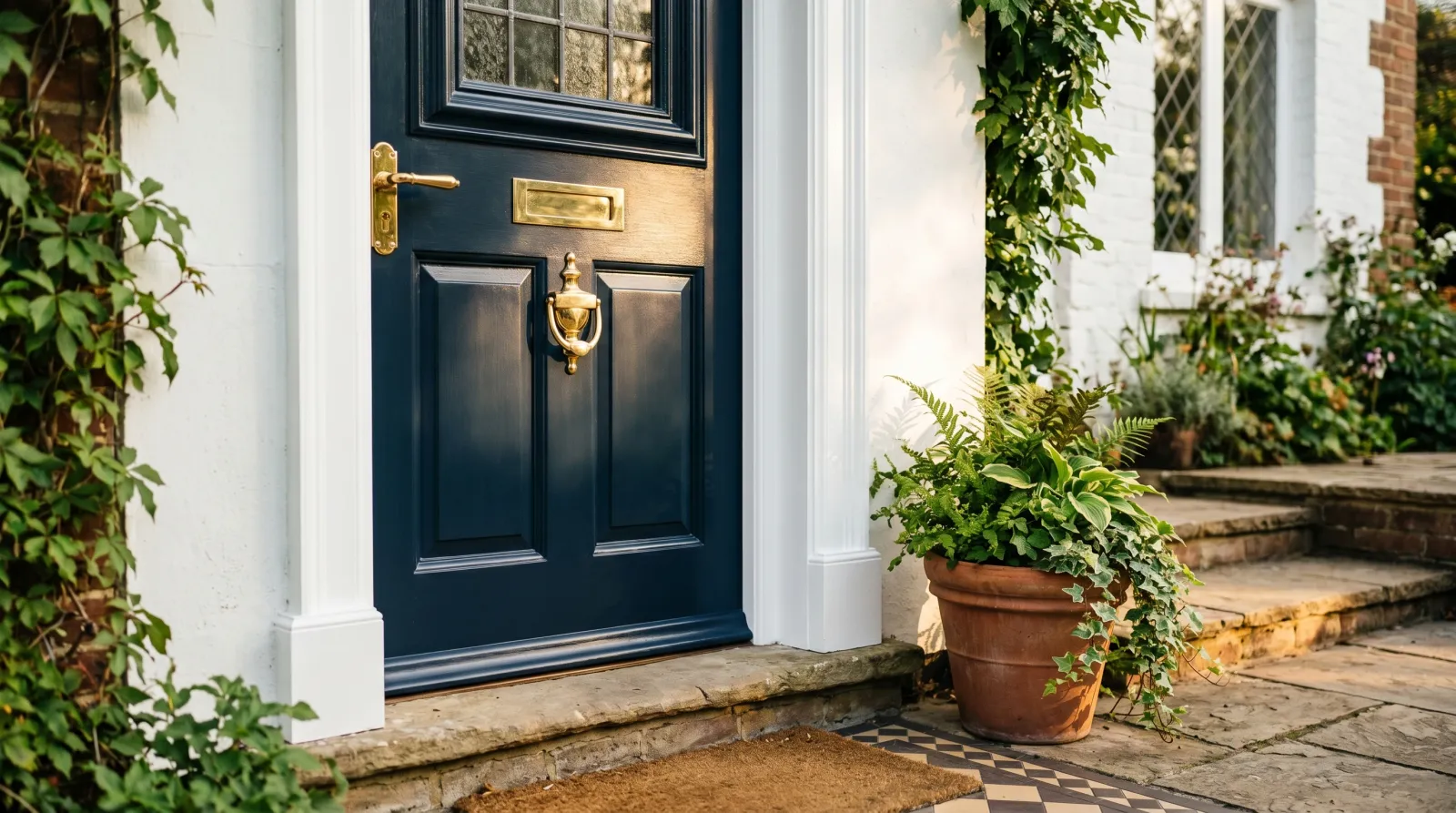
Take the door off the hinges. That’s the whole difference between a door that looks sprayed and a door that looks rushed. A door painted flat on sawhorses drains no drips, sags nowhere, and lets you seal the top and bottom edges where water gets in. A door painted hanging gets runs down the stiles and a bare bottom edge that rots in five years.
An exterior door takes more abuse than any wall in your house. One face bakes in the sun. The edge eats weather. The latch slams it shut a dozen times a day. Paint it like that, with a hard enamel and real prep, or you’ll be back out here next spring scraping.
TL;DR
- Pull the door off the hinges and lay it flat on sawhorses. No drips, no sags, and you can seal the edges.
- Sand the gloss dull with 120-grit. New enamel needs tooth, or it peels off the first hot summer.
- Prime all four edges, including the top and bottom nobody reaches. That’s where water gets behind the paint.
- Use a hard exterior enamel in semi-gloss or satin (SW Emerald Urethane, BM Advance, Behr Alkyd). Skip wall paint.
- Two thin coats, panels first, then rails, then stiles. Tip off each coat with a dry brush.
- Don’t let it latch shut for 24 hours. Soft enamel bonds to the weatherstrip and tears. That’s blocking.
What You’ll Get
A smooth, hard-wearing door with no brush ridges, sealed edges, and a finish that takes a slamming latch without chipping. Done right, it holds 8 to 10 years on a sheltered north door, 5 to 7 on a south-facing one that bakes.
Honest Take on Difficulty and Time
Call it medium. The painting isn’t hard; the prep and cure time trip people up. About four hours of actual work. The rest is waiting.
Realistic schedule: Saturday morning you pull the door, sand, fill, and prime. Saturday afternoon, first color coat. Sunday morning, second coat. Sunday evening you rehang it and leave it cracked open overnight. The paint’s dry to the touch in hours and hard enough to use in a day, but it isn’t fully cured for a couple of weeks.
Worried about an open doorway? Plan it for dry weather and have a piece of plywood or a screen door ready to cover the gap while the slab is off.
What You’ll Need
Paint and Primer
A quart of exterior door and trim enamel in semi-gloss or satin. The waterborne urethane enamels (Sherwin-Williams Emerald Urethane Trim Enamel, BM Advance) level out almost like old oil-based paint and dry hard enough to take a latch. Behr’s Alkyd Semi-Gloss Enamel is the budget version and it holds up fine. A quart does both sides of a standard door with two coats.
Skip flat wall paint. Skip cheap interior trim paint. A door wants a finish that cleans up and resists blocking, which is when soft paint sticks to the weatherstripping and tears.
Primer depends on the door. Bare or repaired wood: a stain-blocking primer like Zinsser Cover Stain, so old knots and tannin don’t bleed through. Slick fiberglass or steel: a bonding primer like KILZ Adhesion, because nothing grips those on its own. For the full breakdown on prepping a wood slab, see the guide to painting exterior wood. For SKU picks, the best exterior paint round-up covers the enamels worth buying.
Tools
A 2.5-inch angled sash brush, the good kind. A $4 brush sheds bristles into your enamel and leaves a streaky line. A $15 Purdy or Wooster lays the paint flat. A 4-inch foam mini-roller for the flat panel faces, and a small tray. Two sawhorses, a cordless drill for the hinge screws, and a putty knife.
If your brushes are shot, the brush picks sort out which ones hold an edge.
Step 1: Pull the Door and Strip the Hardware
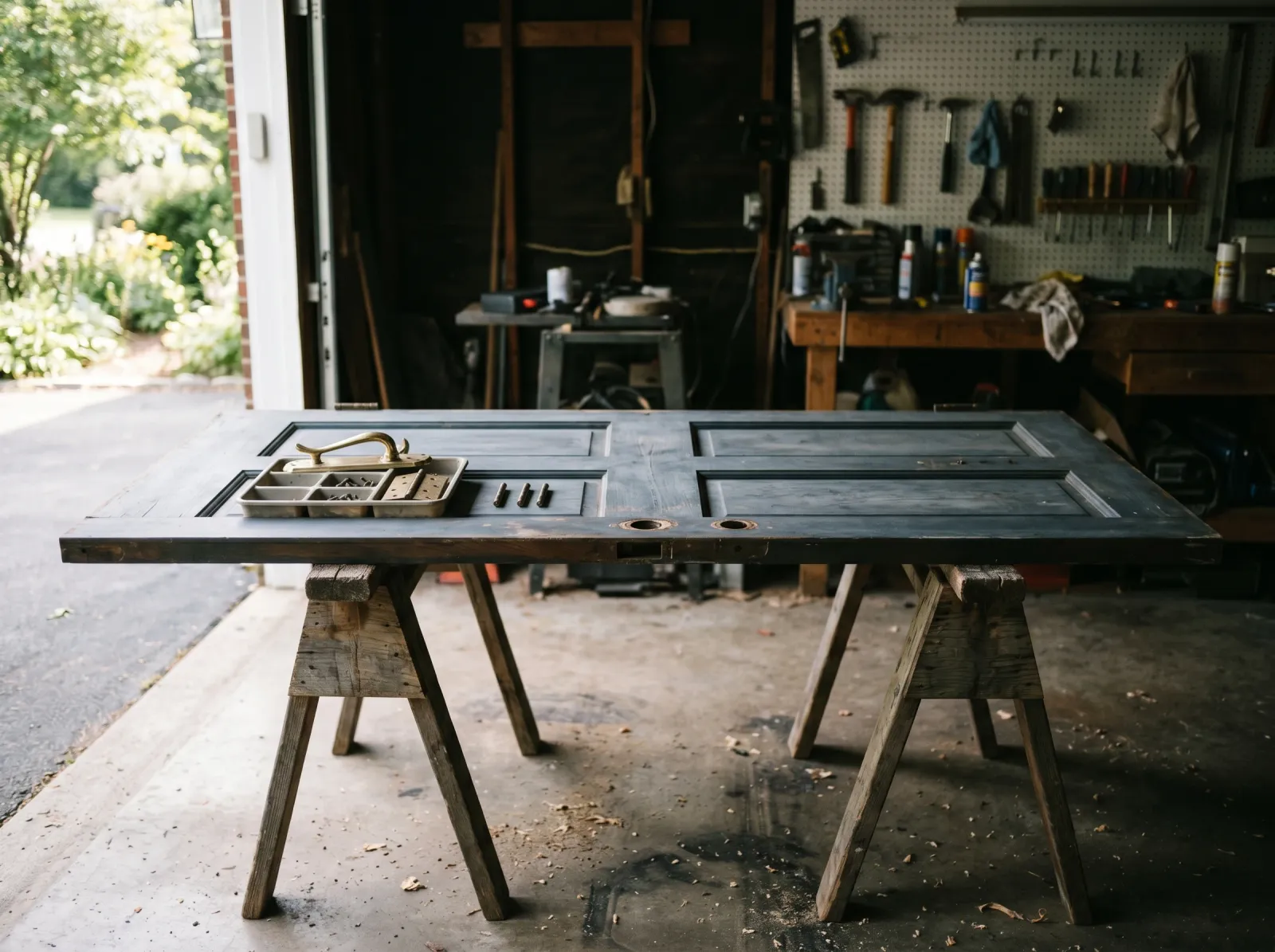
Door lifted off the pins, hardware removed, set flat across two sawhorses in the shade.
Tap the hinge pins up and out, bottom hinge first so the door doesn’t drop on you. Carry it to the sawhorses and set it flat in the shade. Direct sun flashes the enamel before it levels and you get lap marks.
Take off the handle, the deadbolt, the knocker, the kick plate, all of it, and drop the screws in a labeled bag. Painting around hardware leaves a ragged edge and gums up the lock.
Watch out for a door heavier than it looks. A solid-core or steel slab is a two-person lift. Don’t wreck your back or drop it on the threshold.
Step 2: Sand, Fill, and Clean
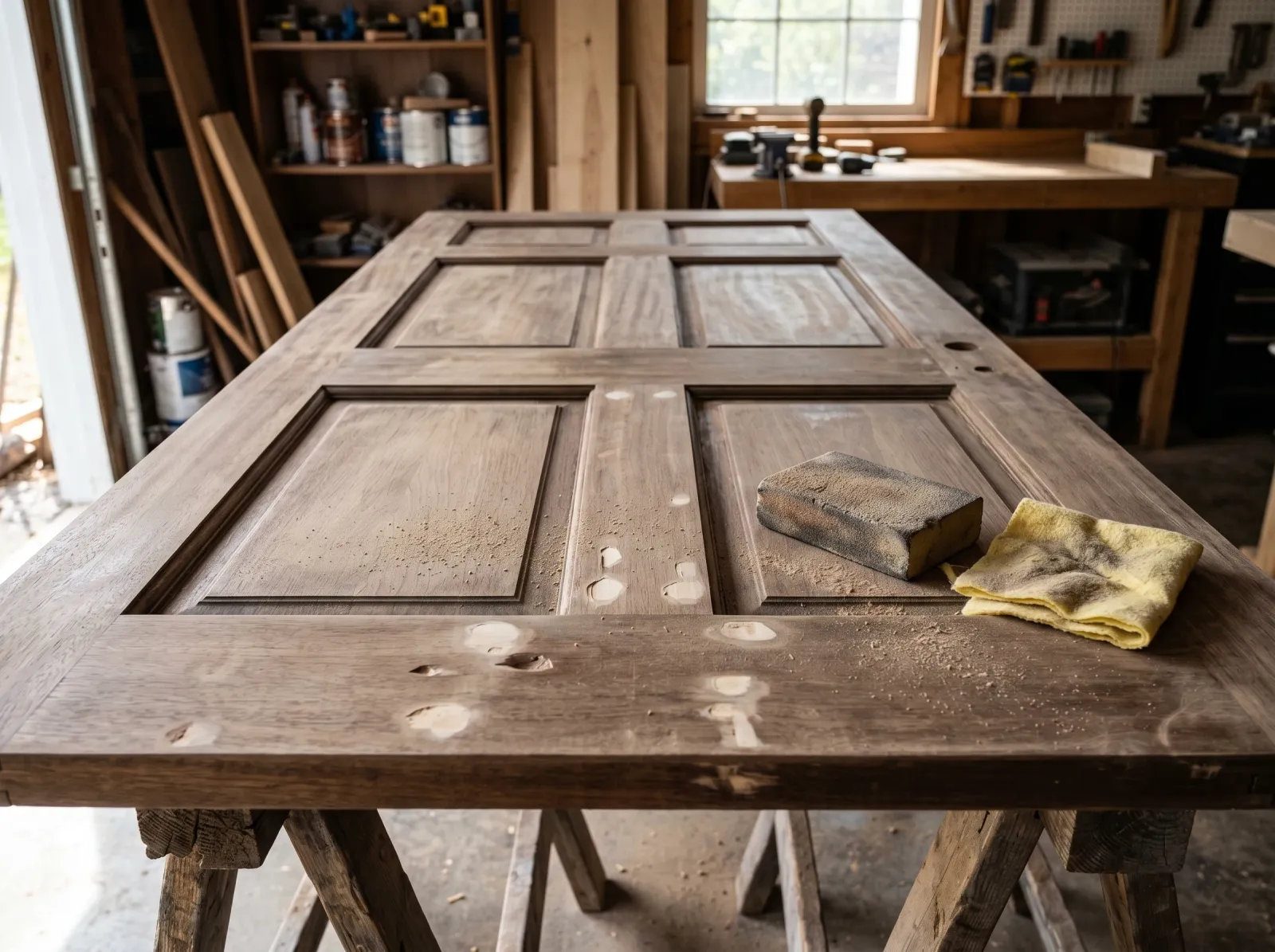
Old gloss knocked down with 120-grit, dings filled, panel profiles scuffed, then wiped with a tack cloth.
Knock the gloss off the whole face with 120-grit until it feels dull, not shiny. New enamel needs tooth to grip. Skip this and the fresh coat peels off in sheets the first hot week. Get into the panel profiles with a sanding sponge; the flat block won’t reach the curves.
Fill any dings and dead screw holes with wood filler, let it set, then sand flush. Hit the whole door with 220-grit for the final pass.
Wipe everything down with a tack cloth. If it’s a door near the kitchen or a grubby storm door, degrease it first with a TSP substitute and let it dry. Grease and sanding dust both kill adhesion.
Watch out for old peeling paint. Scrape it back to a sound edge and feather the edge smooth with 120-grit so the repair doesn’t telegraph through. The peeling paint fix covers the bad cases.
Step 3: Prime, Edges and All
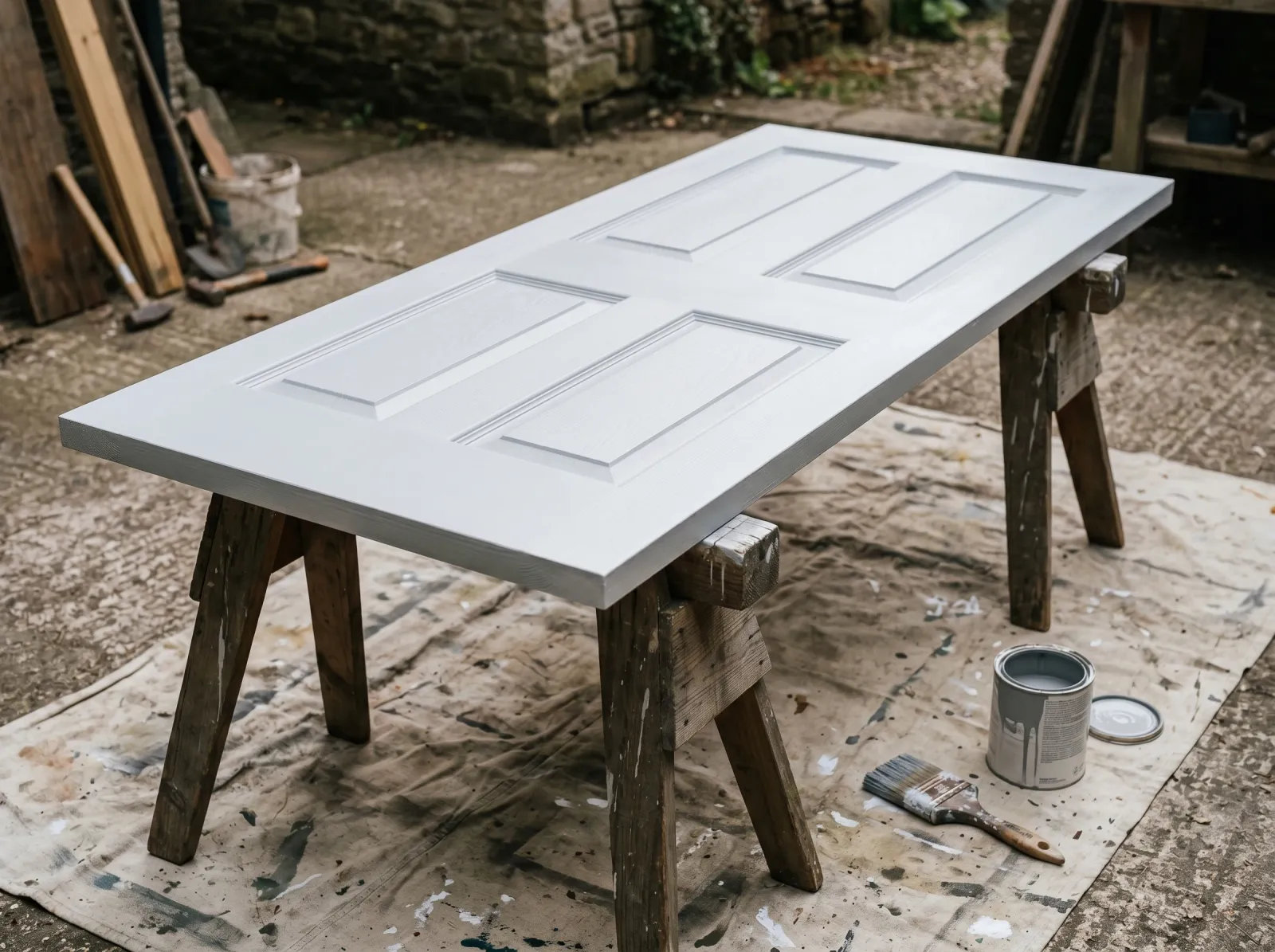
One coat of bonding primer over the whole face and every edge.
Tape off any glass and the weatherstripping. Then prime the whole face, the panel recesses, and every edge. The top and bottom edges are the ones everybody skips, and they’re exactly where water wicks into bare wood and lifts the paint from behind.
Brush the primer into the recesses first, roll the flats, then tip it off with the dry brush to pull out the ridges. One coat is enough. Let it dry per the can, usually an hour or two, then scuff it lightly with 220 before color.
Watch out for raised grain on a freshly sanded wood door. Primer swells the fibers and they feel rough. That light 220 scuff after the primer dries is what gives you a glass-smooth color coat.
Step 4: First Color Coat, In the Right Order
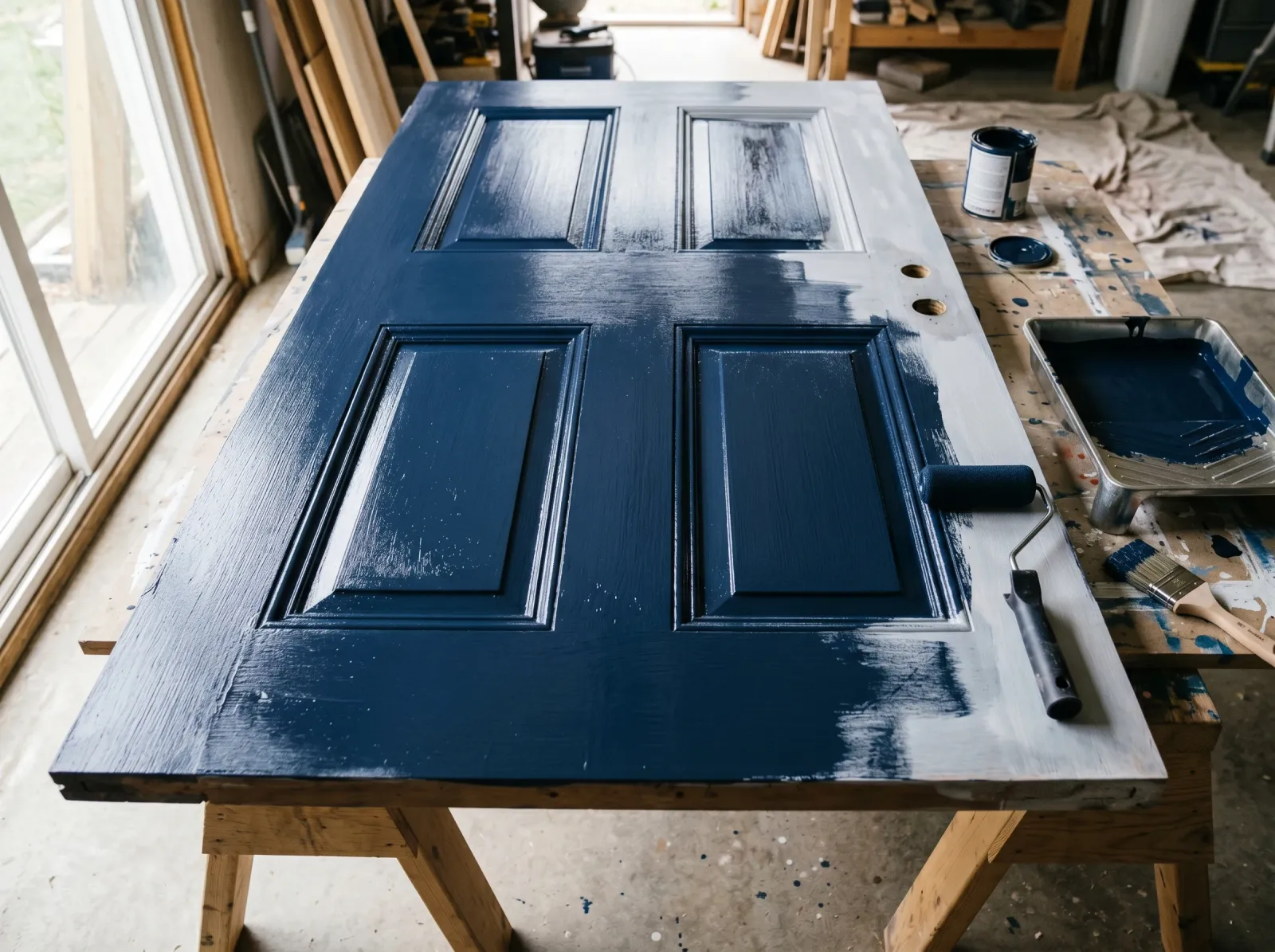
Panels first, then the rails, then the long stiles. Roll the flats, tip off with the brush.
Order matters on a paneled door. Paint the recessed panels first, then the horizontal rails (the cross-pieces), then the long vertical stiles last. That way any overlap gets smoothed by the stile strokes instead of leaving a hard line.
Load the brush a third of the way, cut the panels and edges, roll the flat faces, then tip off every flat with a near-dry brush in one direction. Thin even coats. A heavy coat sags and stays soft underneath for a week.
Watch out for enamel pooling in the bottom corners of the panels. Catch it with the brush tip while it’s wet, or you’ll be sanding a dried pool flat and recoating.
Step 5: Second Coat, Then Rehang
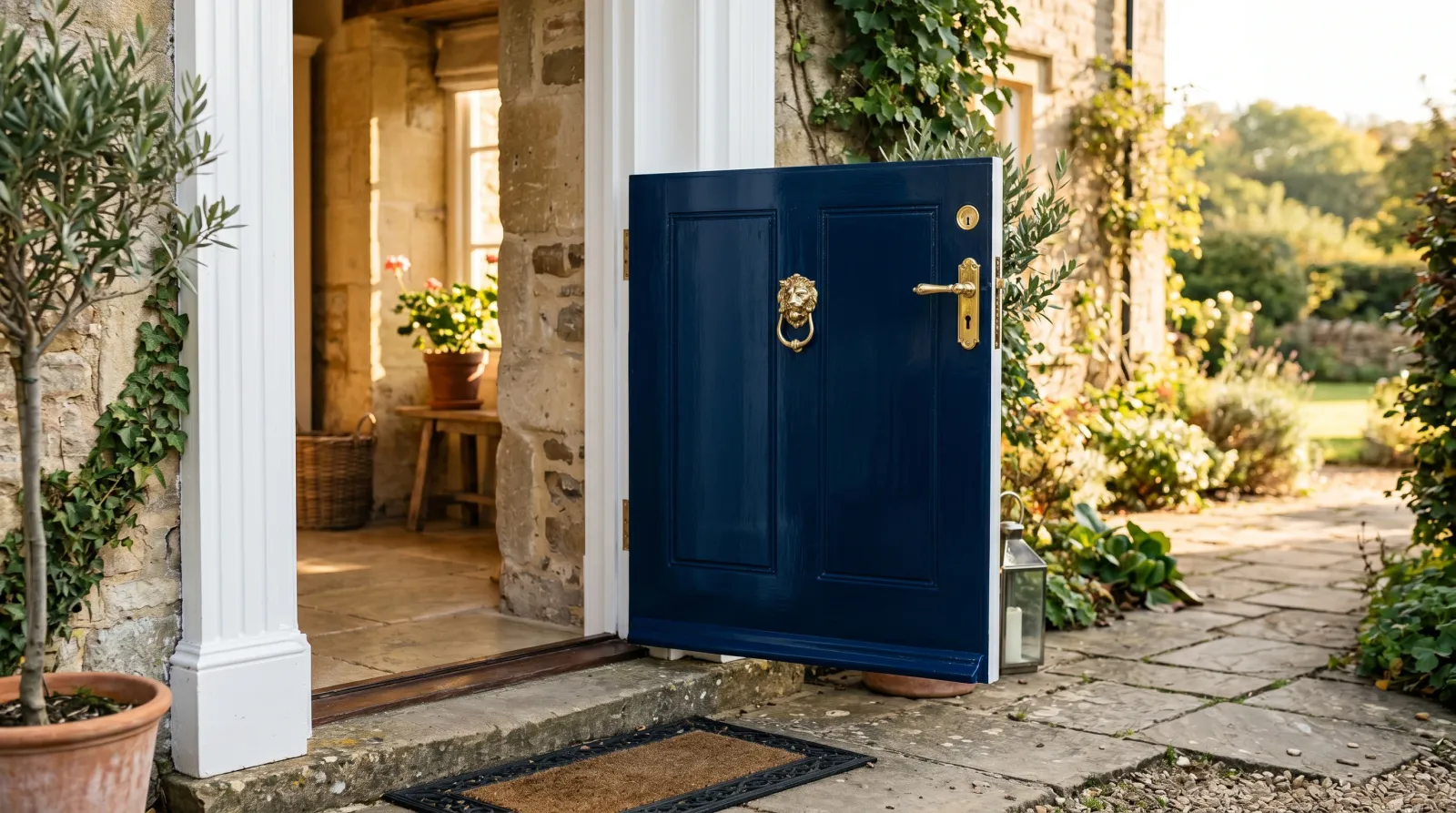
Two coats cured, door back on the hinges, hardware reinstalled.
Let the first coat dry the full recoat window on the can, usually 4 to 6 hours for a waterborne enamel. Recoat too soon and the brush drags the soft under-layer up into a mess. Second coat goes on the same way: panels, rails, stiles, tip off.
When the second coat is dry to the touch (a few hours), rehang the door, top pin first so it sits in the frame. Reinstall the hardware. Then leave it cracked open. Do not let it latch against the weatherstripping for the first day.
Watch out for blocking. This is the one that bites people. The enamel feels dry but it’s still soft, and a latched door bonds to the rubber seal overnight, then tears the paint when you open it in the morning. Crack the door, or rub a little talc or a candle stub on the weatherstrip to keep it from grabbing.
How Long Before I Can Close the Door?
Touch dry in 2 to 4 hours. Safe to use, gently, in 24. But “use it” and “let it latch shut against the seal” are two different things. Keep it from sealing tight that first day. Full cure on a waterborne enamel is two to three weeks, and until then the film scratches easier than it will once it’s hard.
Common Mistakes
- Painting the door hanging. Runs down the stiles, a bare bottom edge that rots, and you can’t lay the enamel flat. Pull the door. Twenty minutes of hinge-pin work saves the whole finish.
- Skipping the sand on a glossy old finish. Nothing grips. The new coat peels in sheets the first hot summer. Scuff the whole face dull with 120-grit, no exceptions.
- Leaving the top and bottom edges bare. Water wicks into raw wood from those edges and lifts the paint from behind. Prime and paint all four edges.
- Latching the door too soon. The paint blocks to the weatherstrip and tears when you open it. Leave it cracked the first 24 hours.
- One thick coat to save a trip. It sags, skins over, stays soft for a week, and blocks worse. Two thin coats, tipped off, every time.
Cure Schedule
| Time after final coat | What’s safe |
|---|---|
| 2–4 hours | Touch dry; rehang if you must |
| 24 hours | Light use; keep it from latching tight |
| 3 days | Normal latching and slamming |
| 7 days | Wipe down gently |
| 2–3 weeks | Full cure; scrub, lean things against it |
Maintenance and Touch-Ups
A sheltered north or east door holds 8 to 10 years. A south or west door in full afternoon sun fades and chalks faster, figure 5 to 7. Sun kills door paint faster than weather does, and a deep color on a baking south door is the shortest-lived combination there is.
Wash the door twice a year with mild soap and water. Most “fading” is just road film and pollen. For a chip down to primer, scuff the spot, dab a little enamel with an artist’s brush, feather the edge. Keep the leftover quart sealed and labeled. It blends better than a fresh can mixed two years later.
Cost Breakdown
| Item | $ |
|---|---|
| Door and trim enamel, 1 quart | $22–$45 |
| Bonding or stain-blocking primer, 1 quart | $14–$22 |
| Sandpaper, sponge, filler, tack cloth | $15 |
| Angled brush + foam mini-roller + tray | $25 |
| Tape and rags | $10 |
| Total | $86–$117 |
You likely own the sawhorses and the drill. Borrow them if not.
What’ll bite you in two years: the bottom edge you couldn’t be bothered to seal because the door was half-rehung and you wanted to be done. That’s where the rot starts and the peel begins. It’s a thirty-second job while the door’s still flat on the horses. Seal it now.
Ask a Question