What Is Satin Paint?
Satin reads 15–35 gloss units at 60° — between eggshell and semi-gloss. Here's why that middle slot wins the kitchen, the bath, and the kid's hallway.

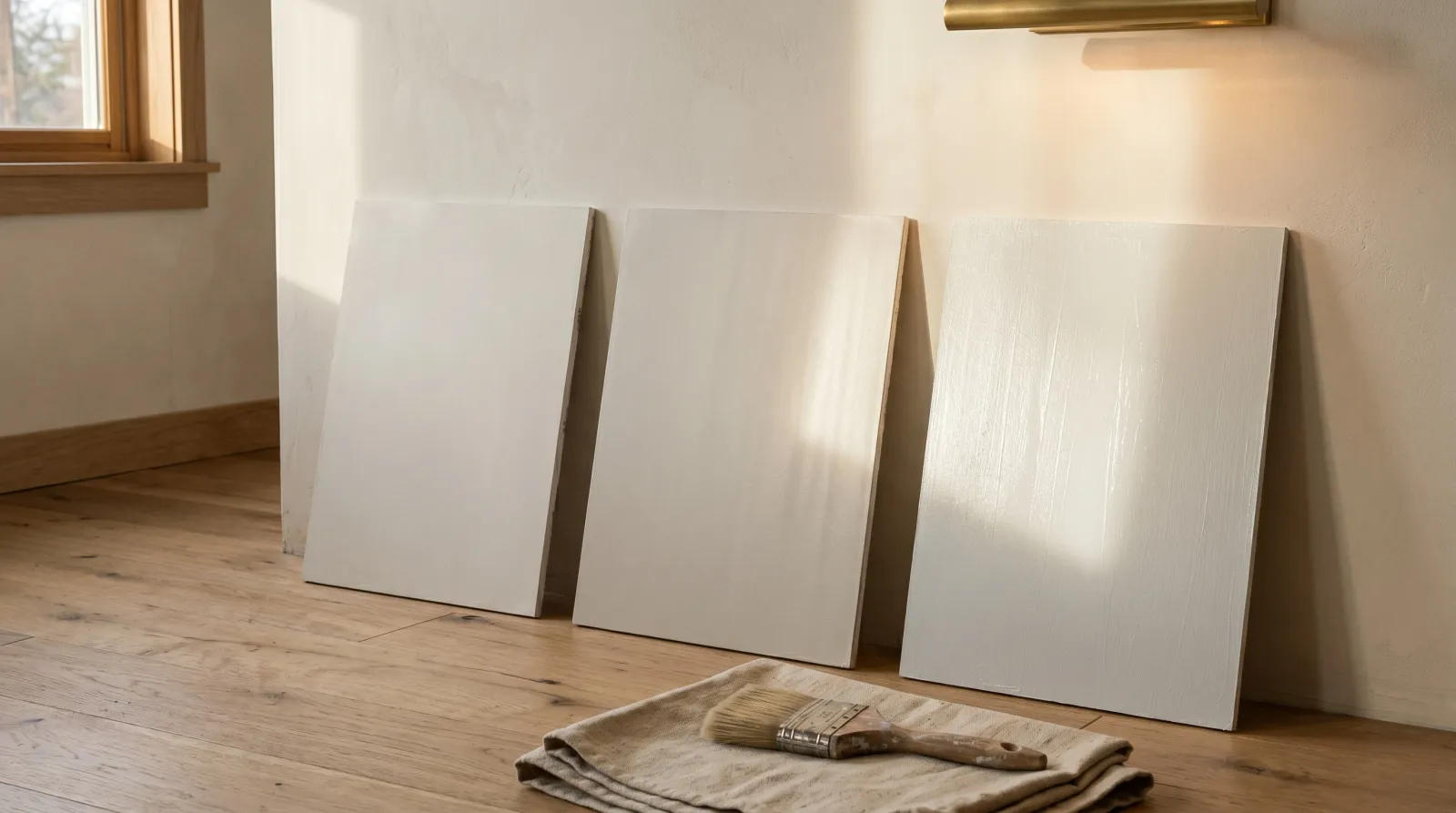
You notice it before you can name it. Two walls painted the same color from the same can read slightly different in afternoon light. One looks softer, one has a quiet glow that catches the eye. The difference isn’t the paint, it’s the sheen, and the one that quietly glows is almost always satin.
Satin paint sits in the middle of the sheen ladder. Measured on a gloss meter at 60°, it reads 15 to 35 gloss units. Eggshell sits just below at 10 to 25, semi-gloss climbs to 35 to 65, and full gloss tops out above 70. That middle slot is where the modern interior wall has landed for almost any room that gets touched, splashed, or wiped: kitchens, bathrooms, kid hallways, mudrooms, trim that doesn’t want to look plastic. The reason for that comes down to two competing demands. A wall has to look good, and it has to clean up. Satin is the compromise where neither one loses badly.
Where the Sheen Actually Comes From
Sheen isn’t pigment and it isn’t binder by itself. It’s the ratio between them, called pigment volume concentration, or PVC. The binder is the clear polymer that forms the film; the pigment is the solid particles suspended in it. A high-PVC formula has more pigment than the binder can fully coat, so pigment particles stick up above the dried film like pebbles in dried concrete. Light hits them and scatters in every direction. That scattering is what your eye reads as “matte.”
Lower the PVC by adding more binder, and the dried film grows a thin layer of pure resin sitting on top of the pigment. Light hits that resin layer and reflects more like a mirror. Less scatter, more directional bounce. That’s gloss. Eggshell, satin, semi-gloss, gloss is just a ladder of decreasing PVC. Satin sits at roughly 30–35% PVC, which gives you a surface where the binder layer is just thick enough to wipe clean but not thick enough to read as shiny under most room light.
The substrate matters too. A latex satin film forms in two stages. Water evaporates, then the binder particles fuse into a continuous film. If part of the wall is more porous than the rest (a fresh patch, a degreased spot, raw drywall under a thin primer), it pulls water out of the wet paint faster. The binder doesn’t get the time it needs to coalesce evenly. The dried film is chemically the same paint, but optically duller where the substrate stole the water. People blame the paint. The fix was upstream, in the primer pass.
Why It Sits Where It Does on Scrubbability
The other reason satin earns its middle slot is mechanical. The ASTM D2486 scrub test runs a weighted brush across the cured film and counts cycles until the film fails. Flat and matte fail at a few hundred cycles on most premium lines. Eggshell survives 400–800. Satin clears 1,000 routinely on a 100% acrylic film, and the best satins (Aura, Emerald, Marquee) push past 2,000 before any burnishing shows. Semi-gloss does a little better than satin, full gloss a little better still, but the curve flattens. You don’t get dramatically more scrubbability by going from satin to semi-gloss; you do get a noticeably shinier wall.
That’s why the kitchen, the bathroom, and the high-traffic hallway are satin territory. You’re trading one gloss unit’s worth of cleanability for several gloss units’ worth of softer look. Most rooms make that trade gladly.
When to Use Satin
Use it for:
- Bathroom walls outside the direct splash zone. Full acrylic satin holds up to wipe-downs without burnishing once cured.
- Kitchen walls behind a stove or sink. Wipeable, and reads softer than semi-gloss under cabinet lights.
- Hallways with kids, dogs, scooters, or grocery-bag scrapes. The surface that survives a magic eraser.
- Interior trim where you want crisp edges without the plastic look of full semi-gloss.
- Doors and door frames in modern interiors. The contemporary alternative to high-gloss trim.
When Not to Use Satin
Don’t use it for:
- Walls with visible drywall imperfections, roller stipple from a previous job, or untextured ceilings. The sheen catches raking light and reveals everything.
- Living rooms or bedrooms aiming for a soft, sophisticated read. Step down to eggshell or matte.
- Direct splash zones in a heavy-use bathroom (the wall behind the tub, the splash arc above a sink). Step up to semi-gloss or use a dedicated bath product like Aura Bath & Spa.
- Ceilings in normal rooms. Sheen plus low grazing light equals every seam visible. Flat or matte is the default.
How Satin Compares
| Property | Matte / Flat | Eggshell | Satin | Semi-Gloss |
|---|---|---|---|---|
| Gloss units (60°) | 0–10 | 10–25 | 15–35 | 35–65 |
| Hides wall flaws | 🟢 Best | 🟢 Good | ⚪ Fair | 🟡 Worst |
| Scrubbability | 🟡 Worst | ⚪ OK | 🟢 Strong | 🟢 Best |
| Best room | Bedrooms, ceilings | Living rooms | Kitchen, bath, halls | Trim, doors, splash |
For the full ladder including gloss, see the sheen guide. For the head-to-head with the next step up, see satin vs semi-gloss.
Common Mistakes
- Putting satin over un-skim-coated drywall. Old construction-grade drywall has roller stipple and seam ridges that flat paint hid. Satin reveals them in raking light. Skim, re-prime, then go satin, or accept eggshell.
- Wiping the wall at day three. Touch-dry is not cured. The acrylic binder needs 14 to 30 days to fully coalesce. Wash early and the cleaned spot reads brighter than the surrounding wall because you polished an immature film. Wait three weeks before any real scrub.
- Trusting the label across brands. Behr’s satin sits near the top of the 15–35 range. Sherwin’s satin sits near the bottom. Don’t switch brands and assume the sheen carries. Paint a sample board and read it in your actual light.
- Touch-up patches mid-wall. Satin and above don’t hide partial repaints. The patch always shows in raking light. Repaint the wall corner to corner or step down a sheen before you start.
What to Buy
Premium 100% acrylic satin is the floor for anywhere you’ll wash the wall. Benjamin Moore Aura Interior in satin, Sherwin-Williams Emerald in satin, and Behr Marquee in satin all clear the ASTM scrub thresholds that matter. For specific picks by room, see the best bathroom paint round-up and the scrubbability guide for the test numbers.
The practical takeaway: satin is the sheen you choose when the wall has to look soft and survive a sponge. If either side of that pulls hard, if the wall is too rough to flatter, or the room is too splashy to forgive, step one notch in that direction and don’t compromise.
Ask a Question