How to Clean Up a Paint Spill
Paint spill cleanup, step by step. Blot wet paint, lift dried paint off carpet, wood, and tile, and know when latex turns permanent. The honest version from a 22-year contractor.

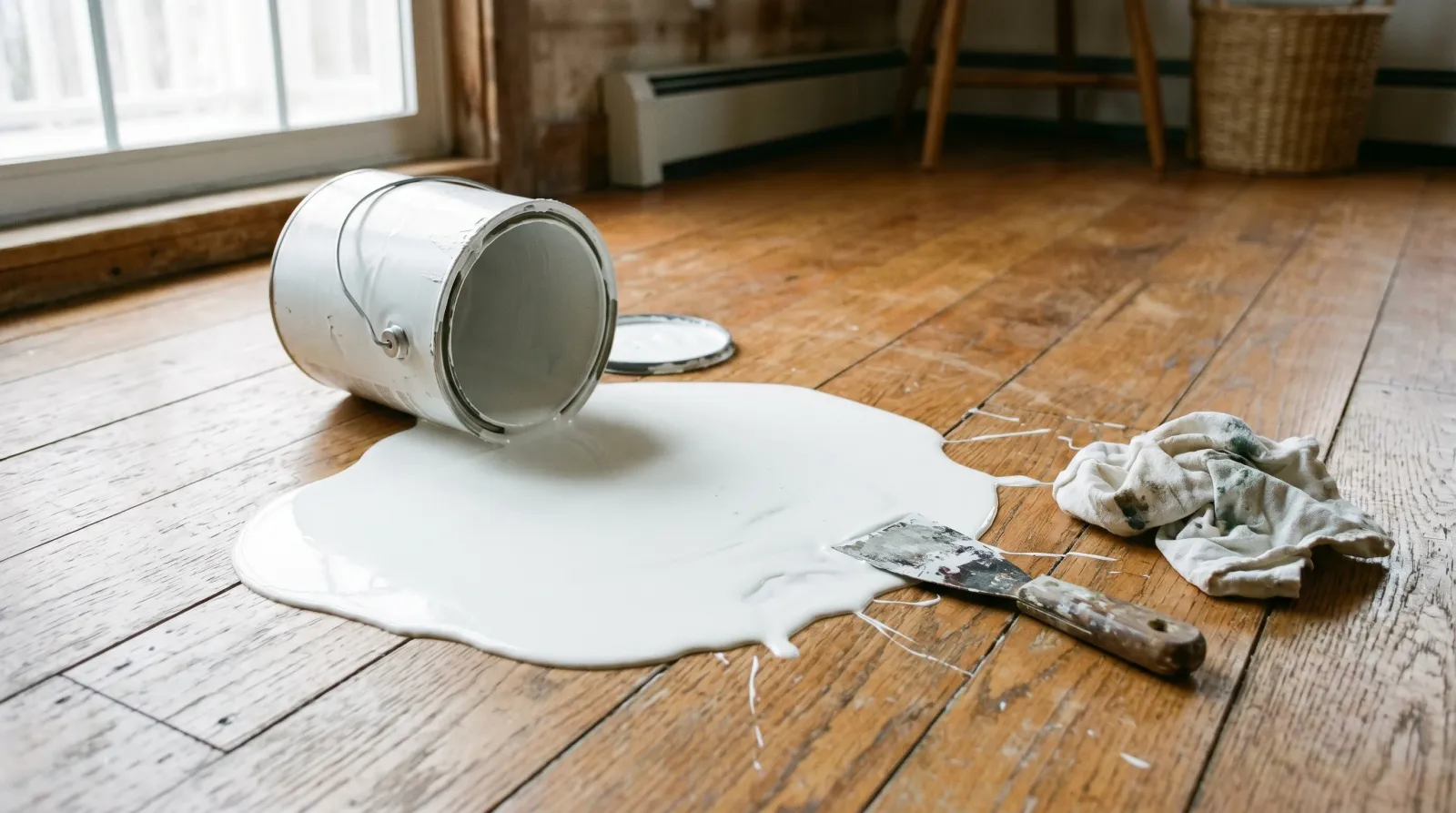
A paint spill isn’t an emergency. It’s a clock. Wet paint comes up easy; dried paint fights you. The whole job is getting to it before it sets, and knowing the few surfaces where even wet paint is already lost.
Does This Match What You’re Seeing?
Two things decide how hard this is: what kind of paint, and what it landed on. Sort that first.
- Glossy, still-wet puddle on a hard floor: the easy case. Latex on tile, sealed wood, vinyl, or metal. You have plenty of time.
- Wet paint soaking into carpet: the clock is loud. Latex wicks down into the pad in minutes. Blot now, read the rest later.
- Wet paint on bare or unsealed wood: soaking into the grain as you watch. Blot fast and accept some will stay in the pores.
- Dried film on a hard surface: annoying, not bad. Latex re-softens with warm water and peels.
- Dried paint crusted into carpet or fabric: the hard case. The fiber is dyed now, not just coated.
- Solvent smell, can says “mineral spirits” for cleanup: oil-based. Water does nothing. Different chemistry, covered below.
If you’re not sure whether it’s latex or oil, rub a wet rag on a hidden edge of the spill. Latex moves and tints the rag. Oil-based ignores water completely.
How Serious Is This?
Most spills are a same-hour fix. Three things move it up the ladder.
- Carpet or upholstery, latex already drying: medium. You have a real shot if you start now and a poor one in an hour.
- Oil-based paint anywhere indoors: medium. Solvent fumes, ventilation, and rag disposal all matter. It’s not dangerous if you respect it.
- Large spill on bare hardwood or unsealed concrete: medium. The stain in the grain or pores may outlast the cleanup, and you’re into refinishing territory.
Nothing here is a health hazard on the scale of mold or lead. The risk is a permanent mark on something you didn’t want to mark, and that risk is almost all about time.
Why a Spill Sets (root Cause)
Paint dries in two stages, and the cleanup window lives in the gap between them.
First the water (latex) or solvent (oil) flashes off. That’s dry-to-touch, usually 30 minutes to an hour for latex. Then the binder crosslinks and cures, which for latex takes days and for oil takes longer. While the paint is still wet, the binder hasn’t grabbed the surface yet. Water can still float the whole thing off a non-porous floor, and a rag can still lift it out of carpet fibers before it locks in.
The moment latex flashes off, the film starts gripping. On glass or tile that grip is weak and you can peel it. On carpet, wood grain, and concrete pores, the paint has already wicked into the surface, and now it’s curing in place. That’s why the same spill is a five-minute wipe on tile and a refinishing job on bare oak.
Porosity is the other half. A non-porous surface holds paint on top, where you can reach all of it. A porous one pulls paint below the surface, where you can’t. Carpet, raw wood, grout lines, and bare concrete are the porous traps. Sealed floors, glass, metal, and finished trim are the easy ones.
So the rule is simple. Speed beats every technique. Get to it wet.
The Fix
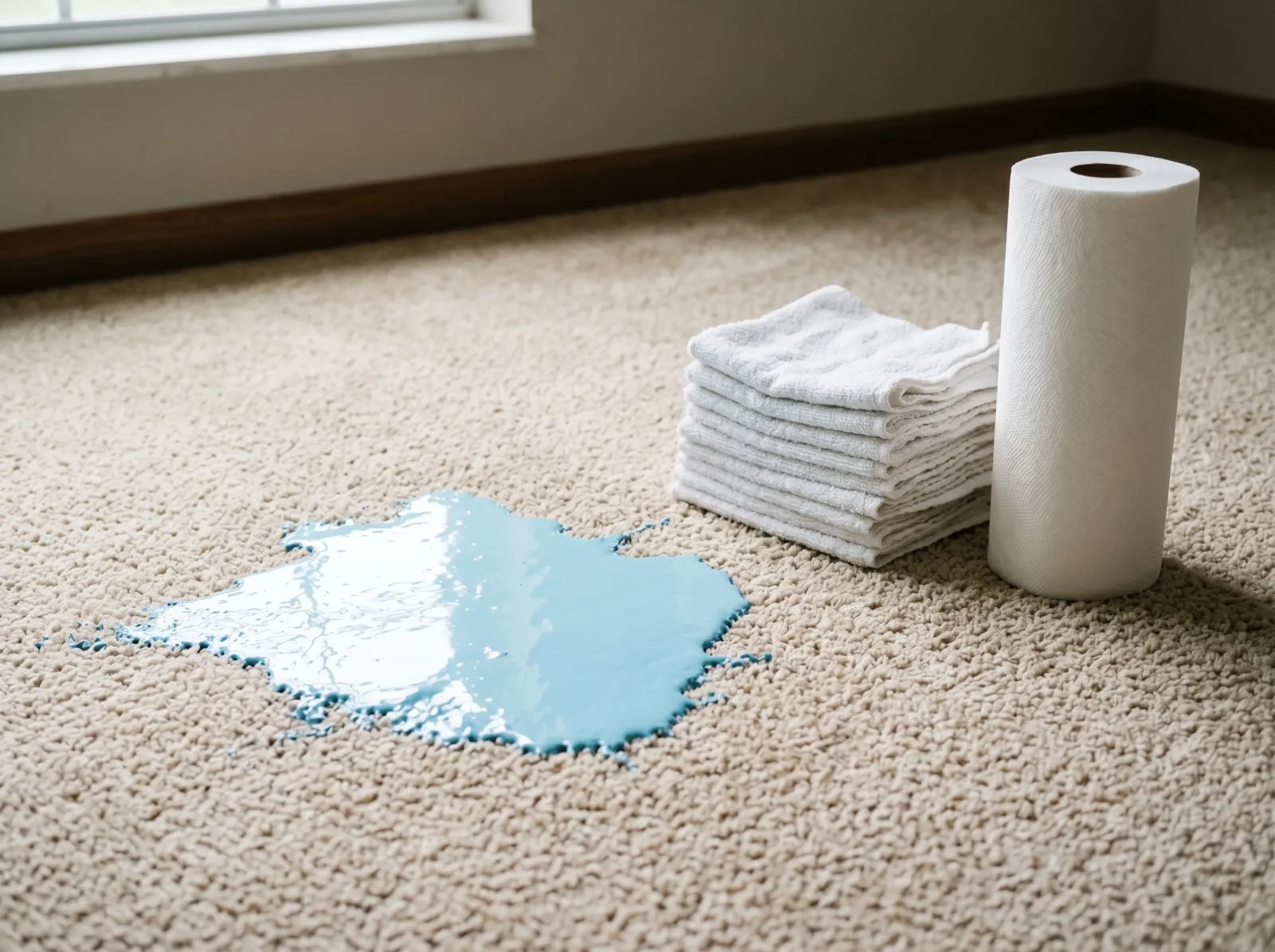 First move on any spill: contain and blot the wet paint before it spreads or soaks in.
Step 1. Contain It, Don’t Smear It
Stop the spread before you clean anything. Lay rags or paper towels in a ring around the puddle to dam it. On a hard floor, scoop the bulk back into the can with a plastic putty knife or a piece of cardboard. Work from the outside edge toward the center so you don’t widen the pool.
Do not wipe yet. Wiping a fresh spill grinds it into the surface and triples the area. Lift and scoop first.
Step 2. Blot Wet Paint Out of Carpet
Latex on carpet is all about blotting, never rubbing. Press a clean white rag straight down into the spill, lift it, move to a clean section of rag, press again. Rubbing drives paint into the pad and frays the fiber.
When the rag stops picking up color, switch to a solution of one teaspoon dish soap in one cup of warm water. Dab it on, blot it up, repeat. Keep going until the rag comes away clean. A wet/dry shop vac helps on the final passes to pull the diluted paint and water up out of the pad. Don’t vac while the paint is still thick; you’ll spread it.
Finish with plain warm water to rinse the soap, then weigh a dry towel down on the spot overnight to wick the last moisture out.
Step 3. Lift Dried Paint Off Hard Surfaces
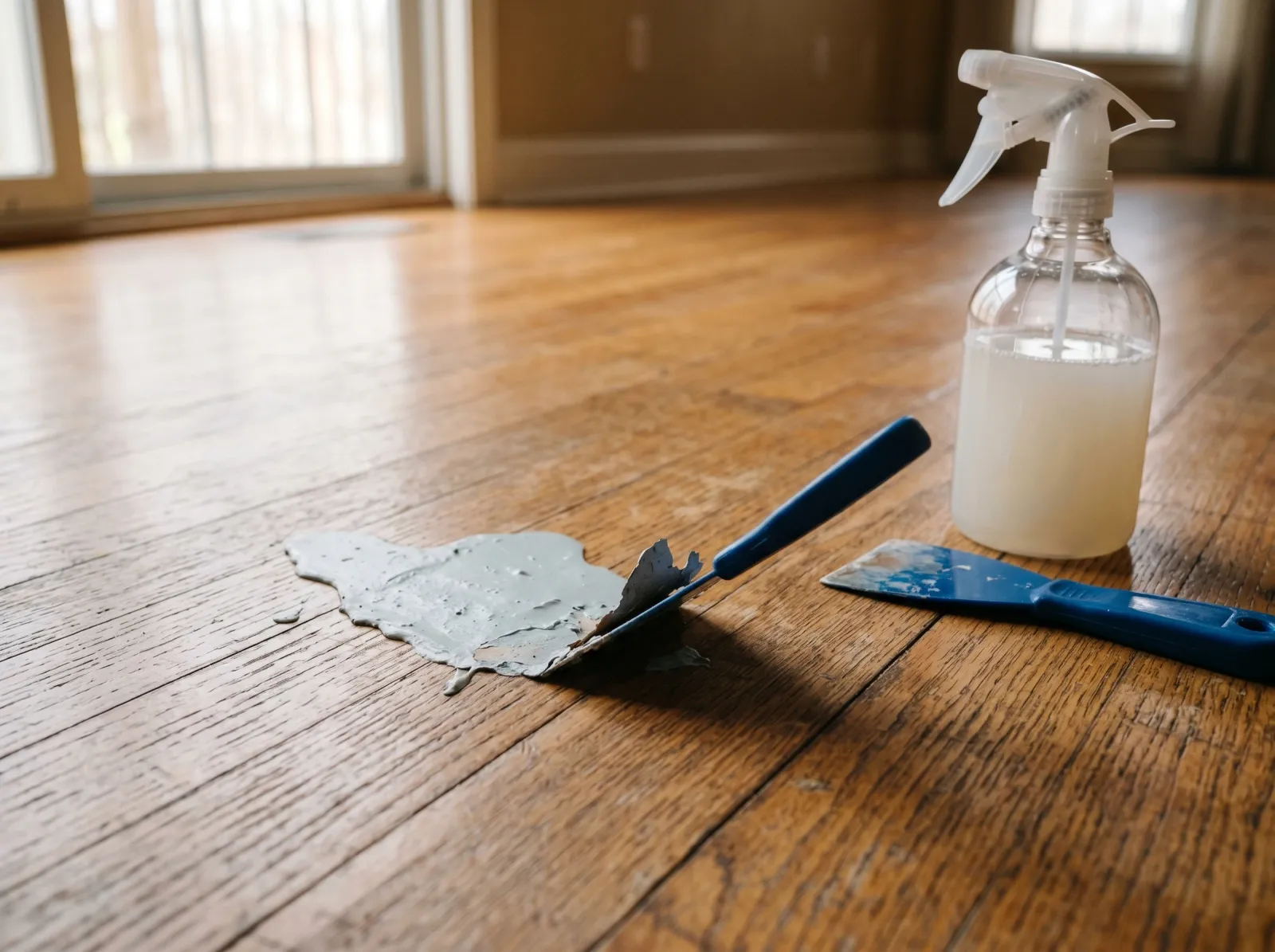 Dried latex on a sealed hard floor: soften with warm soapy water, then lift the edge with a plastic scraper.
Dried latex on tile, glass, sealed wood, vinyl, or metal is the friendly version. Soak a rag in warm soapy water and lay it over the dried paint for 10 minutes. The film re-absorbs water and loosens its grip.
Then slide a plastic putty knife or an old credit card under the edge and lift. On glass you can use a razor scraper held at a low angle. Plastic on everything softer, so you don’t gouge the finish. Most dried latex peels off in one sheet once it’s had its soak.
For a stubborn haze left behind, a dab of rubbing alcohol on a rag cuts cured latex without harming most sealed finishes. Test a hidden spot first.
Step 4. Handle Oil-Based Paint Separately
Water won’t touch oil-based paint. Use the solvent the can names for cleanup, usually mineral spirits or paint thinner. Dampen a rag, work from the outside in, and keep moving to clean rag sections. Open windows and run a fan; the fumes are the real hazard, not the paint.
On a hard floor, oil-based wipes up with mineral spirits while wet and needs a solvent-soaked soak when dry. On fabric or carpet, oil-based is rough and often permanent once cured. For the difference in how these two paints behave and clean up, see oil-based vs water-based paint.
Step 5. Clean the Spot, Then the Surface
After the paint’s gone, the surface still carries soap film, solvent residue, or a faint stain. Rinse hard floors with clean water and dry them. Spot-clean carpet with a little upholstery cleaner. On bare wood where paint soaked into the grain, you’re now looking at light sanding and a refinish on that board, which is its own job.
Safety
Gloves for any solvent work. Cross-ventilate the room when you’re using mineral spirits or rubbing alcohol. Never mix cleaning products. Bleach with ammonia or vinegar makes toxic gas, and it has no place near a paint spill anyway. Oil-soaked rags can self-heat and ignite. Lay them flat outdoors to dry before you bag them; don’t ball them up in a trash can.
How Do You Get Dried Paint Out of Carpet?
This is the case people most want a miracle for, so here’s the honest version. Dried latex in carpet is sometimes salvageable and sometimes not.
Soften the crust with warm soapy water and let it sit 10 minutes. Scrape the surface paint off with a blunt edge, then work the fibers with an old toothbrush and more soapy water, blotting as you go. A little rubbing alcohol on a rag, dabbed and blotted, breaks down what soap leaves behind.
If the paint went deep and dyed the fiber before it dried, no cleaner brings the color all the way back. At that point you’re choosing between living with a faint shadow, a professional carpet cleaner, or cutting and patching that section. I’ve seen a sharp pro lift a two-day-old latex spill that looked hopeless. I’ve also seen fresh spills that wicked to the pad and never came clean. Speed is why one worked and the other didn’t.
Common Mistakes
- Wiping a fresh spill. Turns a saucer-sized puddle into a dinner-plate stain. Scoop and blot, don’t wipe.
- Rubbing carpet. Drives paint into the pad and mats the fiber. Press straight down, lift, repeat.
- Reaching for solvent on latex. Warm soapy water does the job. Mineral spirits is for oil-based only.
- Metal scrapers on soft surfaces. Gouges wood, scratches vinyl, chips tile glaze. Plastic first.
- Vacuuming wet latex out of carpet. Spreads it and clogs the machine. Blot by hand until it’s nearly clean, then vac.
- Pouring leftover or rinse paint down the drain. Clogs traps, and oil-based is hazardous waste. Dry it out or take it to a drop-off.
Prevention
The cheapest spill is the one that doesn’t happen, and the second cheapest is the one that lands on something disposable.
- Pour, don’t dip from a full gallon. Work out of a roller tray or a cut bucket with a few inches in it. Tip a full gallon and you lose the whole can.
- Canvas drop cloths, not plastic. Canvas absorbs and stays put. Plastic sheds drips sideways and slides underfoot.
- Lid on between coats. A tapped-down lid turns a kicked can into a dent instead of a flood.
- Seal porous floors before you ever paint near them. A coated concrete floor releases a spill that bare concrete would swallow. If your garage or basement floor is bare, that’s the real fix. See how to paint a concrete floor and the best garage floor paint for what holds up.
When to Call a Pro
- Large oil-based spill indoors where ventilation is poor and the fumes won’t clear.
- Paint into the pad over a wide area of good carpet, where a professional extractor beats anything you’ll do by hand.
- Hardwood you care about that drank a spill into the grain, since a board-level sand-and-refinish is a finish-matching job.
- Any spill near a floor drain or storm drain. Stop the spread and call about cleanup rules. Latex in waterways is a reportable problem in some areas.
What’ll Bite You in Two Years
The spill you “mostly” got out of the carpet will telegraph back. Latex that soaked the pad keeps a faint outline that grows as foot traffic grinds dirt into the slightly stiffened fibers. If it mattered enough to clean, clean it all the way down or patch it. A shadow you can live with today is the spot you stare at every day for the next two years.
Ask a Question