Vinyl Matte vs Eggshell: Which Wall Finish Wins?
A chemist's read on vinyl matte vs eggshell. Where flat-hiding wins, where wipeable sheen earns its keep, and the right finish for each room and wall.

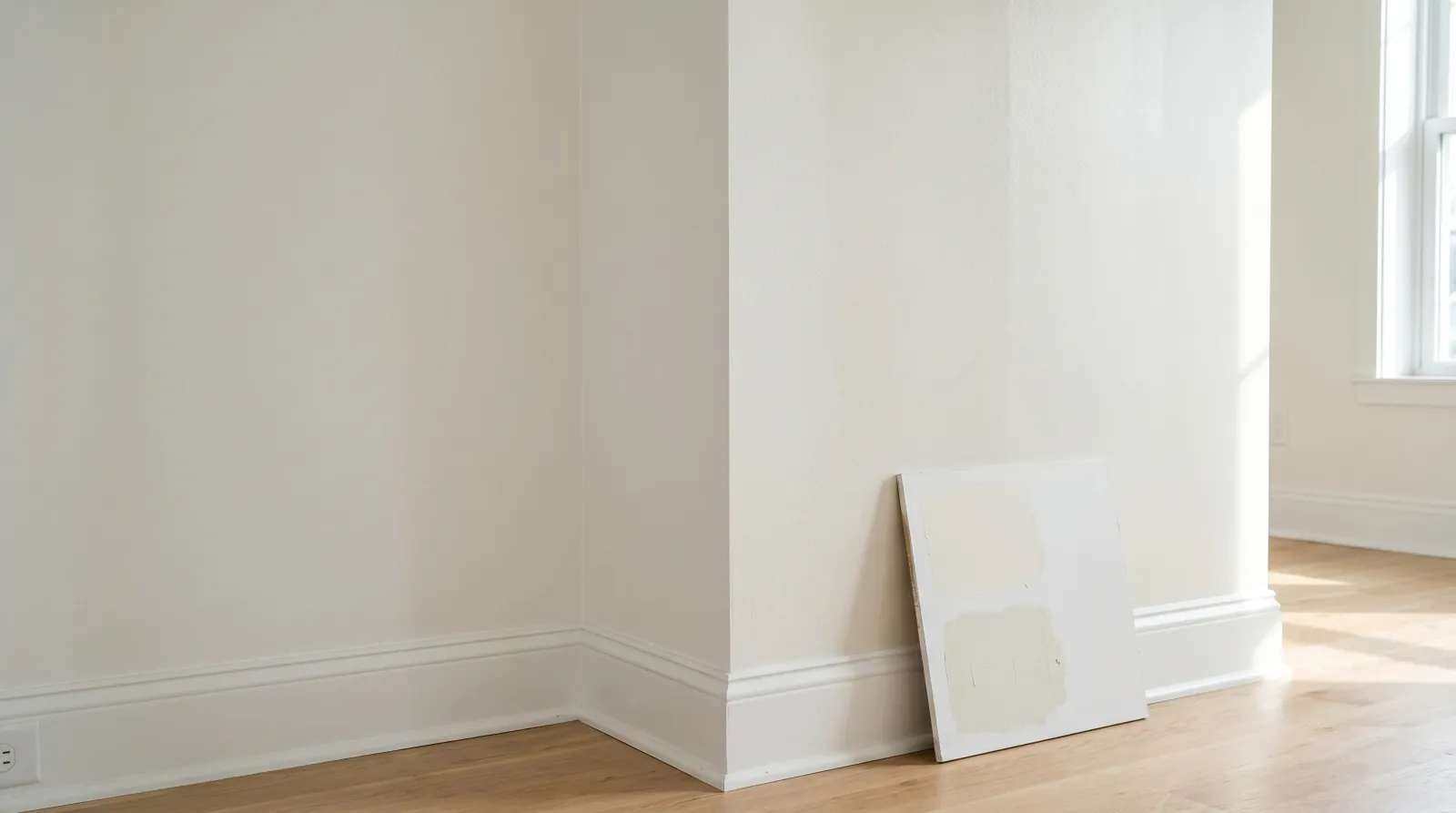
The 30-Second Answer
Pick vinyl matte when the wall has flaws to hide and the room stays calm. Pick eggshell when the wall gets touched, splashed, or wiped. Both are the same paint chemistry with a different amount of sheen baked in, and that sheen is the whole decision: matte scatters light and hides a bad surface, eggshell reflects a little and survives cleaning. Most people over-buy gloss out of fear of dirt. In a bedroom or a ceiling, matte is the smarter, better-looking call.
At a Glance
| Vinyl matte | Eggshell | |
|---|---|---|
| Gloss units (60°) | 2–10 | 10–25 |
| Hides surface flaws | ✓✓ | ✓ |
| Scrub resistance (ASTM D2486) | 150–400 cycles | 300–600 cycles |
| Touch-up blends in | ✓✓ | ✓ |
| Wipes clean | ~ | ✓✓ |
| Cost (per gallon) | $ | $ (small premium) |
How to Tell Which One You’ve Got
Stand at the wall and look down its length toward a window, so the light rakes across the surface instead of hitting it straight on. A matte wall stays uniformly soft with no highlight. An eggshell wall throws a faint, even glow where the light glances off it. If you press a slightly damp cloth on a hidden spot and wipe, eggshell stays put while a cheap matte may burnish to a shiny patch or transfer a little color. The raking-light test alone settles it in about ten seconds.
Durability
Here’s the chemistry. Both finishes start from the same waterborne acrylic binder. The difference is how much of that binder sits at the film surface relative to pigment, a ratio chemists call pigment volume concentration. Matte runs a high PVC: more pigment, less binder at the surface, which is exactly what scatters light and kills sheen. Eggshell drops the PVC a little, so more continuous binder reaches the surface. That binder is what takes abrasion.
A weighted scrub test (ASTM D2486) runs a brush back and forth until the film breaks through. Matte films typically tap out at 150 to 400 cycles. Eggshell runs 300 to 600. The pigment-rich matte surface releases color sooner because there’s less binder holding the particles in place. This is also why a budget flat chalks onto your hand when you brush against it: nothing’s binding the surface pigment.
Winner: Eggshell. More surface binder, more abrasion before failure.
Finish & Hiding
Sheen and hiding pull in opposite directions, and this is where matte earns its place. A glossy film acts like a weak mirror. Every dent, taping seam, nail pop, and roller lap bounces light at a slightly different angle than the flat wall around it, so your eye reads it as a flaw. A matte film scatters that light in all directions and erases the contrast. The flaw is still there. You just stop seeing it.
The reason for that is microscopic surface roughness. Matte paint carries flatting agents and extra pigment that leave the dried film microscopically bumpy, which diffuses reflection. Eggshell’s smoother film holds a little specular reflection, so it shows more.
On a new, skim-coated wall in perfect condition, eggshell looks clean and rich. On a 1970s wall with thirty years of patches and texture, eggshell turns every repair into a visible map and matte makes them disappear.
Winner: Vinyl matte. Nothing hides a rough wall like low sheen.
Cleanability
This is eggshell’s home turf, and it’s the reason it exists. The same surface binder that helps eggshell survive scrubbing also lets it shed dirt. A fingerprint, a scuff from a backpack, a splash of pasta sauce: on eggshell you wipe it with a damp cloth and it lifts. The film is continuous enough that the dirt sits on top rather than soaking into a porous surface.
Matte is the opposite. Its rough, pigment-heavy surface is mildly porous, so grime keys into it, and wiping hard enough to remove the grime burnishes the spot into a shiny patch. You end up trading a dirt mark for a sheen mark. Better matte formulas (Benjamin Moore Aura Matte, Sherwin Emerald Matte) have closed a lot of this gap with tougher binders, and they wipe far better than a builder flat. They still don’t match eggshell for repeated cleaning.
Winner: Eggshell. It’s the wipeable finish, full stop.
Ease of Use
Matte is the more forgiving finish to apply, and that’s a real advantage for a first-timer. Because it hides surface variation, it also hides application variation: a slightly uneven roller pass, a missed spot you rolled back over, a touch-up six months later. Matte touch-ups practically vanish because there’s no sheen line to give them away.
Eggshell is less forgiving in two ways. Its sheen telegraphs lap marks if you let an edge dry before you roll back into it, so you have to keep a wet edge moving. And touch-ups flash: a dab of fresh eggshell over a cured eggshell wall often dries to a slightly different sheen and shows as a halo unless you feather a full corner-to-corner section.
For brushing and rolling mechanics, both behave the same because the binder is the same. The difference is entirely in how mercilessly each one reveals what you did.
Winner: Vinyl matte. It forgives the wall and it forgives you.
Cost & Coverage
Within a single product line, eggshell usually costs a few dollars more per gallon than matte, sometimes nothing. Coverage is effectively identical, around 350 to 400 square feet per gallon per coat, because the binder and pigment load are close. Two coats over primer is the standard for both.
The cost gap that actually matters isn’t the can. It’s the repaint. Choose matte in a high-traffic hallway because it was a couple dollars cheaper, and you’ll be cutting in and repainting that hallway a year early when the scuffs won’t wipe off. Choose eggshell for a calm bedroom and you’ve paid a small premium for cleanability you’ll never use. Spec by the room, not by the shelf price.
Winner: Tie. The per-gallon difference is noise. The room decides the real cost.
Verdict by Use Case
- Pick vinyl matte if: the wall is a ceiling, a primary or guest bedroom, a formal living or dining room, or any older wall with patches, seams, and texture you want to hide. Also pick matte if you’re a first-time painter who wants forgiving touch-ups.
- Pick eggshell if: the wall is a hallway, stairwell, kids’ room, kitchen, or a bathroom with decent ventilation. Anywhere hands, food, or splashes land and you’ll want to wipe it down.
- It’s a tie when: the wall is a normal-light, normal-touch living space on a sound, smooth surface. Either reads well. Pick matte if you lean toward a softer, flatter look, eggshell if you want a slightly richer color depth and easy cleaning.
Top Picks by Side
Going with matte? Look at the premium matte lines built with tougher binders so they wipe better than a builder flat. For the full sheen breakdown by room, see the sheen guide.
Going with eggshell? Most premium interior lines offer it, and it’s the safe default for shared living space. If the room is a bath, read the bathroom wall guide before you commit to a sheen.
FAQ
Can I paint eggshell directly over a matte wall? Yes, with light prep. Clean the wall, scuff-sand glossy or burnished patches, and spot-prime any stains or repairs. Both are waterborne acrylic films, so the eggshell bonds mechanically to the cured matte. The catch is hiding: eggshell’s higher sheen will show flaws the matte was masking, so fix dents before you switch.
Do I need eggshell in a bathroom, or is satin better? Eggshell works in a well-ventilated bathroom and reads softer than satin. In a windowless bath or one without a strong exhaust fan, step up to satin or semi-gloss for better moisture resistance.
Why does my matte wall look shiny in patches? That’s burnishing. You cleaned or rubbed a spot hard enough to compress the rough matte surface into a smoother, shinier one. It’s the main weakness of low-sheen finishes. A tougher premium matte resists it better, and eggshell mostly avoids it.