Sherwin-Williams Repose GrayvsSherwin-Williams Colonnade Gray
Why this comparison: Both sit between gray and greige; Colonnade Gray carries a green cast Repose Gray doesn’t. Repose Gray and Colonnade Gray are very close (ΔE 2.59). The difference shows up most in side-by-side comparison and under specific light.

Built from our full reviews of both colors — same measured data, same real-room photos. About the testing process →
The Numbers
Repose Gray is slightly lighter (LRV 58 vs 53, 5-point delta).
What Each Color Really Is
A light greige built on a violet base. That last part is the whole story. Most warm grays get their softness from yellow or brown pigment; Repose Gray gets a good share of its from a whisper of purple, with a faint green thread underneath it. In warm light the purple reads as "soft" and "not cold," which is exactly the effect people are after. Take the warm light away and the same pigment reads as what it is. Nothing about the mix changes room to room — only what the light lets you see.
At LRV 58 it sits almost exactly where Agreeable Gray does at 60, so the two are not a light-versus-dark decision — they are a temperature decision. Repose leans slightly cool and clean; Agreeable leans slightly tan. That two-point gap also tells you something people miss: 58 is mid-light, not pale. It is a real, visible color on the wall, roughly halfway between a white ceiling and a mid-tone gray sofa, and it will read as gray from across the room rather than disappearing like an off-white.
Colonnade Gray (SW 7641) is a warm greige with hex value #C6C0B6 and an LRV of 53. That number puts it just above the middle of the light scale, so it returns about half the light that reaches it. The result is a wall color that stays light without being pale, and holds its color instead of bleaching out. The hue sits at 37 degrees with 12 percent saturation, which is a beige base pulled most of the way toward gray.
It gets picked when a lighter greige has proved too weak. In a bright room, very pale neutrals often read as dirty white and lose whatever undertone made them appealing. Colonnade Gray has enough depth to still look like a chosen color at noon, which is also why it turns up so often on siding and on whole-house interior schemes.
Specs Side by Side
| Spec | Repose Gray | Colonnade Gray |
|---|---|---|
| Brand | Sherwin-Williams | Sherwin-Williams |
| SKU | SW 7015 | SW 7641 |
| Hex | #CCC9C0 | #C6C0B6 |
| RGB | 204, 201, 192 | 198, 192, 182 |
| LRV | 58 | 53 |
| Undertone | red-orange / warm | red-orange / warm |
| Family | Neutral | Neutral |
How Light Changes Them
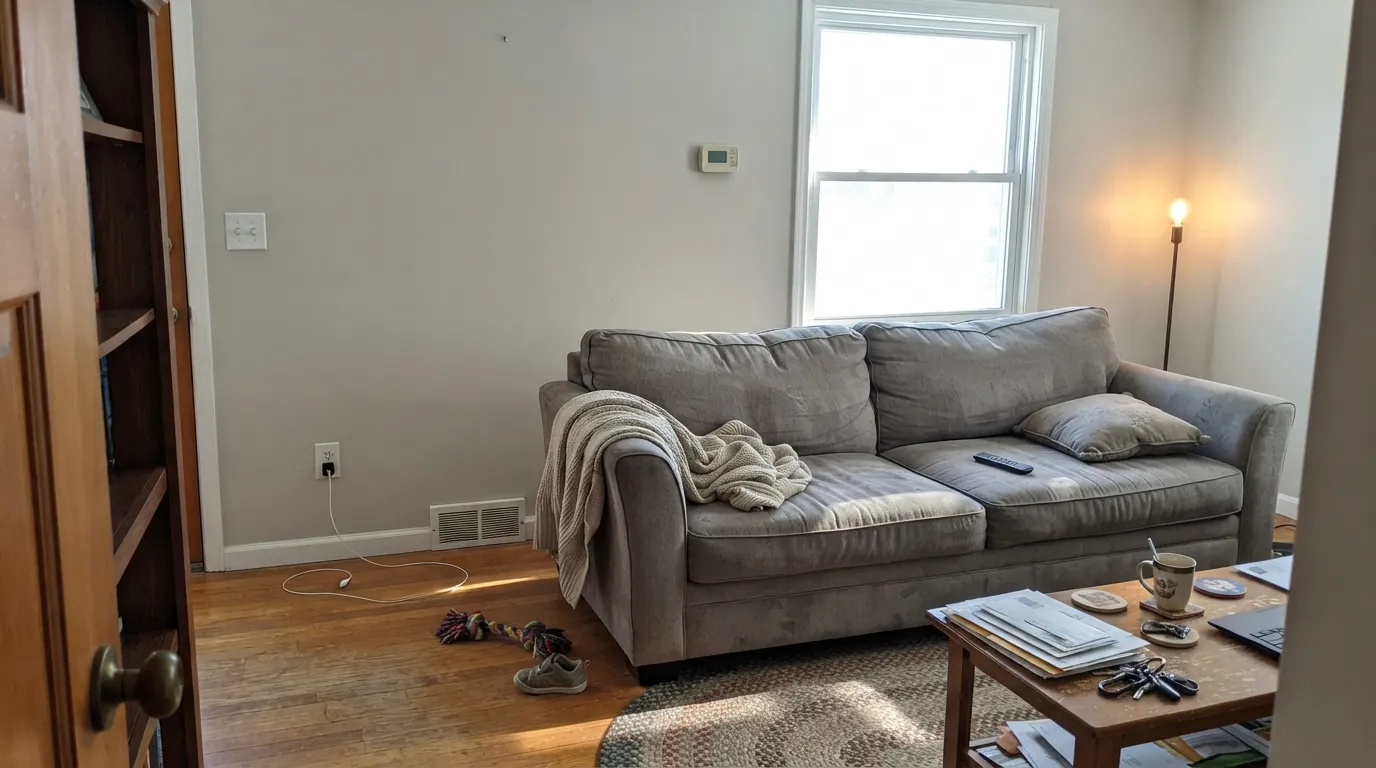
Warm daylight all day keeps the greige balanced and soft. This is the room it was made for.
Cool light kills the warmth and the violet base surfaces. Expect lavender or baby blue. Sample large, or go warmer.
4000K LEDs push it blue-gray and lifeless after dark. Swap to 2700K bulbs before you blame the paint — it usually fixes it outright.
West windows at 4pm bleach it close to an off-white. Fine on a big wall, disappointing if you wanted visible gray.
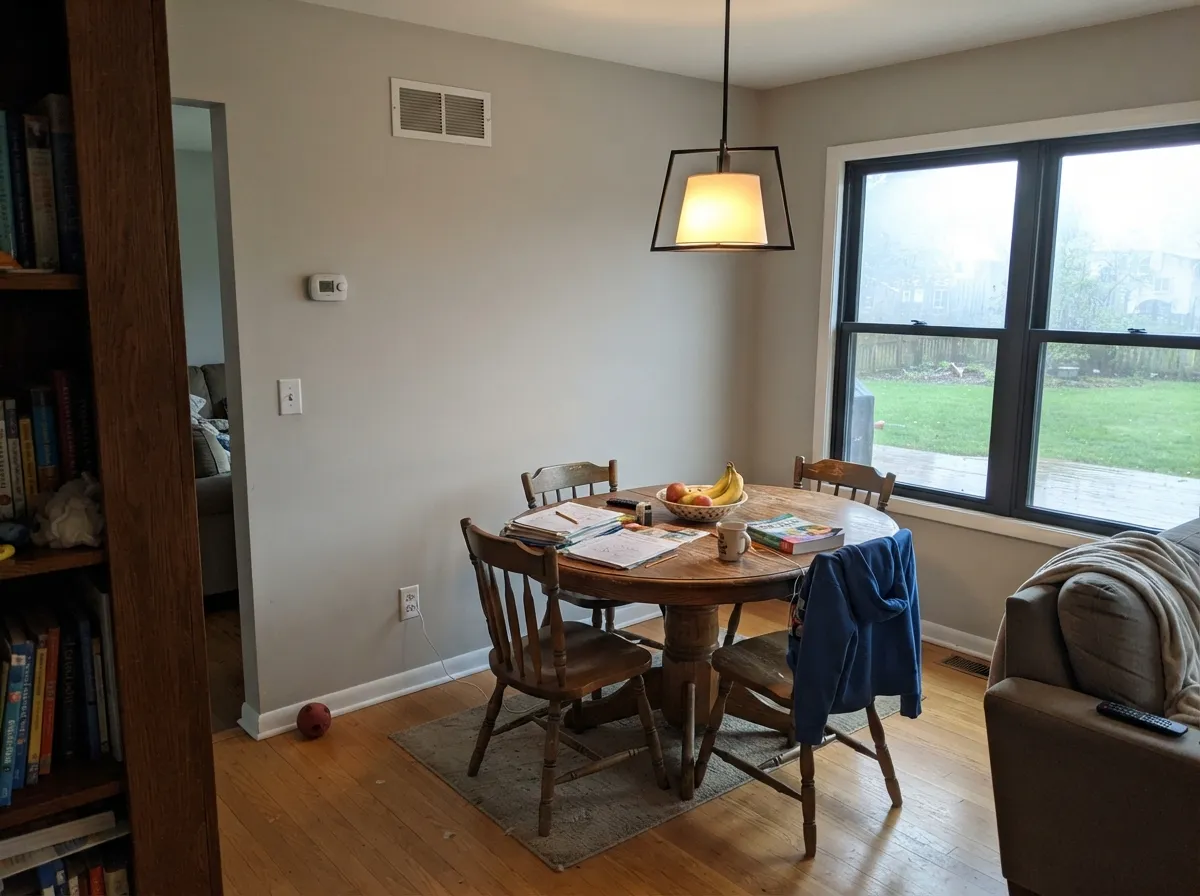
An LRV of 53 means Colonnade Gray reflects roughly half the light in the room, so it responds strongly to whatever that light is like. North-facing rooms cool it down. The beige recedes, the color reads grayer and slightly heavier, and this is where the faint green cast is most likely to appear.
South-facing rooms bring the warm side forward. In steady sun it looks like a soft, sandy greige and feels a good deal lighter than its chip. East rooms are warm early and settle gray by afternoon. West rooms hold flat and gray through the morning, then turn noticeably warm and golden late in the day.
Both Colors in Real Rooms
Photos from our full reviews — the same rooms and captions, so you can judge each color where it actually lives, not on a chip.
When to Pick Which
South- and west-facing living rooms · open-plan main floors that need one calm neutral · walls beside warm wood, brass, or matte black · anyone who found Agreeable Gray too beige
Your room faces north and stays dim · your cabinets or counters are cream, ivory, or champagne · your bulbs are 4000K daylight LEDs · you want a gray that reads clearly gray, not greige
Best when you want a warmer wall feel — pairs well with brass, oak, and creams.
No comparison page can see your light. Upload one photo of your room and try both colors on the same walls, seconds apart.
Repose Gray vs Colonnade Gray FAQ
Which is lighter, Repose Gray or Colonnade Gray?
Repose Gray is lighter: LRV 58 vs 53. Repose Gray is slightly lighter (LRV 58 vs 53, 5-point delta).
Which is warmer, Repose Gray or Colonnade Gray?
They share the same undertone family — both read red-orange / warm. The difference between them is lightness and depth, not temperature.
How similar are Repose Gray and Colonnade Gray?
Repose Gray and Colonnade Gray are very close (ΔE 2.59). The difference shows up most in side-by-side comparison and under specific light. The only reliable test is seeing both in your own room and light — a side-by-side on a screen or chip flattens the difference.
Can I use Repose Gray and Colonnade Gray together in one house?
Not in the same room, and be careful in the same house. At ΔE 2.59 they are so close that two walls in each will read as a tinting mistake, not a design choice. Pick one, or keep them on different floors where they are never seen together.
Ask a Question