Farrow & Ball Wimborne WhitevsFarrow & Ball All White
Why this comparison: Wimborne White carries gentle warmth; All White is Farrow & Ball’s only truly neutral white. Wimborne White and All White are very close (ΔE 3.26). The difference shows up most in side-by-side comparison and under specific light.

Built from our full reviews of both colors — same measured data, same real-room photos. About the testing process →
The Numbers
All White is slightly lighter (LRV 92 vs 89, 3-point delta).
What Each Color Really Is
Wimborne White (No. 239) reads as near-white at LRV 89 — near-white.
All White earns its name literally. Farrow & Ball mixes nearly every color in its deck — including its other "whites" — from a base plus a measured drop of pigment; All White is the one shade built with no added pigment at all. That is unusual even within F&B's own range, and it is the whole reason the color exists: a true, undiluted white without the colder blue cast that a standard trade "brilliant white" carries. The company's own description calls it the "softest, most sympathetic" white it makes, and that softness is real — it is warm-leaning rather than neutral, closer in spirit to a quiet off-white than to a stark hospital white.
At an LRV of 92 it is genuinely bright — up there with the brightest whites any brand sells — but it does not behave like a cold bright white on the wall. Compare it to Farrow & Ball's own Strong White (No. 2001, LRV 76), which carries a visible grey undertone: Strong White reads more architectural and structured, while All White stays soft and light-bouncing. That gap is the useful part. In a dim room, All White gives back nearly all the daylight it gets without turning the space sterile the way a blue-based white would.
Specs Side by Side
| Spec | Wimborne White | All White |
|---|---|---|
| Brand | Farrow & Ball | Farrow & Ball |
| SKU | No. 239 | No. 2005 |
| Hex | #F4F2E7 | #F6F6F2 |
| RGB | 244, 242, 231 | 246, 246, 242 |
| LRV | 89 | 92 |
| Undertone | near-white | near-white |
| Family | White | White |
How Light Changes Them
Wimborne White is very light — LRV 89, close to white. It opens up small or dim rooms and keeps walls feeling airy. Its yellow undertone is the part to watch: it gets picked up by whatever sits next to it, so test it against your trim, floor and the room's main light before committing. In north light it can read slightly cooler; a warm white trim alongside keeps it from going clinical.
This is the light F&B built it for: cool, indirect daylight in a hallway or north-facing room, where the warm base keeps it from tipping blue-grey the way a trade white would.
Strong south sun or cool-white bulbs can wash out its softness and leave a flat, almost sterile white, especially with no warm material nearby to bounce color back.
Warmest at sunrise or sunset hours, quietly neutral the rest of the day. The shift is gentle — most owners barely notice it.
2700K bulbs keep it soft and warm after dark. Cool white LEDs flatten it — this is the single easiest fix for a room that reads "too stark."
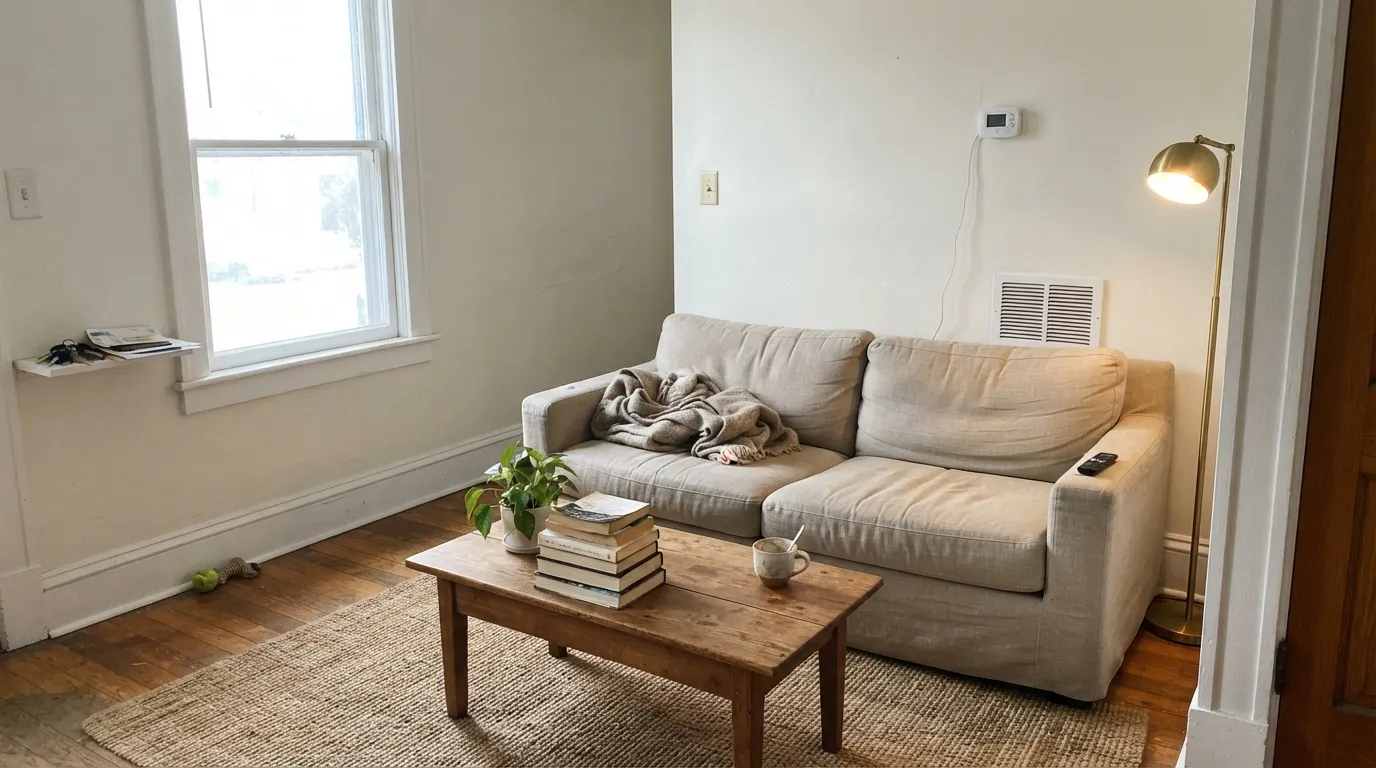
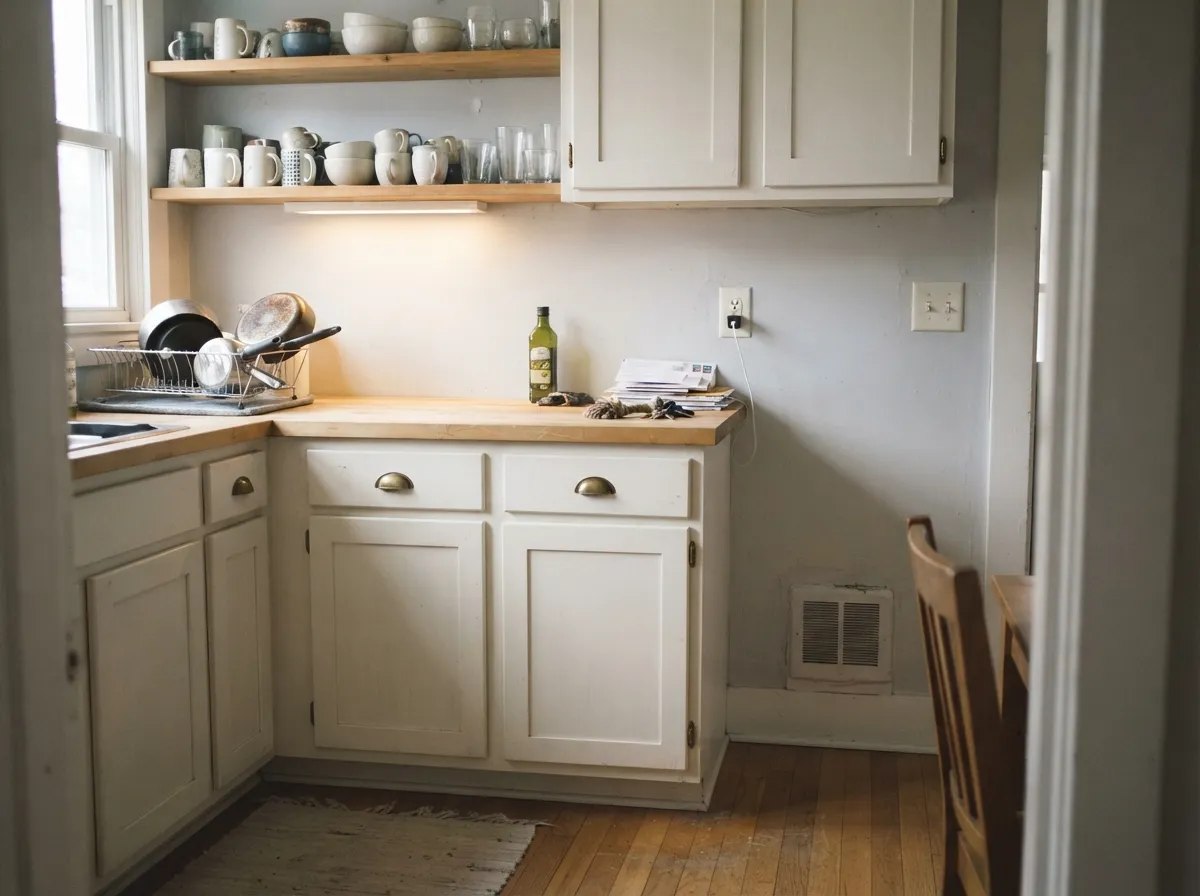
Both Colors in Real Rooms
Photos from our full reviews — the same rooms and captions, so you can judge each color where it actually lives, not on a chip.
When to Pick Which
Best when you want the more neutral baseline — works in nearly any room.
North-facing rooms and hallways that need every bit of daylight bounced back · kitchens and baths with warm wood, brass, or stone · anyone who wants a genuine near-white without a cream lean or a grey lean · small rooms with limited window area that need to feel bigger
You want the single brightest, whitest option, full stop · your room already runs cool (north light, LED bulbs, little natural texture) · you are painting a busy hallway or mudroom and want a scrub-proof finish straight off the shelf · the Farrow & Ball price per can is the deciding factor for a whole house
No comparison page can see your light. Upload one photo of your room and try both colors on the same walls, seconds apart.
Wimborne White vs All White FAQ
Which is lighter, Wimborne White or All White?
All White is lighter: LRV 92 vs 89. All White is slightly lighter (LRV 92 vs 89, 3-point delta).
Which is warmer, Wimborne White or All White?
They share the same undertone family — both read near-white. The difference between them is lightness and depth, not temperature.
How similar are Wimborne White and All White?
Wimborne White and All White are very close (ΔE 3.26). The difference shows up most in side-by-side comparison and under specific light. The only reliable test is seeing both in your own room and light — a side-by-side on a screen or chip flattens the difference.
Can I use Wimborne White and All White together in one house?
Not in the same room, and be careful in the same house. At ΔE 3.26 they are so close that two walls in each will read as a tinting mistake, not a design choice. Pick one, or keep them on different floors where they are never seen together.
Ask a Question