Behr Polar BearvsBehr Ultra Pure White
Why this comparison: Behr’s two go-to whites; Ultra Pure White is the stark one, Polar Bear softly warm. Polar Bear and Ultra Pure White are very close (ΔE 2.55). The difference shows up most in side-by-side comparison and under specific light.

Built from our full reviews of both colors — same measured data, same real-room photos. About the testing process →
The Numbers
Ultra Pure White is slightly lighter (LRV 97 vs 90, 7-point delta).
What Each Color Really Is
Polar Bear (SKU 75) is Behr's standard-issue soft white, the one stocked in every Home Depot paint aisle and mixed into everything from wall paint to cabinet enamel to exterior stain. It carries no fancy collection name and no Color of the Year moment — it is simply the default white Behr customers grab, which is exactly why it shows up so often searched alongside Benjamin Moore White Dove: both are their brand's reflexive answer to "just give me a nice white." The comparison is popular, but the paint chemistry underneath it is not identical, and treating them as swaps is the single most common regret story about this color.
At LRV 94 it sits well above White Dove's LRV 83 and above Behr's own Swiss Coffee (LRV 80) and Blank Canvas (LRV 79) — Polar Bear is a brighter, cooler white than either of those creamier Behr shades, and only a shade warmer than Ultra Pure White (LRV 92). That places it firmly in true-white territory rather than warm-cream territory. Where White Dove holds a visible grayed-yellow body even in bright light, Polar Bear reflects enough light that it reads close to plain white in full sun, and only shows character once the light gets flat or dim.
It is the paint before anyone touches it — the untinted base white in the Behr can, which is exactly why so many houses are wearing it. On paper it is not perfectly neutral: the hue sits at 50 degrees, in yellow territory, and the hex value #F4F2E8 carries a little more red and green than blue. But there is so little colorant involved that the lean is almost theoretical. Ultra Pure White does not really have an undertone the way White Dove or Swiss Coffee do. It has brightness, and brightness is its whole personality.
At LRV 97 it reflects nearly all the light that lands on it — for scale, Benjamin Moore Chantilly Lace sits at LRV 91 and Behr Swiss Coffee (12) at 88. Those numbers look close on a chart and behave nothing alike on a wall. Chantilly Lace and Swiss Coffee are tinted colors with a body to them, so they hold a temperature in bad light. Ultra Pure White has nothing to hold. That is why it is the best ceiling white on the shelf and the most unforgiving wall white on the shelf, in the same gallon.
Specs Side by Side
| Spec | Polar Bear | Ultra Pure White |
|---|---|---|
| Brand | Behr | Behr |
| SKU | 75 | 50 |
| Hex | #F5F4EC | #FAFDF7 |
| RGB | 245, 244, 236 | 250, 253, 247 |
| LRV | 90 | 97 |
| Undertone | near-white | near-white |
| Family | White | White |
How Light Changes Them
Reads bright, clean and close to true white — the light that makes its LRV 94 obvious and flattering, indoors or out.
The subtle cool side comes forward — reviewers report a blue-grey or faintly violet cast. Sample here before committing a whole room.
A faint creamy warmth at the sun hours, closer to neutral the rest of the day. The swing is gentle, not dramatic.
2700K lamps warm it toward a soft ivory. Cool white LEDs flatten it and can expose the blue-grey side — swap bulbs before repainting.
Closets, interior baths, basements, garages. Nothing bounces borrowed light around better.
Cool gray daylight and no pigment to resist it. The wall reads blank and slightly blue.
Bright and clean in the morning, hard on the eyes by mid-afternoon. Keep the sheen low.
2700K lamps soften it toward cream. 4000K LEDs make it clinical — change bulbs, not paint.
Both Colors in Real Rooms
Photos from our full reviews — the same rooms and captions, so you can judge each color where it actually lives, not on a chip.
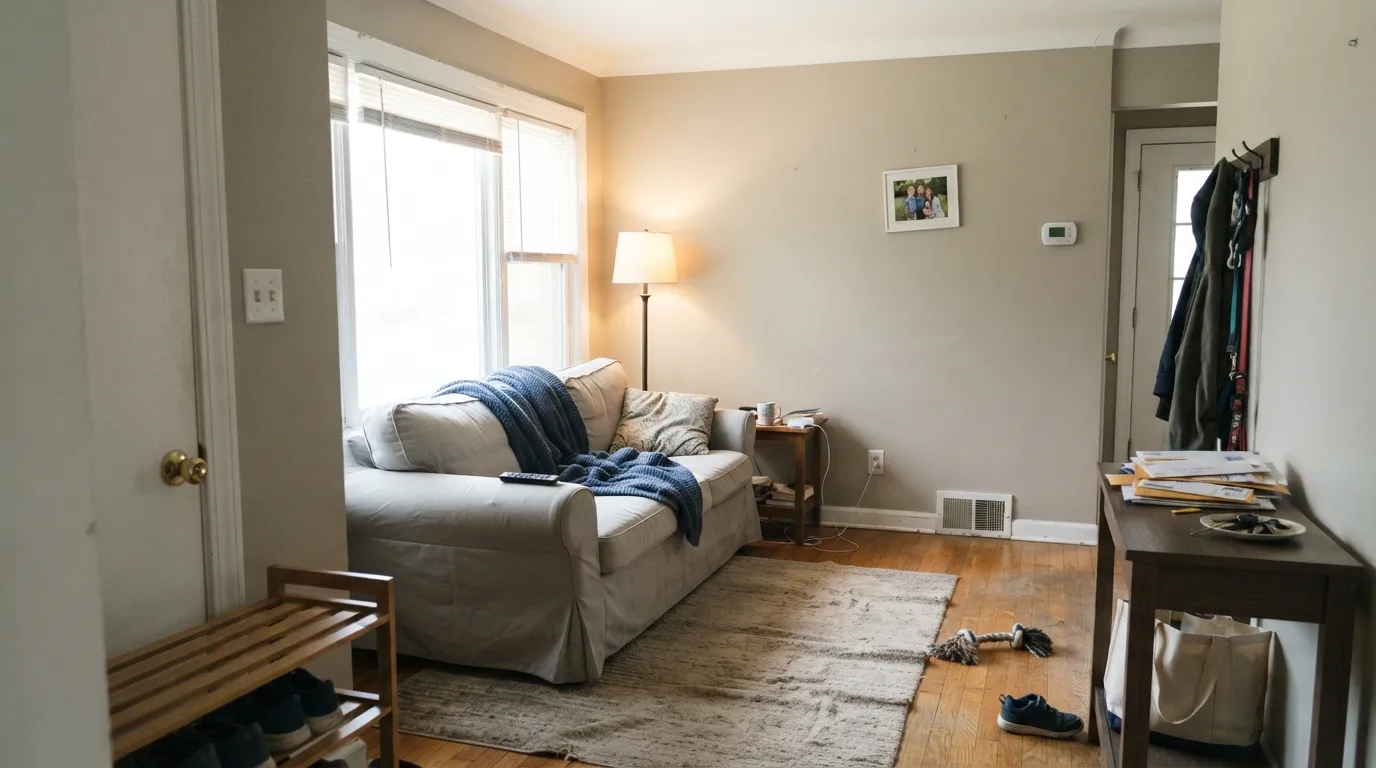
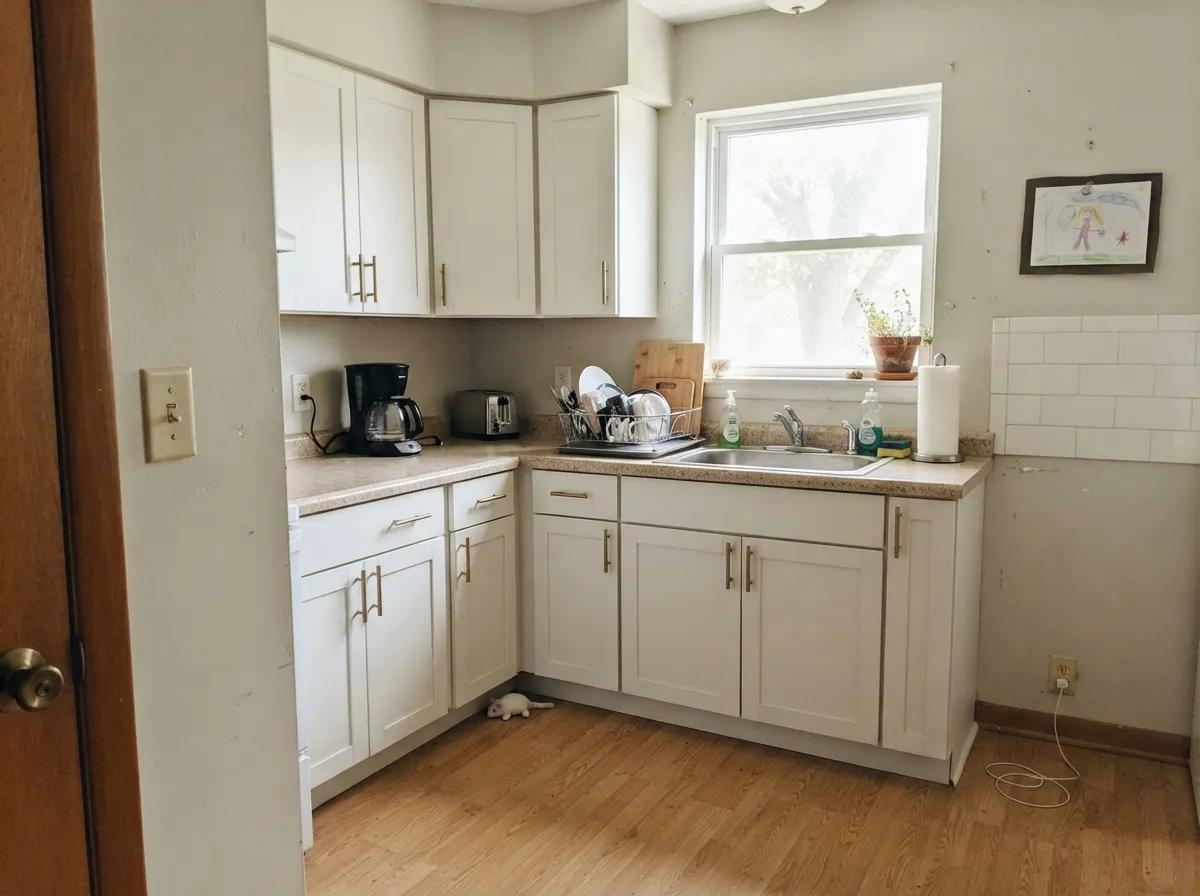
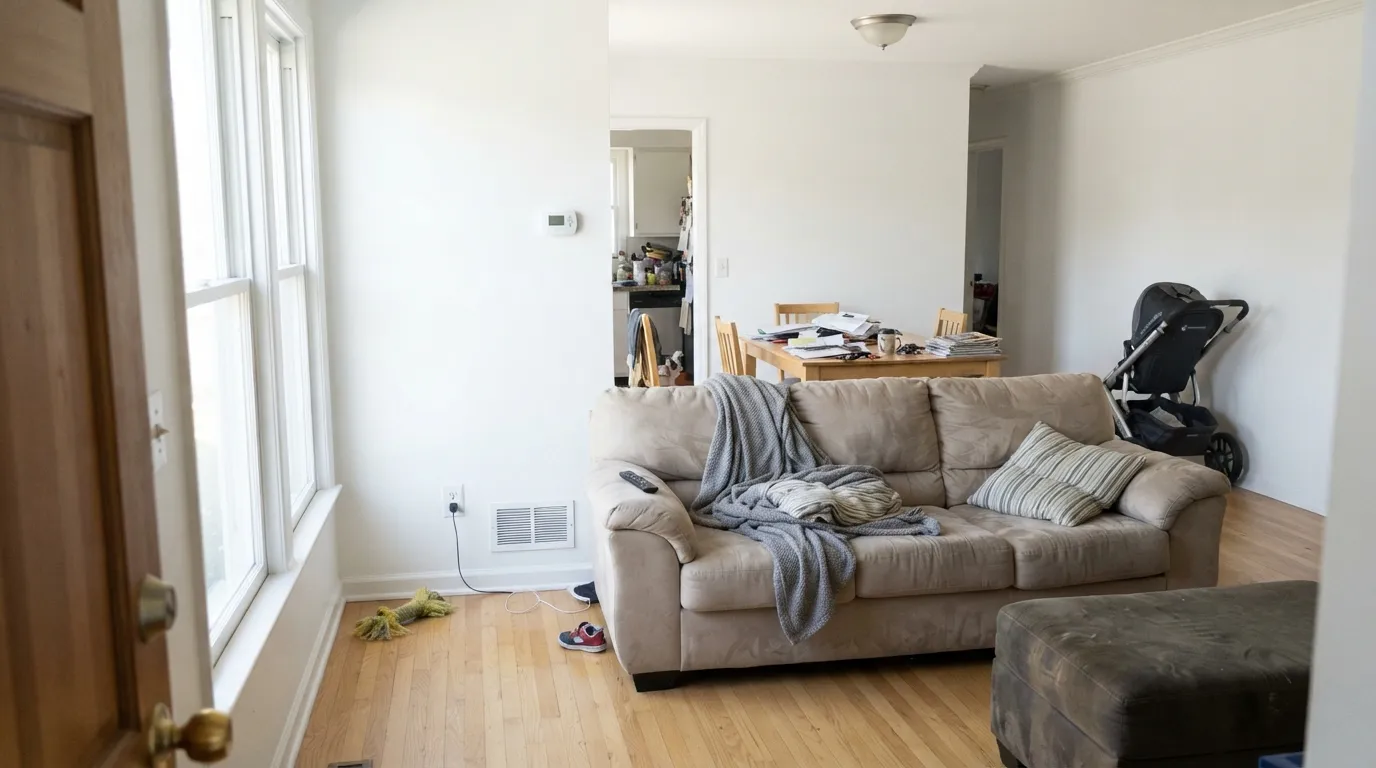
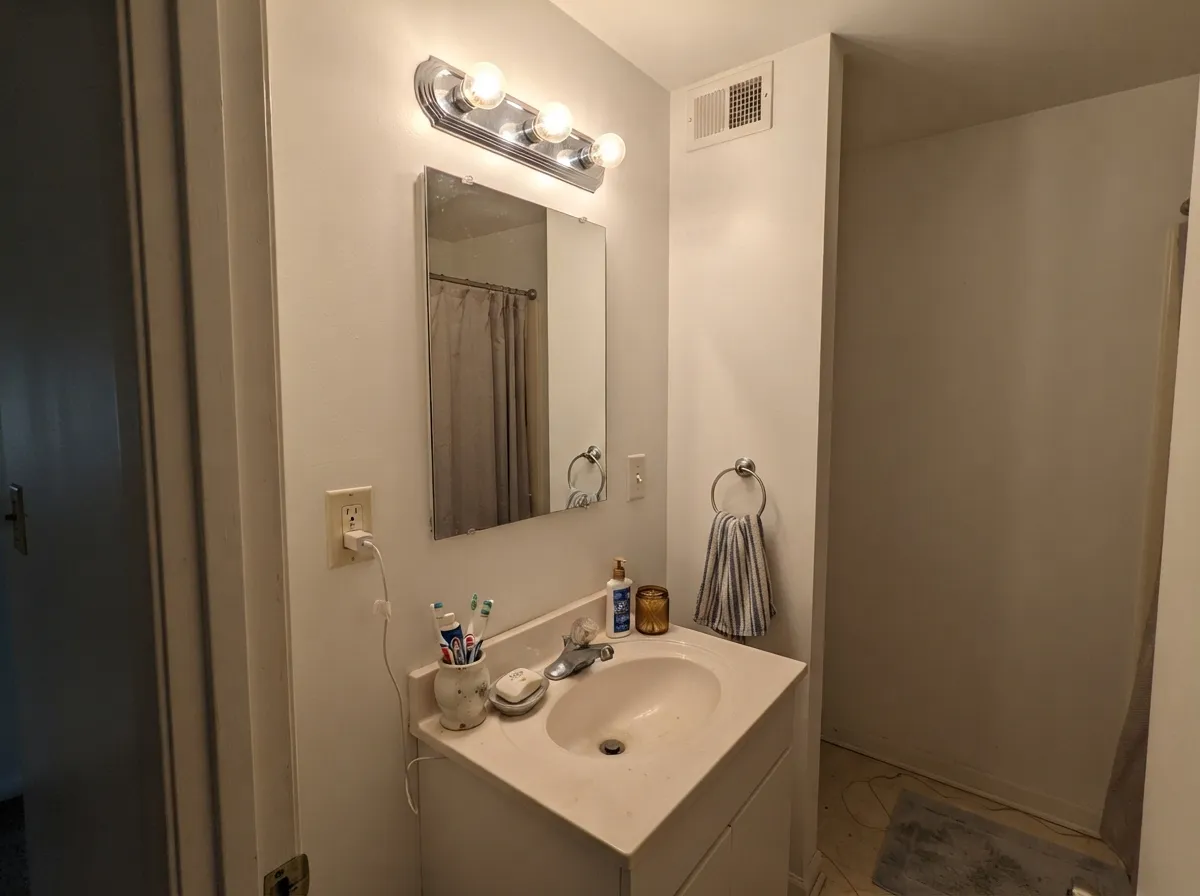
When to Pick Which
Trim, doors and ceilings under almost any wall color · whole-house budget whites bought at Home Depot · exterior siding and trim in bright climates · small or dim rooms that need brightness more than warmth
You actually want White Dove's warm grayed cream · your room is dim and north-facing with cool floors · you're painting it next to a warmer white and expect them to match · you want a white with zero undertone drama
Ceilings in every room of the house · trim, doors and closet interiors · small windowless bathrooms, laundries and hallways · rentals, flips and garages that need clean and cheap
Your room faces north and stays dim · you want white walls with some atmosphere · the room is full of cream tile, oak trim or warm stone · you are covering a dark color and only budgeted two coats
No comparison page can see your light. Upload one photo of your room and try both colors on the same walls, seconds apart.
Polar Bear vs Ultra Pure White FAQ
Which is lighter, Polar Bear or Ultra Pure White?
Ultra Pure White is lighter: LRV 97 vs 90. Ultra Pure White is slightly lighter (LRV 97 vs 90, 7-point delta).
Which is warmer, Polar Bear or Ultra Pure White?
They share the same undertone family — both read near-white. The difference between them is lightness and depth, not temperature.
How similar are Polar Bear and Ultra Pure White?
Polar Bear and Ultra Pure White are very close (ΔE 2.55). The difference shows up most in side-by-side comparison and under specific light. The only reliable test is seeing both in your own room and light — a side-by-side on a screen or chip flattens the difference.
Can I use Polar Bear and Ultra Pure White together in one house?
Not in the same room, and be careful in the same house. At ΔE 2.55 they are so close that two walls in each will read as a tinting mistake, not a design choice. Pick one, or keep them on different floors where they are never seen together.
Ask a Question