Product review · Wagner · Updated June 10, 2026
Control Pro 130Wagner paint review
8.0/10Airless capability at a homeowner budget — for square footage, not for finish that reads at six inches.
A real airless at a homeowner price: 1600 psi, unthinned latex straight from the can, and a high-efficiency tip that cuts the overspray cloud by up to 55 percent. The ceiling is 50 gallons a year, and it is a real one.

Mark Thompson · Pro Contractor & Field Editor · Updated June 10, 2026
22 years running residential and light commercial repaints across the Midwest. Mark has run a high-efficiency airless beside a standard one and watched the difference in the air, and he judges a homeowner sprayer by what its pump looks like after a season, not by the box. About the testing process →
Wagner Control Pro 1302 sheens
TypeHigh Efficiency Airless
Max pressure1600 psi
Flow rate0.24 gal/min
Tank1.5-gallon gravity-feed
Sheens primerstain
Read this first
The Fast Verdict
Yes, if the job is big flat square footage — a house of walls, a fence, a run of siding — and you do not want to thin paint or roll for a week. It is a real airless at a homeowner price, it sprays unthinned latex from the can at 1600 psi, and the HEA tip cuts the overspray cloud that makes cheap airless rigs miserable to mask for. No, if you are spraying cabinets and furniture, where the coarse 515 tip leaves texture, and no if you spray for a living, because Wagner rates the pump for up to 50 gallons a year.
Best for
Interior walls and ceilings · Exterior siding · Fences and lattice · Decks and sheds · Unthinned latex and primer · Spraying near cars and landscaping
Skip if
Cabinets, doors, and furniture · Daily or pro volume · More than 50 gallons a year · You need a portable or shoulder-carried rig · Constant color changes
What it's good at
- Spraying unthinned latex, primer, and 2-in-1 paint straight from the can
- Speed on flat square footage — a heavier, more even wet coat per pass than a 3/8-inch roller, with no tray to reload
- A visibly smaller overspray cloud than a standard airless, which means less masking and less drift
- Reaching up a wall or down a fence line on the 25-foot hose without moving the machine
- Fences and lattice, where the gun covers gaps a brush cannot reach
- A gravity tank that rinses clean with no suction tube to prime and no air pockets to chase
What it's not good at
- Volume — the 50-gallon-a-year ceiling is the pump's real limit, not marketing
- Fine work; the fixed 515 tip leaves texture on cabinet doors and furniture
- Cleanup, which is 15 to 20 minutes of flushing every session, mostly the hose
- Portability, at roughly 21 lb full with no strap and no backpack option
- Constant color changes, which the bucket-fed 150 and 170 handle with less fuss
- Holding much paint at once — 1.5 gallons goes quickly on a whole house
Same shelf, different cans
Which Control Pro 130 Are You Looking At?
This is where buyers get crossed up. Control Pro 130 shows up on more than one box, and the wider Control Pro line has bigger siblings that look almost identical online. The gravity-feed tank is the tell on the 130 — the 150 and 170 pull paint up a hose from the can instead.
Control Pro 130 Power Tank (SKU 580678) — this review
Buy it if
You want gravity-feed airless with a 515 tip and a 25-foot hose at $240 to $260, for one color across a whole job.
Avoid if
You swap colors constantly or you will run past 50 gallons a year.
Control Pro 130 HEA (newer, T2 gun)
Buy it if
It is the listing in front of you at a fair price. Same pump, updated T2 spray gun — this review still applies.
Avoid if
The older SKU is meaningfully cheaper and the gun update is not worth the gap to you.
Control Pro 150 / 170
Buy it if
You spray 100 or more gallons a year and want a suction tube that pulls straight from the bucket on larger jobs.
Avoid if
Your jobs are one-color and modest, where the gravity tank is simpler and rinses cleaner.
Wagner FLEXiO 590 / 5000
Buy it if
Your work is cabinets and furniture with thinned finishes, where fan and flow control matter more than square footage.
Avoid if
You are covering walls, ceilings, and siding — that is a different tool entirely.
Numbers, not adjectives
Spec Sheet
- Type
- High Efficiency Airless (HEA), gravity-feed
- Max pressure
- 1600 psi
- Flow rate
- 0.24 gal/min
- Tank
- 1.5-gallon gravity-feed
- Tip included
- 515 HEA (0.015-inch), 10-inch fan
- Hose
- 25 feet
- Paints
- Unthinned latex, primer, stain, oil, and 2-in-1
- Overspray
- Up to 55 percent less than a standard airless
- Annual rating
- Up to 50 gallons of paint per year
- Weight
- Roughly 21 lb full; a two-handed carry, no strap
- Warranty
- 1-year limited, parts and labor
- Price
- $240–260 street; MSRP $259.99
Application Settings That Work
- Airless
- Spray a test board first and dial the pressure down until the fan stops fingering. The included 515 HEA tip throws a 10-inch fan from a 0.015-inch orifice, which is the walls-and-siding setup; buy a finer HEA tip if you will ever spray anything tighter. Park the unit and walk the gun on the 25-foot hose rather than moving the machine, and back-roll flat exterior boards if you want the paint worked into the grain.
- Thinning
- None. It pulls unthinned latex, primer, and most 2-in-1 paint straight from the can at 1600 psi — no viscosity cup, no mixing math. Very thick elastomeric and heavy-bodied ceiling paint spray better with a splash of water, but standard wall and exterior latex needs nothing. That unthinned capability is the whole reason to buy this over an HVLP.
Cleanup Is a Tax You Pay Every Time
Budget 15 to 20 minutes with latex, every session, no exceptions. You flush the gravity tank, the 25-foot hose, and the gun with water until it runs clear, then clear the tip. The tank is the easy part — dump it and rinse it, no suction tube to prime and no air pockets to chase. The hose is where paint hides and where the time goes. Get lazy once and dried latex sets up in the line, and that is how these sprayers die. It voids any goodwill on the warranty too. One more piece of off-season maintenance: keep a pump-saver flush solution on the shelf, because leaving water in the pump over a cold winter cracks seals.
Mid-project panic
When It Goes Wrong, and How to Fix It
Cabinet doors and furniture come out with an orange-peel texture
Why it happens. It ships with a 515 tip — a 10-inch fan and a 0.015-inch orifice. That is a wall-and-siding tip, and the machine is tuned for area, not detail.
The fix. Buy a finer Wagner HEA tip if you occasionally need tighter work. For real cabinet-grade finish, use an HVLP instead: the FLEXiO 5000 gives fan and flow control the fixed-tip 130 cannot touch.
The pump dies inside a year
Why it happens. Volume, almost always. Wagner rates the 130 for up to 50 gallons a year and that is the duty cycle the pump is built for, not marketing. A contractor spraying weekly will cook it.
The fix. Stay inside the rating and flush every session. If your work is 100-plus gallons a year, step up to a Control Pro 150 or 170, or a Graco Magnum built for the volume. Buying the 130 for daily work is buying a replacement pump in twelve months.
Dried paint in the hose after a skipped cleaning
Why it happens. The 25-foot hose holds paint and it is the part people rush. Latex sets up in the line overnight.
The fix. Flush the tank, the hose, and the gun with water until it runs clear, every single session, and clear the tip afterward. Fifteen to twenty minutes. There is no shortcut, and a set-up hose is not a warranty claim.
Refilling the tank more than you expected
Why it happens. One and a half gallons is not much for a whole house, and a loaded tank makes the head heavy when you reposition the unit.
The fix. Work in one color and plan refills at natural breaks — the gravity tank has no suction tube to prime, so a refill is quick. If you swap colors constantly or run big volume, the bucket-fed 150 and 170 are less fiddly.
The fan fingers at the edges
Why it happens. Pressure set higher than the coating needs, which also wastes paint into the air.
The fix. Spray a test board first and dial the pressure down until the fan stops fingering. Then rinse that hose before you walk away — skip the rinse once and the next can of paint you buy is a new pump.
Side by side
Control Pro 130 vs Graco Magnum vs FLEXiO 5000
Three homeowner sprayers people put side by side, and each one is built around a different priority: overspray, volume, or finish. Buy on which of those matters most to your job.
| Wagner Control Pro 130 | Graco Magnum X5 / X7 | Wagner FLEXiO 5000 | |
|---|---|---|---|
| Type | High-efficiency airless, gravity-feed | Standard airless, suction-fed from the bucket | Two-piece HVLP, floor turbine and light gun |
| Pressure | 1600 psi | 3000 psi | Turbine air, no fluid pressure |
| Unthinned latex | Yes, straight from the can | Yes, straight from the bucket | Yes for ordinary latex; thin enamels for fine work |
| Overspray | Up to 55 percent less than a standard airless | Heavier — more masking | Heavy stippled cloud from the iSpray nozzle |
| Paint supply | 1.5-gallon gravity tank | Suction tube into a 1-gallon or 5-gallon pail | 1.5-qt cup |
| Annual rating | Up to 50 gallons | Up to 125 gallons | Not rated in gallons; a homeowner handheld |
| Fine finish | Textured with the stock 515 tip | Coarse for furniture-grade work | The best of the three, with the Detail Finish nozzle |
| Street price | $240–260 | $300–400 | $150–200 |
Type
Wagner Control Pro 130High-efficiency airless, gravity-feed
Graco Magnum X5 / X7Standard airless, suction-fed from the bucket
Wagner FLEXiO 5000Two-piece HVLP, floor turbine and light gun
Pressure
Wagner Control Pro 1301600 psi
Graco Magnum X5 / X73000 psi
Wagner FLEXiO 5000Turbine air, no fluid pressure
Unthinned latex
Wagner Control Pro 130Yes, straight from the can
Graco Magnum X5 / X7Yes, straight from the bucket
Wagner FLEXiO 5000Yes for ordinary latex; thin enamels for fine work
Overspray
Wagner Control Pro 130Up to 55 percent less than a standard airless
Graco Magnum X5 / X7Heavier — more masking
Wagner FLEXiO 5000Heavy stippled cloud from the iSpray nozzle
Paint supply
Wagner Control Pro 1301.5-gallon gravity tank
Graco Magnum X5 / X7Suction tube into a 1-gallon or 5-gallon pail
Wagner FLEXiO 50001.5-qt cup
Annual rating
Wagner Control Pro 130Up to 50 gallons
Graco Magnum X5 / X7Up to 125 gallons
Wagner FLEXiO 5000Not rated in gallons; a homeowner handheld
Fine finish
Wagner Control Pro 130Textured with the stock 515 tip
Graco Magnum X5 / X7Coarse for furniture-grade work
Wagner FLEXiO 5000The best of the three, with the Detail Finish nozzle
Big flat square footage near cars, windows, and landscaping: the Control Pro 130, because the HEA cloud is the smallest of the three and it still sprays unthinned paint. More than 50 gallons a year, or a full exterior every season: a Graco Magnum, which sprays from the bucket and is rated for the volume. Cabinets, doors, and furniture where the finish reads at six inches: the FLEXiO 5000, and plenty of homeowners end up owning one of each.
If not this one
Honest Alternatives
WC
Wagner Control Spray or HomeRight Finish Max$60–100
If your real job is a dresser, a few doors, or one accent project, you do not need an airless. A handheld HVLP costs a quarter of the 130 and gives a finer finish on detail work, as long as you thin the paint. It will not cover a house.
GM
Graco Magnum X5 / X7$300–400
A true suction-fed airless that sprays from a 5-gallon bucket, runs higher pressure, and is rated for far more gallons a year. The move if you spray bigger or more often than the 130's 50-gallon ceiling allows. Heavier overspray than HEA and more masking, but more machine.
Full review →WF
Wagner FLEXiO 5000$150–200
For cabinets, furniture, and trim where you want a near-sprayed-factory finish, this HVLP gives you fan and flow control the fixed-tip 130 cannot touch. It wants thinned material and it is slow on big walls, so it is a complement to the 130, not a replacement.
Full review →Questions people actually ask
Control Pro 130 Questions, Answered
Is the Wagner Control Pro 130 worth it?
Yes, if you have big flat square footage to cover — a house of walls, a fence, a run of siding — and you would rather not thin paint or roll for a week. It is a real airless at a homeowner price, it sprays unthinned latex from the can at 1600 psi, and the HEA tip cuts the overspray cloud that makes cheap airless rigs miserable to mask for. It is not worth it for cabinets or fine furniture, and not for daily work, since Wagner rates the pump for up to 50 gallons a year.
Do I have to thin latex paint for the Control Pro 130?
No. It pulls unthinned latex, primer, and most 2-in-1 paint straight from the can at 1600 psi. Very thick elastomeric or heavy-bodied ceiling paint sprays better with a splash of water, but standard wall and exterior latex needs nothing. That unthinned capability is the whole reason to buy this over an HVLP.
How much can I spray before I wear it out?
Wagner rates it for up to 50 gallons of paint a year. That covers most homeowners painting a house, a fence, and a deck across a season. If you are a contractor running paint weekly you will blow past that number, and you should step up to a Graco or a stand-mount rig built for daily volume.
Is the Control Pro 130 worth it over a FLEXiO HVLP?
For walls, ceilings, and exterior siding, yes. The airless lays a heavier wet coat faster and handles unthinned paint the FLEXiO chokes on. For cabinets, doors, and furniture where you want a fine furniture-grade finish, the FLEXiO 5000 controls fan and flow better. Buy the 130 for square footage, the FLEXiO for detail.
How long does cleanup actually take?
Budget 15 to 20 minutes with latex. You flush the gravity-feed tank, the hose, and the gun with water until it runs clear, then clear the tip. The gravity tank is easier to rinse than a suction-tube rig, but the 25-foot hose holds paint and takes the most time. Do not skip it. Dried latex in the hose is how these sprayers die.
Can one person move it around a job?
Yes, but it is a two-handed carry. The stand keeps the pump and tank together, and at roughly 21 pounds full it is fine to reposition every few feet. It is not a backpack and it is not handheld. On a ladder you are spraying with the hose and gun while the unit sits on the ground below you.
Does the 55-percent-less-overspray claim hold up?
It does. Run a standard airless next to it and the difference is visible in the air. Less mist drifting onto the next wall means less plastic and tape and a lot less cleanup of dried spray on things you did not mean to hit. For a homeowner spraying near cars and landscaping, that is the reason to pick HEA over a cheaper rig.
Gravity tank or a bucket-fed model?
The 1.5-gallon gravity tank means no suction tube to prime, no air pockets to chase, and rinsing is just dumping and flushing. The grumble is capacity — 1.5 gallons is not much for a whole house, so you refill more than you would with a bucket-fed 170, and a loaded tank makes the head heavy when you reposition. One color, gravity tank. Constant color changes or big volume, the suction models.
Should I back-roll after spraying with it?
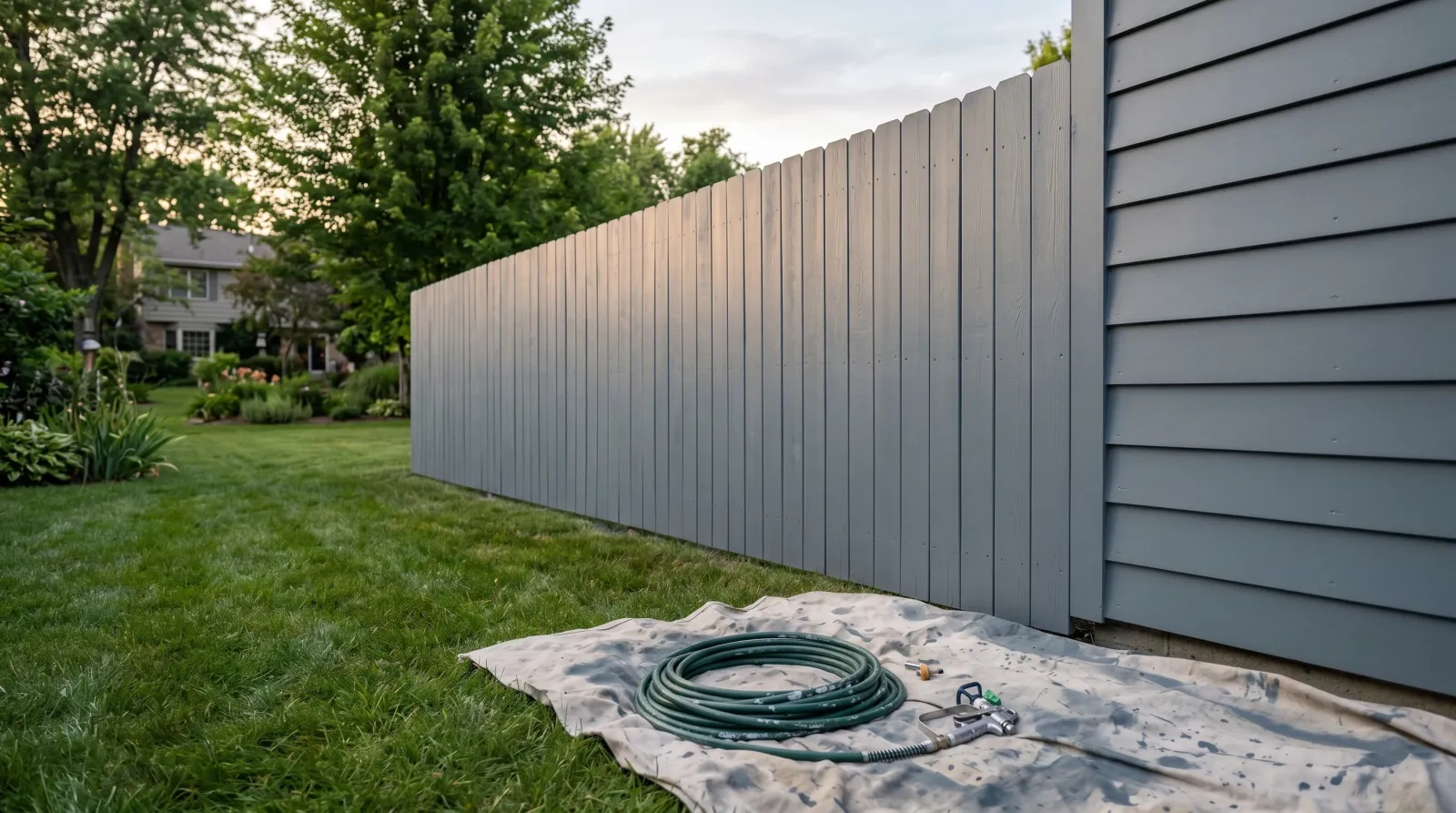
On flat exterior boards, it is worth it. The gun handles the gaps and lattice a brush cannot reach, and back-rolling the flat surfaces works the paint into the grain. On a picket fence, spraying turns a Saturday into twenty minutes, and the back-roll is optional depending on how the coating lays down.
What should I buy with it?
A spare filter and a finer tip if you think you will ever spray anything tighter than a wall. The one part worth keeping on the shelf is a pump-saver flush solution for the off-season, because leaving water in the pump over a cold winter cracks the seals.
Keep exploring
We may earn a commission when you buy through the retailer link above. It never changes the score or the verdict.
Ask a Question