Product review · Sherwin-Williams · Updated June 29, 2026
SnapDry Door & TrimSherwin-Williams paint review
8.0/10Best-in-class dry-to-close on a door enamel — a notch softer than Emerald Urethane, and only two sheens.
SnapDry solves one problem better than anything else on the shelf: a door that has to close tonight. What you trade for that hour is sheen choice, a little cured hardness, and a tight weather window.

Maya Patel · Reviews Editor & Product Tester · Updated June 29, 2026
Maya spent five years running comparative product testing at a consumer testing nonprofit before joining CompositePaint. She built the round-up protocol the team uses, and she has priced the same Sherwin-Williams gallons at list and on sale to see what the discount is actually worth. About the testing process →
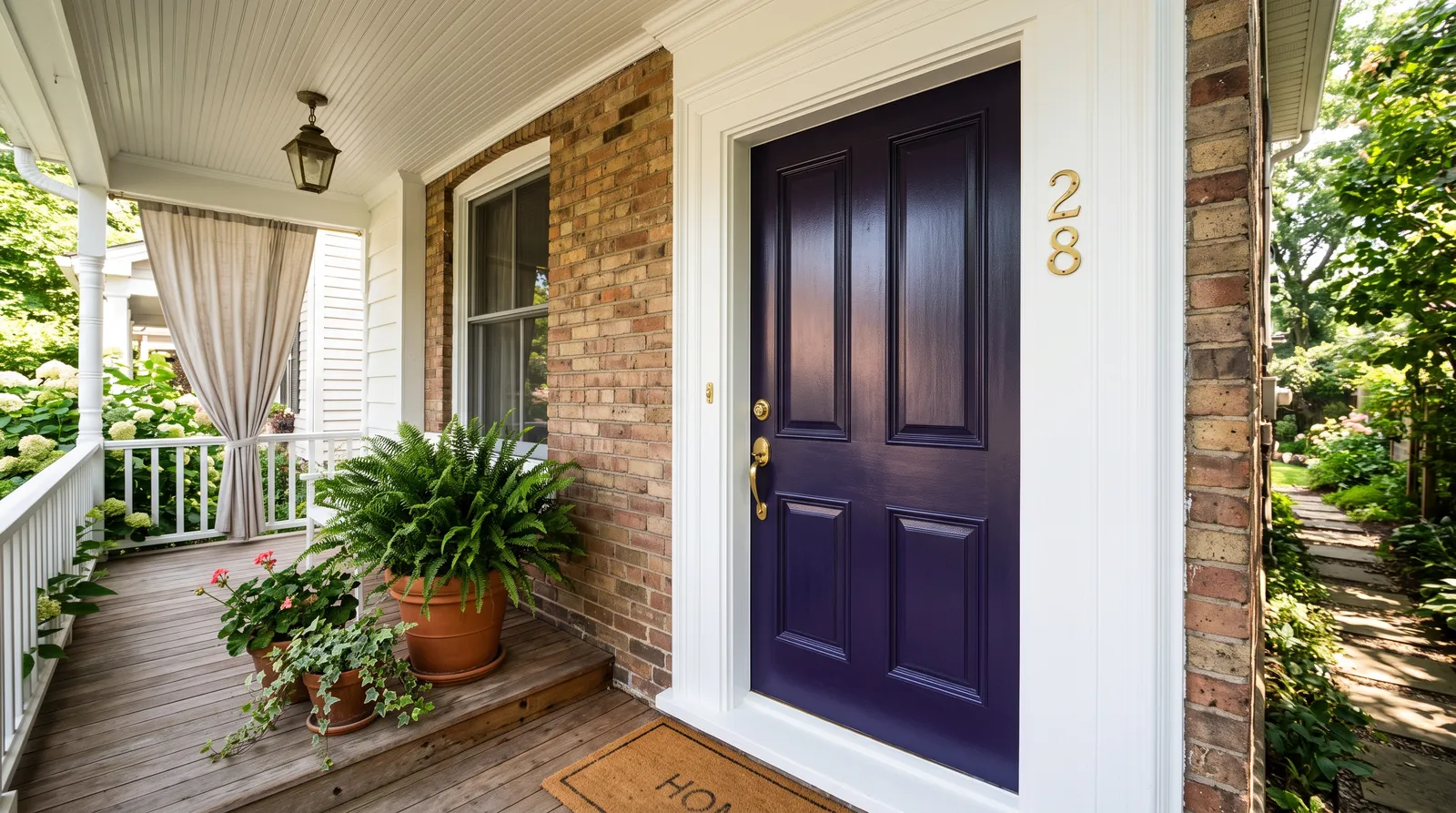
Sherwin-Williams SnapDry Door & Trim2 sheens
Coverage350–400 sq ft / gal at 4 mils wet
Recoat2 hours
VOCUnder 50 g/L
Sheens SatinSemi-Gloss
Read this first
The Fast Verdict
Buy it if the door has to shut the same day. In good conditions a coat is closable in about an hour without welding itself to the weatherstrip, and the film adds dirt, fingerprint, UV, and mildew resistance for an exterior entry. At about $74 a gallon it sits below the premium trim lines. Skip it if you want the hardest cured film on a high-traffic interior door, need a sheen outside satin and semi-gloss, or are painting outside the rated temperature and humidity window.
Best for
Front and exterior doors · Doors that must close and lock the same day · Hot, humid climates · Shutters and louvers · Exterior casing and trim · Windows
Skip if
High-traffic interior doors that take daily kicks · You need gloss or a flatter sheen · Cold, damp, or muggy conditions · Cabinets or walls · You can leave the door open to dry anyway
What it's good at
- Same-day close. In good drying conditions a coat is closable in about an hour, so the front door is not propped open into the night
- Block-resistance against the jamb and weatherstrip — the single most useful property on an exterior door
- Beating the heat-tack problem in hot, humid climates where ordinary enamel stays sticky for hours
- Exterior-grade resistance: dirt, fingerprints, UV weathering, plus a mildew-resistant film
- One can from doors to shutters — rated interior and exterior across doors, trim, windows, and shutters
- The full SW color deck and accurate in-store tinting, at about $74 a gallon rather than premium trim money
What it's not good at
- A tight application window — 50 to 90°F and 40 to 70 percent humidity, outside which the fast dry falls apart
- Sheen choice. Satin and semi-gloss, full stop — no high gloss, no flatter matte trim look
- Ultimate cured hardness; Emerald Urethane resists wear a notch better on a high-traffic interior door
- Forgiving a second brush pass — the fast set shortens open time and punishes reworking a panel
- Blocking risk if you rush it. Close it before the hour is genuinely up and the paint still transfers
- General-purpose work. It is a door-and-trim enamel, not a cabinet or wall paint
Numbers, not adjectives
Spec Sheet
- Coverage
- 350–400 sq ft / gal at 4 mils wet (1.4 mils dry)
- Sheens
- Satin, Semi-Gloss
- Dry to touch
- About 1 hour (at 77°F, 50% RH)
- Close door
- Same day, about 1 hour after the coat, without sticking
- Recoat
- 2 hours (at 77°F, 50% RH)
- Application temp
- Surface, air, and substrate 50°F–90°F
- Humidity
- 40%–70% relative humidity
- VOC
- Under 50 g/L; SCAQMD, CARB, and OTC compliant
- Surfaces
- Doors, trim, windows, shutters; interior and exterior
- Primer
- Prime bare or glossy surfaces; quick-dry primers want about 4 hours before SnapDry
- Sizes
- Quart, gallon, 5-gallon
- Price
- About $74 / gal at SW stores
Application Settings That Work
- Brush
- Brushes fine, but the fast set shortens your open time. Keep a wet edge, make one pass, and do not rework a panel that has started to set. Work panel by panel on a door rather than trying to keep the whole face wet. Coverage is 350 to 400 sq ft a gallon at 4 mils wet, and recoat is 2 hours in good conditions.
- Primer
- Prime bare or glossy surfaces first. Quick-dry primers want about 4 hours before SnapDry goes over them, which is the one place the schedule slows down. Previously painted doors in sound condition need cleaning and a scuff, not a full prime.
Dry to Close: What That Hour Really Means
The one-hour number is the reason people buy this, and it comes with fine print worth shouting. Sherwin-Williams rates SnapDry to touch in about an hour and to recoat in two, both measured at 77°F and 50 percent relative humidity. Drop the temperature, raise the humidity, or paint a shaded north door and the set time stretches. The application window itself is real — 50 to 90°F surface and air, 40 to 70 percent RH — and outside that band the fast dry is the first thing to suffer. In practice that means treating the rated hour as a floor rather than a promise: wait the full hour and then some on the second coat, and knuckle-test a top corner before you swing the door shut. Close it early and the paint can still transfer or stick at the contact points, which undoes the entire reason you bought it.
Mid-project panic
When It Goes Wrong, and How to Fix It
Paint transferring or sticking at the weatherstrip
Why it happens. The door got closed before the hour was genuinely up. The rating is measured at 77°F and 50 percent humidity, and a cool or damp porch does not meet that. Block-resistance is the headline property, but it develops on the film's schedule, not yours.
The fix. Wait past the rated hour on the second coat, especially in cool or damp air, and knuckle-test a top corner before you swing it shut. Read the porch before you read the can. If it already stuck, sand the transfer spots back and recoat that area rather than trying to patch the contact face.
The fast dry not happening at all
Why it happens. You are outside the window. Sherwin specs 50 to 90°F and 40 to 70 percent relative humidity, and a cold spring morning or a muggy summer afternoon can push dry-to-close well past the rated hour. A shaded north-facing door dries slower than a sunlit one on the same day.
The fix. Move the job into the middle of the day and inside the temperature and humidity band. If the weather will not cooperate this week, either wait or pick a different enamel — the speed is the whole product, and outside the window you are paying for a feature you do not get.
Brush marks or a torn-looking panel
Why it happens. The same fast set that closes the door shortens your open time. Go back into a panel that has started to set and you are dragging a skin around instead of levelling wet paint. This is the trade-off that makes it less forgiving than a general-purpose trim paint.
The fix. Keep a wet edge, lay one pass, and do not rework. Work a door panel by panel rather than door-wide, and plan your route before you load the brush. If leveling matters more to you than the clock, ProClassic is the better can for unhurried millwork.
Peeling off a bare or glossy door
Why it happens. SnapDry is a topcoat, not a self-priming system. Bare wood and glossy old finishes both need priming first, and skipping that on a slick door is the standard way a door repaint fails at the edges.
The fix. Prime bare or glossy surfaces before you start. If you use a quick-dry primer, give it about 4 hours before SnapDry goes over it — rushing the primer undercuts the topcoat's grip no matter how fast the topcoat itself sets.
Side by side
SnapDry vs Emerald Urethane vs ProClassic
These are the three SW cans people cross-shop for a door, and they split cleanly on one axis: speed, hardness, or leveling. Pick the axis that matches your problem and the answer falls out.
| SnapDry Door & Trim | Emerald Urethane Trim Enamel | ProClassic | |
|---|---|---|---|
| Dry to close | About 1 hour in good conditions. Best-in-class. | No. Leave the door open to dry. | No. Wrong tool for a same-day exterior entry. |
| Recoat | 2 hr | 4 hr | 4 hr |
| Cured hardness | Tough, dirt- and UV-resistant, a notch below the urethane. | The hardest cured enamel SW sells a homeowner. 7-day cure. | Good for trim, doors, and uppers. |
| Sheens | Satin and semi-gloss only | Full trim range | Satin and semi-gloss in the acrylic-alkyd; gloss and high gloss in the acrylic |
| Brushing | Fine, but the fast set shortens open time and punishes a second pass. | Stiff and unforgiving under a brush. | The best leveling of the three, with no clock rushing you. |
| Exterior resistance | Dirt, fingerprint, UV weathering, plus a mildew-resistant film. | Best scuff and chip resistance at year one. | Built for interior millwork. |
| Price per gallon | About $74 | $95–110 | $75–95 |
| Where it wins | A door that must close and lock tonight, or a hot sticky climate. | A high-traffic door you want to survive dog scratches and door kicks. | Unhurried interior trim and doors where leveling matters most. |
Dry to close
SnapDry Door & TrimAbout 1 hour in good conditions. Best-in-class.
Emerald Urethane Trim EnamelNo. Leave the door open to dry.
ProClassicNo. Wrong tool for a same-day exterior entry.
Cured hardness
SnapDry Door & TrimTough, dirt- and UV-resistant, a notch below the urethane.
Emerald Urethane Trim EnamelThe hardest cured enamel SW sells a homeowner. 7-day cure.
ProClassicGood for trim, doors, and uppers.
Sheens
SnapDry Door & TrimSatin and semi-gloss only
Emerald Urethane Trim EnamelFull trim range
ProClassicSatin and semi-gloss in the acrylic-alkyd; gloss and high gloss in the acrylic
Brushing
SnapDry Door & TrimFine, but the fast set shortens open time and punishes a second pass.
Emerald Urethane Trim EnamelStiff and unforgiving under a brush.
ProClassicThe best leveling of the three, with no clock rushing you.
Exterior resistance
SnapDry Door & TrimDirt, fingerprint, UV weathering, plus a mildew-resistant film.
Emerald Urethane Trim EnamelBest scuff and chip resistance at year one.
ProClassicBuilt for interior millwork.
Where it wins
SnapDry Door & TrimA door that must close and lock tonight, or a hot sticky climate.
Emerald Urethane Trim EnamelA high-traffic door you want to survive dog scratches and door kicks.
ProClassicUnhurried interior trim and doors where leveling matters most.
If the door has to shut the same day, SnapDry, and it is not close — nothing else on the shelf gives you a closable entry in about an hour. If you can leave the door hanging open and you want the most abuse-proof finish on something that takes daily kicks, Emerald Urethane is worth the extra $20 to $35 a gallon. If the job is interior millwork with no clock on it, ProClassic levels best of the three and costs less than Emerald. Most homeowners painting an entry over a weekend value the close more than the last bit of hardness, which is exactly why SnapDry exists alongside the harder enamel instead of being replaced by it.
If not this one
Honest Alternatives
SW
Sherwin-Williams Emerald Urethane Trim Enamel$95–110 / gal
The hardest cured enamel SW sells a homeowner, and the right pick when scuff and chip resistance matters more than a same-day close. You give up the fast-close trick and the easy timeline — 4-hour recoat, 7-day cure — for a film that outlasts SnapDry on a high-abuse door.
Full review →MM
Modern Masters Front Door Paint$35–45 / quart
A self-leveling satin enamel built specifically for entry doors, with a fast set and a smooth brushed finish in a curated color range. It is the closest direct rival to the paint-it-and-close-it promise, though it leans interior-decorative and its palette is narrower than the full SW deck.
SW
Sherwin-Williams ProClassic$75–95 / gal
The long-open-time choice when you are hand-brushing trim and doors and want the flattest leveling, with no fast-set clock rushing you. It cures slower and will not close a door in an hour, so it is the wrong tool for a same-day exterior entry and the right one for unhurried interior millwork.
Full review →Questions people actually ask
SnapDry Door & Trim Questions, Answered
Is SnapDry worth it?
If the door has to close the same day, yes — nothing else on the shelf does that as reliably. In good conditions a coat is closable in about an hour without sticking to the weatherstrip, and the film resists dirt, fingerprints, UV, and mildew on an exterior entry. At roughly $74 a gallon it sits below the premium trim lines, which is fair. It is not worth it if you want the hardest cured film on a high-traffic interior door, need a sheen outside satin and semi-gloss, or are painting outside the rated window.
How fast can I really close the door?
Sherwin-Williams rates SnapDry to touch in about an hour at 77°F and 50 percent humidity, and the whole pitch is closing the door the same day without it sticking. In real conditions that hour stretches. Cool, damp, or shaded porches dry slower, so wait the full hour-plus on the second coat and test a top corner with a knuckle before you swing it shut.
Is SnapDry only for exterior front doors?
No. It is rated interior and exterior, and it works on doors, trim, windows, and shutters either side of the threshold. The fast-close feature matters most on an entry door you cannot leave hanging open all day, but the same can will do interior doors, casing, and louvered shutters. It is a door-and-trim enamel, not a wall or cabinet paint.
SnapDry or Emerald Urethane for a front door?
Pick SnapDry if speed is the problem — a door you must close the same day, or a hot, sticky climate where ordinary enamel stays tacky. Pick Emerald Urethane if you want the hardest, most scuff-resistant cured film and you can leave the door open longer to dry. Speed versus hardness is the whole call, and most homeowners painting an entry door in a hurry want SnapDry.
What sheens does SnapDry come in?
Satin and semi-gloss, and that is the full list. There is no high gloss for a formal front-door shine and nothing flatter for a matte trim look. Satin for a softer face, semi-gloss for the standard wipeable door sheen. If a specific sheen is driving the project, SnapDry may simply not have it — the color deck is the full SW range, but the sheen range is not.
Do I need to prime before SnapDry?
On bare or glossy surfaces, yes. Prime those first, and if you use a quick-dry primer give it about 4 hours before SnapDry goes over it. A previously painted door in sound condition needs cleaning and a scuff rather than a full prime. Skipping the prime on a slick old finish is the usual reason a door repaint lets go at the edges.
What temperature and humidity does SnapDry need?
Surface, air, and substrate all between 50 and 90°F, with 40 to 70 percent relative humidity. The rated dry times are measured at 77°F and 50 percent RH. Outside that band the fast dry is the first thing to suffer, and a cold spring morning or a muggy afternoon can push dry-to-close well past the rated hour.
Can I use SnapDry on kitchen cabinets?
No. It is single-purpose by design — a door-and-trim enamel, not a cabinet or wall paint. The fast set that makes it work on an entry door is the same property that makes it less forgiving on cabinet doors, where leveling and cured hardness matter more than closing the job out today. Look at ProClassic or Emerald Urethane for cabinets instead.
How soon can I recoat SnapDry?
Two hours at 77°F and 50 percent humidity. That means two coats and a closed, locked door inside one working day in good conditions. In cooler or damper air, give it longer — the recoat number stretches the same way the dry-to-close number does, and rushing the second coat is how the block-resistance fails.
How much does SnapDry cost?
About $74 a gallon at SW stores, which puts it below the premium trim lines like Emerald Urethane at $95 to $110. It also comes in quarts, which is usually enough for a single door and its casing at 350 to 400 sq ft a gallon. Sherwin-Williams runs frequent 30 to 40 percent homeowner sales, so timing a purchase to one drops the price well under list.
Keep exploring
Sherwin-Williams brand guide and product lineupEmerald Urethane Trim Enamel reviewSherwin-Williams ProClassic review
We may earn a commission when you buy through the retailer link above. It never changes the score or the verdict.
Ask a Question