Product review · Sherwin-Williams · Updated August 7, 2026
Setfast Acrylic Traffic Marking PaintSherwin-Williams paint review
8.2/10The right waterborne pail for white and yellow work above 50 degrees F, and the wrong one for anything colder or any color beyond that.
A TT-P-1952 waterborne line that goes no-track in under ten minutes and reopens a retail lot within the hour. The catch is a hard 50-degree floor and a color menu that has quietly narrowed to white and yellow.

Robert Vega · Commercial Coatings Editor · Updated August 7, 2026
Twelve years in facility engineering specifying coatings for school districts, light industrial sites, and municipal assets before moving to editorial. Robert still consults on pavement and lining specs that have to survive a procurement meeting. About the testing process →
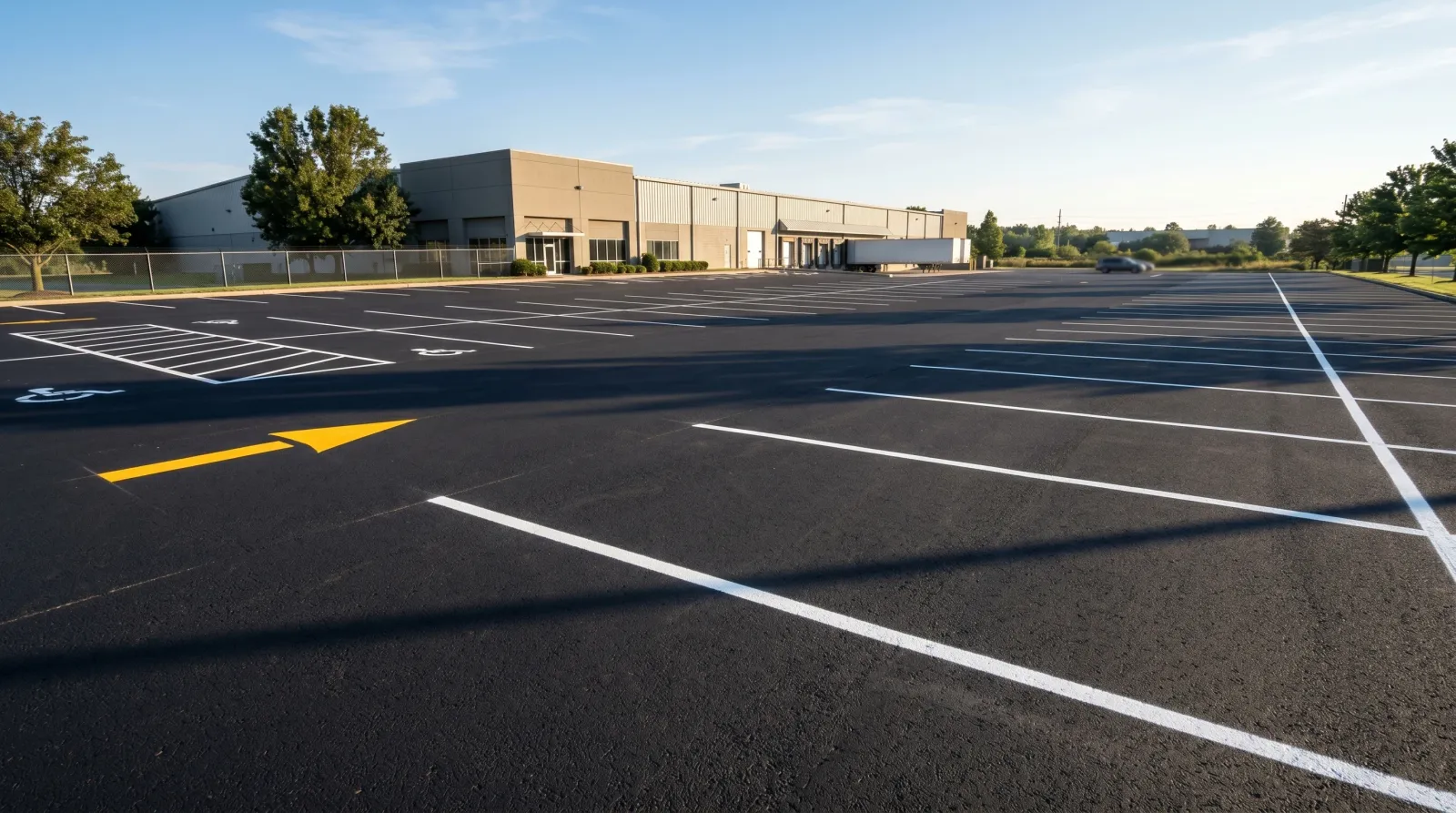
Sherwin-Williams Setfast Acrylic Traffic Marking Paint1 sheen
Dry / no-trackUnder 10 min ambient at spec mils
VOCLow-VOC waterborne
Sheens Flat only
Read this first
The Fast Verdict
Specify it for white and yellow striping on asphalt or cured concrete above about 50 degrees F. It meets Federal Spec TT-P-1952, reaches no-track in under ten minutes at ambient conditions and one to two minutes off a heated rig, clears regional VOC limits solventborne traffic paint no longer can, and flushes with water. At roughly $45 to $70 per gallon equivalent, material is a small fraction of mobilization and labor. Do not specify it cold, damp, or in blue or red.
Best for
Parking lot striping · Warehouse aisle and stall lines · Airport aprons · TT-P-1952 callouts · Retail lots that cannot close · Warm-season DOT-approved work
Skip if
Surface or air below about 50 degrees F · Damp pavement · Blue or red lines · Interior floors that take forklift torque · A curb-sized job that cannot justify a 5-gallon pail
What it's good at
- No-track dry under ten minutes ambient, so a retail lot reopens the same hour
- One to two minutes to no-track off a heated rig at 140-150 degrees F
- Answering a TT-P-1952 callout without a variance
- Clearing regional VOC limits that solventborne traffic paint no longer can
- Water flush at the end of a shift instead of solvent handling
- Sharp daytime contrast in white and yellow on new and weathered asphalt
- Honest cost per striped foot at 300-400 linear ft of 4-inch line per gallon
What it's not good at
- Anything below roughly 50 degrees F surface and air — the film does not coalesce
- Damp pavement or a falling-temperature evening
- Salt-belt service life, where chloride and plows cut the recoat cycle to six to eight months
- Colored lines: blue and red are effectively unobtainable, black is marginal
- Crossing over to interior floors that take forklift wheel torque
- Small jobs, since the waterborne acrylic ships in 5-gallon pails through commercial channels
Same shelf, different cans
Which Setfast Are You Ordering?
The Setfast name spans several SKUs, and ordering the wrong one is the most common Setfast mistake. If a state DOT spec names a revision or a solventborne grade, match it exactly — substituting either direction is how a striping sub fails inspection and eats a re-mobilization.
Setfast Waterborne Acrylic Latex
BaseConventional-dry waterborne acrylic latex, ready to use
RecoatNo-track under 10 min ambient; 1-2 min heated to 140-150 degrees F
Buy it if
General parking-lot and road striping where you need low VOC, water cleanup, and a lot reopened within the hour. This review's product.
Avoid if
You are working below the temperature floor, or you need a colored base beyond white and yellow.
Setfast Solventborne Acrylic
BaseAcetone-based solventborne acrylic
Buy it if
Cold or damp conditions where the waterborne film will not coalesce. It develops hardness fast and tolerates cooler application.
Avoid if
You are in a jurisdiction or on a job where the VOC and solvent handling penalties rule it out.
Setfast Waterborne (TT-P-1952B, white/yellow)
BaseWaterborne acrylic to the older federal revision
Buy it if
A DOT spec names that exact revision. Match the callout literally.
Avoid if
The spec names 1952D or a different grade.
Setfast Solvent-Based Zone Marking
BaseSolvent-based zone marking
Buy it if
Interior plant floors, OSHA aisle and zone lines.
Avoid if
You are marking a lot or a roadway rather than a plant floor.
Numbers, not adjectives
Spec Sheet
- Product type
- Conventional-dry waterborne acrylic latex, ready to use
- Coverage
- About 300-400 linear ft of 4-inch line per gallon at spec film build
- Recommended film
- Roughly 12-15 mils wet, 5-7 mils dry
- Sheen
- Flat
- Dry / no-track
- Under 10 min ambient at spec mils; 1-2 min when heated to 140-150 degrees F
- VOC
- Low-VOC waterborne, well under 150 g/L; meets Federal Spec TT-P-1952
- Primer
- None. Clean, dry, sound pavement only; fresh concrete cures about 30 days first
- Surfaces
- Asphalt and Portland-cement concrete — lots, airports, roads
- Reflectivity
- Drop-on AASHTO Type I glass beads, about 6 lb/gal, for night visibility
- Temperature floor
- About 50 degrees F surface and air, rising, pavement dry
- Sizes
- 5-gallon pails; white and yellow order reliably, colored bases only on rep confirmation
- Price
- About $45-70 per gallon equivalent, sold by the 5-gallon pail
Application Settings That Work
- Brush
- Not what it is built for. You can roll short curb runs and stencil stalls, but brushed lines go on thick, dry slowly, and track. For a couple of parking stops, use a marking aerosol instead.
- Airless
- Airless or conventional striping equipment at a controlled film build: roughly 12 to 15 mils wet, 5 to 7 mils dry, which lands about 300 to 400 linear feet of 4-inch line per gallon. A heated rig at 140 to 150 degrees F cuts no-track to one or two minutes.
- Thinning
- Ready to use — do not thin it. Flush lines and tips with water at the end of the shift rather than solvent, which is a real part of the cleanup and hazmat savings.
- Primer
- None. Clean, dry, sound pavement only. Fresh Portland-cement concrete needs roughly 30 days of cure first, and slick sealed surfaces will not hold the line. For night visibility, drop AASHTO Type I glass beads into the wet film at about 6 lb per gallon.
No-Track, Then Full Hardness
The dry speed is the headline and it is real. At spec film thickness and ambient temperature the waterborne line reaches no-track in under ten minutes; on a heated airless rig at 140 to 150 degrees F that drops to one or two minutes. No-track means foot traffic and a passing tire will not lift the line, which is why a retail lot can reopen within the hour. Full hardness and abrasion resistance build over the next several days, so schedule heavy turning traffic accordingly rather than routing trucks across a fresh stop bar the same afternoon. None of that applies below the temperature floor. Waterborne acrylic coalesces by water evaporation, and below roughly 50 degrees F surface and air the film does not knit — it looks fine when the crew leaves and powders off the drive lane within weeks.
Mid-project panic
When It Goes Wrong, and How to Fix It
Lines powder off the drive lane within weeks
Why it happens. Application below the temperature floor. Waterborne acrylic coalesces by water evaporation, and under roughly 50 degrees F surface and air, or into a falling-temperature evening, or onto pavement still damp from dew, the film never knits. Stripe a lot on a 45-degree November morning and the first plow lifts it.
The fix. There is no working around the physics. Move the work earlier in the season, wait for surface and air above 50 degrees F and rising with the pavement dry, or switch to the Setfast solventborne grade, which is why that product exists.
Restripe cycle arriving twice as often as budgeted
Why it happens. Chloride. A lot that gets salted and plowed every winter is an abrasion-plus-chemistry attack the marking film was not built to shrug off. Drive lanes and turning radii go first; perimeter stalls last longest.
The fix. Budget the recoat interval off field conditions, not the lab dry-time figures: about twelve months on a dry-climate high-traffic lot, six to eight in the salt belt. Restripe over sound existing lines rather than chasing bare pavement every cycle.
Blue or red lines you quoted and cannot order
Why it happens. The color menu on paper is not the color menu at the counter. Sherwin's own Setfast pail page lists black, blue, and red bases, and only black can actually be added to a cart. Striping contractors have hit this for years — one was told flatly by his rep that Setfast is no longer available in blue and sourced it from another brand; another burned a whole thread hunting Setfast Traffic Red with no store able to supply it.
The fix. Confirm any colored base with a Sherwin-Williams commercial rep in writing before you mobilize a crew. If a handicap stall or a fire lane needs blue or red, plan on a different brand for those lines and keep Setfast for the white and yellow.
Lines that track or dry slowly on a small hand-applied job
Why it happens. The product is built for airless or conventional striping equipment at a controlled film build. Brushed lines go on far thicker than the 12 to 15 mils wet the dry-time numbers assume, so they stay soft and pick up traffic.
The fix. Roll short curb runs and stencil stalls if you must, but for a few parking stops or a single curb, a quart-scale latex traffic paint or a marking aerosol is the saner buy than a 5-gallon pail and a thick line.
Fresh line lifting off new concrete
Why it happens. Uncured slab. Setfast bites clean asphalt and cured concrete but drops on slick sealed surfaces and green concrete that is still bleeding curing compound and moisture.
The fix. Give new Portland-cement concrete about 30 days to cure before marking, and confirm the surface is free of curing compound and sealer. There is no primer step to rescue a bad surface here — the pavement has to be clean, dry, and sound.
Side by side
Setfast Waterborne vs Setfast Solventborne vs Thermoplastic
Three marking systems that answer three different constraints: VOC and cleanup, calendar and weather, and service life. The spec usually names one of them for you.
| Setfast Waterborne Acrylic | Setfast Solventborne Acrylic | Thermoplastic | |
|---|---|---|---|
| Chemistry | Conventional-dry waterborne acrylic latex, ready to use | Acetone-based solventborne acrylic | Hot-applied thermoplastic |
| Cold and damp tolerance | Hard floor near 50 degrees F; below that the film never knits | Tolerates cooler, damper application and develops hardness fast | Applied molten, so ambient temperature is far less of a gate |
| VOC and cleanup | Low VOC, well under 150 g/L, water flush | Carries the VOC and handling penalties of a solvent product | Not a solvent system; different handling entirely |
| Service life | About 12 months on a high-traffic lot, 6-8 in the salt belt | Comparable acrylic service life, bought for the conditions rather than the years | Outlasts any sprayed acrylic by years |
| Equipment and mobilization | Striping rig, water flush | Striping rig, solvent handling | Heated melt kettle and a trained crew; cost and mobilization well above a striping rig |
| Where it wins | Warm-season white and yellow work with a TT-P-1952 callout and a lot that cannot close | The cold-zone shoulder season and damp mornings | High-volume roadways and crosswalks where service life, not first cost, drives the spec |
Chemistry
Setfast Waterborne AcrylicConventional-dry waterborne acrylic latex, ready to use
Setfast Solventborne AcrylicAcetone-based solventborne acrylic
ThermoplasticHot-applied thermoplastic
Cold and damp tolerance
Setfast Waterborne AcrylicHard floor near 50 degrees F; below that the film never knits
Setfast Solventborne AcrylicTolerates cooler, damper application and develops hardness fast
ThermoplasticApplied molten, so ambient temperature is far less of a gate
VOC and cleanup
Setfast Waterborne AcrylicLow VOC, well under 150 g/L, water flush
Setfast Solventborne AcrylicCarries the VOC and handling penalties of a solvent product
ThermoplasticNot a solvent system; different handling entirely
Service life
Setfast Waterborne AcrylicAbout 12 months on a high-traffic lot, 6-8 in the salt belt
Setfast Solventborne AcrylicComparable acrylic service life, bought for the conditions rather than the years
ThermoplasticOutlasts any sprayed acrylic by years
Equipment and mobilization
Setfast Waterborne AcrylicStriping rig, water flush
Setfast Solventborne AcrylicStriping rig, solvent handling
ThermoplasticHeated melt kettle and a trained crew; cost and mobilization well above a striping rig
Where it wins
Setfast Waterborne AcrylicWarm-season white and yellow work with a TT-P-1952 callout and a lot that cannot close
Setfast Solventborne AcrylicThe cold-zone shoulder season and damp mornings
ThermoplasticHigh-volume roadways and crosswalks where service life, not first cost, drives the spec
Specify the waterborne acrylic for white and yellow work on asphalt or cured concrete in warm-season conditions — it is the right pail, and the ten-minute no-track is what keeps a lot open. Move to the solventborne grade when the calendar pushes you past the temperature floor. Move to thermoplastic when the owner is buying years rather than a first-cost line item, and accept the kettle and the crew that come with it.
If not this one
Honest Alternatives
RO
Rust-Oleum 2300 System Striping PaintLower price tier than Setfast
Roughly the same waterborne-acrylic class through more channels, and a common pick for private lots with no federal-spec callout. It dries fast and stripes clean, but the cold-weather floor and salt-belt wear are the same. Choose it when budget leads and no DOT spec is named.
TP
Thermoplastic pavement markingWell above a striping rig once you price the kettle and crew
A different system: thicker, far more durable, and the standard for high-volume roadways and crosswalks. It outlasts any sprayed acrylic by years and embeds beads better. Choose it when service life, not first cost, drives the spec.
SS
Setfast Solventborne AcrylicSame Setfast family, commercial pail pricing
Acetone-based, built for the conditions the waterborne line cannot handle. It develops hardness fast and tolerates cooler, damper application, which is why cold-zone crews keep it on the truck. It carries the VOC and handling penalties of a solvent product.
Questions people actually ask
Setfast Acrylic Traffic Marking Paint Questions, Answered
Is Setfast worth it?
For white and yellow striping above about 50 degrees F, yes. It meets Federal Spec TT-P-1952, reaches no-track in under ten minutes at ambient conditions, cleans up with water, and at roughly $45 to $70 per gallon equivalent the material cost is small against mobilization and labor. It is not worth specifying in cold or damp conditions, and it is not worth quoting for blue or red lines that crews cannot reliably order.
Is Setfast the same as Sherwin-Williams ProMar?
No. ProMar is an interior architectural wall paint. Setfast is a pavement-marking line built to Federal Spec TT-P-1952 for parking lots, airports, and roads. They share a maker and nothing else. If you searched Setfast for a wall job, you are on the wrong product.
How fast can I open a lot after striping with Setfast?
The waterborne acrylic reaches no-track in under 10 minutes at ambient conditions when applied at spec film thickness, or 1 to 2 minutes when heated to 140 to 150 degrees F. No-track means foot traffic and a passing tire will not lift the line. Full hardness and abrasion resistance build over the next several days, so schedule heavy turning traffic accordingly.
Does Setfast need glass beads to be reflective?
The paint itself is not retroreflective in the dark. For night visibility on roads or ramps you drop AASHTO Type I glass beads into the wet film as you stripe, typically 6 lb per gallon. On a daytime warehouse aisle or a private lot you can skip beads. State DOT work almost always requires them, so check the spec before you order.
How cold is too cold to stripe with Setfast?
Below roughly 50 degrees F surface and air temperature the waterborne film does not coalesce. It also fails if you stripe into a falling-temperature evening or onto pavement still damp from morning dew. The line looks fine when you leave and powders off the drive lane within weeks. In cold zones, move the work earlier in the season or switch to the Setfast solventborne grade.
How long does Setfast striping last on a parking lot?
Plan on roughly 12 months on a high-traffic lot before a recoat, and six to eight months where de-icing salt and snowplows work the surface. Drive lanes and turning radii wear first; perimeter stalls last longest. Restripe over sound existing lines rather than chasing bare pavement every cycle.
Can I get Setfast in blue or red?
In practice, no. Sherwin's own Setfast pail page lists black, blue, and red bases, and only black can be added to a cart. Striping contractors have hit the same wall for years, with one rep saying flatly that Setfast is no longer available in blue. Confirm any colored base with a commercial rep before you quote a handicap stall or a fire lane, and expect to buy those colors from another brand.
Can I brush or roll Setfast for a small job?
You can roll short curb runs and stencil stalls, but the line is built for airless or conventional striping equipment at a controlled film build. Brushed lines go on thick, dry slowly, and track. For a few parking stops or a curb, a quart-scale latex traffic paint or a marking aerosol is the saner buy.
Can I use Setfast on an interior warehouse floor?
Only for marking, and even then it is the wrong branch of the family — the Setfast Solvent-Based Zone Marking product covers OSHA aisle and zone lines. Setfast is pavement marking and nothing else. It is not formulated for interior concrete that takes forklift wheel torque, and stretching one product across striping and floor coating gets you a thin, scuff-prone line.
What film thickness should the line be applied at?
Roughly 12 to 15 mils wet, 5 to 7 mils dry. That build is what delivers about 300 to 400 linear feet of 4-inch line per gallon and what the under-ten-minute no-track figure assumes. Thin to bare pavement and you halve the coverage figure and the service life at once.
Keep exploring
Sherwin-Williams brand guide and product linesBest garage and shop floor coatingsHow film thickness in mils is measured
We may earn a commission when you buy through the retailer link above. It never changes the score or the verdict.
Ask a Question