Product review · Sherwin-Williams · Updated August 3, 2026
ProBlock PrimerSherwin-Williams paint review
9.0/10The best one-can default primer at an SW counter, with an honest ceiling: a waterborne film cannot permanently hold back a water-soluble stain.
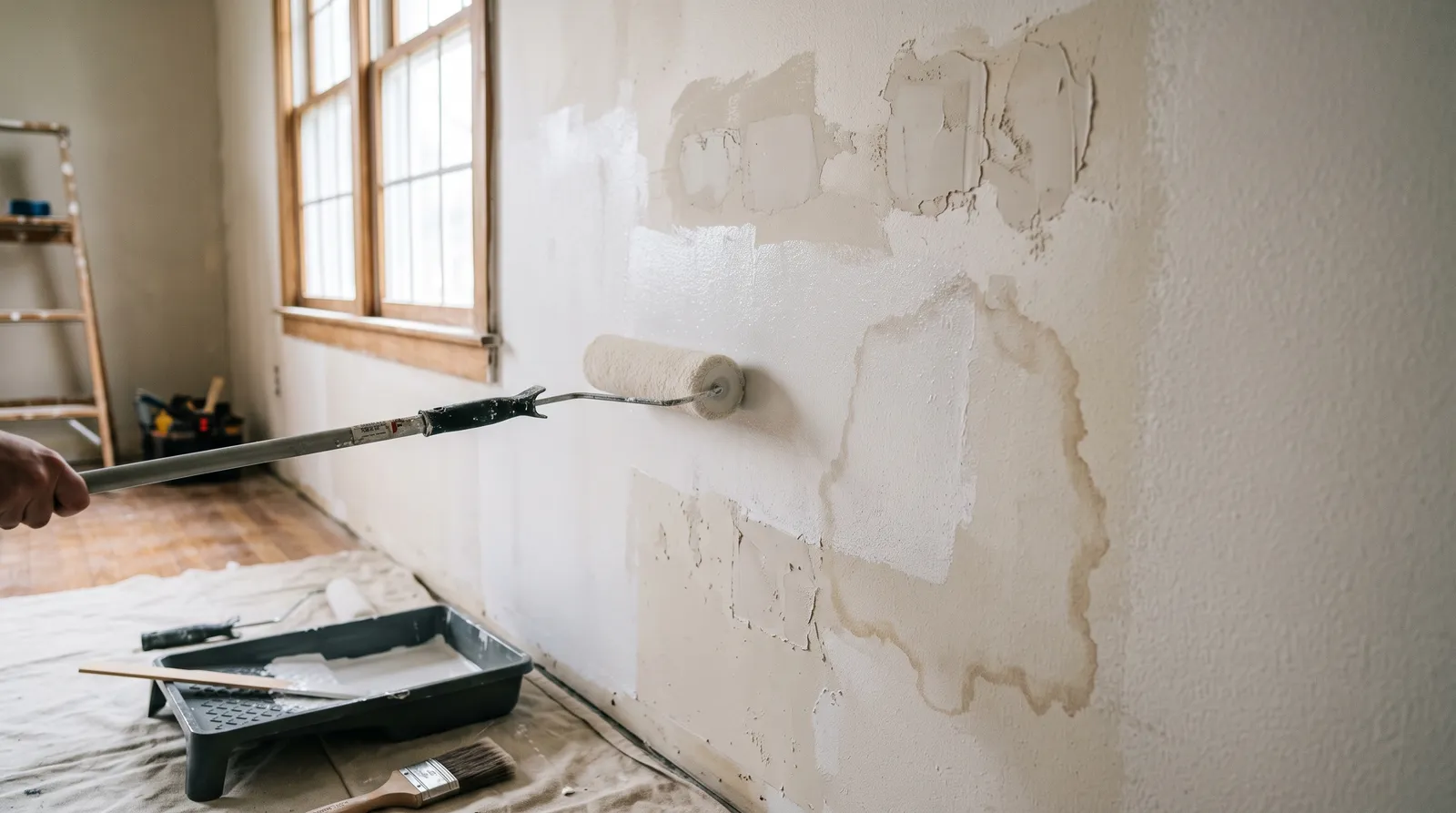
A stain bleeds through because the water in your topcoat re-dissolves it. ProBlock seals the water-soluble ones — dried water marks, tannin, tar, marker — and that same waterborne chemistry is exactly why heavy nicotine and fire smoke still need shellac.

David Chen · Formulation Lead & Resident Chemist · Updated August 3, 2026
Polymer chemist by training, six years in industrial coatings R&D before joining CompositePaint's formulation team. David writes the adhesion pieces — why a primer wets out on a slick door, and why the wrong one lets go in a curl. About the testing process →
Sherwin-Williams ProBlock Primer
Coverage400 sq ft / gal at 4 mils wet
Dry / RecoatTouch 30 min
VOCLow-VOC waterborne
Read this first
The Fast Verdict
Buy it if you repaint a lot of different surfaces. At $45 to $55 a gallon it seals ordinary dried water stains, tannin, tar, and marker, replaces PVA as your sealer on new drywall, bridges scuff-sanded old oil trim to a waterborne enamel, and works outside — one bucket instead of three. It runs roughly double a PVA sealer, and that is the trade. Heavy nicotine, fire smoke, and a set-in water ring still want shellac spot-primed first.
Best for
Ordinary dried water stains · Tannin bleed on trim · Tar and marker · New and patched drywall · Scuff-sanded old oil trim · Interior and exterior repaints
Skip if
Heavy nicotine or fire smoke · A reactivating water ring · Melamine, laminate, glazed tile · You need a primer tinted properly dark · You only need the cheapest new-drywall sealer
What it's good at
- Sealing everyday dried water stains and tannin bleed under one coat
- Killing tar and marker, which ordinary primers smear around instead of locking down
- Replacing PVA on new drywall — it seals bare board and blocks stains from the same can
- Bridging scuff-sanded old oil trim to a waterborne enamel, the job where straight latex peels in sheets
- Low odor and water cleanup, Greenguard Gold, so an occupied house stays liveable
- Real versatility — interior and exterior, on drywall, plaster, wood, paneling, masonry, metal, down to 35°F
- Good wet and dry hide, so it equalizes patched and porous drywall under a new color
What it's not good at
- Heavy nicotine, deep fire smoke, and stubborn set-in water rings — the waterborne ceiling
- Factory-slick substrates like melamine, laminate, and glazed tile
- Tinting properly dark — White and Deep Base only, and a limited toner load
- Being thinned; reducing it for stain work opens the film you are relying on
- Price against a plain PVA sealer, which it runs roughly double
- Beating the 4-hour sealer window when you are in a hurry
Numbers, not adjectives
Spec Sheet
- Coverage
- 400 sq ft / gal at 4 mils wet (1.4 mils dry)
- Chemistry
- Water-based primer/sealer
- Blocks
- Minor dried water stains, tannin, tar, markers
- Dry / Recoat
- Touch 30 min · recoat as primer 1 hr · recoat as stain sealer 4 hr (77°F, 50% RH)
- Application temp
- Down to 35°F surface and air
- VOC
- Low-VOC waterborne; Greenguard Gold (UL 2818)
- Surfaces
- Drywall, cured plaster, wood, paneling, masonry and concrete, metal, previously painted
- Use
- Interior and exterior
- Tintable
- Limited — White and Deep Base, up to 4 oz toner per gallon toward the topcoat
- Sizes
- Quart, gallon, 5-gallon
- Also sold as
- Formerly PrepRite ProBlock — same formula, new label
- Price
- $45–55 / gal at SW stores
Application Settings That Work
- Brush
- Rolls and brushes smoothly with good wet and dry hide, so it doubles as your sealer on bare or patched drywall rather than just a stain coat. Low odor and Greenguard Gold certified, and the roller rinses out in the sink. It applies down to 35°F surface and air, which is unusually low for a waterborne primer — just expect the dry times to stretch down there.
- Thinning
- Do not reduce it when you are stain blocking. The data sheet is explicit about this, and the chemistry backs it up: thinning opens the film and undercuts the barrier that is doing the work. For ordinary priming there is no reason to thin it either.
- Primer
- This is the primer, but two jobs still belong to something else. Heavy nicotine, fire smoke, and set-in water rings get spot-primed with shellac or an oil primer first, then ProBlock or the topcoat over everything. Factory-slick melamine, laminate, and glazed tile get a real bonding primer — SW Extreme Bond or INSL-X Stix.
Dry Times and the Four-Hour Sealer Rule
Two different clocks live on this can, and using the wrong one is how a sealed stain comes back. As an ordinary primer it is touch-dry in about 30 minutes and recoatable in roughly an hour at 77°F and 50 percent humidity, so prime and topcoat in the same day is normal. As a stain sealer it wants the full 4 hours before anything goes over it. That gap is not padding — the waterborne resin particles need the time to coalesce into a continuous barrier, and rushing it lets a partly formed film hand the stain a path back up into the fresh paint. Two more rules that go with it: do not reduce the primer when you are stain blocking, because thinning opens up the very film you are counting on, and give it longer than the rated times when you are working cold, since it applies down to 35°F but does not dry on schedule down there.
Mid-project panic
When It Goes Wrong, and How to Fix It
A brown halo creeping back through the fresh topcoat
Why it happens. The stain is water-soluble and the topcoat is waterborne. Roll wet latex over a dried leak mark and the water in the paint re-mobilizes the colored compound, which wicks up through the wet film and reappears as the water evaporates. ProBlock stops that for light, fully dried stains. On years of nicotine, fire soot, or a deep oily ring that keeps reactivating, the concentration and migration pressure beat a slightly permeable waterborne film.
The fix. Match the primer's solvent to the stain's solvent. Spot-prime the bad areas with Zinsser B-I-N, which dries from alcohol into a non-aqueous barrier the stain has no solvent path to cross, then run ProBlock or your topcoat over everything. Do not try to win it with a third coat of the waterborne.
Topcoat peeling off melamine, laminate, or glazed tile
Why it happens. ProBlock promotes adhesion and genuinely grips scuff-sanded gloss enamel, and Sherwin-Williams says so on the label. But it is a stain blocker, not a bonding primer. A factory-slick, low-energy surface needs an adhesion-promoting resin built to wet it out, which is a different formulation problem entirely.
The fix. Use SW Extreme Bond or INSL-X Stix on those substrates. Draw the line at factory melamine and glazed tile, not at ordinary gloss enamel — for scuff-sanded old oil trim heading to a waterborne finish, ProBlock is the right bridge coat.
The primer still reading through under a deep topcoat
Why it happens. It only comes in White and a Deep Base and takes a limited dose of toner — up to 4 oz a gallon. A sealer only accepts so much colorant before it stops sealing, which is a real formulation limit, not a stocking decision.
The fix. Ask the counter to shade it toward your topcoat before a drastic color change. Expect grey or off-white rather than a match, and let the topcoat finish the burying — plan two finish coats on a big jump. If you truly need a colored undercoat, use a tintable acrylic undercoater instead.
A stain that bled after the primer looked fine going on
Why it happens. Almost always a timing or a thinning problem. Topcoating a stain-sealing coat at the one-hour primer window instead of the four-hour sealer window puts finish over a film that has not fully coalesced. Reducing the primer does the same damage chemically — it thins the barrier you are relying on.
The fix. Give it the full 4 hours whenever you are leaning on it as a sealer, and never reduce it for stain work. If the stain is already back through the topcoat, spot-prime with shellac and repaint that area; there is no cleaner for it.
Side by side
ProBlock vs Zinsser B-I-N vs Bulls Eye 1-2-3
Stain primers get chosen by reputation when they should be chosen by solvent. These three sit at three different points on that scale, and the right one depends entirely on how severe your stain is and how much smell you can live with.
| ProBlock | Zinsser B-I-N | Bulls Eye 1-2-3 | |
|---|---|---|---|
| Chemistry | Waterborne primer/sealer. | Shellac dissolved in alcohol — a non-aqueous film. | Waterborne primer-sealer, same family as ProBlock. |
| Light water stains and tannin | Seals them cleanly. This is the core job. | Overkill, but it works. | Fine when the stains are light. |
| Heavy nicotine, smoke, set-in rings | The honest ceiling — they eventually bleed through. | The benchmark. Locks them down, odors included. | Same waterborne ceiling as ProBlock. |
| Tar and marker | Locks them down instead of smearing them around. | Handles them. | General-purpose sealing; not formulated for this specifically. |
| Tinting | Limited — White and Deep Base, up to 4 oz toner per gallon. | Not the point of it. | Tints, which is its edge over ProBlock. |
| Odor and cleanup | Low odor, Greenguard Gold, rinses in the sink. | Alcohol fumes, serious ventilation, ammonia or alcohol cleanup. | Waterborne, water cleanup. |
| Doubles as a general primer | Yes — new drywall in place of PVA, patched walls, exterior, down to 35°F. | No. Buy it as a spot primer. | Yes, for general interior and exterior priming. |
| Price | $45–55 / gal | $40–48 / quart equivalent | $22–28 / gal |
Chemistry
ProBlockWaterborne primer/sealer.
Zinsser B-I-NShellac dissolved in alcohol — a non-aqueous film.
Bulls Eye 1-2-3Waterborne primer-sealer, same family as ProBlock.
Light water stains and tannin
ProBlockSeals them cleanly. This is the core job.
Zinsser B-I-NOverkill, but it works.
Bulls Eye 1-2-3Fine when the stains are light.
Heavy nicotine, smoke, set-in rings
ProBlockThe honest ceiling — they eventually bleed through.
Zinsser B-I-NThe benchmark. Locks them down, odors included.
Bulls Eye 1-2-3Same waterborne ceiling as ProBlock.
Tar and marker
ProBlockLocks them down instead of smearing them around.
Zinsser B-I-NHandles them.
Bulls Eye 1-2-3General-purpose sealing; not formulated for this specifically.
Tinting
ProBlockLimited — White and Deep Base, up to 4 oz toner per gallon.
Zinsser B-I-NNot the point of it.
Bulls Eye 1-2-3Tints, which is its edge over ProBlock.
Odor and cleanup
ProBlockLow odor, Greenguard Gold, rinses in the sink.
Zinsser B-I-NAlcohol fumes, serious ventilation, ammonia or alcohol cleanup.
Bulls Eye 1-2-3Waterborne, water cleanup.
Doubles as a general primer
ProBlockYes — new drywall in place of PVA, patched walls, exterior, down to 35°F.
Zinsser B-I-NNo. Buy it as a spot primer.
Bulls Eye 1-2-3Yes, for general interior and exterior priming.
For the typical repaint — a couple of dried ceiling marks, some patched drywall, maybe a knot bleeding on trim — ProBlock is the better stock decision than PVA plus a separate stain primer, because one bucket does bare board, patched walls, and the ceiling stain, inside or out. Bulls Eye 1-2-3 is the value swap when the stains are light and you want it tinted, and it is on every big-box shelf. And when the stain is severe, neither waterborne primer is the answer: spot-prime the bad areas with BIN, then run ProBlock or your topcoat over the whole surface. Matching the primer's solvent to the stain's solvent is the entire game.
If not this one
Honest Alternatives
ZB
Zinsser B-I-N Shellac-Based Primer$40–48 / quart equivalent
The opposite chemistry on purpose. Shellac in alcohol dries to a tight non-aqueous film that locks down heavy nicotine, smoke, set-in water rings, and odors any waterborne primer eventually lets pass. It smells and demands ventilation, but for stain blocking it is the benchmark. Use it on the bad spots, then ProBlock or the topcoat over everything.
ZB
Zinsser Bulls Eye 1-2-3$22–28 / gal
A waterborne primer-sealer in the same chemical family, at every big-box store and usually cheaper. It seals, hides, and bonds well for general interior and exterior priming, and it tints, which ProBlock effectively does not. ProBlock's edge is the specific stain-blocking formulation and SW counter support.
Full review →KO
KILZ Original$18–24 / quart equivalent
A classic solvent-based oil primer that seals water stains, light smoke, and tannin better than a waterborne film, sitting between ProBlock and shellac on stain power. It costs less than BIN and sands well, but it is slow to dry, high-odor, and cleans up with mineral spirits.
Full review →Questions people actually ask
ProBlock Primer Questions, Answered
Is ProBlock primer worth it?
For most repaints, yes. At about $45 to $55 a gallon it seals ordinary dried water stains, tannin, tar, and marker, works as your sealer on new drywall in place of PVA, bridges scuff-sanded old oil trim to a waterborne enamel, and goes outside — one bucket instead of three. It runs roughly double a PVA sealer, which is the trade. It is not worth it against heavy nicotine, fire smoke, or a set-in water ring.
ProBlock or shellac (BIN) — which blocks stains better?
For the worst stains, shellac wins, and it is not close. ProBlock seals minor dried water stains, tannin, tar, and marker on everyday repaints. But heavy nicotine, deep smoke, a set-in water ring, or cedar and redwood tannin migrate through a waterborne film over time. BIN dries from alcohol into a tight non-aqueous barrier those stains cannot cross. Spot-prime the bad stains with BIN, then ProBlock or your topcoat over everything.
Is ProBlock the same as the old PrepRite ProBlock?
Yes. Sherwin-Williams renamed PrepRite ProBlock to ProBlock Premium All-Purpose Primer — the data sheet literally reads Formerly PrepRite ProBlock. It is a new label and packaging on the same water-based stain-blocking formula. If your store still has cans marked PrepRite ProBlock on the shelf, you are buying the same product.
Can I topcoat ProBlock the same day?
For ordinary priming, yes. At 77°F and 50 percent humidity it is touch-dry in about 30 minutes and recoats as a primer in roughly an hour. When you are leaning on it as a stain sealer, give it the full 4 hours before topcoating — the film needs that time to set into a continuous barrier, and rushing it lets a stain creep back up into the fresh paint.
Can ProBlock be tinted?
Only partly. It comes in White and a Deep Base and takes up to 4 oz of toner per gallon, so the counter can shade it toward your topcoat but cannot match it. Painters routinely ask for it shaded before a drastic color change, and what comes home is usually grey or off-white. A sealer only accepts so much colorant before it stops sealing.
Can I use ProBlock on new drywall instead of PVA?
Yes, and plenty of painters do. SW staff describe it as their most universal primer and a step better than PVA on fresh board, and it seals patched areas and stains from the same can. The trade-off is money, not performance: PVA is the cheap builder-grade sealer that does one job, ProBlock runs roughly double and also blocks stains, goes outside, and takes some tint.
Will ProBlock stick to glossy old oil trim?
To scuff-sanded gloss enamel, yes — SW's own copy says it assures adhesion of the topcoat to slick, glossy surfaces, and that is exactly how trim painters use it before a waterborne enamel. Draw the line at factory melamine, laminate, and glazed tile. Those need a dedicated bonding primer such as Extreme Bond or INSL-X Stix.
Can I thin ProBlock?
Not for stain work. The data sheet is explicit about not reducing it when you are stain blocking, and the reason is simple: thinning opens up the film and undercuts the barrier you are counting on. For ordinary priming there is no real reason to thin it either — it rolls and brushes smoothly as supplied.
Does ProBlock work outside?
Yes. It is rated interior and exterior across drywall, cured plaster, wood, paneling, masonry and concrete, metal, and previously painted surfaces, and it applies down to 35°F surface and air temperature. It also carries antimicrobial agents in the dry film to resist mildew growth on the coating.
What stains will ProBlock not block?
Heavy nicotine, fire and deep smoke damage, and stubborn set-in water rings that keep reactivating. Cedar and redwood tannin on a bad day belongs on that list too. All of them are water-friendly stains being asked to stay put under a water-compatible film, and the film stays slightly permeable. Spot-prime those with shellac or an oil primer first.
Keep exploring
Sherwin-Williams brand guide and product lineupSherwin-Williams SuperPaint reviewedHow to block a water stain so it stops bleeding through
We may earn a commission when you buy through the retailer link above. It never changes the score or the verdict.
Ask a Question