Product review · Sherwin-Williams · Updated July 31, 2026
LoxonSherwin-Williams paint review
8.6/10Best-in-class on raw, high-pH masonry. Heavy, thirsty, and misunderstood everywhere else.
Nine products wear the Loxon name, and the one most people mean is Loxon XP Waterproofing Masonry Coating. Which rung your wall needs, what the coverage really is on rough stucco, and why waterproofing does not mean basement.

Mark Thompson · Pro Contractor & Field Editor · Updated July 31, 2026
22 years running residential and light commercial repaints across the Midwest. Mark has put Loxon XP on green stucco and efflorescing foundation walls, and still takes side jobs to keep the numbers honest. About the testing process →
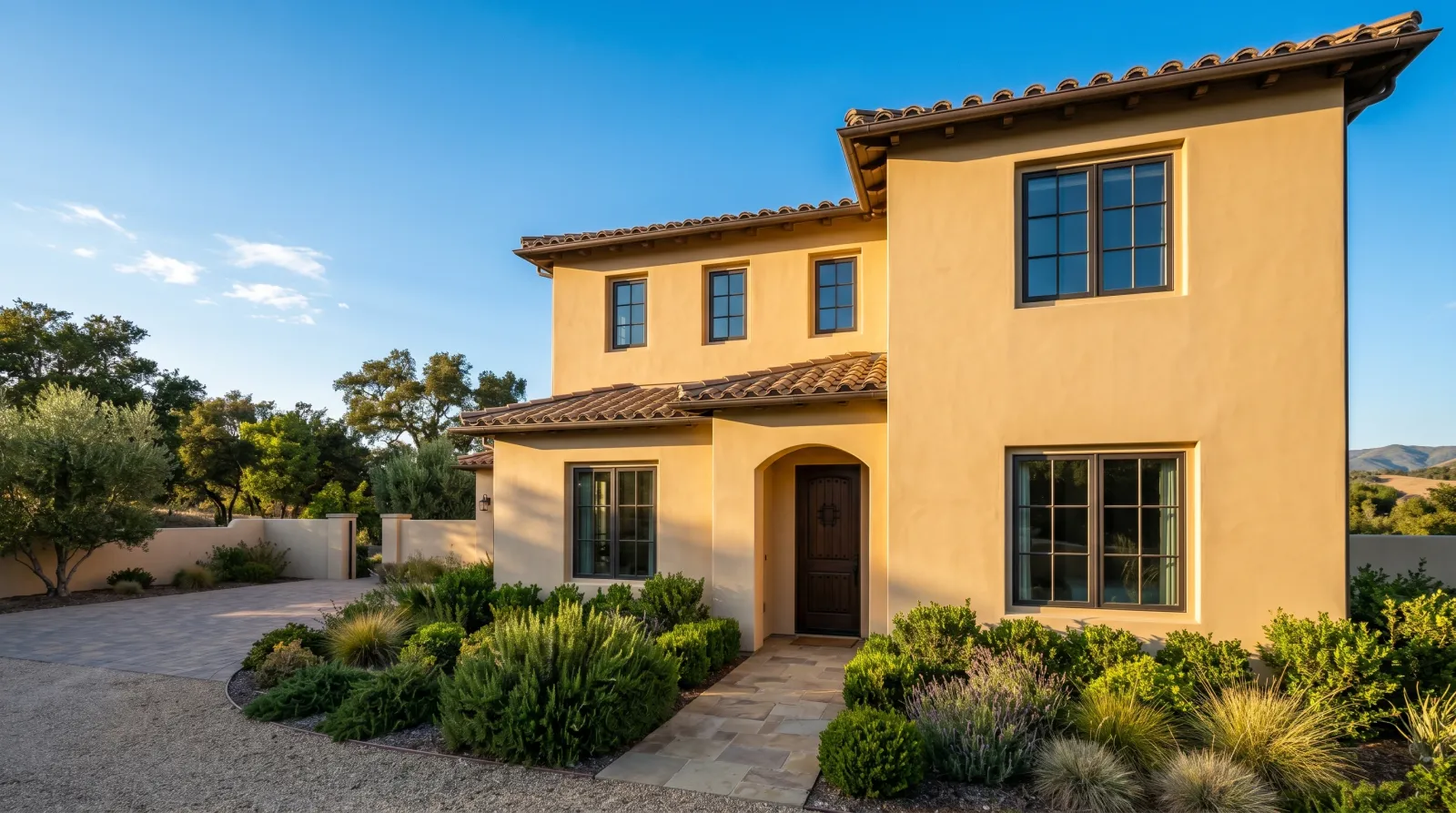
Sherwin-Williams Loxon2 sheens
Coverage85–110 sq ft / gal per coat
Dry / RecoatTouch 4 hr at 45°F and above
VOCUnder 50 g/L
Full cureAbout 30 days
Sheens FlatSatin
Read this first
The Fast Verdict
On raw, cracking, efflorescing, or storm-facing masonry, buy it. It bonds direct to masonry up to pH 13, so fresh stucco and green block skip the alkali primer, and two coats at 14.5 to 18.5 wet mils pass the ASTM D6904 wind-driven rain test. At $55 to $75 a gallon and 85 to 110 sq ft per gallon, a wall drinks it. Skip it on a sound painted wall, and skip it below grade — it breathes at 18 perms and cannot hold back hydrostatic pressure.
Best for
Bare or fresh stucco · CMU and block · Poured and tilt-up concrete · Walls that have effloresced or lifted paint · Storm-facing elevations · Hairline stucco cracking · Cold repaints down to 35 degrees
Skip if
A sound, already-painted wall on a budget · Below-grade or basement walls · Horizontal surfaces that hold water · Cracks that move more than 2.5 mm · Brush-only work on heavy texture · You need it finished this weekend
What it's good at
- Alkali tolerance on raw masonry — pH 13 direct application, no separate alkali primer on green stucco or fresh block
- Efflorescence resistance on a foundation that kept pushing salt through the old paint
- Film build and rain shedding — two coats pass the ASTM D6904 wind-driven rain test
- Bridging hairline cracks to 2.5 mm at -10°C without leaving the product
- Working cold, down to 35°F, which buys real weeks on either end of the season
- Self-priming on most masonry, so a big elevation is one product and two passes
- Anti-carbonation and chloride numbers that matter on structural concrete — 344 m CO2 diffusion resistance, 243 coulombs chloride permeability
- Mildew resistance on north walls and tree-shaded elevations
What it's not good at
- Pinholes on open CMU — the spec allows 10 per square foot because it expects them
- Anything below grade; it breathes at 18.03 perms and will not hold back hydrostatic pressure
- Horizontal surfaces where water collects
- Single-coat shortcuts — one thin coat is a colored wall, not a waterproofed one
- Brush and roller work on heavy texture; it is high-build and it fights you
- Coverage economy at 85 to 110 sq ft a gallon, dropping to about 80 on rough stucco
- A quick weekend, once you add the 7-day cure wait on fresh concrete
Same shelf, different cans
Which Loxon Are You Buying?
This is where buyers get tripped up. Sherwin-Williams lists nine products under the Loxon name, split into coatings and the prep products that go under them. Grab the wrong one and you prime when you meant to topcoat, or topcoat when the wall needed a surfacer first. One correction while we are here: Loxon XP Masonry Coating and Loxon XP Waterproofing are the same can — series LX11-50, in flat and satin. There is no cheaper flat-only XP and no pricier waterproofing upgrade.
Loxon XP Waterproofing Masonry Coating (this review)
BaseHigh-build 100 percent acrylic topcoat, self-priming to pH 13
SheensFlat and Satin, same product
Recoat24 hr; 24–48 hr at 35–45°F
Buy it if
The wall is raw, fresh, efflorescing, hairline-cracked, or facing the storm direction. Two coats bridge cracks to 2.5 mm and pass the wind-driven rain test.
Avoid if
The wall is sound, already coated, and low-stress. You are paying for alkali tolerance and film build you do not need.
Loxon Self-Cleaning Acrylic Coating
BaseStandard-build acrylic topcoat
SheensFlat and Satin (LX14-50 series)
Buy it if
The wall is sound and previously coated and the job is appearance rather than protection. It sheds dirt every time it rains, which is exactly right for a shaded elevation that keeps going grey.
Avoid if
The masonry is bare, high-pH, or cracked. It builds a conventional acrylic film and does not bridge cracks at all.
Loxon Vertical Concrete Stains (opaque and semi-transparent)
BaseVertical concrete stain
Buy it if
Tilt-up and poured concrete you want stained rather than coated. It will not peel, crack, or blister, and the semi-transparent version lets the concrete character read through.
Avoid if
You need film build, crack bridging, or a wind-driven rain barrier. A stain is not a coating.
Loxon 40% Silane Water Repellant
BaseClear penetrating silane
Buy it if
Big commercial masonry where you want water repellency with no color change at all.
Avoid if
You want to change the color of the wall or cover anything. It is clear and it penetrates rather than building a film.
Prep rungs — Concrete & Masonry Primer/Sealer, Acrylic Conditioner, Acrylic Block Surfacer
BasePrimer, binder, and block filler
Buy it if
Chalky, patched, or porous walls take the Primer/Sealer; soft or dusty masonry takes the Conditioner; open CMU takes the Block Surfacer so the topcoat is not asked to do a filler's job.
Avoid if
The masonry is sound, clean, and cured. XP is self-priming on pH 6 to 13 and these are extra coats you do not need.
Loxon Water Blocking Primer/Finish
BaseWater-blocking primer and finish
Buy it if
Water is seeping through masonry and you need the Loxon rung aimed at stopping it rather than the breathable topcoat.
Avoid if
The job is an above-grade rain barrier. That is XP's job, and this is not a substitute for the drainage and grading fix outside.
Numbers, not adjectives
Spec Sheet
- Coverage
- 85–110 sq ft / gal per coat; about 80 on porous or rough stucco
- Film build
- 14.5–18.5 wet mils per coat, 6.5–8.4 dry; up to 40 wet mils in one pass
- Sheens
- Flat and Satin — same product, both sheens
- Dry / Recoat
- Touch 4 hr at 45°F and above, 6 hr at 35–45°F · recoat 24 hr, 24–48 hr in the cold
- Full cure
- About 30 days
- Application temp
- Down to 35°F air, surface, and material; 5°F above dew point
- Vapor permeance
- 18.03 perms (ASTM D1653 wet cup, 2 coats at 8.1 mils DFT)
- Crack bridging
- EN 1062-7 Class A5, up to 2.5 mm at -10°C; 312% elongation (ASTM D412)
- Adhesion
- 375 psi (ASTM D4541)
- VOC
- Under 50 g/L; a zero-VOC base is available
- Primer
- Self-priming on masonry pH 6–13; raw concrete must cure 7 days first
- Surfaces
- Stucco, CMU and block, tilt-up and poured concrete, brick — above grade, vertical only
- Price
- $55–75 / gal street; pros pay less on an SW account
Application Settings That Work
- Brush
- It is heavy-bodied, so brushing it onto texture is a chore and a roller is hard work for the same film. Roller cover is 1/2-inch to 1-1/2-inch nap synthetic, long nap for heavy texture. Keep the brush for stripe-coating inside corners, edges, and transitions before the field coats go on.
- Airless
- 2300 psi through a .021-inch tip, and do not reduce. Spray and back-roll is the real method on rough stucco and open block — the gun lays the mils on and the roller drives them into the texture.
- Thinning
- Do not reduce it. Thinning to make it spray easier drops you out of the wet-mil range, and out of the wet-mil range means out of the waterproofing claim.
- Primer
- Self-priming direct to masonry at pH 6 to 13, which is the whole point of the line. Fresh concrete and mortar cure 7 days at 75°F first; shotcrete and gunite can be coated after 3. Chalky, patched, or porous walls take Loxon Concrete & Masonry Primer/Sealer, soft or dusty walls take the Acrylic Conditioner, and extremely porous CMU takes the Acrylic Block Surfacer.
Two Coats, Ten Pinholes, Thirty Days
The waterproofing claim on this label is a system, and the system has numbers. Two coats, 6.5 to 8.4 dry mils each, 13 to 16.8 mils total, and 10 or fewer pinholes per square foot. Hit those and the claim holds. Roll one thin coat to save a bucket and you have a colored wall, not a waterproofed one, and none of the test numbers apply to it. The clock that goes with it: touch dry at 4 hours above 45°F, 6 hours in the 35 to 45°F band, recoat at 24 hours and 24 to 48 when it is cold, full cure around 30 days. Cold work has fine print of its own — air, surface, and the material in the bucket all at 35°F or above, 5°F above the dew point, no rain expected within 2 to 3 hours, and no drop below 35°F for 48 hours after. A freeze that first night ruins the film even though it looked fine at quitting time. Plan a cold-weather job as three days, not a weekend.
Mid-project panic
When It Goes Wrong, and How to Fix It
Pinholes across open block
Why it happens. A high-build coating over porous CMU traps air, and the air comes back out as pinholes. This is expected behavior, not a bad batch — Sherwin-Williams' own waterproofing spec allows up to 10 per square foot, which tells you how normal it is. Beating that number is technique, not paint.
The fix. Spray and back-roll: spray lays the mils on, the roller pushes them into the texture and closes voids. Let it dry overnight between coats. Power-roll to feed material continuously into open block. Stripe-coat every inside corner, edge, and transition by brush before the field coats, because sprayed film always thins at an edge. On really open CMU, put Loxon Acrylic Block Surfacer down first.
Blisters on a basement wall a month after coating
Why it happens. The name sells it and the chemistry cannot deliver it. Loxon XP breathes at 18.03 perms by design so trapped moisture can escape, and a film that lets vapor through cannot hold back liquid water under pressure. The data sheet says plainly that it will not withstand hydrostatic pressure and is not for below-grade use or horizontal surfaces where water collects.
The fix. For water coming through a foundation from the soil side, use a cementitious waterproofer or Loxon Water Blocking Primer/Finish, not this. The real fix is usually drainage and grading outside the wall. Above grade, facing rain, XP is the right coating.
Running short of material halfway up the wall
Why it happens. Coverage is the number that surprises everybody. Smooth poured concrete gets you toward 110 sq ft a gallon, but heavy-textured stucco and open block pull it down to about 80 — and the waterproofing claim needs two full coats, not one.
The fix. Take off at 80 sq ft a gallon and two coats, always. Buy the 5-gallon on any full elevation; the per-gallon saving adds up fast on a thirsty wall. Run the math on the rough end of the range or you come up a bucket short.
Mildew growing back through the new coating
Why it happens. The film passes ASTM D3273 and D3274 mildew resistance, but that is the film resisting new growth, not the film killing what is already on the wall. Coat over live mildew and it grows straight back through.
The fix. Wash with 1 part liquid bleach to 3 parts water, let it sit on the surface 10 minutes, rinse, and let the wall dry completely before you coat. Never add detergent or ammonia to that solution — bleach plus ammonia makes chlorine gas, and that is not a paint problem.
Rust bleeding or grain raising at vents and trim boards
Why it happens. Loxon XP is a masonry coating. It has no rust-inhibitive package, and it is not a wood primer either. Anything ferrous or wooden sitting in the wall plane is outside what the coating is formulated to handle, and those are the spots that get the most water.
The fix. Prime incidental metal — vents, lintels, conduit, hardware — with Pro Industrial Pro-Cryl first. Prime incidental wood such as trim boards, bucks, and blocking with an exterior latex wood primer. Then run XP over both.
Side by side
Loxon XP vs the Self-Cleaning Acrylic vs Box-Store Masonry Paint
Three real options for a masonry wall, and the wall decides which one is right. The question is not which is best paint — it is whether your wall is raw and stressed or sound and tired.
| Loxon XP | Loxon Self-Cleaning Acrylic | Behr Premium Masonry | |
|---|---|---|---|
| Film build | 14.5–18.5 wet mils per coat, 6.5–8.4 dry. | A fraction of that — conventional acrylic film. | Thin by comparison; it does not carry the same film. |
| Crack bridging | EN 1062-7 Class A5, up to 2.5 mm at -10°C, 312% elongation. | None. Cracks telegraph back through. | Not a crack-bridging film. |
| Alkali tolerance | Direct to masonry at pH 6–13. The reason to buy it. | Standard acrylic tolerance; meant for previously coated walls. | Wants a separate alkali-resistant primer on raw or fresh masonry. |
| Primer coats on raw masonry | None. Self-priming, so you save a coat on a big elevation. | Use the Loxon Primer/Sealer underneath on bare or chalky walls. | Alkali primer first, then two topcoats. |
| Sheens | Flat and Satin, same product, same bases. | Flat and Satin. | Check the shelf; the line is a masonry paint, not a system. |
| Efflorescence | Holds on a wall that kept pushing salt through the old finish, once you wire-brush the existing salt off. | Not what it is for. | This is where the cheaper coating gets fed by the cycle. |
| Price per gallon | $55–75 | Less than XP in the same family | $35–45 |
| Where it wins | Raw, fresh, efflorescing, cracking, or storm-facing masonry. | Sound, already-coated walls where the job is appearance and dirt shedding. | A covered, low-exposure, already-painted wall that just looks tired. |
Film build
Loxon XP14.5–18.5 wet mils per coat, 6.5–8.4 dry.
Loxon Self-Cleaning AcrylicA fraction of that — conventional acrylic film.
Behr Premium MasonryThin by comparison; it does not carry the same film.
Crack bridging
Loxon XPEN 1062-7 Class A5, up to 2.5 mm at -10°C, 312% elongation.
Loxon Self-Cleaning AcrylicNone. Cracks telegraph back through.
Behr Premium MasonryNot a crack-bridging film.
Alkali tolerance
Loxon XPDirect to masonry at pH 6–13. The reason to buy it.
Loxon Self-Cleaning AcrylicStandard acrylic tolerance; meant for previously coated walls.
Behr Premium MasonryWants a separate alkali-resistant primer on raw or fresh masonry.
Primer coats on raw masonry
Loxon XPNone. Self-priming, so you save a coat on a big elevation.
Loxon Self-Cleaning AcrylicUse the Loxon Primer/Sealer underneath on bare or chalky walls.
Behr Premium MasonryAlkali primer first, then two topcoats.
Sheens
Loxon XPFlat and Satin, same product, same bases.
Loxon Self-Cleaning AcrylicFlat and Satin.
Behr Premium MasonryCheck the shelf; the line is a masonry paint, not a system.
Efflorescence
Loxon XPHolds on a wall that kept pushing salt through the old finish, once you wire-brush the existing salt off.
Loxon Self-Cleaning AcrylicNot what it is for.
Behr Premium MasonryThis is where the cheaper coating gets fed by the cycle.
Price per gallon
Loxon XP$55–75
Loxon Self-Cleaning AcrylicLess than XP in the same family
Behr Premium Masonry$35–45
Where it wins
Loxon XPRaw, fresh, efflorescing, cracking, or storm-facing masonry.
Loxon Self-Cleaning AcrylicSound, already-coated walls where the job is appearance and dirt shedding.
Behr Premium MasonryA covered, low-exposure, already-painted wall that just looks tired.
Match the coating to the wall and the money sorts itself out. Bare or fresh masonry, an efflorescing foundation, hairline stucco cracking, or an elevation that takes storms head-on — buy Loxon XP and buy enough of it, because self-priming saves a coat and narrows the price gap more than the shelf tags suggest. A sound, already-coated wall that is only going grey — the Self-Cleaning Acrylic is the cheaper rung in the same family and it sheds dirt every time it rains. A covered, low-exposure wall that just needs freshening — Behr Premium Masonry at $35 to $45 is honest money. Do not pay for alkali tolerance you do not need, and do not skip it when you do.
If not this one
Honest Alternatives
BP
Behr Premium Masonry, Stucco & Brick$35–45 / gal
Half the price, at every Home Depot, and fine on a sound, previously painted, low-alkali masonry wall. Less film build and it wants a separate alkali-resistant primer on raw or fresh surfaces. The right call when the wall is already coated and just needs a freshen-up.
LS
Loxon Self-Cleaning Acrylic CoatingLess than XP in the same family
The standard-build rung, flat or satin, with a surface built to shed dirt every time it rains. Less film, no crack bridging, less money. Take it when the wall is sound, already coated, and the job is appearance rather than protection — a shaded elevation that keeps going grey is its case.
SO
SherLastic or ConFlex XL ElastomericAbove XP in material and labor
Sherwin-Williams' own selection guide puts these above Loxon XP when the wall needs more movement than Class A5 crack bridging covers. They build a thicker rubber membrane. Step here only when the cracks are real and moving; on a stable wall a heavy elastomeric just traps moisture.
DE
Dunn-Edwards EFF-STOP Premium$50–60 / gal
A West Coast favorite built for the same alkali-and-efflorescence problem, common on Southwest stucco. Worth a look if you have a Dunn-Edwards store closer than a Sherwin-Williams. Compare the alkali rating and the warranty before you switch — the two are close competitors on stucco.
Questions people actually ask
Loxon Questions, Answered
Is Loxon XP worth it?
On raw, cracking, efflorescing, or storm-facing masonry, yes. It bonds direct to masonry up to pH 13, builds 14.5 to 18.5 wet mils a coat, bridges cracks to 2.5 mm, and being self-priming it saves you a coat, which narrows the price gap with the $35 to $45 box-store masonry paints. On a sound, previously painted wall it is overkill — the Loxon Self-Cleaning Acrylic or a cheaper masonry paint is enough. And it is not worth buying to stop water coming through a foundation, because it is not rated below grade.
Is Loxon XP actually waterproof?
It is a wind-driven-rain barrier, not a below-grade waterproofer. Two coats at 6.5 to 8.4 mils each pass the ASTM D6904 wind-driven rain test and the film bridges cracks up to 2.5 mm. But it breathes by design, so the data sheet says it will not withstand hydrostatic pressure and is not for use below grade. For a leaking basement wall you want a cementitious waterproofer, or Sherwin-Williams' own Loxon Water Blocking Primer/Finish.
Is Loxon XP breathable?
Yes, measurably. Sherwin-Williams rates two coats at 18.03 perms by ASTM D1653 wet cup, which is a highly vapor-permeable film — anything above roughly 10 perms counts as highly permeable. That is the design trade-off: it keeps wind-driven rain out from the face while letting moisture vapor escape from inside the wall. It also means it will not hold back hydrostatic pressure.
What is the difference between Loxon and Loxon XP?
Loxon is the family name; XP is its high-build waterproofing member. Loxon XP goes on at 14.5 to 18.5 wet mils per coat, stretches 312 percent by ASTM D412, and bridges cracks up to 2.5 mm under EN 1062-7 Class A5. The standard Loxon acrylic coatings build a much thinner film and do not bridge cracks at all. Pick XP for raw, cracking, or storm-exposed masonry; the Self-Cleaning Acrylic Coating is enough for sound, previously coated walls.
Does Loxon come in satin?
Yes. Loxon XP Waterproofing Masonry Coating is sold in both flat and satin, and the satin ships in the same Extra White, Deep, and Ultradeep bases in 1-gallon and 5-gallon. The Self-Cleaning Acrylic Coating has a satin series too. Flat is still the default look on textured stucco, and it hides patches and a wavy plane that satin telegraphs.
How cold can it be when you apply Loxon XP?
Down to 35°F, lower than most exterior acrylics. Air, surface, and the paint itself all have to be 35°F or above and at least 5°F above the dew point, with no rain or snow expected for 2 to 3 hours and no drop below 35°F for 48 hours after. In that 35 to 45°F band expect slower drying: about 6 hours to touch and 24 to 48 hours before the second coat.
Do I need to prime before Loxon XP?
On most masonry, no. Loxon XP goes direct to concrete, block, and stucco at a pH as high as 13, which is the whole point of the line. The exception is fresh concrete: let it cure at least 7 days, though shotcrete and gunite can be coated after 3. On chalky, previously painted, or repaired walls, the Loxon Concrete and Masonry Primer/Sealer is the right first coat.
How does Loxon compare to Behr or Valspar masonry paint?
Loxon XP carries more film build and shrugs off high alkali better than the big-box masonry paints. Behr Premium Masonry and Valspar's block filler cost less and are fine on a low-alkali, already-painted wall. On fresh stucco or efflorescing block, Loxon's alkali tolerance is worth the price gap — and skipping the separate alkali primer takes a coat out of the job.
Can I roll Loxon XP or do I need to spray it?
Both work. Spray and back-roll is how the pros build the mil thickness on rough stucco, and it forces the coating into the texture. Airless is 2300 psi through a .021-inch tip, and you do not reduce it. Rolling, Sherwin-Williams calls for a 1/2-inch to 1-1/2-inch nap synthetic cover, long nap for heavy texture. A roller will do a smaller wall fine, you will just work harder for the same film.
How much Loxon XP do I need for my wall?
Figure the rough end of the range and two coats. Smooth poured concrete runs toward 110 sq ft a gallon, but heavy-textured stucco and open block drop to about 80. Take off at 80 and two coats, and buy the 5-gallon on any full elevation. Estimating at the high end of the coverage range is the single most common way people come up a bucket short.
Keep exploring
All Sherwin-Williams paint lines reviewedBest masonry and block paint round-upWhat elastomeric masonry coatings actually do
We may earn a commission when you buy through the retailer link above. It never changes the score or the verdict.
Ask a Question