Product review · Sherwin-Williams · Updated August 7, 2026
LatitudeSherwin-Williams paint review
8.0/10The best weather window in the Sherwin-Williams exterior line, on a middle-of-the-line film.
You are buying the calendar, not the film. It goes on at 35°F and beats a pop-up rain in about 30 minutes — and a touch-up will still cost you a full course.

Mark Thompson · Pro Contractor & Field Editor · Updated August 7, 2026
22 years running residential and light commercial repaints across the Midwest. Mark has put Latitude on north-side clapboard at 38°F in late October and watched a light rain bead off it ninety minutes later. About the testing process →
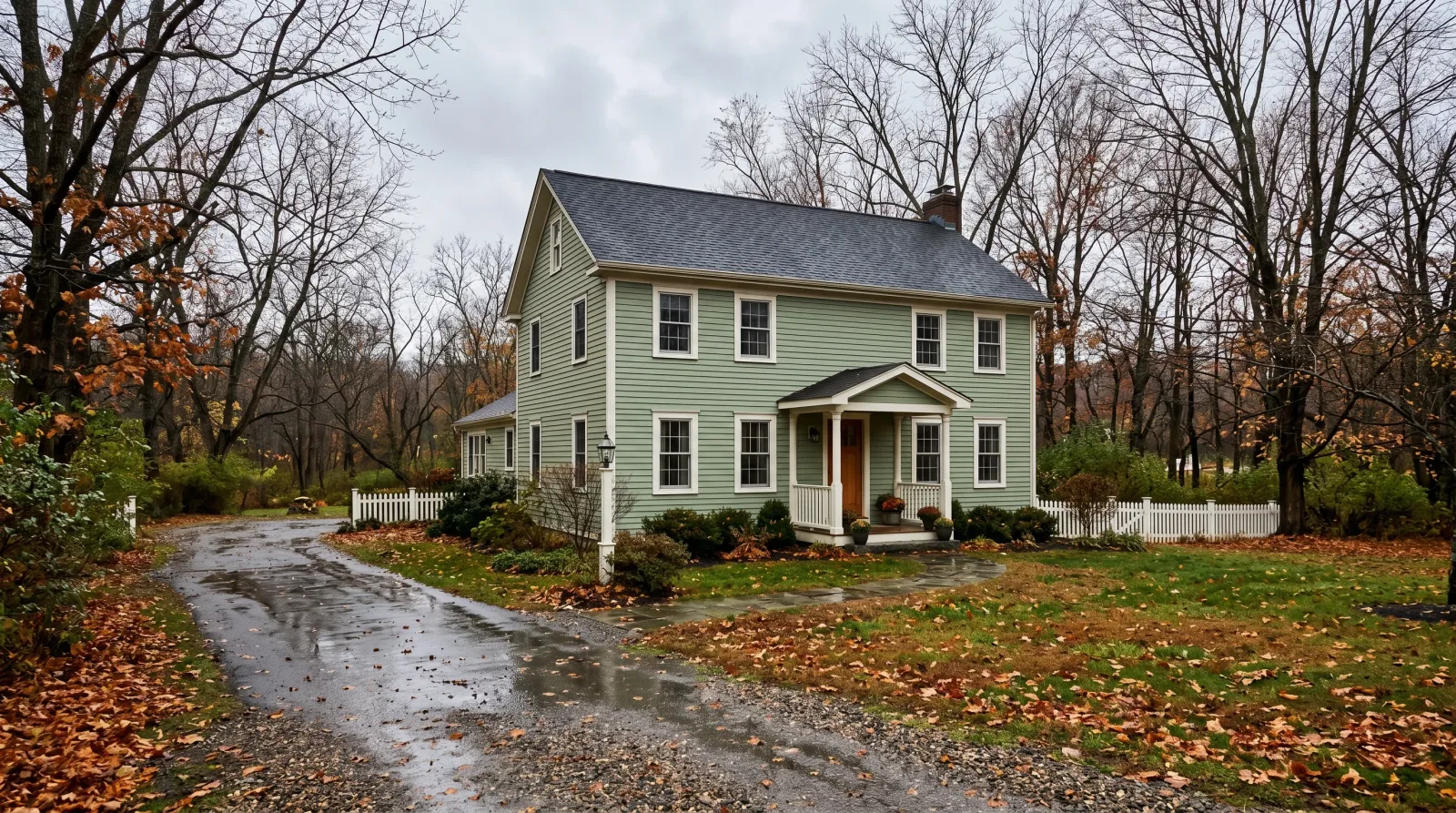
Sherwin-Williams Latitude4 sheens
Coverage250–400 sq ft / gal
Dry / RecoatTouch 1–2 hr · recoat 2 hr
Full cureOver 30 days
Sheens FlatLow LustreSatinGloss
Read this first
The Fast Verdict
If cold or unpredictable weather is your problem, yes. It applies at 35°F and beats a pop-up rain in about 30 minutes, which no value latex does, and that saves whole working days in spring and fall. If your weather is warm and stable, no. SuperPaint costs $10 to $15 less a gallon and does the same job, and Emerald or Duration hold color longer on a hot south wall. You are paying for the weather window, not a better film.
Best for
Zone 5–7 spring and fall repaints · Late-season jobs before the freeze · Coin-flip rain forecasts · Vinyl siding in VinylSafe colors · Wood, clapboard, shakes and shingles
Skip if
Warm, stable weather · You want the deepest color and longest fade resistance · You expect to spot touch-up often · No Sherwin-Williams store nearby · You want a fifteen-year coating
What it's good at
- Cold-weather application that actually works — 38°F north-side clapboard in late October
- The 30-minute rain window, which saves whole days on coin-flip spring forecasts
- Early dirt-pickup resistance, so the first spring pollen does not embed in the film
- VinylSafe darker colors that do not warp vinyl panels
- Flexing across temperature swings instead of fracturing at the lap joints
- Honest two-coat hide on most siding
What it's not good at
- Spot touch-ups, which flash unless you roll the full course
- Long-term film hardness — it trades some for the cold-weather flex
- Hot south-facing walls, where Emerald and Duration hold color a notch longer at year five
- Deep colors and rough cedar, where the hide stretches thin
- Convenience if you do not live near a Sherwin-Williams store
- Green-build paperwork, since the exact VOC g/L is not published on the consumer page
Numbers, not adjectives
Spec Sheet
- Coverage
- 250–400 sq ft / gal, substrate-dependent
- Sheens
- Flat, Low Lustre, Satin, Gloss
- Dry / Recoat
- Touch 1–2 hr · recoat 2 hr
- Full cure
- Over 30 days
- Rain resistance
- As soon as 30 minutes; rain-ready in 30–60 min
- Application temp
- 35°F to 120°F (air, surface, material)
- VOC
- Low-VOC, below the federal 100 g/L exterior limit; exact g/L not published
- Primer
- Self-priming on sound surfaces; spot-prime bare or chalky substrate
- Surfaces
- Wood, clapboard, shakes, shingles, plywood, vinyl and aluminum siding, masonry, primed metal
- Sizes
- Quart, gallon, 5-gallon
- Warranty
- Lifetime limited (original purchaser, prepped substrate)
- Price
- $73–87 / gal MSRP; $55–60 during SW 30–40% sale events
Application Settings That Work
- Brush
- Flows and levels clean down to 35°F, which no value latex does. Slightly draggy in full sun above 95°F, so chase the shade around the house on a hot day. Two coats, always two coats, and keep the same roller nap through the whole job so future repairs match.
- Primer
- Self-priming on clean, dull, previously painted siding — skip the primer there and it bonds and hides fine. On bare cedar, redwood or tannin-prone wood, prime first with a stain blocker. On chalky old paint, knock the chalk off and spot-prime the bare spots. The self-priming claim covers maintenance repaints, not bare or failing substrate.
The 35-Degree Fine Print
ClimateFlex paints down to 35°F on air, surface and material, and that low number is the whole product. The trap is the overnight low. The film needs to skin over and start curing before the temperature drops to the dew point, or you get surfactant leaching — brown or white streaks weeping down the wall the next morning. Paint a 35°F morning that is climbing toward 50°F, not a 35°F afternoon that is falling toward 28°F overnight. Rain-safe runs 30 to 60 minutes, recoat is about two hours, and full cure takes more than 30 days. Two coats. Always two coats on exterior — the coverage number on the can assumes one perfect coat on perfect siding, and forty-year-old clapboard is not perfect siding.
Mid-project panic
When It Goes Wrong, and How to Fix It
A touch-up patch that sits flatter and lighter than the wall
Why it happens. This is the real soft spot in the product. Spot-dab a ding on a sunlit wall and the repair reads at a different sheen and shade than the surrounding film. It happens even with the same color from the same tint batch.
The fix. Do not spot-dab. Roll the entire course, corner to corner, and keep the same roller nap you started the job with. Plan repairs by full sections so a five-minute ding does not turn into a half-day surprise.
Brown or white streaks weeping down the wall the next morning
Why it happens. Surfactant leaching. You painted into a falling temperature and the film hit the dew point before it could skin over and start curing. The 35°F rating is about the temperature during and after application, not just at the moment you load the brush.
The fix. Paint a morning that is climbing, not an afternoon that is dropping toward a freeze. Check the overnight low before you open the can. If the streaks are already there, wash them off once the film has cured properly rather than sanding into fresh paint.
Rust-colored streaks bleeding out of cedar knots
Why it happens. Self-priming is a marketing line that holds right up until your substrate is not sound. Latitude is not a stain blocker. On bare cedar, redwood or any tannin-prone wood the tannin bleeds through inside a year.
The fix. Spot-prime bare wood with a stain-blocking primer before the topcoat. Same for chalky old paint that has been baking in the sun for a decade: knock the chalk off, spot-prime the bare areas, and do not trust the self-priming claim to fix a surface it was never meant to fix.
New paint coming off in sheets with the old
Why it happens. You painted over a failing substrate. No exterior coating bonds to paint that was already letting go, and the warranty does not cover it either.
The fix. Fix the peeling before you open the can — scrape to sound material, feather the edges, spot-prime the bare wood, then coat. Prep order matters more here than the paint you chose.
Vinyl panels buckling after a dark repaint
Why it happens. A dark, non-VinylSafe color absorbs enough heat to warp vinyl siding on the first hot afternoon. It is the problem that ruins a lot of DIY vinyl jobs.
The fix. Stay inside the VinylSafe deck, which is engineered to reflect heat at darker shades. Get tinted samples first if you are going dark, and confirm the color is on the deck before the counter mixes the full order.
Side by side
Latitude vs SuperPaint vs Emerald Exterior
Three exterior acrylics off the same shelf. The question is not which is best, it is whether the weather or the finish is the thing standing between you and a done house.
| Latitude | SuperPaint Exterior | Emerald Exterior | |
|---|---|---|---|
| Street price per gallon | $73–87 MSRP, $55–60 on sale | $63–70 | $85–98 |
| Application temperature | 35°F to 120°F | Wants 50°F and up | Does not paint as cold as Latitude |
| Rain window | About 30 minutes, rain-ready in 30–60 min | Wants a dry afternoon | Not what you buy it for |
| Color and fade resistance | Good. A step under the top tier in south-facing UV at year five. | Value tier — the same job as Latitude on a warm, dry day. | Deepest color, best fade and dirt resistance, longest film life on hot walls. |
| Where it wins | Cold and unpredictable weather, late-season jobs, vinyl in VinylSafe colors. | Warm-day repaints on a budget. | A forever home where the finish and the long wear matter more than the calendar. |
Street price per gallon
Latitude$73–87 MSRP, $55–60 on sale
SuperPaint Exterior$63–70
Emerald Exterior$85–98
Application temperature
Latitude35°F to 120°F
SuperPaint ExteriorWants 50°F and up
Emerald ExteriorDoes not paint as cold as Latitude
Rain window
LatitudeAbout 30 minutes, rain-ready in 30–60 min
SuperPaint ExteriorWants a dry afternoon
Emerald ExteriorNot what you buy it for
Color and fade resistance
LatitudeGood. A step under the top tier in south-facing UV at year five.
SuperPaint ExteriorValue tier — the same job as Latitude on a warm, dry day.
Emerald ExteriorDeepest color, best fade and dirt resistance, longest film life on hot walls.
Where it wins
LatitudeCold and unpredictable weather, late-season jobs, vinyl in VinylSafe colors.
SuperPaint ExteriorWarm-day repaints on a budget.
Emerald ExteriorA forever home where the finish and the long wear matter more than the calendar.
Buy Latitude if you are repainting siding in zones 5 to 7 and the forecast will not hand you a clean 50°F afternoon for weeks. At $55 to $60 on one of SW's 30 to 40 percent sales it is a bargain for the days it saves you. If the weather cooperates, it is the wrong spend: SuperPaint does the same job on a warm afternoon for $10 to $15 less a gallon, Duration is the durability sibling, and Emerald Exterior is where the money goes on a forever home.
If not this one
Honest Alternatives
SW
Sherwin-Williams SuperPaint Exterior$63–70 / gal
Same brand, one tier down, about $10 to $15 less per gallon. Does the same job as Latitude on a warm, dry afternoon. You lose the 35°F application and the 30-minute rain window. The right pick when the weather cooperates and the budget is tight.
Full review →SW
Sherwin-Williams Emerald Exterior$85–98 / gal
SW's top exterior. Deeper color, better fade and dirt resistance, longer film life on hot south walls. Costs $10 to $15 more than Latitude and does not paint as cold. The right pick for a forever home where the finish and the fifteen-year wear matter more than the calendar.
Full review →SW
Sherwin-Williams Duration Exterior$73–80 / gal
The durability sibling. Thicker self-priming film, strong crack and peel resistance, and SW's contractor-favored exterior for years. Pick Duration over Latitude when long-term film toughness beats the cold-weather window.
Full review →Questions people actually ask
Latitude Questions, Answered
Is Sherwin-Williams Latitude worth it?
If cold or unpredictable weather is your problem, yes. It applies at 35°F and beats a pop-up rain in about 30 minutes, which no value latex does, and that saves whole working days in spring and fall. If your weather is warm and stable, no — SuperPaint costs $10 to $15 less a gallon and does the same job, and Emerald or Duration hold color longer on a hot south wall. You are paying for the weather window, not a better film.
How cold can you paint with Latitude?
Down to 35°F air, surface and material temperature. That is the whole reason Latitude exists. Most exterior latex stops at 50°F. Just do not paint at 35°F if the temperature is still dropping toward a freeze overnight. The film needs to skin over before the dew point hits, or you get blush and surfactant streaks the next morning.
How soon can Latitude take rain?
As soon as 30 minutes, and rain-ready in 30 to 60. I have watched a light rain hit a wall ninety minutes after the last pass and bead off with no runs and no watermarks. That single property is what saves whole days of rework on a Midwest spring job.
Is Latitude better than SuperPaint for exterior?
For cold-weather and quick-rain jobs, yes. Latitude paints at 35°F and beats rain in about 30 minutes; SuperPaint wants 50°F and a dry afternoon. For a warm-day repaint where the weather cooperates, SuperPaint costs $10 to $15 less per gallon and does the same job. You are paying for the weather window, not better paint film.
Did Latitude replace Resilience?
Yes. Latitude landed in 2021 to replace Resilience, the old rain-in-two-hours line, and it is the line Sherwin-Williams is stocking long term. Latitude cuts the rain window to about 30 minutes and stretches the application range from 35°F up to 120°F. If you want a color you can walk back in and re-match in five years, Latitude is the safer buy.
Does Latitude need a primer?
On sound, previously painted siding that is clean and dull, no. Latitude self-primes. On bare wood, chalky old paint, raw masonry, or tannin-prone cedar and redwood, spot-prime first. The self-priming claim covers maintenance repaints, not bare or failing substrate. Bare cedar without a stain-blocking primer will bleed through inside a year.
Can you use Latitude on vinyl siding?
Yes, and it is one of its strengths. Latitude carries VinylSafe colors, a limited deck of darker shades engineered not to absorb enough heat to warp the vinyl. Stay inside the VinylSafe range on vinyl. Paint a dark non-VinylSafe color on vinyl and you can buckle the panels on the first hot afternoon.
How long does Latitude last?
Call it a strong seven-year paint, not a fifteen-year one. It trades some long-term film hardness for the cold-weather flex, so on a hot south-facing wall Emerald and Duration both hold color and resist chalking a notch longer at the five-year mark. In a moderate climate on well-prepped siding it does the job well.
Keep exploring
Sherwin-Williams brand hub and full lineupBest paint for cold-climate exteriorsPainting in cold weather, explainedHow to fix peeling exterior paint
We may earn a commission when you buy through the retailer link above. It never changes the score or the verdict.
Ask a Question